1915
Seats: 2
1915
Seats: 2
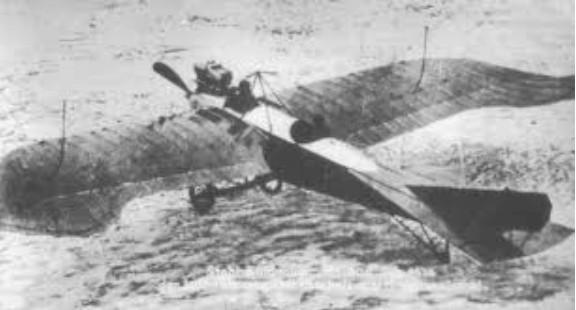
Reconnaissance and training aircraft, Germany, 1913
Engine: Argus As I, 99 hp
Length: 31.791 ft / 9.69 m
Height: 9.744 ft / 2.97 m
Wingspan: 45.505 ft / 13.87 m
Wing area: 387.504 sq.ft / 36.0 sq.m
Max take off weight: 1874.3 lb / 850.0 kg
Weight empty: 1323.0 lb / 600.0 kg
Max. weight carried: 551.3 lb / 250.0 kg
Max. speed: 62 kt / 115 km/h
Cruising speed: 54 kt / 100 km/h
Wing load: 4.92 lb/sq.ft / 24.0 kg/sq.m
Range: 162 nm / 300 km
Crew: 2
A single-seat turbojet-powered monoplane, first seen in 1996.
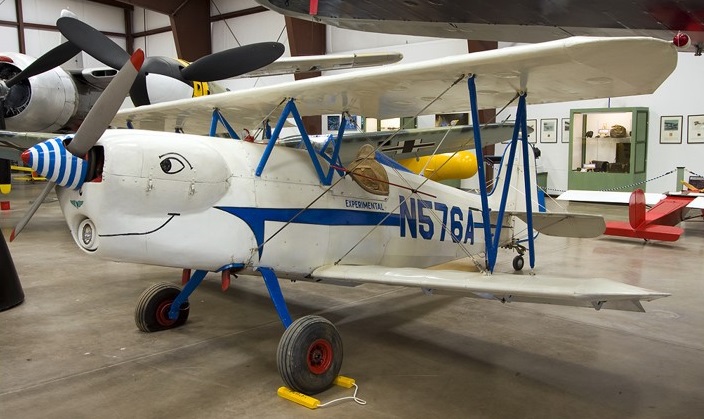
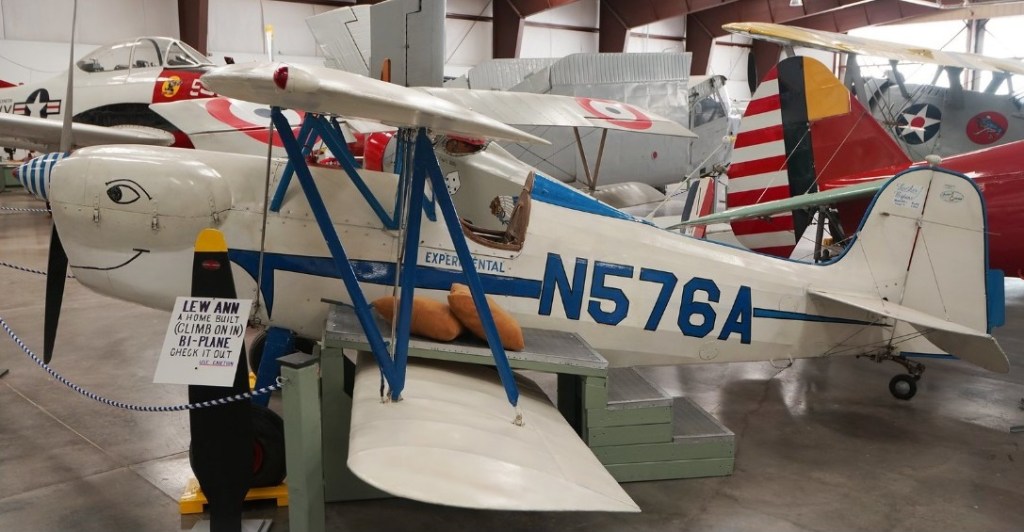
The Lewann DD-1 built in 1964 and registered N576A C/n 1 was in the Planes of Fame Air Museum at Valle Airport, AZ, USA in October 2017.
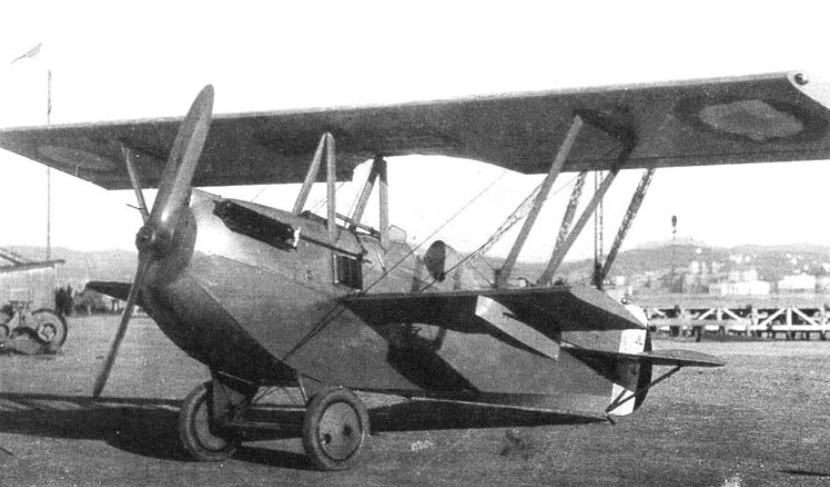
The Levy Biche LB.2 was a single seat French sesquiplane fighter aircraft designed to be used from aircraft carriers. With a watertight fuselage, jettisonable wheeled undercarriage and small under-wing floats, it could survive emergency sea touchdowns; it could also be fitted with seaplane type floats.
The LB.2 was designed as a shipboard fighter. It was a single bay sesquiplane, with outward leaning parallel pairs of interplane struts and wire cross bracing. The wings were strictly rectangular in plan, the lower plane smaller in both span and chord. The upper wing carried full span ailerons. Its flat sided fuselage was watertight and its belly deep; in emergency touchdowns at sea the undercarriage could be jettisoned with the aircraft stabilised with two small rectangular cross section, planing floats mounted on the lower wing underside below the interplane struts.
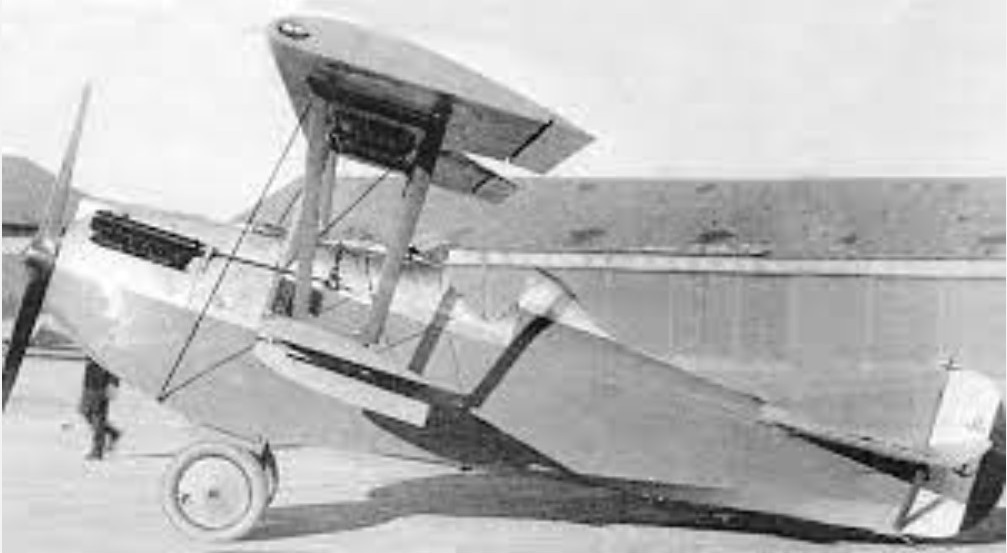
The LB 2 was powered by a 246 kW (330 hp) Hispano-Suiza 8Fe upright water-cooled V-8 engine. The upper wing was high above the fuselage on cabane struts and had a rounded cut-out in the trailing edge over the pilot’s open cockpit to enhance his view. He had a short, faired headrest. The fuselage tapered aft and had distinct narrow keel to enhance its water surface behaviour. The braced tailplane was wide chord and triangular in plan, carrying split elevators; the fin was also broad and triangular, with a deep, curved rudder that reached down to the bottom of the extreme keel, where there was a very small tailskid. The jettisonable main fixed conventional undercarriage structure had two short V-struts, supporting a wire cross braced single axle and mainwheels. Armament consisted of a pair of 7.7 mm (0.303 in) Vickers machine guns.
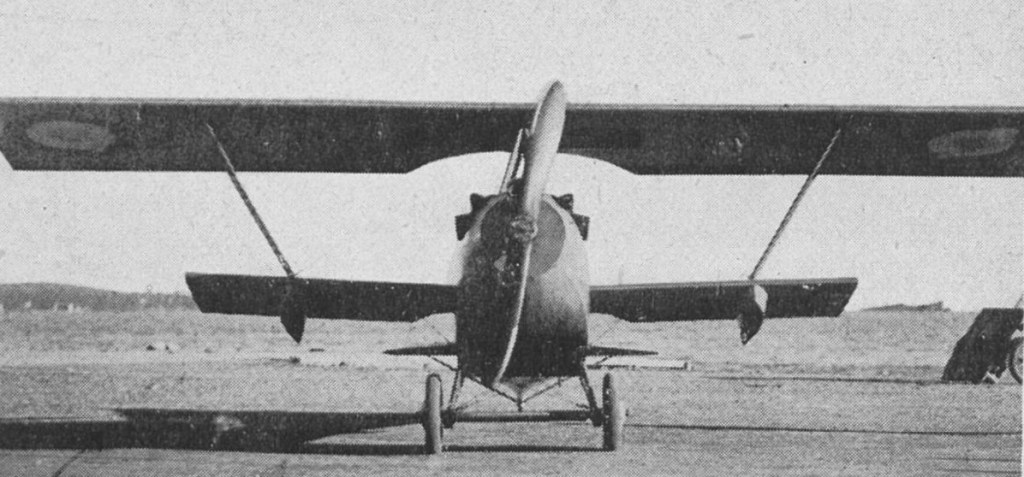
The first flight was in 1927 and by October that year it had also flown with seaplane style floats. Soon after, Constructions Aéronautiques J Levy became bankrupt and production rights were purchased by Etablissements P. Levasseur. The latter built twenty production aircraft during 1928-9, designated LB.2 AMBC.1, which served on the experimental French aircraft carrier Béarn, commissioned in May 1927, as well as from shore bases.
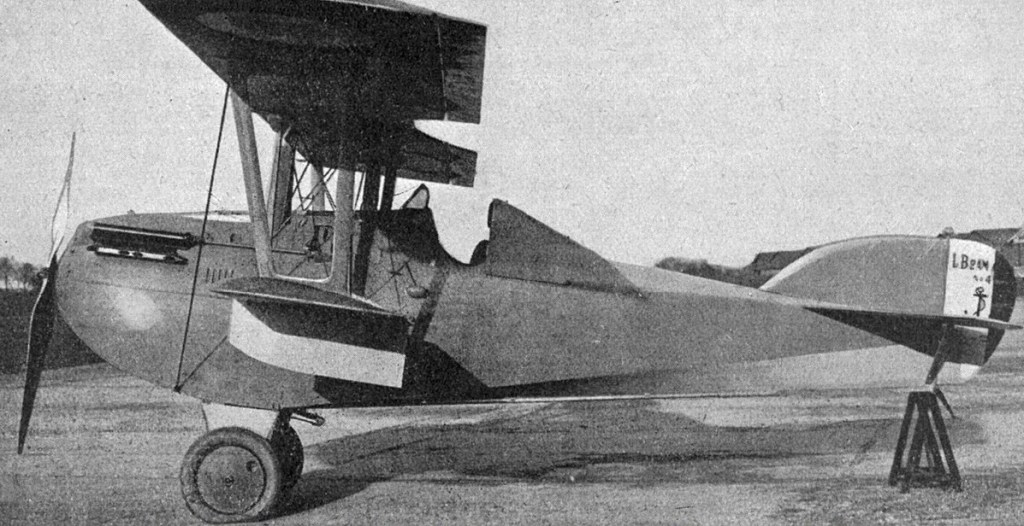
The LB.2 remained in service with French Naval Aviation until 1932, when they were replaced by Wibault 74 fighters.
Powerplant: 1 × Hispano-Suiza 8Fe, 250 kW (330 hp)
Propeller: 2-bladed fixed pitch
Wingspan: 10.40 m (34 ft 1 in)
Wing area: 24.00 m2 (258.3 sq ft)
Length: 7.525 m (24 ft 8 in)
Height: 3.488 m (11 ft 5 in)
Empty weight: 920 kg (2,028 lb)
Gross weight: 1,350 kg (2,976 lb)
Maximum speed: 219 km/h (136 mph, 118 kn)
Stall speed: 88 km/h (55 mph, 48 kn)
Time to 5,000 m (16,000 ft): 25 minutes
Wing loading: 55.4 kg/m2 (11.3 lb/sq ft)
Power/mass: 0.182 kW/kg (0.111 hp/lb)
Crew: One
Armament: 2× 7.7 mm (0.303 in) Vickers machine-guns
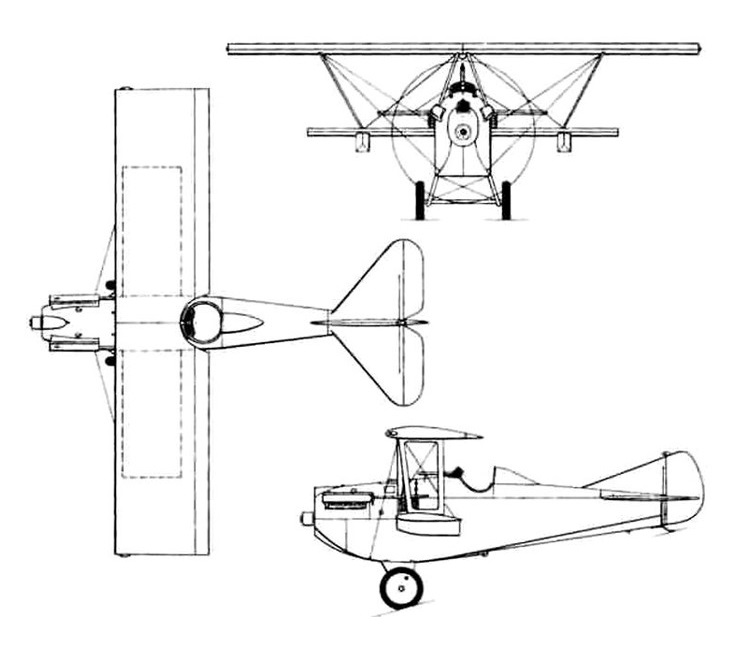
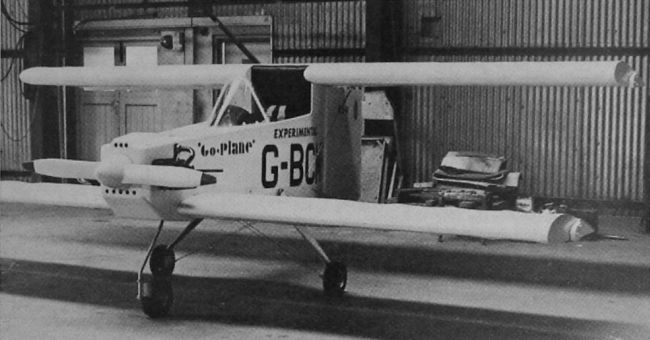
The Levi RL-6 Go-Plane is a single-seat tandem wing design with tricycle undercarriage. Either a double monoplane or a staggered biplane, with its rudder integrated into the fuselage but no tail, in the traditional sense, or tailplanes.
By the end of 1974 Renato Levi of Newport, Isle of Wight was conducting test on the RL-6 Go-Plane G-BCMF c/n EAA3678, at Bembridge. It was a Bembridge Airfield on 16 November 1974 for the purpose of its maiden flight. It was damaged beyond repair in the course of that on 16 November 1974.
The CAA cancelled the registration of G-BCMF on 5 December 1983.
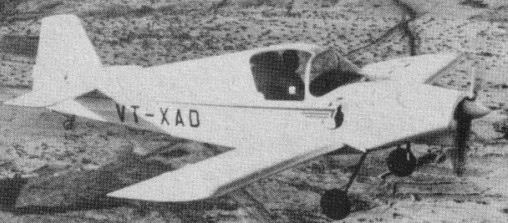
This two-place, low-wing taildragger was first built in India by an Italian engineer who studied in England and France and was available to American homebuilders through Canadian company Aie-Craft Supplies. It is of conventional all-wood construction and covered with fabric. The prototype, VT-XAD, was powered by a Continental 85-hp engine. Some are also built to house a 125-hp Lycoming.
Gross Wt. 1500 lb
Empty Wt. 870 lb
Fuel capacity 28 USG
Wingspan 25’l0”
Length 20’3”
Top speed 130 mph
Cruise 115 mph
Stall 45 mph
Climb rate 800 fpm
Takeoff run 500 ft
Landing roll 700 ft
Range 600 miles
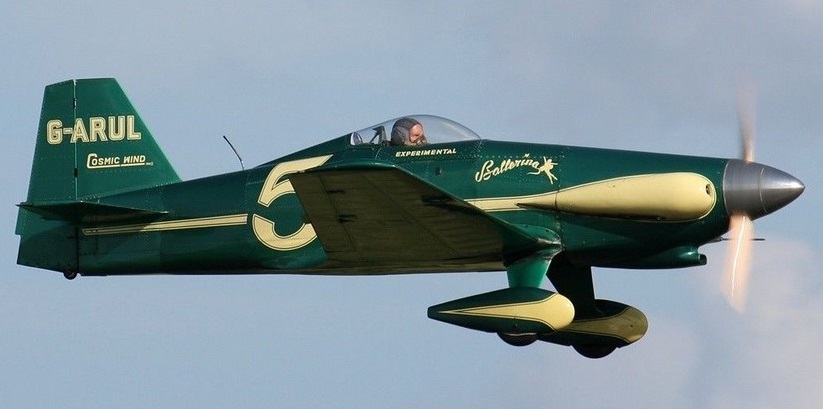
The Le Vier Cosmic Wind is an all-metal Formula One racing aircraft designed by Toni Le Vier and built by a consortium of Lockheed employees at Burbank.
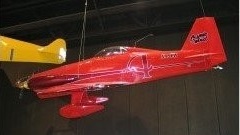
Three were imported to the UK;
c/n 101
‘Little Toni’ first flown as NX67888, later re-registered N20C. Sold to Pacific Air Racers, then to M.Blair.
Sold to R.McCowen in 1971 and moved to the UK as G-AYRJ. Modified and fitted with a Rolls-Royce/Continental O-200-A and first flown as such on 28 January 1971 at Blackbushe.
c/n 103
‘Ballerina’ Registered N22C and sold to Pacific Air Racers, then to M.Blair.
Sold to the Tiger Club in 1961 and moved to the UK as G-ARUL. Sold to P.G.Bannister but badly damaged in a crash at Halfpenny Green on 17 April 1968. Rebuilt from 1969 onwards as PFA.1511. It flew again in 1973 as ‘Ballerina II’.
c/n 1067
A fifth airframe built under Lockheed supervision to meet the USAF ‘Mighty Mouse’ specification for an ultra-small counter-insurgency aircraft. It was not finished.
The hulk was bought by Robin Voice and moved to the UK in 1973 as G-BAER. It was completed as PFA.1571. First flew at Redhill in 1973 with a Continental C90, named ‘Filly’ after Robin’s wife.
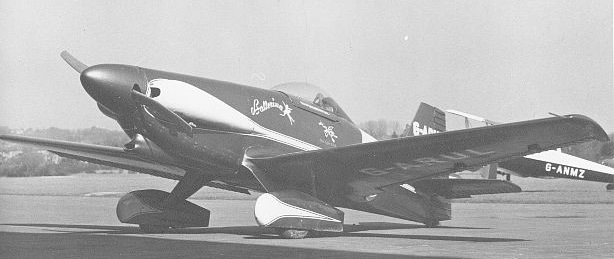
Engine: Continental C85
Wingspan: 18.11 ft
Length: 16.08 ft
Final product of the company was the PL 400, built to an Armee de I’Air requirement, inspired by the German Fieseler Fi 156 Storch, for a STOL observation machine. A high-wing cabin monoplane powered by a Potez 9C radial of 164kW, the PL 400 flew for the first time on 19 December 1939, but German occupation put an end to construction of the PL 401 development with a Renault 6Q-09 engine of similar power.
The PL 200 monoplane was intended as an advanced reconnaissance seaplane, with a shoulder-wing mounted on a short nacelle for the three crew members, at the front of which was the 537kW Hispano-Suiza 9Vbrs radial engine.
Test-flown in February 1935, the PL 200 achieved a maximum speed of 225km/h by comparison with the 208km/h of the production PL 15. It was re-engined with a 552kW Gnome-Rhone 9Kfr engine in October 1935 as the PL 201, but development was abandoned soon afterwards

