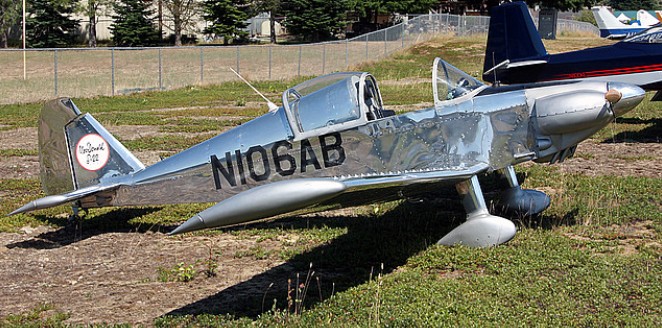
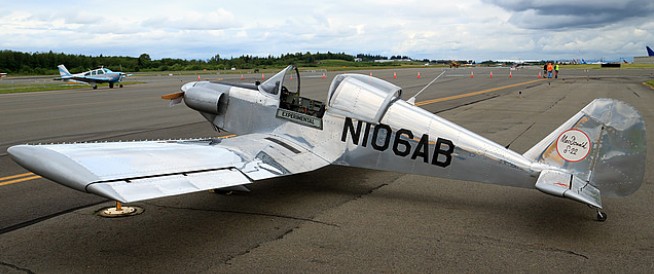
An all metal, low wing, fixed taildragger. The S-21 was designed to be easy to build and fly with good economy. Construction is all metal using pop riveting. Prototype designated S-20, plans built versions the S-21.
Gross Wt. 720 lb
Empty Wt. 456 lb
Wingspan 25’
Length 18’6”
Engine 1500cc Volkswagen.
Vmax 110 mph
Cruise 90 mph
Climb rate 850 fpm
Range 250 miles
The S-20 utilizes all-metal construction but keeps it simple by the extensive use of pop rivets. It features open-cockpit seating for one, low wings and conventional tail-wheel landing gear. The fuselage is of steel-tube truss construction with a light alloy skin. The constant-chord wings are also covered with the same light alloy skin.
First flight was made on March 9, 1972 by N106AB. S-21 was the designation for plan-built aircraft by home-builders.
Engine Volkswagen 1500cc, 53-hp
Wingspan 25 ft 0 in
Length 18 ft 6 in
Gross Wt. 720 lb
Empty Wt. 456 lb
Fuel capacity 10 USG
Top speed 162 mph
Cruise 90 mph.
Stall 38 mph.
Climb rate 850 fpm
Takeoff run 300 ft
Landing roll 300 ft
Range 250 miles
Seats: 1
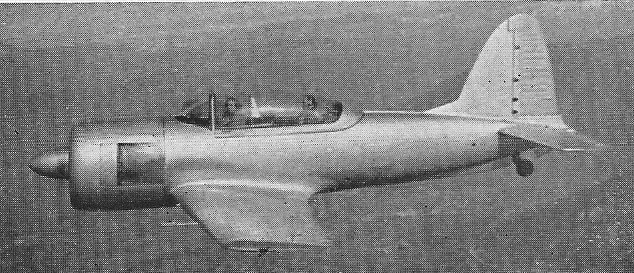
The 1952 Macchi MB.323 was designed to meet an Italian Air Force specification for a two-seat basic trainer. The first prototype was powered by a 610 hp Pratt & Whitney Wasp, and the second had an Alvis Leonides 502/5 Mk.24.
Engine: 610 hp Pratt & Whitney Wasp
Max speed: 242 mph at 5905 ft
Cruise: 199 mph at 9842 ft
ROC: 1436 fpm
Service ceiling: 21,325 ft
Range: 808 mi
Empty weight: 4409 lb
Loaded weight: 5575 lb
Wingspan: 39 ft 4.5 in
Length: 29 ft 11.5 in
Height: 13 ft 1.5 in
Wing area: 217u sq.ft
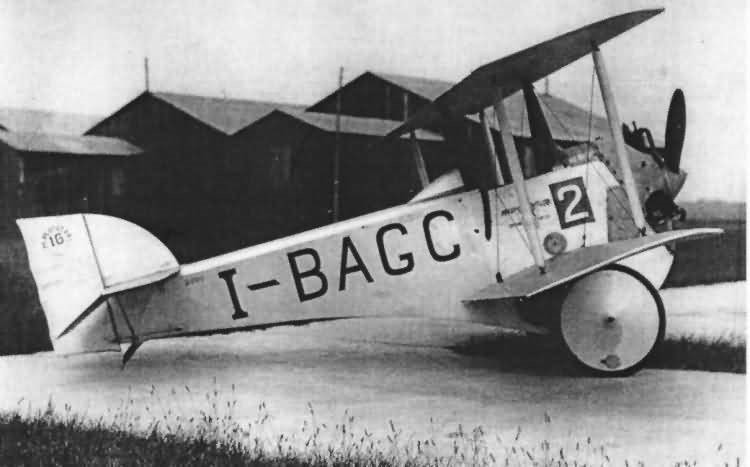
The Macchi M.16 was a light, single-seat aircraft designed by Alessandro Tonini and produced by Macchi in Italy in 1919.
It was a single-bay biplane with unstaggered wings and a largely conventional design except for an unusually deep fuselage that extended in a bulge below the lower wing. The landing gear axle being sprung directly on the bottom longerons with shock cord. The plane could also be fitted with pontoons.
The M.16 was developed in parallel with the Macchi M.20, a two-seat civil trainer aircraft which it resembled and with which it shared many common features.
The M.16 proved a successful sporting type, setting an altitude record of 3,770 m (12,370 ft) in 1920 while competing for the Coppa Mappelli (“Mapelli Cup”), and winning first prize in the competition in 1921.
The United States Navy purchased three float-equipped examples for evaluation as communication floatplanes.
Powerplant: 1 × Anzani, 22 kW (30 hp)
Wingspan: 6.00 m (19 ft 8 in)
Wing area: 11.3 m2 (122 sq ft)
Length: 4.43 m (14 ft 6 in)
Height: 2.12 m (7 ft 0 in)
Empty weight: 160 kg (350 lb)
Gross weight: 260 kg (570 lb)
Maximum speed: 165 km/h (103 mph, 90 kn)
Landing speed: 25 mph
Range: 420 km (260 mi, 230 nmi)
Crew: 1, pilot
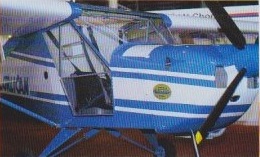
The Orlikan has a welded spaceframe fuselage with Dacron covered wooden wings.
Engine: Walter M-202, 65 hp
Wing span: 10.42 m
Wing area: 13.55 sq.m
MAUW: 450 kg
Empty weight: 250 kg
Max speed: 160 kph
Cruise speed: 135 kph
Minimum speed: 55 kph
Climb rate: 3.5 m/s
Seats: 2
Fuel consumption: 13.25 lt/hr
Price (1998): 50 000 DM
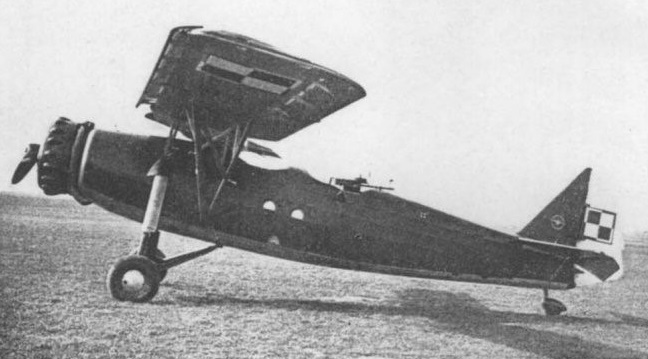
The RWD-14 Czapla was a Polish observation, close reconnaissance and liaison aircraft, designed in the mid-1930s by the RWD team, and produced in the LWS factory from 1938. The aircraft was designed in response to a Polish Air Force requirement of 1933 for a new army cooperation plane, a successor of the Lublin R-XIII. The RWD team of the DWL workshops (Doświadczalne Warsztaty Lotnicze) initially proposed the RWD-12 project, based on the RWD-8 trainer. It was however considered as not as good as the R-XIII, and another aircraft, the RWD-14 was designed by Stanislaw Rogalski and Jerzy Drzewiecki. Designer Tadeusz Chyliński prepared its technical documentation.
The aircraft was a mixed construction monoplane with a braced parasol high-wing. The fuselage was a metal and wooden frame, covered with canvas. Wooden two-spar wings were covered with canvas and plywood and fitted with slats and the stabilizers were also of wooden construction. The wings folded rearwards. The fixed landing gear was of conventional design with a rear tailwheel. The Crew of two sat in tandem open cockpits, with twin controls and individual windshields. The observer had a 7.7 mm Vickers K machine gun, the pilot had a fixed 7.92 mm wz.33 machine gun with interrupter gear. 9 cylinder air-cooled radial engine PZL G-1620B Mors-II with 430 hp (320 kW) nominal power and 470 hp (350 kW) take-off power and a two-blade wooden propeller. Two fuel tanks with total capacity of 315 litres (265 liter in the fuselage, 50 liter in the central wing). The aircraft could be fitted with a radio and camera.
The first prototype was flown in late 1935. It won the contest over the Lublin R-XXI project and the Podlaska Wytwórnia Samolotów factory project, but factory trials showed that its performance was still not satisfactory. Between 1936 and 1937 two modified prototypes were built, designated RWD-14a, but both crashed during trials due to steering mechanism faults (the pilots survived). Finally, in early 1938 the fourth prototype, designated RWD-14b, was built.
It was ordered by the Polish Air Force, receiving the name Czapla (Heron), but due to the long development process, it was regarded as only an interim model, to replace the R-XIII until the advent of the more modern LWS-3 Mewa. In return for refunding the development costs, DWL gave the rights to produce the RWD-14b to the state factory LWS (Lubelska Wytwórnia Samolotów – Lublin Aircraft Works, a successor of the Plage i Laśkiewicz).
The fourth prototype was tested by the Ilmavoimat evaluation team but the only feature that rated highly was the short take-off (140 m) and landing (120 m) distances which enabled it to operate from fields and meadows.
LWS built a series of 65 RWD-14b Czapla’s by February 28, 1939, out of 125 ordered by the Polish Army, 120, and Polish Navy. The Czaplas entered service in the Polish Air Force in the spring of 1939, equipping a number of observation squadrons (eskadra obserwacyjna). Due to its long development, it was not a modern aircraft, only a little better than the Lublin R-XIII. Its advantage was its short take-off (140 m) and landing (120 m), enabling it to operate from fields and meadows. Its modern successor, the LWS-3 Mewa, did not manage to enter operational units due to the war. In the invasion of Poland in 1939, the Polish Air Force had 35 Czaplas in five observation squadrons (out of 12): No.’s 13, 23, 33, 53 and 63. Each squadron had seven aircraft. Squadrons were distributed among the field Armies.
The remaining 30 Czaplas were in reserve (probably only four supplemented combat units during the campaign). Like the R-XIII, the Czapla was no match for any Luftwaffe fighter, bomber, or even reconnaissance aircraft encountered, being much slower, and armed with only two machine guns. In spite of this, they were actively used for close reconnaissance and liaison tasks. Most RWD-14b’s were destroyed during the campaign. About ten were withdrawn to Romania (there are quoted numbers from 10 to 16) and one probably to Hungary. They were taken over by the Romanian Air Force and used for auxiliary duties. No RWD-14b has survived.
Ten Polish Air Force Czaplas escaped from Poland to Sweden as the Polish resistance to the German and Soviet invasions collapsed. On arrival in Sweden after flying across German-held territory and then a wavetop flight across the Baltic, they were quickly refueled and flew on to Finland, eventually landing at Turku. These aircraft were incorporated into the Ilmavoimat.
RWD-14 Czapla
Crew: two (Pilot and Observer)
Engine: 1 x PZL G-1620B Mors-II air-cooled 9-cylinder radial, 470 hp
Maximum speed: 153 mph
Range: 421 miles
Service ceiling: 16,728 ft
Defensive armament: 1 × fixed, forward-firing 7.92 mm wz.33 machine gun / 1 × flexible, rearward-firing 7.7 mm Vickers K machine gun for observer.

One of the first developments of LWF Engineering was a dual reconnaissance aircraft Model G, built in late 1917. During the tests the plane was destroyed and on its base in 1918 a new airplane was built- G-2, which could be used as a heavy fighter or as a scout-bomber. Equipped with a liquid-cooled engine Liberty 12 rated at 435 hp. The aircraft carried seven 7.62-mm machine guns (four of them were installed in front and synchronized for firing through the screw, two – in the rear cabin on a mobile turret-type Scarff and one at the bottom of the fuselage).
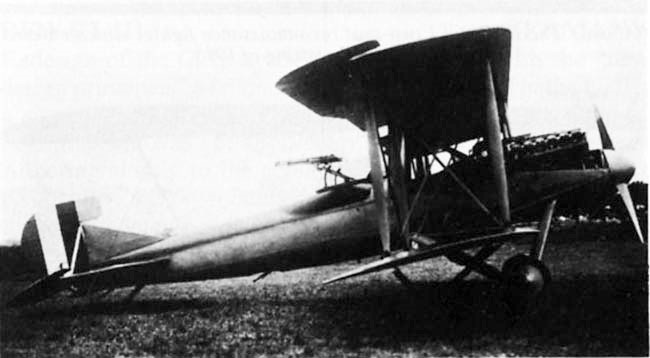
For the first time, the G-2 took off in the spring of 1918. The aircraft successfully passed the tests and the question of its serial production was considered, when on November 18, 1918 the prototype was lost as a result of the accident that occurred during the flight in the fog. This led to a complete halt of the project.
The third copy of the aircraft (G-3) was completed in 1919 as a racing aircraft for the New York-Toronto air race.
G-2
Engine: Liberty 12, 435 hp
Wing span: 12.69 m
Wing area: 47.94 sq.m
Length: 8.88 m
Height: 2.86 m
Empty weight: 1213 kg
Normal take-off weight: 1825 kg
Maximum speed: 222 km / h
Cruising speed: 196 km / h
Endurance: 4 hr
ROC: 328 m / min
Crew: 2
Armament: seven 7.62-mm machine guns

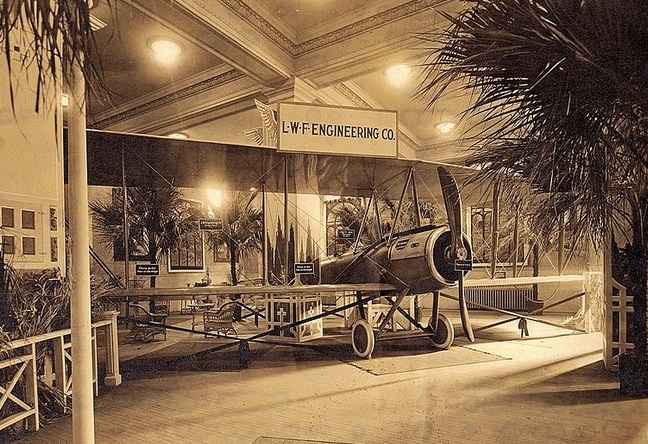
Built series of its own designs, including trainers V-1, -2 and -3 of 1918-1919 for the Army.
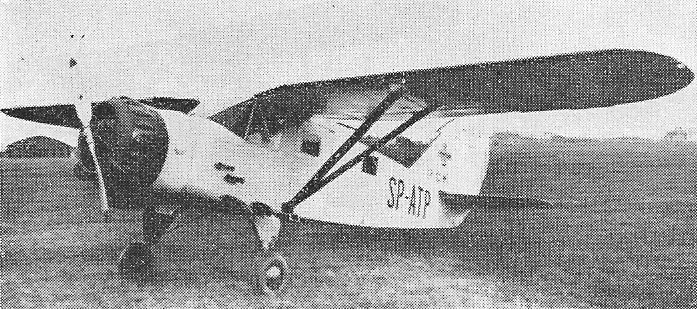
Built in the winter of 1936/37 at the former Plage & Laskiewcz Aircraft Works in Lubin, the LWS-2 was designed as an ambulance in competition with the later successful RWF-13D.
The LWS-2 could carry two plus two stretcher cases.
The LWS-2 never progressed beyond the prototype.
Engine: 220 hp Skoda-Wright Whirlwind
Span: 42 ft 2.5 in
Length: 29 ft 10 in
Height: 9 ft 4 in
AUW: 3700 lb
Load: 1100 lb
Cruise: 115 mph
Range: 320 mi
Max speed: 130 mph

