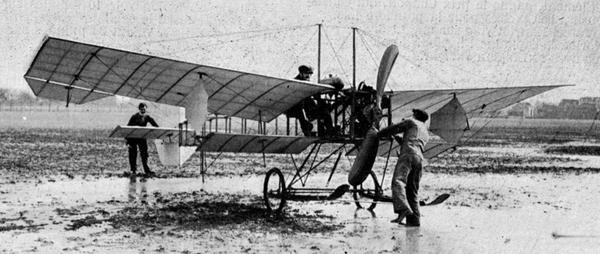
Zodiac monoplane No.2, known as L’Albatros was ordered by the Prince de Nissole and built in 1910 in France.
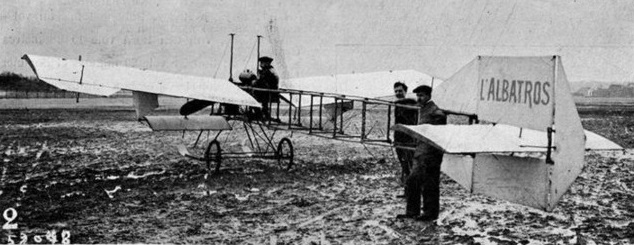
Zodiac monoplane No.2, known as L’Albatros was ordered by the Prince de Nissole and built in 1910 in France.
A two-seat biplane of 1912.

The Zodiac IX was purchased in France in 1910 by Russia and renamed “Kite”. It was sent to the Far East but not used.

Engine: 1 x 59 hp
Volume: 2,140 cu.m
Length: 47 m
Diameter: 9 m
Max.speed: 47 km/h
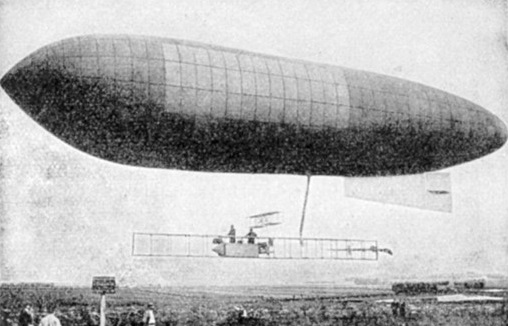
The 1910-built non-rigid Zodiac VIII was purchased in France in 1910 by Russia and renamed Tchajka / Seagull. It was used for training.
Engine: 1 x 59 hp
Length: 47 m
Width: 9 m
Envelope volume: 2140 cu.m
Max speed: 47 kph
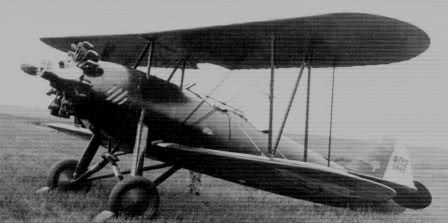
In 1933, the command of the Yugoslav Royal Air Force (YRAF) decided to replace outdated planes with modern school aircraft, for transitional training from basic training to combat.
The designers, R. Fizir and D. Stankov, opted for a biplane concept, although the YRAF preferred a low wing (due to the development of modern combat aircraft). The Zmaj Factory designed a prototype Fizir FP-1, in 1993, but it did not satisfy all the requirements set by the YRAF. As a result, Rudolf Fizir and Dusan Stankov, made adjustments to the Fizir FP-1 and so the plane became the Fizir FP-2. In the end, the concept accepted.
A prototype Fizir FP-2 (Fizir Prelazni) with a Gnome-Rhone K-7 engine of 308 kW power was completed and test flown at the end of 1933. More test flights followed, and by 1934 the plane showed good results.
The Zmaj modified the FP-2 during 1934 using a Walter Pollux 2 engine of 235 kW power, but the results were not satisfactory.
Engine: 1 × Gnome-Rhone K7, 313 kW (420 hp)
Propeller: 2-blade
Wingspan: 10.80 m (35 ft 5 in)
Wing area: 28.80 sq.m (310.0 sq ft)
Length: 7.90 m (25 ft 11 in)
Height: 2.90 m (9 ft 6 in)
Empty weight: 740 kg (1,631 lb)
Gross weight: 1,450 kg (3,197 lb)
Maximum speed: 200 km/h (120 mph; 110 kn) 238 km/h at sea level
Range: 580 km (360 mi; 313 nmi)
Service ceiling: 6,800 m (22,310 ft)
Crew: 2
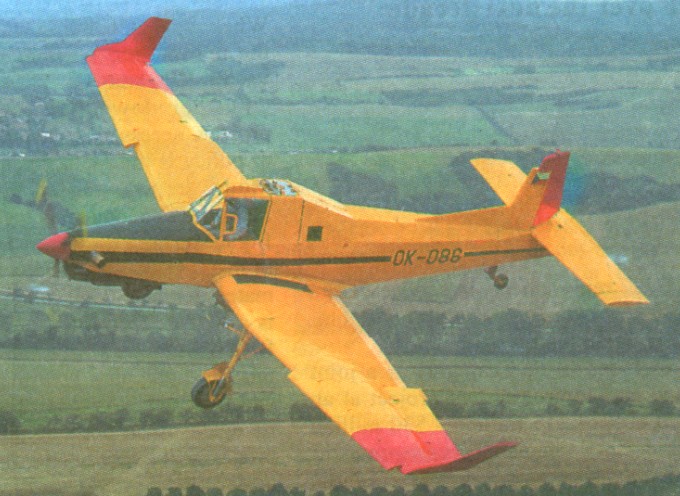
The Zlin Z-137T Agro Turbos are essentially an updated turbine version of the piston engine Z-37 Cmelak, first flown in 1981. Modifications included strengthening the centre section of the wing, alterations to the tail surfaces and the installation of a rudder trim.
The first Z-137T was #029 and registered OK-UJM in July 1989.

The aircraft were built in batches. The first batch totalled six and from 1960 they were built in batches of 20 or 30, with production reaching its height in 1972 when some 65 aircraft were produced. Along with the agricultural aircraft, some two-seat trainers were built, with a second cockpit replacing the hopper. Production ceased in 1977 but in 1981 the production line was reopened at Kunovice, and a further 40 aircraft were built. Production ceased in 1995 with #053, which was sold to Hungary as HA-MFR. The constructor numbers are in batches — 00-01 through 00-06, then 01-01 to 01-20, 02-xx and so on depending on the number in the batch.

A modernized Z-137 Agro Turbo light aircraft equipped with air-to-air missiles was spotted in the Ukrainian sky in August 2025. The Czechoslovakian-made Z-137 civilian turboprop aircraft was converted to perform air defense missions. Its tail section was marked with a typical army aviation insignia of two white transverse stripes.

Two AKU-73 pylons were mounted under the wings of the aircraft, which made it possible to use R-73 short-range air-to-air missiles. The use of R-73 missiles from non-designated aircraft is possible due to its complete autonomy as it does not require complex integration with the radar or central radar of the aircraft. It uses an infrared guidance system to track the target. The missile head itself ‘captures’ a heat-contrasting object. Given the type of weaponry and the aircraft’s ability to reach speeds of 200-250 km/h, the tasks of such a combat unit could include intercepting Russian attack drones and tactical reconnaissance UAVs.

The use of turboprop aircraft for such tasks can significantly increase the capabilities of the Air Force, as well as unload full-fledged fighters for higher priority tasks.
137T Agro Turbo
Engine: Motorlet M601Z turboprop (520 hp)
Wing span: 44 ft 8.5 in
Length: 34 ft 4 in
Height: 11 ft 6 in
Empty wt: 2756 lb
MTOW: 5566 lb

First flown in 1975 in the original Z 50 L version, the Zlin Z 50 is an all metal low wing monoplane with a mid fin tailplane braced by two struts that attach at the bottom of a tapering vertical fin. It has a fixed spring gear and a Lycoming AEIO-540 D1B5, putting out 260 hp to a three blade Hoffmann wood fiberglass propeller driven through a constant speed hub. The original prototype that appeared in the Zlin literature apparently had six short stacks that exited from the sides of the cowl, but the noise was unbelievable; they had to go to a pair of collectors that exit at the rear of the lower cowl lip. It has an empty weight of 1,254 pounds in aerobatic configuration and an aerobatic performing weight of 1,584 pounds. All up maximum gross weight is 1,760 pounds, and the Zlin is stressed to plus nine or minus six Gs. The wing is fabricated entirely with round head rivets apparently for strength. The Zlin 50 has a truly impressive roll rate, the product of very generous aileron area for its size and weight; its wing span in aerobatic trim is about 28 feet, and it is about 21 and a half feet long. The Z 50 has a symmetrical wing section without dihedral, a single seat cabin under a one piece plexiglas canopy and full inverted systems are standard. The wing area is 120 square feet; with a power loading of 5.5 pounds per horsepower and a maximum rate of climb of around 3,000 fpm, the airplane will possess the vertical capability the elder Zlin lacked. The structure is principally aluminum, with some fabric covered portions and a fiberglass cowling.
Moravan Aeroplanes built the Z-50 as a certified aircraft in the standard category in the Czech Republic.
Eighty-one were built in the various sub-types from 1976 until the ’90s.
The Zlin 50L has a 260 hp Lycoming modified by the Czechs to run all ways up and a three blade German composite propeller.
The Czech team flew five 50 Ls at the 1976 world contest in Russia, and despite the newness of the type, came second in the team prize and third in the men’s individual championships. The undercarriage is of titanium spring.
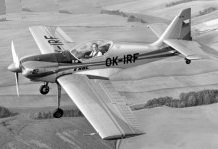
There appeared to be no ad¬verse aileron yaw, which was remark¬able in view of the almost full span control surfaces. They had an odd tab arrangement: the left aileron had a conventional geared tab; the right one worked through a cam, so that at small deflections it was an anti balance tab, but at larger ones it reverted to acting as a conventional geared tab. The symmetrical wing was thinner at the tip, giving it a washout effect both erect and inverted.
It is a single-seat, low-wing monoplane with an enclosed cockpit and fixed undercarriage. Built predominantly of anodised aluminium, with fabric covered tail and fibreglass engine cowls, the Z-50LS is powered by the 300-hp Lycoming AEIO-L1B5D, driving a three-blade composite Hoffmann propeller.
Later came the Z 50 LS aerobatic version.

Z-50LS
Engine: Lycoming AEIO-L1B5D, 300 hp
Zlin 50
Engine: Lycoming AIO-540, 260hp
Wing span: 27 ft 11 in
Length: 21 ft 2 in
Top speed: 180mph
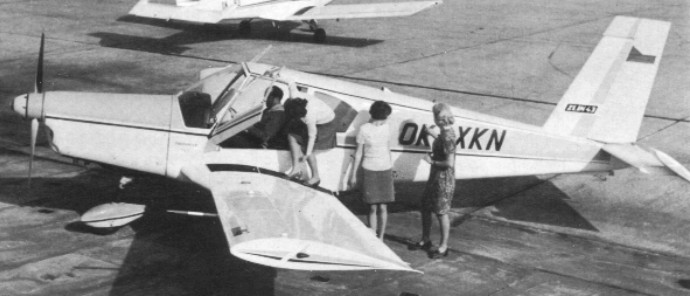
After successful production of the Z-26 aircraft family, the Czechoslovak aircraft manufacturer Moravan, began design of a new series of training aircraft, known as the Z-40 family. Unlike the previous tandem-seat aircraft, the Z-40 family featured a side-by-side cockpit. It was available in two basic variants, a two-seat trainer, the Zlín Z-42, and a four-seat aircraft, the Zlin Z-43 capable of being used both as a trainer and a tourer.

The resulting design is a single-engined low-wing monoplane of all-metal construction and a fixed nosewheel undercarriage. The Z 43 shares 80% of its structure with the Z 42, but is fitted with a revised fuselage accommodating a four-seater cabin and a more powerful engine. The Z-43’s wings are of greater span and do not have the slight forward sweep of the Z- 42.
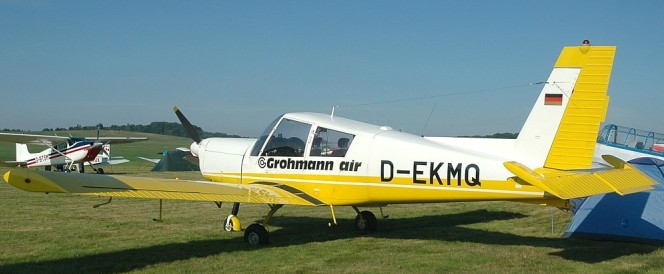
The Z-43 first flew on 10 December 1968, with production starting in 1972. It proved less popular than its two-seat contemporary, and production ended in 1977 after 80 aircraft were built.
The Z-143 is a version introduced in 1992, powered by a six-cylinder Lycoming O-540 engine, in parallel to the Z-42 being re-engined with a Lycoming to become the Z-242. The Z143 L four-seat lightplane with Textron Lycoming engine first flew in April 1992.
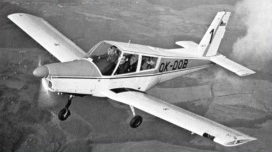
Pictures released by the Tamil Tigers in Sri Lanka indicate that they operated Czech-built Zlin Z-143 single-engine, four-seater light aircraft modified to carry four bombs mounted on the undercarriage. On 9 September 2008, the Sri Lanka Air Force reportedly brought down an Air Tigers Z-143 over Mullaittivu.
The Air Tigers carried out a Suicide air raid on Colombo on 20 February 2009 using two of these aircraft. Under heavy anti-aircraft fire one of these aircraft crashed into Sri Lanka Inland Revenue Department building in Colombo and the other craft was shot down near Sri Lanka Air Force Base at Katunayake.
Other operators include; Hungarian Police, Hungarian Air Force, Algerian Air Force – producing locally under Safir-43 name, Cuban Air Force, East German Air Force, and Macedonian Air Force.
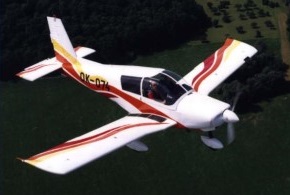
Algeria’s Aeronautical Manufacturing Enterprise started manufacturing the Safir 43 in 1993, although they initiated the project in 1987. They are built under licence from the Czech Republic, but are manufactured completely in Algeria.
The aircraft were designed by the Zlin company and are marketed by the Aeronautical Manufacturing Enterprise throughout the whole of Africa.
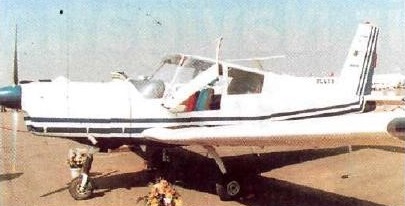
The Safir is used in Algeria for training, recreational flying, coastal and pipeline surveillance and agriculture. Around 50 examples of the four seater had been built since it entered service in 1994.
AME is also building the two-seat Firnas 142 aerobatic trainer, based on the Zlin 143, complete with aerobatic modifications. The Firnas 142 is a two-seater and the Safir 43 a four-seater. AMC has built some 60 of the aircraft, 20 for use by the Algerian Air Force, government departments and parastatal corporations in a variety of roles.
These include basic training, aerobatic training, aerial surveying of powerlines and pipelines, as well as normal general aviation and utility duties, including banner and glider towing.
Both aircraft have fixed tricycle landing gear.
Variants:
Zlín Z 43
Base model
Engine: 1 × Avia M 337 A, 160 kW (210 hp)
Wingspan: 9.76 m (32 ft 0 in)
Wing area: 14.50 sq.m (156.1 sq ft)
Length: 7.75 m (25 ft 5 in)
Height: 2.91 m (9 ft 7 in)
Empty weight: 730 kg (1,609 lb)
Max takeoff weight normal: 1,350 kg (2,976 lb)
Max takeoff weight utility: 1,000 kg (2,204 lb)
Fuel capacity normal: 130 L (34 US gal; 29 imp gal)
Fuel capacity opt/ wingtips: 110 L (29 US gal; 24 imp gal)
Maximum speed: 146 km/h (91 mph, 79 kn) at sea level
Cruise speed: 210 km/h (130 mph, 113 kn)
Stall speed: 103 km/h (64 mph, 56 kn) (flaps down)
Never exceed speed: 273 km/h (170 mph, 147 kn)
Range standard: 610 km (380 mi, 330 nmi)
Range opt/fuel: 1,150 km (710 mi; 620 nmi)
Service ceiling: 3,800 m (12,465 ft)
Rate of climb: 3.5 m/s / 210 m/min (690 ft/min)
Takeoff distance to 15 m (50 ft): 700 m (2,300 ft)
Landing distance to 15 m (50 ft): 590 m (1,940 ft)
Cabin length: 8 ft 2.5 in / 2.50 m
Cabin width: 3 ft 8 in / 1.12 m
Cabin height: 3 ft 11.25 in / 1.20 m
Cabin baggage: 7.1 cu.ft / 0.2 cu.m
Rear baggage: 8,8 cu.ft / 0.25 cu.m
Crew: 1
Capacity: 3 passengers
Zlín Z 43M
Experimental model.
Only one was built
Zlín Z 143
Improved model
Aeronautical Manufacturing Enterprise Safir 43
Engine: LOM M337AK, 157kW (210hp)
Empty weight: 761kg / 1,676lb
Take-off weight: 1,350kg
Maximum speed: 166kt / 307km/h
Cruising speed: 212 km/h
Range: 1,060km / 570nm
Endurance: 6h
Seats: 4
Aeronautical Manufacturing Enterprise Firnas 142
Engine: LOM M337AK, 154 kW / 210 hp max, 103 kW cruise
Propeller: two-blade
Length: 7.33 m
Wingspan: 9.16 m
Height: 2.75 m
Empty weight: 745 kg
MTOW: 1090 kg
Top speed: 333 km/h
Cruising speed: 215 km/h
Endurance: 5+ hr
Maximum range: 1050 km
Maximum ceiling: 5000 m
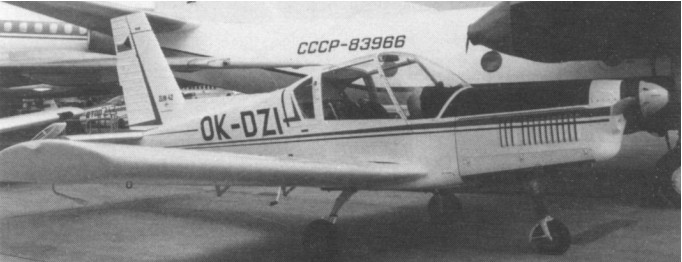
A two-seat trainer and touring aerobatic aircraft, the Zlin 42 (first flown in 1967) was developed in the late sixties and followed by the Z-142 with a slightly modified cockpit canopy and a more powerful engine. The Z 142 two-seat basic and advanced civil/military trainer was first flown in December 1978.

The Z 242 is a variant of the Z142 with a U.S. Textron Lycoming engine in place of the L0M Prague type.
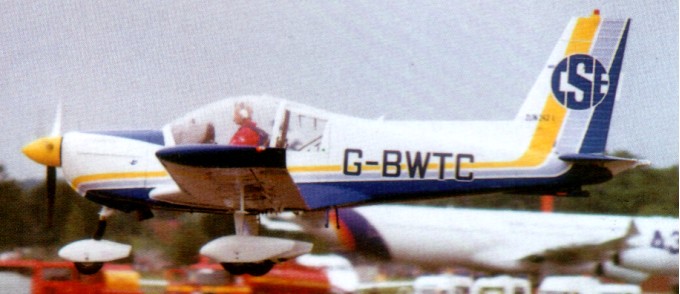

Z-42
Engine: Avia M 137 A, 180 hp
Wing span: 30 ft (9.1m)
Seats: 2
Z-42 M
Seats: 2
Z-142
Z-242L
Engine: Lycoming
Seats: 2
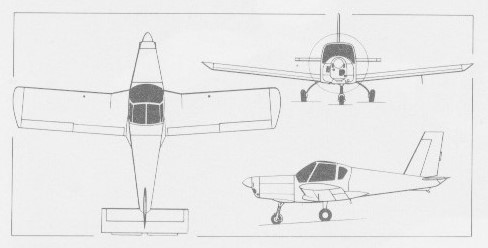

The XZ-37 was first flown as OK-60 on 29 June 1963. Powered by a 310 hp Ivchenko Al-14VF, the aircraft went into production as a joint venture between Moravan and SPP at Kunovice in 1966. The Zlin Z-37 Cmelak was fitted with a 315 hp Walter M-462RF radial, a licence-built version of the Ivchenko AI-14.

In 1967, the first Z-37s were exported to East Germany and Yugoslavia. The Z-37A was an improved version from 1971 with stronger and more corrosion-resistant airframe and other changes. Both featured an auxiliary seat behind the hopper.
As in the West, the swing to turbines was noticed by Moravan and a new aircraft, the XZ-37T, was built at Otrokovice and made its maiden flight on 6 September 1981. It was powered by a 691-shp Walter M-60lB. Two more prototypes were completed in 1983, these powered by a 483-shp M-601Z turbine. Certification under BCAR (British Civil Air Regulations) was received in 1984 and production was started in 1985 as the Z-37T Agro Turbo. Two Z-37T-2 two-seat trainers were completed in 1987. An upgrade of the Z-37 with increased engine power followed and, although the aircraft was designated the Z-137T, the same type certificate is used. A total of 713 piston engined aircraft were built with the last being 25-40.

Z-37
Engine: M 462 RF, 315 hp
Span: 40’ 01” / 12.22 m
Length: 28’ 0.5” / 8.55 m
Height: 9’ 10”
Wing area, 256 sq.ft
Empty weight 2,295 lb / 1043 kg
MTOW normal: 3,855 lb / 1750 kg
Cruise 4920 ft / 1500 m: 99 kt / 114 mph / 183 kph
ROC SL: 925 fpm / 282 m/min
Service ceiling: 13,125 ft / 4000 m
Range w/1 hr +10% res: 345 nm / 398 mi / 640 km
Seats: 1 crew + 1 pax
Z-37 Ag
Engine: M 462 RF, 315 hp
Span: 40’ 01” / 12.22 m
Length: 28’ 0.5” / 8.55 m
Height: 9’ 10”
Wing area, 256 sq.ft
Empty weight 2,295 lb / 1043 kg
MTOW: 4089 lb / 1850 kg
Cruise 4920 ft / 1500 m: 92 kt / 106 mph / 170 kph
ROC SL: 728 fpm / 222 m/min
Hopper capacity: 143 Imp.Gal / 650 lt / 1323 lb / 600 kg
Hopper / cargo volume: 63.5 cu.ft / 1.8 cu.m
Let Z 37 A Cmelak
Engine : Avia M 462 RF, 306 hp
Length : 28.215 ft / 8.6 m
Height : 9.514 ft / 2.9 m
Wingspan : 40.026 ft / 12.2 m
Wing area : 256.183 sqft / 23.800 sq.m
Max take off weight : 4079.3 lb / 1850.0 kg
Max. speed : 108 kts / 200 km/h
Cruising speed : 100 kts / 185 km/h
Initial climb rate : 787.40 ft/min / 4.00 m/s
Service ceiling : 13287 ft / 4050 m
Wing load : 15.99 lb/sq.ft / 78.00 kg/sq.m
Range : 346 nm / 640 km
Crew : 1-2
Z-37T
Engine : Walter M 601 Z, 360-483 shp
Length: 34.449 ft / 10.5 m
Height: 11.483 ft / 3.5 m
Wingspan : 44.619 ft / 13.6 m
Wing area : 287.399 sqft / 26.7 qm
Max take off weight : 5567.6 lb / 2525.0 kg
Weight empty : 2756.3 lb / 1250.0 kg
Max. weight carried : 2811.4 lbs / 1275.0 kg
Max. speed : 118 kts / 218 km/h
Landing speed : 42 kts / 77 km/h
Cruising speed : 103 kts / 190 km/h
Initial climb rate : 826.77 ft/min / 4.20 m/s
Wing load : 19.48 lb/sq.ft / 95.00 kg/sq.m
Range : 189 nm / 350 km
Crew : 1
Z-37T-2
Seats: 2

 All Aero