A four seat cabin monoplane with Allied Monsoon (license-built Regnier) engine
1 engine
Merckle SM-67
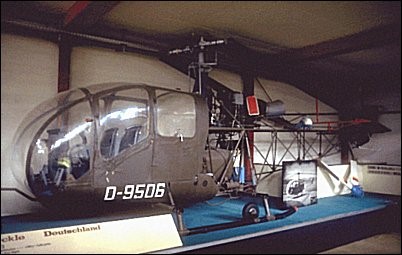
First turbine-powered helicopter built and flown in Germany, the five-seat Merckle SM 67 development began as a private venture in 1956, but the third prototype, which flew for the first time on April 12,1961, was bought by the Federal Government and spent much of last year undergoing an official flight test and evaluation programme.
More refined than its predecessors, it has a fully enclosed cabin and is powered by a 406shp Turbomeca Artouste IIC shaft turbine, driving a three-blade main rotor and two-blade tail rotor.
SM-67
Engine: 406shp Turbomeca Artouste IIC
Rotor diameter: 10.49m
Overall length: 12.75m
Height: 2.8m
Gross weight: 1700kg
Empty weight: 1037kg
Max speed: 220km/h
Cruising speed: 190km/h
Hovering ceiling OGE: 3500m
Range with full payload: 360km
Payload: 300kg
Merćep 1912 / Merćep-Rusjan Military-Monoplane / Rusjan-Novak No.2
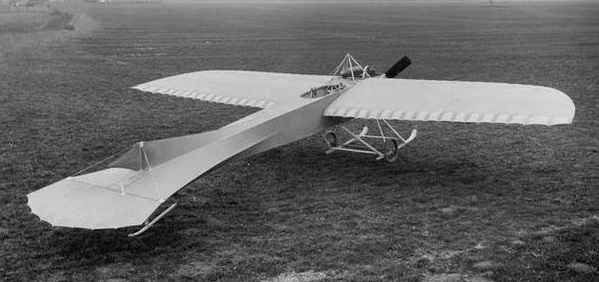
The Merćep 1912 aka Merćep-Rusjan Military-Monoplane of 1912 or Rusjan-Novak No.2, was the second design after the crash of the Slovenian aviation pioneer Eduardo Rusjan. Earlier, Eduardo Rusjan had moved with his brother to Zagreb, Croatia, where Guiseppe Rusjan and Dragutin Karlo Novak then continued to build aircraft for the “Agramer Aëroplanfabrik M. Merćep”, set up by the businessman Mihajlo Merćep in Zagreb.
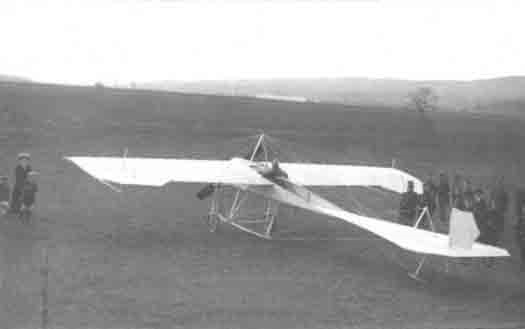
Engine: Gnome, 50 h.p.
Span: 32½ ft / 10 m
Wing area: 204 sq. ft / 19 m²
Length: 23 ft / 7 m
Weight: 617 lb / 280 kg
Useful load: 661 lb / 300 kg
Number built: 1
Mellander Monoplane 1911
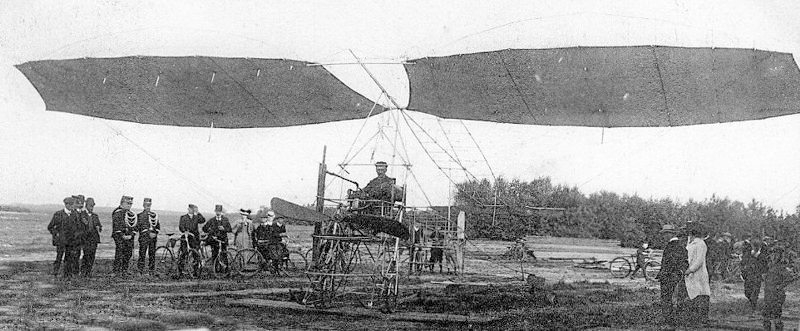
This machine was built at the Sint-Job-in-‘t-Goor airfield, Belgium, in the hangars of baron Pierre de Caters, by the Swedish inventor Janne Mellander, who lived in Antwerp at the time. In 1911 he was granted French patent No. 422954, which disclosed some details of his rather fragile-looking machine, which was equipped with an automatic stabilization device and had the wings mounted very high on a secondary fuselage.
Melfa VCA-1
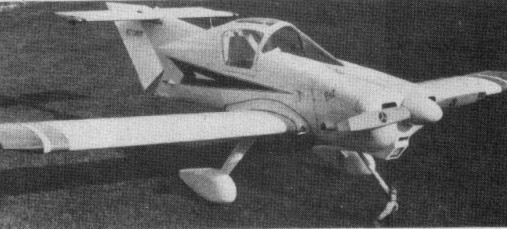
The VCA-1 is a tiny single-seat, low-wing monoplane of all-metal construction. The wing section is NASA GA(W)-1 with no sweepback. It has a constant chord with plain ailerons and electrically operated flaps. The fuselage uses 2024-T3 aluminum alloy. Landing gear are nonretractable tricycle type, and the Continental 0-200 fiat-four engine drives a two-blade Sensenich fixed-pitch propeller. The cockpit is enclosed and sweeps back to a combination fuselage/T-tail empennage.
Gross Wt. 1100 lb
Empty Wt. 710 lb
Fuel capacity 24.5 USG
Wingspan 20’
Length 18’
Engine 100-hp Continental
Top speed 150 mph
Cruise 130 mph
Stall 57 mph
Climb rate 1100 fpm
Range 200 miles
Melbourne Aircraft Corp MA-2 Mamba
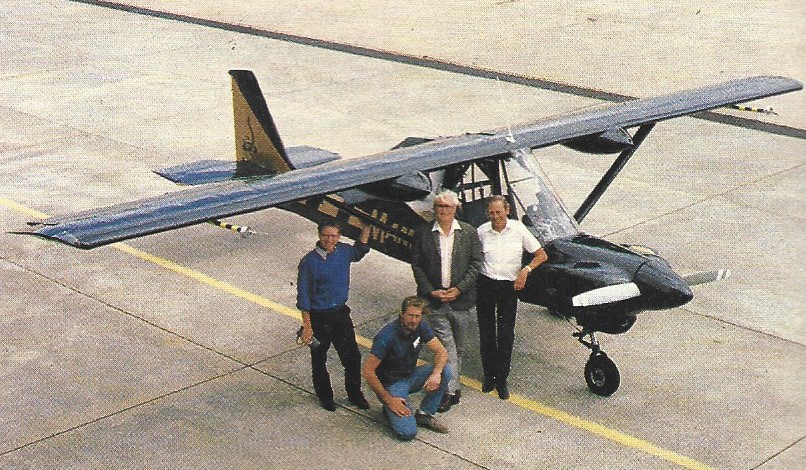
The MAC Mamba, Mamba Range is an Australian two-seat light aircraft designed and built by the Melbourne Aircraft Corporation.
The Mamba is a strut-braced, high-wing monoplane designed over two years and first flown on 25 January 1989. It has fixed tricycle landing gear and is powered by a 116 hp (87 kW) Lycoming O-235 flat-four piston engine. It has an enclosed glazed cabin with side-by-side configuration seating for two. The fuselage is constructed of welded steel tubing with stressed aluminum skin. It was intended to introduce four-seat and military versions of the Mamba.
The military version was built under contract by Australian Aircraft Industries as the AA-2S Mamba powered by an IO-360.
Variants
AA-2
Lycoming O-235-powered prototype built by Melbourne Aircraft Corporation
Powerplant: 1 × Lycoming O-235-N2C, 86 kW (116 hp)
Wingspan: 8.68 m (28 ft 5.75 in)
Wing area: 10.13 m2 (109.04 sq ft)
Length: 7.00 m (22 ft 11.5 in)
Height: 2.38 m (7 ft 9.75 in)
Empty weight: 390 kg (860 lb)
Gross weight: 680 kg (1,499 lb)
Maximum speed: 250 km/h (155 mph, 135 kn)
Endurance: 5 hours 42 minutes
Rate of climb: 7.6 m/s (1,500 ft/min)
Crew: one
Capacity: one
AA-2M
Lycoming IO-360-powered military variant built by Australian Aircraft Industries
AA-2S
Lycoming IO-360-powered civilian under test by Mamba Aircraft Company
AA-4S
Lycoming O-320 four-place under development by Mamba Aircraft Company
Meindl M1
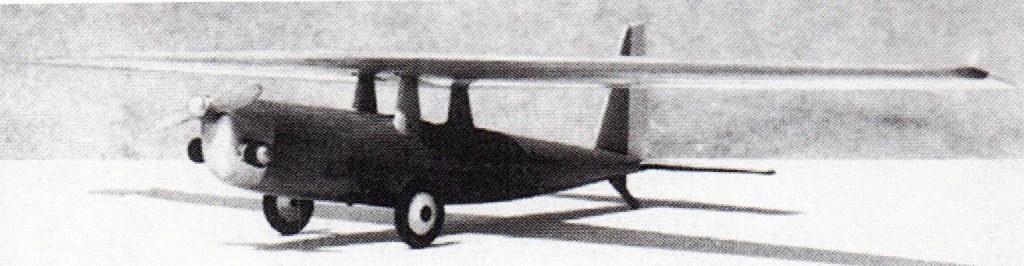
The Meindl M1 was the first construction of Erich Meindl.
It crashed on its first flight.
Meichelböck 1913 Eindecker
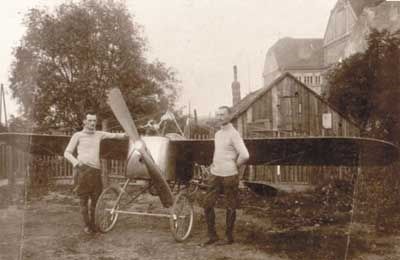
Built by Franz Meichelböck and a friend in Ober Sankt Veit, a district of Vienna, in 1913.
Meger Heli-Star
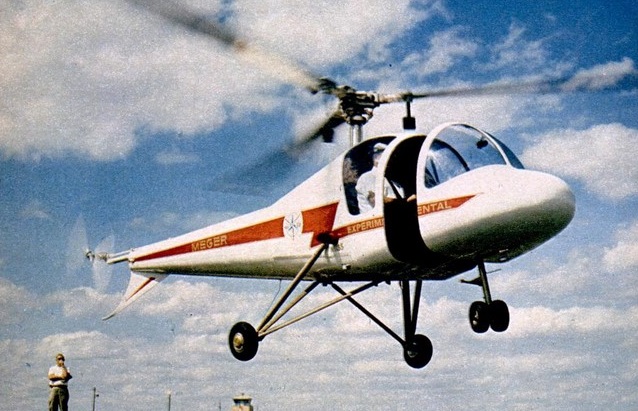
The Heli-star is a two place, homebuilt three rotor helicopter designed by Mike Meger, flight director of Enstrom.
It was equipped with tricycle landing gear, using modified Enstrom F-28 helicopter rotor blades, gearbox and tail boom. Developed in 1969, it was first flown on 25 March 1971.
The helicopter can be flown from either seat with dual controls. The fuselage splits open at the windshield line, sliding forward for access. The helicopter was demonstrated with the front section slid open in flight.
Only the one was built.
Engine: 1 × Lycoming HIO-360-C1A, 205 hp (153 kW)
Main rotor diameter: 3× 29 ft 6 in (8.99 m)
Length: 29 ft (8.8 m)
Height: 8 ft 2 in (2.49 m)
Empty weight: 1,450 lb (658 kg)
Max takeoff weight: 2,100 lb (953 kg)
Maximum speed: 100 kn (115 mph; 185 km/h)
Cruise speed: 78 kn (90 mph; 144 km/h)
Service ceiling: 13,000 ft (4,000 m)
Rate of climb: 1,000 ft/min (5.1 m/s)
Disk loading: 2.1 lb/sq ft (10 kg/m2)
Crew: 1
Capacity: 1 passenger
Medway Budget
The Medway Budget trike uses a Rotax 503 and Raven wing.

