110 hp Alfa 2 and 220 hp Alfa 4 engines powered two-seat
1 engine
Meteor FL.55 / Super Meteor
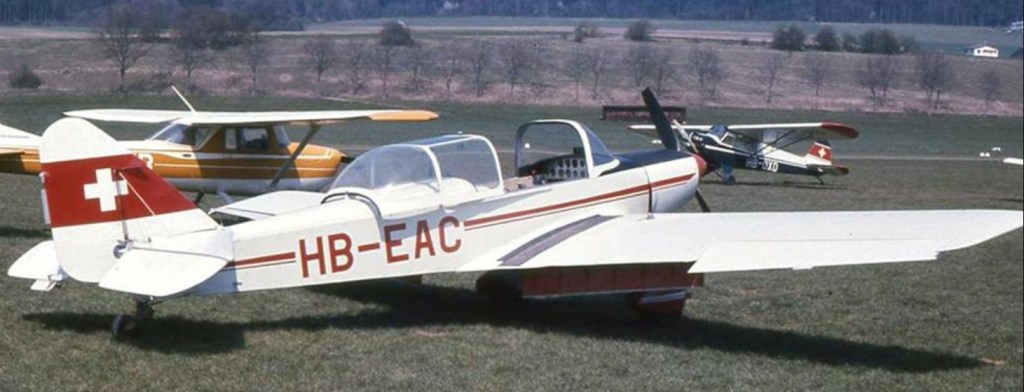
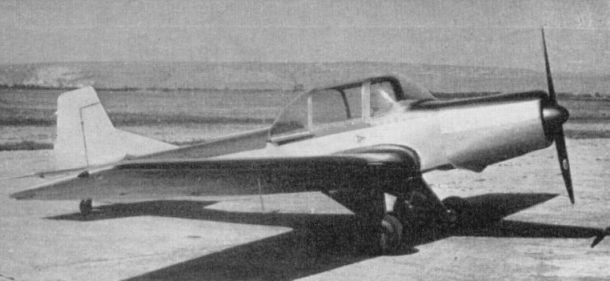
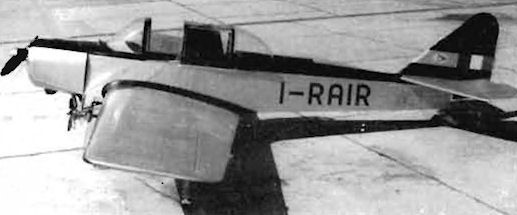
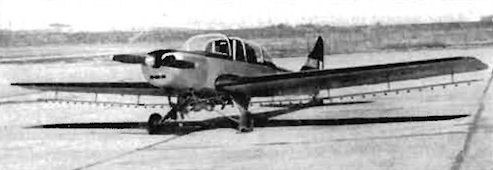
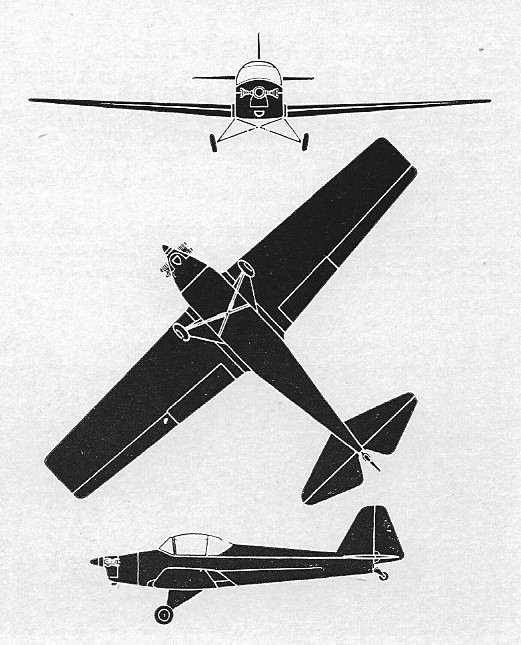
In 1953 Meteor took over the aeronautical designs and equipment of Francis Lombardi & Co. (formerly Azionari Vercellese Industrie Aeronautiche-AVIA) of Vercelli, whose products included the FL.3 of which 566 were built between 1939 and 1948. Meteor redesigned the FL.3 with tubular steel construction, a cut-down rear fuselage and bubble canopy. A total of 37 Meteors of various kinds was built during the period up to 1959 and several of these aircraft were sold as crop sprayers and with ski or float landing gears. The different Meteor models were:
FL.53, two-seat trainer and tourer, powered by a 65 hp Continental A65 engine (8 built).
FL.53BM, basic FL.53 fitted with 90 hp Continental C90-12F engine (4 built).
FL.54, three-seat FL.53 with 85 hp or 90 hp Continental (10 built).
FL.55, four-seat FL.54 with strengthened airframe and 135 hp Lycoming O-290-3 engine (4 built).
FL.55BM, basic FL.55 with modified fin and rudder and 150 hp Lycoming O-320-A1A engine (10 built).
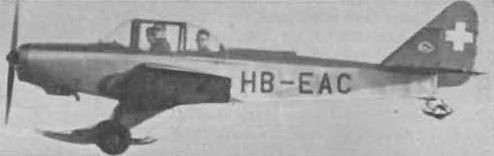
FL.55CM, basic FL.55 with 180 hp Lycoming O-360-A1A engine (1 built).
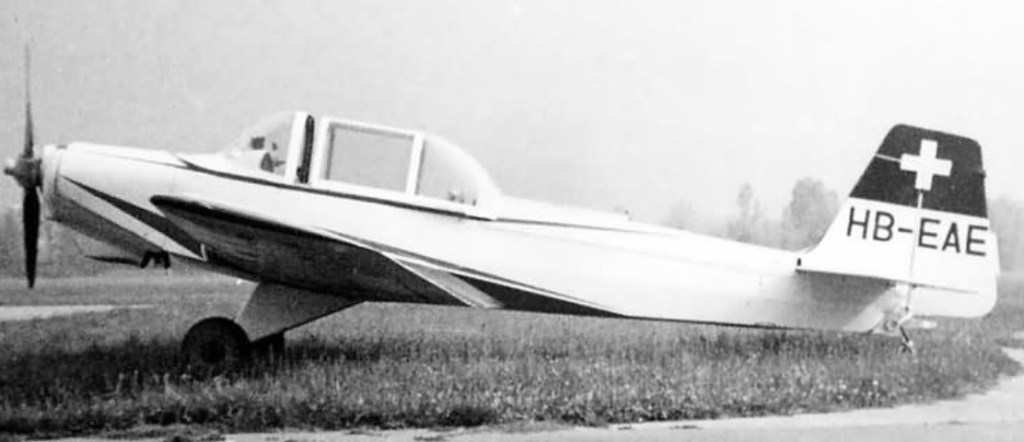
Super, basic FL.55 with enlarged vertical tail and 220 hp Meteor Alpha engine (1 built).
Bis, two-seat Super with 110 hp Meteor Alpha 2 engine (number built unknown).
Meteor F.L.53 / F.L.54
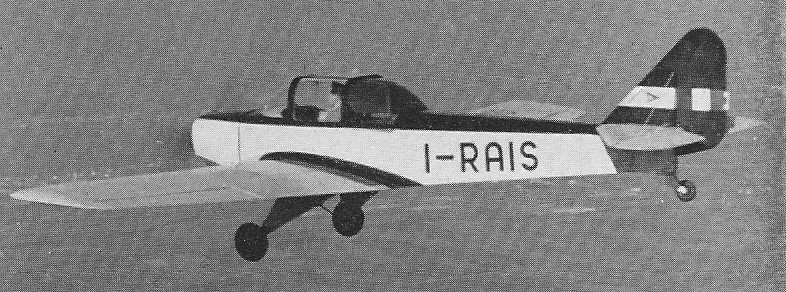
The Meteor F.L.53 is an improved version of the Lombardi F.L.3 built by Meteor S.p.A. of Trieste under licence. The F.L.53 differs by having an all-round vision cockpit canopy and a cut-down rear fuselage.
Engines can include the 75 hp Praga D, the 65 hp Continental A-65, or the 60 hp CAN D-4. The F.L.53 is of mixed construction and the undercarriage is identical to that of the standard Piper Cub.
The F.L.54 is a three-seat model which can be powered by an 85 hp Continental C-85 or 90 hp Continental C-90.
F.L.53
Engine: 65 hp Continental A-65
Wingspan: 33 ft 9 in
Wing area: 152.85 sq.ft
Length: 21 ft 7.75 in
Empty weight: 772 lb
Normal loaded: 1157 lb
MTOW: 1378 lb
Max speed: 112 mph
Cruise: 97 mph
Cruise altitude: 13,120 – 18,700 ft
Seats: 2
Métallerie Jacques Chapelet Big Bang
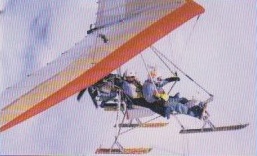
The Big Bang Mild trike is welded steel tube now for a comfortable space between the seats. The engine is an in-houde conversion of a BMW.
The Big Bang Lazer is a Mild equipped with a full fairing.
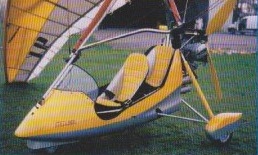
Big Bang Mild
Empty weight: 215 kg
Wing span: 10 m
Wing area: 16.5 sq.m
Fuel capacity: 55 lt
Engine: BMW 1100, 80 hp
MAUW: 450 kg
Seats: 2
Max speed: 120 kph
Cruise speed: 90 kph
Minimum speed: 60 kph
Climb rate: 5.5 m/s
Fuel consumption: 8.5 lt/hr
Price (1998): 154 178 F
Big Bang Lazer
Empty weight: 225 kg
Wing span: 10 m
Wing area: 15.50 sq.m
Fuel capacity: 55 lt
Engine: BMW 1100, 80 hp
MAUW: 450 kg
Seats: 2
Max speed: 140 kph
Cruise speed: 105 kph
Minimum speed: 65 kph
Climb rate: 5 m/s
Fuel consumption: 8.5 lt/hr
Price (1998): 183 875 F
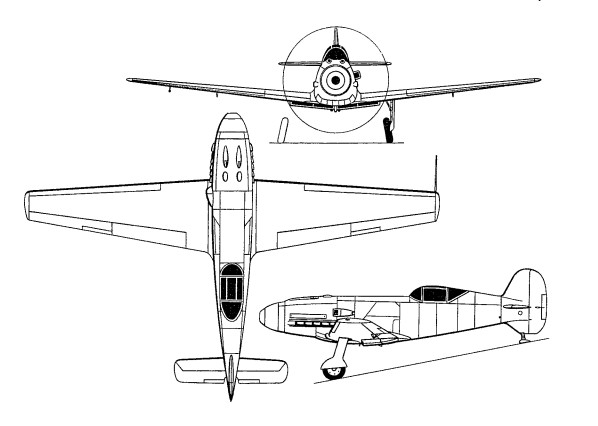
Messerschmitt Bf.109X
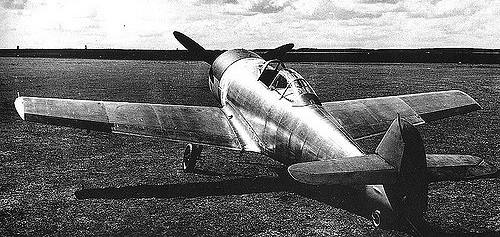
After the success of a demonstration at Zürich in 1937, Udet was receptive to the idea of developing an export version of the Bf 109 but with a different engine than the DB 601.

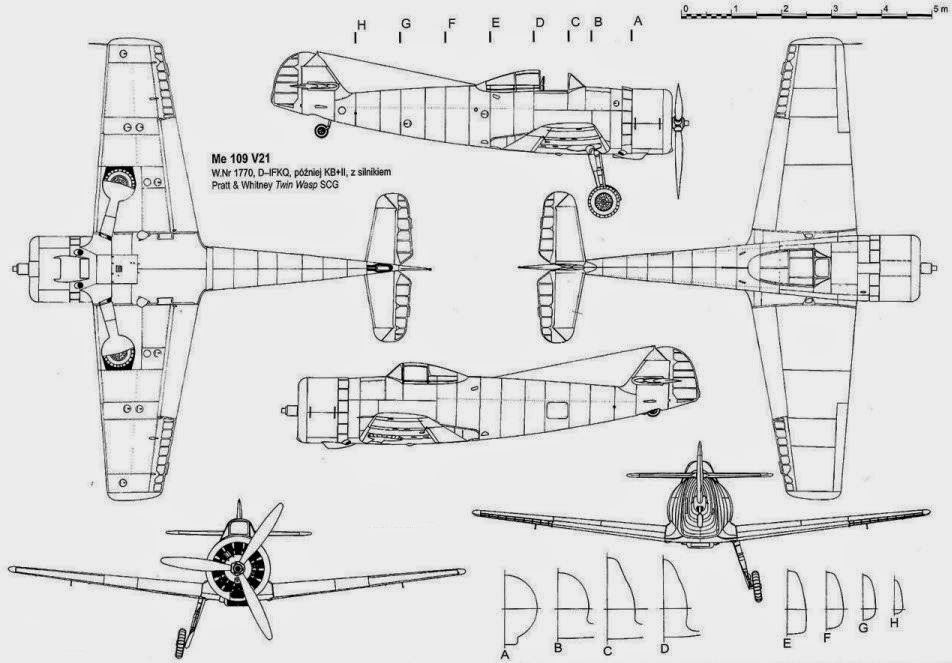
The engine chosen was the P&W “Twin Wasp” SC-G of 1200 hp. The Messerschmitt company received a contract from RLM/LC on 13 June 1938 to fit the P&W Twin Wasp on the Bf 109 V21 (21st prototype) Werknummer 1770 (D-IFKQ).
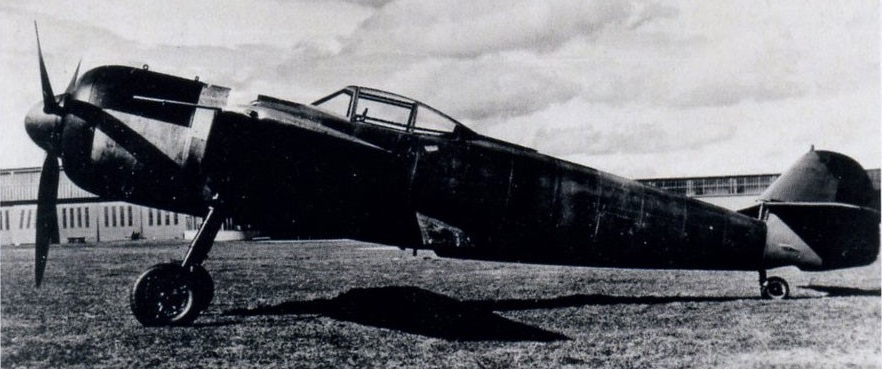
Even the maiden flight date is not known; it is established that Hermann Wurster flew it at Augsburg on 17 August 1939 and in September 1940 it was part of the DVL (Deutsche Versuchsanstalt für Luftfahrt) at Brauschweig-Völkenrode with the Stammkennzeichen code KB+II. Its fate is not known.
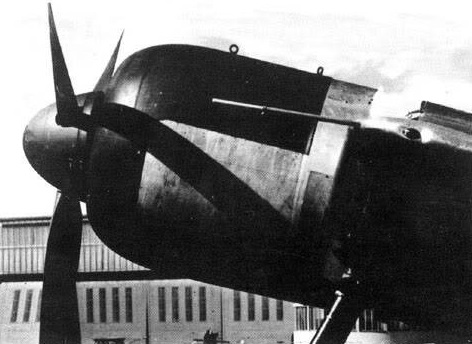
As the BMW 801 radial engine became available, a Bf 109F, Werknummer 5608, callsign D-ITXP was converted with a BMW 801 A-0. This aircraft became a prototype for the Bf 109X.
The fuselage had a wider cross-section, and a new canopy was fitted. The wing tips were similar to that of the Bf 109E.
The prototype was first flown by Flugkapitän Fritz Wendel on 2 September 1940, and the test flights continued despite troubles with the BMW 801A powerplant.

Development was stopped in early 1942.
Messerschmitt P.1101
(Emergency Fighter Program) in the middle of 1944. The Messerschmitt A.G.’s P.1104 was in the running. Heinkel won the contract.
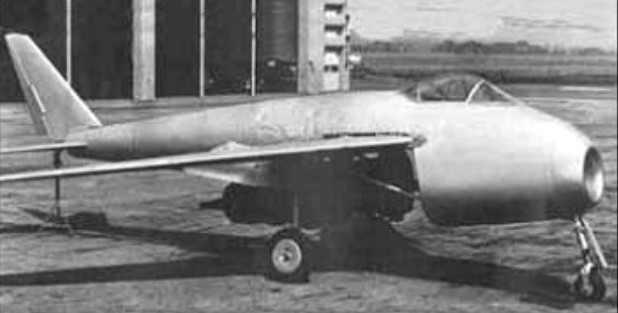
After two initial Messerschmitt designs were penciled, a finalized third design proposal was selected for development. The P.1101 was to have a deep fuselage to make room for the engine, applicable ductwork, the cockpit pressurization equipment, cannon armament and internal fuel. The fuselage would feature a nose-mounted intake to aspirate the Heinkel-Hirth He S 011 turbojet engine to be installed and wings were to be shoulder mounted assemblies with noticeable sweep. The single-seat cockpit would be fitted well ahead in the fuselage under a three-piece bubble canopy and a retractable tricycle undercarriage was utilized – the main landing gear legs coming from a Messerschmitt BF 109K fighter. The tail section was to be of a conventional type with a single vertical tail fin and applicable horizontal planes all made of wood. The tail assembly was fitted onto a tapered boom formed atop the engine exhaust port. Plans were made for cockpit armoring, carriage of four wire-guided missiles and a recessed centerline fuselage position for a single bomb.
To help speed development of the P.1101 along, it was decided to construct the P.1101 V1 prototype alongside the wind tunnel and other data collection still ongoing. The P.1101 V1 design was also given wings that would adjust their sweep preflight and could test wing sweep at 35- and 45-degree angles. The wings were eventually set to test sweep at positions of 35-, 40- and 45-degrees. changes to the wing sweep were to be made while the aircraft was still on the ground. First flight was slated for sometime in June 1945 if all went as planned. All development and construction was to take place at the largely unknown Messerschmitt facility at Oberammergau in the Bavarian mountains of Southern Germany.
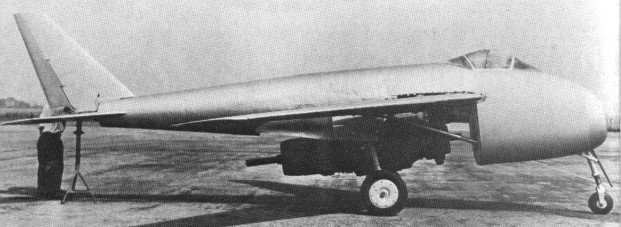
For fear of the P.1101 data falling into enemy hands, Messerschmitt employees moved the information into microfilm form and hid them in four locations at neighboring villages. The Allies moved into the area on April 29th, 1945 with the Americans taking Oberammergau. The Me P.1101 V1 prototype was found in a tunnel and secured by the Americans. It was only later that Messerschmitt employees revealed the missing data and their locations. However, by this time, the French Army had moved in and found the hidden P.1101 data, subsequently shipping them back to French authorities. A joint American-German effort led by Robert Woods of Bell Aircraft and Woldermar Voight of Messerschmitt to secure the microfilm and finish the P.1101 fell on deaf ears – the French maintained little interest.
The P.1101 made its way to the US. Not only had exposure to the elements take their toll on the P.1011 airframe, the P.1101 airframe prototype fell off of her transporting railcar sustaining enough damage that ensured the V1 prototype would never be able to fly. Nevertheless, Bell Aircraft proceeded to break down the P.1101 and fitted the V1 with mock cannon armament along her fuselage sides and an American Allison J35 turbojet engine. The P.1101 V1 still served in valuable static ground tests before being scraped sometime in the 1950s.

Messerschmitt Me 309

Designed as a replacement for the Bf 109 in 1940, the Me 309 was assigned a low priority. Advanced in concept, with tricycle landing gear, a pressurized cockpit, and cannon armament, the Me 309 was never satisfactory.

Four were built before the RLM cancelled the project.

Messerschmitt Me-163D / Me-263

The Me 163D was developed with retractable tricycle undercarriage, then moved to Junkers as the Ju 248, and then renamed again Me 263. Compared with the Me 163, the Me 263 had a larger, longer fuselage, retractable wheeled landing gear, a larger fuel tank, and a new rocket engine with a ‘cruise chamber’.
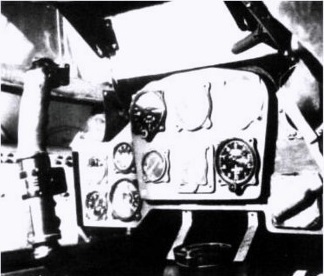
The V1 prototype built by Junkers was tested as a glider (after aero-towed) before being returned to Messerschmitt for powered flight trials. The aircraft flew for the first time on 31 December 1944.
Construction of two more prototypes was started but they were captured by Russian forces.
There is no evidence that the Me 263 ever made a powered flight.

Power: Walter 109-509C rocket
Fuel: T-Stoff and C-Stoff
Armament: 2 x 30mm MK.103 cannon / 150 rds
Max speed at 9840 ft: 590 mph
Climb rate: 13,800 fpm
Service ceiling: 52,500 ft approx
Endurance max pwr: 15 min
Range: 100 miles
Wingspan: 31 ft 2 in
Length: 25 ft 10.25 in
Wing area: 193 sq.ft
Empty weight: 4410 lb
Max weight: 11,687 lb

Messerschmitt Me 209 / Me 109L
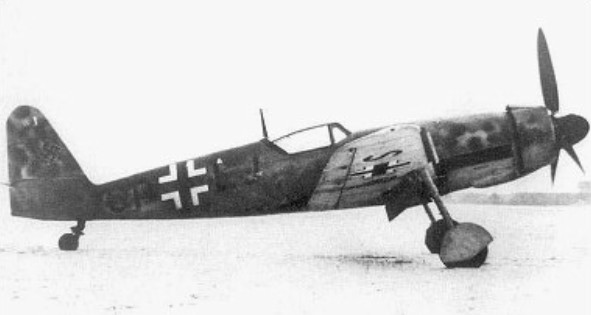
A high-altitude fighter programme, not related to the earlier Me 209 record aircraft, the two built were essentially re-engined Bf 109s with longer wings and tails. After official cancellation the development continued under the name Me 109L.
Messerschmitt Me 209

The Me 209 was a small, high-powered aircraft built especially for setting the world speed record.