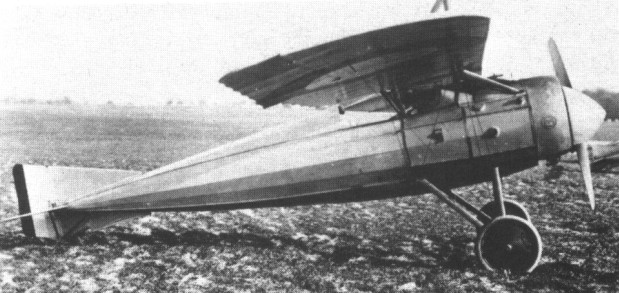
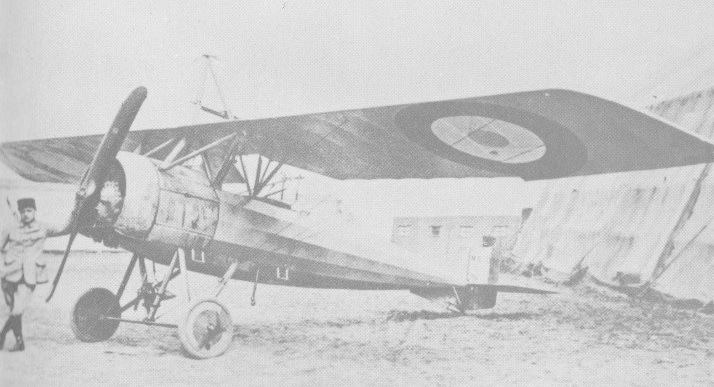
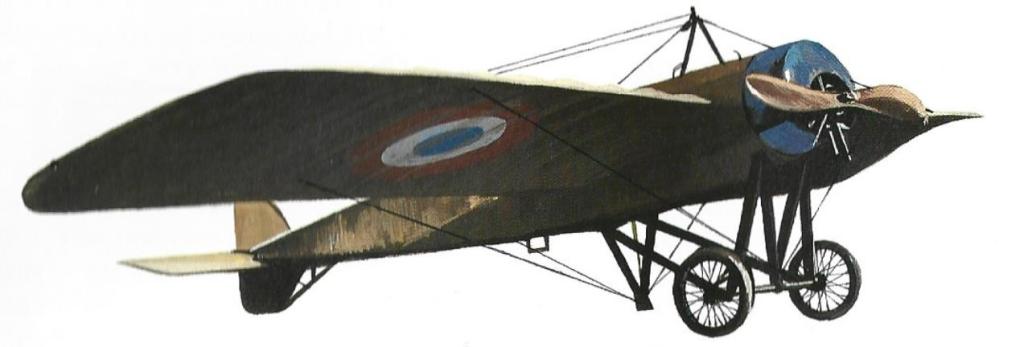
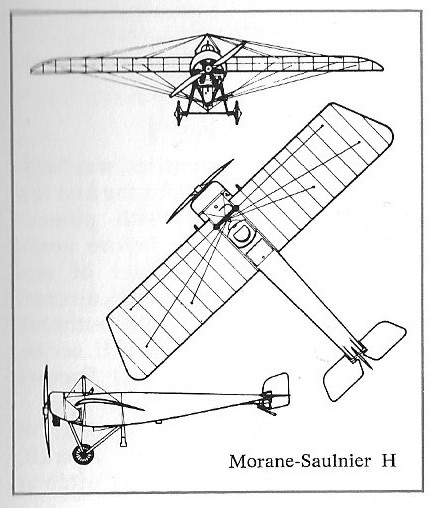
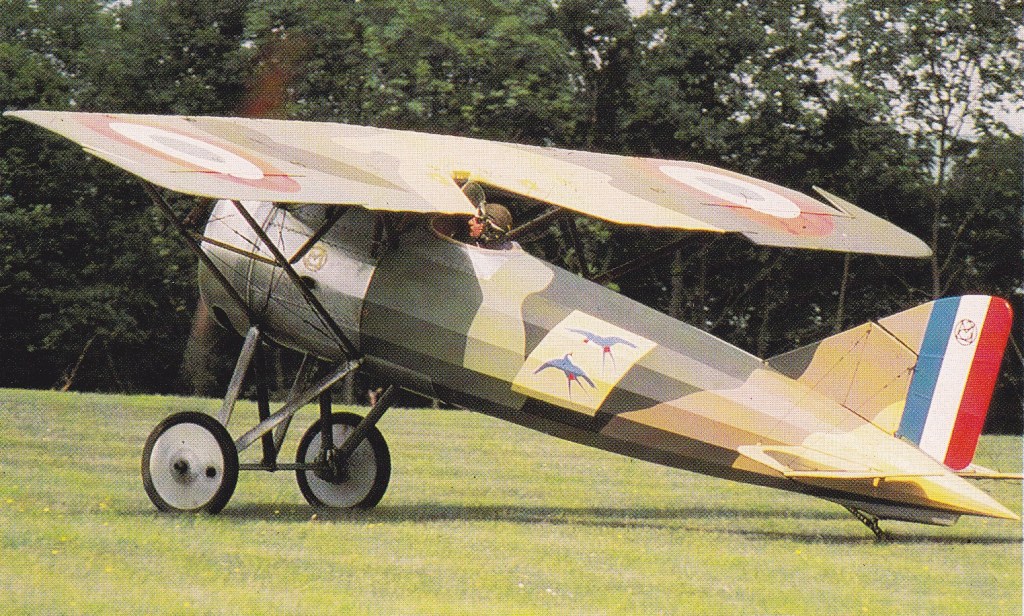
During the summer of 1916, Morane-Saulnier produced two different single-seat fighter versions of the Type P reconnaissance two-seat parasol monoplane. Both were powered by the 110 hp Le Rhóne 9J nine-cylinder rotary, but whereas the first single-seater was a simple conversion retaining the forward cockpit of the two-seater and carrying a single synchronised 7,7-mm Vickers gun, the second version featured a lower-mounted wing, an armament of twin synchronised 7,7-mm guns and an aft-positioned cockpit.
The airframe was a wire-braced parasol-wing monoplane with two-spar wooden wings. The wooden fuselage had light stinger rings to give a circular section. The entire airframe was fabric covered. There were conventional contols, with no fixed tailplane.
Allegedly the first Allied twin-gun fighter, the latter was 183 lb (83 kg) heavier than the former in loaded condition and 56 mph (9 km/h) slower at sea level, recorded performance figures proving inferior to those of the two-seat Type P.
Two prototypes of the initial version and at least one prototype of the two-gun version were evaluated by the Aviation Militaire, but neither was adopted for series production and the single-seat Type P was officially abandoned in December 1916.
Max speed, 102 mph (165 km/h) at sea level Time to 3,280 ft (1 000 m), 3.35 min Span, 28 ft 74 in (8.75 m) Length, l9ft l in(5,8l m)
two-gun version Max speed, 97 mph (156 km/h) at sea level Time to 6,560 ft (2 000 m), 8.67 min Endurance, 2.5 hrs Empty weight, 955 lb (433 kg) Loaded weight, 1,528 lb (693 kg) Span, 36 ft 9 in (11,20 m) Length, 23 ft 7½ in (7,20 m) Height, 10 ft 8¾ in (3,27 m)
Engine: Le Rhone, 110 hp Wing span: 36 ft 8 in Length: 23 ft 7 in Height: 11 ft 5 in Empty weight: 952 lb MTOW: 1612 lb Max speed: 97 mph at 6000 ft Service ceiling: 16,000 ft Endurance: 2.2 hr Armament: 1 x Vickers mh, 1 x Lewis mg Seats: 2
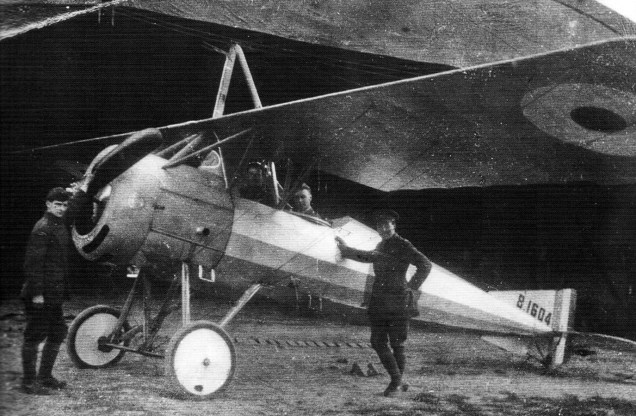
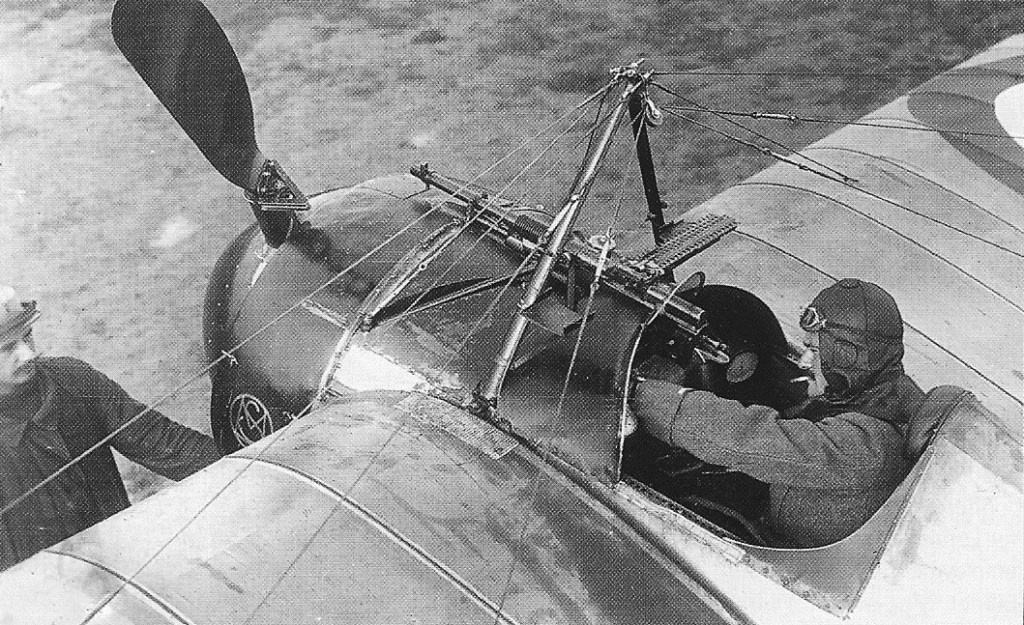
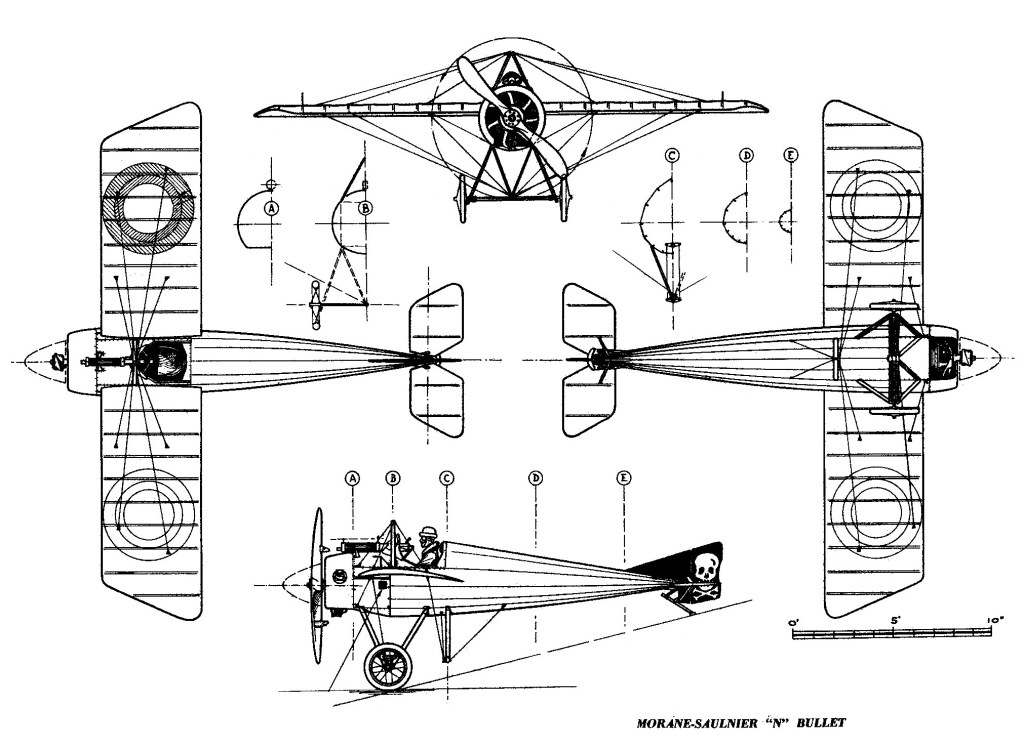
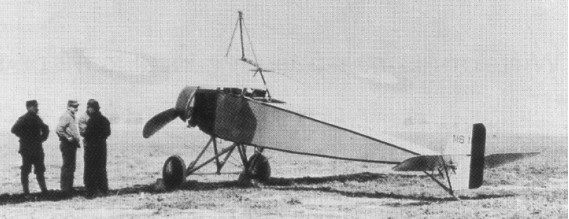
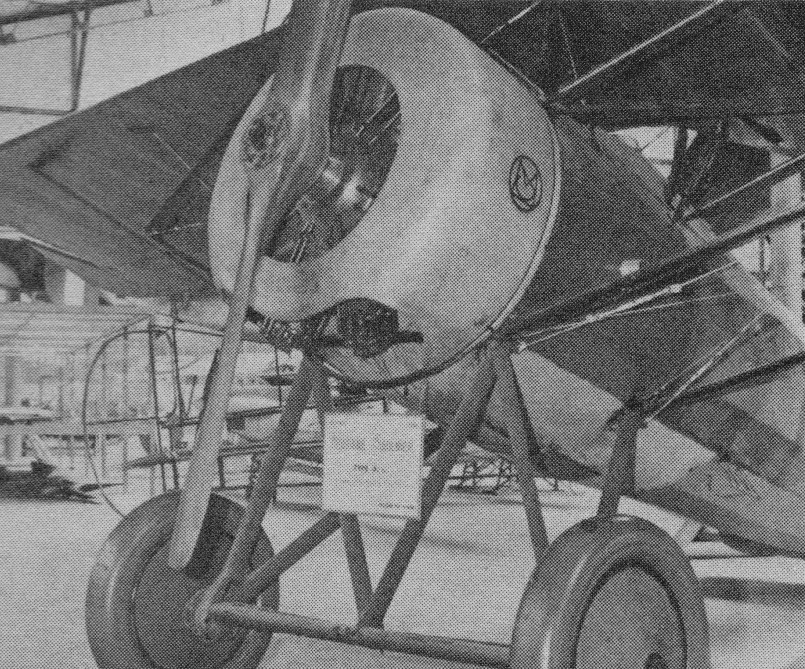
The Type N was a streamlined version of the L and thus obtained the nickname of “Bullet” from the RFC. Its lines were accentuated by the large airscrew spinner, dubbed “casserole” by the French. The Type N or Monocoque Morane was a mid wing fighter powered by either the 80 h.p. Gnome or 110 h.p. Le Rhone engine. Fabric covered, the two-spar wooden wings used wing warping. The fabric covered wooden fuselage has ring stringers to give a circular section. The tail surfaces were fin, rudder and elevators.
Armament varied; earlier versions flown by the French were armed with the Hotchkiss or more often with the St. Etienne machine gun fitted above the fuselage immediately behind the propeller blades. Later the Vickers gun, with a crude form of interrupter gear, became standard. British versions were fitted with the Lewis gun.
During the period May August 1916 the N served with No. 60 Squadron RFC. It was during this time that an official order was issued to the effect that all “Bullets” must have their spinners and other external metallic parts doped red, to avoid confusion with the similar shape of the Fokker monoplanes.
Effectively the earliest single-seat fighters were the Morane-Saulnier Type N and its German contemporary, the Fokker E I, although the Type N had not been conceived with a military application in mind. Both types were flown in May 1914, the Type N being demonstrated in the following month at Aspern, Vienna. Retaining the wing warping lateral control of earlier Morane-Saulnier shoulder-wing monoplanes, but embodying noteworthy aerodynamic refinements, the Type N was powered by an 80 hp Le Rhône 9C rotary engine, and its operational use was pioneered by Eugene Gilbert who flew an early example fitted with a forward-firing 8-mm Hotchkiss machine gun with propeller-mounted steel bullet dcflectors and dubbed Le Vengeur, this armament being similar to that of the Type L flown by Roland Garros. The performance of Le Vengeur prompted an official order for a small series of aircraft for use by the Aviation Militaire and these entered service in the summer of 1915. In January 1916, 24 Type N aircraft were ordered for the Royal Flying Corps, these being delivered between March and June 1916, and becoming known unofficially to the service as “Morane Bullets”. A few were delivered to the Russian Military Air Fleet, but most had been withdrawn from French operational service before the end of 1915, and those delivered to the RFC were phased out in the following summer. As supplied to the RFC, the Type N was fitted with either the Lewis or Vickers machine gun, both of 7,7-mm calibre.
Only 49 were built, designated MS.5C.1 in French service. The Morane-Saulnier Type N was followed into service by two larger, more powerful and better-armed variants, the Type LA and Type P.
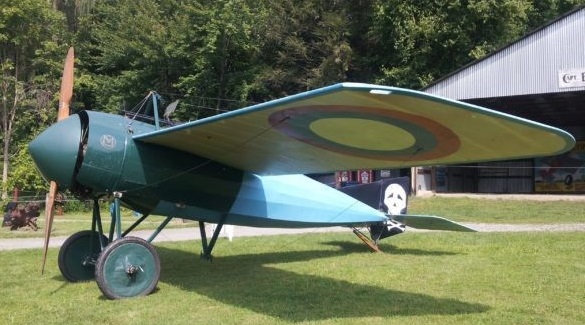
The Old Rhinebeck Morane Saulnier N was constructed from an original Morane Saulnier A.I fuselage, obtained by Cole Palen in 1981, and new wings were fabricated to complete the reproduction. It is finished in the colors of Alexander Kazakov’s aircraft.
Old Rhinebeck Morane Saulnier N
Replica: Circa Reproductions Morane Saulnier N / Bullet Bianchi / Personal Plane Services Morane N
Engine: 1 x 110hp Le Rhone 9J rotary engine Max take-off weight: 510 kg / 1124 lb Span, 26 ft 8 5/8 in (8,15 m) Length, 19 ft 1½ in (5,83 m) Height, 7 ft 4½ in (2,25 m) Wing area, 118.4 sq ft (l1,00 sq.m). Max. speed: 165 km/h / 103 mph at 6,500ft Service ceiling: 4000 m / 13100 ft Armament: 1 x 7.7mm machine-gun Endurance: 1¾ hrs Time to 3,280 ft (1 000 m), 4.0 min
Engine: 1 x 110hp Le Rhone 9J rotary engine Span: 27 ft 3 in Length: 22 ft Height: 8 ft 3 in Empty weight: 735 lb Max take-off weight: 1122 lb Max. speed: 103 mph at 6,000ft Service ceiling: 13,000 ft Endurance: 1 hr 30 min Armament: 1 x Hotchkiss, Vickers, or Lewis machine-gun
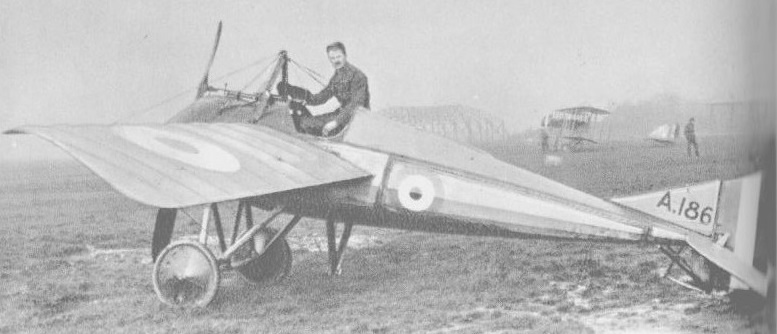
The Morane Saulnier and Morane Borel concerns built racing aeroplanes before the first world war, and the earliest of their “parasol” monoplanes, literally meaning sunshade, was the type L of 1913. This was one of the first fighter aeroplanes, and was used in large numbers by the French Army as well as the British Expeditionary Force in France.
The most famous parasol monoplane of its period, the Type L two-seater, which appeared in 1913, was to see service as a fighter as a result of fortuity rather than original intent. Derived from the Type G-19, the first aircraft of Leon Morane and Raymond Saulnier to feature a parasol wing configura¬tion, the Type L emulated previous Morane-Saulnier types in its use of wing warping for lateral control, 50 examples being ordered by Turkey immediately prior to WWI. With the commencement of hostilities, the Turkish aircraft were im¬mediately sequestered for use by France’s Aviation Militaire, and, in October 1914, chosen by Commandant Bares, the Chef du Service Aéronautique aux Armées, for fighting duties. Powered by either the seven-cylinder Gnome or nine-cylinder Le Rhóne 9C rotary, both rated at 80 hp, the Type L was described as a Morane de chasse, and, at times, was armed with an 8-mm Hotchkiss or 7,7-mm Lewis machine gun fired from the rear cockpit. Sometimes flown as a single-seater in the fighting role, the Type L was to have the distinction of carrying into combat the first fixed forward-firing machine gun to be used operationally by a tractor aircraft. Just over 50 Type L aircraft were delivered to the Royal Flying Corps, with which they performed unspectacular service throughout 1915 in the reconnaissance role, and others were supplied to the Russian Military Air Fleet.
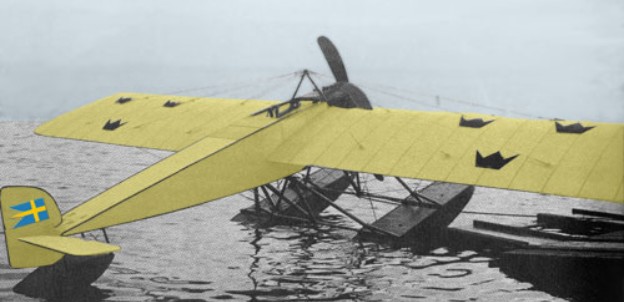
Thulin B was a licenced copy of the Morane Saulnier MS 3L. Two of these aircraft, fitted with floats, were presented to the Swedish Navy. They got the Navy registrations M I (delivered in 1915) and M II (1916). Both were fitted with a 90 hp Gnome engine, manufactured by AETA under the name ”Thulin A”.
Both aircraft made their service at the south coast of Sweden. They were both struck by accidents and written off in September 1917.
Standard two-seat Type L Max speed, 71 mph (115 km/h) at 6,560 ft (2 000 m) Time to 3,280 ft (1 000 m), 5.75 min Endurance, 2.5 hrs Empty weight, 849 lb (385 kg) Loaded weight, 1,444 lb (655 kg) Span, 36 ft 9 in (11,20 m) Length, 22 ft 6¾ in (6,88 m) Height, 12 ft 10¾ in (3,93 m) Wing area, 196.98 sq ft (18,30 sq.m)
Morane Saulnier LMS Parasol Length : 20.669 ft / 6.3 m Height : 9.678 ft / 2.95 m Wingspan : 33.465 ft / 10.2 m Wing area : 195.905 sq.ft. / 18.2 sq.m Max take off weight : 1234.8 lb / 560.0 kg Weight empty : 723.2 lb / 328.0 kg Max. payload : 511.6 lb / 232.0 kg Max. speed : 66 kt / 123 km/h Initial climb rate : 246.06 ft/min / 1.25 m/s Service ceiling : 13123 ft / 4000 m Wing load : 6.36 lb/sq.ft / 31.0 kg/sq.m Range : 216 nm / 400 km Endurance : 4 h Engine : Le Rhône Jb-9, 108 hp Crew : 2
The Type I single-seat fighter was fundamentally a Type N re-¬engined with a 110 hp Le Rhóne 9J nine-cylinder rotary and stemmed from interest evinced by Maj-Gen Trenchard in a more powerful version of the basic aircraft and an order placed in January 1916 on behalf of the RFC for one aircraft. Twelve more were ordered during the following March when the first example was flown for the first time. The Type I was intended to have a single 7,7-mm Lewis gun with French Alkan synchronising mechanism. but the four examples supplied to the RFC mid-July 1916 were fitted with a centrally-mounted Vickers gun. No additional Type I fighters were supplied to the RFC as, meanwhile, it had been overtaken by the similarly-powered, but extensively redesigned Type V which afforded greater endurance, and the Type I was not adopted by the Aviation Militaire.
Max speed, 104 mph (168 km/h) at sea level Time to 6,560 ft (2 000 m), 6.75 min Endurance, 1.33 hrs Empty weight, 736 lb (334 kg) Loaded weight, 1,124 lb (510 kg) Span, 27 ft 04 in (8,24 m) Length, 19 ft 1 in (5,81 m) Height, 8 ft 24 in (2,50 m) Wing area, 1184 sq ft (11,00 sq.m)
1913 reconnaissance aircraft built by Societe Anonyme des Aeroplanes Morane-Saulnier
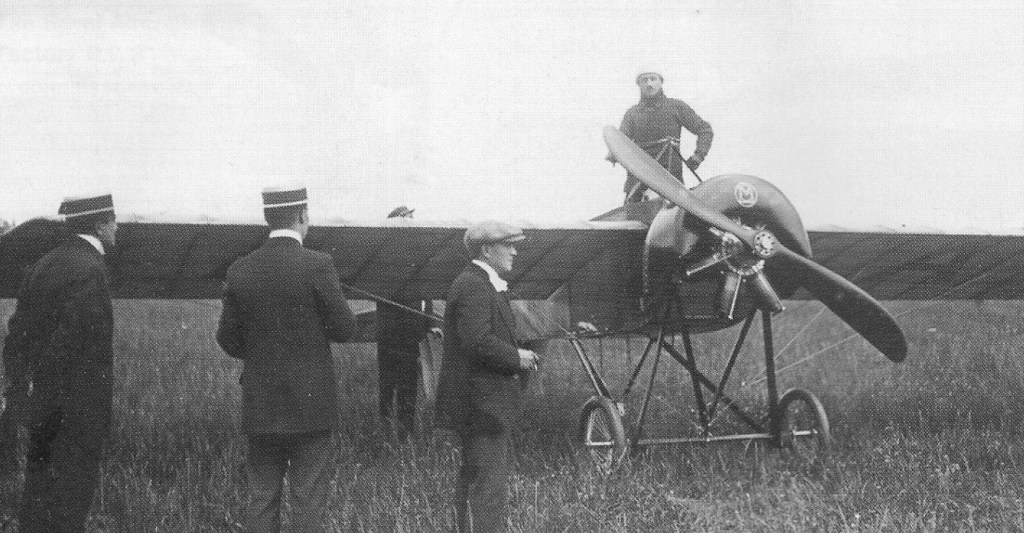
Type H of Frenchman Edmond Audemars at Juvisy in 1913
Engine: Gnome, 80 hp Wingspan: 29 ft 11 in / 9.12 m Length: 20 ft 7 in / 6.28 m Height: 7 ft 6 in / 2.30 m Weight: 1034 lb / 470 kg Max speed: 85 mph / 135 kph Ceiling: 3280 ft / 1000 m Endurance: 3 hr Armament: 1 x mg Seats: 1
The appellation Type G was something of a generic designa¬tion in that several very different Morane-Saulnier designs were known as such, the last of these being a single-seat fighter designed in the summer of 1915 and built after the initial production batch of Type N aircraft for the Aviation Militaire. A refined development of the basic Type G of 1912, but featuring a fully-faired fuselage and powered by an 80 hp Le Rhóne 9C, the Type G fighter had a centrally-mounted 8-mm Hotchkiss machine gun with standard bullet deflectors on the propeller.
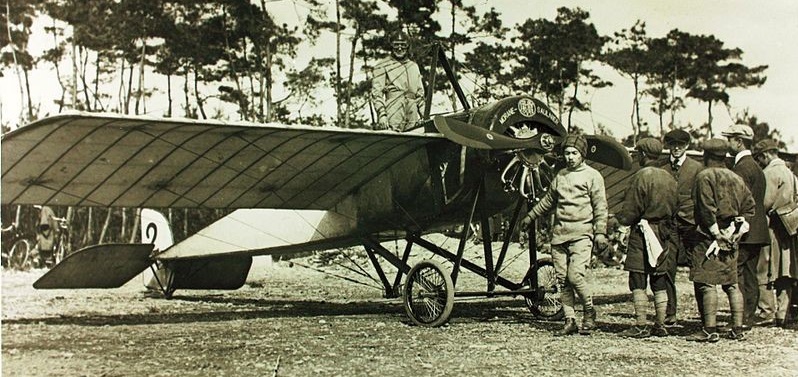
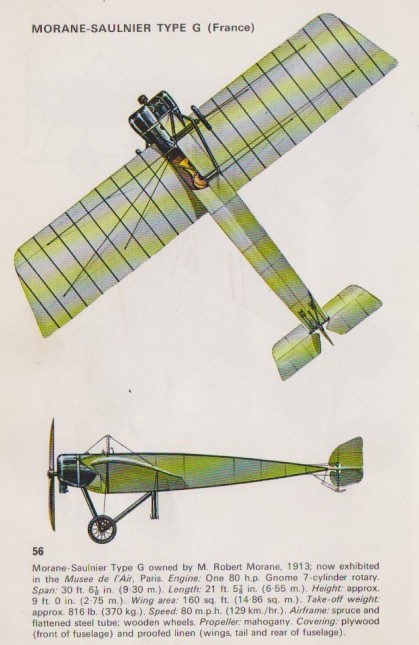
The Morane-Saulnier G was a two-seat sport and racing monoplane produced in France before the First World War. It was a development of the racing monoplanes designed by Léon Morane and Raymond Saulnier after leaving Borel and, like its predecessors, was a wire-braced, shoulder-wing monoplane. Construction was of fabric-covered wood throughout, except for the undercarriage struts which were of steel tube.
The type was a sporting success. In April 1913, Roland Garros took second place in the inaugural Schneider Cup in a floatplane version, finishing with a time of 40 minutes 40 seconds. On 26 June, Claude Grahame-White flew another float-equipped example from Paris to London via Le Havre, Boulogne-sur-Mer, and Dover, covering some 500 km (310 mi) that day. Between 21 and 28 September the same year, two float-equipped Type Gs competed at the seaplane meeting at San Sebastián, with Lord Carbery winning the short takeoff prize on one, and Edmond Audemars winning the maneuverability prize on the other. The following week, Carbery flew his Type G in the Italian Waterplane Contest from Lake Como to Pavia and back, along with two other Type Gs in the field of fifteen competitors, these flown by Garros and Morane. Garros not only won the Grand Prize in the “general class”, but also the prizes for best speed (127.7 km/h, 79.8 mph) and greatest altitude (2,100 m, 6,000 ft).
1909 – Roland Garros and Gustav Hamel
On 28 September 1913 Roland Garros became the first person to cross the Mediterranean Sea by air, flying from Fréjus in the south of France to Bizerte in Tunisia in a Morane-Saulnier G.
In 1914, Russian manufacturer Duks arranged to build the type under licence at their Moscow factory for the Russian Army, and the same year, the Turkish military ordered 40 examples. Before these could be delivered, however, war broke out, and the aircraft were impressed into the French Army. To these, the Army soon added an order of 94 aircraft, and the British Royal Flying Corps also acquired a number, these latter machines purchased from Grahame-White, who was manufacturing the type in the UK under licence. The Type XIV was the in-house designation given to Grahame-White license-built Morane-Saulnier Type G aircraft.
At the outbreak of war, the type’s military value was found to be wanting, and the French machines were quickly relegated to training duties. Despite this, a dedicated single-seat fighter version was built in 1915, armed with an 8 mm Hotchkiss machine gun that fired through the propeller arc, the propeller blades being protected by deflector plates. Only one or two prototypes were built, and the type never entered service.
Some Type Gs were modified by Morane-Saulnier to have their wings mounted above the fuselage, parasol-fashion, rather than at the fuselage sides. This arrangement was found to offer far better visibility for the pilot, and formed the basis for the Morane-Saulnier L.
A Type G is preserved at the Museo del Aire (Madrid) (Museo del Aire de Cuatrovientos).
Operators included the Argentine Air Force, one aircraft in Cuba, the Imperial Russian Air Force and with their aircraft taken over by the Soviet Air Force, the Spanish Air Force, and Royal Flying Corps.
The French Aéronautique Militaire ordered 94, plus the 40 impounded from the Turkish order.
Variants: Type GA version with 40 kW (60 hp) Le Rhône engine
Type GB version with 60 kW (80 hp) Gnome engine
Type WB version for export to Russia with glazed forward fuselage
MS.2 official French government STAe designation for the G
Grahame-White Type XIV License built by Claude Grahame-White in the United Kingdom
Specifications
Span, 29 ft 11 in (9.12 m) Length, 21 ft 8 2/3 in (6.62 m) Height, 8 ft 4 in (2.54 m)
GB Engine: 1 × Gnome, 60 kW (80 hp) Wingspan: 9.20 m (30 ft 2 in) Wing area: 16 m2 (172 ft2) Length: 6.30 m (20 ft 8 in) Empty weight: 95 kg (208 lb) Gross weight: 370 kg (815 lb) Maximum speed: 123 km/h (76 mph) Rate of climb: 1.8 m/s (345 ft/min) Crew: one pilot Capacity: one passenger
Differing from earlier single-seat Morane-Saulnier shoulder-wing monoplanes essentially in having ailerons for lateral control rather than utilising wing warping and in employing rigid wing bracing, the Type AC appeared in the autumn of 1916. Powered by either the 110 hp Le Rhóne 9J or 120 hp Le Rhóne 9JB nine-cylinder rotary engine and carrying a single synchronised 7,7-mm gun, the Type AC was aerodynamically clean by contemporary standards, its fuselage being faired to a circular cross section. Thirty production aircraft were ordered for the Aviation Militaire, deliveries commencing late 1916. Although of advanced design and possessing a good perfor¬mance, the Type AC was considered inferior to the SPAD 7, and, in consequence, was not adopted in quantity. Two examples were supplied to the UK for RFC evaluation.
Max speed, 111 mph (178 km/h) at sea level Time to 6,560 ft (2 000 m), 5.92 min Endurance, 2.5 hrs Empty weight, 959 lb (435 kg) Loaded weight, 1,451 lb (658 kg) Span, 32 ft 1 4/5 in (9,80 m) Length, 23 ft 1½ in (7,05 m) Height, 8 ft 11½ in (2,73 m) Wing area, 161.46 sq ft (15,00 sq.m)
The type AI was a parasol monoplane with the wing on cabane struts and braced by parallel struts running from the outer wings to the landing gear attachment points on the lower fuselage.
The first flight was made in the summer of 1917, entering service at the beginning of 1918. Arrmament was one or two machine guns synchronised to fire through the propeller disc.
In May 1918 the type was withdrawn from front-line service after a number of structural failures and engine problems.
Morane-Sualnier tried to revive the fighter with a modified structure and a 150 hp / 112 kW Gnome rotary but further production was concentrated on two advanced trainer models without armament.
Total production exceeded 1200 and the AI was exported to Belgium, Great Britain, Japan, Switzerland, USA, and USSR.
A single-seat advanced trainer was flown by French pilot Alfred Fronval from 1921 through 1928. In August 1927 at the Zurich Meet, Fronval won over Germany’s Gerhard Fieseler in a Raab-Katzenstein with 110 hp Siemens, and Marcel Doret in his 300 hp Hispano-powered Dewoitine D-27.
Alfred Fronval’s A1
In February 1928 Fronval looped an AI 1,111 consecutive times in 4 hours 56 minutes over Villacoublay.
Alfred Fronval’s A1 was donated to the Musee d L’Air by Robert Morane.
A.1
Variants:
MoS.27 Fighter Engine: Gnome Monosoupape 9N, 150 hp / 112 kW Wingspan: 27 ft 11 in / 8.51 m Length: 18 ft 6.5 in / 5.65 m Height: 7 ft 10.5 in / 2.40 m Wing area: 144.13 sq.ft / 13.39 sq.m Empty weight: 928 lb / 421 kg MTOW: 1431 lb / 649 kg Max speed: 141 mph / 225 kph at SL Climb to 13,125 ft / 4000m: 11 min 15 sec Service ceiling: 22,965 ft / 7000m Endurance: 1 hr 45 min Armament: 1 x .303 / 7.7mm mg Seats: 1
A-1 Engine: Clerget 9B-A, 120 hp Wingspan: 27.91 ft Length: 18.53 ft
MoS.29 Fighter Armament: 2 mg
MoS.30 Trainer Engine: Le Rhone 9Jb, 120hp/89 kW or Le Rhone 9Jby, 135hp/101 kW
MoS.30bis Trainer Engine: Le Rhone 9Jby, 90hp/67 kW
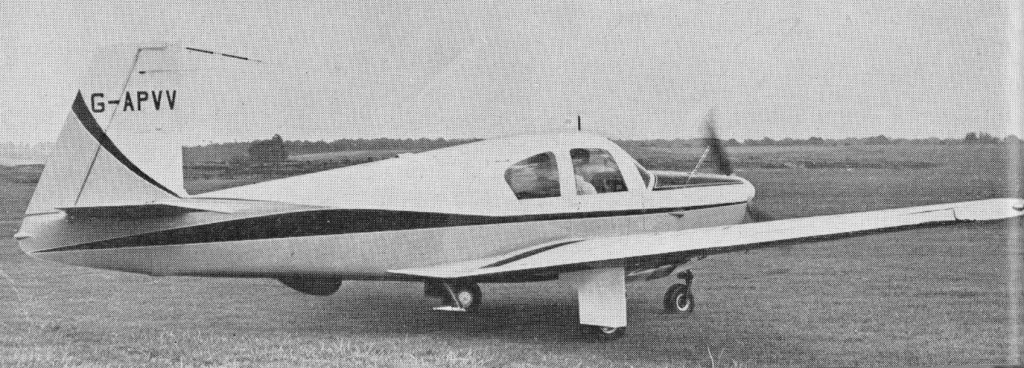
After the Mite and a corporate shuffle, the company moved from the original Kansas facility to Kerrville, Texas, and re-emerged one year later with a four seater called the Mark 20. Pug Piper offered to buy it and Mooney regrets not taking Piper’s marketing know how. The first M20 was built in 1955 and kept the Mite’s most distinctive features: the high aspect ratio wing; squared off wingtips; manually activated, stubby, trailing beam landing gear; and the all moving tail assembly with its forward ¬swept trailing edges.
M.20A
First flown on August 10, 1953 with a Lycoming O-320 engine, the 150 hp engine was upgraded to O-360-A 180 hp as the M-20A, improving the Mark 20’s takeoff, climb and cruise performance with an acceptably small sacrifice in economy. Mooney owners could count on a cruise speed of 150 knots at 75 percent power, making the Mark 21 the fastest airplane for the horsepower in its class. It wasn’t long before Mooneys were outselling all other single engine retractables, an honor they would hold until the ascendancy of the Piper Arrow in the late 1960s. This all-wooden wing aircraft was in production until 1961 when the all-metal M20B was introduced. This was superseded by the M20C Mk2l in 1962.
From the M20C the basic structure has been all-metal but with the unusual feature of a welded steel tube frame for the cabin area, covered in sheet light alloy, and the more conventional semi-monocoque construction aft of the rear seats. The wing is made as a single full-span unit of considerable strength to support the fuselage, and the entire empennage, tailplane, fin, rudder and all, pivots to provide a low-drag elevator trim.
In 1963, Mooney introduced two variations on the theme: the Master (M 20D), a fixed gear fixed pitch prop less sophisticated (read cheap) airplane that could be used for training; and the Super 21 (M 20E), a Mark 21. The Master was actually an attempt to generate brand loyalty in the flight training stratum. The M20E Super 21 with a 200-hp injected Lycoming giving a maximum cruise of 187 mph. In 1965, Mooney offered an optional electrically actuated retractable landing gear system. By 1965 Mooney was selling almost 700 aircraft that year, with the M20F Executive with stretched fuselage offered a year later in 1966. It was essentially a Super 21 with a longer fuselage and a third side window.
1969 Mooney M20E
Square windows were introduced in 1967 for O-360-AID-powered Ranger and Executive, and M20J or Model 201, both of which had Lycoming IO-360-A1B6D engines.
The Executive has an extra 10 inches of length and extra window in the aft cabin. The Executive has a gross weight of 2,740 pounds, 165 pounds almost one passenger’s worth more than the Chaparral and the Ranger. The empty aircraft weighs 40 pounds more than its 200 hp cousin, the Chaparral, however, so the useful load difference is whittled to 125 pounds. Engine: Lycoming IO 360 AlA. The advertised service ceiling of an Executive is 18,800 feet.
The Executive’s larger, airier cabin, higher gross weight and increased fuel capacity proved to be a popular combination, and it wasn’t very long before Mooney came up with yet another stretch job, this time on the ubiquitous Mark 21, resulting in the Statesman.
Only 196 of the M20G Statesman model were built in 1968 and 1969, as basically an M20F powered by only a 180 hp Lycoming instead of the normal 200 hp, with a consequent lower gross weight. But the longer fuselage (with its built in invitation to greater load factors) didn’t fare as well with the smaller, 180 hp engine, and most people opted for the higher powered version.
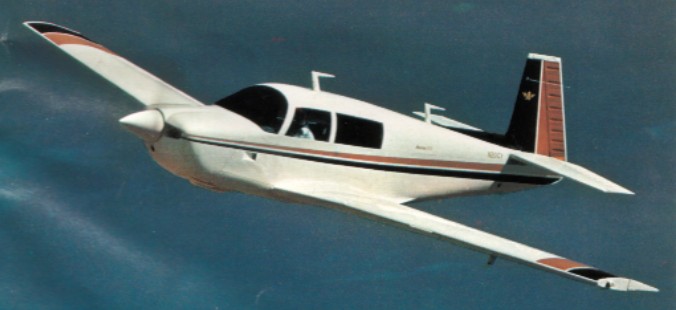
Beginning in 1968 there was some name changing: the Mark 21 became the Ranger, the Super 21 became the Chaparral. The standard body airplanes now had a one piece windshield, even nicer instrument panels, and paint designs that actually complemented their lines. Electric gear retraction was standard equipment, the hand pump arrangement that lowered the flaps had given way to a simpler electric system.
1978 Mooney Ranger
The Ranger is recognizable by looking first at the chin beneath the propeller spinner. Executives and Chaparrals, both with Lycoming IO 360 A1A engines, have a filter housing that is flush with the cowling, but the air filter on the Ranger, powered by the Lyc O 360 A1D, is set up with its lower edge jutting out just a bit. Otherwise, a Ranger is exactly like a Chaparral, which is, with the exception of 10 inches of fuselage length, exactly like an Executive. All three air¬planes have the same wingspan: 35 feet.
After the take-over by Republic, the M20 underwent a major efficiency and drag reduction programme to produce the M20J. The last of the M20Cs was built in 1978, a year after the popu¬lar 200-hp M20J was introduced – known as the 201 because the cruise speed was 201 mph. Late in 1976, Mooney presented the Model 201 as a new design that boasts a significant speed increase over the Mooney Executive. The same size as the Executive and, like it, powered by a 200 hp Lycoming engine, the 201 is capable of a 174 knot (201 mph, hence the name) top speed, the increase a result of a very effective aerodynamic cleanup.
The early 201s had the Vne upped from 173 kt to 195 and the Vno from 151 to 173 kt by removing the propeller high pitch (full coarse) stops. Roy Lopresti, who did the aerodynamic clean-up on the Grumman range to get the excellent figures for the Tiger and Cheetah, joined Mooney in 1975 work on the Mooney M20F Executive to turn it into the Mooney M20J Model 201. It’s careful attention to detail plus striking a balance between cost and benefit. Flush riveting is used extensively both above and below the wing back to the rear spar. And also on the fuselage from the nose cowl back to the widest part just abeam of the front seats. Careful fitting of all doors and windows and the increased rake of the windshield over that on earlier Mooneys all add up. The Mooney fuselage is a welded steel tube and underneath the starboard wing a little bump protrudes that is the new OAT sensor replaces the old temperature probe usually seen sticking out from the windshield on other aircraft. The trim system is unique on light aircraft in that the whole tail assembly pivots for trimming – rudder and all. This was a design feature of all Mooneys designed by Al Mooney. On this area Mr Lopresti limited his efforts to ensuring good sealing around all gaps and joins. The 201 was a new airplane, an addition to the Mooney line. The 200 hp Executive re-mains a part of it, although many observers thought the 201 would replace the Executive, which has the same engine, wing and fuse¬lage.
1978 updates for the 201 incorporate a revised power console with vernier push pull controls in place of the power levers of yore. There’s also a re¬vised gear extension system with a cable and pull handle, replacing the crank that was always in semi eclipse, half covered by the pilot’s seat. They’ve also relocated the fuel selector to a position just forward of the front seats and left of the centerline, which should now make it easier to see and to reach.
The M20K 231/252 first appeared in 1979 and differed from the 201 in that it had a Conti¬nental 210-hp. There’s a prop extension on the front of the 231 longer engine, and the 231 has a longer and very distinc-tive nose. Two landing lights are located in the chin of the new cowling, and the cowl flaps are larger. There’s a new wing root fillet, and non ic¬ing fuel vents. The fuel filler caps have been placed farther out on the wingand the tanks are bigger, with a usable capacity of 75 USG.
A dorsal fin has been added at the rear, including a scoop for cabin air. This new ventilation system eliminates the scoop right atop the cabin.
In 1988 Mooney teamed up with Porsche and produced forty-one 217-hp Porsche engined aircraft, the M20L. The incredibly quick, big-block Mooneys began rolling off the line in 1988 with the 220-knot, 270-hp M20M Bravo, followed by the 280-hp M20R Ovation in 1994. The M20M model was available in two versions. The MSE has the four-cylinder Lycoming O-360 and the TLS (Turbo Lycoming Sabre in marketing parlance) has more power.
Four-seat Allegro (former M20J) production ended 1998, and Encore (M20K) became built in batch orders. Bravo (M20M) four-seater has turbocharged TI0-540-AF1A and was previously known as TLS (first appeared 1989), while Ovation (M20R) first flew May 1994 and has Teledyne Continental IO-550-G5B engine. Mooney’s next model was the 244-hp M20S Eagle, awarded type certification by June 1997. The Eagle was marketed as a high performance model combining the longer fuselage design with a 244 hp / 182 kW Continental IO-550 and two blade prop.
M20C Mk.21 / Aerostar Ranger Engine: Lycoming O-360-A1D, 180 hp Wingspan: 35 ft 0 in / 10.67 m Length: 24 ft 1 in / 7.34 m Cabin length: 8 ft 8 in / 2.64 m Cabin max width: 3 ft 4.5 in / 1.04 m Cabin max height: 3 ft 8.5 in / 1.13 m Baggage compartment: 13.5 cu.ft / 0.38 cu.m Empty weight: 1525 lb / 691 kg MTOW: 2575 lb / 1168 kg Max speed SL: 153 kt / 176 mph / 283 kph ROC SL: 1000 fpm / 305 m/min Service ceiling: 19,500 ft / 5743 m Range 45min res: 1001 mi / 1610 km Seats: 4
Ranger M20C Engine: 1 x Lycoming O-360-A1D, 180 hp Seats: 4 Wing loading: 15.4 lb/sq.ft Pwr loading: 14.3 lb/hp Gross wt: 2575 lb Empty wt: 1525 lb Equipped useful load: 961 lb Payload max fuel: 649 lb Range max fuel/75% pwr: 694nm/4.8hr Range max fuel / 55% pwr: 799 nm/ 6.6 hr Service ceiling: 16,500 ft 75% cruise: 143 kt 55% cruise: 122 kt Stall: 49-58 kt 1.3 Vso: 64 kt ROC: 800 fpm Min field length: 1550 ft Fuel cap: 312 lb Undercarriage: retractable.
M20 Ranger Engine: Lycoming 0 360 AlD, 180 hp TBO: 2,000 hrs Prop: constant speed, two blade, 74 inch dia Length: 23 ft. 2 in Height: 8 ft. 4 in Wingspan: 35 ft Wing area: 174 sq. ft Wing loading: 15.11 lb./sq.ft Seats: 4 Empty weight, IFR equipped: 1,606 lbs Useful load, IFR equipped: 969 lbs Equipped payload (750 miles fuel, 75 % power): 715 lb Gross weight: 2,575 lbs Power loading: 14.2 lb/hp Fuel capacity: 52 gals./312 lbs Minimum runway requirement: 1,550 ft Rate of climb: 800 fpm Service ceiling: 16,300 ft Maximum speed: 147 knots Cruise (75 % @ 10,000 ft): 143 knots Economy cruise (57 % @ 10,000 ft.): 123 knots Maximum range (75% power): 948mi Stall speed, clean: 58 knots Stall speed, landing config: 49 kts Cabin width (elbow to elbow): 43.5in.
Ranger Engine: Lycoming O 360 A1D, 180 hp TBO: 2,000 hrs Propeller: Hartzell two blade, constant speed, 74 in Length: 23 ft. 2 in Height: 8 ft. 4 in Wingspan: 35 ft Airfoil: NACA 632 215 at root, NACA 641 412 at tip Aspect ratio: 7.338 Wing area: 167 sq. ft Wing loading: 15.4 lb/sq.ft Seats: 4 Empty weight: 1,525 lbs Useful load: 1,050 lbs Payload with full fuel: 738 lbs Gross weight: 2,575 lbs Power loading: 14.3 lb/hp Fuel capacity: 52 USG/312 lbs Baggage capacity: 120 lbs Baggage area: 15 cu.ft Minimum runway requirement: 1,550 ft Rate of climb: 860 fpm Service ceiling: 19,500 ft Maximum speed: 153 knots Cruise (75% @ 10,000 ft.): 143 knots Economy cruise (65% @ 10,000 ft.): 135 knots Range @ max cruise (45 min res): 684 nm Range @ economy cruise (45 min res): 745 nm Duration @ max cruise (no res): 5.5 hrs Stall speed (clean): 58 knots Stall speed (gear and flaps down): 49 knots
M 20D Master Simplified M20C Undercarriage: fixed
M20 Chaparral / M20E Super 21 Engine: Lycoming IO 360 A1A, 200 hp TBO: 1,600 hrs Propeller: Hartzell two blade, constant speed, 74 in Length: 23 ft. 2 in Height: 8 ft. 4 in Wingspan: 35 ft Airfoil: NACA 632 215 at root, NACA 641 412 at tip Aspect ratio: 7.338 Wing area: 167 sq. ft Wing loading: 15.4 lb/sq.ft Seats: 4 Empty weight: 1,600 lbs Useful load: 975 lbs Payload with full fuel: 663 lbs Gross weight: 2,575 lbs Power loading: 12.8 lb/hp Fuel capacity: 52 USG/312 lbs Baggage capacity: 120 lbs Baggage area: 15 cu.ft Minimum runway requirement: 1,550 ft Rate of climb: 1,125 fpm Service ceiling: 21,200 ft Maximum speed: 165 knots Cruise (75% @ 10,000 ft.): 158 knots Economy cruise (65% @ 10,000 ft.): 150 knots Range @ max cruise (45 min res): 534 nm Range @ economy cruise (45 min res): 700 nm Duration @ max cruise (no res): 4.1 hrs Stall speed (clean): 58 knots Stall speed (gear and flaps down): 49 knots Cabin width (elbow to elbow): 43.5in Seats: 4
M20F / Aerostar Executive Engine: Lycoming IO-360-AlA, 200 hp at 2700 rpm TBO: 1600 hours Prop: Hartzell 74” Constant speed Power Loading: 13.7 lbs/hp Wingspan: 35 ft Wing Area: 167 sq.ft Airfoil: NACA 632 215 at root, NACA 641 412 at tip Wing Loading: 16.4 lbs./sq.ft Length: 24 ft Height: 8’4” Seats: 4 Baggage Capacity: 120 lbs Gross Weight, Normal Category: 2,740 lbs Empty Weight: 1,640 lbs Equipped payload (750 miles fuel, 75 % power): 752 lb Fuel Capacity, Standard Tanks: 64 USG / 384lb Payload max fuel: 627 lb Max speed; 185 mph Cruise Speed (75% pwr): 177 mph Cruise 67% pwr: 171 mph 55% cruise: 130 kt 1.3 Vso: 70 kt Maneuvering Speed: 135 mph Stall Speed, Clean: 68 mph Stall Speed, (gear and) full flaps: 62 mph Takeoff Distance: 834 ft Landing Distance: 785 ft Takeoff, over 50ft. obstacle: 1,384 ft Landing, over 50 ft. obstacle: 1,786 ft Best Rate of Climb, S.L.: 960 fpm Service Ceiling: 18,800 ft Max. Endurance Range, Standard Tanks, No Reserve: 8:41 hours; 1,060 st.mi. Maximum speed: 161 knots Cruise (75% @ 10,000 ft.): 150 knots Economy cruise (65% @ 10,000 ft.): 141 knots Range @ max cruise (45 min res): 649 nm Range @ economy cruise (45 min res): 834 nm Duration @ max cruise (no res): 5.1 hrs Range 75% pwr, 45 min res: 977 sm Average Fuel Consumption, Normal Cruise: 10.2 gph Cabin width (elbow to elbow): 43.5in
M20G Statesman Similar to Ranger, longer fuselage, extra window
M20J 201 Engine: 1 x Lycoming IO-360-AB6D, 200 hp TBO: 1800 hrs Prop: McCauley 2 blade, constant speed 74 in Seats: 4 Length: 24.7 ft Height: 8.3 ft Wingspan: 35 ft Wing area: 170 sq.ft Wing aspect ratio: 7.4 Max ramp wt: 2740 lbs Max take off wt: 2740 lbs Standard empty wt: 1640 lbs Max useful load: 1069 lbs Max landing wt: 2740 lbs Baggage cap: 130 lbs Wing loading: 16.1 lbs/sq.ft Power loading: 13.7 lbs/hp Max useable fuel (std): 64 USG, 384 lbs Climb rate: 1030 fpm @ 89 kts Climb gradient: 694 ft/nm Rate of climb @ 8000 ft: 630 fpm Service ceiling; 18,800 ft Max speed: 185kts Cruise @ 65% power @ 8,000ft: 157kts Fuel flow @ 65% power @ 8,000ft: 56 pph Endurance @ 65% power @ 8,000ft: 6.6 hr Stalling speed clean: 63 kts Stall speed flaps/gear down: 55 kts T/O 50 ft: 1302 ft Ldg 50 ft: 1700 ft Turbulent air penetration speed: 120 kts Retractable undercarriage.
M20J Allegro
1978 201 Engine: Lycoming IO-360-A3B6D, 200 hp TBO: 2000 hr Propeller: Const. spd. Landing gear type: Tri/Retr Gross weight: 2740 lb Empty weight: 1640 lb Useful load: 1100 lb Fuel: 64 USG Wingspan: 35 ft Overall length: 24 ft. 8 in Height: 8 ft. 4 in Wing area: 167 sq. ft Seating capacity: 4 Cabin width: 43.5 in Cabin height (in.): 44.5 Baggage capacity (lbs.):120 Cruise speed 75% power: 169 kt Cruise speed 65% power: 156 kt Max range (w/ reserve) 75% power: 835 nm Max range (w/ reserve) 65% power: 881 nm Fuel consumption 75% power: 10.8 USgph Fuel consumption 65% power: 9.7 USgph Stall speed (gear, flaps down): 55 knots Best rate of climb: 1030 fpm Service ceiling: 18,800 ft Takeoff ground roll: 913 ft Landing ground roll: 770 ft
Mooney 205 Engine: Lycoming IO-360-A3B6D, 200 hp@2700 rpm @SL TBO: 2000 hr Fuel type: 100LL Propeller: McCauley CS Landing gear type: Tri/Retr. Max ramp weight: 2740 lb Gross weight: 2740 lb Max landing weight: 2740 lb Empty weight, std: 1695 lb Useful load, std: 1045 lb Payload, full std. fuel: 661 lb Usable fuel, std: 64 USG Oil capacity: 8 qts Wingspan: 36 ft. 1in Overall length: 24 ft. 9 in Height: 8 ft. 4 in Wing area: 174.8 sq. ft Wing loading: 15.7 lbs./sq. ft Power loading: 13.7 lbs./hp Wheel size: 6.00 x 6 in Seating capacity: 4 Cabin doors: 1 Cabin width: 43.5 in Cabin height: 45 in Baggage capacity:120 lbs /13.5 cu. ft Cruise speed 75% power: 171 kt Cruise speed 65% power: 162 kt Max range (w/ reserve) 75% power: 740 nm Vs: 61 kt Vso: 54 kt Best rate of climb: 1050 SL fpm Best rate of climb, 8,000 ft: 700 fpm Service ceiling: 18,600 ft Takeoff ground roll: 900 ft Takeoff over 50-ft. obstacle: 1700 ft Landing ground roll: 677 ft Landing over 50-ft. obstacle: 1600 ft
M20K Turbo 231 First built: 1978 Engine: 1 x Continental TSIO-360-GB-1, 210 hp TBO: 1800 hrs Fuel; 100/100LL Prop: McCauley 2 blade, constant speed 74 in Seats: 4 Length: 25.4 ft Height: 8.3 ft Wingspan: 36.1 ft Wing area: 174.8 sq.ft Wing aspect ratio: 7.4 Max ramp wt: 2900 lbs Max take off wt: 2900 lbs Standard empty wt: 1800 lbs Max useful load: 1100 lbs Payload full std fuel; 462 lbs Max landing wt: 2900 lbs Wing loading: 16.6 lbs/sq.ft Power loading: 13.8 lbs/hp Max useable fuel: 453 lbs Fuel Capacity (std); 78.6 US Gal Usable Fuel (std); 75.6 US Gal Climb rate: 1080 fpm @ 96 kts Climb gradient: 675 ft/nm Rate of climb @ 8000 ft: 1020 fpm Certificated (& service) ceiling; 24,000 ft Turbulent air penetration speed: 119 kts Retractable undercarriage Wheel base; 5 ft 11 9/16 in Wheel Track; 9 ft 3/4 in Wheel Size; Nose; 5.00×5 Mains; 6.00×6 Cabin Length; 114 in Cabin Width; 43.5 in Cabin Height; 44.5 in Baggage Capacity; 130 lbs Trim; Stabilizer. Max Level Speed; 201 kts Never Exceed Speed; 196 kts. Cruise 75%, 24,000 ft: 192 kt Cruise 65%, 24,000 ft: 178 kt Cruise 55%, 24,000 ft: 163 kt Range 75%, 21,000 ft: 1000 nm Range 65%, 9,000 ft: 1080 nm Range 55%, 12,000 ft: 1170 nm Stall Speed Flaps up/gear up; 61 kts Stall Speed Flaps down/ gear down; 57 kts Best Angle of Climb; 71 kts Take-off Ground Run; 1250 ft Take-off 50 ft; 2250 ft Landing Ground Roll; 1150 ft Landing over 50 ft; 2300 ft
M20K Encore 1998 Engine: Lycoming IO-360-A1B6, 200 hp TBO: 2000 hr Propeller: Const. spd. Landing gear type: Tri/Fixed Gross weight: 2535 lb Empty weight: 1576 lb Useful load: 959 lb Fuel capcity: 54 USG Wingspan: 32 ft Overall length: 25 ft. 2 in Height: 9 ft. 10 in Wing area: 128 sq. ft Seating capacity: 4-5 Cabin width: 50 in Cabin height: 46 in Baggage capacity: 143 lb Cruise speed 75% power: 130 kt Cruise speed 65% power: 123 kt Max range (w/ reserve) 65% power: 800 nm Fuel consumption 75% power: 12.4 USgph Fuel consumption 65% power: 11.0 USgph Stall speed (gear, flaps down): 53 kt Best rate of climb: 937 fpm Service ceiling: 16,000 ft Takeoff ground roll: 1067 ft Landing ground roll: 623 ft
M20L
M20M Bravo Engine: Lycoming TIO-540-A1FB, 270 hp TBO: 2000 hr Propeller: Const. spd. Landing gear type: Tri/Retr. Gross weight: 3368 lb Empty weight: 2268 lb Useful load: 1100 lb Fuel: 89 USG Wingspan: 36 ft. 1 in Overall length: 26 ft. 9 in Height: 8 ft. 4 in Wing area: 174.8 sq. ft Seating capacity: 4 Cabin width: 43.5 in Cabin height: 44.5 in Baggage capacity: 120 lb Cruise speed 75% power: 220 kt Cruise speed 65% power: 215 kt Max range (w/ reserve) 75% power: 750 nm Max range (w/ reserve) 65% power: 840 nm Fuel consumption 75% power: 17.6 USgph Fuel consumption 65% power: 16.6 USgph Stall speed (gear, flaps down): 59 kt Best rate of climb: 1230 fpm Service ceiling: 25,000 ft Takeoff ground roll: 1080 ft Landing ground roll: 1200 ft
M20M MSE Engine: Lycoming IO-360-A3B6D, 200 hp@2700 rpm@SL TBO: 2000 hr Fuel type: 100/100LL Propeller type/diameter: McCauley CS Landing gear type: Tri/Retr. Max ramp weight: 2900 lb Gross weight: 2900 lb Landing weight: 2900 lb Empty weight, std: 1726 lb Useful load, std: 1174 lb Payload, full std. fuel: 790 lb Usable fuel: 64 USG Oil capacity: 8 qts Wingspan: 36 ft. 1 in Overall length: 24 ft. 8 in Height: 8 ft. 4 in Wing area: 175 sq. ft Wing loading: 16.6 lbs./sq. ft Power loading: 14.6 lbs./hp Wheel base: 6 ft Wheel track: 9 ft. 2 in Wheel size: 6.00 x 6 in Seating capacity: 4 Cabin doors: 1 Cabin width: 43.5 in Cabin height: 44.5 in Baggage capacity: 120 lb Cruise speed 75% power @ 8,000 ft.: 168 kt Cruise speed 65% power @ 8,000 ft.: 160 kt Max range (w/ reserve) 75% power: 850 nm Fuel consumption 75% power: 10.8 USgph Fuel consumption 65% power: 9.1 USgph Fuel consumption 55% power: 7.7 USgph Vs: 62 kt Vso: 58 kt Best rate of climb: 1030 fpm Best rate of climb, 8000 ft: 750 fpm Service ceiling: 18,600 ft Takeoff over 50-ft. obstacle: 1520 ft Landing ground roll: 770 ft Landing over 50-ft. obstacle: 1610 ft
M20M TLS Engine: Lycoming TIO-540-AF1A, 270 hp Vne: 195 kt MAUW: 3368 lb Max ldg wt: 3200 lb Cruise: 220 kt @ 25,000 ft Cruise: 200kt @ 12,000ft Range IFR res: 1070nm.
M20R Ovation Engine: 280-hp. Length: 26.739 ft / 8.15 m Height: 8.333 ft / 2.54 m Wingspan: 36.089 ft / 11.0 m Aspect ratio: 7.4 Wing area: 175.023 sq.ft / 16.26 sq.m Max take off weight: 3367.0 lb / 1527.0 kg Weight empty: 2268.9 lb / 1029.0 kg Max. payload weight: 1144.4 lb / 519.0 kg Landing speed: 59 kts / 110 km/h Cruising speed: 190 kts / 352 km/h @ 9000 ft. Initial climb rate: 1150 ft/min Service ceiling: 20013 ft / 6100 m Cruising altitude: 9006 ft / 2745 m Wing load: 19.27 lb/sq.ft / 94.0 kg/sq.m Range: 1129 nm / 2090 km Endurance: 7 h Crew: 1+3
1997 Ovation Engine: Cont. IO-550G, 280 hp TBO: 2000 hr Propeller: Const. spd. Landing gear type: Tri/Retr. Gross weight: 3368 lb Empty weight: 2225 lb Useful load: 1134 lb Fuel: 89 USG Wingspan: 36 ft. 1 in Overall length: 26 ft. 9 in Height: 8 ft. 4 in Wing area: 175 sq.ft Seating capacity: 4 Cabin width: 42.5 in Cabin height: 44.5 in Baggage capacity: 120 lb Cruise speed 75% power: 190 kt Cruise speed 65% power: 182 kt Max range (w/ reserve) 75% power: 935 nm Max range (w/ reserve) 65% power: 1015 nm Fuel consumption 75% power: 17 USgph Fuel consumption 65% power:14 Usgph Stall speed (gear, flaps down): 59 kt Best rate of climb: 1200 fpm Service ceiling: 20,000 ft Takeoff ground roll: 900 ft Landing ground roll: 1000 ft
2005 Mooney Ovation2 GX Base Price: USD$418,150 Engine: Continental IO-550G, 280 hp@2500@SL TBO hr: 2000 Fuel type: 100LL Propeller diameter: 73 in Landing gear type: Tri./Retr. Max ramp weight: 3368 lb Gross weight: 3368 lb Landing weight: 3368 lb Empty weight, std: 2205 lb Useful load: 1163 lb Payload, full std. fuel: 567 lb Usable fuel, std: 89 USG Oil capacity: 12 qts Wingspan: 36 ft. 1 in. Overall length: 26 ft. 9 in. Height: 8 ft. 4 in. Wing area: 174.5 sq. ft Wing loading: 19.3 lbs./sq. ft Power loading: 12.0 lbs./hp Seating capacity: 4 Cabin doors: 1 Cabin interior length: 12.1 in Cabin interior height: 3.7 in Cabin interior width: 3.6 ft Baggage capacity: 120 lb Range (w/ res) 75% power @ 9,000 ft.: 970 nm Range (w/ res) 55% power @ 9,000 ft.: 1240 nm Cruise Speed (8000 ft.): 192 kts Endurance (75%) (970nm@9000 ft.): 5.0 hr Endurance (55%) (1240nm@9000 ft.): 7.9 hr Best rate of climb (SL): 1250 fpm Service ceiling: 20,000 ft Vso: 60 kt Takeoff ground roll: 900 ft Takeoff over 50-ft. obstacle: 1700 ft Landing ground roll: 1000 ft Landing over 50-ft. obstacle: 1600 ft
2007 Mooney Ovation3 Base price: $469,000 Engine: Continental IO-550G, 310hp @SL TBO: 2000 hr Fuel type: 100/100LL Propeller type: Hartzell CS/3-blade Landing gear type: Tri./Retr Max ramp weight: 3374 lb Gross weight: 3374 lb Landing weight: 3374 lb Empty weight, std: 2267 lb Useful load, std: 1107 lb Useful fuel, std: 102 USG Optional fuel: 130 USG Payload, full std. fuel: 495 lb Wingspan: 36 ft. 1 in Overall length: 25 ft. 9 in Height: 8 ft. 4 in Wing area: 174.8 sq. ft Wing loading: 19.3 lbs./sq.ft Power loading: 10.9 lbs./hp Seating capacity: 4 Cabin doors: 1 Cabin width: 43.5 in Cabin height: 44.5 in Cruise speed 75% power: 197 kt @8000 ft Fuel consumption 75% power: 17.1 Usgph Fuel consumption 45% power: 10.1 Usgph Vso (kts.): 59 Best rate of climb, SL: 1300 fpm Service ceiling: 20,000 ft Takeoff distance: 900 ft Takeoff over 50 ft. obstacle: 1620 ft Landing distance: 1000 ft Landing over 50 ft. obstacle: 1600 ft
2009 M20R Ovation 3 New price: $517,522 Engine: Continental IO-550G-A/P, 300 hp@SL TBO: 2000 hr Fuel type: 100LL Propeller type: 3-blade, CS Hartzell Landing gear type: Tri./Retr. Gross weight: 3368 lb Empty weight, std: 2261 lb Useful load, std: 1107 lb Usable fuel, std./opt: 100/300 USG Payload, full std. fuel: 495 lb Wingspan: 36 ft. 1 in Overall length: 26 ft. 9 in Overall height: 8 ft.3 in Wing area: 175 sq. ft Wing loading: 19.3 lbs./sq. ft Power loading 10.86 lbs./hp Seating capacity: 4 Cabin doors: 1 Cabin width: 43.5 in Cabin height: 44.5 in Vso: 59 kt Best rate of climb, SL: 1300 fpm Service ceiling: 20,000 ft Cruise speed, 75% power: 197 kt Fuel consumption, 75% power: 19 Usgph Max range, 102 USgals: 1860 nm Takeoff ground roll: 1620 ft
M20S Eagle Engine: 244 hp / 182 kW Continental IO-550 Prop: two blade Max cruise: 175 kt Initial ROC: 1150 fpm / 350m/min Max range: 1210 nm / 2240 km
2001 Mooney Eagle2 Base price: US$360,000 Engine: Continental IO-550G, 244 hp @ 2400 rpm@SL TBO: 2000 hr Fuel type: 100/100LL Propeller: McCauley CS/73 in Landing gear type: Tri/Retr. Max ramp weight: 3300 lb Gross weight: 3300 lb Landing weight: 3300 lb Empty weight, std: 2200 lb Useful load, std: 1100 lb Payload, full std. fuel: 650 lb Usable fuel: 75 USG Oil capacity: 12 qts Wingspan: 36 ft. 1 in Overall length: 26 ft. 9 in Height: 8 ft. 4 in Wing area: 175 sq. ft Wing loading: 18.3 lbs./sq. ft Power loading: 13.1 lbs./hp Wheel base: 6 ft. 7 in Wheel track: 9 ft. 2 in Wheel size: 6.00 x 6 in Seating capacity: 4 Cabin doors: 1 Cabin width: 43.5 in Cabin height: 44.5 in Baggage capacity: 120 lb Cruise speed 75% power @ 8,300 ft.: 180 kt Fuel consumption 75% power: 12.7 Usgph Fuel consumption 65% power: 11.0 USGph Fuel consumption 55% power: 9.2 USGph Stall speed (flaps up): 66 kt Stall speed (flaps down): 59 kt Best rate of climb: 1150 fpm Best rate of climb, 8000 ft: 760 fpm Service ceiling: 18,500 ft Landing ground roll: 1100 ft
M20 TN Acclaim Price: US$495,000 Engine: Continental IO-550-G, 262 bhp@25,000 ft Fuel type: 100LL Propeller diameter: 76 in. Landing gear type: Tricycle/Retractable/Trailing Link Max ramp weight: 3374 lb Gross weight: 3368 lb Landing weight: 3200 lb Empty weight, std: 2353 lb Useful load, std: 1015 lb Useful fuel, std: 102USG Payload, full std. fuel: 418 lb Oil capacity: 8 qts Wingspan: 36 ft. 5 in Overall length: 26 ft. 6 in Height: 8 ft. 6 in Wing area: 175 sq. ft Wing loading: 19.25 lbs./sq. ft Power loading: 12.03 lbs./hp Wheel base: 79 in Wheel track: 110 in Wheel size: 6.00 x 6 in Seating capacity: 4 Cabin doors: 2 Cruise speed, 25,000 ft 100% power: 237 kt Cruise speed 94% power: 231 kt Cruise speed 75% power: 206 kt Cruise speed 65% power: 198 kt Cruise speed 55% power: 180 kt Max range 100% power: 932 nm Max range 94% power: 1097 nm Max range 75% power: 1373 nm Max range 65% power: 1455 nm Max range 55% power: 1594 nm Fuel flow 100% power: 22.1 USgph Fuel flow 94% power: 20.7 USgph Fuel flow 75% power: 14.5 USgph Fuel flow 65% power: 12.0 USgph Fuel flow 55% power: 10.2 USgph Service ceiling: 25,000 ft
M20TN Acclaim Type S Base price: $599,900 Engine: Continental TSIO-550-G, 280 hp @SL TBO: 2000 hr Fuel type: 100/100LL Propeller: 3-blade, CS Hartzell Landing gear type: Tri./Retr. Gross weight: 3374 lb Empty weight, std: 2370 lb Useful load, std: 1004 lb Usable fuel: 100 USG Payload, full std. fuel: 404 lb Wingspan: 36 ft. 5 in. Overall length: 26 ft. 9 in. Height: 8 ft. 4 in. Wing area: 175.7 sq. ft Wing loading: 19.2 lbs./sq. ft Power loading: 12.1 lbs./hp Wheel size: 6.00 x 6 in Seating capacity: 4 Cabin doors: 1 Cabin width: 43.5 in Cabin height: 45 in Cruise speed, 75% power: 237 kt @ FL250 Vso: 59 kt Climb rate, SL: 1240 fpm Max operating altitude: 25,000 ft
1988 Mooney 252 TSE Base price: $330,000 Engine: Continental TSIO-360-MB1, 210 TBO: 1800 hr Fuel type: 100LL Propeller: 3-blade McCauley/74 in Landing gear type: Tri./Retr. Max ramp weight: 2900 lb Gross weight: 2900 lb Landing weight: 2900 lb Empty weight, std: 1800 lb Useful load, std: 1100 lb Payload, full std. fuel: 647 lb Useful fuel, std: 75 USG Oil capacity: 8 qts Wingspan: 36 ft. 1 in. Overall length: 25 ft. 5 in. Height: 8 ft. 4 in Wing area: 175 sq. ft Wing loading: 16.6 lbs./sq. ft Power loading: 13.8 lbs./hp Wheel base: 71.6 in Wheel track: 108.75 in Wheel size, nose: 5.00 x 5 in Wheel size, main) :6.00 x 6 in Seating capacity: 4 Cabin doors: 1 Cabin width: 43.5 in Cabin height: 44.5 in Baggage capacity: 120 lb Cruise speed 75% power @ 20,000 ft.: 201 kt Cruise speed 65% power @ 10,000 ft.: 180 kt Range (w/ reserve) 75% power @ 10,000ft.: 541nm Range (w/ reserve) 75% power @ 20,000 ft.: 541nm Max range (w/ reserve) 75% power: 980 nm Fuel consumption 75% power: 12.7 Usgph Vs: 61 kt Vso: 59 kt Best rate of climb: 1080 fpm Best rate of climb, 8,000 ft: 1100 fpm Service ceiling: 28,000 ft Takeoff ground roll: 1250 ft Takeoff over 50-ft. obstacle: 2200 ft Landing ground roll: 1140 ft Landing over 50-ft. obstacle: 2300 ft
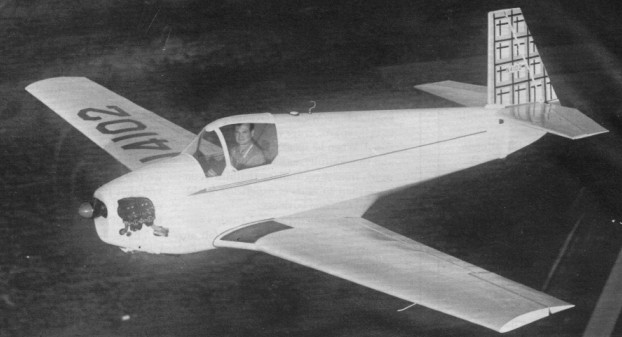
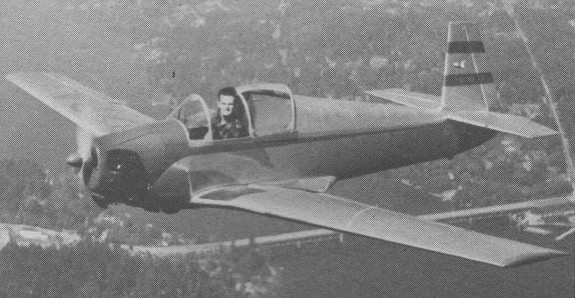
The all-wood single-seat Mooney “Mite” appeared in 1948. Low cost was a prime consideration ‘ and the initial powerplant was a 25-hp water-cooled Crosley automobile engine. Good performance with such low power was achieved by careful attention to design detail, including a high-aspect-ratio wing, enclosed cockpit, flaps and a retractable tricycle landing gear. The Mite is built with a combination of steel-tube, wood and fabric materials.
Crosley made the engine, but Mooney had to modify it as the Mooney CC46M 2 to get CAA certification. The little four cylinder was basically the same as the one in the Crosley automobile, connected by four belts to the propeller shaft. The engine developed 25 hp at 3,900 rpm, which meant that a two to-one reduction was necessary in the belt drive to keep the wooden propeller turning within some reasonable limit. The engines were intended to be replaced every 250 hours
The Crosley wouldn’t quite do the job, however, and the airplane was quickly adapted without structural change to the 65-hp Lycoming O-145 engine. When that engine went out of production, a change was made to the 65-hp Continental A.65 (O-170). The ATC’d M-18 Mite single-seat light aircraft with Crosley engine; became M-18 Wee Scotsman with 65-hp Lycoming engine.
The “Mite” went out of production in 1952, after 284 were sold even at $2,250 less engine. Mooney had by that time enlarged the basic design to a four-seater and gone after a much more lucrative market.