Two English enthusiasts named Mortimer and Vaughan built a biplane with two pairs of semicircular wings which gave it the appearance of a double decker ring doughnut. They called it ‘The Safety’, but the machine crashed and burned during its first trial at Edgware, Middlesex, in 1910. A second version proved safer, if no more successful, for it never flew at all, though Morton and Vaughan did have it photographed suspended on thin wires to give the impression of flight.
1 engine
Morszeck Junkers F 13
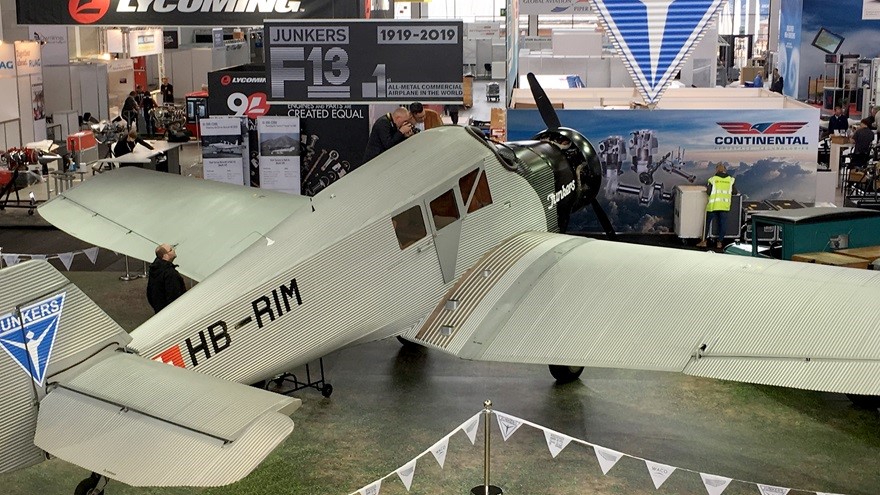
Dieter Morszeck, the owner of Rimowa GmbH, the famed baggage manufacturer, had a fondness for Junkers’ aircraft, and his father had produced the first travel case made of duralumin, the corrugated material Junkers used for his airplanes.
When the idea of a flyable reconstruction of the Junkers F 13 was floated in 2013, he was keen. However, he soon found out that there were only few remaining engineering drawings on which to base a reconstruction, and what existed was damaged and incomplete.
Further research revealed that there was an engineless F 13 in a museum in Le Bourget, France. With the permission of the curator, this aircraft was disassembled and laser-scanned, and the reconstruction proceeded on the basis of the derived blueprints.
Morszeck’s vision was a flyable airplane just like the original, but the knowledge of how to tool the components was seemingly lost. Dominik Kaelin, an expert in restoring vintage aircraft, their structures, and components. He and his team reinvented methods and materials they integrated into the aircraft. By the time they finished, every piece of it was crafted from scratch.
A ladder gets onto the huge wing, and tiny steps get through the door into the cabin, where four passengers can sit comfortably opposite each other in roomy leather upholstery. The two-seat cockpit, which is separated from the cabin by a window and, quite unlike the cabin, is open to the air. It can’t be accessed through the cabin as it also not have an outside door. Entry is from the wing.
A small recessed step leads into the pilot’s bucket seat 10 feet 2 inches above the ground. The instrument panel is equipped with a primary flight display, as well as a multifunction display, modern radio equipment, a transponder, and engine controls, but the wind is still in the pilot’s face.
In 2018 HB-RIM obtained type certification and was touring Europe.
Peter Bowers, president of Waco Classic Aircraft (which has been acquired by Morszeck) exhibited with the Junkers at Aero 2018.
Junkers F 13
Engine: Pratt & Whitney R-985 450 hp
Wing span: 48 ft 9 in
Length: 31 ft 6 in
Height: 10 ft 2 in
Empty weight: 3,430 lbs
Range: 345 nm
Cruise speed: 100 mph
Never exceed: 138 mph
Stall speed: 59 mph
Fuel consumption: Avgas 100 LL, 21 gph
Price: $ 2.8 million
Morse MB-3 / Thomas-Morse MB-3 / MB-6 / R-2
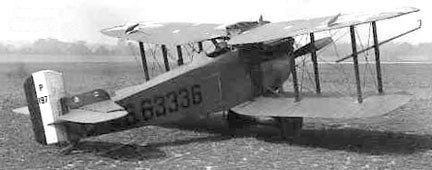
The MB-3 first flew on 2 February 1919. Fifty were for the US Army (AS63331-AS63380), 10 for USMC (A6060 to A6069); plus 1 static and 3 flying prototypes (AS40092 to AS40095), and 4 production for tests at McCook Field (AS63332, and AS63336 and AS63337).
The 1922 MB-3A featured a new cooling system and four-bladed prop. First flying on June 7, 1922, 200 Morse MB-3A fighters (AS68237 to AS68436) were built by Boeing during 1921 -1922, contracted by the government in 1920. Some later became MB-3M advanced trainers. Design elements went into Boeing PW-9. In addition 50 were built by Thomas-Morse.
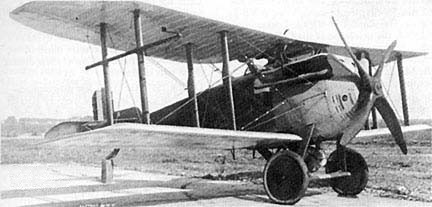
Three clipped-wing models were built in 1921, with one becoming MB-6 / R-2, and 10 for the USMC in 1921.

The MB-3B modified Boeing four-aileron design was cancelled.
Thomas-Morse MB-3
Engine: 300hp Wright-Hisso H
Wingspan: 26’0″
Length: 20’0″
Useful load: 823 lb
Max speed: 141 mph
Cruise speed: 125 mph
Range: 310 mi
Ceiling: 23,700′
Seats: 1
Morse S-4 / S-5

Designed by B D Thomas, the S-4 was evaluated for combat, but rejected and used as a trainer. The S-4 civil prototype (possibly still extant as NR66Y) was powered with a 100hp Gnôme and first flew in June 1917, piloted by Paul D Wilson. Twelve went to the USN, A395 to A406.
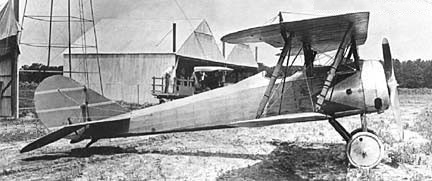
Thomas brothers, backed by Morse Chain Company, built three civil S-4B and 97 S-4B single-seat biplane advanced trainers for the Army, AS4276 to AS4372, plus ten for the USN, A3235 to A3244.
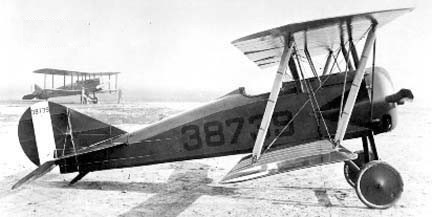
The improved S-4Cs were built powered by 80hp Gnôme B-9 or 80hp LeRhône C-9 engines. Priced at $5400, six civil, 461 for Army (AS38637 to AS38979, AS39882, AS41359 to AS41408, and AS44608 to AS44674), and four with twin floats for USN (A5855 to A5858); 50 with Gnôme and 447 with LeRhône, were built.
The designation S-5 was applied to S-4B fitted with two short main floats and a tail float. Six, A757 to A762, went to the US Navy in 1917.
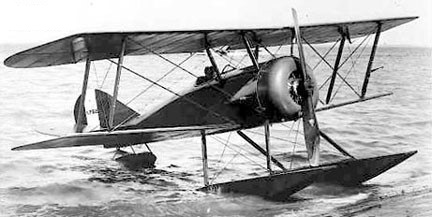
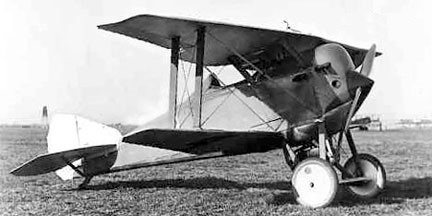
The 1918 S-4E had a tapered wings and redesigned landing gear and a 110hp LeRhône. One was built for evaluation as an aerobatic trainer but was rejected and used as a racer ‘Space-Eater’ with a 135hp Aeromarine V-8, piloted by Basil Rowe.
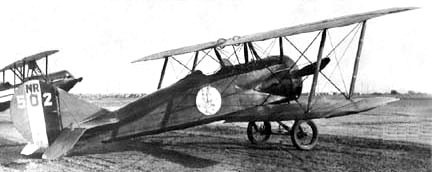
The S-4 was in considerable varied civil use from war surplus with about 60 show on records, with many converted to 90hp Curtiss OX-5.
Yackey produced three place conversions.
S-4
Engine: 100hp Gnôme
Speed: 95 mph
S-4B
Engine: 100hp Gnôme
Wingspan: 27’0″
Length: 20’3″
Speed: 95 mph
S-4C
Engine: 1 x 80hp Le Rhone 9C or 80hp Gnôme B-9
Max take-off weight: 623 kg / 1373 lb
Empty weight: 438 kg / 966 lb
Wingspan: 8.08 m / 26 ft 6 in
Length: 6.05 m / 19 ft 10 in
Height: 2.46 m / 8 ft 1 in
Wing area: 21.7 sq.m / 233.58 sq ft
Max speed: 83 kt / 153 km/h / 95 mph
Ceiling: 4500 m / 14750 ft
Initial climb rate: 826.77 ft/min / 4.2 m/s
Range: 217 nm / 402 km
Armament: 1 x .30CAL 7.62mm machine-gun
Crew: 1
S-4E
Engine: 110hp LeRhône
Wing span: (upper) 22’0″ (lower) 14’0″
S-4E Space-Eater
Engine: 135hp Aeromarine V-8
Speed: 103 mph
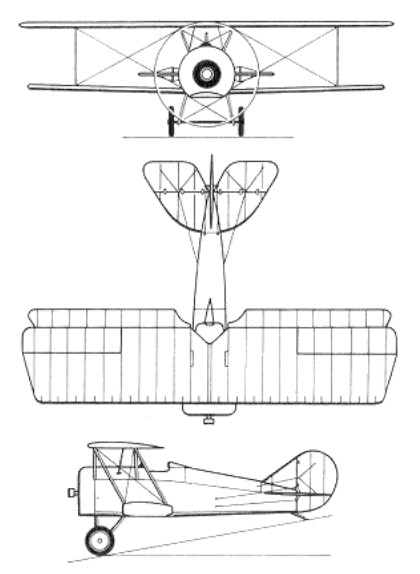
Morrow Aircraft Model 1-L
Morrow Aircraft developed the Model 1-L tandem two-seat trainer for Civil Pilot Training Program. Employed plastic-bonded plywood construction and was powered by a Lycoming O-435A engine.
Morrow 1912 biplane
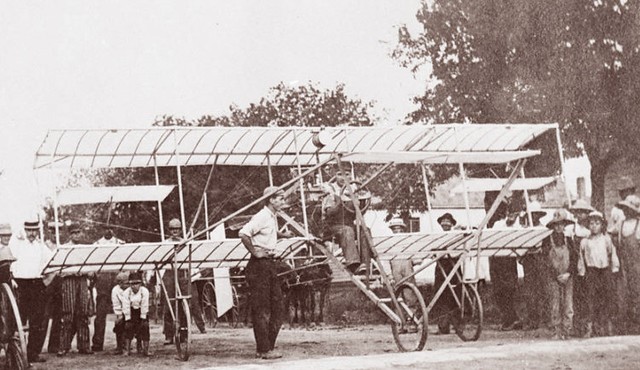
In the summer of 1911 J. A. Morrow and his sons, Everett and Edward, began building an airplane in their Carleton, Nebraska, blacksmith shop. Before it was finished, the Morrows moved to Burwell to ply their trade. It was there that the plane first took flight in the fall of 1912. It was a pusher biplane patterned after the 1909 Curtiss. It proved to be less than successful, though they persevered and built a second machine, used to make exhibition flights throughout Nebraska.
Morrisey OM-1 / OM-1-2 Bravo II
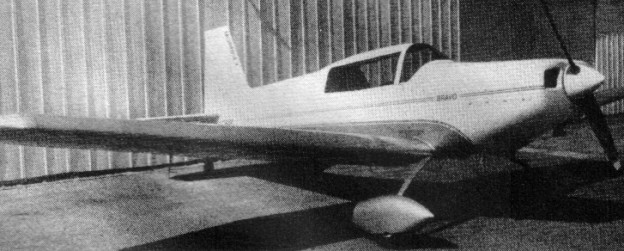
Designed by Bill Morrissey, the Bravo originated as the single-place Model OM-1, which became the two-place Bravo II in 1982. Modification was simple – no alterations to the basic structure. Instrument panel and windscreen were moved forward and the canopy extended.
Gross wt: 1700lbs
Empty wt: 965 lbs
Fuel cap: 35 US Gal
Wing span: 26.5’
Length: 21.5’
Top speed: 155mph
Cruise 75%: 145mph
Stall: 57mph
Climb rate: 1500fpm
T/O run: 400ft
Ldg roll; 700ft
Range: 550mls + res
Morrisey Nifty / 2000 / 2150 / Shinn Engineering Inc 2150A Kachina / Varga Kachina 2150A
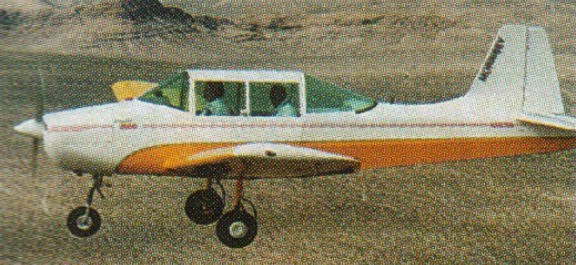
The only Nifty ever built had a fabric cover, wooden wings, and a 115 hp engine, built in the late 1940s.
Morrisey Nifty / 2000 / 2150 Article
Bill Morrisey adapted the design to aluminum, installed a 150 hp engine and built 10 Morriseys.
Shinn Engineering acquired full manufacturing rights, tooling and spares, and turned out 35 Shinn 2150 airplanes.
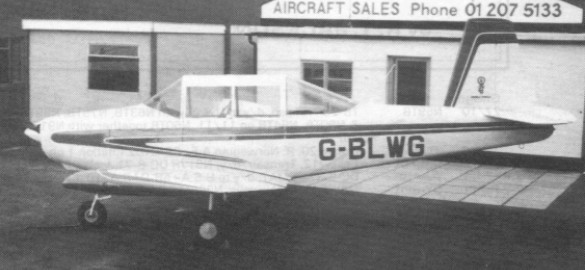
Varga Aircraft Corp, an airplane parts dealer, acquired from Shinn Engineering Inc full manufacturing rights, tooling and spares for Shinn Model 2150A in 1967. Vega moved the tooling twice and started setting up a plant in 1971. Put into production by Varga in 1977 as Model 2150A Kachina. It was available with 180 hp.
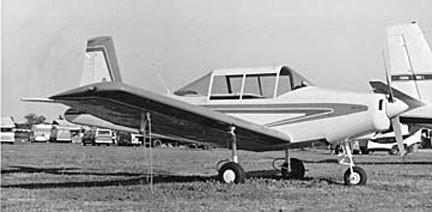
The 1973 Kachina sold for $13,500. 121 of the 1978 2150A (ATC 4A19) were built, and 18 of the 1981 2180 (4A19).
The 1982 2180TG were three conventional-gear configuration by Hibbard Aviation Co, Oakland CA.
Over 200 were built by the three manufacturers. As the Morrisey 2000, was offered as a kit, with planed production still under the FAA type certificate 4A14.
Nifty
Engine: 115 hp
Kachina 2150A
Engine: 1 x Lycoming O-320-A2C, 150 hp
TBO: 2000 hrs
Prop: Schenich 2 blade, fixed pitch 74in
Seats: 2
Length: 21.3 ft
Height: 7.2 ft
Wingspan: 30 ft
Wing area: 145 sq.ft
Wing aspect ratio: 6.3
Max ramp wt: 1817 lbs
Max take off wt: 1817 lbs
Standard empty wt: 1125 lbs
Max useful load: 692 lbs
Max landing wt: 1817 lbs
Wing loading: 12.5 lbs/sq.ft
Power loading: 12.1 lbs/hp
Max useable fuel: 34 USG/204 lbs
Climb rate: 910 fpm @ 68 kts
Climb gradient: 803 ft/nm
Rate of climb @ 8000 ft: 400 fpm
Service ceiling; 22,000 ft
Max speed: 128 kts
Cruise @ 65% power @ 8,000ft: 105 kts
Fuel flow @ 65% power @ 8,000ft: 45 pph
Endurance @ 65% power @ 8,000ft: 4.3 hr
Stalling speed clean: 50 kts
Stall speed flaps down: 45 kts
Turbulent air penetration speed: 102 kts
Fixed nose wheel undercarriage
2150ATG
First built: 1981
Engine: Lycoming O-320-A2C, 150 hp
TBO: 2000 hrs
Prop: Sensenich 2-blade, 74-in
Seats: 2
Length: 21.3 ft
Height: 7.2 ft
Wingspan: 30 ft
Wing area: 145 sq.ft
Wing aspect ratio: 6.3
Maximum ramp weight: 1817 lbs
Maximum takeoff weight: 1817 lbs
Standard empty weight: 1125 lbs
Maximum useful load: 692 lbs
Maximum landing weight: 1817 lbs
Wing loading: 12.5 lbs/sq.ft
Power loading: 12.1 lbs/hp
Maximum usable fuel: 204 lbs
Best rate of climb: 1110 @ 68 kts
Climb gradient: 803 ft/nm
Service ceiling: 22,000 ft
Stalling speed clean: 50 kts
Stalling speed flaps down: 45 kts
Turbulent-air penetration speed: 102 kts
Fixed tail wheel under carriage
Morrisey 2000
Speed max: 132 mph
Cruise: 125 mph
Range: 350 sm
Stall: 50 mph
ROC: 1000 fpm
Take-off dist: 500 ft
Landing dist: 500 ft
Service ceiling: 16,000 ft
Engine: Lycoming O-235, 115 hp
HP range: 65-150
Fuel cap: 20 USG
Weight empty: 975 lbs
Gross: 1600 lbs
Height: 7 ft
Length: 20 ft
Wing span: 30 ft
Wing area: 142.1 sq.ft
Seats: 2
Landing gear: nose wheel
Morok 1910 monoplane
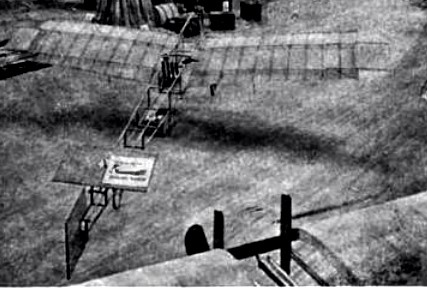
A monoplane with sliding wing-tips, which allowed it to bypass the lateral control patent wars of the time. It was built by Charles F. Morok of the Morok Aeroplane Co. of New York. His most noted flight was when he flew across the Green Mountains at Rutland, Vermont, but he also gained some notoriety by crashing into the window of a young woman during an attempt to fly across the Hudson River in December 1910.
Morok 1911 biplane
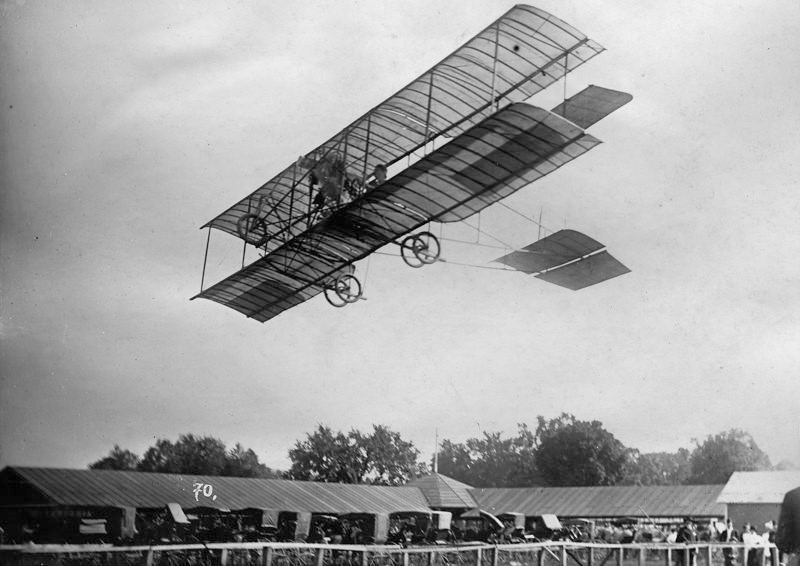
Belgian aviator Charles Frank van der Merrsche, alias Charles F. Morok (the name he used in the USA), flying his biplane over the Sandusky County Fairground at Fremont, Ohio in September 1911. Following the Boston Aero Show in February 1910, Morok was flying for Fred Shneider on Shneider biplanes. He then settled on the Nassau Boulevard Aerodrome of Garden City, formed a flying school and built a biplane of his own in Summer 1911. The machine had a span of 32 feet (9,75 m) and a weight of 500 pounds (227 kg). The engine was a 45 hp Anzani, probably American-built. It has been stated that two of these machines were built for exhibition and training duties.

