Nexaer LS1

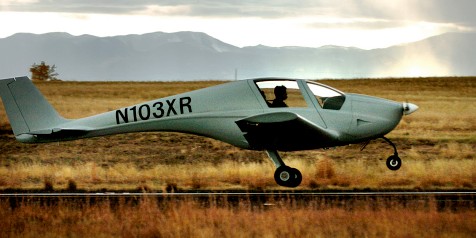
The Nexaer LS1, a 2-seat composite airplane that meets Light Sport Aircraft classifications and is being promoted and marketed by Sportplanes.com. The LS1, manufactured by Nexaer in Colorado Springs, Colorado, fetures a 54” wide cockpit, a cruise speed of 120 knots and a useful load in excess of 600 lbs. The prototype of the LS1 was unveiled at AirVenture 2005.
With a moulded carbon fiber composite structure, the Nexaer LS1 features a 4-point harness, and an all-plane parachute.

Standard features include:
No-flap
Tricycle landing gear for easy ground handling
Molded Kevlar® fuel tank (single center-mounted tank)
21-inch-wide seating with slide and tilt adjustment
Cabin heat and vent
Rear baggage compartment for standard cargo
Sporting goods cargo area for skiis, fishing poles, hunting gear, and golf clubs
Passenger-side glove compartment with flip-down tray and 12V power outlet

Standard Edition (SE)
Jabaru 2200 engine (80 hp)
Standard mechanical flight instruments (6-pack)
Standard analog engine gauges
Garmin SL-40 comm radio
Garmin GTX327 digital transponder
Single pilot-side yoke and pedals
Landing light
Navigation lights and strobes

Trainer Edition (TE)
Jabaru 2200 engine (80 hp)
Standard mechanical flight
instruments (6-pack)
Standard analog engine gauges
Garmin SL-30 nav/comm radio
Garmin GTX327 digital transponder
Dual flight controls
Landing light
Navigation lights and strobes
All-plane parachute

Luxury Edition (LE)
Jabaru 3300 engine (120 hp)
Dual electronic flight instrumentation system (EFIS)
Dual GPS
Electronic engine monitor with matching LCD display
Garmin SL-40 comm radio
Garmin GTX330 digital transponder
PSEngineering PCD7100-I stereo intercom with CD/MP3
2-axis digital autopilot
Single pilot-side flight controls
Landing light
Navigation lights and strobes
All-plane parachute
Keychain remote door unlock and open

Length: 23.25 ft.
Height: 7 ft. 10 in.
Wing span: 29.5 ft.
Wing Area: 124 sq. ft.
Cabin Width: 54 in.
Seat width: 21 in.
Max Gross Weight: 1320 lbs.
Empty Weight: 750 lbs.
Fuel Capacity: 27 USgal. (162 lbs.)
Useful Load: 570 lbs.
Design load factor: +4.5/-2.0 g
Power: 80 – 120 hp
Stall speed: 44 knots (51 mph)
Max speed in level flight: 120 knots (138 mph)
Maneuvering speed (VA): 105 knots (121 mph)
Never-exceed speed (VNE): 160 knots (184 mph)
Max rate of climb (sea level): 1500 ft./min
Max rate of climb (10,000 ft.): 700 ft./min
Service ceiling: TBD
Take-off distance (sea level): 350 ft
Take-off distance (10,000 ft): 750 ft
Endurance: 4 hours (with 30 minute reserve)
Range: 550 miles (ave.)

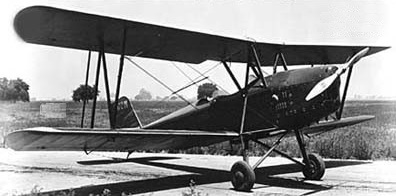
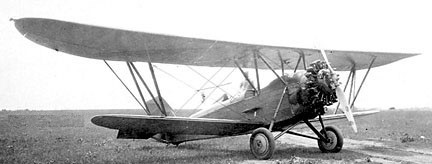
New Standard D-29 / NT-1

New Standard D-29A NC155M s/n 1007

The 1929 New Standard D-29 design (ATC 198) evolved from license-built Belgian Stampe-Vertongen D-29A. Probably only one machine was built, priced at $4,250.

Twenty-six of the 1929 D-29A (ATC 216) were built; NC36K, NC151N/158M, NC164M/172M, NC715Y, NC913V, NC922V/926V, and NC9195, powered by a Kinner K-5 and priced at $4,250.

New Standard D-29 Special NX172M

The D-29 Special of 1929 (2-326) was for 95hp Menasco B-4 installation as D-29 Special in NX172M c/n 1026.

New Standard D-29 Special NX172M

USN version with Kinner B-5 was NT-1.

The D-29S of 1930 (ATC 2-272) was a “Sport” version with coupe-type cockpit priced at $5,000.

One special model built for Charles H Day, NC173M c/n 1020; also appears on registers as D-25C.

D-29
Engine: 85hp Cirrus Mk III
Wingspan: 30’0″
Length: 24’11”
Useful load: 535 lb
Max speed: 88 mph
Cruise: 75 mph
Stall: 37 mph
Range: 300 mi
Seats: 2

D-29A
Engie: 100hp Kinner K-5
Wingspan: 30’0″
Length: 24’8″
Useful load: 625 lb
Max speed:: 98 mph
Cruise: 80 mph
Stall: 42 mph
Range: 250

D-29 Special
Engine: 95hp Menasco B-4 i

NT-1
Engine: Kinner B-5

D-29S
Useful load: 655
Max speed: 102 mph
Cruise: 85 mph
Stall: 45 mph
Range: 340 mi

D-25C
NC173M c/n 1020

New Standard D-25

New Standard D-25 as crop-duster N928V

The 1925 D-25 received ATC 108 and was priced at $9,795. About 45 were built. ATC 2-542 was issued in 1937.

In 1928 the Gates-Day Aircraft Corporation became New Standard Aircraft Corporation, and the following year produced the White New Standard D-25 tandem, open-cockpit four-seat biplane, developed from the Gates-Day GD-24.

With the pilot seated behind and four passengers in front, all in open cockpits, it is a large biplane by any standards.

Designed by Charles H Day, production of D¬25s began at the Gates Day plant at Peterson, New Jersey in 1928 and when production ceased two years later about 65 of the type had been delivered a few were built during the 1930s as crop dusters.

Jones Aircraft Corp was formed in 1935 by Ben Jones after acquiring rights in D-25 biplane previously built by the New Standard Aircraft Company. Jones built 10 of these in 1938, in factory at Schenectady, New York.

New Standard D-25

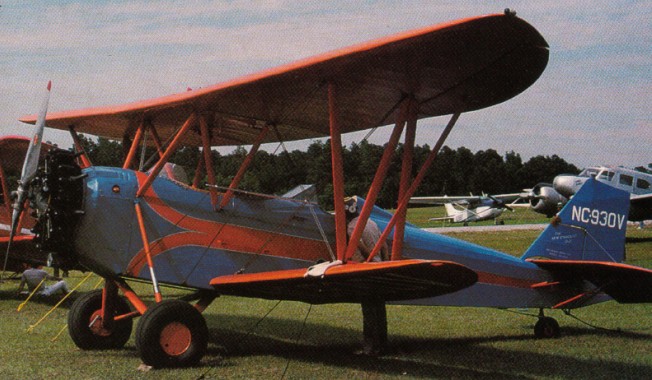
The 1929 D-25A (ATC 224) was powered by a 225hp J-6 for an increase in load. Priced at $7,990, five were built, NC33K, NC38K, NC150M, NC930V, NC9190, the next-to-last of which was modified with 300hp J-6 as D-25B (see White D-25B).

The D-25X was a modification of D-25A, registered N37K c/n 203.

D-25
Engine: 220hp Wright J-5
Wingspan: (upper) 45’0″ (lower) 32’6″
Length: 26’10”
Useful load: 810 lb
Max speed: 110 mph
Cruise: 98 mph
Stall: 37 mph
Range: 490 mi
Ceiling: 18,000′
Seats: 5

D-25A
Engine: 225hp Wright J-6

New Standard D-24

The 1929 New Standard D-24 (ATC 107) was designed by Charles H Day as a five-place open biplane. Selling for $4,600 with a 180hp Wright-Hisso E or $4,250 with a 150hp Hisso A, four were built, NC442, NC9102, NC9756, and NC9794, and two were converted from Standard GD-24, NC193 and NX7286.

D-24
Engine: 180hp Wright-Hisso E
Wingspan: 45’0″
Length: 26’6″
Useful load: 1334 lb
Max speed: 100 mph
Cruise speed: 95 mph
Stall: 37
Range: 550 mi
Seats: 5

Newson Kelvin 40

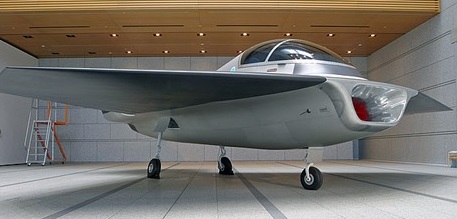
The Kelvin 40 “concept plane” by designer Marc Newson, who was developing the interiors for Qantas’ A380s. The Kelvin is fitted with a real Snecma jet engine, and Newson says the aircraft has been proven to be aerodynamically viable. But will never fly. On display at a design exhibition in Tokyo.

New Pacer Aircraft New Pacer

Designed by Frank R Seesock circa 1925, the New Pace had two side-by-side cockpits. An open cockpit high wing monoplane. It s known one carried 1491 lb in one test with a 1000-fpm rate of climb.

Known examples:
1929
Engine: 150hp Hisso A
Wingspan: 36’6″
Length: 22’9″
Useful load: 1200 lb
Max speed: 138 mph
Cruise speed: 110 mph
Stall speed: 42 mph
Range: 750 mi
Incl: NX1928

1930
Engine: 200hp Wright J-5
Max speed: 147 mph
Cruise speed: 120 mph
Stall speed: 42 mph
one NR786Y c/n 2

1932
Engine: 300hp Wright
one NX749Y c/n 101

Newman Australia II

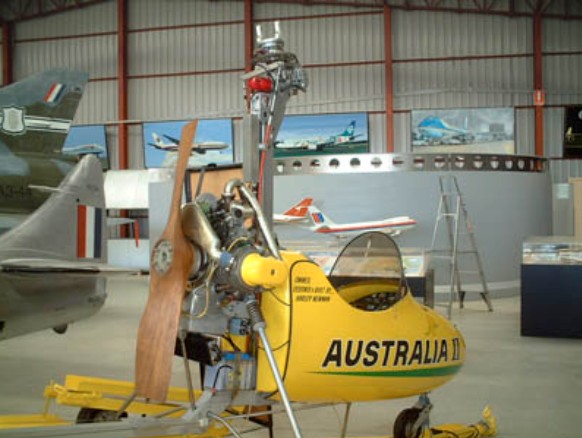
The Australia II was owned, designed and built by Sydney Engineer Mr. Harley Newman. The advantages of Australia II over the original gyrocopter, named Australia, include a more streamlined overall design, lighter weight and a single rudder to reduce the air drag created by the twin rudders on the original machine.

The engine is a turbo charged 900cc BMW motor bike engine. Features of the aircraft include a Streamlined Cabin, Hydraulic Pre-Spin Wind Up for the Rotor Blades, Full Instrumentation, Hydraulic Disc Brakes, Self Starter, Radio Communication, Cabin Controlled Adjustments for Advance and Retarding the engine, altering the Fuel Mixture of the Carburettor and directing the Oil Flow from the Hydraulic Pump to the Hydraulic Motor in the Rotary Head.

The fuel tank has been designed to be an integral part of the cabin area. Also of note was the design of the Tail Plane and Rudder.

Australia II was never flown. However, a considerable amount of Ground Testing and Development on the Engine, particularly the Turbo Charger had been carried out. At the time of Mr. Newman’s death this machine was producing high Horsepower and Static Thrust. At the time of it’s construction, Australia II was by far the most technically advanced Gyrocopter in Australia.

Australia II was donated to the Australian Aviation Museum by Harley Newman’s son Gordon, as this was his father’s wish.