Supermarine Seagull

RAAF Seagull III

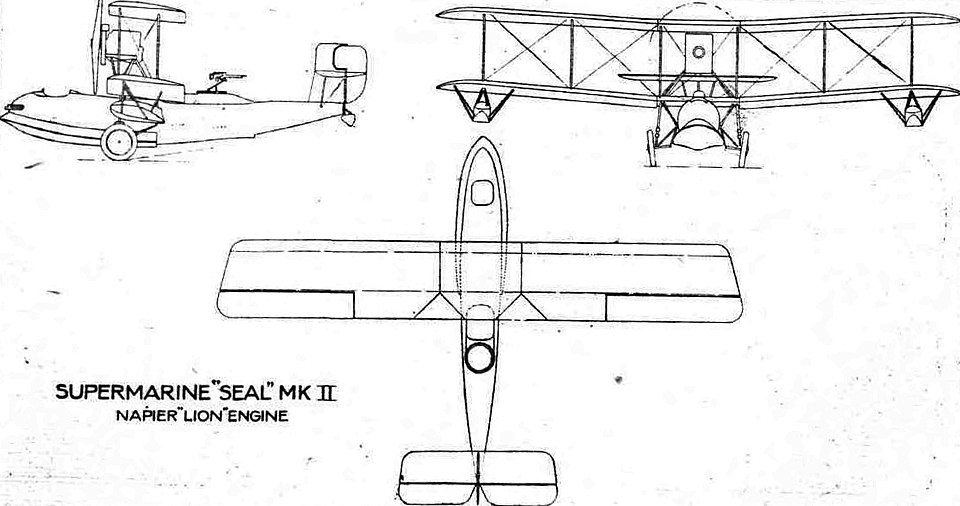
The Supermarine Seagull was a flying boat produced by the British aircraft manufacturer Supermarine. It was developed by Supermarine’s chief designer R.J. Mitchell from the experimental Supermarine Seal II.

Development of the Seagull started during 1920. In June 1921 it was evaluated for military applications but was rejected, and so Supermarine developed the aircraft as a private venture. During February 1922, an initial order for two aircraft was placed by the Air Ministry; subsequent production of the Seagull is believed to have assisted Supermarine to survive during a period when the aircraft industry struggled to attract customers.

The Seagull was used by the British Fleet Air Arm for gunnery spotting and reconnaissance duties. It was operated by the Royal Australian Air Force for similar purposes. During the early 1930s, when the type was being replaced by the more successful Supermarine Walrus, a number of Seagulls were re-used for civilian purposes.

The origins of the Seagull are heavily interconnected with the Supermarine Seal and the Supermarine Commercial Amphibian. Work on the Seal, which started in 1920, sought to build upon the Commercial Amphibian. A range of alterations and improvements were incorporated, many of which were drawn from the Commercial’s official review. The Commercial Amphibian was later designated as the Seal Mk I—and the new design, initially known as the Seal Mk II, later became the Seagull.

N158, the prototype of the Seagull, flew for the first time in May 1921. On 2 June 1921, having completed manufacturer’s trials, it was handed over for service trials with the Royal Air Force. Attention was paid to the aircraft’s seaworthiness and handling characteristics at low speeds, including its relatively low landing speed. Trials revealed that the rudder gave poor yaw characteristics. New designs were tested until a fin extension was found to solve the issues, which was incorporated into the prototype. Having been sufficiently impressed by the aircraft’s performance, two aircraft were ordered by the Air Ministry in February 1922. The prototype was shown at the 1922 RAF Display at Hendon Aerodrome.

The Supermarine Seagull was an amphibian flying boat, powered by a single Napier Lion engine. This engine was mounted in a nacelle slung from the aircraft’s upper wing and powered a four-blade propeller in a tractor configuration. The Seagull employed gravity feed to supply fuel for the engine, and was the first single-engined flying boat to use this method.

The lower wing was set in the shoulder position and had two bays. The floats were attached to the lower wing near the wingtips via struts, their positioning maximised buoyancy. For land operations, the Seagull was equipped with a retractable undercarriage; pilots lacked aids such as indicators or alarms, thus were reliant on training and memory to deploy the undercarriage when applicable. For easier stowage on board ships, the wings were designed to be folded, which necessitated mounting the wings in a relatively forward position on the fuselage.

The fuselage had an oval cross-section and had a planing bottom with two steps. The interior of the fuselage was divided into several watertight compartments. The three-man crew—pilot, observer, and radio-operator—each had an open cockpit. The pilot was seated in a relatively forward position, at a distance from the other crew members, being directly ahead of the fuel tanks; the cockpit was provisioned with a single retractable machine gun. The radio operator was located just behind the wing, while the rear gunner position was further back still. The majority of the aircraft was constructed from wood.[9] Previous Supermarine aircraft had incorporated the fuel tanks into the hull; with their removal to the upper wing, the Seagull’s crew gained full access within the interior of the aircraft.

On 4 July 1922, the name Seagull was adopted for the type. The prototype was designated as the Mk I; the subsequent production aircraft were given the designation Seagull Mk II. The two versions were similar, although an alternative powerplant in the form of a single more powerful Napier Lion III engine, a reduced wingspan, and a larger fin were used in the Mk II. Production of the Seagull (with serial numbers in and around N9642–N9647) began in 1922. In total, 25 aircraft were built for the Air Ministry and the Royal Navy; their production has been seen as critical to the survival of Supermarine at this time, and the first orders were intentionally built in small batches to ensure that the firm received enough business to stay operational.

In 1925, construction of the improved Mk III began for the Royal Australian Air Force (RAAF), following an order being placed in January of that year. This type featured a more powerful Napier Lion V engine, and the radiators were redesigned so as to be able to operate in tropical regions. The RAAF received six Mk IIIs were between 1926 and 1927. In 1928, one of the Seagull Mk IIs (the so-called Mk IV) was rebuilt with Handley-Page leading edge slots and twin fins and rudders.

Seagull III were delivered to the RAAF in 1926-27 to replace Fairey IIID. They were flown by No 101 Fleet Co-operation Flight, an RAAF unit under the operational control of the RAN. They flew briefly from the RAN seaplane carrier HMAS Albatross and subsequently from cruisers. Under-powered, incapable of catapult launch the Seagulls were withdrawn from service in 1934.

Powerplant: 1 × Napier Lion IIB W-12, 492 hp (367 kW)
Wingspan: 46 ft 0 in (14.02 m)
Length: 37 ft 9 in (11.51 m)
Height: 14 ft 0 in (4.27 m)
Wing area: 593 sq ft (55.1 sq.m)
Empty weight: 3,820 lb (1,733 kg)
Gross weight: 5,691 lb (2,581 kg)
Maximum speed: 98 mph (158 km/h, 85 kn) at 3,000 ft (914 m)
92 mph (80 kn; 148 km/h) at 6,500 ft (1,981 m)
Endurance: four hours, 30 minutes
Service ceiling: 9,150 ft (2,790 m)
Time to altitude: 3,000 ft (914 m) in7 minutes 43 seconds
Armament: Guns: One × .303 in (7.7 mm) Lewis gun
Crew: 3 (pilot, wireless operator & observer)
Boeing C-204

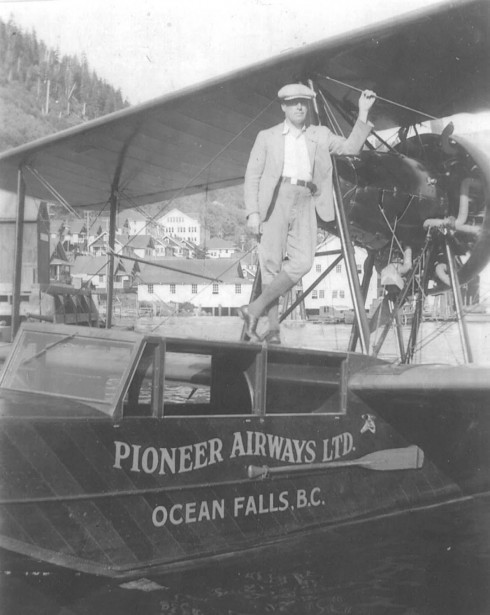
The Boeing Model 204 was an American biplane, pusher configuration flying-boat aircraft built by Boeing in 1929. Externally, the 204 looked identical to the Boeing Model 6E, but a number of internal changes, including increasing the passenger capacity to four, gave it a new type certificate and model number.

Construction was started on five aircraft, but only two were completed. The first, designated 204 and the second 204A. A third aircraft was built by a private owner who had bought the three incomplete machines. The 204A was a dual-control version which was later owned by Peter Barnes, who flew it on his private Seattle-Victoria, British Columbia main run.

The C-204 Thunderbird, a modified 204, was the first type produced by Boeing Aircraft of Canada. These had altered wing and tailplane incidence and a reduction in upper wing area. The prototype was first flown on 30 March 1930, the first of a batch of four. They failed to sell readily, though they were sometimes leased for work. Eventually three were sold. All worked in British Columbia, remaining active until 1939.

William “Bill” McCluskey stands atop a Boeing Canada C-204 Thunderbird flying boat.

204
Four-seat variant of the Model 6E, one built.
Crew: one pilot
Capacity: four passengers
Length: 32 ft 7 in (9.93 m)
Wingspan: 39 ft 8.25 in (12.10 m)
Height: 12 ft 0 in (3.66 m)
Wing area: 470 sq ft (43.66 sq.m)
Empty weight: 3,298 lb (1,496 kg)
Gross weight: 4,940 lb (2,240 kg)
Powerplant: 1 × Pratt & Whitney R-1340 Wasp , 410 hp (305 kW)
Maximum speed: 115 mph (185 km/h, 100 kn)
Cruise speed: 95 mph (153 km/h, 83 kn)
Range: 350 mi (563 km, 300 nmi)
Service ceiling: 9,000 ft (2,743 m)
Rate of climb: 1,000 ft/min (5.1 m/s)

204A
As the Model 204 with dual-control, one built.

C-204 Thunderbird
Four 204s built by Boeing Canada.

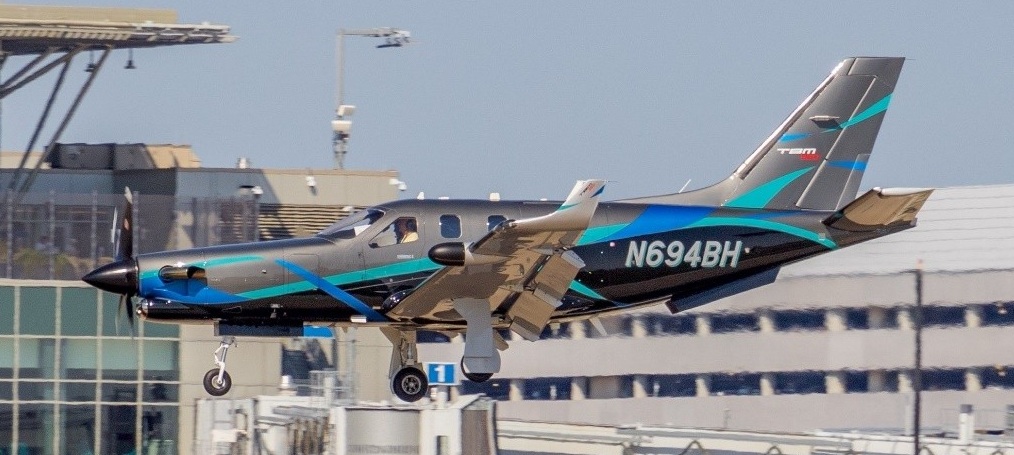
Daher TBM 900 / 910 / 940 / 960

TBM 900

Launched in 2014, the TBM 900 brought 26 refinements aimed at improving both speed and efficiency. According to Daher, key enhancements included a redesigned engine cowling, a new five-blade composite propeller, and aerodynamic tweaks to the fuselage and winglets. These changes resulted in reduced drag and improved climb rates, allowing the TBM 900 to outperform its predecessor while consuming less fuel.

There were also subtle exterior changes introduced to reduce drag. These included a re-contoured tail cone and engine nacelle, and the addition of inner main landing gear doors. Additionally, cabin improvements made the aircraft quieter and more comfortable.

TBM 900

There are five versions of the TBM 900 series aircraft.

Introduced in 2017, the TBM 910 was designed to build upon the aerodynamic and structural improvements of the TBM 900 while focusing primarily on avionics advancements. The TBM 910 featured the Garmin G1000 NXi avionics suite, offering faster processing speeds, improved resolution, and enhanced connectivity options.

TBM 910

The aircraft’s performance remained largely similar to the TBM 900, but the new avionics provided pilots with a more intuitive and user-friendly experience. Features include improved touchscreen controls, ADS-B capabilities, and enhanced synthetic vision.

TBM 910

Introduced in 2019, the TBM 940 introduced an automatic throttle system, which helped pilots manage power settings more efficiently. This variant also featured autoland technology, as well as automatic deicing.

Additional refinements included improved cabin comforts, upgraded climate control, and enhanced noise reduction.

Introduced in 2022, the TBM 960 featured a digital e-throttle and Pratt & Whitney PT6E-66XT engine. The TBM 960 also includes an autoland system.

TBM 960

Additionally, this variant boasts a dual-channel full authority digital engine control (FADEC) feature – Daher calls this EPECS, which stands for Engine and Propeller Electronic Control System. The TBM 960 is the first aircraft in the TBM line to feature this. The TMB 960 also has an MTOW that is 221 lb (100 kg) greater, totaling 7,615 lb (3,454 kg).

TBM 960

The TBM 960 replaced the 940, and was sold alongside the baseline TBM 910 model.

1,155 TBM series aircraft have been produced, as of July 2023. From its inception with the TBM 700 to the TBM 960.

TBM 900
Engine: Pratt & Whitney Canada PT6A-66D
Maximum cruise speed: 330 knots (380 mph, 611 km/h)
Range: 1,730 nautical miles (1,991 mi, 3,204 km)
Maximum takeoff weight (MTOW): 7,394 lbs (3,354 kg)
Service ceiling: 31,000 ft (9,449 m)
Fuel capacity: 292 US gal (1,105 L)
Seating capacity: 6

TBM 910
Engine: Pratt & Whitney Canada PT6A-66D
Maximum cruise speed: 330 knots (380 mph, 611 km/h)
Range: 1,730 nautical miles (1,991 mi, 3,204 km)
Maximum takeoff weight (MTOW): 7,430 lbs (3,370 kg)
Service ceiling: 31,000 ft (9,449 m)
Fuel capacity: 292 US gal (1,105 L)
Seating capacity: 6

TBM 940
Engine: Pratt & Whitney Canada PT6A-66D
Maximum cruise speed: 330 knots (380 mph, 611 km/h)
Range: 1,730 nautical miles (1,991 mi, 3,204 km)
Maximum takeoff weight (MTOW): 7,430 lbs (3,370 kg)
Service ceiling: 31,000 ft (9,449 m)
Fuel capacity: 292 US gal (1,105 L)
Seating capacity: 6

TBM 960
Engine: Pratt & Whitney Canada PT6E-66XT
Maximum cruise speed: 330 knots (380 mph, 611 km/h)
Range: 1,730 nautical miles (1,991 mi, 3,204 km)
Maximum takeoff weight (MTOW): 7,615 lbs (3,454 kg)
Service ceiling: 31,000 ft (9,449 m)
Fuel capacity: 292 US gal (1,105 L)
Seating capacity: 6

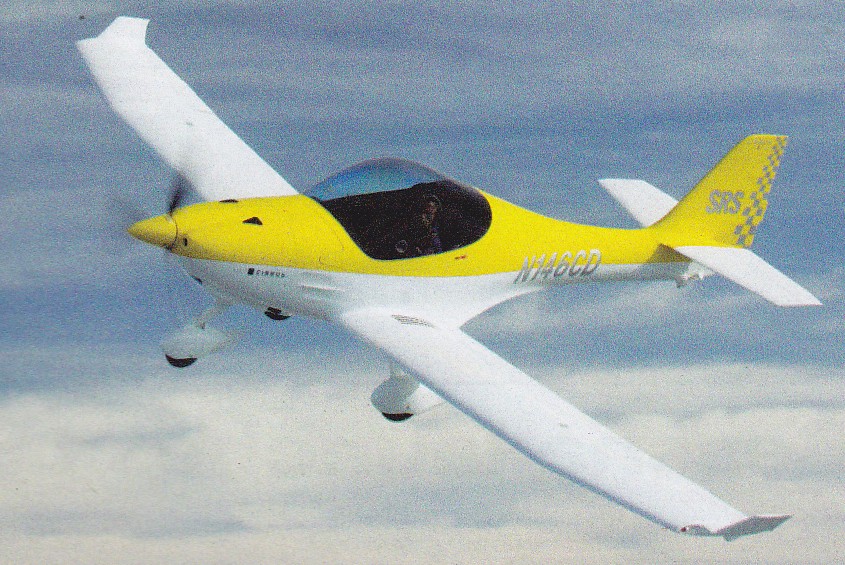
Cirrus Designs SR-S

The Cirrus SRS (SR Sport) is the German B&F Fk 14 Polaris all-composites two-seat ultralight modified for US LSA regulations. First flowing in 1999, it was selected by Cirrus after a four-year evaluation of various designs. Powered by a 100 hp / 75 kW Rotax 912S, Cirrus will have to slow the aircraft down to meet the LSA’s 120 kt / 222 kph maximum cruise speed rules.

Neiva N-59 Regente

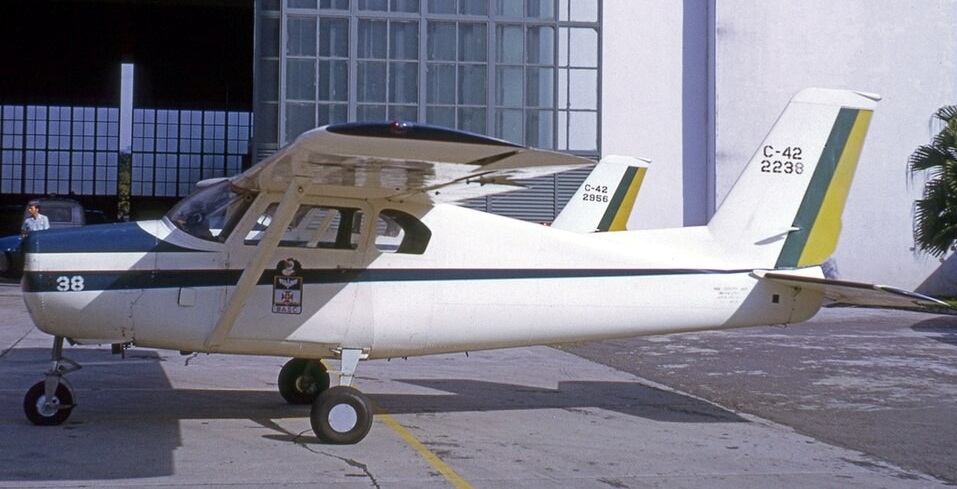
Neiva N-591 Regente C-42 2238 FAB

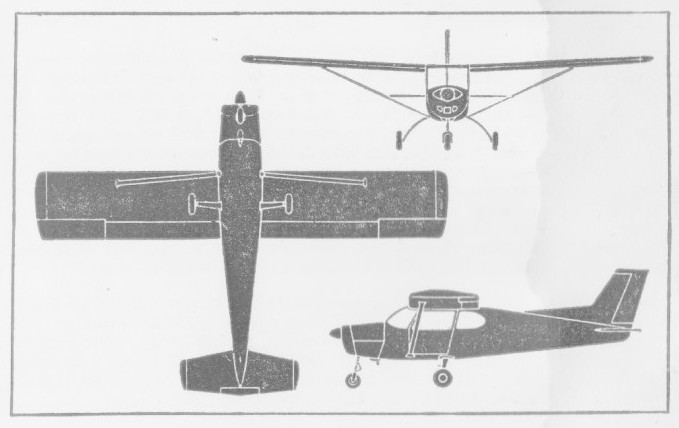
Neiva Regente is a Brazilian propeller-driven four-seat light utility aircraft manufactured by Indústria Aeronáutica Neiva.

The design was started in 1959 for a four-seat cabin monoplane aircraft with a high wing and fixed undercarriage. The prototype, designated the Neiva Regente 360C, was first flown on 7 September 1961 with a 145 hp (108 kW) Continental O-300 piston engine, and received its certificate of airworthiness on 19 November 1963.

Neiva Regente Article

The type was ordered into production by the Brazilian Air Force with a more powerful 180 hp (134 kW) Lycoming O-360-A1D engine. Eighty aircraft were built originally designated the U-42 (later changed to C-42) for the utility role. Twenty for the Brazilian Army’s Air Observation Squadron. First delivery occurred late in 1963. Neiva developed a three-seat air observation post version for the Air Force, designated the Regente 420L. Its tailcone was lowered in order to improve visibility, and it used a more powerful Continental IO-360D 210 hp engine. The aircraft was first flown in January 1967 as the YL-42. Forty were built for the Brazilian Air Force as the L-42. It had provision to carry light bombs or rockets on underwing hardpoints.

Two commercial versions were to be manufactured by Neiva, one being powered by a 180 hp Lycoming O-360-A1A and the other by a 145 hp Continental O-300-A.

Neiva also developed a four-seat civil version designated the Lanceiro. The prototype (Registered PP-ZAH) first flew in 1970, followed by production aircraft in 1973. The company’s subsequent involvement with Embraer resulted in the Lanceiro’s program termination.

Variants

Regente 360C – utility version (80 built)
U-42 – military designation of the Regente 360C
C-42 – military designation changed from U-42

Regente 420L – air observation post version (40 built)
L-42 – military designation of the Regente 420L. Originally designated L-8 and L-20.

Lanciero – civil version (2 built)

C-42
Powerplant: 1 × Lycoming O-360-A1D air-cooled flat-four engine, 130 kW (180 hp)
Propeller: 2-bladed Hartzell HC-C2YK-1A/A7666 constant-speed propeller
Length: 7.04 m (23 ft 1 in)
Wingspan: 9.13 m (29 ft 11 in)
Height: 2.93 m (9 ft 7 in)
Wing area: 13.45 sq.m (144.8 sq ft)
Aspect ratio: 6:1
Airfoil: NACA 4410
Empty weight: 640 kg (1,411 lb)
Max takeoff weight: 1,040 kg (2,293 lb)
Fuel capacity: 172 L (45 US gal; 38 imp gal)
Maximum speed: 220 km/h (140 mph, 120 kn) at sea level
Cruise speed: 212 km/h (132 mph, 114 kn) (max cruise)
Stall speed: 90 km/h (56 mph, 49 kn) (flaps down)
Range: 928 km (577 mi, 501 nmi) at 1,500 m (4,900 ft) (econ. cruise)
Service ceiling: 3,600 m (11,800 ft)
Rate of climb: 3.5 m/s (690 ft/min)
Takeoff run to 15 m (50 ft): 350 m (1,150 ft)
Landing run from 15 m (50 ft): 460 m (1,510 ft)
Crew: 1
Capacity: 3 passengers

Engine: 145 hp Continental O-300-A
Length: 7.04 m (23 ft 1 in)
Wingspan: 9.13 m (29 ft 11 in)
Height: 2.93 m (9 ft 7 in)
Wing area: 13.45 sq.m (144.8 sq ft)
Empty weight: 1190 lb
Max speed: 152 mph
Cruise 75%: 141 mph at 6560 ft
ROC: 866 fpm
Service ceiling: 15,420 ft
Range: 755 mi