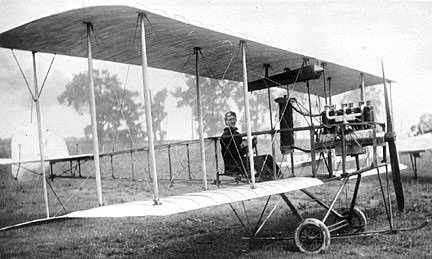
Built for sportsman-pilot Joseph Best in 1913, the single place open cockpit #1 featured Wright two-stick controls and wing-warping.
Engine: 60hp Kirkham
Built for sportsman-pilot Joseph Best in 1913, the single place open cockpit #1 featured Wright two-stick controls and wing-warping.
Engine: 60hp Kirkham
Charles Dickenson successfully tendered for the Twin Cities-Chicago mail contract in 1926 with three Wright J-4 Lairds, an open cockpit biplane built by Henry C. Keller, and a cabin biplane built by Elmer Partridge. A few minutes after taking off on the Dickenson company’s inaugural flight on 7 June 1927, Elmer Partridge crashed and died in his home-made aircraft.
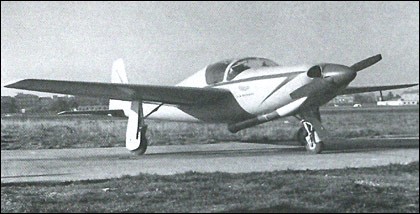
A one off designed specifically to enter and win the “Giro de Sicilia”, the Tour of Sicily, the P.55 Tornado was a two-seat sport competition aircraft, with a mid-mounted wing, retractable tricycle landing gear, a Lycoming O-320 flat-four engine, and side-by-side seating.
First flying in 1955, the only example (I-REGJ) winning the Tour of Sicily in 1956, to be lost in a crash on 13th June 1958.

Engine: 1 x Lycoming O-290-D2, 140 h.p.
Span: 23′ 7.5″
Wing area: 86.1 sq.ft
Length: 19′ 9.75″
Height: 6 ft 10.75 in
Empty weight: 868 lb
Loaded weight: 1367 lb
Max speed: 211 mph
Cruise: 186 mph
Time to 3280ft: 3 min
Max range: 497 mi

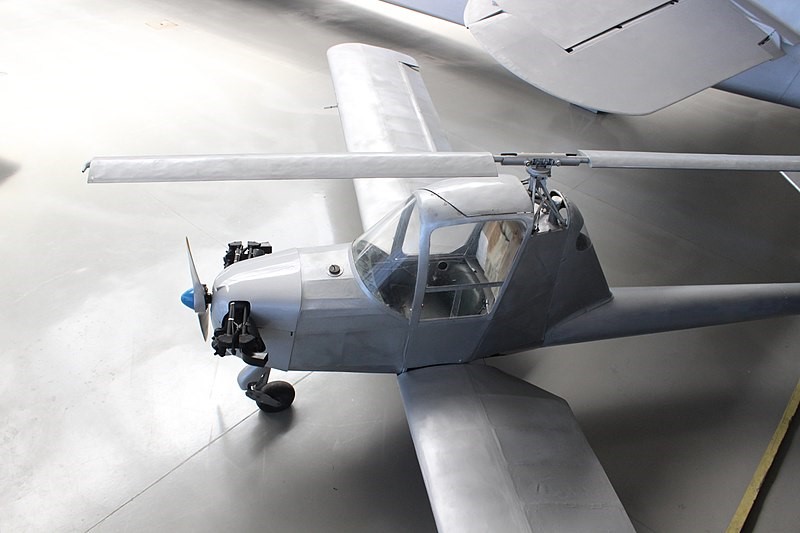
The Partenavia P-53 Aeroscooter was designed by Luigi Pascale, expressly for Mario de Bernardi, winner of the previous year’s d ‘Annunzio Trophy on a Partenavia P-55 Tornado.
The Aeroscooter is constructed of metal, and represents the minimum safe structure required to unite pilot, engine and flying surfaces. It fitted with a two-bladed rotor to reduce descent rate and stall in the event of an engine failure.
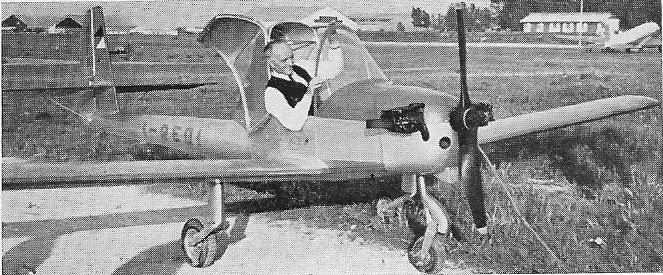
It flew in 1951.
It was built in collaboration with one Mario de Bernardi, who went on to build a two-seat version of the Aeroscooter; but he then died of a heart attack, and that was the end of it.
Engine: Ambrosini P-25, 16 kW (22 HP)
Prop: two-blade wooden
Wingspan 27 ft. 2 in / 8.28 m
Wing area: 8.3 m2 (89 sq ft)
Airfoil: NACA 63-series
Length 16 ft. 9 in / 5.12 m
Height 5 ft. 7 in / 1.70 m
Empty weight: 180 kg / 397 lb
MTOW: 280 kg / 617 lb
Maximum speed: 93 m.p.h. / 150 km/h / 81 kn
Cruising speed: 74 m.p.h. / 120 km/h / 65 kn
Stalling speed: 37 m.p.h. / 32 kn / 60 km/h
Service ceiling: 11,500 ft / 3,500 m
Range: 500 km / 310 mi / 270 nmi
Seats: 1
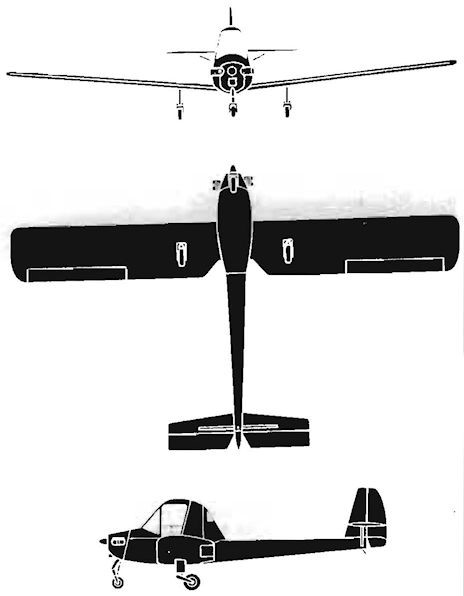

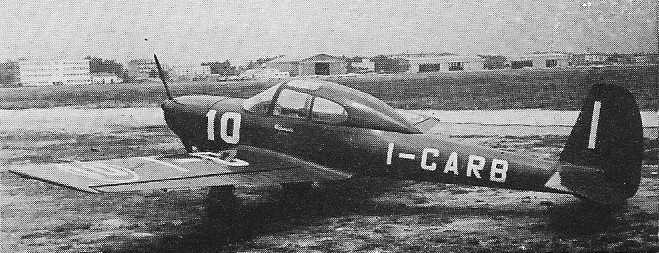
The Astore was followed by the Tigrotto was a low-wing cabin monoplane with a retractable tailwheel landing gear. It had two-seats side-by-side and was powered by an 85 hp (63 kW) Continental C85 engine.
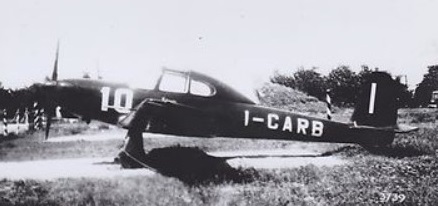
The all-wood prototype, and only Tigrotto, registered I-CARB, first flew in 1953.
Engine: Continental C85-12F, 63 kW (85 hp)
Wingspan: 29 ft 6.5 in
Length: 19 ft 3.5 in
Height: 5 ft 7 in
Maximum speed: 235 km/h (146 mph, 127 kn)
Cruise speed: 200 km/h (124 mph, 108 kn)
Ceiling: 14,764 ft
Range: 597 mi
Empty weight: 948 lb
Loaded weight: 1598 lb
Crew: 1 (pilot)
Capacity: 1 (passenger)

Luigi “Gino” Pascale and his brother Giovanni “Nino” Pascale of Naples, Italy, having been enthusiastic flying model aircraft makers, decided to work on full-scale aircraft. The first, built while the brothers were college students, was the “P.48 Astore (Goshawk)” — a two-seat aircraft, with the seats in tandem, featuring a high strut-braced wing, fixed taildragger landing gear, and a Continental O-170 / A65 flat-four air-cooled engine with 48 kW (65 HP).
The Astore had two seats in tandem and was powered by a 65 hp (48 kW) Continental A65 engine.
The prototype and only Astore, registered I-NAPA, was built in a garage in Naples and first flew in 1952, piloted by Mario de Bernardi.
P-48-B
Engine: 1 × Continental A65, 48 kW (65 hp)
Wingspan: 26 ft 9.5 in
Length: 20 ft 11.75 in
Height: 5 ft 10.5 in
Maximum speed: 185 km/h (115 mph, 100 kn)
Cruise: 99 mph
Time to 3280 ft: 5 min 50 sec
Service ceiling: 10,827 ft
Range: 342 mi
Empty weight: 617 lb
Loaded weight: 1036 lb
Crew: one
Capacity: one passenger
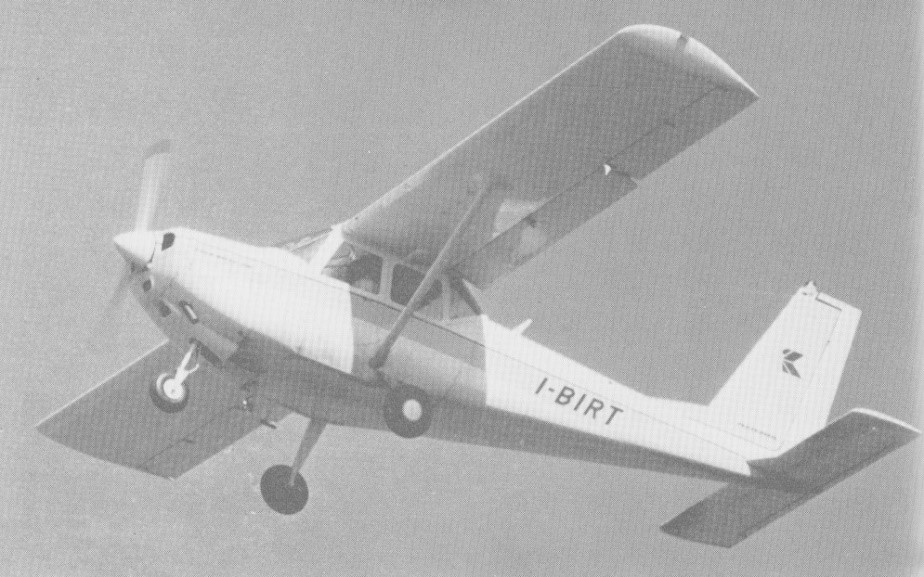
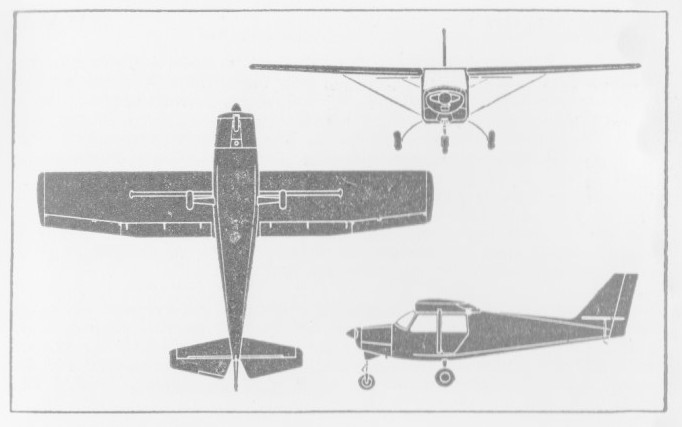
The P.57 was successful enough to consider a re-thought version of all-metal construction, with the “P.64 Fachiro III” taking to the air for the first time on 2 April 1965. After some rethinking of the prototype design, mostly to add a rear window and a cut-down rear fuselage, it went into production as the “P.64B Oscar B” — the “Oscar” effectively meaning “Type O” — to then be renamed the “P.64B Oscar 180”.
Partenavia P.64 Oscar / P.66 Article
The P.64 Oscar (first flown April 1965), was also produced in South Africa under license as the RSA.200 by AFIC (Pty) Ltd.
P.64 Standard
Initial for seat basic version. Constant propeller, blind flying instrumentation, radio, VOR, ADF. Optional glassfibre wheel fairings.
P.64 Oscar Club
Fixed pitch propeller. VHF radio.
P.64 Oscar Cargo
Fixed pitch propeller, reinforced floor, wider rear door for freight.
P.64B Oscar-180 / Oscar B
Stepped down rear fuselage. Panoramic rear cabin window
Engine: Lycoming O-360-A1A, 180 hp
Wingspan: 32 ft 9.25 in / 9.99 m
Length: 23 ft 8.75 in / 7.23 m
Empty weight: 1477 lb / 670 kg
MTOW fixed pitch: 2425 lb / 1100 kg
MTOW variable pitch: 2456 lb / 1155 kg
Max cruise 75% 7000ft/2150m: 129 kt / 149 mph / 240 kph
ROC SL: 984 fpm / 300 m/min
Service ceiling: 16,400 ft / 5000 m
Endurance 75% pwr: 4 hr 30 min
Seats: 4
P.64B Oscar-200
Engine: Lycoming IO-360-A1B, 200 hp
Prop: variable pitch
AFIC RSA 200 Falcon
Stepped down rear fuselage. Panoramic rear cabin window

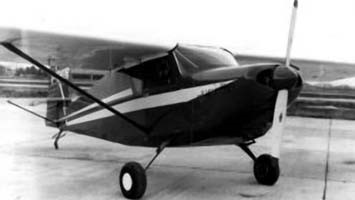
Partenavia’s next effort was the “P.59 Jolly (Joker)”, a two-seater with fixed taildragger landing gear and a Continental O-200 flat-four engine with 75 kW (100 HP). The structure wooden/metal.
It was designed in response to a competition for a trainer for the Italian Aero Club in 1960 but the P.59 lost to the Aviamilano P.19 Scricciolo, and the P.59 remained a one-off.
Engine: Continental O-200, 75 kW / 100 hp
Max speed: 105 kt
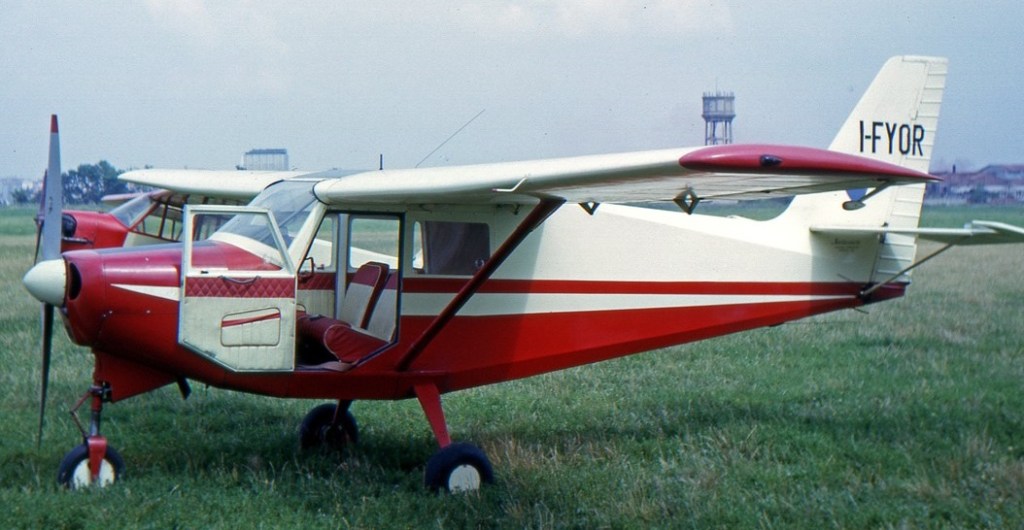
The P-57 Fachiro of 1957 was a touring aircraft of conventional configuration, with a high braced wing, four seats, forward-hinged doors on each side, fixed tricycle landing gear, of mixed steel tube / fabric construction.
First flown on 7 November 1958 with a 150 hp Lycoming O-320 engine, the Fachiro was Pascale’s first production machine, introduced in 1958 by Partenavia, which the Pascales had set up the year before to mass-produce their aircraft.
The P.57 The first machine, the “Fachiro I” was powered by a Lycoming O-320 with 112 kW (150 HP); it was followed by three “Fachiro II” machines with an O-360-B2A engine with 125 kW (168 HP).
Then 33 “Fachiro III” machines, with an O-320-A2A engine providing 134 kW (180 HP) and swept vertical tail surfaces.
The P.57 was successful enough to consider a re-thought version of all-metal construction, with the “P.64 Fachiro III” taking to the air for the first time on 2 April 1965.
Partenavia P-57 Fachiro III
Engine: Lycoming O-320-A2A. 180 hp
Wingspan: 30 ft 0 in
Length: 21 ft 9 in
Height: 7 ft 11 in
Wing area: 144.2 sq.ft
Empty weight: 1367 lb
Loaded weight: 2315 lb
Max speed: 152 mph at SL
Max cruise: 135 mph at 3280 ft
Econ cruise 65%: 127 mph
ROC: 985 fpm
Service ceiling: 13,780 ft
Range: 560 mi at 127 mph
Designed by Saleem Saleh, the Mystere S-45 is basically the same as the S44 except for the Lycoming 160 hp O-320 engine and a larger tail boom. Construction is carbn fibre and fibreglass.
In 1991 the prototype was completing the test hours, and one kit had already been sold.
S44 Mystere
Engine: Rotax 912, 80 hp
Wing span: 8.60 m
Wing area: 8.20 sq.m
MAUW: 544 kg
Empty weight: 317 kg
Fuel capacity: 95 lt
Max speed: 250 kph
Cruise speed: 210 kph
Minimum speed: 72 kph
Climb rate: 5 m/s
Seats: 2 tandem
Fuel consumption: 15 lt/hr
Price (1998): Can$69,000
Kit price (1998): Can$49,000
S45 Mystere
S45 Mystere Mark II

