Rand KR-2

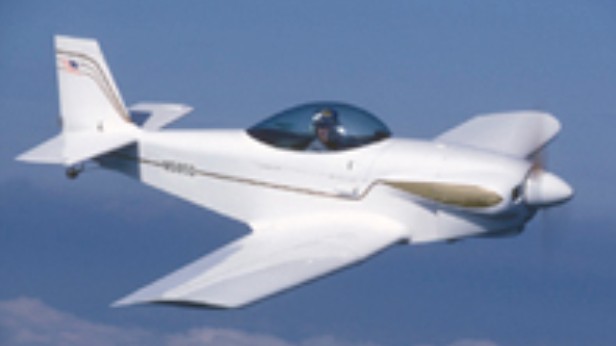
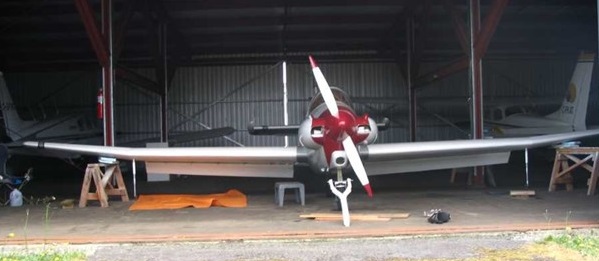
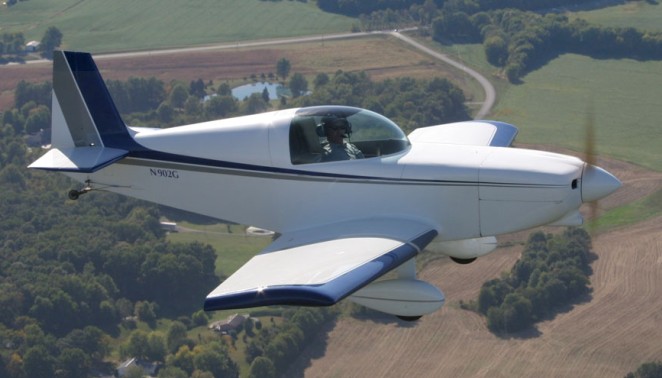
The KR-2 is a two-place version of the KR-1 and is generally similar in construction. The low wings are removable, the main gear is retractable and the tailwheel is steerable. With a stock 1600-cc engine, cruise speed is 140 mph. With a 2100-cc turbocharged VW conversion, cruise is 180 mph at 3200 rpm. To achieve simplicity of construction, the airplane is designed so that no machining or welding is required in building the airframe. The cost and construction time is minimized by using a combination of wood, polyurethane foam, fiberglass cloth and epoxy resin. The result is a structurally strong, clean, hard surface and an exceptionally fast airplane for the power used. All new premolded fiberglass parts have been developed to speed the building time for the KR-2. Luxury upholstery kits are also available and can be simply snapped into position.

First flown in July 1974.

Ken Rand, in 1974, commenced marketing plans and kits for the single seat KR-1 and two-place KR-2. Instant acceptance saw 9000 plans and kitsets sold within the first five years.

Rand KR-2 Builds

As with all KR’s, the KR-2 is equipped with removable wings, and choice of retractable, fixed conventional, or tricycle gear.
Variation:
Boshoff SB2

Gallery

Engine: VW 2100, 76 hp
Length: 14′ 6″
Wing Span: 20′ 8″
Total Wing Area: 80 sq. ft.
Empty weight: 480 lbs.
Gross weight: 900 lbs.
Useful load: 420 lbs.
Baggage capacity: 35 lb
Take off distance: 350 ft.
Landing distance: 900 ft.
Stall Speed: 52 mph / 42 kt
Maximum Speed, Vne: 200 mph / 160 kt
Cruise Speed: 180 mph
Max flap speed: 96 kt / 120 mph
Range: 1600 miles (35 gal. fuel)
Rate of Climb (light): 1200 fpm
Rate of Climb (gross): 800 fpm @ 60 kt / 75 mph
Service ceiling: 15,000 ft.
Fuel: 12-60 US gal.
Fuel consumption: US3.8 gph
Seats: 2
Width at Hips: 38 in
Width at Hips: 36 in
Landing gear: Fixed conventional or trigear, or retractable conventional

Engine: VW 1834
Length: 14ft 4in
Span: 20ft 2in
Wing area: 82 sq.ft.
Empty wt: 480 lb
Gross wt: 900 lb
Top speed: 180 mph
Cruise speed: 170 mph
Stall speed: 42 mph
Seats: 2 side-by-side

Engine: VW 1600
Empty wt: 420 lbs
Max wt: 800 lb
Fuel cap: 12 USG
Top speed: 150 mph
Cruise speed: 140 mph
Stall: 42 mph
Seats: 2
Length: 14 ft 4 in
Wing span: 20 ft 2 in
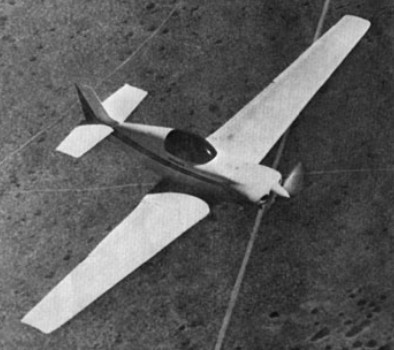
Rand KR-1B

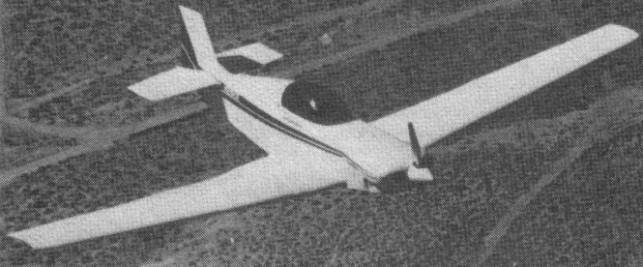
The KR-1B motorglider is essentially a stock KR-1 with longer wings and a bigger tail. For a wing curve, an RAF-48 standard KR-1 airfoil was used for the center section and the GA(W)-2 airfoil for the replacement outer panels. The outer wing section provides a clean and responsive curve for use with a spoiler/flap control, permitting deadstick landings at 70 mph TAS. Where the stock KR-1 wingspan is 172″, the motorglider wingspan measures 27′ from tip to tip, thereby increasing square footage from 64 to 91.

Power is supplied by a 60-hp VW engine. Maximum cruise is 130 mph, and with 33 gallons of fuel, range is 950 miles while getting 29 mpg. At the standard 4-gph burn rate, 33 gallons should deliver 8.25 hours of flying at 120 mph for a range of 1,020 miles.

Engine: 60-hp VW
Wing span: 27 feet
Wing area: 91 sq.ft
Maximum cruise: 130 mph
Fuel capacity: 33 USgallons
Range: 950 miles
At 120 mph Endurance: 8.25 hours
At 120 mph Range: 1020 miles
Airfoil centre: RAF-48
Airfoil outer: GA(W)-2

Rand KR-1

Ken designed the KR-1 in 1972 using cutting edge building techniques that would later become the standard for modern aviation.

Rand KR-1 Article

The KR-1 is the single seat low wing retractable monoplane which is typically powered by smaller VW engines, up to the VW 2100. The KR-1B motorglider is a standard KR-1 with modified outer wing sections. With this simple wing conversion, the original KR-1 becomes an excellent self-powered glider.

Ken Rand, in 1974, commenced marketing plans and kits for the single seat KR-1 and two-place KR-2. Utilising spruce, foam and Dynal cloth in construction, these designs could be built in as few as 800 hours sparetime work. The clean lines and smooth finishes attainable with this technique meant reduced drag, resulting in higher speeds on less power. Retractable gear adds to its performance. The prototype KR 1 (first flown in February 1972) reached 150 mph in level flight, powered by a 36 hp converted VW car engine. Instant acceptance saw 9000 plans and kitsets sold within the first five years.

Gallery

Engine: VW 1834, 60 hp
HP range: 60-80
Length: 12′ 9″
Wing Span: 17′ 0″
Total Wing Area: 62 sq. ft.
Empty weight: 375 lbs.
Gross weight: 750 lbs.
Useful load: 375 lbs.
Baggage capacity: 20 lbs. max
Take off distance: 350 ft.
Landing distance: 900 ft.
Stall Speed: 52 mph
Maximum Speed: 200 mph
Cruise Speed: 180 mph
Range: 1400 miles
Rate of Climb (light): 1200 fpm
Rate of Climb (gross): 800 fpm
Service ceiling : 15,000 ft.
Fuel: 8-30 USgal.
Fuel consumption: 3.8 USgph
Landing gear: Fixed conventional or trigear, or retractable conventional
Seats: 1
Width at Hips: 21 in
Width at Hips: 19 in

Engine: 1835 VW
Span: 17’6″
Length: 15’9″
Empty Weight: 410 lb
Useful Load: 340 lb
Wing Area: 75 sq.ft
Seats: 1
Take Off Distance: 600 ft
Stall: 45 mph
Landing Speed: 58 mph
Cruise: 140 – 160 mph
Rate of Climb: 900 fpm

Ramphos Aircraft Ramphos

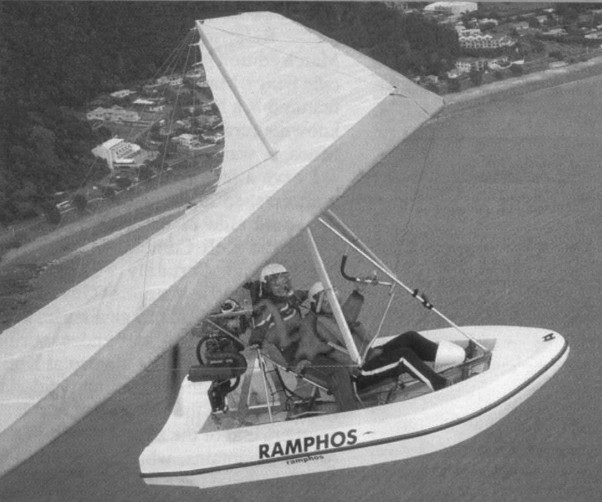
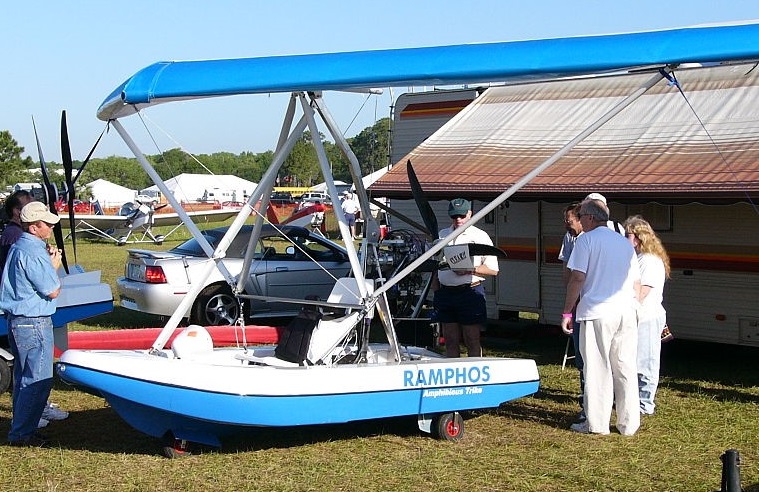
The Italian Trident amphibious ultralight trike was designed to comply with the Fédération Aéronautique Internationale microlight category, including the category’s maximum gross weight of 450 kg (992 lb). The Trident features a strut-braced hang glider-style high-wing, weight-shift controls, a two-seats-in-tandem open cockpit with a rigid boat hull, retractable tricycle landing gear and a single engine in pusher configuration.

Introduced in 1998, the Ramphos Trident is designed and produced by Ramphos of Fontanafredda. The aircraft was supplied as a kit for amateur construction or as a complete ready-to-fly-aircraft, in production in 2013.

Ramphos is an amphibious boat shaped flying hull with wings made of anti-UV mylar of 15 sq.m mounted as standard. Wings up to 21sq.m or a new strong foldable wing (tested +6/-3G) can be mounted. The 15sq.m wing is manufactured in Treviso, Italy.

The hull is a triple “V”, stepped to enhance its rough and glassy water performance. It has a retractable tricycle undercarriage, which enables it to be taxied from the beach to the water and is also suitable for ordinary airstrips.

The aircraft is made from bolted-together aluminum tubing, with its double surface wing covered in Dacron sailcloth and its boat hull made from either fibreglass or carbon fibre and Kevlar.

Its 10.5 m (34.4 ft) span Hazard wing has struts and uses an “A” frame weight-shift control bar. The powerplant is a twin cylinder, liquid-cooled, two-stroke, dual-ignition 64 hp (48 kW) Rotax 582 engine or a four-cylinder, air and liquid-cooled, four-stroke, dual-ignition 80 hp (60 kW) Rotax 912UL engine or a 78 hp (58 kW) converted Smart Car four stroke turbocharged engine. All engines are fitted with a clutch that stops the propeller from turning when the engine is at idle to permit water handling. The three ¬blade Warp Drive propeller has nickel inlaid edges for operation from water sur¬faces. The propeller can be two or three bladed, made of wood or composite material. The propeller ring functions as a protective as well as an anti-noise device. Engines can range from 50 to 80 Hp (Rotax, Hirth, etc.). The boat hull features a water rudder.

Starting in 2005 the frame and wing portion of the aircraft was taken from the Skyrider Sonic ultralight trike, built by Skyrider Flugschule.

Variants:

Hydro
Initial flying boat model that lacks wheeled landing gear. Introduced in 1998 and in production in 2013.

Trident
Amphibious model with fibreglass boat hull, in production in 2013.

C
Amphibious model with carbon fibre/Kevlar boat hull and lexan windows in the bottom of the hull to allow visibility downwards. In production in 2013.

Trident
Engine: 1 × Rotax 912UL, 60 kW (80 hp)
Propellers: 2-bladed composite
Wingspan: 10.5 m / 34 ft 5 in
Wing area: 15 m2 / 160 sq ft
Stall: 26 kt / 30 mph / 48 kmh
Cruise: 59 kt / 68 mph / 110 kmh
VNE: 78 kt / 90 mph / 145 kmh
Empty Weight: 210 kg / 463 lbs
MTOW Weight: 450 kg / 992 lbs
Take-off distance (50ft obstacle): 330 ft / 100 m
Seats: 2

Ralph Santa Anna 001

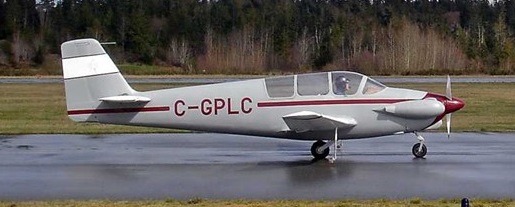
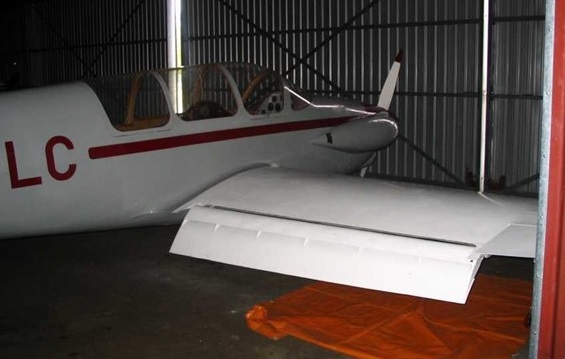
The Santa Anna 001 is a 2 seat tandem touring motor glider with short cruise wings with double slotted flaps and optional long span soaring wings. Retractable tandem nose wheel gear and outriggers. Construction is mixed wood and composite. Yellow cedar structure, glass/kevlar flying surface, Okoume ply fuselage skins.

First flown on 10 April 2008, C-GPLC was owned by Paul Ralph, Victoria BC, Canada.

Engine: Continental A65
Prop: Home made
Cruise: 115 mph
Stall: 45mph

Raisner Aircraft Depot Antares

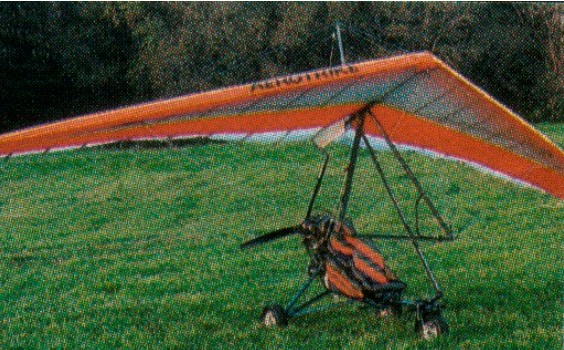
A flexi-wing, two seat design from the Ukraine. Using the Aeros Stranger wing, the type is stressed to +4 and –6 G.

A pod, folding mast and brakes are standard. Options include electric start, skis and floats.

Circa 1997
Top speed: 70 mph
Cruise: 50 mph
Range: 150 sm
Rate of climb: 1000 fpm
Takeoff dist: 90 ft
Landing dist: 150 ft
Service ceiling: 19,700 ft
Engine: Rotax 582, 65 hp
Fuel capacity: 8 USG
Empty weight: 450 lb
Gross weight: 872 lb
Height: 12 ft
Length: 11 ft
Wing span: 33.5 ft
Wing area: 160 sq.ft
Seats: 2

Rainbow Ranger

New in 2002 was the Ranger I from Rainbow Aviation. This design evolved from joining a Continental 65 hp engine to an ultralight wing and a Breezy airframe.

The landing gear is formed from the composite spring used in a Pontiac Trans Am. The wing and tail are all metal and the fuselage can be fabric covered if desired.

Rainbow Aerotrike

Circa 2007, uses the Spirit 14.8 wing. A folding mast and brakes are standard. Options included electric start, pod, skis, and floats.

Top speed: 70 mph
Cruise: 55 mph
Range: 195 sm
Rate of climb: 800 fpm
Takeoff dist: 195 ft
Landing dist: 160 ft
Service ceiling: 10,000 ft
Engine: Rotax 503 DC, 52 hp
HP range: 52-80
Fuel capacity: 14 USG
Empty weight: 340 lb
Gross weight: 880 lb
Height: 12.5 ft
Length: 10 ft
Wing span: 33.5 ft
Wing area: 160 sq.ft
Seats: 2

Rainbow Cheetah XLS

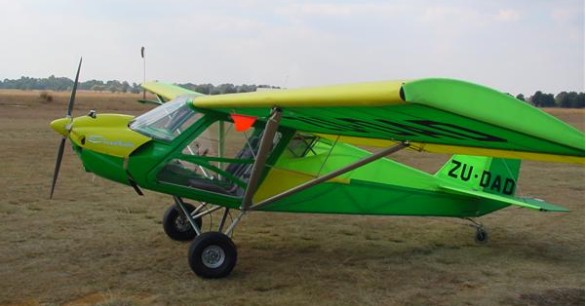
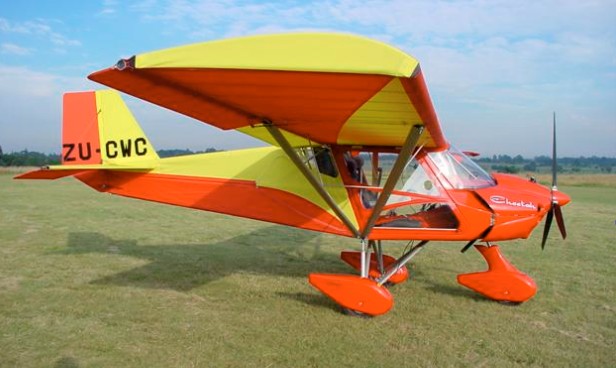
The Cheetah is the versatile 3-axis Microlight from Rainbow Aircraft, manufactured completely in South Africa.

Rated and tested to 560kg +6 -4g Wide range of engines and accessories available. The Cheetah has been approved by South African CAA for full PPL training and hour-building towards CPL.

The R&D team has been working on a Jabiru powered Cheetah. The first Cheetah with a Jabiru 80HP engine has performed its first test flight.

Engine: Rotax 582/99 UL, 65 hp
Gearbox reduction: 3.47 : 1
Propeller: 2 or 3 Blade
Fuel Consumption (at 80%): 14.5 l/hr
Wing span: 9600 mm
Wing Area: 13.25 sq.m
Chord: 1380 mm
Aspect Ratio: 7.01
Aircraft Length: 5670 mm
Aircraft Height (at Wing): 1900 mm
Empty Weight: 248 kg
Gross Weight: 560 kg
Useful Load: 312 kg
Load Factors: +6g -4g
Cockpit Height: 1370 mm
Cockpit Width: 1200 mm
Seats: 2
Luggage Compartment: 2 x 25 lt (max 35kg)
Fuel Capacity: 100L / 26gal
100L / 26gal
100L / 26gal
Doors (optional): 2
Take Off roll: 100 m
Landing Ground Roll: 120 m
Rate of Climb: 700 ft/min
Service Ceiling: 12000 ft asl
Max crosswind component: 32 mph
Cruise Speed (at 65%): 75 mph
Maximum level Speed: 100 mph
Max Speed (VNE): 125 mph
Glide Ratio: 10 : 1
Power Off Stall (with No flaps): 40 mph
Power Off Stall (with flaps): 35 mph
Roll Rate: 3 sec 45/45
Endurance (with reserve): 6.5 hrs
Range (with reserve): 500 miles

Engine: Rotax 912 UL, 80 hp
Gearbox reduction: 2.27 : 1
Propeller: 2 or 3 Blade
Fuel Consumption (at 80%): 12 l/hr
Wing span: 9600 mm
Wing Area: 13.25 sq.m
Chord: 1380 mm
Aspect Ratio: 7.01
Aircraft Length: 5670 mm
Aircraft Height (at Wing): 1900 mm
Empty Weight: 272 kg
Gross Weight: 560 kg
Useful Load: 288 kg
Load Factors: +6g -4g
Cockpit Height: 1370 mm
Cockpit Width: 1200 mm
Seats: 2
Luggage Compartment: 2 x 25 lt (max 35kg)
Fuel Capacity: 100L / 26gal
100L / 26gal
100L / 26gal
Doors (optional): 2
Take Off roll: 100 m
Landing Ground Roll: 100 m
Rate of Climb: 730 ft/min
Service Ceiling: 12000 ft asl
Max crosswind component: 32 mph
Cruise Speed (at 65%): 90 mph
Maximum level Speed: 105 mph
Max Speed (VNE): 125 mph
Glide Ratio: 10 : 1
Power Off Stall (with No flaps): 40 mph
Power Off Stall (with flaps): 35 mph
Roll Rate: 3 sec 45/45
Endurance (with reserve): 7.5 hrs
Range (with reserve): 670 miles

Engine: Rotax 912s ULS, 100 hp
Gearbox reduction: 2.27 : 1
Propeller: 2 or 3 Blade
Fuel Consumption (at 80%): 13 l/hr
Wing span: 9600 mm
Wing Area: 13.25 sq.m
Chord: 1380 mm
Aspect Ratio: 7.01
Aircraft Length: 5670 mm
Aircraft Height (at Wing): 1900 mm
Empty Weight: 274 kg
Gross Weight: 560 kg
Useful Load: 286 kg
Load Factors: +6g -4g
Cockpit Height: 1370 mm
Cockpit Width: 1200 mm
Seats: 2
Luggage Compartment: 2 x 25 lt (max 35kg)
Fuel Capacity: 100L / 26gal
100L / 26gal
100L / 26gal
Doors (optional): 2
Take Off roll: 80 m
Landing Ground Roll: 100 m
Rate of Climb: 900 ft/min
Service Ceiling: 14000 ft asl
Max crosswind component: 32 mph
Cruise Speed (at 65%): 100 mph
Maximum level Speed: 110 mph
Max Speed (VNE): 125 mph
Glide Ratio: 10 : 1
Power Off Stall (with No flaps): 40 mph
Power Off Stall (with flaps): 35 mph
Roll Rate: 3 sec 45/45
Endurance (with reserve): 7.0 hrs
Range (with reserve): 700 miles