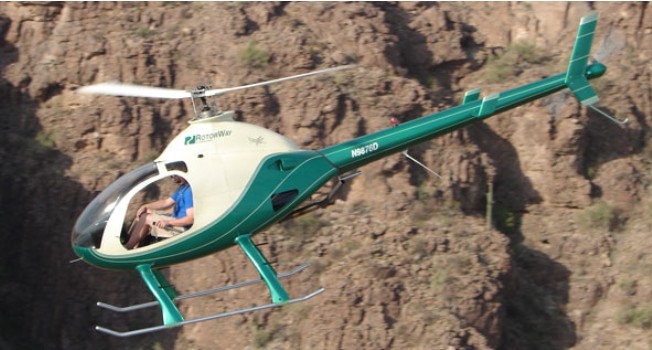
Rowley P-40F

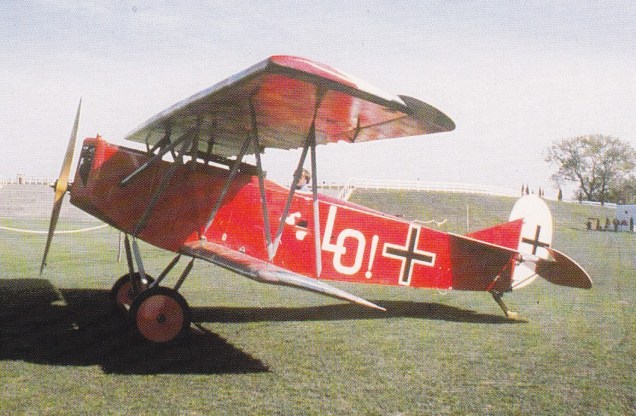
Fully aerobatic.
Peter Rowley was killed in a wire strike accident.

Engine: Suzuki 580cc, 95 hp
HP range: 95-125
Height: 8 ft
Length: 23 ft
Wing span: 28 ft
Wing area: 125 sq.ft
Fuel cap: 5.5 USG
Weight empty: 735 lb
Gross: 1175 lb
Speed max: 145 mph
Cruise: 115 mph
Range: 425 sm
Stall: 48 mph
ROC: 1600 fpm
Take-off dist: 800 ft
Landing dist: 700 ft
Service ceiling: 16,000 ft
Seats: 1
Landing gear: retractable tail wheel

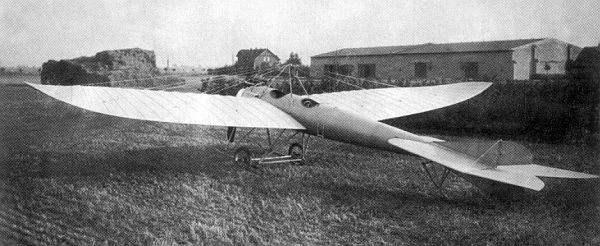
Röver Eindecker

Hans Röver in 1912 built the Röver Monoplane with circular body covered with glue-laminated fabric for what Ernst Röver, his father, was granted German Patent Nr. 271112.

This monoplane was entered into meets in Johannisthal twice that year, with only minor success.

In 1913 Hans Röver rented a shed at Johannisthal, built a second monoplane, and trained pilots until August 1, 1914. Afterwards he flew for the navy and did not return from a reconnaissance mission in 1917.

Rousseau Aviation D.VII-65

20th Century Fox purchased the film rights of Jack D Hunter’s “The Blue Max” and the film was to be a multi-million dollar production, and the stars were to be the full sized reproductions of World War I fighters constructed for the film- two Pfalz D.III biplanes, two Fokker Dr.I triplanes, two S.E.5a scouts and three Fokker D.VII biplanes.

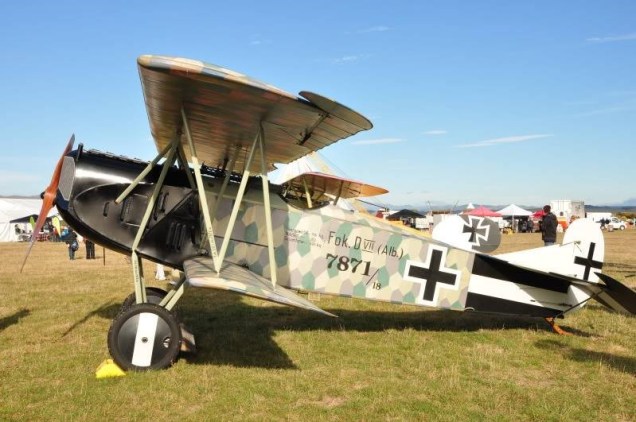
The reproductions had to be built in a hurry to meet the time frame for shooting and were constructed in different locations. At Dinard airport in France, Claude Rousseau constructed three Fokker D.VII fighters (F-BNDF to F-BNDH) in six months. At the time it was stated that the machines were constructed to original plans and dimensions. The two former Federated Fruit Dragon Rapides, G-AKJS and G-ANZP, left Liverpool destined to become part donors for the three Fokker D.VII. The limited choice of engines led to the Gypsy Queen being also installed in the D.VII reproductions. The Gypsy Queen is a six cylinder in-line inverted air-cooled direct-drive engine, as a result the prop emerges through what would be the radiator shell of a true D.VII. Since the Fokkers’ original Mercedes weighed almost twice as much, they required some 200 pounds of nose-ballast for balance. Rousseau Aviation named the reproduction the D.VII-65. They were painted in lozenze camouflage pattern colours.

Rousseau delivered its D.VIIs by actually flying them from France to the set in Exeter-Dublin, Ireland, during August 1965, their German crosses and lozenge camouflage no doubt raising eyebrows below.

The replicas were:
F-BNDF, EI-APT painted as 6796/18

Became N902AC / ZK-FOD
With The Vintage Aviator, New Zealand

F-BNDG, EI-APU painted as 8520/18

Became N903AC
Rendered un-airworthy in a landing accident
At Stampe & Vertongen Museum, Antwerp International Airport, Belgium

F-BNDH, EI-APV

Later N904AC
On display at Southern Museum of Flight, Birmingham, Alabama, USA

They later appeared in “Darling Lili”.

One Fokker D.VII now belong to New Zealand film director Peter Jackson’s 1914–18 Trust, kept in fully airworthy condition.

Rousseau Aviation D.VII-65

Gallery

Rougé Aéro-voile

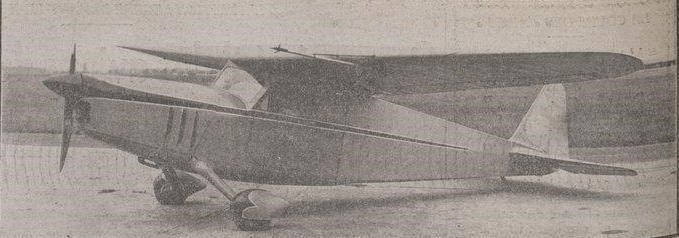
Fourth construction of Emmanuel de Rougé; and piloted by Sadi Lecointe (1891-1944) who obtained French civil brevet No. 431 on February 10, 1911. Before this 1911 machine, de Rougé designed and built two helicopters and one biplane. The Aéro-voile is probably his last venture as after this machine little or nothing was heard of de Rougé.

Rotorwing-Aero 3D-RV Gyroplane

First flown in June 1989, the 3D-RV qualifies as an ultralight with a Rotax 503 or 582. Only available as plans, they originally cost US$100, with drawings for a Subaru engine an additional $20.

Engine: Rotax 503DC, 50 hp
hp range: 50-65
Height: 7.3 ft
Length: 8.5 ft
Disk span: 25 ft
Disk area: 491 sq.ft
Fuel capacity: 5 USG
Empty weight: 245 lb
Gross weight: 500 lb
Max speed: 65 mph
Cruise: 50 mph
Range: 80 sm
Rate of climb: 800 fpm
Takeoff dist: 700 ft
Service ceiling: 10,000 ft
Seats: 1
Undercarriage: nose wheel

RotorWay International A600 Talon

The A600 Talon is a top-to-bottom redesign, incorporating many customer-initiated requests, advanced electronics, engineering, and convenience items. The cockpit is now all-glass, using the MGL Avionics system. The completely redesigned and tuned FADEC system now has a secondary FADEC as a clone of the primary. Any failure of the primary unit will be imperceptible to the engine informing the pilot on the MGL display. The 162’s primary drive chain is replaced by a heavy-duty cog belt for ease of maintenance and longevity.

The useful load is 535 pounds, including a 100-pound luggage compartment. Economy cruise is a practical 90mph and fast long-distance cruise has already been demonstrated at 100 plus, with the doors off! The landing gear is 10 inches wider, 10 inches longer, and 7” higher than its smaller predecessor the Exec 162. This enables improvements in strength and stability, while offering greater accessibility underneath for the optional accessory luggage pod.

Process controls and designs with the new Talon’s manufacture at Rotorway’s new factory, are specifically aimed at the company’s plan to develop and deliver a certified helicopter. The A600 Talon is to be built in the new facility, on the new line, under the new processes that are being set up and proven to enable the certified machine to follow as early as 2011 in the United States. These new processes, materials, and documentation on the experimental, owner-built A600 Talon are designed to mesh into the processes and controls to be used on the future certified machine. The result is that the Talon will be built to type certified standards, of certified materials. First customer deliveries are set for October 2007.

Engine Standard: RI 600N, 147 hp
Engine Supercharged: RI 600S, 167 hp
Gross weight: 1500 lbs
Empty weight: 965 lbs
Fuel cap: 17 USG
Service ceiling: 10,000 ft
HIGE: 6000/7500ft(Supercharged)
Normal cruise: 115 mph
HOGE: 4000/6000ft(Supercharged)
Max IAS SL: 115 mph
Main rotor dia: 25 ft
Tail rotor dia: 50.25 in
Fuselage Length: 22 ft
Overall length: 29.5 ft
Cabin width: 44 in
Skid width: 72 in
Height: 103 in
Seats: 2

RotorWay International Elete

In the late 80’s, RotorWay created the Elete, a larger, two-place helicopter. The Elete had an RW 152, water-cooled, dual electronic, 4 stroke engine that provided 152 horsepower with a pilot and passenger payload of 400 lb / 180kg. Normal cruise was 113 mph / 180km/h with maximum airspeed of 130 mph / 210km/h. After selling three Elete helicopters, the company finally succumbed to financial challenges and was soon purchased by a former customer, John Netherwood, a businessman from England. The new company recognized the design hurdles of the Elete and promptly set out to address making the proven Exec model a better aircraft to sell.

After selling three “Elete” helicopters, the company finally succumbed to financial challenges and was soon purchased by a former customer, John Netherwood, a businessman from England. The new company recognized the design hurdles of the “Elete” and set out to improve the proven “Exec” model a better aircraft to sell.