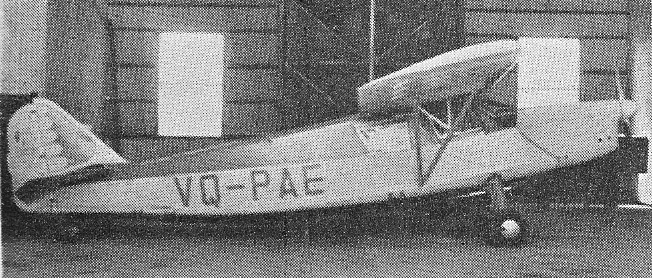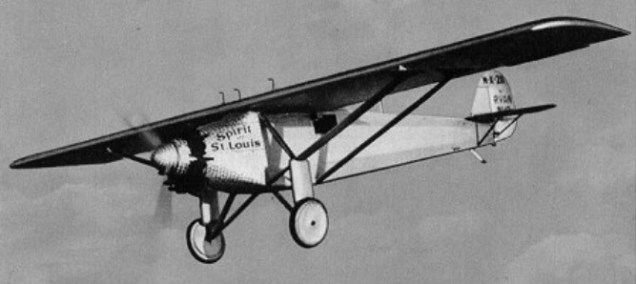
Ryan NYP / Spirit of St. Louis

Early in 1927 Charles A. Lindbergh obtained the backing of several St. Louis men to compete for the $25,000 prize offered by Raymond Orteig in 1919 for the first non-stop flight between New York City and Paris. In February of that year Lindbergh placed an order with Ryan Airlines in San Diego for an aircraft with specifications necessary to make the flight.

Development began based on a standard Ryan M-2, with Donald A. Hall as principal designer, under the direct supervision of Charles Lindbergh. Certain modifications to the basic high-wing, strut-braced monoplane design had to be made because of the nature of the flight. The wingspan was increased by 10 feet, the ribs had to be spaced 11 in. apart instead of the usual 14 15 in, and the structural members of the fuselage and wing cellule were redesigned to accommodate the greater fuel load (around 2,750 lb). Plywood was fitted along the leading edge of the wings. The fuselage design followed that of a standard M-2 except that it was lengthened 2 feet and streamlined, with no “step” for a windscreen. The cockpit was moved further to the rear for safety and the engine was moved forward for balance, thus permitting the fuel tank to be installed at the center of gravity, completely filling the fore part of the fuselage, up to the roof. The pilot could see forward only by means of a periscope or by turning the aircraft to look out of a side window. A Wright Whirlwind J-5C engine supplied the power. The changes involved only 850 design man hours of work.
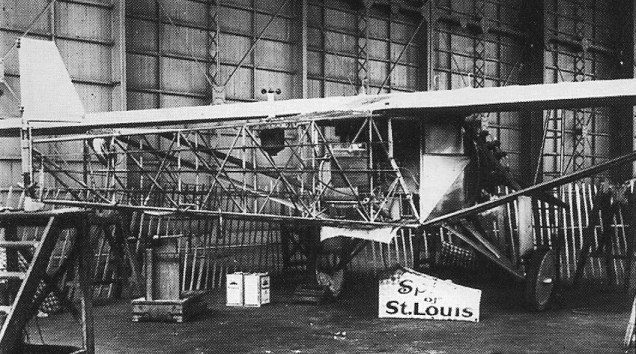
Spirit of Saint Louis at Le Bourget, Paris

Late in April 1927, the work on the aircraft was completed. It was painted silver and carried registration number N-X-211, which, with all other lettering on the plane, was painted in black. Lindbergh made several test flights, and then flew the aircraft from San Diego to New York on May 10-12, making only one stop, at St. Louis. His flight time of 21 hours, 40 minutes set a new transcontinental record.

Flying the Tallmantz Spirit of Saint Louis

After waiting several days in New York for favourable weather, Lindbergh took off for Paris alone, on the morning of May 20, 1927. Thirty-three hours, 30 minutes, and 3,610 miles later he landed safely at Le Bourget Field, near Paris, where he was greeted by a wildly enthusiastic crowd of 100,000.

No flight in history captured the imagination of the Public more than the solo flight across the Atlantic by 24 year old Charles Lindbergh, from New York to Paris, In May, 1927. The distance of 3,610 miles and the time of 33 hrs 39 min spent alone in the air were formidable enough at an average speed of 107 m.p.h. (171 kph). Added to them was the fact that Lindbergh carried no radio or navigation aids, relying instead on dead reckoning, which brought him within three miles of his planned landfall in Ireland.
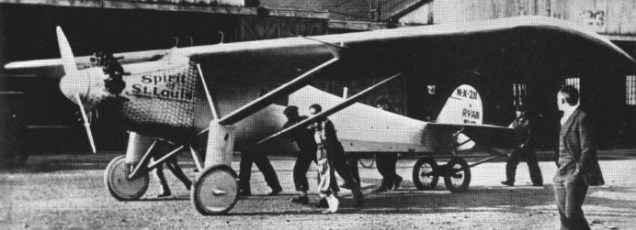
Lindbergh and the Spirit of St Louis returned to the United States aboard the U.S.S. Memphis on June 11. He received tumultuous welcomes in Washington, D.C. and New York City. From July 20 until October 23 of that year he took the famous plane on a tour of the United States. Then, on December 13, he and the Spirit of St. Louis flew nonstop from Washington to Mexico City; through Central America, Colombia, Venezuela, Puerto Rico; and nonstop from Havana to St. Louis. Beginning in Mexico City, flags of the countries he visited were painted on both sides of the cowling. The two tubes beneath the fuselage are flare dispensers that were installed for Lindbergh’s flights to Latin America and the Caribbean.

On April 30, 1928, the Spirit of St. Louis made its final flight – from St. Louis to Washington, D.C where Lindbergh presented the aircraft to the Smithsonian Institution.
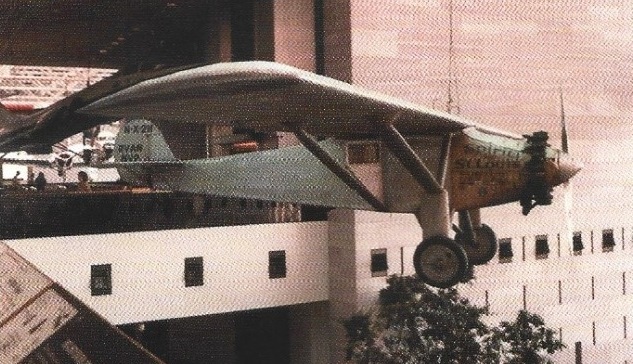
Gallery

Replica:
Tallmantz Aviation Spirit of Saint Louis
Whitney Spirit of Saint Louis

Engine: One Wright J 5C Whirlwind, 200 hp / 165kW
Wing span: 46 ft (14.02 m)
Length: 27 ft 8 in / 8.4328 m
Height: 9 ft 10 in / 2.9992m
Wing area: 29.7 sq.m / 319.69 sq ft
Wing chord: 7 ft
Weight empty: 975 kg / 2150 lb
Weight loaded: 5135lb / 2329.2kg
Fuel capacity : 571 gal / 2160 lt
Cruise speed: 105 mph (170 kph)
Ceiling: 17,500 ft (5,300 m) fully loaded
Max speed: 124 mph
Crew: 1
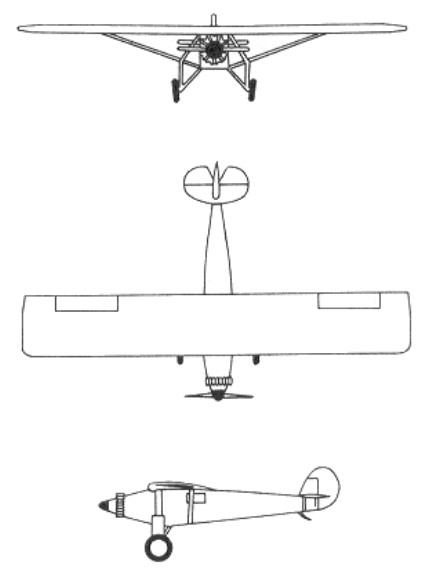
Ryan NYP Spirit of St.Louis

Ryan M-1

AC-pi
From servicing its planes, Ryan Airlines went into modifying them; and from modifying to building Ryan’s own design, the fast, clean M 1 monoplane. The Ryan M 1 first flew on February 14, 1926, and 16 were built for use on the early Western air routes. The M 1 was reputedly a difficult aircraft to fly, but it led ultimately to one of the most famous aircraft in the world, the Ryan Spirit of St. Louis.
Built by B. F. Mahoney Aircraft Corporation, San Diego.

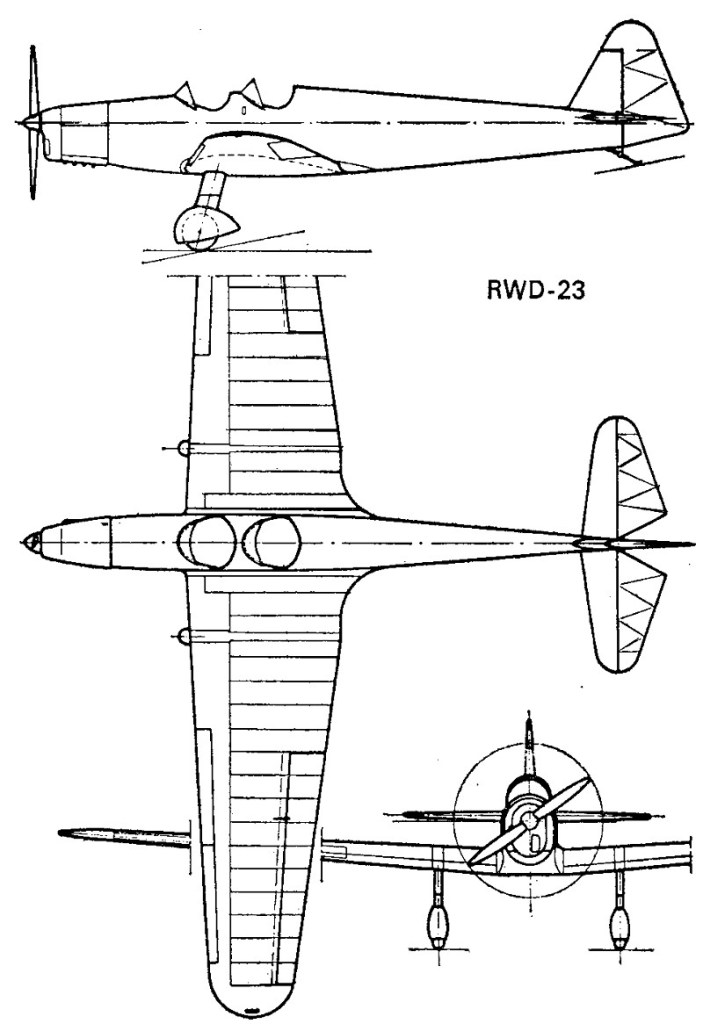
RWD RWD-23 / DWL RWD-23

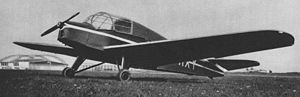
Design work on the RWD 23 was started in September 1938 as a light low-wing trainer. The main designer was Andrzej Anczutin of the RWD bureau. Among the designers were also Bronisław Żurakowski and Tadeusz Chyliński. Chyliński designed the base mount for its engine. Low power output and simple wooden construction would make it cheap and economical in service.

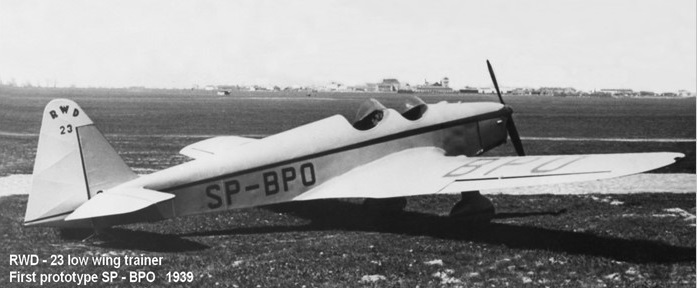
The first prototype (registration SP-BPO) was flown in late 1938 or early 1939 at Warsaw by Eugenne Przysiecki. It underwent factory trials in June 1939, then it was given to the Aviation Technical Institute for tests. In July 1939, the aircraft at the Torun Sea Rally, organised by the Aero Club of Pomerania. It was destroyed in the factory in the first days of World War II, in September 1939. The plane was found as successful; it could also perform basic aerobatics.

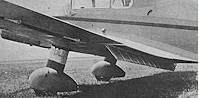
A wooden construction low-wing cantilever monoplane, conventional in layout, with a fixed landing gear and open cockpits. Fuselage semi-monocoque, rectangular in cross-section, plywood-covered. Single-piece trapezoid wings with rounded tips, single-spar, plywood (front) and canvas covered, fitted with flaps. Conventional tail, plywood (fins) and canvas (elevators and rudder) covered. Two open cockpits in tandem, with individual windshields and twin controls. Rear cockpit was raised a bit for a better view. Conventional fixed landing gear with a rear skid, main gear in aerodynamic covers.

62 hp (46 kW) Walter Mikron II inline engine in front, with two-blade wooden propeller. Fuel tank 45 l in a fuselage, cruise fuel consumption 14 l/h.

The second improved prototype was started in the Summer of 1939, with some modifications based on results of the tests of the first prototype, and was under construction when the war broke out, but it was not completed. The LOPP paramilitary organization ordered a series of 10 aircraft, that were not completed due to the war. One RWD-23 was commissioned as a show for Egypt. It has not been delivered because of the war. The sole RWD 23 remained a prototype.

There was design work on a sports version of the RWD-23, which received the designation RWD-26 .

RWD 23
Engine: 1 × Walter Mikron II, Takeoff – 48 kW (65 hp), Continuous – 44 kW (60 hp)
Length: 8 m (26 ft 3 in)
Wingspan: 11.1 m (364 ft 2 in)
Height: 1.9 m (6 ft 3 in)
Wing area: 16 m2 (170 sq ft)
Empty weight: 325 kg (717 lb)
Gross weight: 550 kg (1,213 lb)
Fuel capacity: 50 l (11 imp gal)
Maximum speed: 171 km/h (106 mph; 92 kn) at sea level
Cruising speed: 145 km/h (90 mph; 78 kn)
Stall speed: 65 km/h (40 mph; 35 kn)
Range: 450 km (280 mi; 243 nmi)
Service ceiling: 4,000 m (13,123 ft)
Rate of climb: 2.083 m/s (410.0 ft/min)
Time to altitude: 1,000 m (3,281 ft) in 8 minutes
Endurance: 3.2 hr
Wing loading: 34.4 kg/m2 (7.0 lb/sq ft)
Power/mass: 0.081 kW/kg (0.049 hp/lb)
Crew: 2

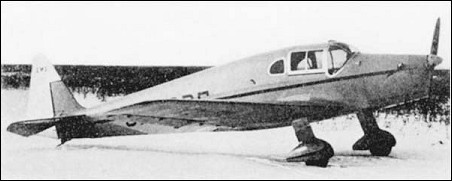
RWD RWD-21

During testing of the prototype aircraft RWD-16 bis Eng. Andrzej Anczutin and Eng. Tadeusz Chylinski developed a draft version of this airplane with an engine more powerful, which received the designation RWD-21. With a more powerful performance of the airplane rose substantially. The design of the airplane was not fundamentally different from RWD 16 bis. RWD-21 and RWD 16 bis could distinguish between the different engine cover and windows.

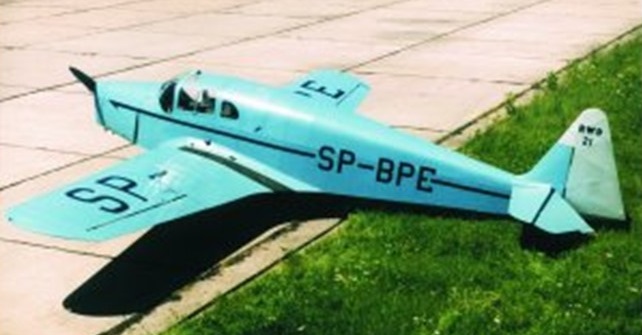
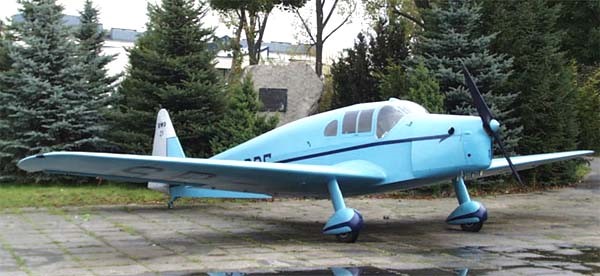
The RWD 21 was a development variant with a stronger 90 hp engine Cirrus Minor and some minor changes, mostly to a canopy.

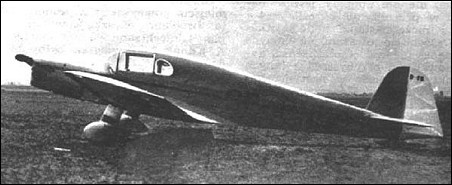
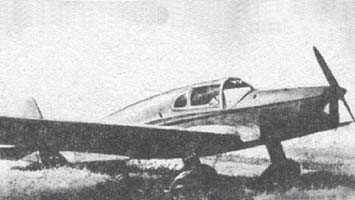
A wooden construction low-wing cantilever monoplane, conventional in layout, with a fixed landing gear and a closed cockpit. Fuselage semi-monocoque, plywood-covered, duralumin in front engine section. Single-part trapezoid wings with rounded tips, two-spar, plywood (in front) and canvas covered, fitted with split flaps. Conventional cantilever empennage, plywood (fins) and canvas (elevators and rudder) covered. Two seats side-by-side, with twin controls, under a canopy, with a fixed windshield. Behind a cockpit, a place for a baggage. The control column was placed between pilot seats which were situated side-by-side. Conventional fixed landing gear with a rear skid, the main gear in covers. 4-cylinder straight engine in front, driving a two-blade tractor wooden propeller Szomański of a fixed pitch. Fuel tank 73 l in mid-wing section, under the crew seats.

The prototype was flown in February 1939 (registration SP-BPE), the pilot being Eugeniusz Przysiecki. The first series of 10 aircraft was ordered and at least six were completed and registered before the war outbreak (SP-BRE, BRF, BRG, BRH, BRM, KAR).

The aircraft were found by the LOPP paramilitary organization as successful economical planes, suitable for the plan of subsiding a development of the private aviation in Poland. A series of RWD 16bis was ordered by the LOPP at a price of 17,800 złoty (including the engine 6,200 zł), in order to sell airframes to private owners for 9,500 zł (the price of a mid-class car), lending them engines. The price of the RWD 21 was 20,500 zł (including the engine 8,000 zł).

At the outbreak of World War II, one RWD 21 was owned by Wilno Aero Club (SP-BRF), three by the LOPP (SP-BRE, BRG, BRH), one by private owner (SP-KAR) and two remained in the factory (SP-BPE, BRM). After the German invasion on Poland, in September 1939, two RWD 21s (SP-BPE and BRM) were evacuated from the factory to Romania (one of them by a glider pilot Bronisław Żurakowski, who had not flown a plane before). At least one of them (SP-BPE) was used in Romania with markings YR-VEN and returned to Poland after the war. It was next used until the mid-1950s with new markings SP-AKG. It is currently restored and preserved in the Polish Aviation Museum in Kraków. The aircraft was restored then at the No 3 Military Aviation Works in Dęblin. The engine was also restored and started. Since 1995, it is presented in the pre-war colours.

One RWD-21 was commissioned as a show for Egypt. It was not delivered because of the war.

One RWD 21 was evacuated to Latvia, its further fate is unknown.

Gallery

RWD-21
Engine: 1 x Blackburn Cirrus Minor, 65kW / 90hp
Wingspan: 11.00 m / 36 ft 1 in
Wing area: 14.95 sq.m / 160.92 sq ft
Length: 8.40 m / 28 ft 7 in
Height: 2.12 m / 7 ft 11 in
Max take-off weight: 685 kg / 1510 lb
Empty weight: 425 kg / 937 lb
Max. speed: 210 km/h / 130 mph
Cruise speed: 180 km/h / 112 mph
Stall speed: 72 kph
Ceiling: 5500 m / 18050 ft
Range: 650 km / 404 miles
Climb rate: 4.7 m/sec
Crew: 2

RWD RWD-16

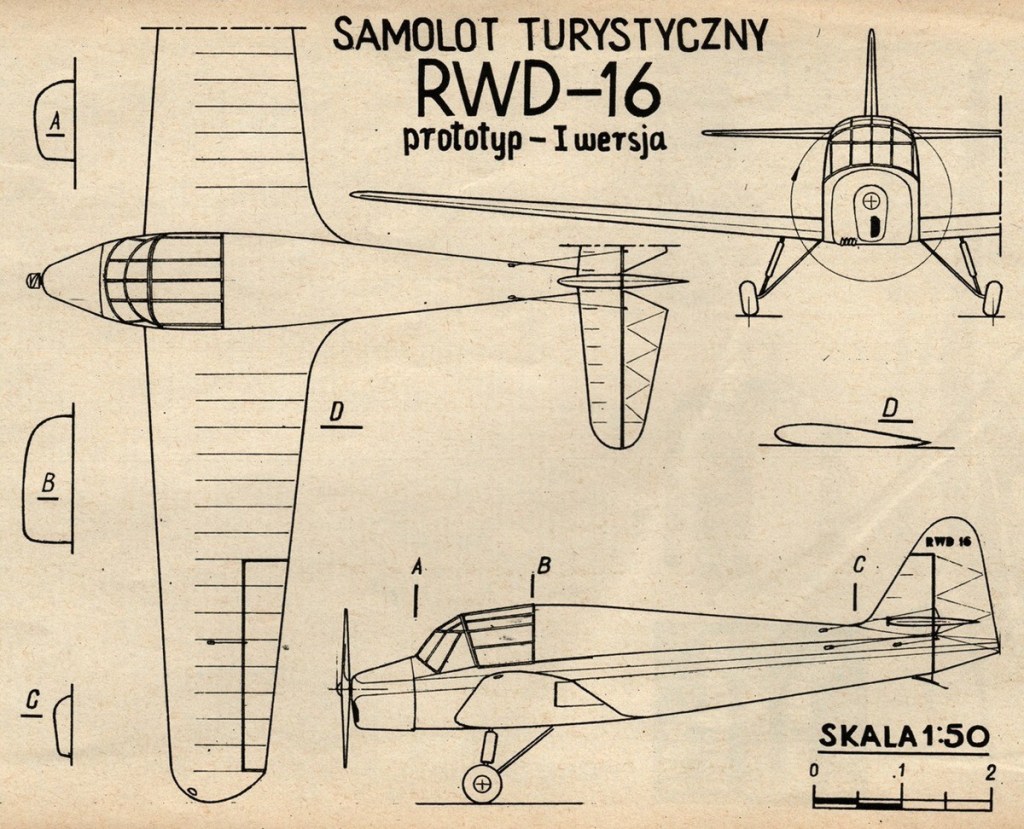
RWD-16 in its initial shape

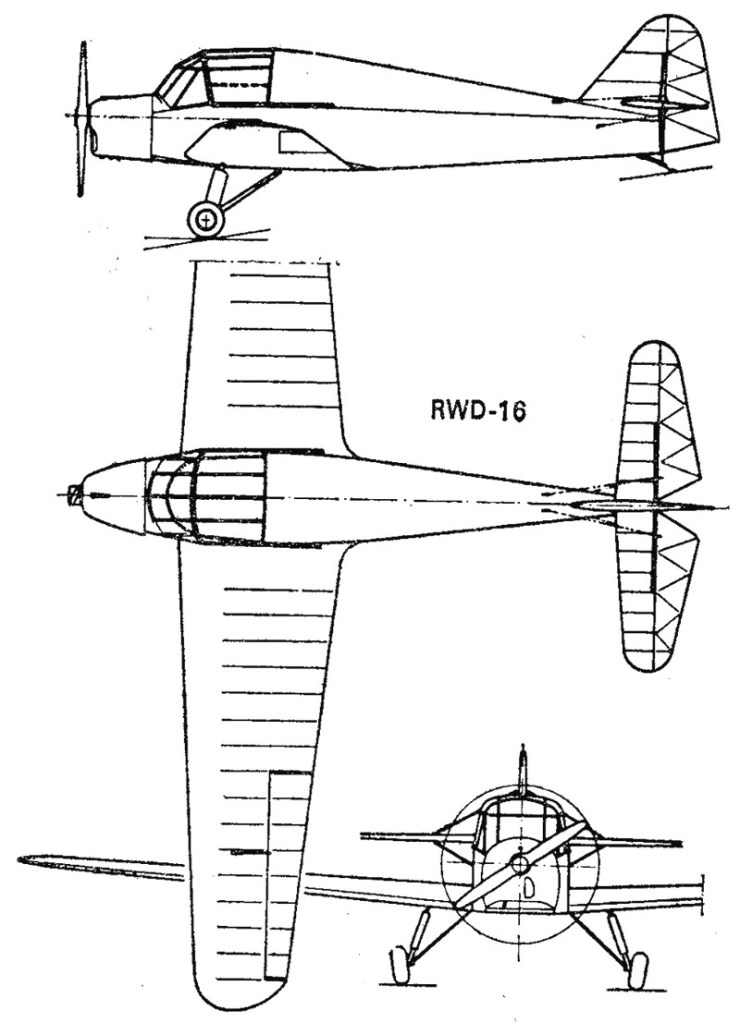
The RWD-16 was designed in 1935 by Andrzej Anczutin as a light, two-seat low-wing, and economical sports plane. The plane was a wooden construction low-wing cantilever monoplane, conventional in layout, with a fixed landing gear and a closed cockpit. The fuselage was semi-monocoque, plywood-covered. Single-piece trapezoid wings with rounded tips, two-spar, plywood (in front) and canvas covered. Conventional cantilever empennage, plywood (fins) and canvas (elevators and rudder) covered. Two seats side-by-side, with twin controls, under a common canopy, with a fixed windshield. Conventional fixed landing gear with a rear skid. Powered was 50 hp Walter Mikron I straight engine, with two-blade wooden Szomański propeller, 1.8 m diameter.

The prototype was built by the RWD team and first flown in early 1936 (registration SP-AXY), funded by the Polish division of Osram factory. The plane did not appear a successful design, though. Test revealed lack of directional stability, therefore its rudder was much enlarged, the wings were fitted with fixed slats and a windshield was redesigned. It did not improve the situation much, and in 1937-1938 the prototype was rebuilt and fitted with stronger 60 hp Avia 3 engine in a lengthened nose, while the vertical stabilizer and rudder were made smaller. Most significant feature became a front windshield with a negative slope.

After final changes, the prototype still was not satisfactory, but it served as a basis for the 1938 RWD-16bis design, which two were built. The redesigned aircraft was produced as the RWD-21. The prototype RWD-16 was given then to a known touring aviator Zbigniew Babiński.

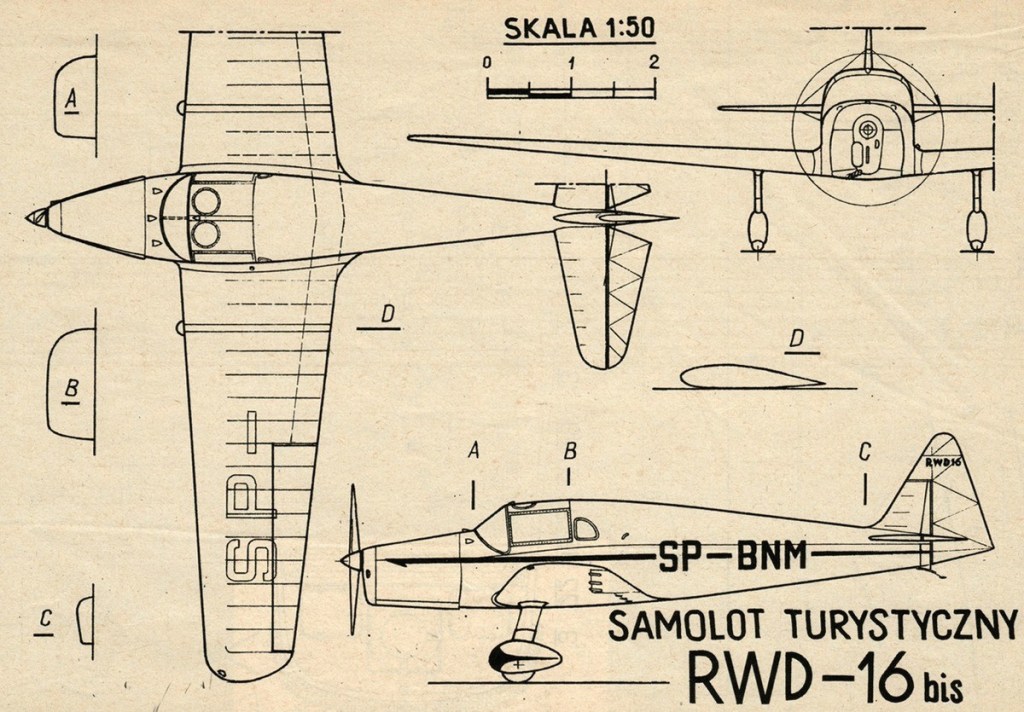
Andrew Anczutin designed over 1937-38 the RWD-16 bis. The prototype RWD-16 bis (registration SP-BNM) was built in the first half of 1938 and was flown in late June 1938 by Eugene Prysieckiego, powered by a Polish-designed 63 hp Avia 3 straight engine. Insufficient directional control led to a wider and higher, pointed fin. The modified prototype flew well in September 1938 and in the same month successfully completed ITL testing.

In November 1938 they built two new RWD-16 bis. The first (SP-BPC) differed in the shape of the rear window, and was fitted with an Avia 3 of 44 kW. The second copy (Factory no.305 SP-BPE) was powered by a Cirrus Minor of 66 kW and was soon modified to become the ‘luxury’ version, and prototype of the RWD-21.

LOPP made a public presentation on 14 January 1939 and at the end of the month LOPP ordered from DWL, through the Committee Wigury Street, 20 of the RWD-16 bis. LOPP offered the aircraft at only 9500 gold because LOPP rented the engine free, and gave a 20% tax discount. Purchase was effectively 53% of the real price.
The first orders were received in January 1939 from 26 yesr old PhD. Jadwiga Pitulanka of Karkow Aeo Club, Dr. Šwietoslaw Baley from Dubna, H.Hoffman from Warsaw, owner of the Stemplew George Gerlicz and Lodz industrialist Andrew Sobczyk.

In September, Sec.pil. Gerllicz flew his RWD 16 bis to Steplewa Airport Lodz Lublinek to take up the post of commander of 5 Platoon Army liaison Carpathians.

The RWD 16 bis ordered by Vilnius Charles Wedziagolskiego was replaced by an RWD-21. Wedziagolskiego’s RWD 16 bis went to the Aero Club of Vilnius.

A quantity of aircraft produced never flew.

Engine: 1 × Avia 3, 60 hp (kW)
Length: 7.51 m
Wingspan: 11.8 m
Height: 2.75 m
Wing area: 15.3 m²
Empty weight: 325 kg
Loaded weight: 610 kg
Useful load: 285 kg
Wing loading: 40 kg/m²
Maximum speed: 145 km/h
Cruise speed: 120 km/h
Stall speed: 67 km/h
Range: 750 km
Crew: 1, pilot
Capacity: 1, passenger or co-pilot

RWD 16 bis
Wingspan: 11.0 m
Length: 8.5 m
Height: 2.07 m
Wing area: 14.95 sq.m
Empty weight: 385 kg
MAUW: 615 kg
Payload: 230 kg
Top speed: 180 kph
Cruise speed: 155 kph
Minimum speed: 70 kph
Climb rate: 3.1 m/s
Ceiling: 4150 m
Range: 700 km
Takeoff dist: 140 m
Fuel burn: 16 lt/hr
Endurance: 4.5 hr
Engine: Avia 3, 65 hp

RWD RWD-15

The RWD-15 of 1938 was a high wing, four seat, single engine touring aircraft.

Six were built, plus ten unfinished.

The RWD-15 were utilised by the Germans as Red Cross ambulances in World War II.

Engine: 205 hp DH Gipsy Six
Wing span: 40 ft 7 in
Length: 29 ft 6 in
Height: 8 ft 2 in
MAUW: 2860 lb
Max speed: 149 mph
Range: 500 mi at 135 mph