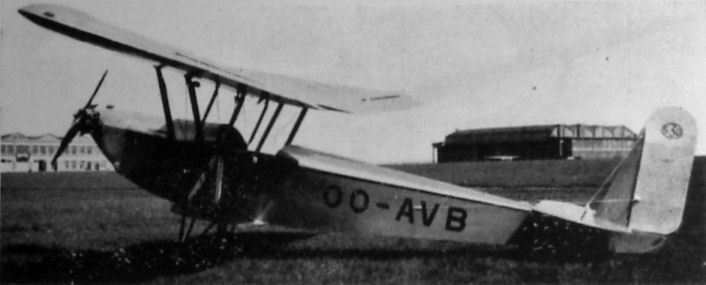
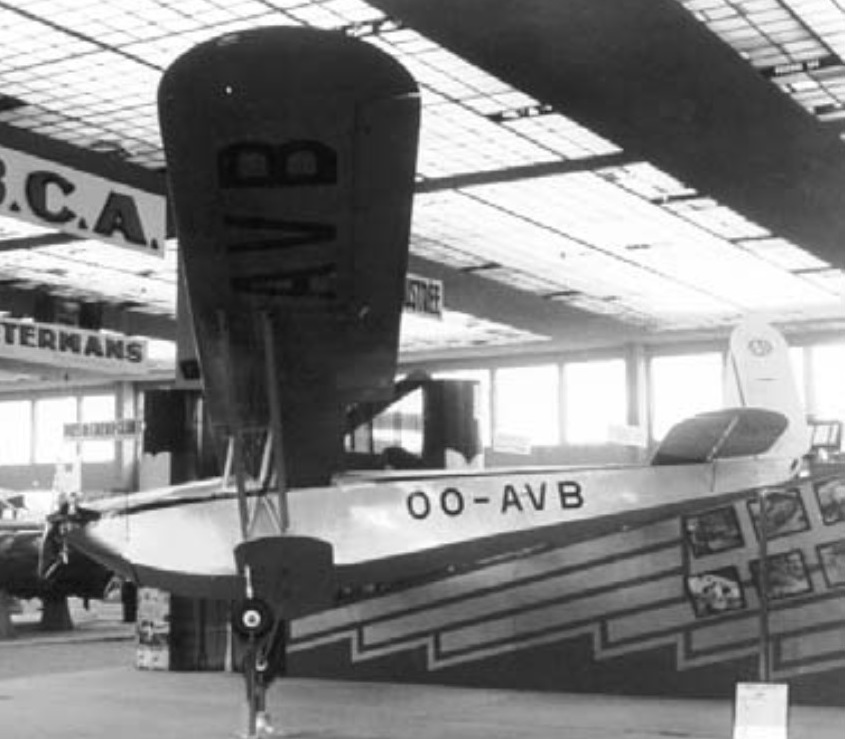
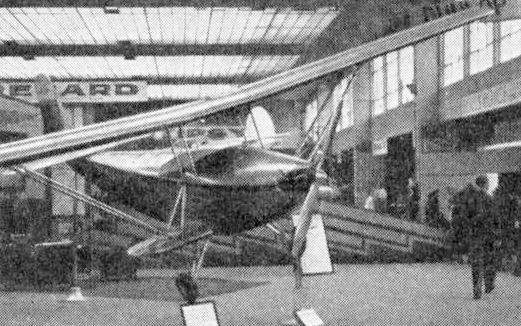
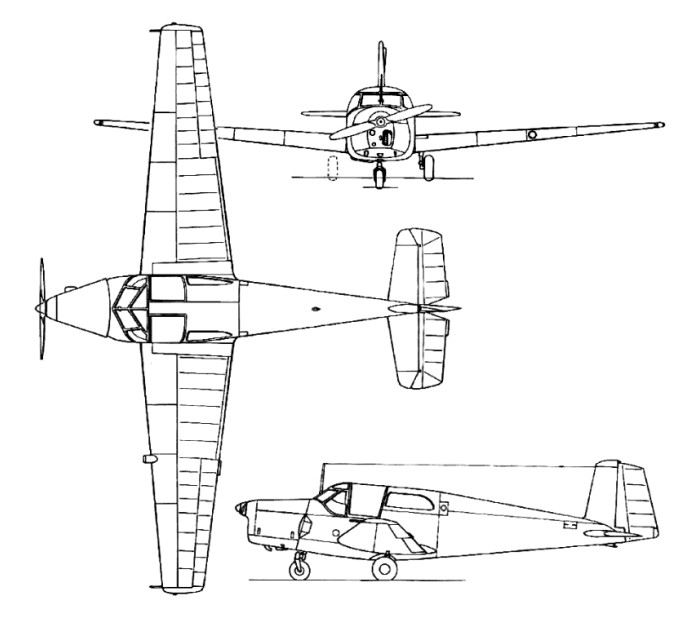
In 1937, SABCA once again tried to enter the light tourism and sport aviation market. The design of the S 30 was to be entirely Belgian.
Entrusted the study to Robert Servais, the company’s chief engineer, he chose a small side-by-side two-seater parasol monoplane of mixed construction predominantly in wood. The motor support and the mast are in steel tubes and duralumin.
SABCA chose the new 40 hp Sarolea Aiglon engine. Unfortunately, it is not yet complete. After several unsuccessful tests carried out in 1937, it was abandoned in favour of a Czech engine: the Praga B.2.
It made its first public appearance at the first Brussels International Air Show (1937) where it stood out for its “flawless” finish.
On February 5, 1938 the S 30 made its first flight in the hands of Charles Wouters, chief test pilot at SABCA.
The ownership of the S 30 is initially joint between the SABCA and Mr. Albert Hellemans, director of the review “The Belgian aviation”. They registered it OO-AVB on February 5, 1938, but very quickly, on March 29, 1938, the SABCA notified the Aviation Administration that it was registered exclusively under its name.
Its selling price, at the first Brussels air show, was announced at 48,000 BF.
The troubled period of 1938-1939 then the war destroyed all hope of mass production.
The registration was cancelled by SABCA on February 26, 1946.
SABCA S.30 Engine: Praga B2, 40 hp Wingspan: 10.90 m Wing area: 15.50 sq.m Length: 7.60 m Height: 2.76 m MTOW: 450 kg Maximum speed: 115 km / h Cruising speed: 95 km / h Endurance: 3 hr 30 min Seats: 2
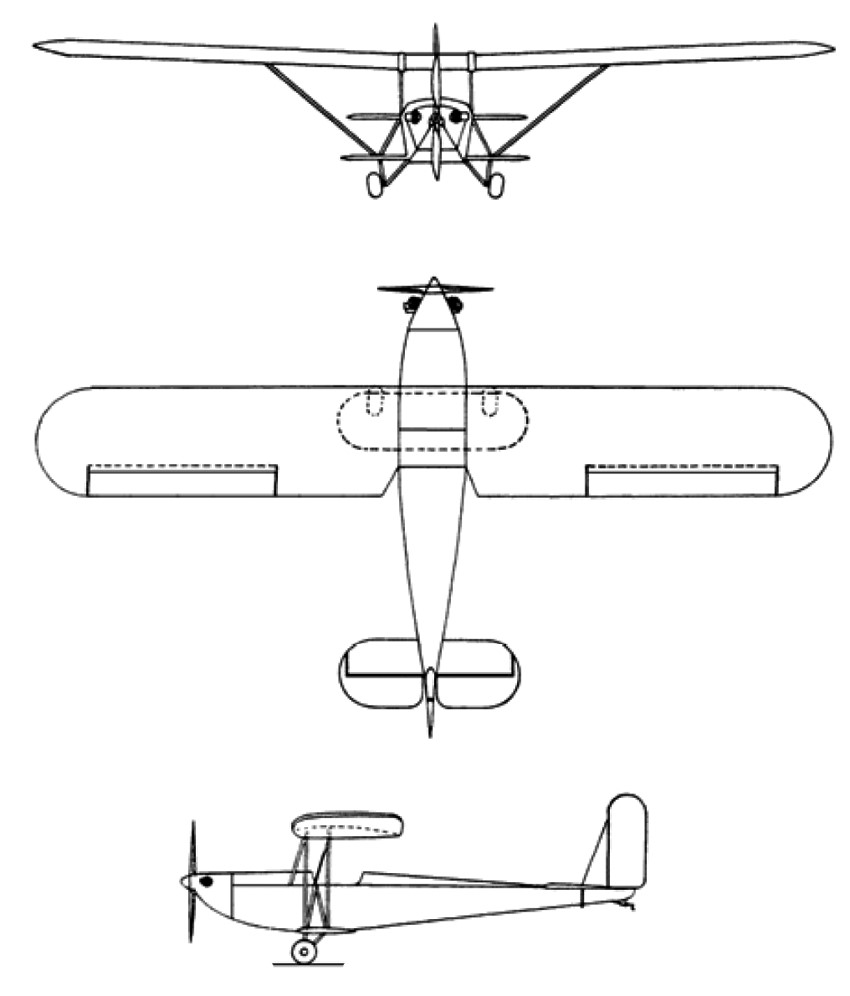
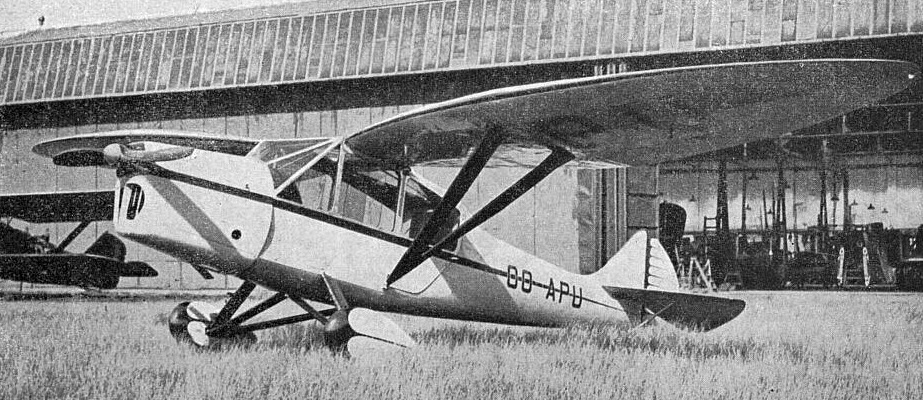
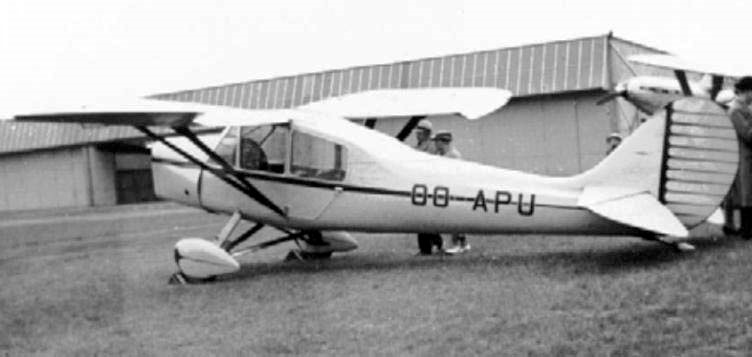
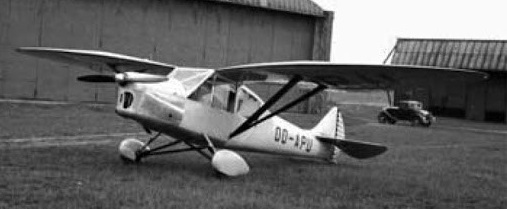
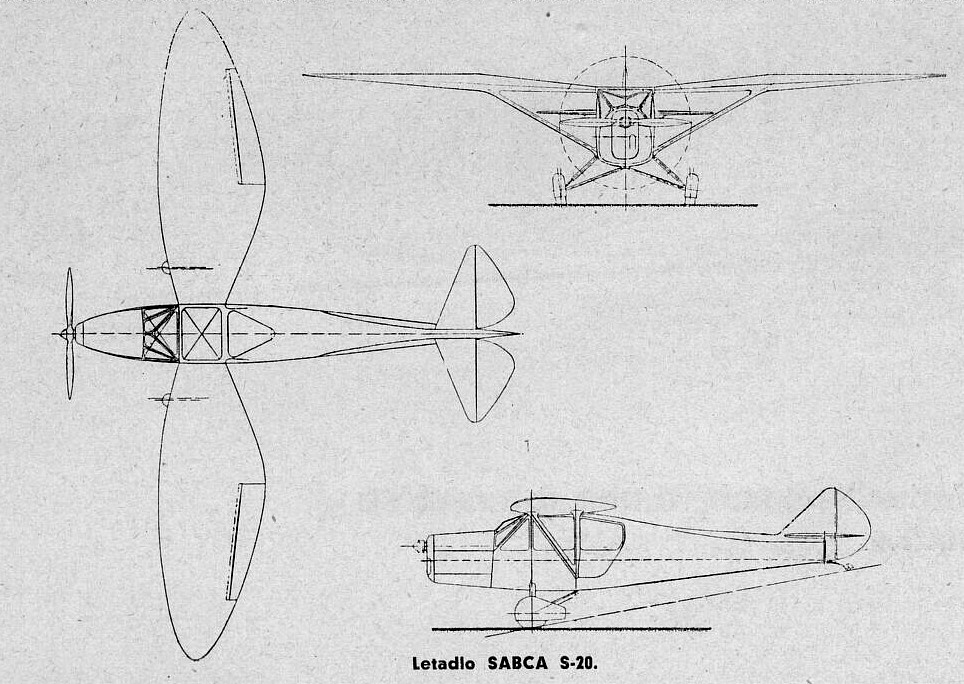
In 1935, the Belgian company SABCA (“Societe Anonyme Beige de Constructions Aeronautiques”) designed and built the light multipurpose aircraft SABCA S.20.
It was a three-seater S.20 high-wing bracing cockpit with a 120 hp Walter Major liquid-cooled engine.
The first copy of the aircraft received its registration number OO-APU on August 26, 1935. The serial production of the aircraft did not take place due to the lack of orders. And the only one built S.20 was lost during the Second World War.
Engine: Walter Major, 120 h.p. Wingspan: 11. 00 m Wing area: 14.00 sq.m Length: 7.80 m MTOW: 900 kg Maximum speed: 225 km / h Cruise: 200 km / h Range: 600 km Seats: 3
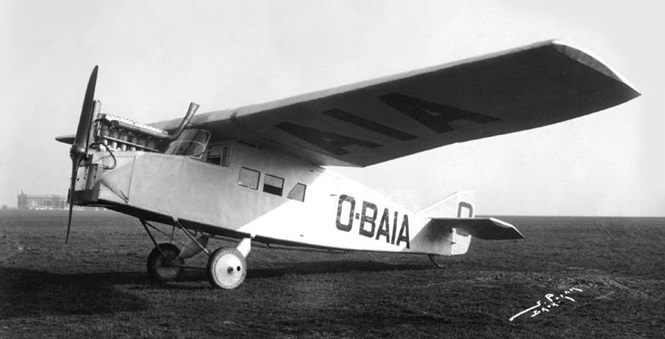
The SABCA S.2 was an airliner built in Belgium in 1926. It was a conventional, high-wing cantilever monoplane with fixed, tailskid undercarriage. The flight deck was open, but the passenger cabin was fully enclosed. Power was provided by a single 240 hp Siddeley Puma engine in the nose, driving a two-blade propeller, and whose exhaust was collected in a single stack that extended up over the wing. Metal was construction throughout, with corrugated skin. Only a single example was built, which served with SABENA.
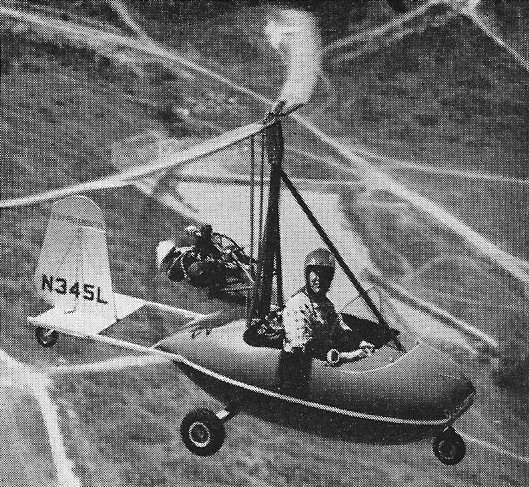
The 1960 Saalfield Aircraft Co Skyskootor, with a molded fiberglass fuselage, was sold either as a complete aircraft or in component form. $3,495-3,995 assembled with motor, $1,995 as a kit less motor.
Engine: 72hp McCulloch 4318A (factory overhauled) or 4318E (new) Rotor: 21’4″ Length: 10’0″ Useful load: 440 lb Max speed: 85 mph Cruise speed: 65 mph Min speed: 25 mph Range: 250 mi Ceiling: 12,000 ft Seats: 2
Not long after it had given a go-ahead for development and production of the Saab-32, the Swedish air force began to draw up its specification for a new single-seat fighter that would be able to intercept bombers flying in the transonic speed range. The new type was going to need supersonic speed capability, an unprecedented rate of climb, above, average range and endurance, and a considerable weapon load. It was required to have STOL (short take-off and landing) characteristics to allow for its deployment from a variety of dispersed sites.
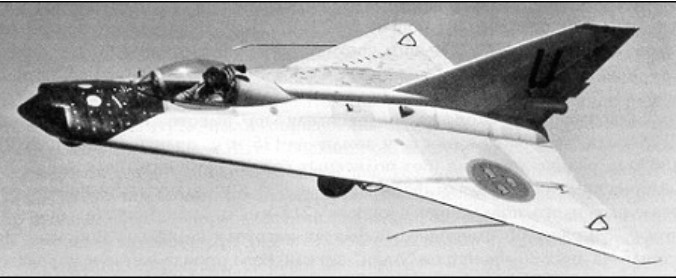
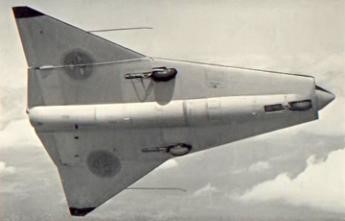
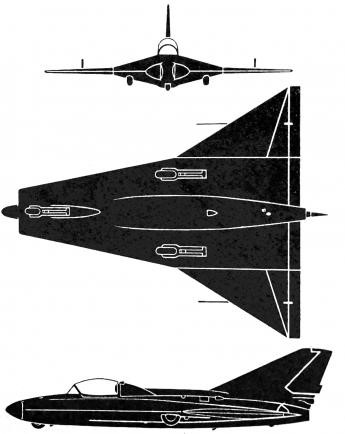
Saab began work on this requirement in August 1949, selecting a wing of double-delta configuration that promised great structural integrity with low weight and which, if it performed satisfactorily, would provide the volume needed for the equipment, fuel and weapons demanded by its primary role. The capability of such a wing was confirmed by wind tunnel testing of models and by the Saab-210 small-scale research aircraft, powered by a 476kg thrust Armstrong Siddeley Adder turbojet. First flown on 21 February 1952, the Saab-210 confirmed that there were no particular problems in the handling of the double-delta wing.
A double delta model, with wing sweep at 80o for the inner and 60o for the outer sections was demonstrated and led to a 1:7 scale aircraft being built. The project was launched in November 1950 and on December 7, 1951, the SAAB 210 began its taxi tests. Tests were carried out with ground contact speeds between 250 and 150 km / h.
The ‘Mini-Draken’ (otherwise the Saab 210) was completed and first flown on 21 January 1952, with Bengt Olow at the controls, nine months and SKr 1.7 million later. The landing gear was raised hydraulicly, the descent was by gravity.
Following a successful test flight, the Swedish Air Force ordered three full-scale J35 prototypes. The 210 flew a total of 887 flights and 286 flying hours.
210 Engine: Armstrong Siddley Adder ASA1, 475 kg Wingspan: 6.35 m Length: 8.80 m Height: 2.78 m Wing area: 24.20 m² Aspect ratio: 1.67 Sweepback: 60 – 77 ° Take-off Weight: 1775 Kg Wing loading: 77 kg / m² Rate of climb: 11 m/s Climb to 2000m: 4 min. Climb to 4000m: 8 min. Max speed 4000m: 540 km / h Landing roll: 300 m Landing roll with parachute: 200 m Take-off dist: 900 m Range: 280 km Takeoff speed: 180 km / h Landing Speed: 190 km / h
210A Engine: Armstrong Siddley Adder ASA1, 475 kg Wingspan: 6.35 m Length: 8.80 m Height: 2.78 m Wing area: 24.20 m² Aspect ratio: 1.67 Sweepback: 60 – 77 ° Wing loading: 77 kg / m² Maximum speed: 555 km / h Max speed 2000 m: 545 km / h Max speed 4000 m: 540 km / h Range: 280 km Takeoff speed: 180 km / h Landing Speed: 190 km / h Take-off dist: 900 m Climb to 2000m: 4 min. Climb to 4000m: 8 min.
210B Engine: Armstrong Siddley Adder ASA1, 475 kg Wingspan: 6.35 m Length: 9.12 m Height: 2.78 m Wing area: 23.00 m² Aspect ratio: 1.67 Sweepback: 60 – 77 ° Wing loading: 77 kg / m² Range: 280 km Takeoff speed: 180 km / h Landing Speed: 190 km / h Climb to 2000m: 4 min. Climb to 4000m: 8 min. Take-off dist: 900 m
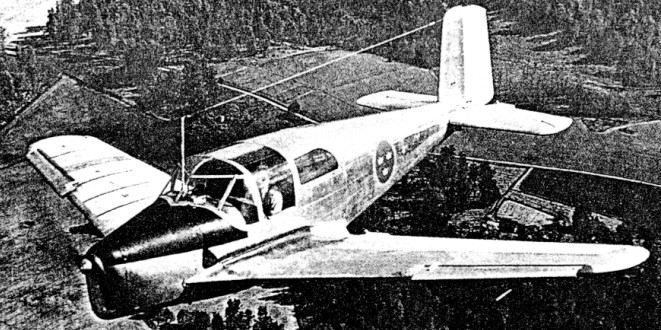
Design work was started in winter 1944-45 and the first prototype. A three-seat cabin monoplane of cantilever low-wing configuration which had retractable tricycle landing gear and was powered by a 147-hp / 97kW de Havilland Gipsy Major 1C inline engine.
Saab flew on 20 November 1945 the prototype, with a top speed of 265 km/h (165 mph).
Successful testing led to the first production version, the Saab-91A, commenced in Spring 1946, which differed primarily by having the more powerful de Havilland Gipsy Major 10 engine. 48 aircraft were built between then and 1950. Ten of these were bought by the Swedish Air Force for liaison and light transport duties.
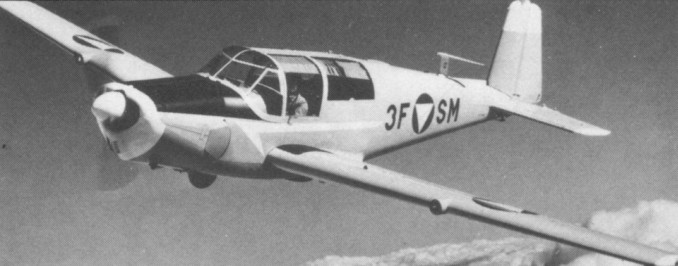
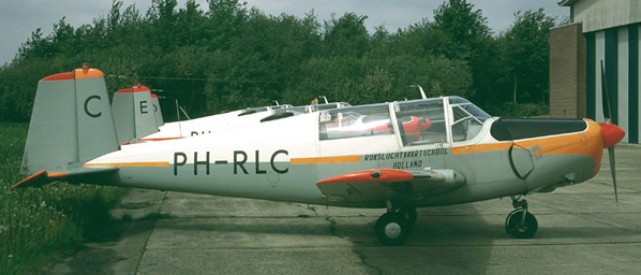
The SAAB 91B, which appeared in 1951, differed primarily in having a 190 hp Lycoming O-435-A engine. This model was ordered by the Swedish Air Force and was largely built by “de Schelde” in Dordrecht, the Netherlands, as the SAAB factories were fully committed at that time. In the Spring 1952 the first SAAB Safir training aircraft for which De Schelde had received a large licensed production order, left the factory. The 91B had a top speed of 275 km/h (171 mph. This model (which was also used as a trainer from 1952 on) was followed by a 4-seater version designated the 91C. Safir production returned to Sweden in 1954 and the company announced the Model 91C which had been modified to include a fourth seat.
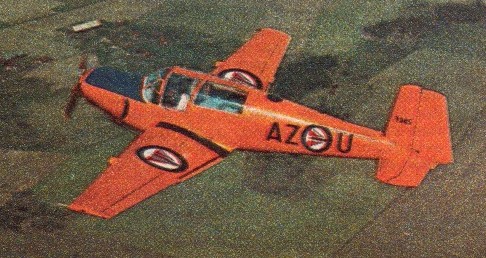
Swedish airforce interest in this aircraft as a primary trainer led to a prototype powered by a 142kW Avco Lycoming O-435-A flat-six engine, first flown on 18 January 1949. This was adopted by the Flygvapen as a standard trainer under the designation Sk 50, built by Saab with the same powerplant as the Saab-91B It could be equipped to carry guns, practice bombs or rockets, and served also with the air forces of Ethiopia and Norway; in a pure training sub-variant this version was also adopted by a number of European airlines.
The Saab-91C, first flown in September 1949 having four-seat accommodation. The final production version was the Saab-91D, which introduced a number of improvements, including a new Avco Lycoming O-360-A1A engine, disc brakes and other advanced equipment that offered weight saving.
In 1957, the SAAB 91D with the smaller 180 hp Lycoming O-360-A1A four-cylinder air-cooled engine, joined the 91C at the production line.
A total of 323 Safirs were built, 120 under licence by de Schelde in Dordrecht, the Netherlands, and examples had been sold to operators in 21 countries and 6 air forces.
91A Engine: 1 x De Havilland Gipsy Major 10,147 hp Span: 10.6 m (34’9.25”) Length: 7.80 m (25’10.25”) Take-off weight: 1075 kg (2370 lb) Maximum speed, km/h (mph): 265 kph (165 mph) Cruising speed: 248 kph (154 mph) Landing speed: 85 kph (53 mph) Range: 960 km (597 miles) Max. altitude: 4600 m (15090 ft)
91B Engine: 1 x Lycoming O-435A, 190 hp Span: 10.6 m (34’9.25”) Length: 7.95 m (26’l’) Take-off weight: 1215 kg (2472 lb) Maximum speed: 275 kph (171 mph) Cruising speed: 240 kph (149 mph) Landing speed: 90 kph (56 mph) Range: 1075 km (668 miles) Max. altitude: 6200m (20340 ft)
91C Engine: 1 x Lycoming O-435A, 190 hp Span: 10.6 m (34’9.25”) Length: 7.95m (26’l’) Take-off weight: 1215 kg (2472 lb) Maximum speed: 275 kph (171 mph) Cruising speed: 240 kph (149 mph) Landing speed: 90 kph (56 mph) Range: 1075 km (668 miles) Max. altitude: 6200 m (20340 ft)
91D Engine: 1 x Lycoming O-360-A1A, 180 hp / 134kW Span: 34 ft 9 in (10.6 m) Length: 26 ft 4 in (8.03 m) Wing area, 146.3 sq.ft (13.6 sq.m) Height: 2.2 m / 7 ft 3 in Empty wt: 1,570 lb (710 kg) Take-off weight: 1205 kg (2657 lb) Maximum speed: 165 mph (265 kph) Cruising speed: 235 kph (146 mph) Initial climb: 800 fpm (4.06 m/sec) Landing speed: 90 kph (56 mph) Range: 660 mls (1060 km) Max. altitude: 6100 m (20010 ft) Service ceiling: 16,400 ft (5000 m)