A two-seat cannon fighter biplane seaplane, powered by one 150 hp HS 8A engine
1 engine
Schreck FBA-B / FBA-C
An improvement FBA-A, as a single engined seaplane as a recce biplane
FBA-C was the same FBA-B, but re-engined with 130 hp Clerget 9B rotary engine
Schreck Diapason I
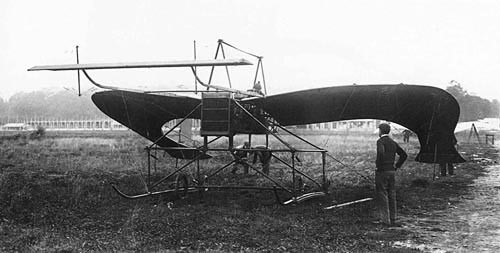
The Diapason (French for tuning-fork of which it resembled), was monoplane of 1910 in a form where the wing was swept back in a wide curve. The photo clearly shows a hefty radiator at the front of the small fuselage, from which may be concluded that one is looking at the 50 hp water-cooled Chenu-powered version. This engine was placed directly in front driving the pusher propeller at the back of the short central nacelle via a long shaft. In this version the entire nacelle is uncovered.
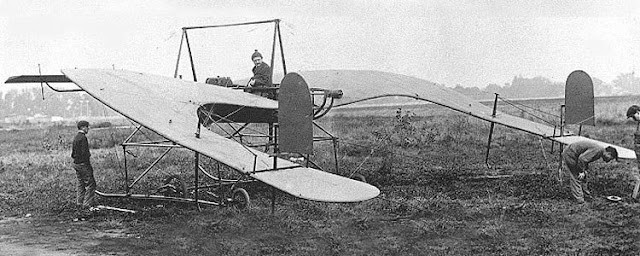
Span: 39’4″
Length: 46′
Weight: 880 lb
Schönleber Metallbau Vento
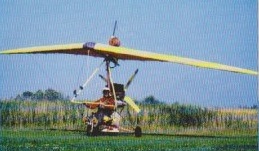
The wing and trike are made by Schönleber.
Empty weight: 160 kg
Wing span: 9.5 m
Wing area: 13 sq.m
Fuel capacity: 60 lt
Certification: Vz
Engine: Rotax 582, 65 hp
MAUW: 400 kg
Seats: 2
Max speed: 120 kph
Cruise speed: 95 kph
Minimum speed: 50 kph
Climb rate: 3.2 m/s
Fuel consumption: 12 lt/hr
Price (1998): 34 145 DM
Schoettler I
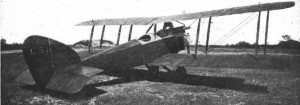
In 1923, the British magazine Flight reported what it termed the first successful flight of an aircraft constructed in China. This conventional biplane was designed by a German engineer, Leopold Carl Ferdinand Friedrich Schoettler. Its engine, instruments, wheels and dope for fabric covering were imported from Europe. All else was locally sourced. Work on it began in the summer of 1922.
The Schoettler I was a conventional European style two seat tractor biplane, with equal span two bay wings. These were mounted with 2° of dihedral and 597 mm, almost 2 ft, of stagger. The gap between the upper and lower planes was 1,676 mm (66 in), maintained by parallel pairs of aerofoil section struts and wire bracing. The unswept wings had a constant chord of 1,600 mm (63 in) with blunt wing tips and ailerons on both upper and lower planes. The Schoettler’s empennage was also conventional.
The fuselage was likewise a standard rectangular section wooden girder structure, fabric covered except around the engine and a wood upper decking around the open, tandem cockpits for pilot and for the observer, who sat under the wing trailing edge. It tapered to a knife-edge at the tail. At the front the 160 hp (119 kW) Mercedes water-cooled upright inline engine was enclosed in a rectangular cross-section metal cowling which tapered vertically, exposing the upper cylinders, to a two-blade propeller. At the rear of the housing an external radiator, with shutters for engine temperature control, projected on each side. The Schoettler had a conventional fixed undercarriage, with the mainwheels on a rigid axle mounted on V-struts.
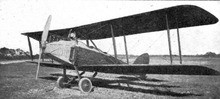
A first flight date was not reported, but this was on or before 23 July 1923 when the Schoettler was test flown by an ex-RAF pilot, W.E. Holland. The latter reported good handling and an excellent, 360°, field of view for the observer noting the aircraft’s potential for development. More recent articles claim the first flight by a Chinese built aircraft was that of the indigenously-designed Xianyi Rosamonde (or Dashatou Rosamonde) on 12 July 1923, though without mention of the Schoettler; the two aircraft were evidently close contemporaries.
Powerplant: 1 × Mercedes, 120 kW (160 hp)
Propeller: 2-bladed
Wingspan: 12.04 m (39 ft 6 in)
Wing area: 37.324 m2 (401.75 sq ft)
Length: 8.3503 m (27 ft 4.75 in)
Height: 3.12 m (10 ft 3 in)
Empty weight: 741 kg (1,634 lb)
Gross weight: 1,160 kg (2,558 lb)
Wing loading: 31 kg/m2 (6.3 lb/sq ft)
Power/mass: 0.063 hp/lb (103 W/kg)
Maximum speed: 206 km/h (128 mph, 111 kn) at 1,000 ft (305 m)
Cruise speed: 158 km/h (98 mph, 85 kn)
Stall speed: 72 km/h (45 mph, 39 kn)
Endurance: 4.5 h
Capacity: Two
Schneider 1928 biplane
In 1928 K O Schneider of Long Beach CA., built a two-place cabin biplane, registered N6947 c/n 1.
It was powered by a 100hp Hall-Scott engine and noted in a magazine ad selling new for $450. It was purchased by Garland Lincoln
Schneider No.1 Biplane
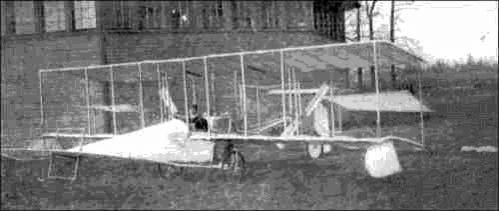
The Frederick Schneider No.1 Biplane was shown at an exhibition at Morris Park called by the Aeronautic Society of New York at the end of 1908, where Schneider tested the biplane of 30 ft. span. Among the most notable of its features was a low total weight of only 450 lbs and the use of three aluminium propellers of variable pitch. The engine, an air-cooled rotary, caused the failure of these flights.

Seversky P-35 / EP-106
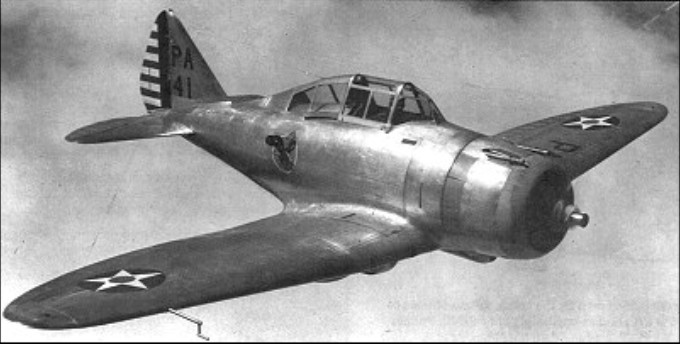
The type began as the company SEV-1XP, one of several machines flown as pursuit prototypes and racers in the 1930s by Major Alexander P. de Seversky, Jacqueline Cochran and others. The P-35 won out over the Curtiss Hawk Model 75 (later P-36) for a 16 June 1936 US Army contract for 77 airframes (36-354 to 430), powered by the 708kW Pratt & Whitney R-1830-9 Twin Wasp 14-cylinder radial engine. The first unit was rejected and modified as the AP-1 and the final airframe in this batch was diverted to become the sole Seversky XP-41.
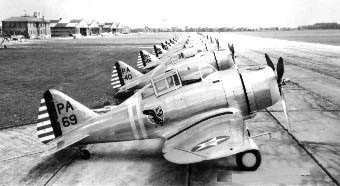
The Seversky P-35 was the first single-seat all-metal pursuit plane with retractable landing gear and enclosed cockpit to go into service with the US Army Air Corps. It was a major step forward, albeit one which was short-lived as war approached.
The P-35 marks the debut of Seversky (later Republic) of Farmingdale, Long Island, as a major builder of fighters and introduces the work of the firm’s chief designer, Alexander Kartveli. The first P-35 was delivered to Wright Field, Ohio, for tests, and the remaining 75 went initially to the 1st Pursuit Group at Selfridge Field, Michigan. There, the type was received with considerable enthusiasm which lingered even after six machines had been lost in accidents during 1938. Only by later, wartime standards would it become evident that the P-35 was unstable, underarmed, and lacking both armour protection for the pilot and self-sealing fuel tanks.
The company EP-106 export variant attracted Sweden’s attention and 120 machines were ordered with the Flygvapen designation J9. These were powered by the 783kW Pratt & Whitney R-1830-45 Twin Wasp radial. When President Roosevelt announced his 10 October 1940 embargo on fighter shipments to Scandinavia, only half had been delivered. Sixty were seized by the US Army as the P-35A (41-17434 to 17493).
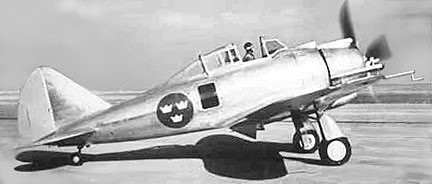
P-35A pursuit ships served with various USAAC units, but by late 1941 about 50 were with First Lieutenant Joseph H. Moore’s 20th Pursuit Squadron, 24th Pursuit Group, at Clark Field in the Philippines. Second Lieutenant Max Louk wrote to his parents in mid-1941 that the squadron was undergoing ‘a very strenuous programme’ of flying ‘up to eight hours a day’ in the P-35A. Incredibly, some P-35As arrived at Clark still painted in Swedish markings and still wore them during the 8 December 1941 Japanese assault, which was synchronised with the attack on Pearl Harbor.
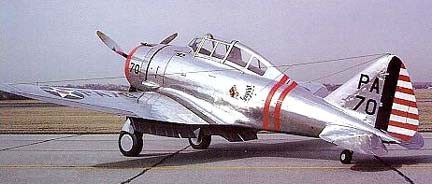
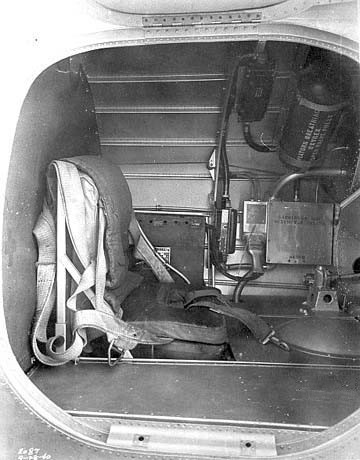
The P-35 was flown by a few memorable pilots, including First Lieutenant ‘Buzz’ Wagner, commander of the 17th Pursuit Squadron, Nichols Field, Philippines, the first American ace of the war. But by December 1941 the type had become dated and inadequate. Pilots of the P-35 started with the disadvantage of an unforgiving mount. 1939 Technical Order No. 01-65 BA-1 had imposed mind-boggling limitations on the P-35, proscribing inverted flight, inverted spins, and outside loops, and similar caveats applied to the slightly more powerful P-35A. Group Captain Christopher Clarkson, the UK’s Royal Air Force test pilot on the US east coast in 1940, logged six hours on P-35 variants and utterly rejected the machine for the RAF. Americans in P-35As in the Philippines simply could not stay with or effectively fight the Mitsubishi and Nakajima fighters that swarmed down on them. Some died ignominiously: First Lieutenant Samuel W. Marrett, commander of the 34th Pursuit Squadron at Del Carmen Field, Philippines, was killed 10 December 1941 when an ammunition barge he was strafing exploded beneath him over Lingayen Gulf, Northern Luzon.
Swedish pilots guarding their nation’s neutrality faced a different problem. Hans Westerberg, flew the J9 (P-35A) and, in 1944, intercepted a crippled American B-24 Liberator struggling away from a target in Germany. “I could just keep speed with the bomber. I closed in to use hand signals to tell him that his crew could land and be interned in Sweden. All of his guns turned towards me and he was an instant away from opening fire before he understood. The problem was that from some angles my P-35A looked exactly like a Focke-Wulf Fw 190.”
P-35 / EP-106
Engine: 1050hp P&W R-1830
Wingspan: 36’0″
Length: 26’10”
Useful load: 2148 lb
Max speed: 290 mph
Cruise: 260 mph
Range: 950 mi
Seats: 1
P-35A
Wingspan: 10.97 m / 36 ft 0 in
Length: 8.18 m / 27 ft 10 in
Height: 2.97 m / 10 ft 9 in
Wing area: 20.44 sq.m / 220.01 sq ft
Max take-off weight: 3050 kg / 6724 lb
Empty weight: 2075 kg / 4575 lb
Max. speed: 499 km/h / 310 mph
Ceiling: 9570 m / 31400 ft
Range: 1529 km / 950 miles
Armament: 2 x 12.7mm + 2 x 7.62mm machine guns
Bomb load: 160kg
EP-106
Engine: P&W R-1830-45, 1050hp
Seversky 2PA / AT-12 Guardsman
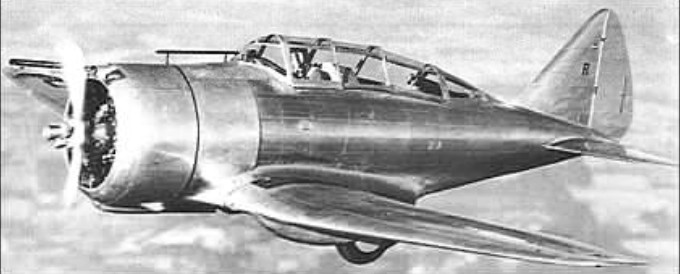
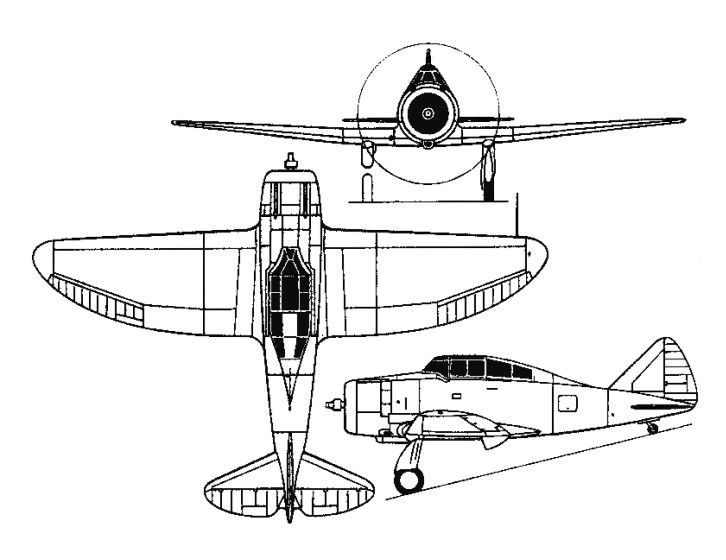
Evolved in parallel with the P-35, the 2PA was a two-seat fighter and fighter-bomber with a fundamentally similar airframe and offered with either a similar undercarriage to that of the single-seater as the 2PA-L (Land) or with an amphibious float undercarriage as the 2PA-A (Amphibian). Dubbed “Convoy Fighter” by the manufacturer, the 2PA was powered by a Wright R-1820-G2 or G3 Cyclone nine-cylinder radial engine, the former rated at 1,000hp for take-off and the latter at 875hp.
One 2PA in 1937 first flew on 8 July 1937 piloted by Frank Sinclair. Powered with an 875hp Wright R-1820-G3 Cyclone engine, it was registered NX/NR189M c/n 6 (1938 registration conflict with SEV-X-BT; possibly a transfer). Demonstrated in South America, it was reportedly abandoned in Brazil after engine failure.
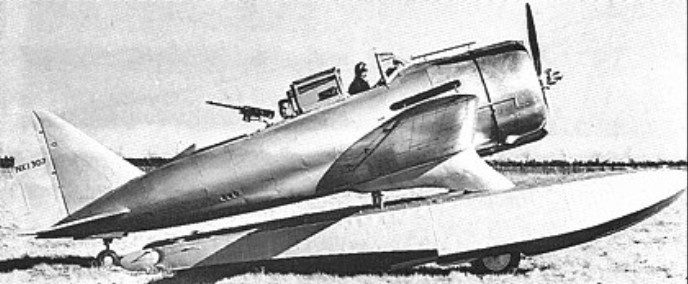
Armament comprised two wing-mounted 7.62mm or 12.7mm Browning guns, one 7.62mm Browning on a flexible mount in the rear cockpit, plus two forward-firing fuselage-mounted 7.62mm or 12.7mm Browning guns. Provision was made for a bomb load of up to 227kg on internal wing racks.
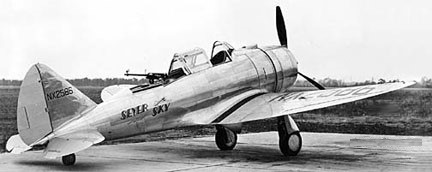
Two 2PA-BX, NX2586 c/n 146 and NX2587, were used as European demonstrators, which brought a substantial order from Sweden. First flown on 23 October 1938 piloted by Frank Sinclair, early in 1939, Major Seversky embarked upon a European sales tour in a 2PA-202 or 2PA-BX which was fitted with a 1,100hp Pratt & Whitney R-1830-S3C Twin Wasp. This aircraft was tested at the A&AEE Martlesham Heath, in March 1939, at the instigation of the Air Ministry.
Fifty-two 2PA-BXs were ordered by Sweden as dive-bombers (the Seversky company having meanwhile become the Republic Aviation Corporation), but only two of these were delivered to Sweden, the remainder being taken over by the USAAC as AT-12 Guardsman advanced trainers.
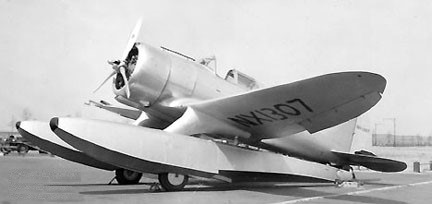
The one amphibian 2PA-A, NX1307, and one 2PA-L were procured by the Soviet Union in March 1938, together with a manufacturing licence, which, in the event, was not to be utilised. The 1937 2PA-L was built from SEV-X-BT components as a potential military export and first flown on 2 November 1937, by C H Miller. Refitted with 850hp R-1820-G2 engine, it was unregistered and ended up in the Spanish Civil War.
Twenty R-1820-G2-powered examples were ordered clandestinely by the Japanese Imperial Navy for use over China as long-range escort fighters. Designated 2PA-B3, these received an armament of two fuselage-mounted 7.62mm machine guns and a similar weapon in the rear cockpit. Assigned the Japanese designation A8V1, the 2PAs were found to possess unacceptable levels of manoeuvrability and climb rate for the escort fighter role and were therefore relegated to reconnaissance missions in Central China, two later being passed to the Asahi Shimbun newspaper group. The c/ns were 122 to 141. Found US regs were NX1321=J-BAAN c/n 126, NX1391 c/n 64-1, NX1388 c/n 64-2 and c/n 64-3, which flew to the West Coast for overseas shipment and left no tracks. The “64-” c/ns seen in some reports likely were Japanese registations.

It was incorrectly thought the type was later produced in Japan as a Kawasaki or Mitsubishi Type 98 and given the allied code ‘Disk’ on that basis.
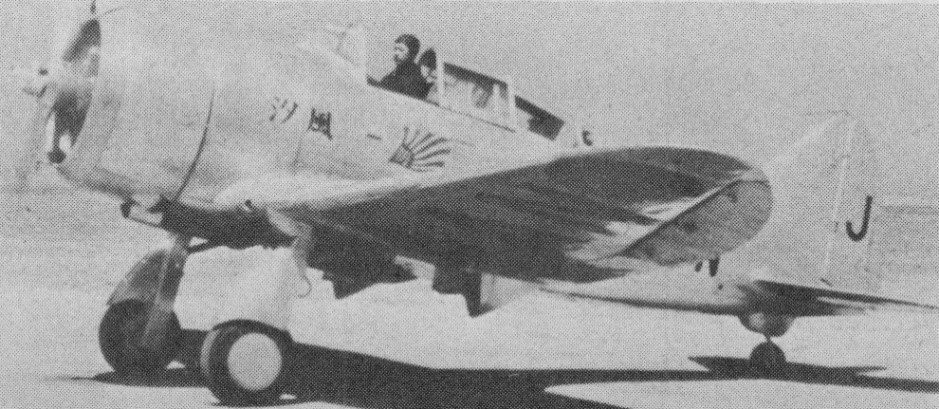
2PA
Engine: 875hp Wright R-1820-G3 Cyclone
Seats: 2
SEV-2PA
Engine: 1,100hp Pratt & Whitney R-1830-S3C Twin Wasp
Max take-off weight: 3474 kg / 7659 lb
Empty weight: 2078 kg / 4581 lb
Wingspan: 10.97 m / 36 ft 0 in
Length: 8.20 m / 27 ft 11 in
Height: 2.99 m / 10 ft 10 in
Wing area: 20.44 sq.m / 220.01 sq ft
Max. speed: 508 km/h / 316 mph
Range: 3138 km / 1950 miles
Seats: 2
2PA-A
Engine: 1000hp Wright R-1820-G5 Cyclone
Seats: 2
2PA-B / 2PA-BX / 2PA-202 / SEV-1-68
Engine: 1200hp P&W P-1830-S1C Wasp
Seats: 2
2PA-L
Engine: 1000hp Wright R-1820-G7
Wingspan: 41’0″
Length: 30’5″
Speed: 250 mph
Seats: 2
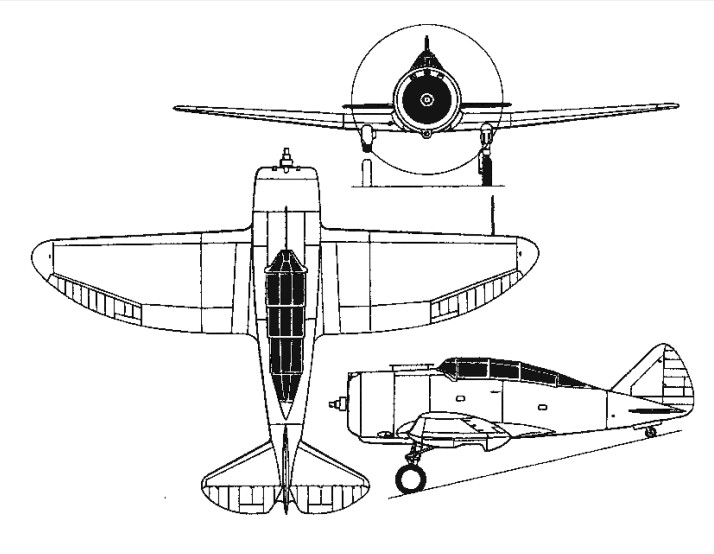
Seversky NF-1 / XFN-1
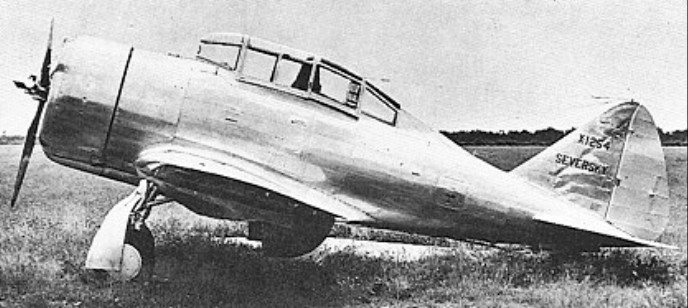
As a contender in the 1937 US Navy shipboard single-seat fighter competition, the Seversky-designated NF-1 (Naval Fighter No 1) was derived from the basic P-35. Wssentially a P-35 with a Cyclone instead of P&W R-1830, arrestor hook, bomb racks, and AP-1’s rearward-retracting gear.
The design was flown for the first time on 3 May 1937 piloted by C H Miller, registered NX1254. Powered by a Wright R-1820-22 Cyclone nine-cylinder radial rated at 950hp for take-off and having provision for one 7.62mm and one 12.7mm gun in the forward fuselage, the NF-1 was delivered to Anacostia NAS for evaluation under the US Navy designation XFN-1 on 24 September 1937 on some USN records as A8978. This designation was actually applied for “book-keeping purposes”, no Navy contract being issued.
The NF-1 had initially flown with a vertical windscreen similar to that first fitted to the AP-1, but this had been replaced by a more conventional windscreen prior to delivery to Anacostia. At an early phase in the evaluation the fairings attached to the main oleo legs, which fully enclosed the undercarriage when retracted, were removed.
By consensus, the XFN-1 lacked the low-speed handling characteristics demanded for shipboard operation and the fighter was rejected by the Navy, further development being discontinued.
Engine: Wright R-1820-22 Cyclone, 950hp
Wingspan: 10.97 m / 36 ft 0 in
Wing area: 20.44 sq.m / 220.01 sq ft
Length: 7.44 m / 24 ft 5 in
Height: 2.77 m / 9 ft 1 in
Max take-off weight: 2373 kg / 5232 lb
Empty weight: 1823 kg / 4019 lb
Max. speed: 430 km/h / 267 mph
Stall: 69 mph
Range: 1570 km / 976 miles
Ceiling: 30,700’
seats: 1

