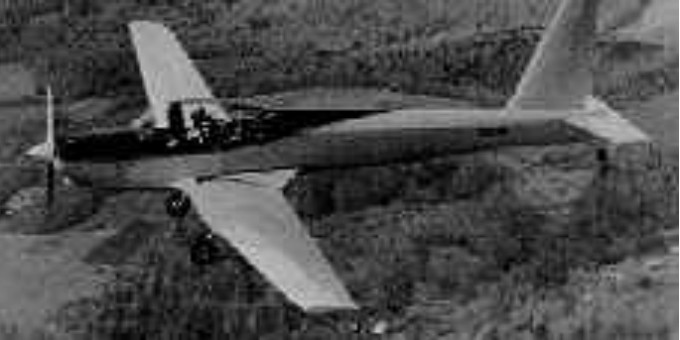
The SGM 2-37 self-launching two-place, side-by-side, fixed gear, motorglider designed by Leslie Schweizer at the request of the USAF for use at USAFA.
To save both money and development time the aircraft used a number of existing aircraft components:
Nose, cowling and engine installation adapted from the Piper PA-38 Tomahawk
Wings adapted from the Schweizer SGS 1-36 Sprite, including extensions to bring it from the Sprite’s 46.2 feet (14.1 m) to 59.5 feet (18.1 m) and leading edge cuffs to improve stall characteristics
Tail from the Schweizer SGS 2-32
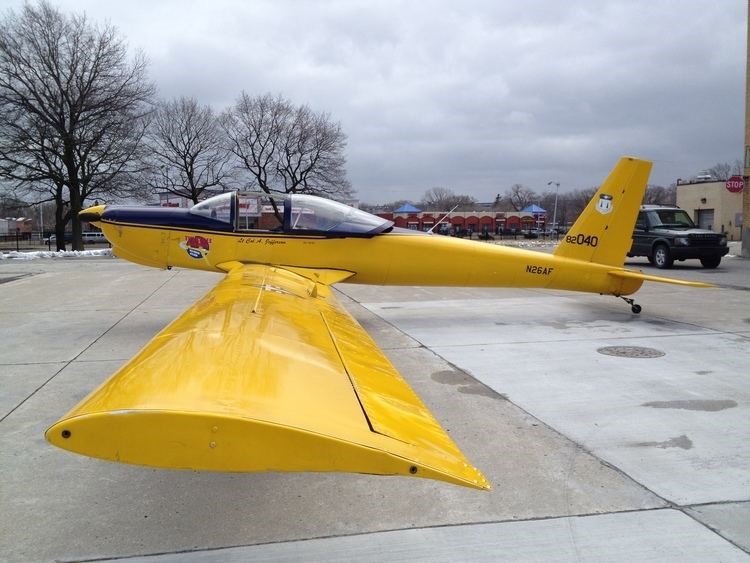
The design was intended to be available as a civil aircraft as well as a military aircraft. The USAF version was delivered with a Lycoming O-235-L2C 4-cylinder aircraft engine of 112 hp (84 kW). The civil version offered the same engine or an option of a Lycoming O-320 of 150 hp (112 kW) or a Lycoming O-360 of 180 hp (134 kW).
The aircraft is of all-metal aluminum monocoque construction. The engine cowling is made from fiberglass and plastics are employed in some of the nonstructural components.
The 2–37 features a 27 cu ft (760 L) baggage compartment behind the side-by-side seating. The aircraft does not have flaps, but instead has top-and-bottom wing-mounted balanced divebrakes, similar to other Schweizer glider designs, and has the capacity to operate as a towplane for other gliders.
First flying in 1982, a total of twelve were produced between 1982 and 1988, including nine for the United States Air Force Academy, which designated it the TG-7A. The TG-7A was retired from USAFA service in April 2003.

The SGM 2–37 was certified by the Federal Aviation Administration under type certificate G1NE on 22 March 1983. The 2–37 type certificate was later held by K & L Soaring of Cayuta, New York. K & L Soaring provided all parts and support for the Schweizer line of sailplanes.
Soaring, the journal of the Soaring Society of America, described the SGM 2–37 as: “Very versatile, very promising, very expensive”. The publication’s review noted that the $70,000 base price did not include a feathering propeller, gyro instruments, wheel fairings, long range fuel tanks or other optional extras.
Examples of the TG-7 were used by the US Army from 1985 on covert surveillance duties under the Grisly Hunter project. The two aircraft were then transferred to the US Coast Guard by mid 1989, were modified and were re-designated RG-8A. The aircraft were used on coastal patrols from the US Coast Guard base at Miami wearing a grey low visibility color scheme in 1989.

There were nine aircraft still registered in the US in April 2008. Current owners include the Tuskegee Airmen National Historical Museum and designer Leslie E. Schweizer.
The SA 2-37A is a two-seat special-mission surveillance aircraft built for the Central Intelligence Agency and US Army and equipped with a Lycoming O-540-B powerplant of 235 hp (175kW) and first flown in 1982 and eight. The US aircraft register records six SA-2-37As, including four belonging to Vantage Aircraft Leasing with serial numbers as high as 8. All are in the experimental exhibition category.
The SA 2-37B is a development of the 2-37A equipped with a Lycoming TIO-540-AB1AD powerplant of 250 hp. The aircraft is optimized for covert surveillance missions and carries FLIR and electronic sensors. It has a 500 lb (231 kg) sensor payload in a 70-cubic-foot (2,000 L) fuselage bay. With a fuel capacity of 99 US gallons (370 L) it can remain on station for up to 12 hours. Gross weight is 4300 lb (1950 kg). The US aircraft registry records four SA 2-37Bs, all owned by Schweizer Aircraft. All are in the experimental Research and Development category.
Operators also included the Colombian Air Force and Mexican Air Force.

The 2–37 was later developed into the SA 3–38, known in military service as the Schweizer RU-38 Twin Condor.
SGM 2–37 / TG-7A
Engine: 1 × Lycoming O-235-L2C, 112 hp (84 kW)
Prop: aluminum fixed pitch
Wingspan: 59 ft 6 in (18.14 m)
Wing area: 195.7 ft2 (18.18 m2)
Airfoil: Wortmann Fx 61–163
Aspect ratio: 17.9
Length: 27 ft 6 in (8.5 m)
Height: 7 ft 8 in (2.4 m)
Empty weight: 1200 lb (544 kg)
Useful load: 650 lb (295 kg)
Loaded weight: 1850 lb (839 kg)
Max. takeoff weight: 1850 lb (839 kg)
Never exceed speed: 135 mph (219 km/h)
Maximum speed: 135 mph (181 km/h)
Cruise speed: 112 mph (181 km/h)
Stall speed: 48 mph with divebrakes closed (78 km/h)
Range: 230 mi (372 km)
Service ceiling: 14,000 ft (4300 m)
L/DMax: 28
MinSink: 0.96 m/s / 3.16 fps / 1.87 kt
Glide ratio: 19.3:1 – 19.7:1
Wing loading: 9.45 lb/ft2 (46.15 kg/m2)
Power/mass: 16.51 lb/hp (0.100 kW/kg)
Baggage compartment: 27 cu.ft / 760 lt
Crew: two side-by-side
SA 2-37A
Engine: 1 × Lycoming TIO-540-B, 235 hp (175kW)
Crew: two side-by-side
SA 2-37B
Engine: 1 × Lycoming TIO-540-AB1AD, 250 hp
Gross weight: 4300 lb (1950 kg)
Fuselage bay: 70-cubic-foot (2,000 L)
Sensor payload: 500 lb (231 kg)
Fuel capacity: 99 US gallons (370 lt)
Time on station: 12 hr