1917
1917
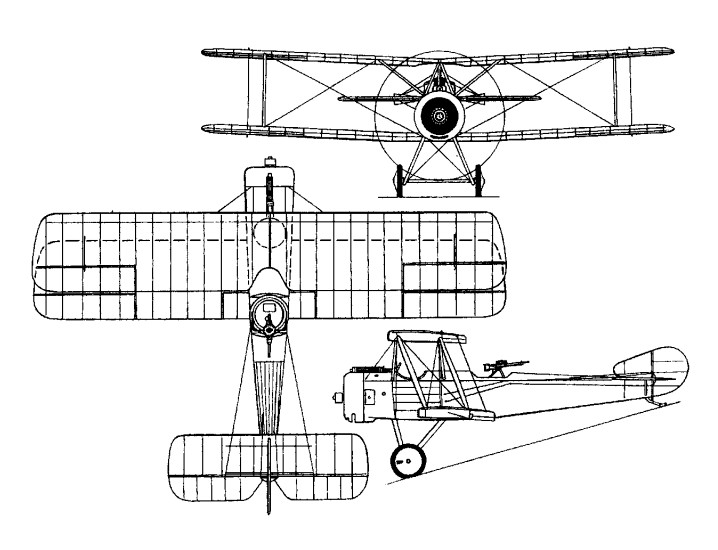
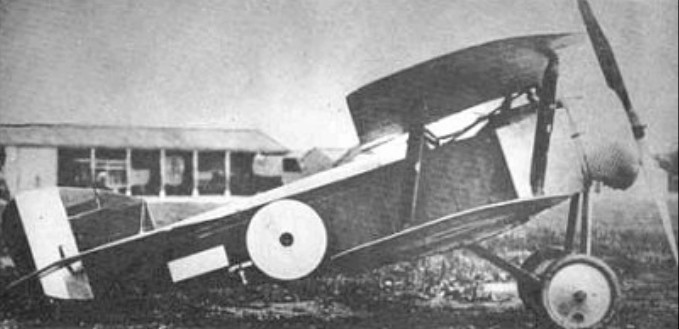
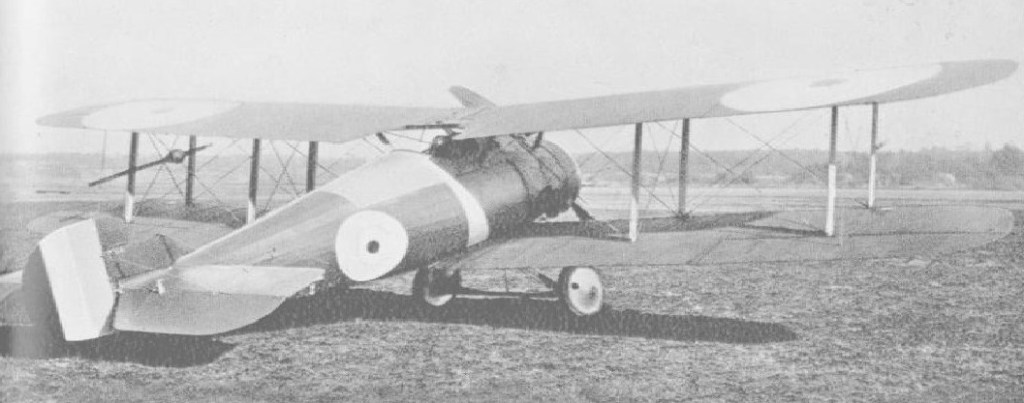
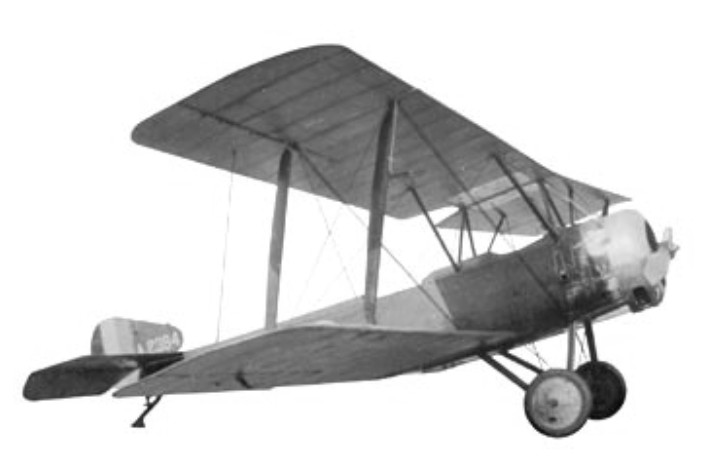
Before the single-seat Sopwith 7 F 1 Snipe assumed its final production form the design underwent several major changes in wing and tail assembly configuration.
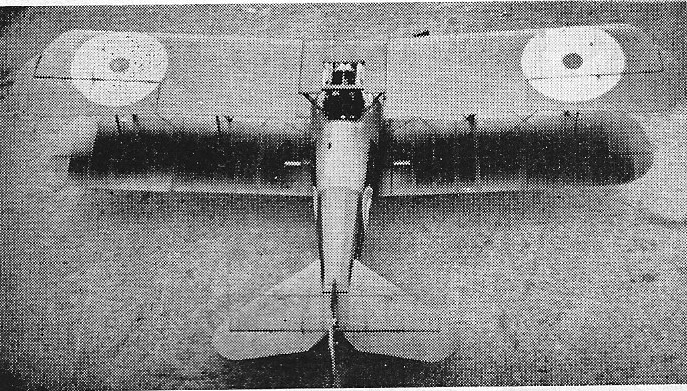
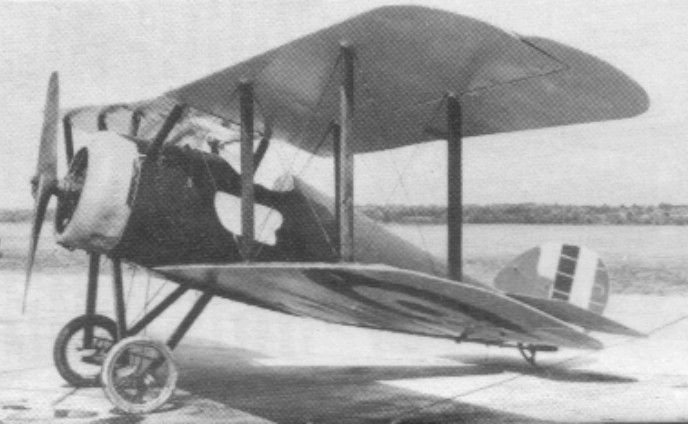
The Sopwith 7 F 1 Snipe first appeared in early 1918 and by the Armistice was in service with several squadrons. A squadron comprised the fighter element of the force which took over responsibility of policing in Iraq from October 1922.
Of the 264 Snipes built before the war ended, only 97 saw service on the Western Front. Some 497 were in use with the RAF until 1926 and gradually replaced by the Gloster Grebe and Armstrong Whitworth Siskin from 1923.
Replicas:
Antique Aero Sopwith 7F.1 Snipe
Pfeifer Sopwith Snipe
Engine: 1 x Bentley B.R.2, 170kW / 231 hp
Wingspan: 30 ft 2 in / 9.17 m
Length: 19 ft 8 in / 6.02 m
Height: 2.9 m / 10 ft 6 in
Wing area: 25.2 sq.m / 271.25 sq ft
Max take-off weight: 917 kg / 2022 lb
Empty weight: 595 kg / 1312 lb
Max. speed: 105 kt / 194 km/h / 121 mph at 19,999 ft
Service ceiling: 20,000 ft / 3050 m
Time to 6500 ft: 5.2 min
Endurance: 3 hr
Range: 297 nm / 550 km
Crew: 1
Armament: 2 x 7.7 mm Vickers machine-guns
Bombload: 4 x 9kg
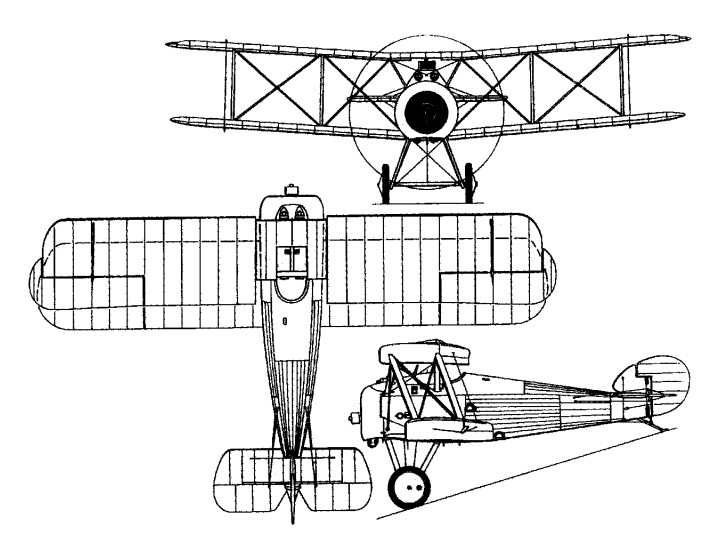
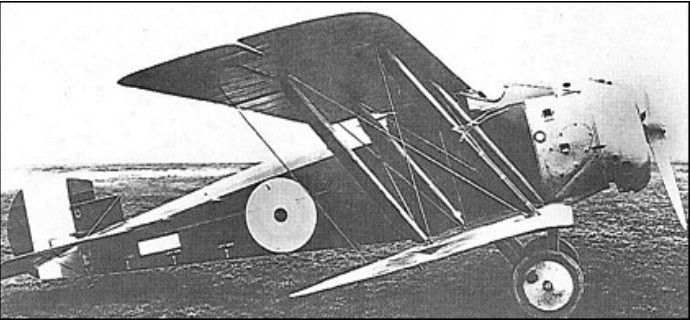
Built as a private venture, the Hippo two-seat fighter featured negative wing stagger, the gap between the wings being completely filled by the deep fuselage. A two-bay biplane powered by a 200hp Clerget llEb 11-cylinder rotary, the Hippo had an armament of two fixed synchronised 7.7mm and (initially) two free-mounted guns of similar calibre, or (later) one 7.7mm gun on a Scarff mount in the rear cockpit.
The first of two prototypes was flown on 13 September 1917 and official trials were performed at Martlesham Heath in January 1918, these having been delayed by engine problems. The performance of the Hippo was considered inferior to that of the Bristol F.2B and lateral control was criticised, and, on 2 February 1918, the aircraft was returned to Sopwith. Despite official rejection, the manufacturer fitted new wings, plain ailerons and an enlarged fin. Wing dihedral was increased and stagger was reduced, and with these modifications the Hippo re-emerged in April 1918, with a second prototype following in June. By that time, the F.2B was giving satisfaction in service and it became apparent to Sopwith that the Hippo was too late, further development being discontinued.
Max take-off weight: 1175 kg / 2590 lb
Empty weight: 672 kg / 1482 lb
Wingspan: 11.81 m / 39 ft 9 in
Length: 7.47 m / 25 ft 6 in
Height: 2.84 m / 9 ft 4 in
Wing area: 31.59 sq.m / 340.03 sq ft
Max. speed: 185 km/h / 115 mph
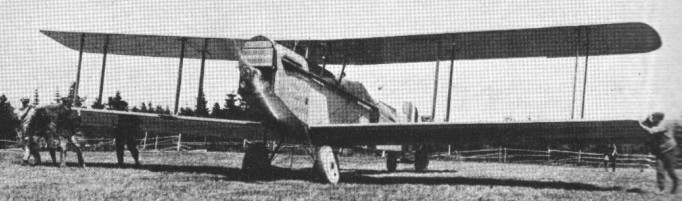
Circa 1919. Attempting to fly the Atlantic, Hawker and Grieve were forced down with radiator trouble after 1000 miles. They were mourned as dead for a week, because the steamer which rescued them had no radio.
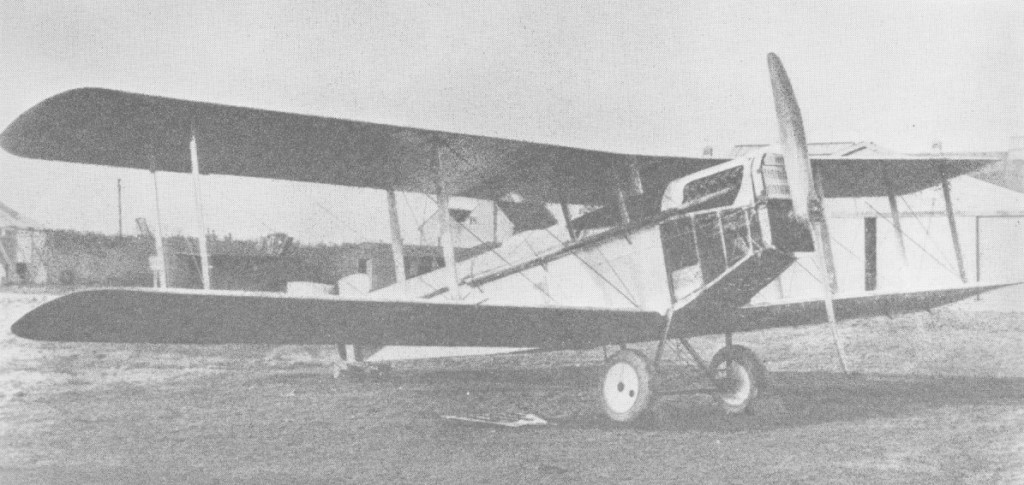
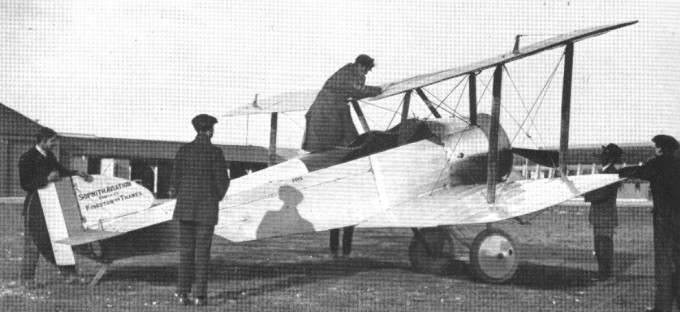
Post WW 1 Sopwith transformed the Pup fighter into the Dove lightplane.
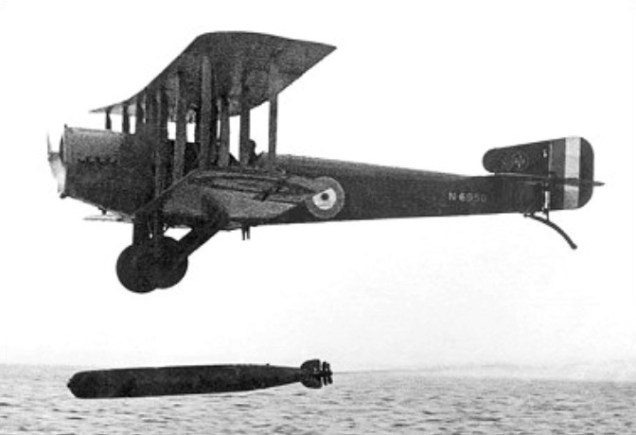
The T.1 was designed to a requirement for a torpedoplane that was to be used in an attack against the German High Seas Fleet at its home anchorage at Wilhelmshaven on the Jade River. A formal proposal was forwarded to the Admiralty by the Admiral of the Grand Fleet at the time – Adm Sir David Beatty, although it was written by Herbert Richmond, captain of the battleship HMS Conqueror and Sqn Cdr Frederick Rutland. As a result of the proposal, Beatty had 200 Cuckoos ordered. Due to production difficulties – the Cuckoo was one of a number of aircraft that were not considered a high priority and therefore had production allocated to satellite firms inexperienced in aircraft manufacture – and the very unreliable 149Kw / 200 hp Sunbeam Arab engine.
The Cuckoo was a three bay biplane with two spar wooden wings and wooden fuselage, with fabric covering. Ailerons were fitted to all four wings. The wings folded rearward for storage on board ships.
The prototype Cuckoo torpedo-bomber flew in June 1917 and was powered by a 200 hp Hispano-Suiza engine.
Initially the first contract to build the T.1 was offered to the Fairfield Shipbuilders in Glasgow but because the rate of production was so slow, Blackburn took over their order. Blackburn built N6950 was the first production Cuckoo to reach the training field, East Fortune in Scotland. The other company to build the T.1 was Pegler and Co brass fitters of Doncaster, their rate of production was not very high either. Blackburn built the most Cuckoos of over 200 built. Sopwith only built the prototype.
Cuckoos did not reach the fleet airfield’s fast enough before the Armistice and the raid, scheduled for mid 1918 never took place.
Production aircraft first appeared with 149kW Sunbeam Arabs as T.1 Cuckoos and entered service in the latter half of 1918, first going to sea on board HMS Argus on 19 October. In the first batch of Cuckoos built by Blackburn were three with Wolseley Viper engines. These became Mk IIs together with others built immediately after the war. Armament of the Cuckoo was a 450mm torpedo. Maximum level speed was 166km/h.
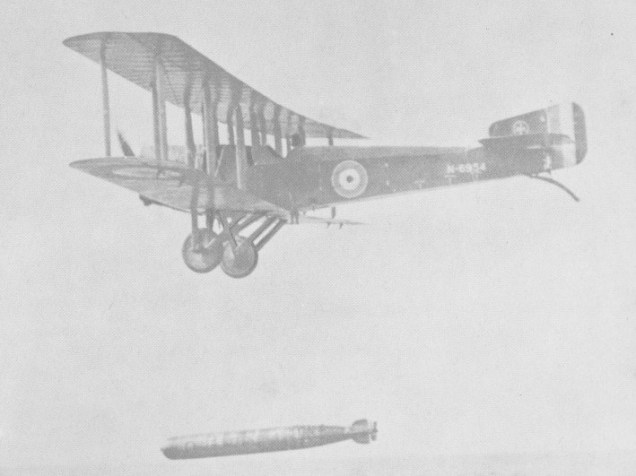
The first aircraft carrier based torpedo squadron, No.185 Sqn was formed at East Fortune on 7 October 1918, but was declared ready for ops from Argus later that month, although they did not embark aboard ship at that early stage. The first recorded landing of a Cuckoo aboard Argus wasn’t until June 1919.
One example of the Cuckoo III was built, powered by a Rolls Royce Falcon engine, but this was not pursued.
In 1921 six Cuckoos and a small naval aviation team was sent to Japan as the British Mission, lead by Colonel the Master of Sempill, to advise the Imperial Japanese Navy in naval aviation matters. Other aircraft sent include Avro 504Ls on floats, Sopwith Pups, Gloster Sparrowhawks and two Blackburn Swift torpedoplanes. Although the Cuckoos and the Swifts were used only for training, there is no doubt that they made landings aboard Hosho, Japan’s first aircraft carrier. Photos survive showing Swifts and Cuckoos carrying out torpedo drops in Tokyo Bay.
Engine: One 200 h.p. Sunbeam Arab
Prop: 2 blade
Wing span 46 ft 9 in / 14.24 m
Length 28 ft 6 in (8.68 m.)
Height: 10 ft 8 in
Wing area: 566 sq.ft
Weight empty 2,199 lb. (997 kg.)
MTOW: 3883 lb
Max speed: 103 mph (166 kph) at 2000 ft
Ceiling: 12,100 ft. (3,700 m.) fully loaded
Endurance: 4 hours
Seats: 1
Armament: One 18 in. (45 cm.) torpedo
Built in 1919 by Sopwith Aviation & Engineering at Kingston on Thames, the two seat, two bay biplane would just touch 90 mph with its 100 h.p. Anzani radial engine.
Engine: Anzani, 100 hp
Seats: 2
Max speed: 90 mph
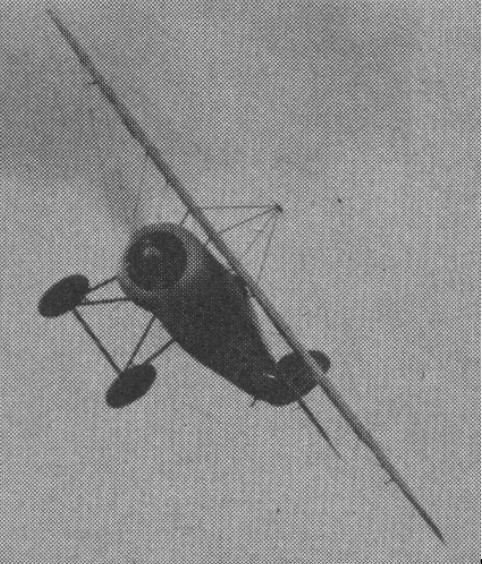
This was, for its time, quite an advanced machine being a wire braced monoplane derived from a Camel fuselage and sporting a 130 h.p. Clerget up front. The Scooter was inspired by the earlier Sopwith Swallow which was built round a Pup fuselage. The Scooter had swept back wings and was fully aerobatic.
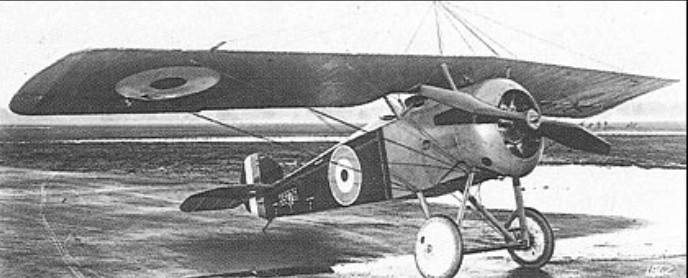
Utilising a Pup fuselage mated with a parasol wing, the Swallow single-seat fighter monoplane was powered by a 110hp Le Rhone 9J nine-cylinder rotary engine and carried the standard armament of twin synchronised 7.7mm machine guns. Flown for the first time in September 1918, the Swallow was delivered to Martlesham Heath for official trials on 29 October 1918, remaining there until May 1919, the trials having been delayed by fuel system problems. The performance of the Swallow as revealed at Martlesham did not warrant further development, and the prototype was scrapped.
Max take-off weight: 644 kg / 1420 lb
Empty weight: 403 kg / 888 lb
Wingspan: 8.79 m / 29 ft 10 in
Length: 5.72 m / 19 ft 9 in
Height: 3.10 m / 10 ft 2 in
Wing area: 14.86 sq.m / 159.95 sq ft
Max. speed: 182 km/h / 113 mph
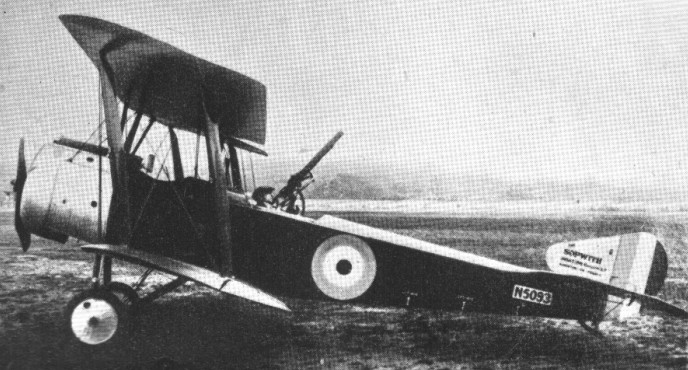
Designed and built for the Admiralty, the unarmed prototype was completed in December 1915, and series deliveries to the RNAS followed from February 1916. The Sopwith two-seater, quickly named the 1½ Strutter because of the unusual arrangement of its central mainplane bracing struts. The 1 1/2-Strutter was both the first British aircraft to be built with a synchronised gun as standard equipment and the first true two-seat fighter to see RFC service.
A single-bay biplane with two-spar wooden wings and wooden fuselage with fabric covering, the 1 1/2-Strutter featured air brakes in the lower wing and an adjustable-incidence tailplane. At an early production stage, armament was standardised on a synchronised 7.7mm gun with a second weapon of similar calibre on a Scarff ring mounting in the rear cockpit. A single-seat bomber version was built in parallel, some examples of this variant being converted as two-seat fighters.
The 1 1/2-Strutter was used by the RNAS in both escort and (without observer) bombing roles, and 77 of the first 150 aircraft ordered by the Admiralty were transferred to the RFC.
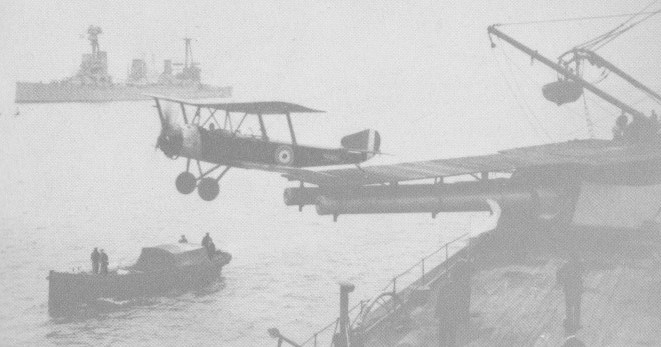
A single-seat bomber version was used by the Royal Naval Air Service and by French units. Single and two seat 1½ Strutters equipped the first unit ever formed as a strategic bombing force; No.3 Wing Royal Naval Air Service.
Initial production aircraft were powered by the 110hp Clerget 9Z ninecylinder rotary engine, but, in the autumn of 1916, this gave place to a 130hp Clerget 9B.
It was widely used by escadrilles of the French Aviation Militaire as well as Belgian and United States air forces. French production of the aircraft considerably exceeded the numbers of British built 1½ Stutters.
At least 1,513 1 1/2-Strutters were built in the UK (by the parent company, Fairey Aviation, Hooper & Co, Mann, Egerton & Co, Ruston, Proctor & Co, Vickers Ltd, Wells Aviation and Westland Aircraft). The 1 1/2-Strutter was licence-built in France as a single- and two-seat bomber (SOP 1B1 and 1B2) and two-seat reconnaissance aircraft (SOP 1A2), primarily with the 110hp and 135hp Le Rhone 9J and 9Jby nine-cylinder rotaries, 4,500 allegedly being produced by Liore et Olivier, Hanriot, Amiot, Bessoneau, Darracq, REP and Sarazin Freres. The US government procured 514 from France, and others were supplied to Belgium and Imperial Russia.
Replica:
Aviation Preservation Society of Scotland Sopwith 1½ Strutter
Engine: Clerget 110 hp
Prop: 2 blade
Wingspan: 10.21 m / 33 ft 6 in
Length: 7.69 m / 25 ft 3 in
Height: 3.12 m / 10 ft 3 in
Wing area: 32.14 sq.m / 345.95 sq ft
Max take-off weight: 975 kg / 2150 lb
Empty weight: 592 kg / 1305 lb
Fuel capacity: 40 Imp.Gal
Max. speed: 161 km/h / 100 mph
Service ceiling: 16,000 ft
Endurance: 4 hr 15 min
Armament: 1 x Vickers MG / 1 x Lewis gun
Bombload: 2 x 65 lb
Engine: Clerget 130 hp
Prop: 2 blade
Wingspan: 10.21 m / 33 ft 6 in
Length: 7.69 m / 25 ft 3 in
Height: 3.12 m / 10 ft 3 in
Wing area: 32.14 sq.m / 345.95 sq ft
Fuel capacity: 40 Imp.Gal
Armament: 1 x Vickers MG / 1 x Lewis gun
Bombload: 2 x 65 lb