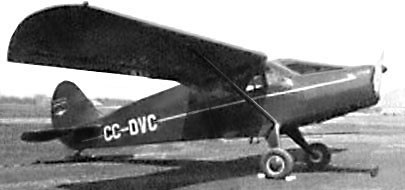
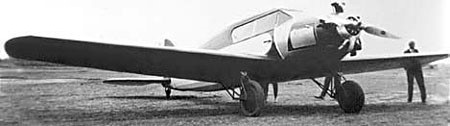
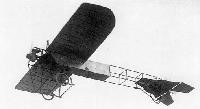
Designed by Sam Bloomfield (ex-Fairchild Corp) in 1936, the Swallow Aircraft Co C Coupe (ATC 2-538 issued in 1937) sold for $3,990.
Three were built; NC15818, NC18586, and NC19540, of which one crashed in a fog, killing company president E B Christopher, and one went to Chile as CC-DVC.
C Coupe Engine: 125hp Menasco C-4 Wingspan: 36’8″ Length: 24’4″ Useful load: 530 lb Max speed: 145 mph Cruise: 135 mph Stall: 43 mph Range: 500 mi Ceiling: 18,000′ Seats: 2
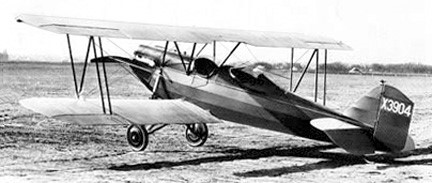
The 1928 Swallow Aircraft Co T-29 was a three-place open cockpit biplane powered by a 120hp Quick (static LeRhône) engine. The one built, registered NX/NC3904 c/n B-1, was later refitted with a 150hp Hisso A engine.
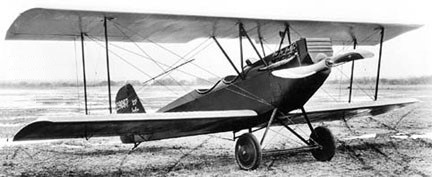
The 1929 Swallow TP (ATC 105) was designed by Amos Payne. Priced at $1,725 less motor, about 200 were built. Strengthened construction, wider cockpits.
Swallow TP C9097
The 1929 TP-K (ATC 186, 2-500) was priced at $4,123. Twenty to twenty-five were built.
Three TP-W (ATC 253) were built in 1929, priced at $4,250.
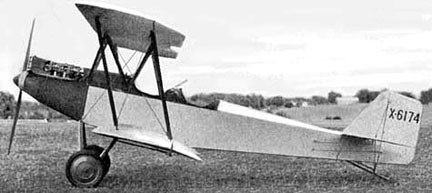
Designed by Dan Lake, and built Oct 1929 by Swallow as a monoplane with a 165hp Wright as C-165 NX431N c/n 1, and relicensed as N431N in October 1930.
Sold to Dan Lake in October 1933 by the receivers of Swallow. The company name could not be used, so Lake used his own name and changed the model to C-1 as a four place cabin biplane after switching to the 150hp Hisso engine.
Sold in May 1935 to Stanley Ball of Wichita and the registration was cancelled on 1 June 1936.
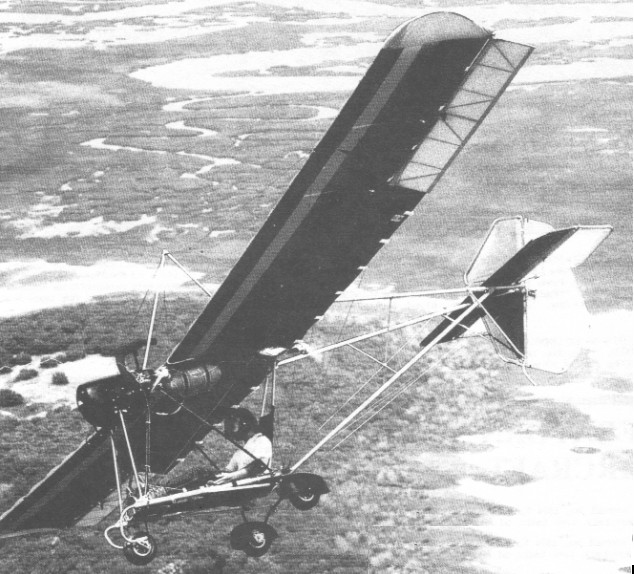
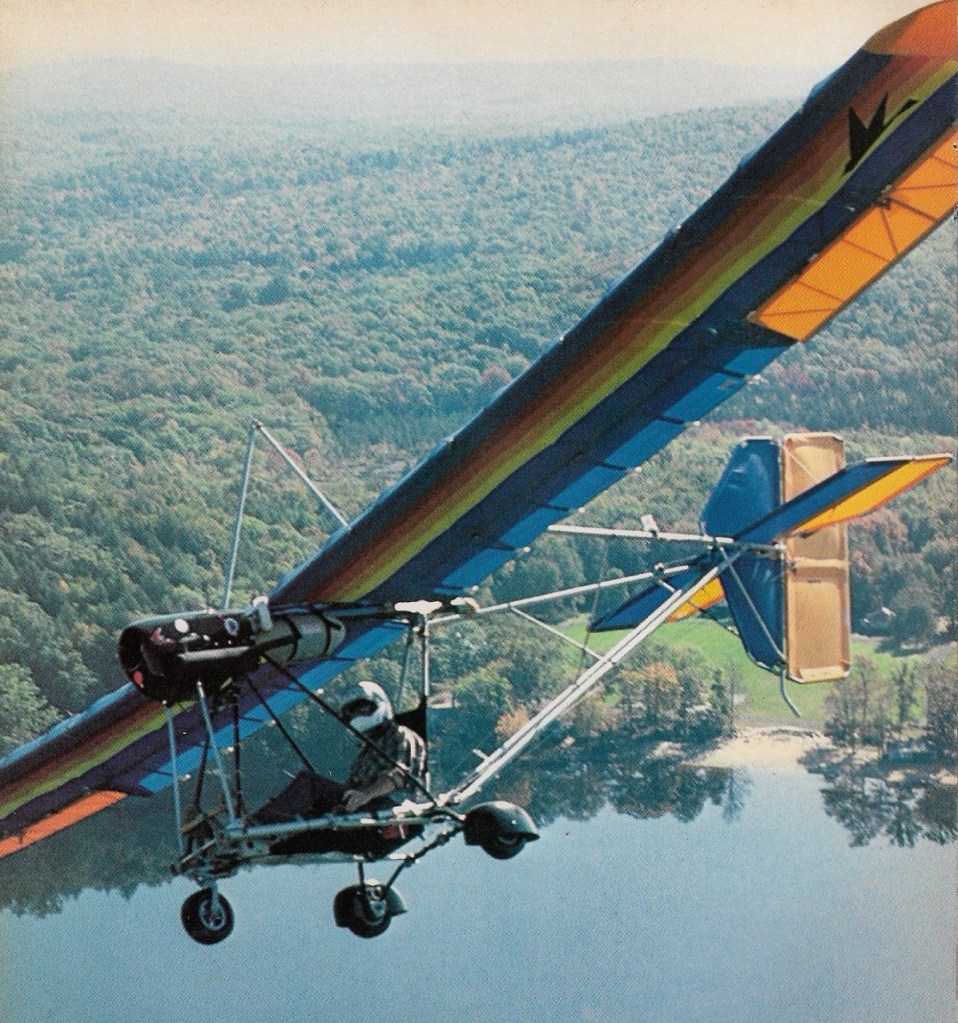
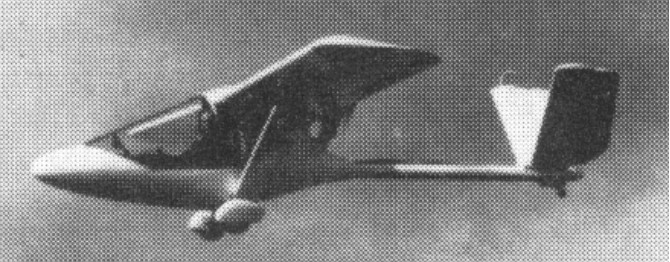
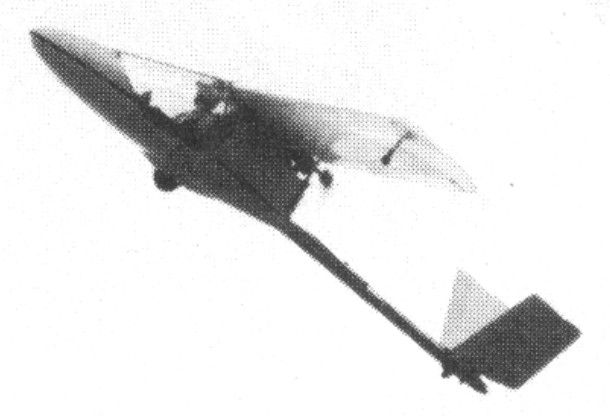
Single seat single engined high wing monoplane with conventional three axis control. Wing has unswept leading and trailing edges, and constant chord; cruciform tail. Pitch control by elevator on tail; yaw control by fin mounted rudder; roll control by one third span ailerons; control inputs through stick for pitch/roll and pedals for yaw. Wing braced from above by kingpost and cables, from below by cables; wing profile; double surface. Undercarriage has three wheels in tricycle formation with additional tailskid; steel spring suspension on nosewheel and glass fibre suspension on main wheels. Push-right go right nosewheel steering connected to yaw control. No brakes. Aluminium tube framework, with optional pod. Engine mounted at wing height driving pusher propeller.
Chet Fudge, the creator of the Swallow, named it in memory of the 1928 American biplane. Swallow AeroPlane Company (earlier called Aeroplane Marketing), originally sold two versions of this single seater, the Swallow bi-motor, which is classified as an ultralight in the United States and the Swallow B with single engine, classed as an experimental homebuilt aircraft. The twin engined ultralight used two single cylinder Yamaha KT100S engines giving 15 hp each and driving through a common reduction drive with separate clutch¬es for single engine operation in case of failure.
The company introduced another ultralight variant, this time with one engine, called the Swallow A. It uses a Rotax 277 engine.
The Yamaha engined machine was avail¬able for $5475 in kit form in 1983. Nosewheel steering, previously optional, has been stan¬dardised for the Swallow A and for the first time in the Swallow range a pod is available as an option. Other options include floats and a strobe.
The Swallow B is the same as Swallow A except: No ground steering (optional: push right go right nose-wheel steering connected to yaw control). Optional brakes on main wheels. No pod option.
In the US the Swallow B is too heavy to be classified as an ultralight, but it could come into the microlight category in some countries. It is basically the same aircraft as the original twin engined Swallow, but with a Cuyuna 430 engine substituted, developing 30 hp.
The engine is shrouded behind a distinctive glass fibre fairing, which also improves its cooling. According to the prices given at Sun ‘n’ Fun in Lakeland in March 1983, the Swallow B sells for $5790 including the engine cowling. Options: wheel fairings for the main wheels $115, steerable nosewheel $360, hydraulic brakes $388, float mountings $456.
Swallow A Engine: Rotax 277, 28 hp at 6200 rpm Propeller diameter and pitch 52 x 34 inch, 1.32 x 0.86 m Toothed belt reduction, ratio 2.0/1 Max static thrust 170 lb, 77 kg Power per unit area 0.20 hp/sq.ft, 2.2 hp/sq.m Fuel capacity 3.8 US gal, 3.2 Imp gal, 14.3 litre Length overall 18.1 ft, 5.51 m Height overall 8.0ft, 2.44m Wing span 34.4ft, 10.49m Constant chord 4.0 ft, 1.22 m Sweepback 0 deg Total wing area 138 sq.ft, 12.8 sq.m Wing aspect ratio 8.6/1 Empty weight 253 lb, 115kg Load factors +4.0, 3.0 design Never exceed speed 60 mph, 97 kph Best glide ratio with power off 8/1
Swallow B Engine: Cuyuna 430R engine Max power 30 hp at 5500 rpm Propeller diameter and pitch 52 x 34 inch, 1.32 x 0.86 m Toothed belt reduction Power per unit area 0.21 hp/sq.ft, 2.3 hp/sq.m Fuel capacity 3.8 US gal, 3.2 Imp gal, 14.3 litre Length overall 18.1 ft, 5.51 m Height overall 8.0ft, 2.44m Wing span 34.4ft, 10.49m Constant chord 4.0 ft, 1.22 m Sweepback 0 deg Total wing area 138 sq.ft, 12.8 sq.m Wing aspect ratio 8.6/1 Nosewheel diameter overall 10 inch, 25 cm Main wheels diameter overall 10 inch, 25 cm Empty weight 290 lb, 131 kg Max take off weight 585 lb, 265 kg Payload 295 lb, 134 kg Max wing loading 4.23 lb/sq.ft, 20.7kg/sq.m Max power loading 19.5 lb/hp, 8.8kg/hp Max level speed 70 mph, 113 kph Max cruising speed 60 mph, 97kph Stalling speed 28mph, 45kph Max climb rate at sea level 780 ft/min, 4.0 m/s Min sink rate 550ft/min at 45mph, 2.8m/s at 72 kph Take off distance 75 ft, 23 m Landing distance 125 ft, 38 m Range at average cruis¬ing speed 137 mile, 220km
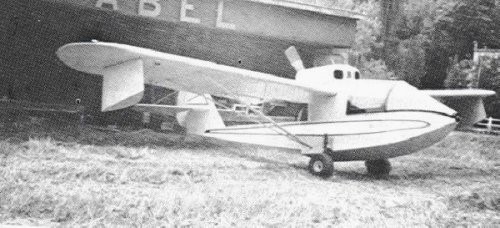
Before September 1964, Svardala built the prototype Svardala Bullet, 2-seater, side-by-side, flying-boat. The (plywood) hull, landing gear, (fabric-covered) wings, (fabric-covered) empennage and tip floats were similar to contemporary Volmer Sportsman and Anderson Kingfisher. The greatest difference was in in the aft cabin, which vaguely resembled a Republic Seabee. The most striking difference was the short pylon supporting the engine (Continental or Lycoming) and propeller. Because the crankshaft was only a short distance above the (flat) aft fuselage, Svardala installed a 2-bladed, wooden propeller with broad, curved blades.
The Svardala Bullet was sold during the early 1970s and moved to Sherbrooke, Quebec. The new owner complained about poor climb performance. He installed a blown Plexiglas windshield, taller engine pylon and larger diameter propeller.
Apparently, several registrations (most non-official) were tied to the Bullet, including CF-PUY, CF-SYF, CF-PUH, CF-PHU, the latter possibly being the X-1).
The SV Xl takes on the sleek lines of the SV series of aircraft from the Veenstra factory. The approach this time is to cater for people who admire the glider lines but would prefer conventional performances. The Xl will have sprung main wheels and a V tail. The owner will have the option to purchase the SV Xl without the sleek cockpit and fly in the breezy aluminium frame that is hidden under the fibreglass skin. Aircraft marketed as Mantis in New South Wales, Australia.
Engine: Fuji Robin 244 Prop: 81 cm x 46cm pitch Wingspan: 8m Length: 5m Weight: 265kgs Fuel capacity: 27 ltr Cruise speed: 48 kts Stall: 30kts
The SV 8 is a cantilever high wing pusher and takes on the lines of a clipped wing sail plane, constructed of foam aluminium and fibreglass, the aircraft has a fully enclosed cockpit, full span flaperons and V tail mounted on the tail boom. The single wheel undercar¬riage comes with brake as standard and the tip wheels aid ground handling. The wing unbolts from either side of the fuselage for trailering.
Engine: Fuji Robin 244 cc Prop: 76 cm x 46 cm pitch Wingspan: 8m Length: 5m Weight: 225 kgs Fuel capacity: 27 Lt Econ cruise speed: 56 kts Stall: 30 kts