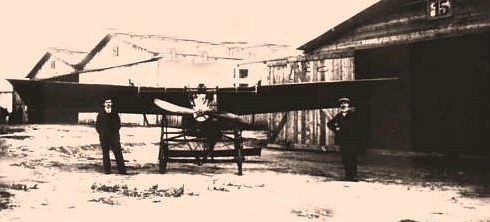
The fourth design of Hungarian Sándor Takács, built in 1911, was a single engined tractor monoplane, powered by a 60 hp 5-cylinder radial engine.
The fourth design of Hungarian Sándor Takács, built in 1911, was a single engined tractor monoplane, powered by a 60 hp 5-cylinder radial engine.
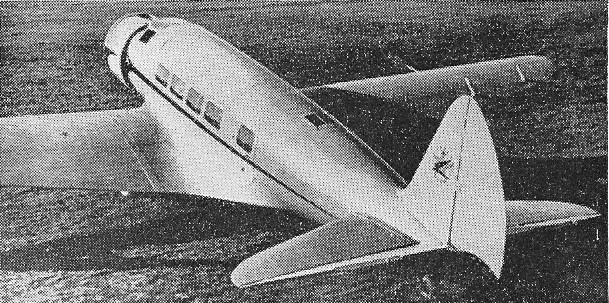
Designed by V.K. Tairov, the OKO-1 had a 750 hp M-25 giving a max speed of 230 mph with an AUW of 7293 lb. Span: 50 ft 6 in
Ta-Ho-Ma built the model B three place open cockpit biplane in 1929. Power was from a 100hp Siemens-Halske SH-12, or optional 180hp Hisso E.
The price was $4275. A total of four model A and B were built, registered NC475, NC536, NC537, and NC538.
Engine: 100hp Siemens-Halske SH-12
Wing span: 30’0″
Length: 21’0″
Useful load: 874 lb
Max speed: 115 mph
Cruise speed: 105 mph
Stall speed: 33 mph
Range: 425 mi
In 1929 Ta-Ho-Ma was selling the model A, three place open cockpit biplane.
Power was the 150hp Hisso E, or optional 90hp Curtiss OX-5. The model A sold for $3,750, or $2,500 less motor.
A total of four model A and B were built, registered NC475, NC536, NC537, and NC538.
Engine: 150hp Hisso E
Wingspan: 32’0″
Length: 21’8″
Usful load: 795 lb
Max speed: 135 mph
Cruise speed: 115 mph
Stall speed: 35 mph
Range: 575 mi
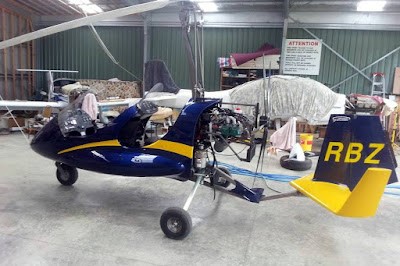
The TAG Aviation Titanium Explorer Gyrocopter was an improved aircraft based on the ELA autogyro. The main structure of the Explorer is made from titanium, which is a first for a gyrocopter, and the carbon fibre and fibreglass body has sidepods for storage. Power comes from a Rotax 912 and the propellor is a 6 bladed unit.
In 1932 Taft built a seaplane, N13159 c/n A1, with a 90hp LeBlond. The registration was cancelled on 30 July 1934.
Built in 1928 the sole Taft Kingfisher, N368, was a 3 place open cockpit biplane flying boat.
First flying on 6 Feb 1928, the Kingfisher became the Whittelsey Amphib.
Engine: 110hp LeBlond 7DF pusher
Wingspan (upper): 37’0″
Wingspan (lower): 18’0″
Length: 28’9″
Useful load: 600 lb
Max speed: 90 mph
Cruise speed: 65 mph
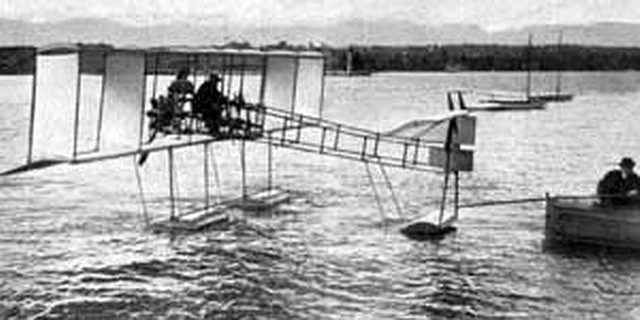
Émile Taddéoli’s Gnôme-engined, Voisin-inspired canard float biplane “Mouette” was designed by his mechanic Prampolini and built at the Perrot & Cie workshop. It flew 80 meters during the first test flight on Lac Léman in March 1912, but sunk when landing, as the main floats got submerged instead of skimming the surface. After that, the project was abandoned.

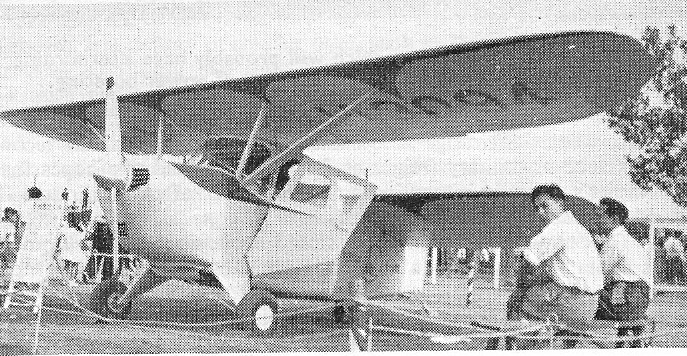
The Tachikawa R-HM is a refined two-seat cabin version of the Mignet pre-war Flying Flea, powered by a 90 hp Continental C90-12F engine. It is generally similar to the H.M.310 Estafette produced by Avioes Mignet do Brasil.
The R-HM is a tandem monoplane or heavily-staggered biplane, lift being divided between the two surfaces which give a slot effect.
The registration was JA3094.
Engine: 90 hp Continental C90-12F
Wingspan: 26 ft 3 in
Wing area: 201.5 sq.ft
Length: 16 ft 8 in
Height: 6 ft 6 in
Empty weight: 910 lb
Loaded weight: 1422 lb
Max speed: 99 mph
Cruise: 74.5 mph
Range: 298 mi
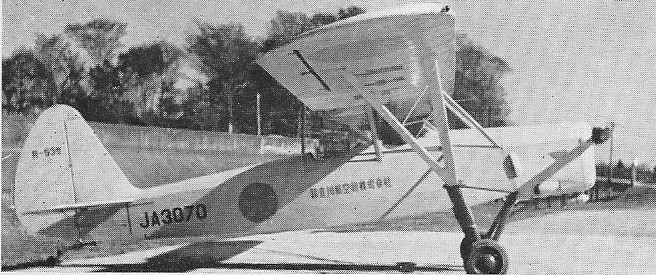
The Tachikawa R-53 is a revised version of the R-52, differing primarily in having a 155 hp Blackburn Cirrus Major engine.
Essentially a parasol wing two-seat primary trainer, the R-53 is of mixed construction with a welded steel-tube fuselage and a wood and duralumin wing, all fabric covered.

Engine: 155 hp Blackburn Cirrus Major
Wingspan: 35 ft
Length: 24 ft 9 in
Height: 8 ft 2 in
Empty weight: 1470 lb
Loaded weight: 2090 lb
Max speed: 129 mph
Cruise: 93 mph
Range: 465 mi
Service ceiling: 14,270 ft

