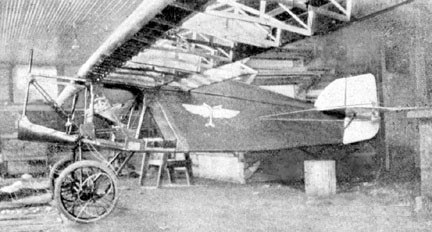
Todhunter Blue Wren

Despite being registered as a microlight, it is really the prototype of what was hoped to become an amateur-built self-launching glider, built from a design that was originated by Reg Todhunter in Australia in the mid 1950s. Construction work begun in early 1980 and the aircraft first flew at Tocumwal, NSW, on 08-07-84 under a permit to fly issued by the Gliding Federation of Australia. It was then air freighted to California to take part in a homebuilt sailplane design competition instigated by the Soaring Society of America. The fly-off took place at Tehaehapi over 1-3 September 1984 and was won by the Rutan Solitaire. The aircraft was imported into New Zealand in 1996 by Neville Swan, following the death of the designer.

Although a glider, the aircraft was registered as a microlight in New Zealand (ZK-JGQ). The initial engine (a JPV PUL 425 horizontal twin 22 hp ) was replaced by a Koenig 3 cyl of 24 hp.

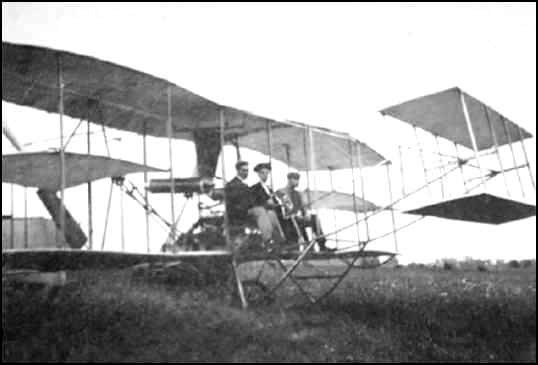
Todd 1909 Biplane

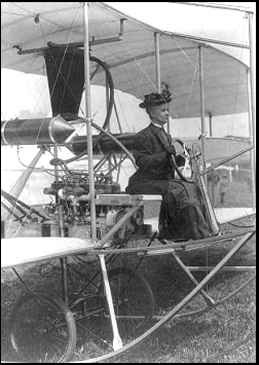
Miss [E.L.] Todd in her aeroplane, Sept 23, 1909

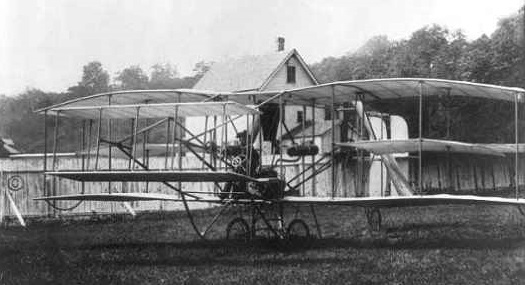
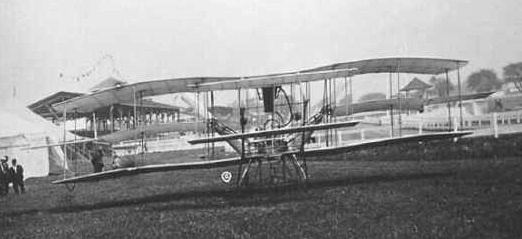
After years of effort, Miss E. Lillian Todd, of No. 131 West Twenty-third street, realized her ambition on Nov 7, 1910, when she had the pleasure of seeing a biplane, the work of her hands and brain, fly across the Garden City aviation field.

Designed and built by E. Lillian Todd and first flown by Didier Masson over the Garden City aviation field in Long Island during November of 1910.

Miss Todd was well known at the time, and her 1910 Biplane, powered by an eight cylinder 60 hp Rinek engine, was the first successful aeroplane built by an American woman. She then tried to get an engine, but met with repeated defeat, as the engines which she tried were not suitable. Finally a modified Rinek motor was declared satisfactory. Todd is told to have designed and built three full-size aircraft; her first – an engineless machine – in 1906.

A good sized crowd was on hand to witness the first attempt to fly the biplane. Mr. Didier Masson was the aviator. He ran the machine across the ground, then went to the air for twenty feet and made a turn at the far end, returning to the starting place, where he was enthusiastically received by Miss Todd and the crowd.

Todd in her plane with Didier Masson

Miss Elizabeth L. Todd has entered the lists as a competitor in several long-distance flights and she has her mechanicians at work in her aerodrome at Hempstead Plains on three machines she designed. She has made several flights and has learned to manipulate her planes and her engines in masterly style.

E. L. Todd at the Controls
Probably Sept., 1909

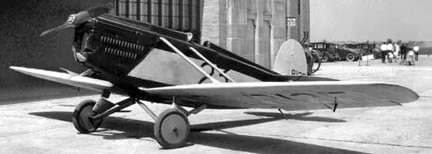
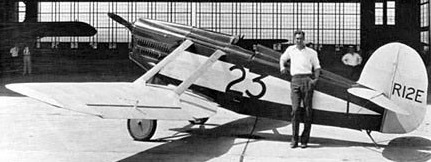
Todd Special

Built first as a Wittman Tailwind, Edward Todd rebuilt the aircraft in 1963 with the wings lowered and the engine raised. Registered N11Q, it was first flown in June 1963.

Engine: Lycoming O-290G, 125hp
Wingspan: 22’0″
Length: 19’6″
Useful load: 621 lb
Max speed: 170 mph
Cruise speed: 160 mph
Stall: 60 mph
Range: 805 mi
Seats: 2

Todd Light Express

The Light Express was built by Edgar B Todd in 1927 as a three-section parasol monoplane with a Clark-Y airfoil. A single seater, the baggage compartment was convertible into a passenger seat.

Only one was built.

Engine: Curtiss OX-5, 90hp
Wingspan: 40’0″
Length: 22’4″
Useful load: 330 lb
Max speed: 120 mph
Cruise speed: 110 mph
Stall: 55 mph
Range: 700 mi
Seats: 1-2

Toczołowski-Wulf TW-12

Henryk Toczołowski and Józef Wulf designed the TW-12 in 1929-30 but had to build the structure slowly in their spare time. They were both members of the P.W.S. Aero Club and eventually got permission to use the P.W.S. workshops but the TW-12 was not ready for flight until the second half of 1933. There is uncertainty about the date of the first flight, which one source gives as 29 September 1933 and another as 29 November 1933.

The TW-12 was an all-wood aircraft, with a cantilever, one piece low wing which was trapezoidal in plan. It was built around twin spars and covered in a mixture of plywood and fabric.

It was powered by a 60–66 kW (80–88 hp) five cylinder Armstrong-Siddeley Genet radial engine. The fuselage, with rectangular section structure and rounded decking, was plywood covered. The TW-12 had two open, tandem cockpits fitted with dual control. Its landing gear was fixed and conventional.

Early flight testing revealed some handling problems, particularly at low speeds in the landing approach. After some modifications the TW-12 went to the I.B.T.L. at Warsaw for official airworthiness tests , which led again to concerns about the low speed handling and also about the low fuel capacity (8.8 imp gal (40 l; 10.6 US gal)). In the summer of 1935 the TW-12 was allowed to fly as a single-seater, with the forward cockpit covered over and with a rudder of increased area.

On its release from the I.B.T.L., the WT-12 was scheduled to take part in the P.W.S. Club rally on 28 July 1935 at their home base at Biała Podlaska. According to one account, Antoni Uszacki decided to take advantage of a strong tail wind to fly it from Warsaw to Lviv, some 370 km (230 mi) away. Despite the limited fuel capacity (40 l (8.8 imp gal; 11 US gal), he arrived safely though with a dry tank .The club began to use the TW-12 as a trainer but its career was soon cut short by a landing crash with Tadeusz Arcinowski at the controls.

Another account states that Uszacki flew it at the rally but only achieved last (6th) place, and that Arcinowski flew it soon afterwards from Warsaw to Lviv but crashed on landing.

two seat version
Engine: 1 × Armstrong-Siddeley Genet, 60–66 kW (80–88 hp)
Wingspan: 10.5 m (34 ft 5 in)
Wing area: 14.5 sq.m (156 sq ft)
Length: 6.5 m (21 ft 4 in)
Height: 2.2 m (7 ft 3 in)
Empty weight: 285 kg (628 lb)
Max takeoff weight: 500 kg (1,102 lb)
Fuel capacity: 8.8 imp gal (40 l; 10.6 US gal)
Maximum speed: 170 km/h (106 mph; 92 kn) at sea level
Cruise speed: 155–150 km/h (96–93 mph; 84–81 kn)
Service ceiling: 2,900 m (9,500 ft)
Rate of climb: 2.8–2.2 m/s (550–430 ft/min)
Landing speed: 70 km/h (43 mph)
Crew: One pilot
Capacity: One pupil
TMM-Avia T-10 Frigate

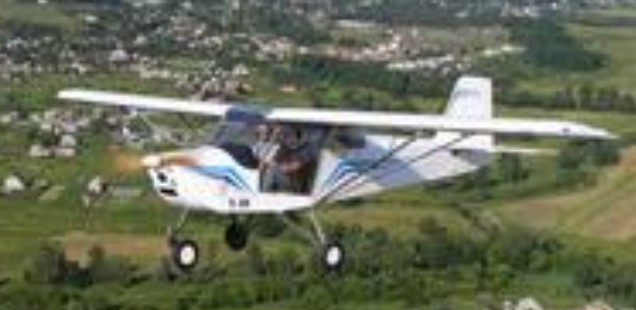
T-10 is a very light multipurpose aircraft, intended for pilot training, crop spraying, and aerial patroing. The airplane’s fugelage frame work has truss structure, made of stainless steel. The wing (double spar, all wooden) and horizontal empennage are foldable along the fuselage, which facilitates the airplane’s assembly, disassembly, transportation and storage.

T-10 tricycle non-retractable landing gear, enables it to operate from ground, grass and paved runways. As additional option it can be equipped with a Cobra recovery system. The T-10 Frigate as a ready-to-fly airplane 2009 Price: 42500 euro or as a kit (21 600 euro).

Stall: 33 kt / 39 mph / 62 kmh
Cruise: 81 kt / 93 mph / 150 kmh
VNE: 103 kt / 118 mph / 190 kmh
Empty Weight: 315 kg / 694 lbs
MTOW Weight: 550 kg / 1213 lbs
Climb Ratio: 1200 ft/min / 6,2 m/s
Glide Ratio: 11
Take-off distance (50ft obstacle): 360 ft / 110 m
Landing distance (50ft obstacle): 230 ft / 70 m

TM Aircraft TM-5

In 1980 one TM-5 (later TM-5A), N1053Y, was built. It was a two-place cabin, low-wing monoplane.

The TM-5B of 1981 was an aerobatic homebuilt.

TM-5
Engine: Continental A65, 65hp
Wingspan: 25’0″
Length: 18’3″
Useful load: 595 lb
Max speed: 128 mph
Cruise speed: 110 mph
Stall: 52 mph
Range: 340 mi
Seats: 2

TM-5A
Engine: Continental A65, 65hp
Wingspan: 25’0″
Length: 18’3″
Useful load: 595 lb
Max speed: 128 mph
Cruise speed: 110 mph
Stall: 52 mph
Range: 340 mi
Seats: 2

TM-5B
Engine: Continental, 100hp
Useful load: 574 lb
Max speed: 151 mph
Cruise speed: 120 mph
Stall: 52
Range: 270 mi
Seats: 2