The 1913 Laird No. 2 baby biplane was designed and built by Emil M. Laird in the USA
1 engine
Kvasz VI
The 1913 Kvasz VI monoplane design by Kvasz started in 1913 but it flew only in 1914, in Hungary.
Span: 36’1″
Length: 20’6″
Speed: 67 mph
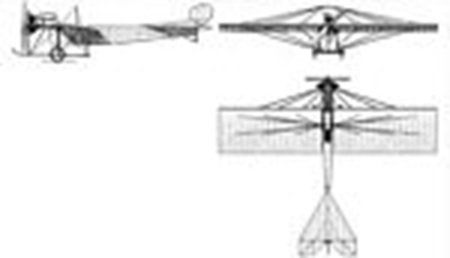
Kvasz V
The 1913 Kvasz Type V was designed and built by Andras Kvasz in Hungary
Span: 10 m
Length: 10 m
Weight: 300 kg
Arocet AT-T Tactical Trainer
The 1988 AT-T Tactical Trainer N253LC was based on Stoddart-Hamilton Glasair III. A two-place monoplane, only one was built, first flying on 24 July 1988, with retractable undercarriage.
Engine: 420hp Allison 250-B17D
Wingspan: 23’3″
Length: 21’9″
Useful load: 1200 lb
Max speed: 403 mph
Cruise: 366 mph
Stall: 70 mph
Seats: 2
Armel White Dove Commercial
The 1928 Armel White Dove Commercial three-place open cockpit biplane was designed by A H Comer and registered N7634 c/n 654. The registration expired on 9 January 1932.
Engine: 90hp Curtiss OX-5
Wingspan: 33’0″
Length: 22’0″
Useful load: 650 lb
Max speed: 95 mph
Stall: 35 mph
Seats: 3
Kovanko 1913 monoplane
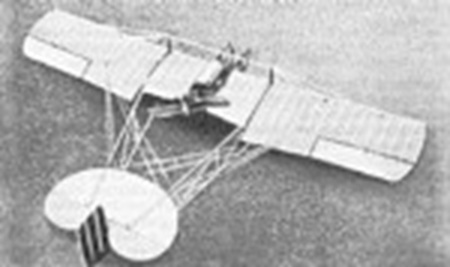
The 1913 Kovanko pusher monoplane was designed and built by A. A. Kovanko in Russia
Kondor 1913 monoplane
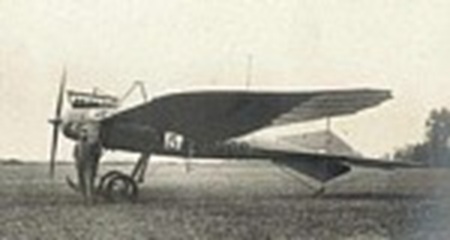
The circa 1913 Kondor monoplane was designed and built by Kondor Flugzeug-werke in Germany
Knabel 1913 monoplane

The 1913 Knabel monoplane featured transparent cellon covering. It was designed and built by A.Knabel Works in Germany
Bellamy Proctor/Junkers Ju 87
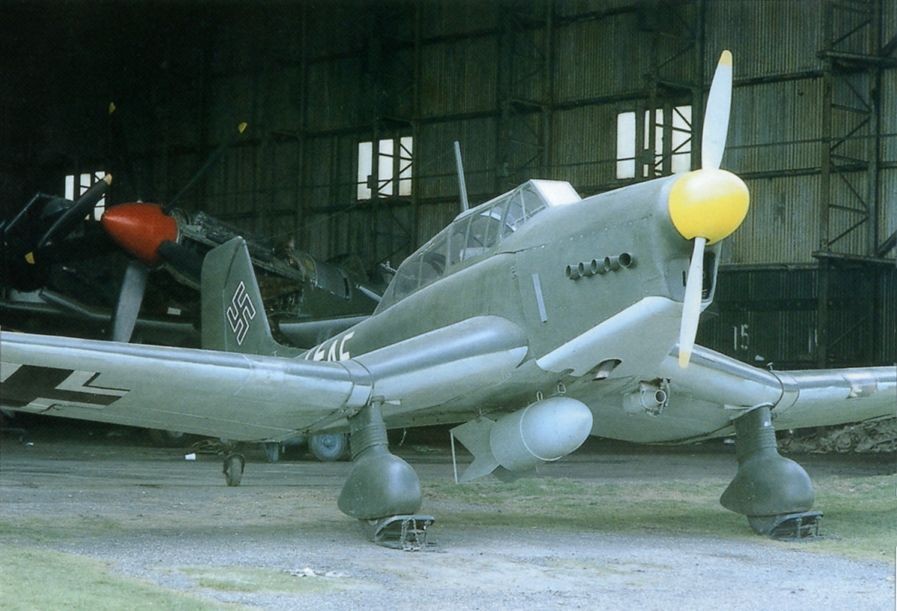
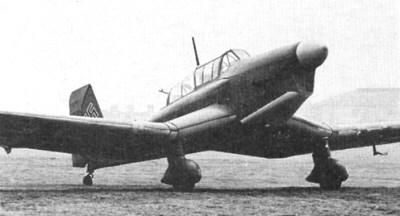
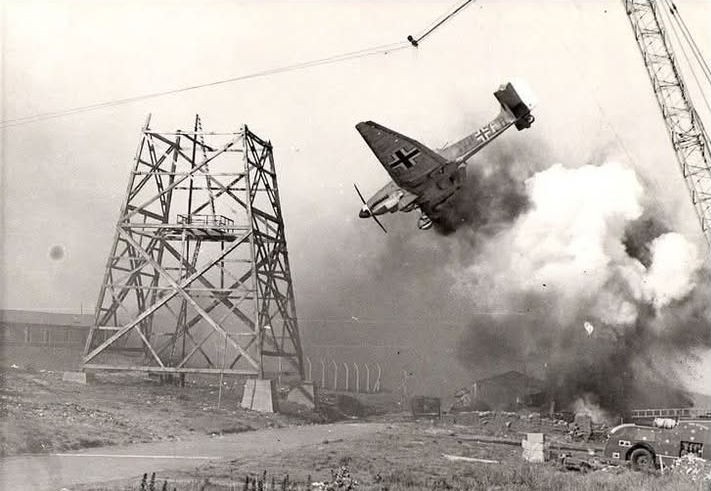
Vivian Bellamy’s Percival Proctor/Junkers Ju 87 Stuka conversion was built for the ‘Battle of Britain’ movie.
This aircraft was known as a “Proctuka”, and was a Percival Proctor trainer that had been heavily modified in order to make it look like a German Stuka dive bomber, including the addition of the cranked wings. Flight characteristics of the Proctukas were not good, though, and their flying footage was not used in the film (models were used for the Stukas instead).
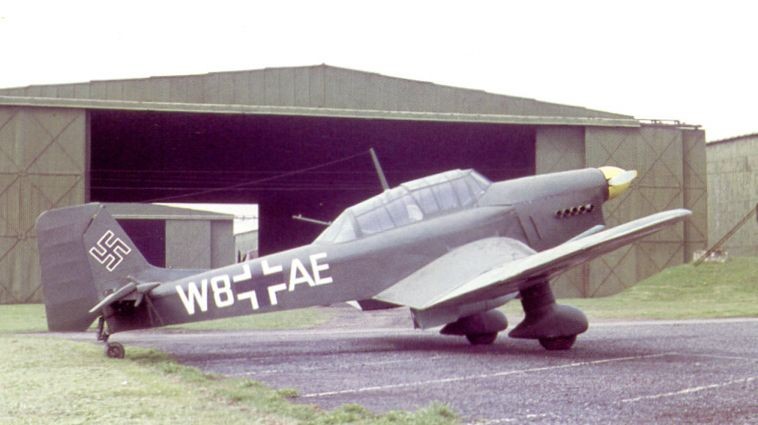
It was considered by one pilot as “too dangerous to fly”

Dickinson DGA-21
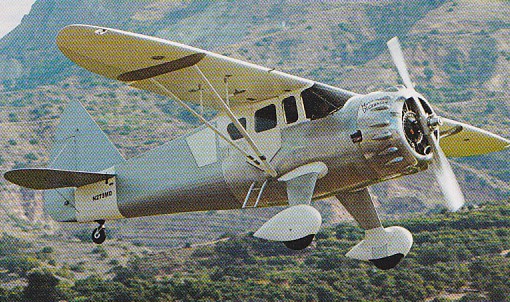
In 1999, Dickinson laid out on his hanger floor in Santa Paula, California, the first piece of what would be a brand new Howard. The goal was to build the airplane he believed Benny Howard would have built had he continued to build Howards.
He wanted Mr Mulligan’s speed and performance, as well as the DGA-15’s handling qualities and stability.
Dickinson adapted the original Mr Mulligan wing configuration, which had been replaced in later production models, and up-graded the DGA-15’s 450 hp Pratt & Whitney Wasp engine with a modern version, one that delivers 600 hp. He built every piece of the plane, or modified something from a DGA-15 or another airplane.
First flying in 2008, at 225 mph, it is 50 percent faster than the DGA-15. The designation, DGA-21 is the sum of DGA-6 (Mr Mulligan, and -15.
 All Aero