The 1930 Plane-a-copter built by Jerry Vidal in the USA was described a “windmill” with counter-rotating wings. A single-place, open cockpit helicopter, it crashed, was modified and rebuilt, then shelved.
The 1929 Victor Metal Aircraft Co Vimac was a two-place, open cockpit high-wing monoplane, powered by a Lee motor. It was reported as in development, but no final version was found.
The 1929 VK-1 was a two-place, open cockpit biplane powered by a 90hp Cirrus Mk III engine. Designed by Felix Knoll and registered N851N c/n 101, the wingspan was 30 ft 0 in.
The registers indicate this was a possible metal-fuselage evolution of Knoll KN-1, but leave unexplained a major engine change to 220hp Wright.
Designed by William L Shaffer, the 1928 SS-1 was a three-place, open-cockpit biplane. It was fabric-covered steel-tube fuselage with wood-framed wings.
No production data was found about this short-lived company, who announced they would keep the initial selling price at $2,000, except for a sole registry of NX5626 c/n 1. Some records show the 50hp Hallett H-526 installation replaced by a 90hp Curtiss OX-5 engine. The X license was cancelled on 2 January 1930 and the ID cancelled 2 July 1934.
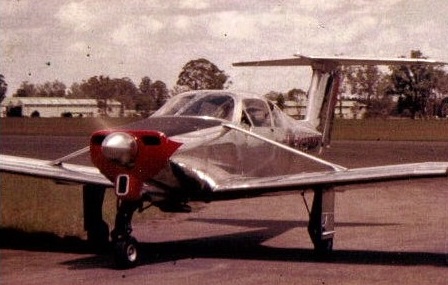
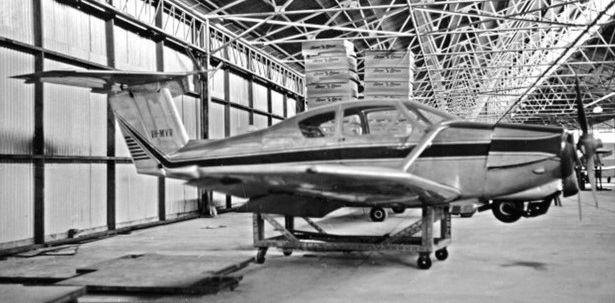
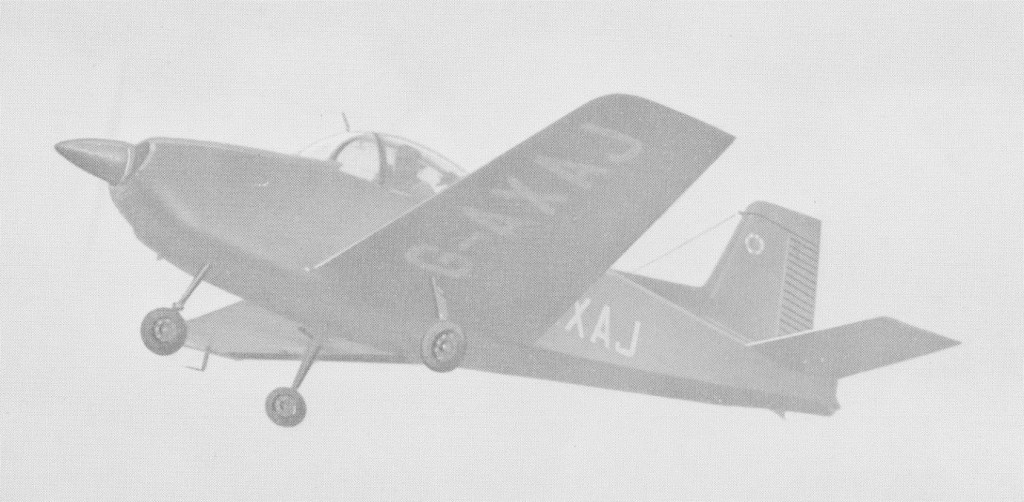
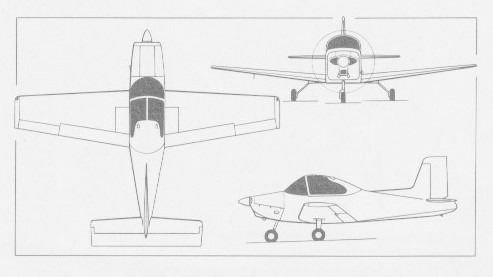
The Victa R2 was a four-seater monoplane designed by Luigi Pellarini. The R2 was all-metal with a T-tail, retractable nosewheel suspension, and was powered by a Lycoming O-360 piston engine with 135 kW.
The prototype C/n 02-1 VH-MVR flew for the first time on February 15, 1961. In April 1961 it was decided at Victa to cancel the development in favor of the Airtourer, as it turned out that the production cost would have become too high.
The R2 was disassembled and stored at Milperra until the Victa plant was closed. It was later taken to Bankstown where it remained in storage for many years.
Engine: 1 × Lycoming O-360, 135 kW Length: 6.58 m Span: 9.75 m Height: 2.53 m Empty weight: 539 kg Max. take-off wt: 1120 kg Top speed: 280 km / h Service ceiling: 5547 m Range: 1190 km Crew: 1 Passengers: 3
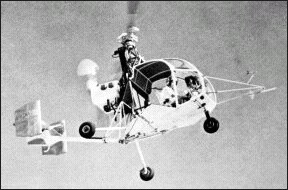
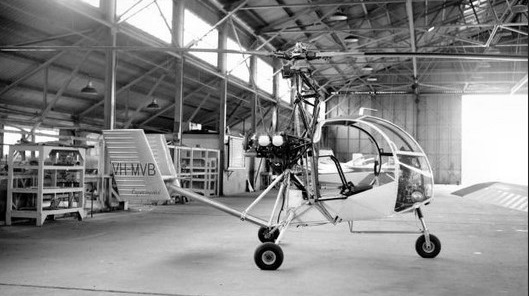
Victa’s aviation division designed a small two-seat gyroplane, the Model 67. The prototype, which was designed by John Blackler, was registered VH-MVB c/n 1 and flew in May 1962. With a tricycle undercarriage, twin-fin tail unit and a two-blade main rotor with a pusher propeller driven by a 160hp Lycoming engine, the prototype logged 150 flights and 20 hours of test flying time, but was abandoned due to financial constraints in 1966.
Engine: Lycoming O-320-A, 160 hp Top speed: 153km/h
The possibilities of developing a four-seat variant of the Airtourer was mooted in Australia and Henry Millicer designed the CT/2 Aircruiser. A completely new design, a prototype, VH-MVR, was built and flown on 17 July 1966. The Aircruiser was powered by a 210 hp Continental IO-360-D and featuring a roomier four-seat cockpit.
However Australian Government approval for levies on imported US light aircraft was not obtained and the project was shelved. The Aircruiser option on the Aircruiser was taken up in 1969 across the Tasman by Aero Engines Services Ltd in company with the production jigs and became ZK DAH, grandfather of today’s CT/4C. The aircraft arriving in New Zealand in December of that year.
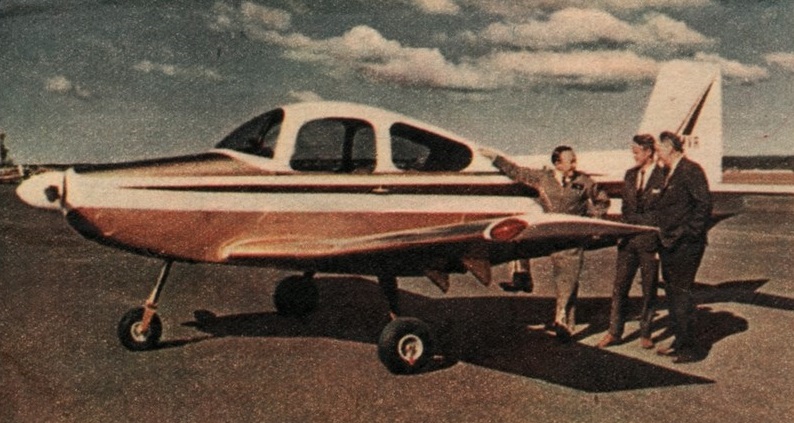
In response to a 1953 Royal Aero, Club competition for a club trainer to replace the biplane Tiger Moth, aeronautical engineer Henry Millicer entered a winning design for a side by side, enclosed cabin, aircraft powered by a 65hp Continental A65 engine.
A wooden prototype was constructed as VH FMM and first flew on 31 March 1959. Victa Consolidated Industries became interested and re-engined VH-FMM with a 90 hp Continental engine. While this aircraft was on a demonstration tour of New Zealand work on an all-metal Airtourer 100 was underway. The all metal Airtourer VH MVA was flown on 12 December 1961 and, following type certification on 4 July 1962 (the first Australian light aircraft design to be so approved), was put into production as the all metal Airtourer 100 and T2. Two versions of this fully aerobatic two-seater were available, powered by 100 hp Continental O-200-A and 115 hp Lycoming O-235-C1BB engines.
The first production model was VH-MVC.
T3A
After producing 167 aircraft Victa closed down and during 1967 all production rights were sold to Aero Engine Services Ltd of Hamilton. Three partially built Victa Airtourers were completed before production of AESL aircraft. They immediately continued production and built a further 80 examples and developed the 130 hp T3A. New Zealand’s very first home grown Airtourer ZK COZ (c/n 501) became airborne off Hamilton airport in October 1967. Progressively more horse powered T3, T4, and T5 variants were developed.
Victa 100s were often later converted to V115 standard or, by AESL, to Airtourer T3A (130-hp engine).
AESL re-designated the model numbers and product line, with the Airtourer 100 becoming the T1 before being dropped from production (although one was later re-manufactured from Victa c/n 50 to AESL c/n 556), and the 115 became the T2. The T3, powered by a 130 hp Continental, was a field modification with only one produced from new; the 150 became the T4, and the T5 was a 150 fitted with a constant-speed propeller.
Finally came the 150 hp Lycoming powered T6/24. Which featured a 24-volt electrical system in place of the earlier 12-volt system. The last examples of the T6 were fitted with a 160 hp engine.
In 1968 designed and built the first 150 hp T6/24 Super 150 Airtourer. A total of 80 were built in all. The T6-24 differed in having a larger engine, constant speed prop, electric flaps and trim.
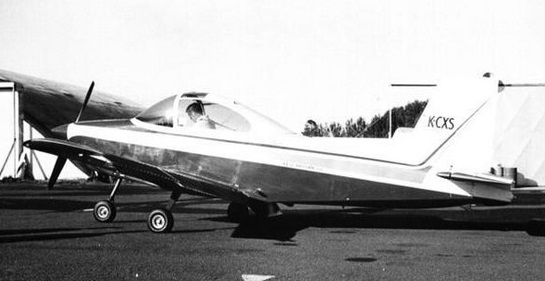
AESL Airtourer 150 ZK-CXS
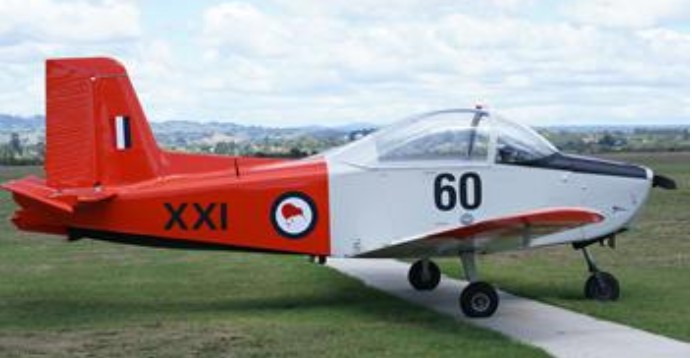
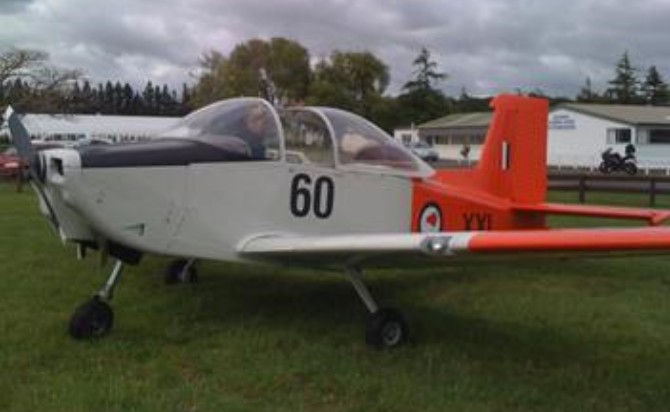
Following evaluation flying of the prototype Airtourer at Wigram, the Royal New Zealand Air Force saw the potential of this locally produced aircraft as a primary trainer. Four T6/24s were ordered in October 1969 and entered service in May and June 1970 as NZ1760 to NZ1763. The aircraft were used by the RNZAF until 1993 when they were retired and sold by tender.
The Glos-Air assembly line of Airtourers included 115s c/ns 525, 528, 529, 530, 531 and 533, 150s c/ns 535, 539, 540-549 and 550 in July 1971 with 535 flying as G-AZBE on July 19. These were imported from New Zealand for completion and assembly at Staverton.
The Airtourer has been out of production since 1973, the last two flying in 1973. The line was shut down, the jigs placed into storage until, as with ZK DAH in 1979, Australian interests purchased the hardware and the rights to build the aircraft back in Australia. The Australian Airtourer Association provides spares for its members and Airtourers still flying worldwide.
AT115 Engine: Lycoming O-235-C2A, 115 hp Prop: fixed pitch
T2 Engine: Lycoming O-235-C1B, 115 hp Wing span: 7.92 m Length: 6.33 m Cruising speed@65% pwr: 115 mph / 185 kmh Fuel consumption @ 65% power: 32 lb/hr Endurance @ 65% power: 5.45 hr Stalling speeds (clean/flaps down): 58-52 mph / 93-83 kph Useful load: 505 lb / 229 kg Max. ROC: 900 fpm / 274 m/min Accommodation: Pilot and one passenger
T3A Engine: Rolls Royce/Continental O-240A, 130 hp Prop: fixed pitch Wing Span: 21 ft 6 in (6.55 m) Length: 21 ft 6 in (6.55 m) Height: 6 ft 10 in Maximum Speed: 142 mph (230 kph) Range: 710 miles (1140 km) Service Ceiling: 14,000 ft (4264 m) Load factor: +6 -3 G Fully aerobatic
T4 Engine: Lycoming 0-320-E2A, 150 hp Prop: fixed pitch Wingspan: 26 ft 0 in / 7.92 m Length: 21 ft 5 7/8 in / 6.55 m Cabin length: 5 ft 8 in / 1.73 m Cabin width: 3 ft 6 in / 1.07 m Cabin max height: 4 ft 2 in / 1.27 m Baggage space: 8 cu.ft / 100 lb / 0.23 cu.m / 45 kg Empty weight equipped: 1165 lb / 528 kg MTOW: 1750 lb / 793 kg Max cruise 4000 ft / 1220 m: 122 kt / 140 mph / 225 kph Max ROC SL: 980 fpm / 299 m/min Service ceiling: 15,500 ft / 4725 m Range max fuel: 542 nm / 625 mi / 1005 km Seats: 2 side by side
T5 Engine: Lycoming 0-320-E1A, 150 hp Prop: Constant speed
T6/12 Engine: Lycoming 0-320-E1A, 150 hp Prop: Constant speed
T6/24 Super 150 Engine: Lycoming 0-320-E1A, 150 hp Prop: 2 blade fixed pitch Prop diameter: 6 ft 0.5 in / 1.82 m Wingspan: 26 ft 0 in / 7.93 m Length: 21 ft 6 in / 6.55 m Height: 7 ft 0 in / 2.13 m Wheel track: 9 ft 0 in / 2.75 m Empty weight: 1120 lb / 508 kg Useful load: 630 lb / 286 kg Fuel capacity: 29 Imp.Gal / 35 USG / 132 lt Max level speed: 150 mph / 242 kph / 130 kt at SL Cruising speed@ 65% pwr: 125 mph / 201 kmh Fuel consumption @ 65% pwr: 44 lb/hr Endurance @ 65% pwr: 3.9 hr Cruising speed@ 75% pwr: 145 mph / 234 kmh / 125 kt at 4000 ft Stalling speeds (clean/flaps down): 58-52 mph / 93-83 kmh Useful load: 500 lb / 227 kg Max. ROC: 980 fpm / 299 m/min Best climb speed: 92 mph / 149 kph / 80 kt Service ceiling: 18,000 ft / 5480 m Max range: 505 miles / 803 km / 438 nm Max payload range: 375 mi / 605 km / 326 nm TO dist 50 ft: 1200 ft / 365 m Approach speed: 80 mph / 129 kph / 70 kt Ldg from 50 ft: 860 ft / 263 m Aerobatic load: +6 / -3 Seats: 2 Price 1970: £5750 / $13,800