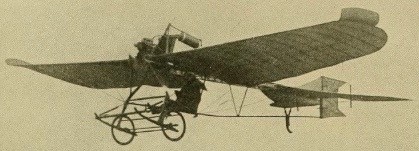
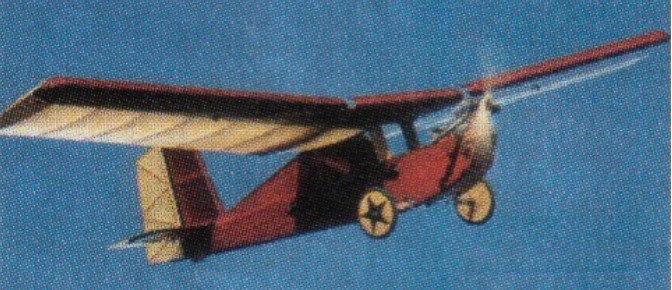
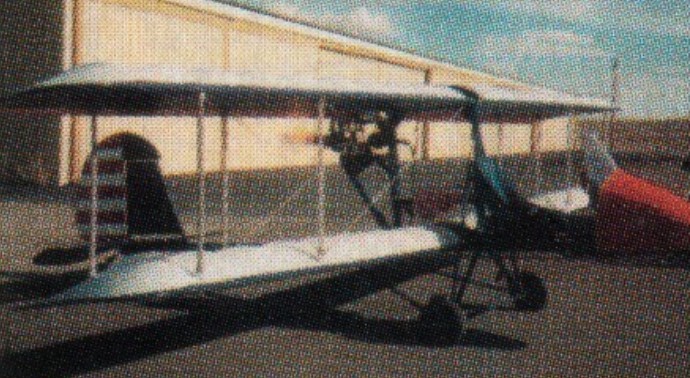
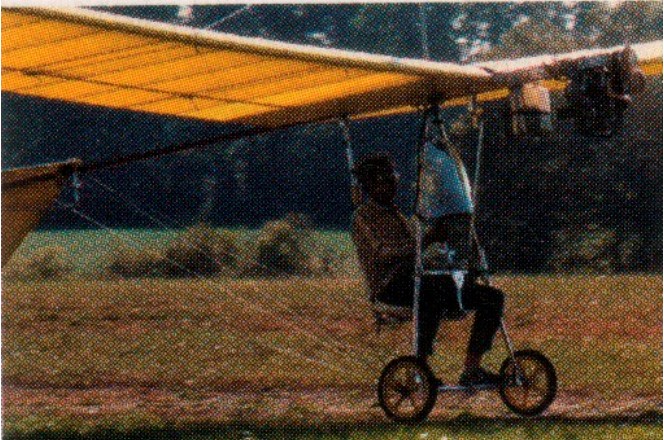
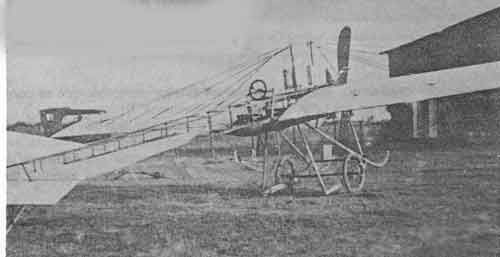
First flown in 1980 and introduced in 1982, the Sky Pup is a single seater designed as an FAR 103 Ultralight Vehicles compliant aircraft with an empty weight within that category’s 254 lb (115 kg) empty weight limit. The aircraft was intended to require the minimum financial investment and the designer intended that the airframe would be able to be completed for US$1000 using locally available materials. In 2001 that Sky Pups had been completed for US$2000, including the engine. A single-seat, high wing, cantilever, single engine, conventional landing gear ultralight aircraft that was designed by Steven K. Wood of Whitewater, Colorado for amateur construction.
The aircraft fuselage and wings are constructed from epoxy-glued Douglas fir, with foam wing ribs all covered in doped fabric or Dacron. The wing is a three-piece design, allowing quick disassembly for transport or storage. The landing gear suspension is made from maple wood. The Sky Pup can be built with an open cockpit or fully enclosed, allowing flying in cooler weather. The Sky Pup is available as plans only (for US$70). The power range specified is 18 to 28 hp (13 to 21 kW), with the largest engine specified the 28 hp (21 kW) Rotax 277. The 20 hp (15 kW) 2si 215, 28 hp (21 kW) Hirth F-33 and 22 hp (16 kW) Zenoah G-25 have also been used. Approxamately 350 were built.
The design was professionally engineered and incorporates a very clean cantilever wing that results in a 12:1 glide ratio. The control system is two-axis, using only elevator and rudder controls, roll being introduced by rudder via a generous dihedral angle. The elevator is stick-controlled, while the rudder is controlled via conventional aircraft pedals. The aircraft is stall and spin proof. Reported construction times are 450-600 hours.
Plans were initially sold direct by the designer and, in the early 2000s, by the Vintage Ultra and Lightplane Association. Later the designer’s son marketed the plans and this is the current source.
Sky Pup
Engine: 1 × Zenoah G-25 , 22 hp (16 kW)
Propeller: 2-bladed wooden
Length: 16 ft 0 in (4.88 m)
Wingspan: 31 ft 0 in (9.45 m)
Height: 4 ft 4 in (1.32 m)
Wing area: 130 sq ft (12 sq.m)
Empty weight: 195 lb (88 kg)
Gross weight: 400 lb (181 kg)
Fuel capacity: 5 US gallons (19 litres)
Maximum speed: 69 mph / 111 km/h / 60 kt
Cruise speed: 55 mph / 48 kt / 89 km/h
Stall speed: 26 mph / 23 kt / 42 km/h
Range: 150 mi / 130 nmi / 241 km
Rate of climb: 450 ft/min / 2.3 m/s
Takeoff dist: 200 ft
Landing dist: 100 ft
Service ceiling: 5000 ft
Lift-to-drag: 12:1
Seats: one
Landing gear: tailwheel