Flown in 1930, powered by a Salmson 60 hp.
1 engine
Aeolus Aviation Aeolus
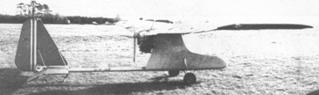
Designer Kevin McGrath wanted to produce an aircraft which could be flown regularly even in British weather conditions, so he deliberately made the wing loading as high as possible within the British microlight definition and gave the aircraft a snug cockpit. The transparent canopy at the front hinges at the top to allow entry and exit and can be removed completely for summer days. Another novel feature is that behind the pilot is a compartment suitable for 13 lb (6 kg) of baggage.
Introduced in prototype form at the beginning of 1983, the Aeolus is most notable for its fully enclosed glass fibre fuselage; this is a structural part of the aircraft rather than just a pod, and supports the engine at the rear.
A single seat, single engined high wing mono¬plane with conventional three axis control. The wing has unswept leading and trailing edges, and constant chord, with a conventional tail. Pitch control is by elevator on the tail; and yaw control by fin mounted rudder; roll control is by full span ailerons; with control inputs through stick for pitch/roll and pedals for yaw. The NACA 63412 profile; 100% double surface wing is braced from above by struts and cables, from below by struts. The undercarriage has three wheels in tail dragger formation; steel spring suspension on the tailwheel and aluminium spring suspension on the main wheels. No ground steering (tailwheel castors) or brakes are fitted. The glassfibre fuselage is totally enclosed, and the engine is mounted below the wing, driving a pusher propeller.
The prototype machine was to be modified for production, using V belts instead of a toothed belt reduction drive. Other changes for production included a 25% increase in tailplane and elevator areas, a reduction in aspect ratio from 7.3 to 5.6/1, a more rigid wing of composite construction with heat shrunk fabric skin and strut bracing, plus replacement of the coil spring suspension on the main wheels by a wire-braced aluminium cantilever arrangement.
Prototype
Engine: Robin EC34PM, 30 hp at 7500 rpm.
Max static thrust: 160 lb, 73 kg.
Propeller: 53 x 36 inch, 1.34 x 0.91 m.
Reduction: Toothed belt ratio.
Length overall: 17.0ft, 5.18 m.
Height overall: 5.5ft, 1.68m.
Power/unit area: 0.21 hp/sq.ft, 2.3 hp/sq.m.
Fuel capacity: 6.0 USG, 5.0 Imp gal, 22.7 lt.
Wing span: 32.0ft, 9.76m.
Constant chord: 4.4ft, 1.34m.
Dihedral: 2 degs
Sweepback: 0 degs
Tailplane span: 7.5ft, 2.29m.
Fin height: 4.0ft, 1.22m.
Total wing area: 140 sq.ft, 13.0 sq.m.
Aileron area: 9.0sq.ft 0.84 sq.m.
Fin area: 3.0 sq.ft, 0.28 sq.m.
Rudder area: 5.0 sq.ft, 0.46 sq.m.
Tailplane area: 15.0sq.ft, 1.39 sq.m.
Elevator area: 10.0 sq.ft, 0.93 sq.m.
Wing aspect ratio: 5.6/1.
Wheel track: 4.0ft, 1.22m.
Wheelbase: 11.0ft, 3.35m.
Tailwheel dia: 4 inch, 102 mm.
Main wheels dia: 12 inch, 305 mm.
Empty weight: 280 lb, 127kg.
MTOW: 550 lb, 249kg.
Payload: 220 lb, 100 kg.
Max wing load: 3.92 lb/sq.ft, 19.1 kg/sq.m.
Max pwr loading: 18.3 lb/hp, 8.2kg/hp.
Load factors: +4.0, 2.0 design; +6.0, 4.0 ultimate.
Max level speed: 65 mph, 105 kph.
Vne: 80 mph, 129 kph.
Max cruise: 58 mph, 93 kph.
Economic cruise: 58 mph, 93 kph.
Stalling speed: 28 mph, 45 kph.
Max climb SL: 550 ft/min, 2.8 m/s.
Best glide ratio: 11/1 at 45mph, 72kph.
Take off dist: 200ft, 60m.
Landing dist: 200ft, 60m.
Service ceiling: 10,000ft, 3050m.
Range ave cruise: 120 mile, 193km.
AEG Helicopter
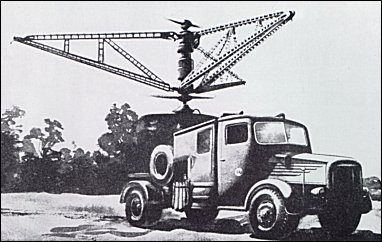
The A.E.G. helicopter designed by R. Schmidt was attached to the ground by a system of three tethering cables which helped to stabilise. R. Schmidt worked from about 1933 and this work was finalised in 1940 in the shape of a tethered electric helicopter for use as an aerial observation or support post for the army.
The helicopter had two two-blade rotors mounted co-axially, one being attached to the shaft and one to the shell of an electric motor. Three fixed arms were attached above the upper rotor, and these arms not only supported the cabin below but served as the cable attachment points for tethering. In the event of engine failure, the observer escaped by using a parachute blown into the air by a powder charge.
The three tethering cables were also used to feed power to the motor from a ground source via the control panel located in the launching and transporting truck. It was driven by electric motors of 50, later 100 and 200 horsepower and had a lift ranging from 450 to 1250 kilograms. Despite successful trials, the AEG helicopter does not appear to have been adopted for military use.
Engine: 1 x 200hp electric motor
Rotor diameter: 7.92m
Weight fully loaded: 1225kg
Ceiling: 1000m
Seats: 1
AEG DJ.I
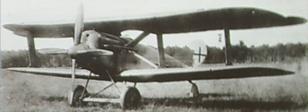
Before flight testing of the AEG PE, development continued in the DJ.I. The DJ.I was a two bay biplane, of unequal span using I-section aerofoil section interplane struts. The fabric covered wings had dural spars, the fuselage utilising aluminium sheet skins and some armour protection for the engine, fuel tank and pilot.
Three DJ.I prototypes were built, the first flying in July 1918. The first two were fitted with Benz Bz.IIIb V-8 engines of 195 hp and fitted with 4-blade propellors, while the third had a Maybach Mb.Iva engine of 240 hp.
Flight testing was not completed by the end of World War 1 in November 1918.
Engine: 1 x Benz Bz.IIIb, 195hp
Wing span: 32 ft 9.75 in / 10 m
Length: 21 ft 11 3/8 in / 5.69 m
Height: 9 ft 10 in / 3 m
Max take-off weight: 1375 kg / 3031 lb
Empty weight: 1182 kg / 2606 lb
Max. speed: 180 km/h / 112 mph
Cruise speed: 146 km/h / 91 mph
Climb to 3280 ft / 1000m: 4 min
Armament: 2 x 7.92mm mg
Crew: 1
AEG PE
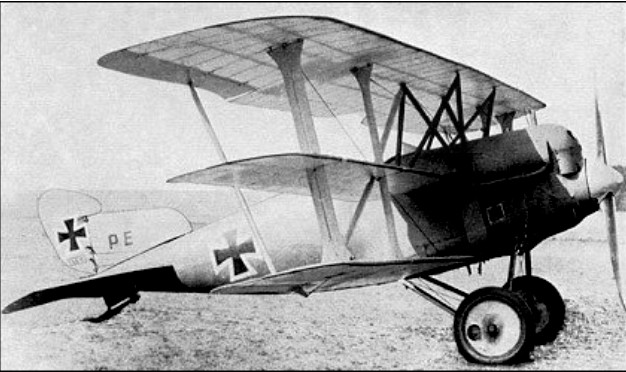
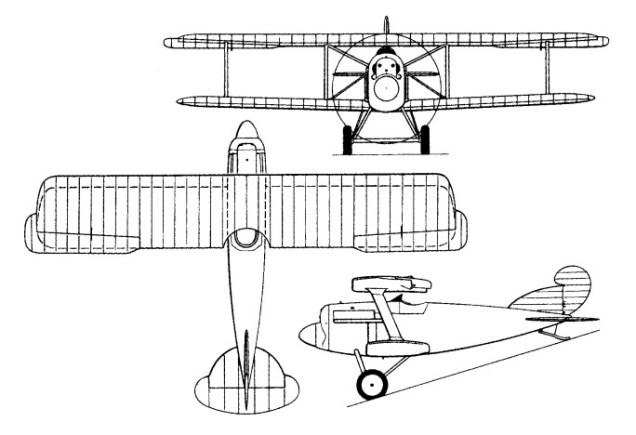
The AEG PE (Panzer-Einsitzer) was a single seat armoured ground-attack triplane aircraft. The PE featured an armoured fuselage of light alloy construction; fabric covered flying surfaces with dural tubular wing spars.
First flying in March 1918 the PE was easy to fly but suffered from poor stability and considered inadequate for fighter versus fighter combat.
Engine: 1 x 195hp Benz Bz IIIb
Wingspan: 11.20 m / 37 ft 9 in
Length: 6.60 m / 22 ft 8 in
Height: 2.48 m / 8 ft 2 in
Wing area: 31.60 sq.m / 340.14 sq ft
Max take-off weight: 1412 kg / 3113 lb
Empty weight: 1182 kg / 2606 lb
Max. speed: 166 km/h / 103 mph
Cruise speed: 121 km/h / 75 mph
Range: 480 km / 298 miles
Armament: 2 x 7.92mm mg
Crew: 1
AEG J.II
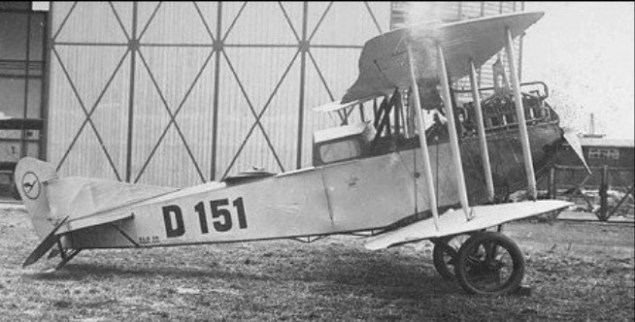
The J.II was similar to the J.I but introduced an improved control system and horn-balanced control surfaces. To to improve directional stability the fin area was also increased. These improvements increased the weight by 55 lb / 25 kg.
After the armistice a number of J.IIs were used as transports (with the armour removed) by Deutsche Luft-Reederei. The J.II civil cabin biplane built 1918 had a two-seat cabin in place of the gunner’s position, as well as
a door and steps.
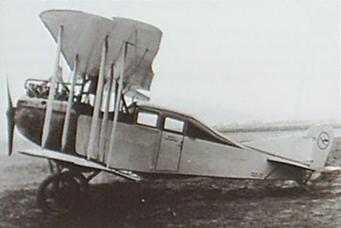
AEG built more than 600 J.Is and J.IIs.
Passenger conversion
Crew: 1
Pax cap: 2
Engine: 1 x 220hp Benz Bz.IV
Length: 7.92 m / 26 ft 0 in
Height: 3.35 m / 11 ft 0 in
Wing area: 34.50 sq.m / 371.35 sq ft
Max take-off weight: 1819 kg / 4010 lb
Wingspan: 13.46 m / 44 ft 2 in
Max. speed: 152 km/h / 94 mph
Cruise speed: 140 km/h / 87 mph
Ceiling: 4500 m / 14750 ft
Rate of climb: 170 m/min / 550 ft/min
Range: 590 km / 367 miles
Armament: 3 x 7.92mm mg
Crew: 2
AEG J.I
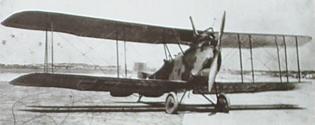
Late 1915 the German army air service introduced what could be called ground support units. Proving effective on a small scale during the Battle of Verdun in early 1916, a high priority expansion programme began. The AEG J.I was developed to meet this task until more suitable aircraft became available.
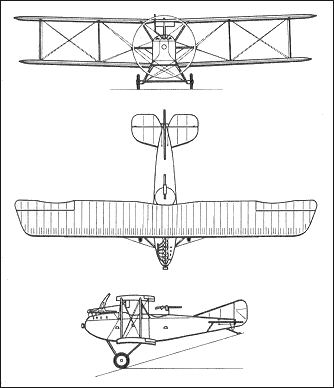
The J.I was essentially a C.IV with a more powerful Benz Bz.IV of 200 hp to offset the weight of 860 lb 390 kg) of armour plate crew and engine protection. This 2 in (51mm) thick steel sheet protection extended from the nose to the rear of the cockpit. Armament was 2 LMG 08/15 mounted in the rear cockpit floor pointing downward and forward at about 45 degrees. These could be used to strafe trenches or columns of troops. The observer had also a trainable LMG 14 on a ring mounting.
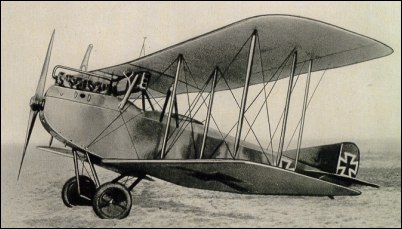
The increased weight caused ailerons to be added to the lower wings to improve lateral control.
AEG built more than 600 J.Is and J.IIs.
Engine: Benz Bz.IV, 200 hp
Wingspan: 44 ft 2 in / 13.46 m
Length: 23 ft 7.5 in / 7.2 m
Height: 10 ft 11.5 in / 3.3m
Wing area: 357.16 sq.ft / 33.18 sq.m
Empty wt: 3280 lb / 1455 kg
MTOW: 3836 lb / 1740 kg
Max speed: 94 mph / 150 kph
Climb to 3280 ft / 1000m; 6 min
Service ceiling: 14,765 ft / 4500 m
Max range: 233 sm / 375 km
Max endurance: 2.5 hr
Crew: 2
Armament: 2 x fixed forward/downward firing 7.92mm MG 08/15 machine guns / 1 x trainable 7.92mm LMG 14 Parabellum
AEG K.I / G.I
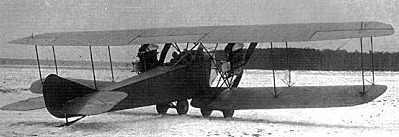
In 1915 the first of the AEG G.I to G.V series twin engined bombers appeared. The G.I was essentially an enlarged version of the C.IV. Only a single example was built which led to the development of the G.II.
Engine: 2 x Mercedes D.I, 100 hp.
Crew: 2
AEG Dr.I
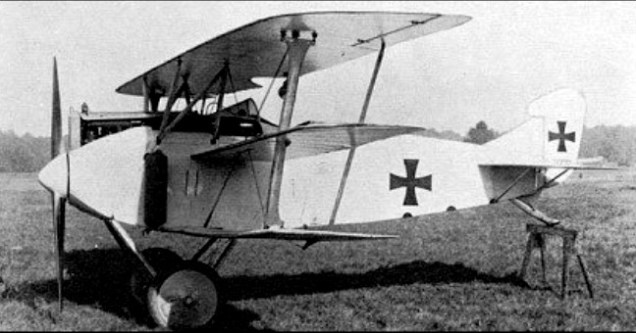
After the capture of a Sopwith Triplane the Germans began a programme of triplane design and development. The AEG version of the concept reached the prototype stage in October 1917 as the Dr.1, essentially a variant of the D.I. This mated a triplane wing to the D.Is fuselage, tail surfaces, engine and armament.
Flight testing revealed poor performance and handling characteristics and further development was abandoned.
Engine: 1 x 160hp Mercedes D.IIIa
Wingspan: 9.40 m / 31 ft 10 in
Length: 20 ft 0.5 in / 6.1m
Max take-off weight: 970 kg / 2138 lb
Empty weight: 710 kg / 1565 lb
Max. speed: 170 km/h / 106 mph
Cruise speed: 148 km/h / 92 mph
Armament: 2 x 7.92mm mg
AEG D.I / D.II / D.III
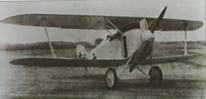
AEG’s first fighter design was the D.I, a short single-bay biplane of mainly steel tube construction under a fabric covering. A notable feature of the D.I was the use of single-spar wings. Three prototypes were built, and the first of these appeared in May 1917. Type testing took place later in August and September after the fuselage had been lengthened by 1 ft 3 ¾ in (0.4 m). The second and third prtotypes (D 440/17 and D 5002/17 respectively) differed by having cheek-type radiators, those of the D.III being longer than those of the D.II. The D.I proved difficult to fly, and one of the prototypes crashed during testing. Nevertheless, 20 pre-series examples of the D.I were ordered for front line evaluation with the standard fighter armament of two 0.312in (7.92mm) LMG 08/15 fixed forward firing machine guns with a synchronisation system to allow them to fire through the propellor disc. The contract was cancelled after the loss of a second prototype in a crash on 5 September 1917.
Type: 2 seat biplane fighter
Engine: Daimler D.IIIa inline, 160hp
Wing span: 27 ft 10.5 in / 8.5m
Length: 20 ft 0.5 in / 6.1m
Height: 8 ft 8.5 in / 2.65m
Wing area: 173.73 sq.ft / 16.14 sq.m
Empty wt: 1510 lb / 685 kg
MTOW: 2072 lb / 940 kg
Max speed: 137 mph / 220 kph
Climb rate: 2 min 30 sec to 3280 ft (1000m)
Armament: 2 x fixed 0.312 in (7.92mm) LMG 08/15 forward firing machine guns

