Wallis WA-116

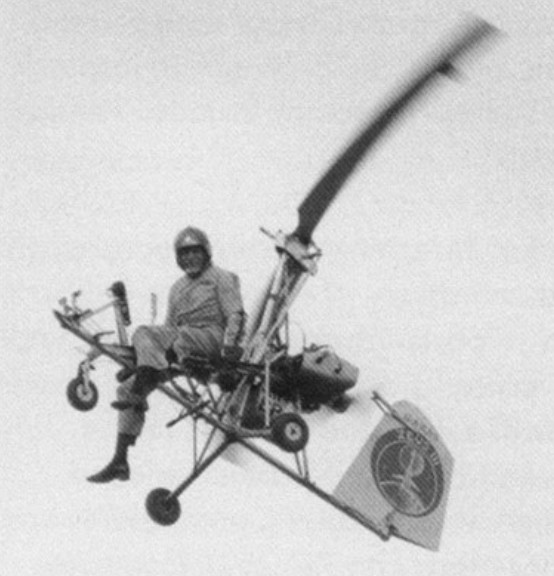
The prototype single-seater WA-116 ultra-light autogyro was flown by Wallis for the first time on 2 August 1961. The Wallis WA-116 Agile was first flown in 1962, and subsequently seen in a James Bond film.

The Wallis WA-116 autogyro, known as “Little Nellie”, could lift twice its own weight, fly 210km/h and rapidly climb to 4100m – even though it weighed 110kg. This aircraft could take off in 30 yards of space at a minimum speed of approximately 20km/h.

The autogyro was flown by James Bond in a movie featuring the flying exploits of agent 007.

The aircraft achieved fame as ‘Little Nelly’ in the 1967 James Bond film You Only Live Twice. For its role, ‘Little Nelly’ was armed with dummy air-to-air missiles, 44mm rockets, rearward-firing ‘flame-throwers’ and two machine-guns. As well as the Bond movie, a Wallis design also appeared in and was used as a camera ship in The Martian Chronicles.
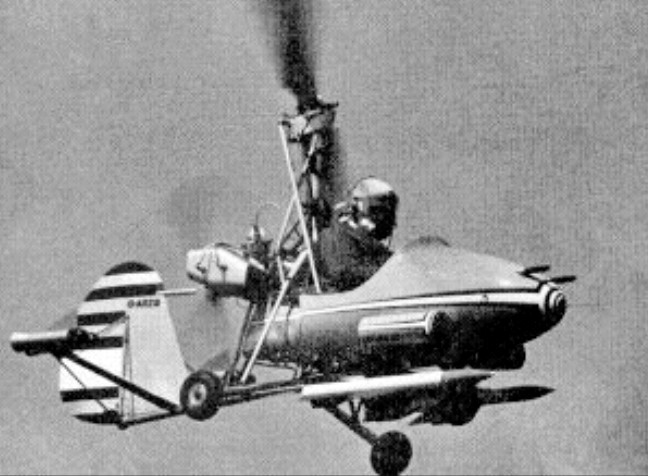
After building nine single-seaters, construction of a two-seat variant — the WA-116T — was begun in 1969; he then tested a four-blade rotor and finally produced the WA-116F with which he won the closed circuit world record in 1974 in the 670.26km category.

Wallis autogyros have been powered by various types of engines, within the range 72 to 160hp (the latter is used in the two-seat Wallis WA-122) and have been employed for research programmes, including one promoted by Sperry Radar.

In 1983 development of a production version, powered by a Weslake engine, was under way in association with Vinten Ltd. Intended primarily for para-military use, including policing and survey work, the definitive aircraft was to be certificated in 1984.

The original WA-116 appeared in various guises, including four Beagle-built military prototypes and a two-seater. Holds Class E3/E3a records for height 15,220 ft (4,639 m) and speed 111.225mph (179kmh). A version built in conjunction with Vinten was designed for aerial photography.

World records for autogyros were set, subject to confirmation, on 5 August 1988 by Kenneth Wallis, flying a WA-116/F/S autogyro G-BLIK powered by a 60 hp Franklin 2A-120-B. Taking off at a weight of 728 lb / 331 kg, the autogyro completed a closed-circuit flight of 623 mls / 1002.75 km in 7 hr 39 min 59 sec. The speed over 311.1 mls / 500 km was 83.3 mph / 134.04 kph and over 621 mls / 1000 km, 81.3 mph / 130..30 kph.
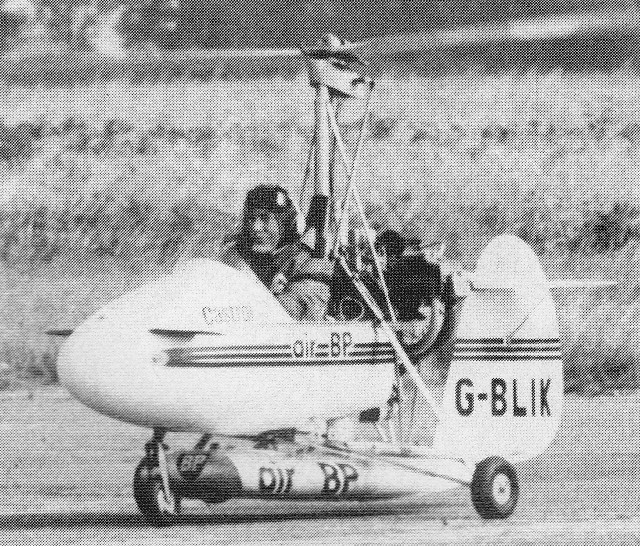
WA-116 Agile
Engine: McCulloch Model 4318A
Top speed: 185km/h
Range: 225km
Seats: 1

WA-116 E-3a
Engine: 1 x Franklin 2A-120A, 44.2kW
Main rotor diameter: 6.2m
Max take-off weight: 317.5kg
Max speed: 161km/h
Max range: 1207km
Max endurance: 6h 25min
Seats: 1

WA-116T
Seats: 2

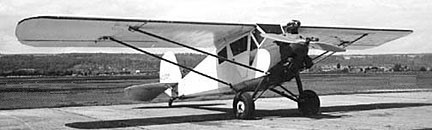
Wallbro Monoplane

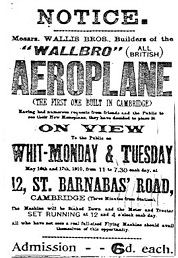
All-British aeroplane constructed by brothers Percy Valentine & Horace Samuel Wallis in the shed at the rear of their parents’ house in Cambridge with ‘offices’ of the Wallbro Aeroplane Co. in their bedroom overlooking the rear garden. By May 1910, it was complete and was put on display to the public. On July 4, 1910, the brothers made their first tentative ‘hop’ near Abington, where the machine had been brought to be housed. A complete and detailed description of the craft can be found in the Thursday, May 12, 1910 edition of the Cambridge Daily News.

The brothers were strong believers in the strength of steel tubing. The fuselage used mainly one-inch diameter tube of 20 gauge, arranged on the girder principle, strongly braced with steel wire. The cross tubing were double bolted onto steel lugs similar to those used in motor cycle construction. The wire stays were attached to eyebolts passing through these lugs. Tightening of the wires was accomplished by means of bronze tensioning screws, which have right and left-hand screw threads. These ideas together with a multitude of others succeeded in producing a machine, which was both light and very strong. The fuselage was twenty-five feet long with a wing span of thirty feet. The undercarriage was also of tubular design but used heavier gauge tubing.

Wallace Aircraft Co B.330 Touroplane / American Eagle Aircraft Corporation Touroplane B / American Eagle 330

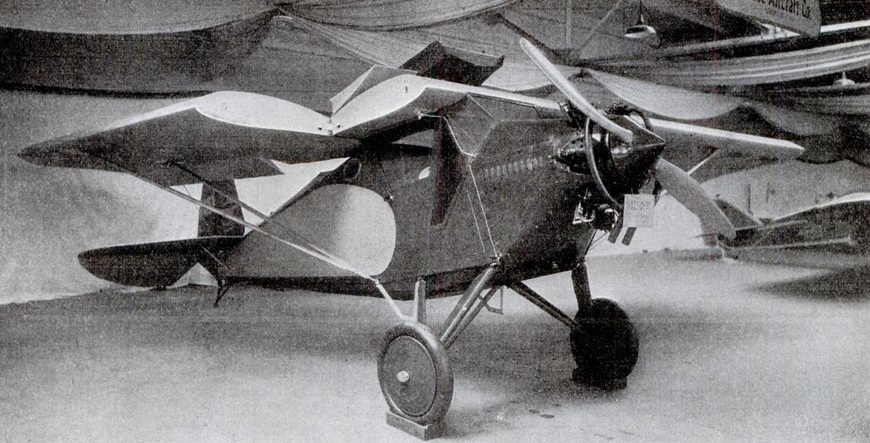
Transitional American Eagle B-330 NC209N

Designed by Stanley Wallace, the Touroplane B (ATC 119) featured folding wings.

Wallace Aircraft Co was formed 1928 at Chicago, Illinois, to manufacture the B.330 Touroplane, shown at Detroit Aero Show. The price being $4,885-5,795.

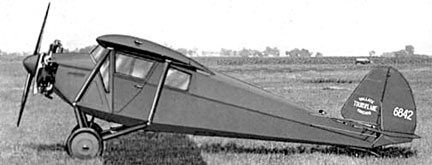
One prototype (NX4253) was built with an 80hp Anzani, subsequently 165hp Wright J-5 were used. Thirteen production aircraft were built (NC209N, NC211N, NC276K, NC566H, NC571H, NC580H, NC584H, NC590H, X/C6842, NC744K, C7740, NC7742, NC7987), of which two were powered with a 90hp OX-5 (NC7740, C7987) and one with a 150hp MacClatchie [C6842] as C-31.

Wallace Touroplane C-31 N6842

American Eagle Aircraft Corporation continued production of the Touroplane B from 1929 as the American Eagle 330.

Engine: Anzani 6-cyl, 80 hp @ 1600 rpm
Wingspan: 37 ft
Chord: 70 in
Airfoil: Eiffel
Wing area: 205 sq.ft
Length: 24 ft
Height: 7 ft 6 in
Sweepback: 0
Dihedral: 0
Aileron area: 31.2 sq.ft
Tail area: 38.2 sq.ft
Empty weight: 735 lb
Payload: 450 lb
Wing loading: 8 lb/sq.ft
Top speed: 97 mph at 3000 ft
Cruise: 85 mph
ROC: 820 fpm
Endurance: 5 hr
Service ceiling 11,000 ft
Landing speed: 40 mph
Width folded: 12 ft 6 in
Seats: 3

Engine: 165hp Wright J-5
Wingspan: 37’0″
Length: 23’11”
Useful load: 780 lb
Max speed: 115 mph
Cruise speed: 100 mph
Stall: 43 mph
Range: 500 mi
Ceiling: 14,000′
Seats: 2-3

Walker Skylark

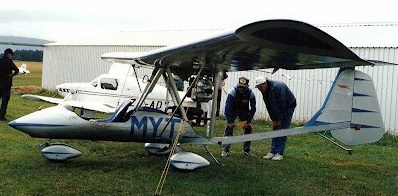
Bruce Walker of Tauranga, New Zealand, designed and built this homegrown microlight which used some components from a Quicksilver that Bruce had previously owned. The wing is a high lift Australian Tyro kitset wing of 32 foot span, and the pusher engine is a Rotax 447 which gives a cruise of around 70 mph.

Bruce Walker Custom Skylark ZK-MYT (c/n TY 6520) was first registered by Bruce on 1 December 2000. Bruce says it has done around 200 hours and flies really well. Bruce keeps it in a hangar on a topdressing strip near Te Puke.

ZK-MYT was for sale.