Ultramagic N series

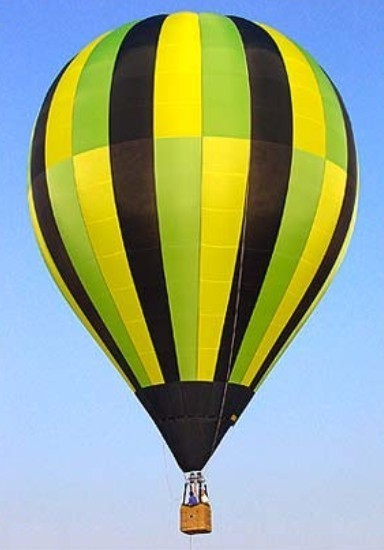
A large size series with 28 gores, especially created for passenger ride operators whilst at the same time providing an excellent background for artwork. These envelopes are designed and rigged to go with ergonomically designed partitioned baskets allowing optimum viewing for passengers whilst housing the fuel cylinders separately in the pilot compartment. The perfect choice for passengers flights.

28 vertical load tapes, Full 1.5m height Nomex base, choice of 22 standard colours. Ultralast fabric to parachute and top panel as standard. Rotation vents and fast deflation system (FDS) as standard.
Optional: Ultralast fabric, special colours, clear windows, Velcro for banners. Skirt, scoop.

Type Certificate: BA.014
Issued by: European Aviation Safety Agency

N-180
Volume: 5.100 cu.m / 180.000 cu.ft
Diameter: 22,5 m
Height: 23 m
Persons: 9

N-210
Volume: 6.000 cu.m / 210.000 cu.ft
Diameter: 23,8 m
Height: 24,3 m
Persons: 11

N-250
Volume: 7.000 cu.m / 250.000 cu.ft
Diameter: 24,9 m
Height: 25,5 m
Persons: 13

N-300
Volume: 8.500 cu.m / 300.000 cu.ft
Diameter: 26,6 m
Height: 27,2 m
Persons: 17

N-355
Volume: 10.000 cu.m / 355.000 cu.ft
Diameter: 27,5 m
Height: 29 m
Persons: 20

N-425
Volume: 12.000 cu.m / 425.000 cu.ft
Diameter: 29,5 m
Height: 31,2 m
Persons: 24

N-500
Volume: 14.400 cu.m / 500.000 cu.ft
Diameter: 31,1 m
Height: 32,2 m
Persons: 27

Ultramagic MV series / The Racer

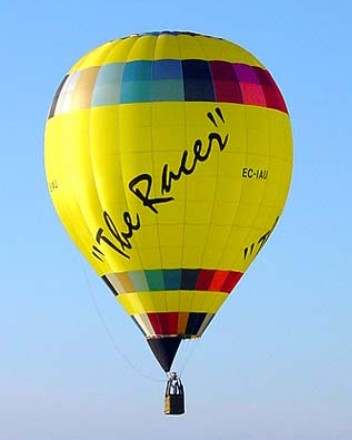
In 1996 Ultramagic made a step forward in the world of competition ballooning – MV series (The Racer). This was the first time that a balloon had been designed, developed and produced especially for the demanding requirements of balloon competition. The goal was to produce a balloon with such a shape so as to perform the maximum rate of ascent and descent whilst avoiding deformation of the envelope, thereby improving the precision on approaching the target.

Safety was also an important factor in the design equation with clear windows and Ultralast fabric on the top of the balloon being part of the standard specification. The final design and shape was the result of considerable development work with a great deal of testing and then analysing precise flight data. Many test hours were logged both by Uwe Schneider as well as Josep and Carles Llado Costa who all fly competition with a passion.

The Racer has been produced so far in 3 sizes to suit all pilot and competition task requirements. These sizes are 56, 65 and 77,000 cu ft.

24 vertical load tapes, Full 1.5m height Nomex base, choice of 22 standard colours. Ultralast fabric to parachute and top 5 panels as standard. 6 clear windows as standard. Scoop as standard. Deflation system: Parachute.

Optional: Extra Ultralast fabric, special colours, Fast deflation System (FDS) and 6 extra clear windows.

The Racer Story – by Uwe Schneider

“I flew the most slimline, because in my experiments I found out, that not the shape nor the diameter of the envelope have a big influence on the climb and decend rate of a balloon but the height of the envelope. We sat down at the design computer and Josep streched their standard 65 by 5%. It was not much difference. He did 10%, then we skipped 15 and streched it by 20%.

Then he reduced the volume to get back to a 65 and put one image on top of the other. The result was 2 m less in diameter and almost 4 m more in height. I told them that this was a shape I would try to test and they built it. I flew it for the 1st time at the preworlds in Japan. The “racer” performed very good in climb and decend. At the beginning, coming from a “normal” shaped balloon I felt I needed more concentration to fly it but soon I realised that it was showing exactly the same response as a normal balloon of the same shape. The only difference was the rate of climb and decend. It was just 30% more what I read on the instrument, but the interval of burning to keep it steady in the air as well as the length of burning to recover it after a while not heating was almost the same. So I told all pilots testing it not to look on the instrument but just flying it by the feeling, that helped. Of course, flying it level just above the ground requires a little bit more concentration, but I got used to it after 1 or 2 flights.
I developed a testing method for the performance of balloons with an electronic instrument including a barograph. After a flight I downloaded that data and evaluated it. There were several data: The max. variometer reading which was usually far higher than all other (so I didn’t use it). Then on the variograph there were some peaks in the rate of climb and descend rate. I got this as an “instant” value. Then I went to the barograph which has a minimum time scale of 1 minute. So I took the altitudes at the crossing of the 1 minute bars and divided the difference by 60 getting the meters per second for a steady climb or descend of 60 seconds. The last measurement for me is the one I use to evaluate envelopes. I tested all balloons since I fly the racer and have quite a useful list. In addition I brought the balloon into a controlled cold descend from high altitude (4 m/s respectively max. descend rate with envelope in full shape). When crossing a round number on the altimeter I switched on one burner and left it running until the variometer went to zero descend. That “altitude difference necessary to recover from cold descend with one burner” is a value of comparison of burners as well as for envelopes.

After having tested the racer 20% I asked UM to build a 25% in order to see if it would be even more faster or if the “bottle effect” would increase i.e. the balloon will spin at higher climb and descend speeds and the mouth will close at high descend rates. The result was that the racer 25 was showing almost the same figures as the racer 20. For me this was an indication that with the “shot” of 20% we almost hit the optimum which maybe in between 20 and 25 and afterwards (30%) it will decrease.”

MV-56
Volume: 1.590 cu.m / 56.000 cu.ft
Diameter: 13,8 m
Height: 17,3 m
Persons: 2

MV-65
Volume: 1.850 cu.m / 65.000 cu.ft
Diameter: 14,7 m
Height: 18,6 m
Persons: 2 / 3

MV-77
Volume: 2.200 cu.m / 77.000 cu.ft
Diameter: 15,5 m
Height: 19,8 m
Persons: 3 / 4
Ultramagic M series

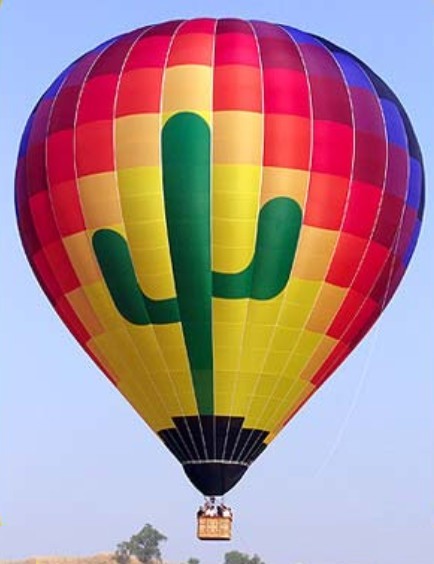
The versatile all purpose balloon. This smooth horizontal cut series is particularly suitable for the application and inclusion of artwork and logos. Its specially computer aided design enables many adaptations to be made whilst minimising fabric stress and eliminating wrinkles completely. The wide range of sizes available makes it a good option, whatever the intended use.

24 vertical load tapes, Full 1.5m height Nomex base, choice of 22 standard colours. Ultralast fabric to parachute and top panel as standard.
Optional: fast deflation system (FDS), rotation vents, extra Ultralast fabric, special colours, clear windows, velcro for banners. Skirt or scoop.

Type Certificate: BA.014
Issued by: European Aviation Safety Agency

M-56
Volume: 1.600 cu.m / 56.000 cu.ft
Diameter: 15,2 m
Height: 14,9 m
Persons: 2

M-65
Volume: 1.850 cu.m / 65.000 cu.ft
Diameter: 16,0 m
Height: 15,9 m
Persons: 2 / 3

M-77
Volume: 2.200 cu.m / 77.000 cu.ft
Diameter: 16,9 m
Height: 17,0 m
Persons: 3 / 4

M-90
Volume: 2.550 cu.m / 90.000 cu.ft
Diameter: 17,4 m
Height: 17,6 m
Persons: 4

M-105
Volume: 3.000 cu.m / 105.000 cu.ft
Diameter: 18,8 m
Height: 19,0 m
Persons: 5

M-120
Volume: 3.400 cu.m / 120.000 cu.ft
Diameter: 19,2 m
Height: 19,6 m
Persons: 5 / 6

M-130
Volume: 3.680 cu.m / 130.000 cu.ft
Diameter: 20,2 m
Height: 20,5 m
Persons: 6

M-145
Volume: 4.105 cu.m / 145.000 cu.ft
Diameter: 20,6 m
Height: 21,0 m
Persons: 6 / 7

M-160
Volume: 4.550 cu.m / 160.000 cu.ft
Diameter: 21,6 m
Height: 22,1 m
Persons: 7 / 8

Ultramagic H Series

Basis for the “Magic Pack”, the fast delivery complete balloon offer. This slightly bulbous 12 gore envelope is designed and manufactured for maximum safety yet it is lightweight and highly manoeuvrable. It makes it ideal for competition or weekend flying.

12 vertical load tapes, Full 1.5m height Nomex base, choice of 22 standard colours. Ultralast fabric to parachute and top panel as standard. Deflation system: parachute.

Optional: rotation vents, extra Ultralast fabric, special colours, clear windows, Velcro for banners. Skirt or scoop.

Rugged yet lightweight, this series is ideal for general sport ballooning, training and syndicate use.

Type Certificate: BA.014
Issued by: European Aviation Safety Agency

H-31
Volume: 900 cu.m / 31.000 cu.ft
Diameter: 12,8 m
Height: 12,4 m
Persons: 1

H-42
Volume: 1.200 cu.m / 42.000 cu.ft
Diameter: 13,8 m
Height: 17,3 m
Persons: 1

H-56
Volume: 1.600 cu.m / 56.000 cu.ft
Diameter: 15,5 m
Height: 15,1 m
Persons: 2

H-65
Volume: 1.850 cu.m / 65.000 cu.ft
Diameter: 16,3 m
Height: 16,0 m
Persons: 2 / 3

H-77
Volume: 2.200 cu.m / 77.000 cu.ft
Diameter: 17,3 m
Height: 17,0 m
Persons: 3 / 4

Ultramagic sa / Ultramagic Balloons

Starting balloon flying in 1978 with a used balloon, after this they designed and built a much bigger balloon for an expedition to Africa. This trip in 1980, lasting 11 months, involved 40 flights and was from Zanzibar (Tanzania) to Kisiangani (Zaire). After this trip they started designing and building an Ultralight aircraft and created Ultramagic S.A. However during the Ultralight period, news had spread about the building of a balloon for the Africa adventure and more and more people started asking if they could build one for them. They had the experience of building balloons still had the sewing machines and had the Aeronautical organisation, so for strategic reasons, Ultramagic Ultralights became Ultramagic Balloons. This was the beginning and they have now built hundreds of balloons including many special shapes.

The annual production has now increased to between 80 and 100 balloons with approximately 80% being for export. Exporting to every part of the world including Japan, North America, South America, Europe and of course where it all began, Africa. In 1993 Ultramagic Balloons started a division for cold air inflatables which quickly became successful with over 4000 built. The annual production of inflatables is averaging over 500.

2012: Ultramagic, SA: Aeròdrom Gral. Vives, Apt. 171 – 08700 Igualada, Barcelona, Spain

Trappe Cluster Balloon

On May 28, 2010, the American adventurer Jonathan Trappe crossed the English Channel by cluster balloon, departing near Challock, England, and crossing over the White Cliffs of Dover at St. Margarets Bay. He made landfall again over Dunkirk, France, and then tracked inland, landing in a farmer’s cabbage patch in France. Trappe continued to experiment in cluster ballooning flights. In 2011 he replicated the ‘Up’ house for a National Geographic television program. In September 2013, he tried to cross the Atlantic, but after taking off in Maine he landed in Canada after being unable to control his balloon.