Caquot Balloon

Caquot Type R

At the start of World War I observation balloons, the use of which was discontinued in France in 1912, were needed on the battlefield, and the Germans used them in large quantities called Drachen. The French who did not have any in their boxes therefore began to copy these German balloons.

While he was mobilized on 1st August 1914 to command the 21th company of balloonists, Albert Caquot performed some aerial observations in a spherical ball type from 1880, then found that the information given by the observers are not reliable due to the instability of the aerostats which makes them sick even in light winds. He then designed a new balloon stabilized by three inflatable rear lobes arranged at 120°. He then sent his plans and calculations to the Atelier de Chalais-Meudon in October 1914 and was received by the director of the establishment in November; but he is not convinced by his idea. Despite everything, he decides to entrust the realization of Caquot’s plans to a team of designers from his design office, they are carried out in a week. In the meantime General Hirschauer, who is in charge of aviation at the Ministry of War, orders that a test be carried out. Caquot then obtained authorization to build a prototype, which was done in February 1915.

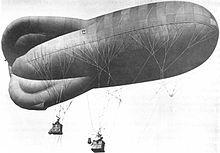
The Caquot type L balloon is then compared to a spherical balloon and a copy of Drachen. It immediately proves to be more efficient, its hull offering minimum resistance to the wind. It managed to withstand winds of 90 km / h against only 54 km / h and 36 km / h for the Drachen and the spherical balloon. Its performance is due to the ovoid shape of the balloon which allows less aerodynamic resistance, and above all to its three inflatable tail units at the rear but based on an internal structure fixing them rigidly to the hull at an angle of 120°. This makes it possible to avoid the pendulum movement of the balloon during gusts of wind, which made observers sick.

Despite these conclusive tests, series production is not launched. However, an English naval officer, who attended the prototype tests, told Caquot that the British navy was trying to equip its fleet with captive balloons, but that they could not withstand bad weather. He then asks her to help them. By examining the constraints, Caquot realizes that the aerostats must resist winds of 125 km / h since in addition to the wind is added the speed of the ship. He then designed a specific braked winch that allowed the balloon to be carried away by too strong gusts and then return once the gust was over.
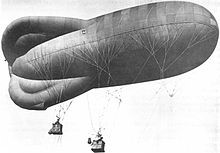
A French Caquot type observation balloon in 1915.

This ability proved itself in an account of a “free balloon” flight taken by Capt. F. H. Cleaver, commanding officer of the RFC’s No. 1 Kite Balloon Section on October 27, 1915:

The speed and direction of the wind was tested and found to be 15 m.p.h. by the air meter. The balloon was then let up and marched for 300 yards to the winch; it was easily controlled by the balloon party. The winch was shackled on and I and Lieut. Beaufort ascended; the wind appeared to be increasing, the speed was again taken from the balloon and found to be 30 m.p.h. The guy of the right sail carried away, which caused the balloon to oscillate considerably, thus increasing the strain on the cable and rigging. On this an order was immediately given to haul down. The winch, whose power is only 6 horse failed; the wind was rapidly increasing in strength and on again being tested the speed was found to be 40 m.p.h. Fortunately for the occupants of the balloon the cable then parted, had it not done so the rigging most certainly would have gone. The valve rope was immediately pulled and as soon as the end of the cable or any part of it touched the ground, the balloon in spite of the loss of gas naturally was lightened owing to being relieved of the weight of a portion of the cable, and ceased to descend and at times rose; this coupled with the heat of the sun causing the gas to expand and the balloon to become still lighter, was responsible for what might appear to be a long flight, which owing to the speed of the wind was carried out at 40 m.p.h. A perfect landing was effected in 45 minutes without any damage to the balloon, occupants and instruments.

These qualities quickly proved the Caquot to be the best balloon design on the Western Front and all the combatant nations eventually adopted it.

In June 1915, Albert Caquot became director of the mechanical aerostation workshop at Chalais-Meudon, where he had new aerostats built in large series according to his plans. On July 10, 1916, the British Aviation Inspector requested M type balloons from the War Department. Between July and the end of November 1916, 46 M type balloons were built in Chalais-Meudon for the British, subsequently ‘others are built in the UK. Three types of balloons with a capacity of 750 cu.m, 820 cu.m and 1000 cu.m. The first equip small ships used for the research of submarines, they are served by two men from an altitude of 500 m; the larger ones are used aboard squadron ships for the adjustment of fire and are served by a crew of three observers at 500 m altitude or two at 1000 m. This use of Caquot balloons allows the British Navy to reduce its losses. In 1917, the French navy, noting that its losses due to torpedoing were becoming higher than those of the British, then decided to adopt the Caquot balloons as well. The French Navy uses types P and P2 on its smaller units for protection against U-boat attacks, and the Type R to direct the fire of its larger ships. In July 1918, it had nearly 200 balloons and 24 units designed to work with them.

The French Army, for its part, trained 76 units during the war equipped with Caquot balloons. These balloons are used for artillery tuning and general observation of the battlefield.

In 1917, when the Germans began to bombard Paris with aircraft, Albert Caquot proposed to make barrages with low volume balloons, the cables of which would force the bombers to climb higher and reduce their load. This idea is taken up by the British in September 1917. At the end of the war, there are Caquot type of balloons, mainly with M 900 cu.m and R 1000 cu.m.

The Caquot balloon entered service in other Allied armies and then in others including the new Polish army.

In France, the production of balloons was 319 units per month in 1919. The first models are of type L and M, and finally the Caquot balloons are produced in four different formats:

P – 750 m³ (capacity – two observers at the height of 500 m)
P2 – 820 m³
M2 – 930 m³
R – 1000 m³ (capacity – two observers at the height of 1000 m or three at 500 m)

During the war, one of the British Caquot balloons fell into the hands of the Germans who made a copy called Ae 800 for Achthundert english 800 which was a reference to the cubic meter capacity.
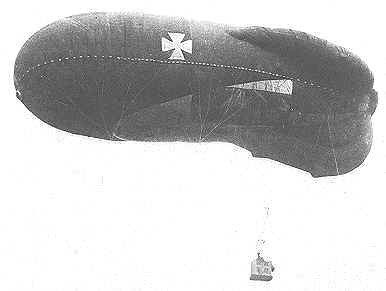
Type Ae

General Ernst von Hoeppner, commander of the German Luftstreitkräfte freely admitted that German balloons put in service after 1916 were patterned after a captured British example. Caquots and their German copies eventually served on all fronts and with naval forces operating in the Atlantic and Mediterranean. The improved Caquot could ride higher, and fly in higher winds than the Parseval-Sigsfeld, so it quickly replaced the Drachen, even among the Luftschiffertruppen.

During the war, France was from 1915 the leading power in the field of ballooning and built nearly 4,200 captive balloons: 1,700 observation balloons and 2,500 barrage balloons.

The Caquot balloon was manufactured in large numbers, including a thousand in the United States between 1918 and 1919.
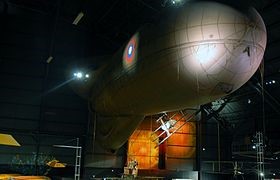
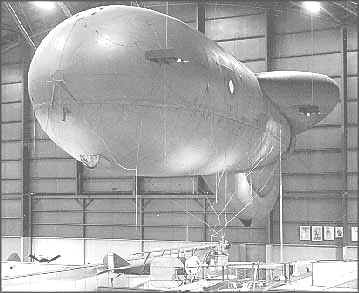
Caquot Type R at the National Museum of the United States Air Force

The United Kingdom built others during World War II where they were used until the 1960s to test parachutes, for non-combat aerial observation and photography.
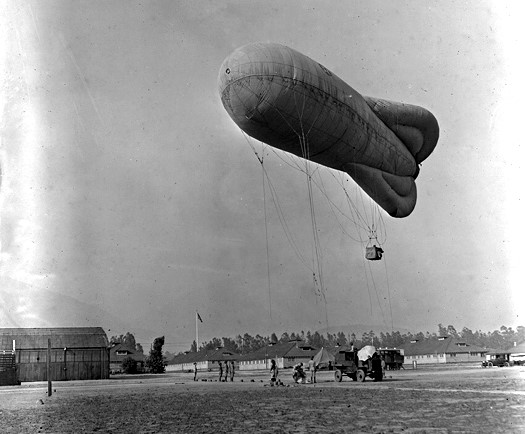
A type R Caquot on the Arcadia Balloon School of the United States Army Air Service in the city of Arcadia (California) in 1921.

Gallery

P
Capacity: 50 m³
Payload: two observers
Altitude: 500 m

P2
Capacity: 820 m³

M2
Capacity: 930 m³

R
Capacity: 1000 m³ / 32,200 cu.ft
Payload: two observers to 1000 m / three observers to 500 m
Length: 92 ft
Diameter: 32 ft
Cruising speed: 75 km / h
Max wind speed: 70 mph
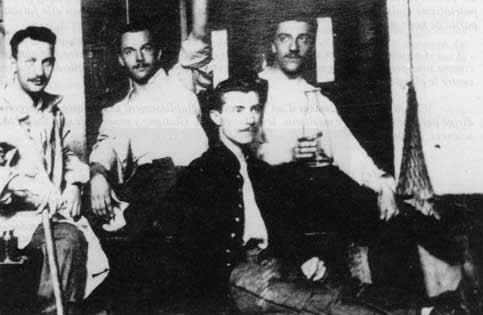
Caquot, Albert

Albert Caquot, in a dark jacket in the foreground (the 2 nd from the right), in the premises of the École Polytechnique

Albert Irénée Caquot, born on 1st July 1881 in Vouziers (Ardennes) and died on November 28, 1976 in Paris at 95, was considered “the greatest of living French engineers” for half a century.

Albert Caquot Article

Large landowners, his parents, Paul Auguste Ondrine Caquot and Marie Irma Cousinard 2 , wife Caquot, “run a large family farm, adjoining a mill on the banks of the Aisne”, in Vouziers in the Ardennes. His father opened this farm to modernism, installing electricity and telephones in his home in 1890.

Just one year after leaving the high school Reims, eighteen years, Albert Caquot received 29 e the entrance exam to the Ecole Polytechnique (class of 1899) which he graduated ranked 15th, and enters the body of bridges and roads.

From 1905 to 1912, he was a bridge and road engineer in Aube, in Troyes, and stood out for the important sanitation measures he developed. These saved many human lives and protected the city from the great flooding of the Seine in 1910.

In 1912, he joined the reinforced concrete design office of Armand Consideration as a partner, where he gave free rein to his talent as a designer of civil engineering structures. In 1914, after the death of Armand Considere, the office became “Pelnard-Considerere & Caquot”. It was in this same context that he worked from 1919 to 1928, from 1934 to 1938, then from 1940.

During his life, Albert Caquot taught for a long time the resistance of materials at the Ecole Nationale Superieure des Mines in Paris, the Ecole Nationale des Bridges et Chaussées and the Ecole Nationale Supérieure de l’Aéronautique.

During his career he produced more than three hundred civil engineering works of all kinds, several of which were then world records.

Two achievements contribute to its international reputation:

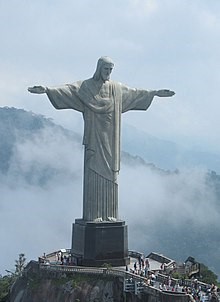
The internal reinforced concrete structure of the large statue of Christ the Redeemer on Mount Corcovado (1931, height 30 m and weight 1,145 t), in Rio de Janeiro, the work of French sculptor Paul Landowski and, for the head of Christ, by Romanian sculptor Gheorghe Leonida.

The George V Bridge in Glasgow (Scotland) on the Clyde for which Scottish engineers are asking for help.

The Christ of Corcovado whose internal structure is due to Caquot.

He devoted his life to aeronautics and civil engineering in alternating periods at the pace imposed by the First and Second World Wars. Albert Caquot’s contributions to aeronautics are invaluable, from the development of the propeller engine and the opening up of the Air Ministry to technical innovations, to the founding of the first institutes of fluid mechanics. Marcel Dassault, who was commissioned by Albert Caquot to build a prototype of the postal three-engine program, wrote of him: “He is one of the best technicians that aviation has ever known. He was a visionary who, in all areas, looked to the future. He was ahead of everyone.”

From 1901 he carried out his military service in a battalion of balloonists. At the start of the Great War, he found a battalion of balloonists from Toul as captain. For a wind speed greater than 22 km/h, it highlights the great instability of the spherical balloon with which the units are equipped. In 1915, he produced a tapered tethered balloon model equipped with rear stabilizers on the Drachen principle developed by the German August von Parseval, allowing observation by winds of 90 km/h. The Chalais-Meudon aerostatic workshop then began to manufacture “Caquot balloons” for all the Allied armies. The winch with constant braking torque that it creates allows it to adapt its balloons to the Allied fleets (fire control and detection of submarines) and to make them withstand winds of up to 125 km/h. Also called a “sausage”, this captive balloon gives France and its Allies a major strategic advantage. In January 1918, Clemenceau appointed him technical director of military aviation.

A French Caquot type observation balloon in 1915.

In 1919, Albert Caquot was behind the creation of the French Air Museum, today the Air and Space Museum at Le Bourget. It is the oldest aeronautical museum in the world.

In 1935, he built a double canopy hangar 120 m long, 60 m wide by 9 m free height and its annexes for around 10,000 m2 at Fréjus on the naval air base.

In 1928, he became the technical director general of the newly created Air Ministry. It practices a policy of research, prototypes and mass production which gives France back the industry it deserves.

In 1934 he preferred to retire and devote himself again to civil engineering. In 1938, under the threat of war, Albert Caquot was recalled to assume the joint presidency of all the national aeronautical companies. In July 1939, he also took over the role of technical director general of the Air Ministry but, although he had spectacularly turned around the production of aircraft, the obstacles he encountered on the part of the staff and the management of the control led him to submit his resignation in 1940.

Numerous honorary distinctions from all countries that have been awarded to him, including the dignity of Grand Cross of the Legion of Honour in 1951.

He chaired many French scientific organizations for more than twenty years, such as the National Council of French Engineers and the Société d’Enouragement pour l’Industrie Nationale. He was also a director of Electricité de France for more than ten years.

He served 41 years in the Academy of Sciences and was its president in 1952.

In 1961, at the age of eighty, Albert Caquot voluntarily resigned from all the presidencies that he had always provided on a voluntary basis.

His name was given to an amphitheatre of the School of Bridges and Roads located in no 28 of the rue des Saints-Peres in Paris May 25, 1977. The new occupant of the premises, the Institut d’études politiques de Paris, renamed it in honour of Simone Veil on March 8, 2018.

The July 2, 2001, a stamp of CHF 4.50 and 0.69 € is issued for the 120th anniversary of the birth and the 25th anniversary of the death of Albert Caquot. Designed and engraved by Claude Andréotto, the stamp is printed in intaglio on sheets of forty and is distributed in 4.37 million copies.

Since 1989, the Albert-Caquot Prize has been awarded each year by the French Association of Civil Engineering (AFGC) to an engineer.

The 7th promotion of the National School of Engineers Military Infrastructure (ENSIM) was christened Albert Caquot to honour his contribution to the military works.

Distinctions:

Distinguished Service Order
Officer of the Order of the Crown of Italy
Commander of the Order of Leopold
Grand Officer of the Order of the Crown of Romania
Order of the White Eagle
Order of the Rising Sun
Order of Saint Michael and Saint -Georges
Croix de guerre 1914-1918
Distinguished Service Medal
Honorary fellow American Institute of Aeronautics and Astronautics (1937)
Grand Cross of the Legion of Honour (1951)
Wilhelm Exner Medal (1962)

Cameron Forbes Special Shape

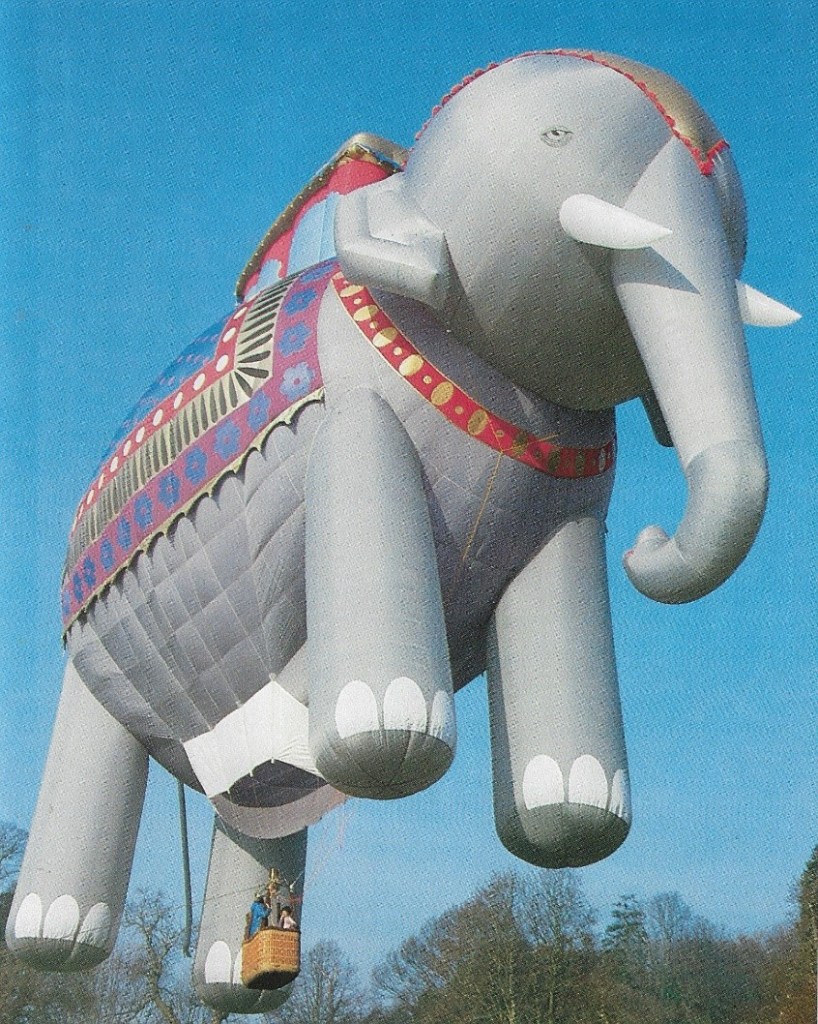
Thailand Elephant

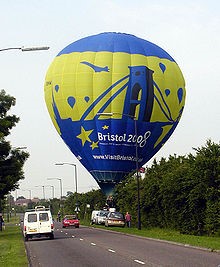
During the 1980s Malcolm Forbes, publisher of the Forbes magazine, built up a collection of special shape balloons. All built by Cameron Balloons in Bristol, Forbes had a special shape commissioned for each country he had visited. From the early 1980s balloonists from all around the world were invited to fly from Balleroy, his French estate, in Calvados, Northern France where he would unveil his newest creation. Nobody had ever seen hot air balloons like this before with only a very small number of shapes made before the most well-known of the fleet, the original Chateau de Balleroy.

The Chateau, registered G-BKBR and built in 1982, was just one of many other spectacular special shapes which followed, including:

  • the Minar-e-Pakistan (G-BKNN, 83)
  • Sphinx (G-BLFE, 84)
  • Thailand Elephant (G-BLRW, 85)
  • Harley Davidson (G-BMUN, 86)
  • Golden Temple (G-BMWN, 86)
  • Rosebud Egg (G-BNFK, 87)
  • Beethoven (G-BNJU, 87)
  • SulIman the Magnificent (G-TURK, 88)
  • Forbes Magazine (G-BPOV, 89)
  • Santa Maria (G-BPSP, 89)
  • Mcaw (G-BRWZ, 90)
  • Chateau de Balleroy no.2 (G-BTCZ, 91)

Cameron Balloons test inflated each of Malcolm Forbes’ balloons at Ashton Court Estate early in the morning, which is still done with new balloons to this day before they are shipped to their new home.

Cameron R-650 / Breitling Orbiter

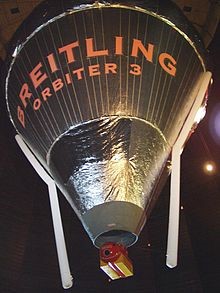
Breitling Orbiter 3

Breitling Orbiter was the name of three different Rozière balloons made by the Bristol based balloon manufacturer Cameron Balloons to circumnavigate the globe, named after the Swiss watchmakers Breitling. The third was successful in March 1999 of making the first nonstop flight around the world by balloon. It was piloted by Bertrand Piccard and Brian Jones.

The Cameron R-650 Breitling Orbiter 3 was a Rozier balloon of Kevlar and carbon fiber composite weave built in 1998. The Breitling Orbiter 3 combines the features of a hot-air balloon and a gas balloon, with a helium cell within a hot-air envelope. Initially, the helium cell is filled to approximately 47% of its maximum capacity. During ascent, warming by the sun causes the helium to expand even more than the surrounding air, which aids the balloon in gaining altitude (unlike the expansion caused by the drop in atmospheric pressure, which can even hinder that until the air and helium temperatures equalize).

The propane gas that fueled its six burners was contained in 28 titanium cylinders mounted in two rows along the sides of the gondola. Concerned about fuel consumption, the team added four additional propane containers prior to launch; these additions proved necessary to complete the trip.

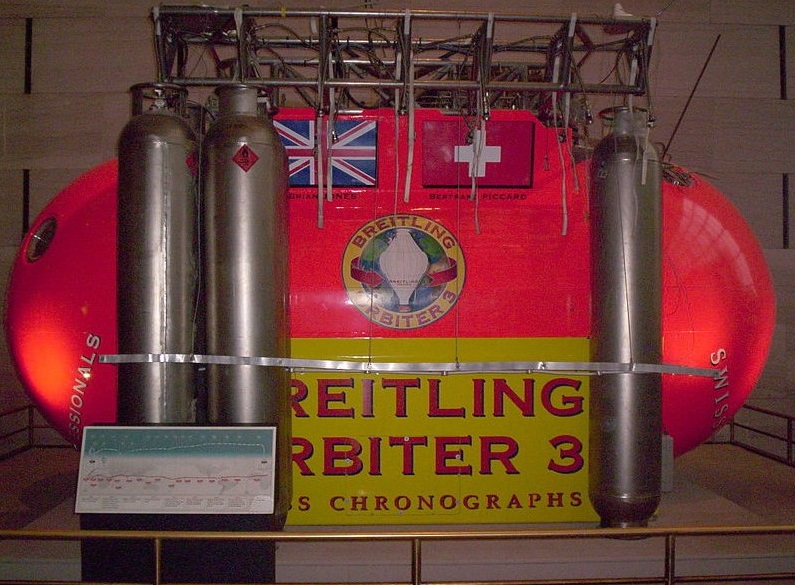
The Breitling Orbiter 3 gondola was constructed of a weave of Kevlar and carbon fiber material. After launching, the cabin was sealed at 1,800 m (6,000 ft) to trap the air within it. During the flight the cabin atmosphere was supplemented by nitrogen and oxygen; carbon dioxide was removed by lithium hydroxide filters. Cabin pressure was maintained at around 24 kPa (3.5 psi) by adding oxygen and nitrogen to the cabin air as necessary. At 10,000 m (33,000 ft), the cabin pressure equaled atmospheric pressure at 3,000 m (10,000 ft). Solar panels suspended beneath the gondola recharged the on-board lead-acid batteries that provided electrical power. Satellite-based systems enabled the crew to navigate via GPS as well as communicate.

Bertrand Piccard and Brian Jones launched from the Swiss Alpine village of Château-d’Oex at 8:05, GMT, March 1, 1999. They traveled southwest over the Mediterranean and then swung east over Mauritania on March 2 at a starting meridian of 9 degrees, 12 minutes west. They landed in the Egyptian desert after being aloft 19 days, 21 hours, and 55 minutes on March 21, 1999, having traveled a distance of 40,814 km (25,361 mi). During the course of the flight, the balloon had climbed to altitudes of up to 11,737 m (38,507 ft), and achieved speeds up to 123 knots. The official “finish line” of the circumnavigation occurred over Mauritania at 4:54 AM, EST on March 19. The goal of ending in Egypt had been to touch down near the Great Pyramids; however, high winds forced the pilots to land short of their target about 80 kilometers north of Mut. Aboard, they carried a copy of Guy de Maupassant’s A Life, which had been inscribed by Maupassant to Jules Verne, who had imagined such a flight in his novel, Five Weeks in a Balloon. The book had been loaned to the pilots to carry for good luck by a grandson of Jules Verne from the novelist’s personal library.

The daily routine was for each man to spend eight hours alone at the controls, eight hours working with his crewmate, and eight hours in the single bunk. A unique pressure-operated toilet was included in a curtained off area at the rear of the craft. Despite the use of heaters designed to maintain a cabin temperature of 59 °F (15 °C), temperatures occasionally decreased so much at night that drinking water froze and ice had to be chipped away from delicate electronic circuitry on the interior walls.

The Breitling-Orbiter III accumulated the following records:
Flight duration: 19 days 21 h 47 min
Maximum altitude: 11,755 meters
Maximum ground speed: 240 km / h
Distance traveled: 45,755 kilometers
Number of countries flown over: 26 countries

When asked by reporter Howard Schneider about the fate of Breitling Orbiter 3, the project manager Alan Noble remarked that the sponsors and the team “…would probably donate the craft to a museum. Possibly the National Air and Space Museum or the Smithsonian.” And indeed the gondola was located for several years on the ground floor of the National Air and Space Museum in the Milestones of Flight Gallery, next to the Wright Brothers 1903 Flyer, Charles Lindbergh’s Spirit of St. Louis, the Mercury Friendship 7 capsule, the Gemini IV capsule, the Apollo 11 command module, and Space Ship One.

The gondola is now displayed at the Udvar-Hazy Center of the National Air and Space Museum, Dulles Airport outside Washington D.C.

A model of the Orbiter 3 constructed with a spare Orbiter 2 envelope was exhibited at Gasometer Oberhausen from 2004 to 2006.

Cameron R-650 Breitling Orbiter 3
Balloon height: 55 m (180 ft) inflated
Fuel: Propane
Gondola height: 3.1 m (10 ft 3 in)
Gondola length: 5.4 m (17 ft 10 in)
Weight: 2,000 kg (4,400 lb) empty
Cabin Air: nitrogen-oxygen mixture
Cabin Pressure: 24 kPa (3.5 psi) at altitude

Cameron M Srs

M-53
1972
Persons: 2
Diameter: 49 ft
Height: 64 ft
Volume: 53,000 cu.ft
Weight: 425 lb
Payload: 1160 lb
Burner: 9.5 Million BTU/hr
Fuel capacity: 20 USG
Cost: (1972): US$ 7320
FAI AX-6

M-63
1972
Persons: 3
Diameter: 52 ft
Height: 67 ft
Volume: 63,500 cu.ft
Weight: 540 lb
Payload: 1270 lb
Burner: 9.5 Million BTU/hr
Fuel capacity: 30 USG
Cost: (1972): US$ 8030
FAI AX-7

M-70
1972
Persons: 3
Diameter: 55 ft
Height: 70 ft
Volume: 70,500 cu.ft
Weight: 600 lb
Payload: 1410 lb
Burner: 9.5 Million BTU/hr
Fuel capacity: 40 USG
Cost: (1972): US$ 8700
FAI AX-7

M-77
1972
Persons: 4
Diameter: 56 ft
Height: 72 ft
Volume: 77,500 cu.ft
Weight: 640 lb
Payload: 1550 lb
Burner: 9.5 Million BTU/hr
Fuel capacity: 40 USG
Cost: (1972): US$ 8850
FAI AX-7

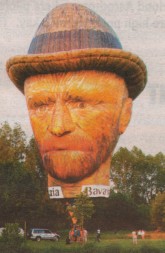
Cameron Van Gogh

Adding an artistic flavour is a three dimensional replica of Van Gogh’s painting Self-portrait with Grey Felt Hat.
Cameron Balloons of the United Kingdom used digital technology to piece the balloon together and it was launched in 2003 at Van Gogh’s birthplace in the Netherlands.

Cameron V- Viva

V-65

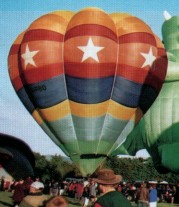
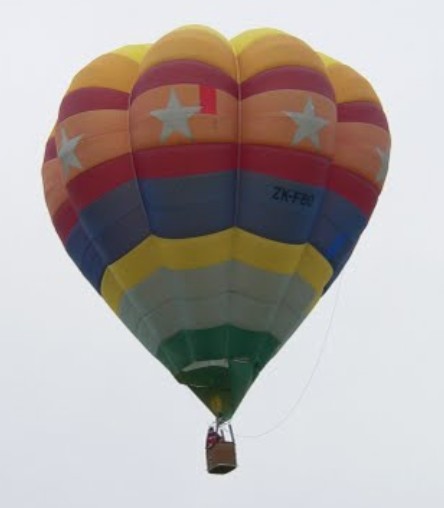
The V designation indicates the Viva model of envelope which consists of eight bulbous gores (segments).

Cameron V65 Viva

Viva
1972
Persons: 3
Diameter: 50 ft
Height: 75 ft
Volume: 56,000 cu.ft
Weight: 349 lb
Payload: 1120 lb
Burner: 9.5 Million BTU/hr
Fuel capacity: 20 USG
Cost: (1972): US$ 5500
FAI AX-6

V-65
Envelope cap: 65,000 cu.ft

V-77
Envelope cap: 77,000 cu.ft

V-90

Cameron O Srs

O-120

The O-77 is designed to the airworthiness requirements of the British Balloon and Airship Club and Airship Club technical committee. The envelope is made of high strength nylon fabric with nylon webbing bands. The nylon is treated to render it imporous and protect it from sunlight. Twelve stainless steel wires extend from the envelope to the burner frame, with another eight from the frame to the wicker basket. The heat source is a high output propane burner fed by liquid propane. This consists of vapourising coil and a set of four jets. There is also a pilot burner with its own fuel system. Four aluminium containers each carry 40 lbs of fuel. A fire extinguisher is standard equipment. The basket is made of wicker and willow and carries the fuel and four people. A 150 ft trail rope is attached.

O-31
1972
Persons: 1
Diameter: 40 ft
Height: 72 ft
Volume: 31,450 cu.ft
Weight: 305 lb
Payload: 630 lb
Burner: 9.5 Million BTU/hr
Fuel capacity: 20 USG
Cost: (1972): US$ 5950
FAI AX-4

O-42
1972
Persons: 2
Diameter: 45 ft
Height: 73 ft
Volume: 42,000 cu.ft
Weight: 334 lb
Payload: 840 lb
Burner: 9.5 Million BTU/hr
Fuel capacity: 20 USG
Cost: (1972): US$ 6600
FAI AX-5

O-56
1972
Persons: 3
Diameter: 50 ft
Height: 75 ft
Volume: 56,000 cu.ft
Weight: 379 lb
Payload: 1120 lb
Burner: 9.5 Million BTU/hr
Fuel capacity: 20 USG
Cost: (1972): US$ 7320
FAI AX-6

O-65
1982
Persons: 3
Diameter: 52 ft
Height: 76 ft
Volume: 65,000 cu.ft
Weight: 509 lb
Payload: 1300 lb
Burner: 9.5 Million BTU/hr
Fuel capacity: 30 USG
Cost: (1972): US$ 8055
FAI AX-7

O-77
1972
Persons: 4
Diameter: 55 ft
Height: 80 ft
Volume: 77,500 cu.ft
Weight: 593 lb
Payload: 1540 lb
Burner: 9.5 Million BTU/hr
Fuel capacity: 40 USG
Cost: (1972): US$ 8700
FAI AX-7

O-77
Capacity: 77,000 cu.ft
Height: 70 ft
Diameter: 35-40 ft
Max wind speeed: 15 kt
Burner: Propane 6,000,000 BTU
Endurance: >3hr

O-84
1972
Persons: 4
Diameter: 57 ft
Height: 82 ft
Volume: 84,000 cu.ft
Weight: 598 lb
Payload: 1680 lb
Burner: 9.5 Million BTU/hr
Fuel capacity: 40 USG
Cost: (1972): US$ 8950
FAI AX-8

O-85

O-105

O-120

O-160
Capacity: 160,000 cu.ft.
Endurance: 3 hr.