Etienne Special

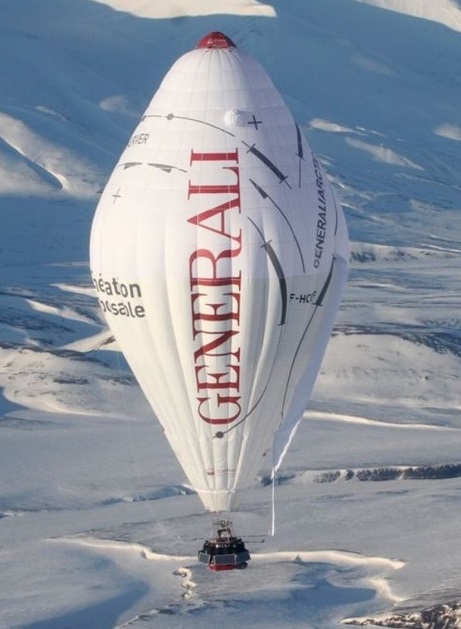
From April 5 to 10, 2010, the explorer Jean-Louis Etienne carried out on board a rozière the first crossing of the Arctic in 121 hr. Departing from the Norwegian archipelago of Spitsbergen, it traveled 3,130 kilometers before landing about 250 kilometers north of Batagai, in eastern Siberia.

Eiloart & Mudie Small World

The Atlantic Ocean was for many years the greatest challenge in ballooning history. A group of four British balloonists, Colin Mudie, his wife Rosemary, Bushy Eiloart and his son Tim, planned to take on the Atlantic crossing, using their experience as sailors. They decided to take an east to west route, leaving from Tenerife heading towards a central location on the east cost of the United States.

The crew, who designed the ballon and planned the whole voyage consisted of Arnold “Bushy” Eiloart (Commander), his son Tim (Radioman), Colin Mudie (Navigator), and his wife Rosemary Mudie (Photographer). They had a gondola (basket) specifically built for the journey which was made from reinforced polystyrene and measured 15ft x 8ft. The gondola was attached to the envelope with quick release cables for ease in the case of an emergency. A special feature of the design is that the basket is designed as a sailing boat, to be used if the party were to be forced to ditch in the sea. The crew had designed, constructed and learnt to fly the balloon with little or no assistance as England at this time did not have even one qualified balloon examiner.

The attempted crossing of the Atlantic from Tenerife to Barbados in the hydrogen balloon “Small World” in December 1958 was filmed.

The film opens with scenes of testing the balloon prior to the actual attempt, with the balloon being inflated at Cardington, outside airship hangars. Wing Commander Ralph Booth, captain of the R-100 airship supervises the testing, and is also involved in heading the launching crew.

The balloon was launched from Tenerife, in the south of the island, at 1 o’clock in the morning of 12th December 1958, after being frustrated and delayed by high winds and bad weather. There are various scenes of the take off, and activities in the basket. They fly the balloon for 94 hours and 1200 nautical miles, before being forced to ditch in the sea through problems with maintaining altitude in a ferocious storm and having to sail the rest of the way to Barbados, which took them about 3 weeks. There are numerous scenes on the small “boat” with rationing, sailing and using instruments such as a chronometer. They eventually land in Barbados (another 1,450 miles) on 5 January 1959, towed in by a fishing boat which charged them 50 dollars. A large crowd greet them, with people running along the beach, as the populace had been alerted to their impending arrival by reporters and local radio.

The Small World broke all existing balloon duration records.

Donaldson New Graphic

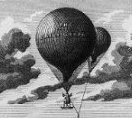
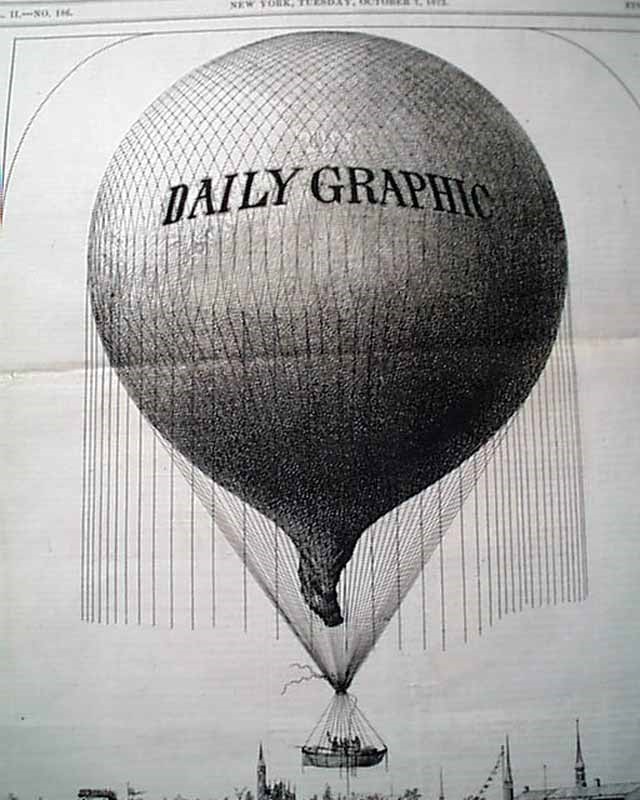
The first attempt at an Atlantic crossing by balloon. Originally intended by John Wise and Washington Donaldson as a 3-envelope aerostat designated the Daily Graphic after the sponsoring newspaper. It was converted to a smaller envelope by Donaldson and renamed New Graphic. Leaving from New York on its trans-Atlantic flight, it reached Connecticut before foundering in 1873.

de Rozier Rozière

Pilátre de Rozier considered it unthinkable that a criminal should gain the honour of being the first airman, volunteered to make the ascent himself; and on 15 October 1783 he rose to about 80 feet in a captive balloon with a capacity of 60,000 cu.ft.

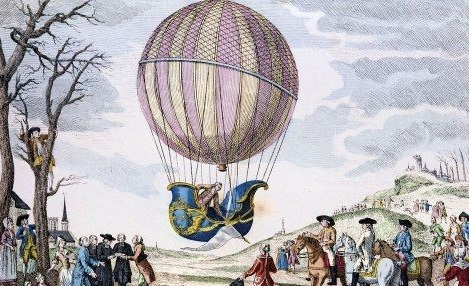
On 21 November he completed the first aerial voyage in history, with the Marquis d’Arlandes, by flying 5.5 miles across Paris at a height of 3,000 feet, from the Cháteau de la Muette. The 25 minute flight was not without hazard, for the balloon kept inflated by means of a brazier slung underneath its neck, and the airmen had a hectic time putting out fires on the fabric with a sponge and water they had taken with them.

De Rozier’s plan was an attempt to cross the English Channel from France to England. A Montgolfier balloon would not be up to the task, requiring large stocks of fuel for the hot air, so his balloon, the Rozière balloon, was a combination hydrogen and hot air balloon. It was prepared in the autumn of 1784, but the attempt was not launched until after another Frenchman, Jean-Pierre Blanchard, and American companion, Dr John Jeffries, flew across the English Channel in a hydrogen gas balloon on 7 January 1785, from England to France.

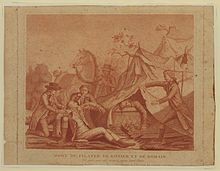
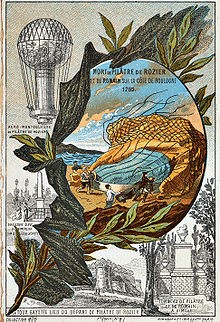
Despite several attempts, De Rozier and his companion, Pierre Romain, were not able to set off from Boulogne-sur-Mer until 15 June 1785. After making some progress, a change of wind direction pushed them back over land some 5 km from their starting point. According to contemporary accounts, the balloon caught fire in midair before suddenly deflating and crashing near Wimereux in the Pas-de-Calais, from an estimated height of 450 m (1,500 feet). Both occupants were killed.

Fatal accident at Wimereux, 15 June 1785.

Eight days later his former fiancée died, possibly having committed suicide. A commemorative obelisk was later erected at the site of the crash. The King had a medal struck, and gave his family a pension.

The modern hybrid gas and hot air balloon is named the Rozière balloon after his pioneering design.

Deaths of Rozier and Romain.

de Rozier, Jean-François Pilâtre

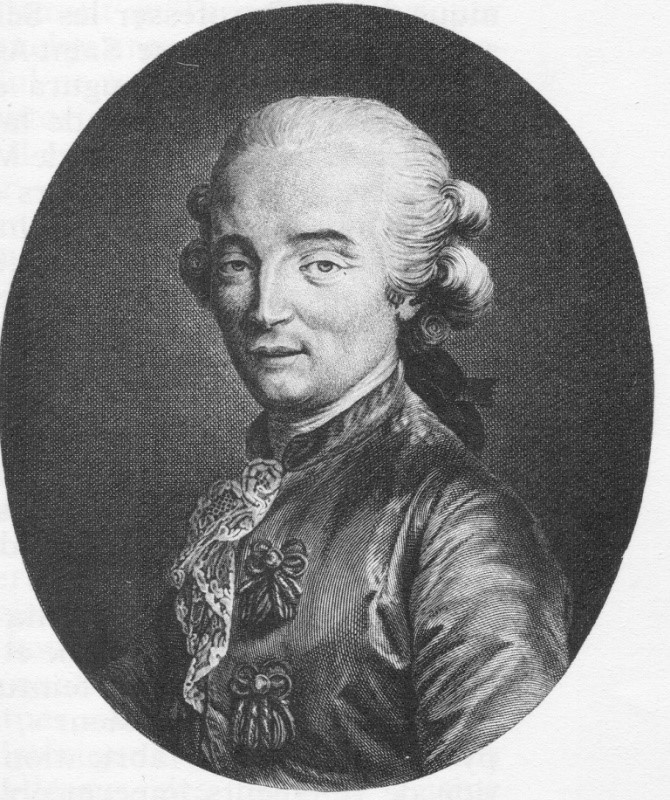
Jean-François Pilâtre de Rozier was born in Metz, Lorraine on March 30th, 1754, the third son of Magdeleine Wilmard and Mathurin Pilastre.

His interests in the chemistry of drugs had been awakened in the military hospital of Metz, an important garrison town on the border of France. He made his way to Paris at the age of 18, then taught physics and chemistry at the Academy in Reims, which brought him to the attention of the Comte de Provence, brother of King Louis XVI.

He returned to Paris, where he was put in charge of Monsieur’s cabinet of natural history and made a valet de chambre to Monsieur’s wife, Madame, which brought him his ennobled name, Pilâtre de Rozier. He opened his own museum in the Marais quarter of Paris on 11 December 1781, where he undertook experiments in physics, and provided demonstrations to nobles. He researched the new field of gases, and invented a respirator.

In June 1783, he witnessed the first public demonstration of a balloon by the Montgolfier brothers. On 19 September, he assisted with the untethered flight of a sheep, a cockerel and a duck from the front courtyard of the Palace of Versailles.

He is the first man who had the courage to fly in the airs on board an astonishing machine, manufactured only a couple of months prior by Etienne and Joseph Montgolfier (two brothers from Annonay – Ardeche). After the first test without basket and passengers and then the complementary flight with animals, the King Louis XVI didn’t want to kill one of his subjects and wished to send convicts instead.

Along with Joseph Montgolfier, he was one of six passengers on a second flight on 19 January 1784, with a huge Montgolfier balloon Le Flesselles launched from Lyon. Four French nobles paid for the trip, including a prince.

Pilâtre de Rozier, a freemason, friend of Benjamin Franklin, Lafayette and other decision makers, had just created a Sciences Museum in Paris. Surprised and interested, the King’s court accepted Jean-François’ project and gave him the possibility to be the first to fly. During several weeks, he modified and tested the balloon, then flew with the “Marquis d’ Arlandes” on November 21st, 1783. He carried out the first world record of distance, altitude and duration. His fame soon exceeded France and extended to the whole world. The Man achieved his dream: to fly in the air. Pilâtre de Rozier invented the first gas mask, the matches and many other inventions, but he continued his experiments in ballooning. He manufactured “La Rozière”, combination between a hot air balloon and a gas balloon (hydrogen) which had just been set up by the physicist Charles. He also risked himself while researching the flammability of hydrogen: in “A Short History of Nearly Everything”, Bill Bryson writes “In France, a chemist named Pilatre de Rozier tested the flammability of hydrogen by gulping a mouthful and blowing across an open flame, proving at a stroke that hydrogen is indeed explosively combustible and that eyebrows are not necessarily a permanent feature of one’s face.”

His 3rd flight would kill him. He intended to fly from France to England on June 15th, 1785, but the machine wasn’t ready. He died at Wimille, on the French coast, aged 31, with his unfortunate flight companion Pierre Ange Romain, crushed on the ground after a vertiginous fall. Physicist chemist, he was also the creator of a new museum (a kind of “Conservatory of Arts and Crafts). He was also the first air victim and the spiritual father of generations which have succeeded him on board hot air balloons, gas balloons and “Rozières”. It’s with a “rozière” that Bertrand Piccard and Brian Jones accomplished a round the world tour in March 1999, so did Steve Fossett a few years later.
de Lôme 1870 airship

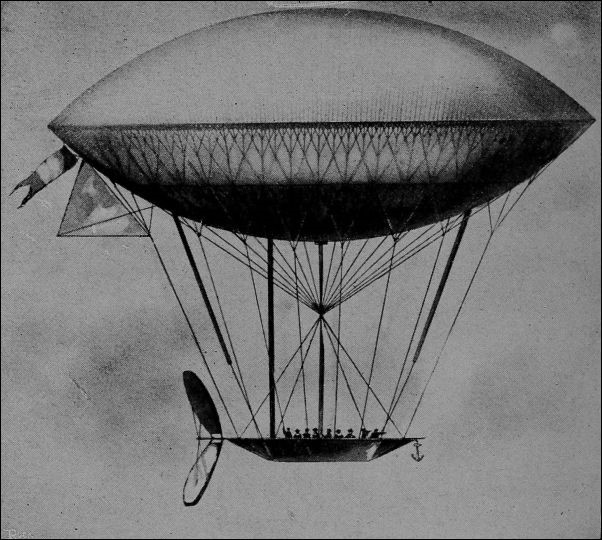
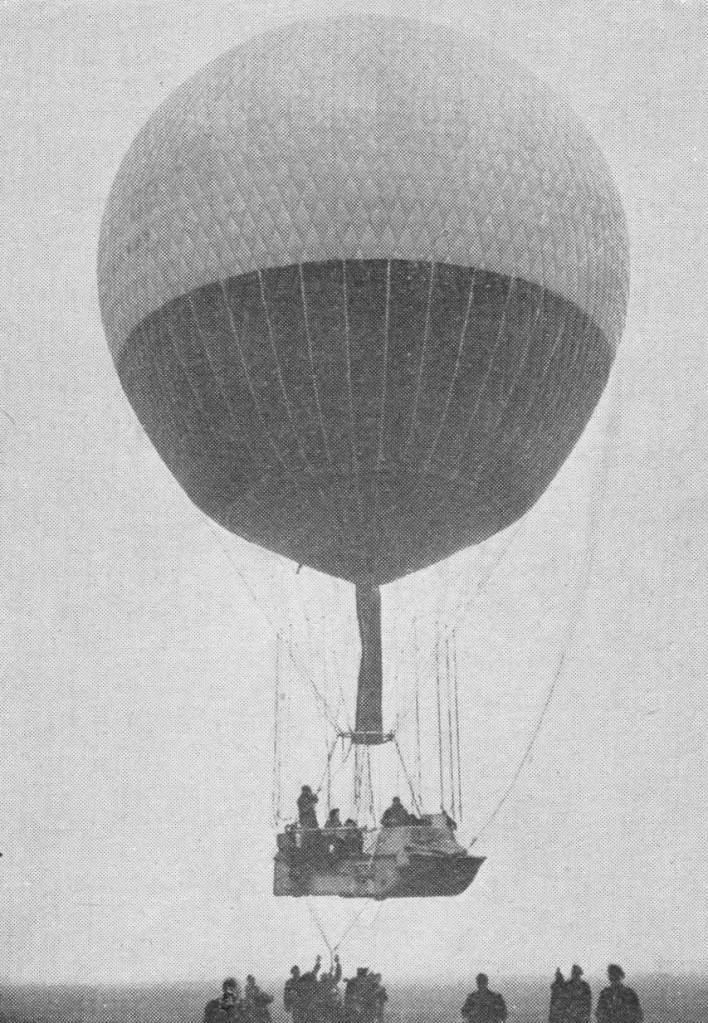
In 1870 Dupuy de Lôme devoted a large amount of time to perfecting a practical navigable balloon, and the French Government gave him great assistance in carrying out the experiments. For carrying out the project, he was given a credit of 40,000 francs; but the balloon was not ready until a few days before the capitulation. These experiments led to the development of one of the first navigable balloons, named the Dupuy de Lôme.

The Dupuy de Lôme airship was 36 meters in length, 14.84 meters in diameter, 29 meters tall, and had a total volume of 3,454 cubic meters. It was powered by a crank, which was operated by 4 or 8 men and which could provide a speed of between 9 and 11 km/h. The basket under the balloon could carry 14 people.

de Carli Cluster Balloon

On January 13, 2008, the Brazilian Roman Catholic priest and human-rights defender Adelir Antonio de Carli lifted off from Ampere, Brazil, suspended under 600 helium-filled party balloons, and reached an altitude of 5,300 metres (17,400 ft) before landing safely in Argentina. On April 20, 2008, lifting off from Paranagua, Brazil, in an attempt to fly 725 km (450 mi) inland to Dourados, Brazil, he flew using a chair suspended under 1,000 party balloons, reaching an altitude of 20,000 feet (6,100 m). Not having checked the weather forecast, he got caught in a storm. He had a GPS but did not know how to operate it. He was last heard on the radio eight hours after liftoff approaching the water after flying off the coast, unable to give his position, and crashed in the Atlantic Ocean; part of his body was found by the Brazilian Navy near an offshore oil platform on July 4, 2008. The act won him a 2008 Darwin Award.

de Anchorena Pampero

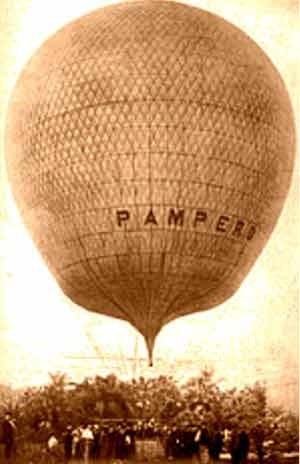
In 1907, Argentine aeronaut Aarón Félix Martín de Anchorena (1877-1965) brought from France a balloon which he named “Pampero”, after the cool Pampero wind which blows on the flat plains of Patagonia and the Pampas. Its first ascension was made on Christmas Day 1907, when Anchorena and well-known sportsman Jorge Newbery inflated the “Pampero” using the Belgrano gasworks at the Sociedad Sportiva Argentina in Buenas Aires (located in Palermo what is now the Campo de Polo), rose to 2000 feet altitude and drifted for two hours across the Río de la Plata to land at a ranch about 30 miles away in Conchillas, Uruguay. The journey had been the first aerial crossing of the Río de la Plata, and numerous flights followed successfully. On October 17, 1908, Eduardo Newbery, brother of Jorge, invited his friend Thomas Owen, a prominent yachtsman, to accompany him on a night flight. When Owen became absent, Newbery decided to make the flight anyway, onto which he invited Sergento Eduardo Romero. After leaving as usual from the Sociedad Sportiva Argentina to the southeast, the balloon disappeared without a trace.

d’Albon Ballon de Franconville

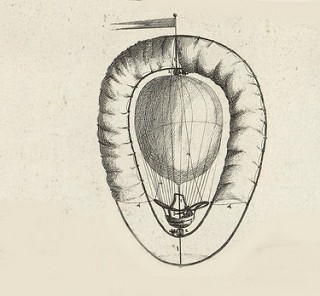
This balloon was most often called the Ballon de Franconville, and was credited to the Comte d’Albon. It was 24 feet high and 16 feet in diameter and had an annular sail that followed the profile of the balloon and was used for steering. This arrangement was used on the balloon when it took off on 16 January 1784 from the gardens of Madame Countesse d’Albon. It was found the 21st of the same month at Montmorency.

Crosbie Aeronautic Chariot

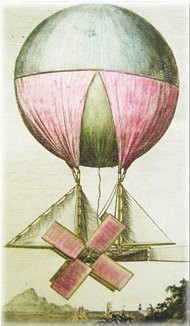
As detailed in the September 1784 issue of Hibernian Magazine, the gondola portion of the craft – with its windmills, masts, and sails – had been built and were on display by August of that year. The article explains how his craft was supposed to work, which in its own way was quite ingenious and clever, even if it was doomed to fail. As events transpired, it wasn’t until January of 1785 that Richard Crosbie was first able to take to the skies. When he did so, it was in a conventional hydrogen balloon, the fixtures and fittings of his “Aeronautic Chariot” having been left behind on the ground. Crosbie went on to make a series of attempts to cross the Irish Sea, none of which were successful.

Crosbie spent much of his childhood devising peculiar contraptions at his family home in Baltinglass, Co Wicklow. By 1783, he was a student at Trinity College, Dublin, listening to the tale of two Frenchmen who spent 25 minutes elevated in the sky within the basket of a hot air balloon.

Crosbie vowed he would one day cross the Irish Sea. His vehicle of choice would be a rubberised silk-covered balloon, filled with hydrogen.

To raise funds for his adventure, Crosbie held an exhibition in Ranelagh Gardens in Dublin. For a small fee, the public was invited to examine both his balloon and the “aeronautic chariot” which would carry himself, his equipment, his scientific instruments and the ballast.

On the final day of his exhibition, he launched the balloon skywards with a cat on board. It travelled north-west, rolled up the Scottish coast and was recovered near the Isle of Man the following day. Crosbie let his fans know that next time, he would be on board.

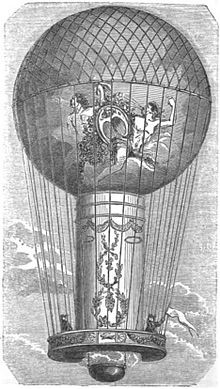
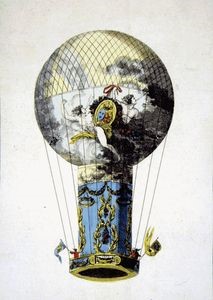
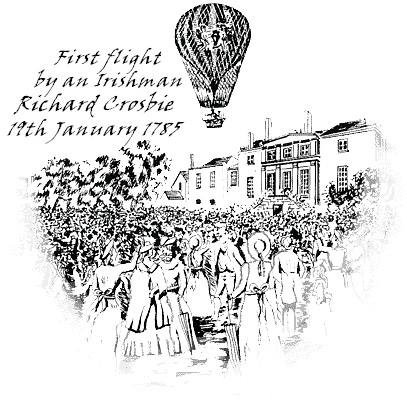
Ticket sales for the big event went through the roof, with forged tickets adding to the mayhem. At 2.30pm on January 19th, 1785, Richard Crosbie stepped into his aeronautical chariot. Ever the showman, the tall aeronaut wore a long, fur-lined robe of oiled silk, a waistcoat and breeches of white quilted satin, Moroccan boots and a leopard skin cap. His balloon was embellished with paintings of Minerva, the Roman goddess of wisdom, and Mercury, the messenger of the gods, carrying the coat of arms of Ireland.

He saluted the 20,000 strong crowd, ordered the ropes cut and ascended into the heavens over Dublin. He was visible for three and half minutes, then disappeared into a cloud. Richard Crosbie became the first Irishman to fly.

His audience roared with delight. As it happened, he only got as far as Clontarf before loosening the valve and returning to earth.

Crosbie might not have crossed the Irish Sea but the flight was hailed as a pioneering scientific achievement across Europe and considered a great victory for Ireland.

The event is recalled by a small plaque in Ranelagh Gardens.