Villiers last design was Type 26 twin-float cabin monoplane.
Amphibian
Villiers Type 4 HBA2
two prototypes of Type 4 HBA2 twin-float biplane for armed reconnaissance were built.
Viking Flying Boat Co V-2

The 1930 Viking V-2 was based on the Schreck Hydroavions FBA-17HT-4 designed by Louis Schreck in France.
One prototype was built, N37V, and ATC2-113 covered three French-built Schreck 17-HT-4 with 180hp Hisso E pusher, NC136N, NC519M, and NC792K, an ATC 2-168 for NC136N modified as a two-seater. They were priced at $15,000.
V-2
Engine: 225hp Wright R-760
Wingspan: 42’3″
Length: 29’4″
Useful load: 1250 lb
Max speed: 105 mph
Cruise: 90 mph
Stall: 46 mph
Range: 380 mi
Seats: 4
Viking Flying Boat Co OO-1
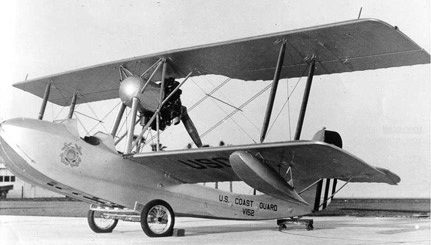
Viking Flying Boat Co built in 1936, at New Haven, Connecticut, five OO-1 single pusher-engined flying-boats for US Coast Guard, based on French Schreck FBA 17HT-4.

The five built as OO-1 (V152-156) were USCG scout version of the V-2. The cost $6500.
Wingspan: 38’7″
Length: 29’4″
Max speed: 104 mph
Cruise: 88 mph
Stall: 45 mph
Range: 390 mi
Vickers Vedette

Vickers Vedette were operated by the Canadian Air Force pre-WW2 on photo-survey duties.
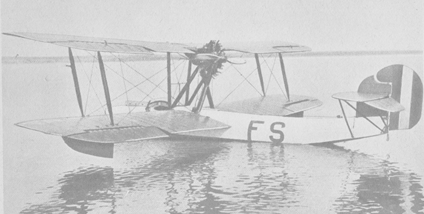
Engine: Lynx
Vickers Viking

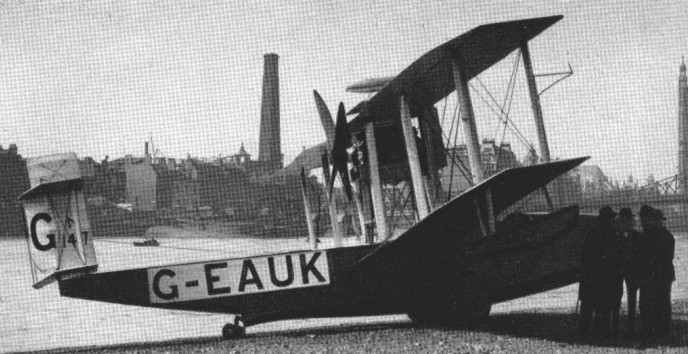
Direct London to Paris flights were pioneered in 1921 by a Vickers Viking III.
Vickers 78 Vultue I / 95 Vulture
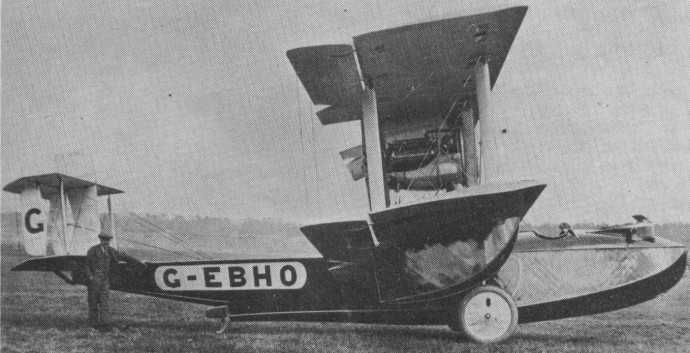
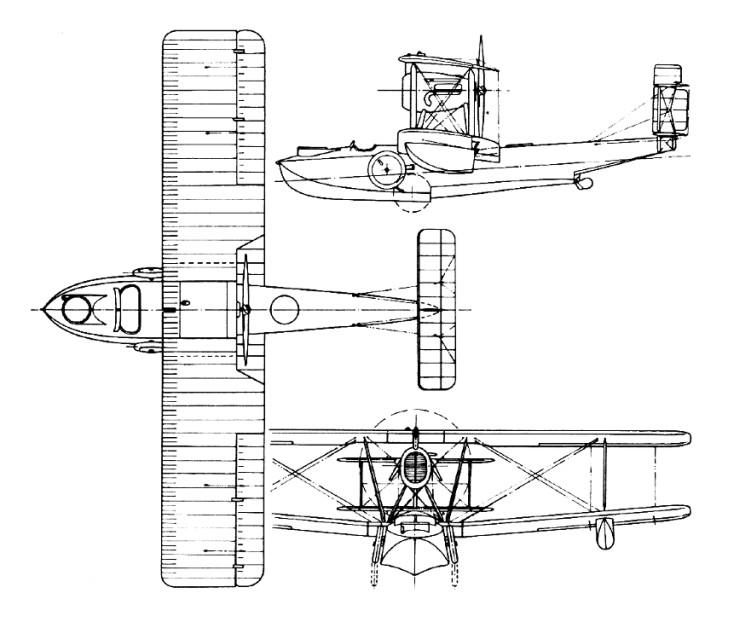
During 1918 Vickers designed a light amphibian with biplane wings and tail unit, its Consuta plywood hull being built by the company’s S. E. Saunders subsidiary and incorporating an enclosed cabin seating four passengers. Its powerplant, a 205kW Rolls-Royce Falcon, was strut-mounted below the upper wing to drive a pusher propeller. Designated Vickers Viking, it was flown for the first time in late 1919. It was in a forced landing with this aircraft, on 18 December 1919, that the company’s famous chief pilot, Sir John Alcock, was killed.
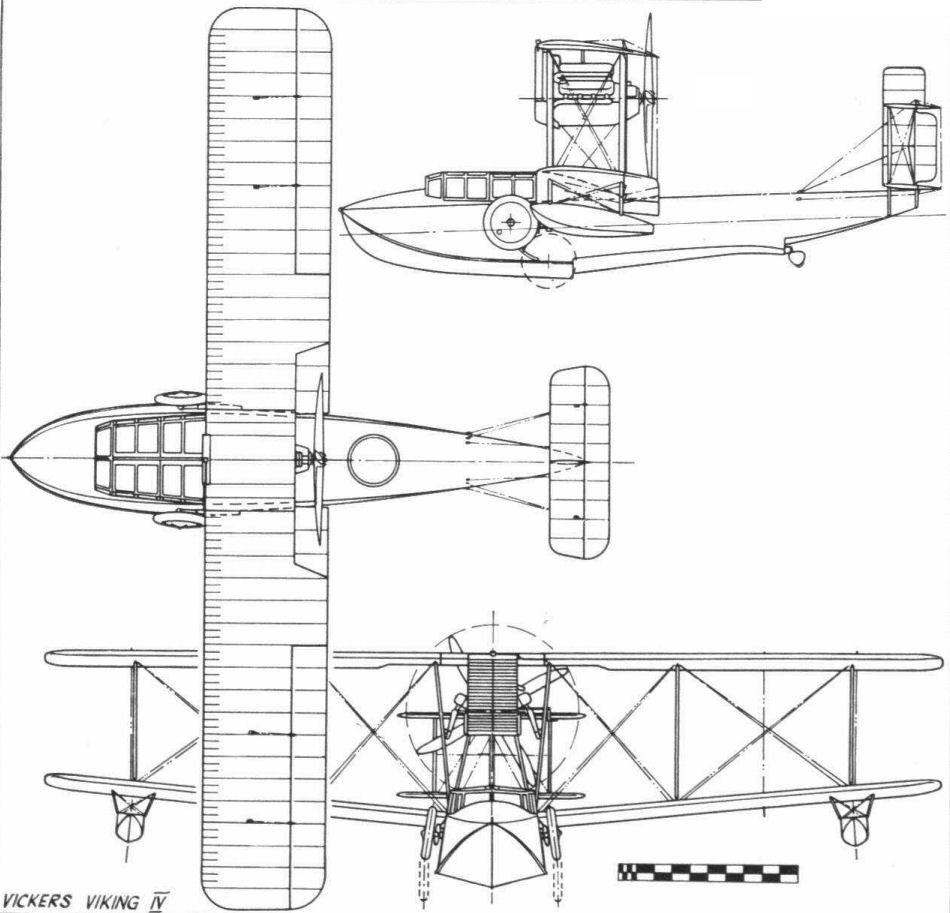
From this Viking I was developed a series of aircraft with progressive improvements, especially to the hull (some of which had open cockpits), and differing powerplant. They comprised the one-off Viking II (268kW Rolls-Royce Eagle VIII) and Viking III (336kW Napier Lion), followed by the production Type 54 Viking IV. Of the 26 that were sold, examples in several type numbers went to the armed services of Argentina, Canada, France, Japan and the Netherlands, and for civil use in Argentina, Canada, the Soviet Union and the USA. Ironically, Sir Ross Smith, knighted like Sir John Alcock for a Vickers Vimy pioneering flight, was killed in an accident with a Viking IV on 13 April 1922. The final version was the Viking V with Napier Lion engine, two built for service with the RAF in Iraq.
The aircraft that was to have been the Viking VI, with redesigned wing structure and single 450 HP Napier Lion engine with a four blade pusher propellor, was designated Type 78 Vulture I; a second example with a 268kW Rolls-Royce Eagle IX had the designation Type 95 Vulture II but was later re-engined with a Napier Lion. These two aircraft were used during 1924 in an unsuccessful round-the-world flight attempt.
The Vickers Type 95 Vulture, G EBHO, was registered to Vickers Ltd on August 9, 1923. It was a three seat amphibian powered by a single 450 hp Napier Lion and was one of two designed by R. K. Pierson for Sqn Ldr A. C. S. MacLaren’s round the world flight. This attempt began at Calshot on March 25, 1924, and ended with a take off crash at Akyab, Burma.
On May 24 the other aircraft, G EBGO, was shipped to Akyab from Tokyo, where it had been positioned earlier, to continue the flight. This also ended prematurely with a forced landing in heavy seas near the Aleutian Islands on August 2, 1924.
Last of the Viking series, at first designated Viking VII but later named Type 83 Vanellus, was a single aircraft for evaluation by the RAF as a three-seat (pilot, observer/gunner and gunner) open-cockpit fleet-spotter; it differed primarily from its predecessors by having a monoplane tail unit. The 15.24m span Viking IV with Napier Lion powerplant had a maximum speed of 182km/h at sea level.
Vickers Aircraft Co Wave
The Vickers Aircraft Company Wave is a two-seat, side-by-side configuration, high wing amphibious aircraft under development by the Vickers Aircraft Company of Hamilton, New Zealand.
The fuselage and wings are constructed from a combination of aluminum and carbon fibre composite materials. An automatic folding wing mechanism and ballistic parachute are planned to be integrated. The standard engine is the 180 hp (134 kW) Continental Titan 340 four-stroke powerplant, mounted in a pusher configuration.
It was introduced at the Sport Aviation Expo in Sebring, Florida in 2014, intended for the US light-sport aircraft category.
Wave
Engine: 1 × Continental Titan 340, 180 hp (130 kW)
Propeller: 3-bladed Catto
Wingspan: 30 ft 10 in (9.40 m)
Wing area: 149.3 sq ft (13.87 sq.m)
Length: 24 ft 7 in (7.5 m)
Height: 7 ft 6 in (2.29 m)
Empty weight: 928 lb (421 kg)
Gross weight: 1,430 lb (649 kg)
Fuel capacity: 50 U.S. gallons (190 L; 42 imp gal)
Maximum speed: 120 kn (138 mph, 222 km/h)
Cruise speed: 120 kn (140 mph, 220 km/h)
Range: 720 nmi (830 mi, 1,330 km)
Wing loading: 10.2 lb/sq ft (49.7 kg/sq.m)
Crew: 1
Capacity: 1 passenger
Van Berkel 1919 seaplane

The 1919 Van Berkel seaplane is a twin-float seaplane, shown at the E.L.T.A. exhibition without engine, but intended for a Mercedes. The fuselage is built up of a light framework covered with three-ply wood. The ply-wood covering of the rear portion of the fuselage is continued outwards over the tail plane, which latter is built integral with the body. The fuselage is very deep at the rear, where it performs the function of a fin, no other vertical fin being fitted. The tail plane is at the top of the fuselage and the rudder has its balanced portion projecting below the stern.
The two floats, which are single step, are flat-bottomed as regards their front portion, but to the rear of the step the bottom gradually changes from flat to Vee bottom, finally corning to a point at the heel of the float. The construction is very similar to that of the fuselage, brass screws and nails being used throughout. The floats are fitted with water-tight bulkheads, detachable inspection doors being provided in the deck for examining the interior.
The wing bracing is only one pair of struts on each side. The upper plane is of slightly greater span than the bottom, and the inter-plane struts slope outwards. The lift and landing loads are taken by tubes sloping from the floats outward to the lower surface of the bottom plane at the points where occur the inter-plane struts. A speed of 155 km. per hour is estimated.
Ursinus Seaplane
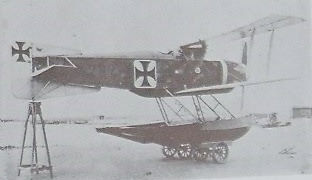
The floats were retracted during flight. 1916-17
120 hp Daimler prototype
160 hp Benz Production
 All Aero