Allied Aviation Corp XLRA-1

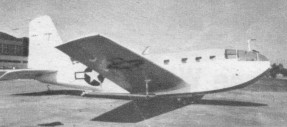
During 1942 the US Navy let contracts for the development of several amphibious transport gliders. Two of the contracts called for twelve-seaters manufactured primarily from non-strategic materials, these being the Allied XLRA 1 and the Bristol XLRQ 1.

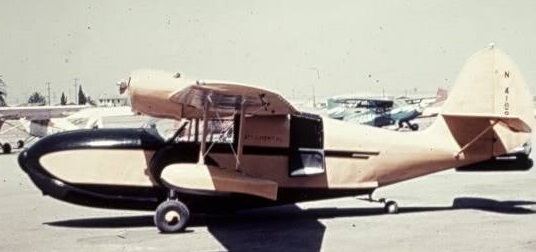
The Allied XLRA 1 was a low wing cantilever monoplane constructed mainly of moulded plastic plywood and carrying two crew members seated in tandem, and ten troops. A jettisonable undercarriage was fitted this comprising a single twin wheel main member, a small tailwheel, and two small stabilising wheels attached at approximately quarter span, and it was intended that the glider would be towed by standard naval aircraft Two prototypes were built (BuAer Nos. 11647 and 11648), and one hundred production LRA Is (BuAer Nos. 31403 502) were ordered, but none of these had been completed when the U.S. Navy cancelled its glider programme. The LRA 2 was a proposed version with a conventional undercarriage.
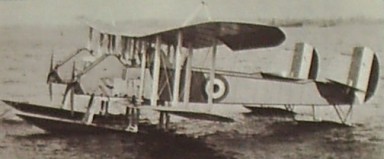
Albatros Werke W.4

The W.4 was a sea-plane development of the D.I and 117 were built for the German Navy to defend coastal naval bases from attack. Most were stationed at North Sea bases from early 1917, but a small number were deployed around the Aegean Sea area.
The W.4 was a two seater powered by the 160 hp Mercedes D.III, and normally armed with one or two Parabellum 7.92 mm machine guns in the rear cockpit.

Engine: 1 x Mercedes D III, 125kW
Wingspan: 9.5 m / 31 ft 2 in
Length: 8.5 m / 27 ft 11 in
Height: 3.7 m / 12 ft 2 in
Wing area: 31.6 sq.m / 340.14 sq ft
Take-off weight: 1070 kg / 2359 lb
Empty weight: 790 kg / 1742 lb
Max. speed: 160 km/h / 99 mph
Ceiling: 3000 m / 9850 ft
Range w/max.fuel: 450 km / 280 miles
Armament: 2 machine-guns
Crew: 1

Airmax Seamax

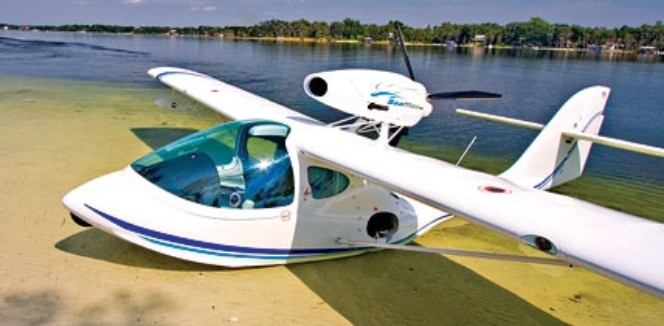
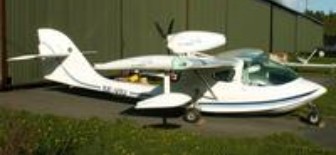
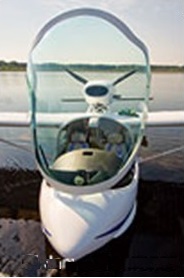
The SeaMax amphibian LSA / Ultralight take off and landing performance is equally good on grass, tarmac and sea. With electrically controlled landing gear retraction, flaps and trim rudders. The cabin is ergonomically designed with a panorama view due to the wing position behind the pilot.

This Brazilian-built all-composite amphibian is Rotax powered. Base price 2012: US$150,000.

Stall: 31 kt / 36 mph / 58 kmh
Cruise: 113 kt / 130 mph / 209 kmh
VNE: 139 kt / 160 mph / 257 kmh
Empty Weight: 300 kg / 661 lbs
MTOW Weight: 520 kg / 1146 lbs
Climb Ratio: 1000 ft/min / 5 m/s
Endurance: 6h
Range: 540nm

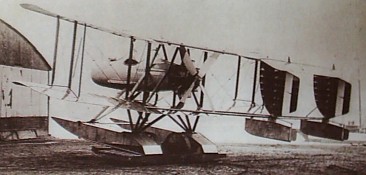
Admiralty Air Department Seaplane Type 1000

Designed by Harris Booth as a torpedo bomber in 1914, the A.D. Seaplane 1000 was a floatplane of wire braced, fabric covered wood construction. An unequal span biplane, the central glazed nacelle housed an engine and pusher propellor. Two tractor engines were mounted in the booms.
The undercarriage was two main floats and two smaller rear floats.
The outer wing panels had dihedral and were separated on each side by two sets of interplane struts. Overhanging ailerons, on the outboard trailing edges of the upper wing, were supported by kingposts and cables.
Seven were ordered from J. Samuel White, but only one was completed. With poor performance further development was abandoned but the single type 1000 survived until 1916.

AD Type 1000 Seaplane
Engine: 3 x Sunbeam Vee, 310 hp / 231vkW
Wingspan: 115 ft / 35.05 m
Crew: 5

Admiralty Air Department Navyplane

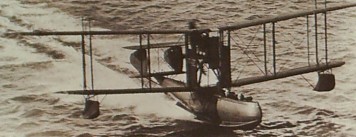
The A.D. Navyplane was designed by Harold Bolas as a two seat pusher floatplane.
Two were ordered in January 1916 for the Royal Naval Air Service and serial numbers were allocated for seven
(9095-9096, N.1070-N.1074) but only one prototype was completed (9095). It was originally fitted with an American Smith Static ten cylinder single-row engine, and flight tested in August 1916 by Lt.Cdr John Seddon. The engine was later replaced by an AR.1 rotary (later redesignated BR.1 for Bentley Rotary 1) and retested in May 1917. The performance was found to be poor and the aircraft was oficially deleted on 27 August 1917.

Engine: 1 x Smith Static, 150 hp / 112 kW
Prop diameter: 8 ft 10 in / 2.69 m
Max speed: 64 mph / 104 kph
Climb to 2000 ft / 907 m: 30 min
Service ceiling: 1300 ft / 396 m
Endurance: 6 hr
Empty weight: 2100 lb / 952 kg
MTOW: 3102 lb / 1157 kg
Wing span: 36 ft / 10.97 m
Wing chord: 5 ft / 1.52 m
Wing gap: 6 ft 6 in / 1.98 m
Tailplane span: 15 ft 6 in / 4.72 m
Length: 27 ft 9 in / 8.46 m
Height: 12 ft 9 in / 3.89 m
Wing area: 364.00 sq.ft / 33.80 sq.m
Armament: 1 x 0.303 / 7.7 mm Lewis mg

Engine: 1 x Admiralty Rotary 1, 150 hp / 112 kW
Wing span: 36 ft / 10.97 m
Wing chord: 5 ft / 1.52 m
Wing gap: 6 ft 6 in / 1.98 m
Tailplane span: 15 ft 6 in / 4.72 m
Length: 27 ft 9 in / 8.46 m
Height: 12 ft 9 in / 3.89 m
Wing area: 364.00 sq.ft / 33.80 sq.m
Armament: 1 x 0.303 / 7.7 mm Lewis mg

Admiralty Air Department Flying-Boat

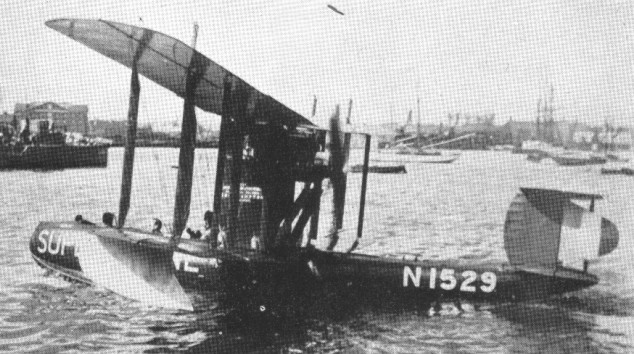
Designed in 1915 to serve in patrol and reconnaissance roles, the AD Flying-Boat was a two seat, single engined, unequal-span braced biplane. The wings could be folded for stowage, and a braced ailplane had twin fins and rudders.
Construction of two prototypes was begun in May 1915, with May, Harden & May of Southampton building the first hull. The hull being designed by Lieutenant Linton Hope. The first was then completed at Southampton by Pemberton-Billing Ltd, who also built the second prototype and the 27 production aircraft.
The first prototype was powered initially by a 200 hp / 149kW Hispano-Suiza with a four blade pusher prop.
The original order was for 85 aircraft but after the first 27 the remaining contracts were cancelled in March 1918.
The aircraft were used by the Royal Naval Air Service, armed with one forward firing 0.303 in Lewis gun and provision for eight light bombs. All 27 production aircraft were declared obsolete in late 1918.
Nineteen were repurchased by Supermarine soon after the war and converted for civil use as the Supermarine Channel.

Supermarine Channel

Gallery

Engine: 1 x Hispano Suiza, 200 hp / 149 kW
Max speed: 100 mph / 161 kph at 2000 ft / 610 m
Cruise speed: 90 mph / 145 kph at 10,000 ft / 3050 m
Service ceiling: 11,000 ft / 3355 m
Endurance: 4 hr 30 m
Empty weight: 2508 lb / 1138 kg
MTOW: 3567 lb / 1618 kg
Wing spar upper: 50 ft 4 in / 15.34 m
Wing spar lower: 39 ft 7.25 in / 12.07 m
Length: 30 ft 7 in / 9.32 m
Height: 13 ft 1 in / 3.99 m
Wing area: 479 sq.ft / 44.5 sq.m
Armament: 1 x 0.303 / 7.7 mm Lewis mg