Aquafugh Aqua / W-6

Aqua I

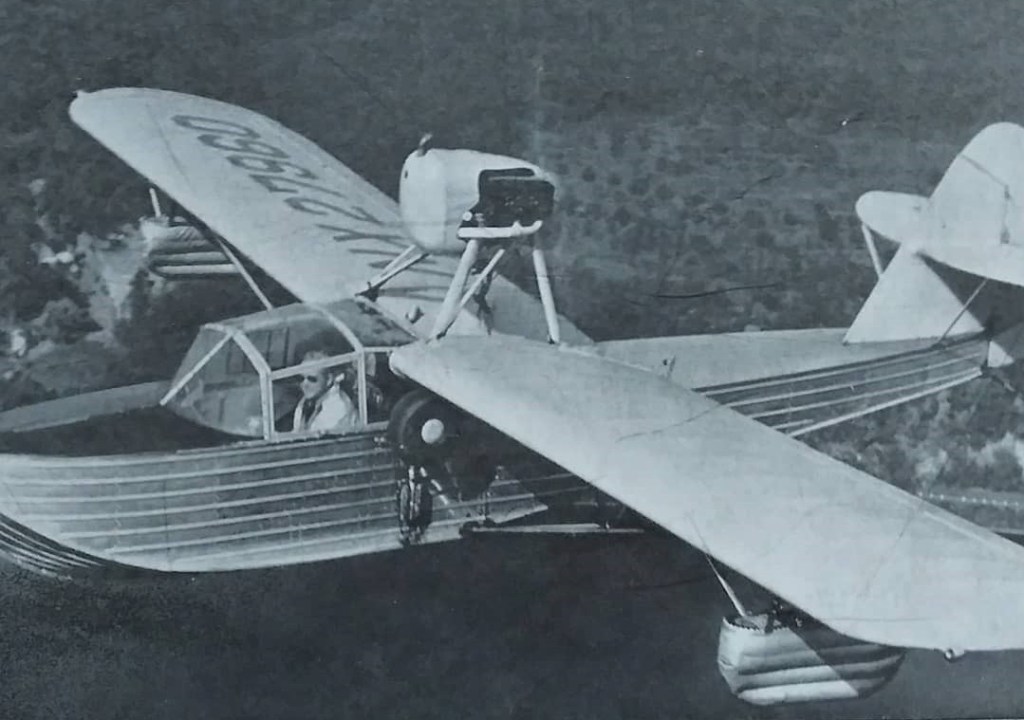
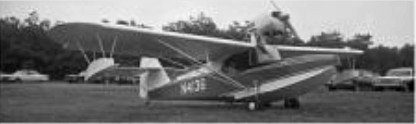
The Aqua was an original design developed by Aquaflight, Inc, a company founded in 1946 by Meredith C. Wardle. The type was only produced in prototype form and possibly the prototype was flown in two versions.

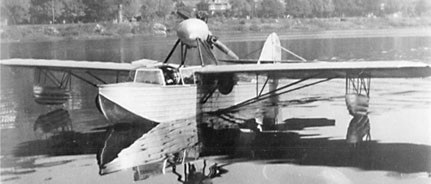
The W-6 Aqua I was the first version, a 4-6 seat utility flying boat which had two 125 hp Lycoming O-290-A series engines. Registered NX74141 it made the first flight during 1946 and was extensively tested at the Philadelphia Seaplane Base. Aqua I had an all metal fuselage, with a wooden hull and had a claimed cruise of 125 mph.

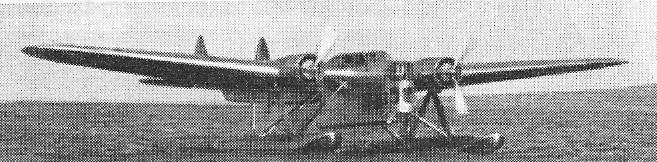
The W-6A Aqua II was possibly modified from the Aqua I, and had several major changes such as re-contoured nose section, a modified vertical tail and fin assembly and a tricycle landing gear, making it an amphibious flying boat. The Aqua II was powered by two 225 hp Lycoming O-435 engines and it made the first flight in 1949. No further work on either the Aqua I or II was undertaken.

Reports that later the boat hull of the Aqua II was used in the homebuilt Collins W-7 Dipper are incorrect.

The Aqua II was tested as landplane also.
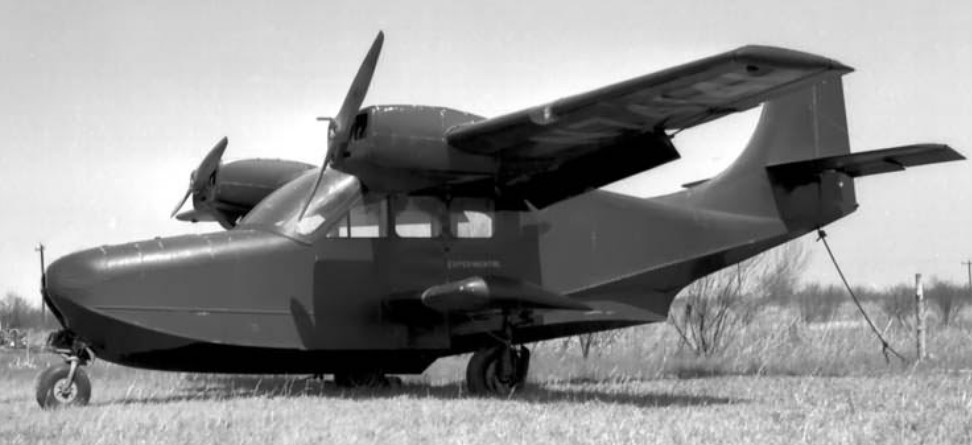
W-6A Aqua II

W-6 Aqua I
Engines: 2 x Lycoming O-290, 125 hp (93 kW)
Wingspan: 36 ft 6 in (11.13 m)
Wing area: 215 sq ft (20.0 m2)
Airfoil: NACA 23012-16
Height (on land): 12 ft 0 in (3.66 m)
Length: 29 ft 6 in (8.99 m)
Empty weight: 2,200 lb (998 kg)
Gross weight: 3,600 lb (1,633 kg)
Fuel capacity: 100 US gal (83 imp gal; 380 L)
Max speed: 135 mph (217 kmh)
Cruise speed: 125 mph (201 km/h, 109 kn)
Stall speed: 40 mph (64 km/h, 35 kn) (half load)
Rate of climb: 1,250 ft/min (6.4 m/s)
Crew: one pilot
Capacity: 5 passengers

W-6A Aqua II
Engines: 2 x Lycoming O-360, 125 hp (93 kW)
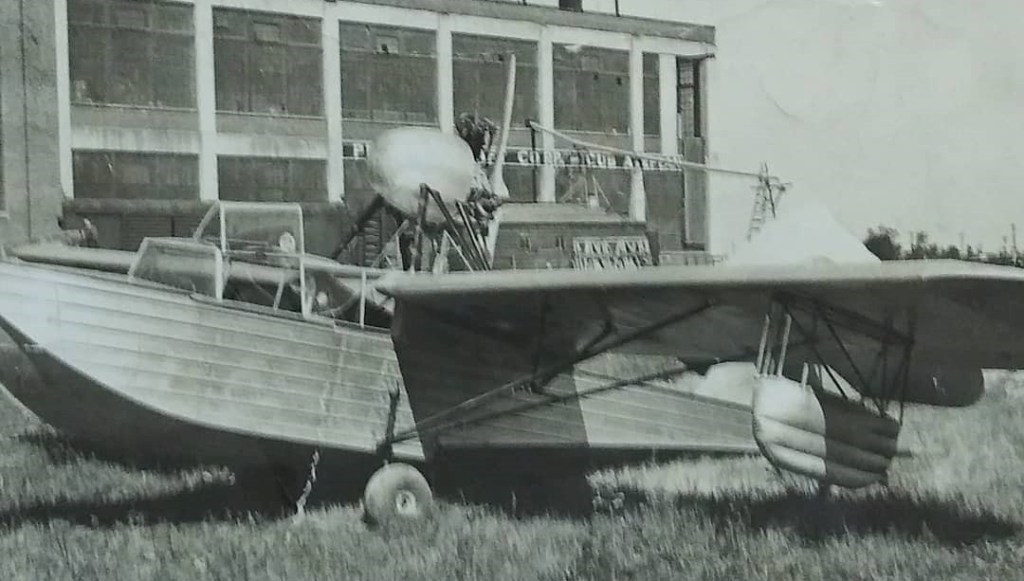
Applegate Duck

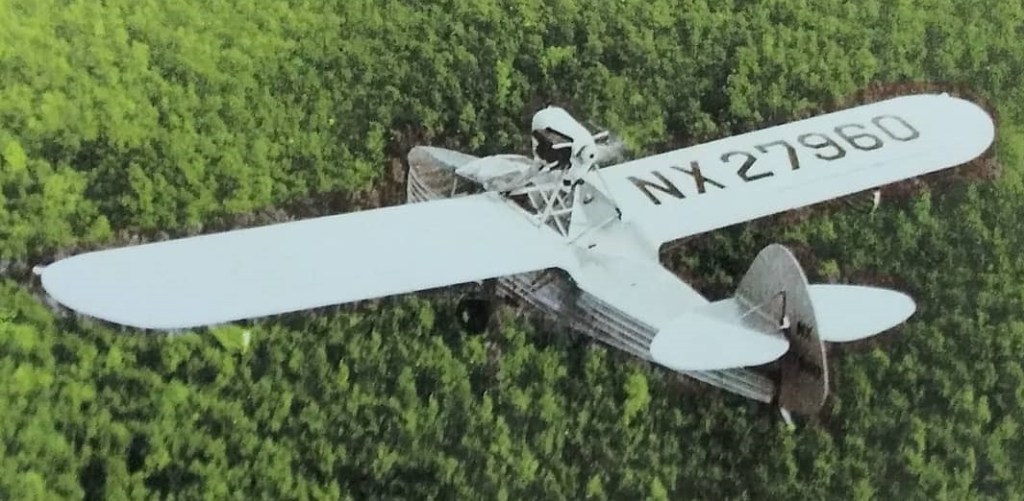
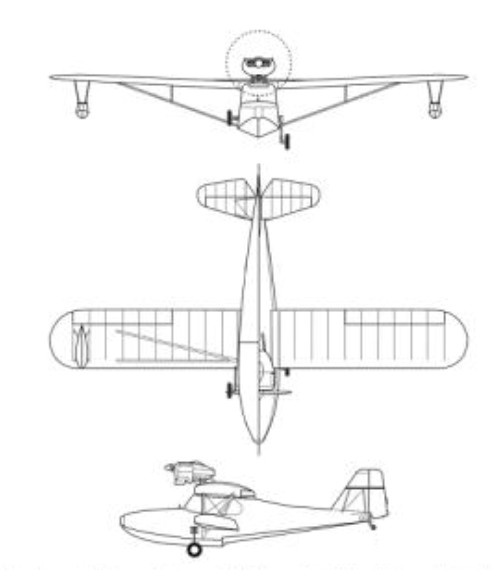
This is the Duck Amphibian that was created by Ray Applegate in 1937. He brought the Amphibian to Lock Haven in 1939 to see if Piper would be interested in manufacturing it. However the project was eventually dropped. Mainly due to WWII.

Designed by Ray Applegate, the 1937 amphibian, registered NX17866, used a Piper J-3 wing and was priced at $2,500±.

Applegate Duck NX17866

Only one was built, the name changed to Applegate 3 Clipper in 1947.

Walter Jamouneau recalled ‘The airplane didn’t fly very well. It made a lot of noise but didn’t go anywhere. The drag was spectacular”.

Engines: various 55-145hp
Wingspan: 34’5″
Length: 22’0″
Useful load: 650 lb
Cruise: 85 mph
Seats: 2

Anderson EA-1 Kingfisher             

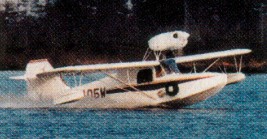
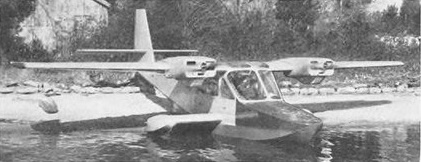
Earl Anderson, a Boeing 747 Captain, spent nine years developing the EA-1 Kingfisher at a cost of $5,500, and first flew it on 24 April 1969. At that time, it used a 100-hp Continental 0-200, similar to the Volmer VJ-22 Sportsman, which served as a design inspiration. Later, Anderson switched to a 115-hp Lycoming 0-235-C1, and by January 1975 had logged more than 600 hours on the amphibian. Seating two people side-by-side in an enclosed cabin, the Kingfisher uses standard Piper J-3 Cub wings, with tip floats of mahogany and plywood covered with fiberglass. The fuselage also is wooden, the framework covered with plywood and fiberglass. The landing gear is retractable.

200 sets of plans had been sold by 1978.

Gallery

Engine: 100 hp Continental O-200
Prop: 2 blade fixed pitch, wood
Max speed: 96 mph
Cruise speed: 85 mph
Range: 322 miles
Empty weight: 1032 lb
MTOW: 1540 lb
Wingspan: 36 ft 2 in
Length: 23 ft 6 in
Wing area: 178.5 sq.ft

Engine: Lycoming O-235, 115 hp.
Span 37 ft l in.
Wing Area 185 sq.ft.
Height 8 ft 4 in.
Length 23 ft 7 in.
Gross Weight 1600 lb.
Empty Weight 1092 lb.
Fuel 20-26 USgal.
Vmax 113 mph.
Cruise 90 mph.
Climb 650 fpm.
Stall 42 mph.
Ceiling 13,500 ft
Range 330 sm.
Seats 2.
Landing gear:
Retractable tail wheel.

Engine: Continental O-200A, 100 hp.
Span 37 ft l in.
Wing Area 185 sq.ft.
Height 8 ft 4 in.
Length 23 ft 7 in.
Gross Weight 1600 lb.
Weight empty: 1050 lbs.
Fuel cap: 20 USG.
Speed max: 95 mph.
Cruise: 85 mph.
Range: 280 sm.
Stall: 42 mph.
ROC: 700 fpm.
Take-off dist: 1000 ft (land), 2000 ft (water).
Seats 2.
Landing gear: Retractable tail wheel.

Amphibian Airplanes of Canada Seastar

A variation from the original Petrel concept, The Seastar has a larger enclosed cockpit designed especially with larger pilot size and requirement in mind. The hull is wider and slightly longer from the previous models and an improved step in the hull, enhances water take-off capability greatly. A longer lower wing with the fuel tank in the wings adds to flying safety and overall performance.
The complete “Seastar fast build kit” consisting of all structural noble hardware and components to construct the LSA aircraft.

Seastar
Stall: 35 kt /40 mph /65 kmh
Cruise: 78 kt /90 mph /145 kmh
VNE: 97 kt /112 mph /180 kmh
Empty Weight: 300 kg /661 lbs
MTOW Weight: 600 kg /1323 lbs
Climb Ratio: 800 ft/min /4 m/s
Glide Ratio: 9
Take-off distance (50ft obstacle): 660 ft /200 m
Landing distance (50ft obstacle): 820 ft /250 m

Seastar SP
Engine: Rotax 912S, 100 hp
HP range: 100-120
Wing span: 30.3 ft
Length: 21.1 ft
Wing area: 196 sq.ft
Empty weight: 750 lb
Gross weight: 1430 lb
Fuel capacity: 20 USG
Cruise: 100 mph
Stall: 40 mph
Range: 520 sm
Rate of climb: 1000 fpm
Takeoff dist: 260 ft
Landing dist: 393 ft
Cockpit width: 44 in
Landing gear: retract, nose