Beriev A-40 / Be-40 Albatross

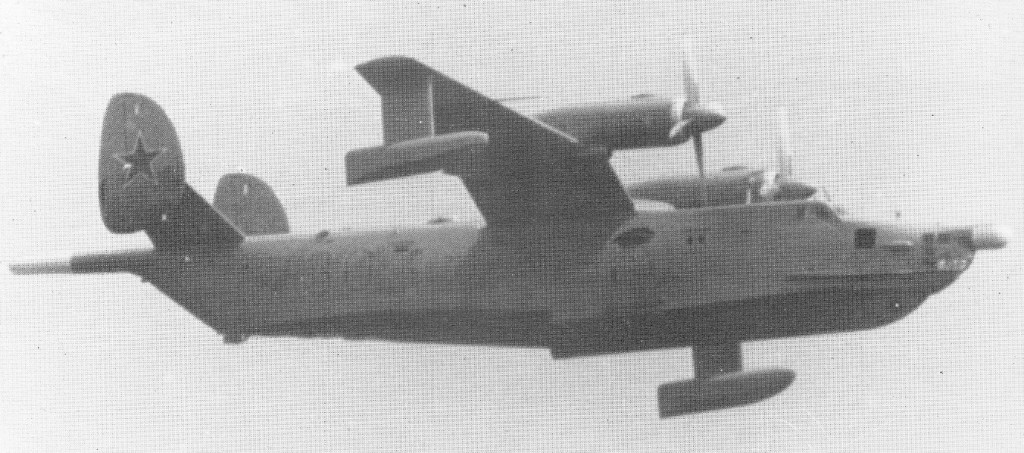
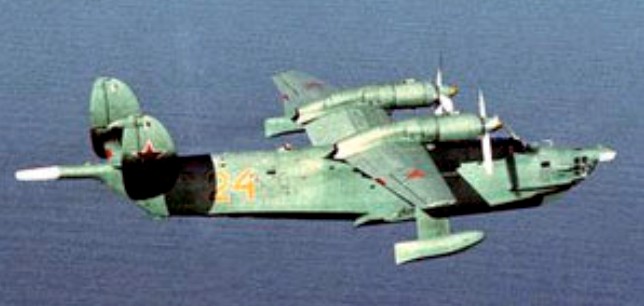
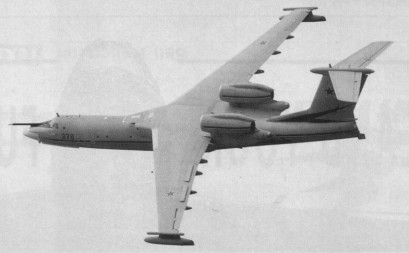
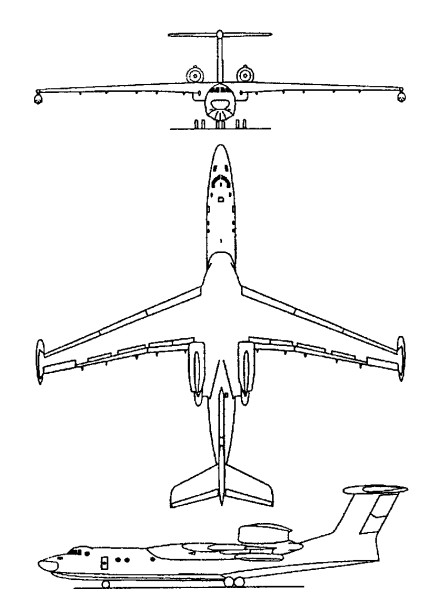
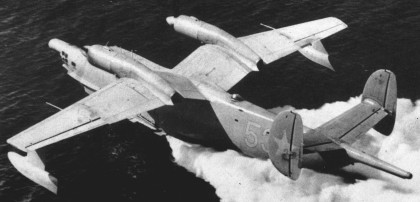
The A-40/Be-40 Albatross Mermaid turbofan-powered intermediate-range antisubmarine, search-and-rescue and patrol amphibian, first flown December 1986 and ordered for the Russian Navy in 1992 but not funded.
The A-40 amphibian aircraft is intended for antisubmarine warfare in the near coastal zone at any time of the day and year, in VFR and IFR weather conditions.
The aircraft is provided with an inflight refueling system.
Its onboard equipment provides for automatic solution of flight/navigation problems, search, detection, tracking and destruction of hostile submarines both in surface and submerged positions and on the sea bottom.
The equipment comprises a search/sighting system, a flight control and navigation complex, communications facilities, and other equipment. The search/sighting system consists of radar, sonar and magnetometric subsystems.
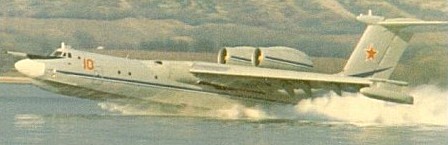
The engines are started by an auxiliary power unit and the cruise turbofans are equipped with a thrust reverser, thereby reducing the landing roll and the abortive takeoff distance.
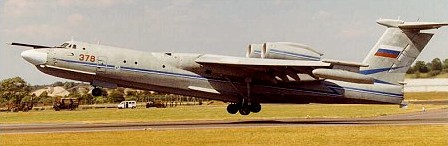
The type first showed up in US reconnaissance photographs during 1988 satellite passes over Taganrog but the first “closeups” came with the amphibian’s surprise debut at an air show in August 1989. NATO dubbed the aircraft, christened Albatross by the G M Beriev Taganrog Aviation Scientific Engineering Complex, “Mermaid”.
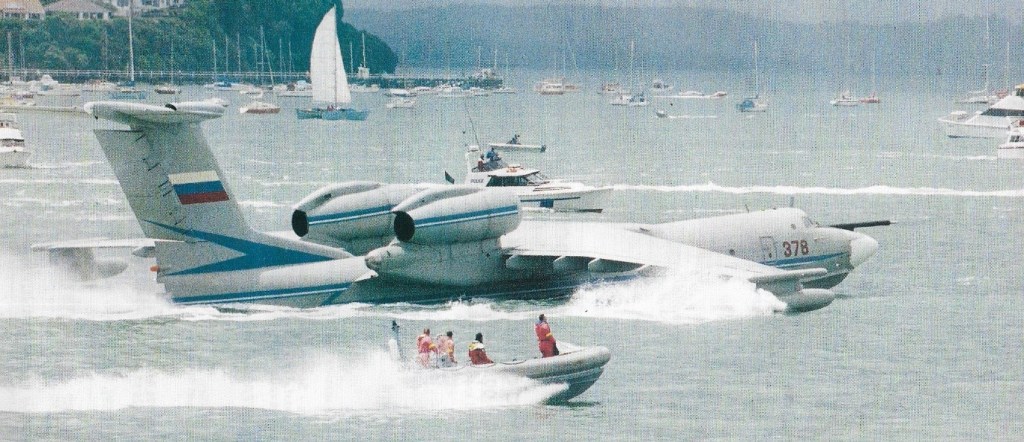
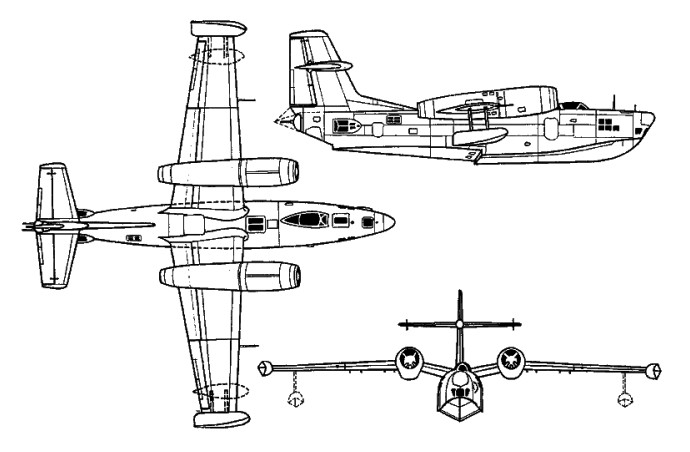
A requirement for the two large 26,455 lb static thrust PERM Soloviev D 30KPV engines to be placed away from ingesting water saw an over wing configuration incorporated in the design. The rear part of the pylon ac¬commodates RD 60 booster engines providing an increase in thrust by 6065 lbs st apiece. In the SAR role the A 40 can cover 1240 nm (2000km) from its base and take on board up to 54 survivors. The crew usually totals five plus a rescue team of around four to six.
An improved search-and-rescue variant became the Be-42 (sometimes referred to in the West as A-45).
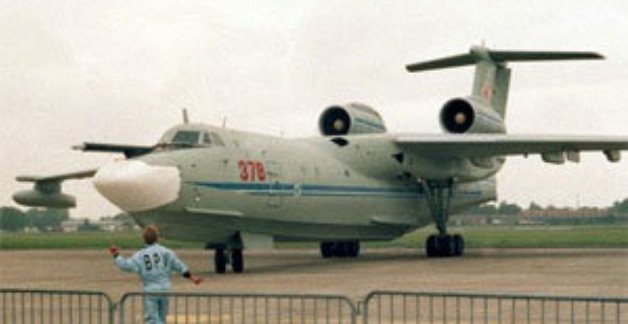
Gallery

Engines: 2 x PERM Soloviev D-30KPV turbofan, 117.7 kN (26,455 lb) and 2 x Klimov RD-36-35AFV, 24.5 kN
Take-off weight: 86000 kg / 189599 lb
Wingspan: 41.6 m / 136 ft 6 in
Length: 43.8 m / 143 ft 8 in
Height: 11.1 m / 36 ft 5 in
Wing area: 200.0 sqm / 2152.78 sq ft
Max. speed: 760 km/h / 472 mph
Cruise speed: 720 km/h / 447 mph
Ceiling: 9700 m / 31800 ft
Range w/max.fuel: 5500 km / 3418 miles
Range w/max.payload: 4100 km / 2548 miles
Armament: 6500kg
Crew: 8
Beriev Be-12 / M-12

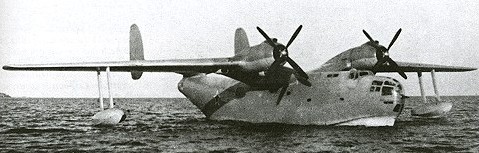
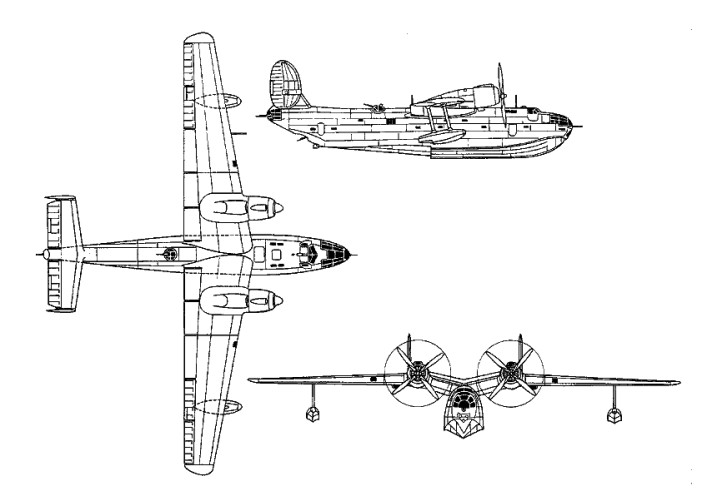
The lessons learned in the design of the R-1 and Be-10 were incorporated in the design of a much improved flying-boat based loosely on the Be-6 and identified originally by NATO as a re-engined version of the older type.

Beriev Be-12 Article

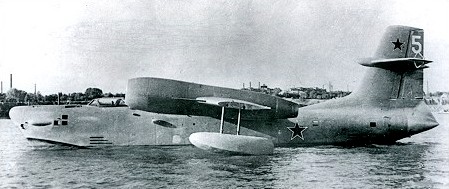
The Be-12 Tchaika (Seagull), designated M-12 in AV-MF service, has the gull-wing layout and twin tail of its predecessor. The greater power and lighter weight of the turboprop engines have permitted a forward extension of the hull, with a new planing bottom. The prominent spray suppressor around the bows of the Be-10 is also a feature of the turboprop aircraft.

The addition of a retractable landing gear makes the Be-12 amphibious. MAD (magnetic anomaly detection) gear extends 15 ft behind the tail. The search and mapping radar projects far ahead of the glazed nose, and much of the hull is filled with equipment and there is a weapon and sonobuoy bay aft of the wing with watertight doors in the bottom aft of the step.

The Be-12 turboprop aircraft, first seen at the 1961 Moscow Aviation Day at the same time as the swept-wing Be-10, has fast become the Soviet Union’s standard large marine aircraft.
The weight-lifting capability of the Be-12 was demonstrated in a series of class records for amphibians set up in 1964, 1968 and 1970, suggesting a normal weapons load as high as 5000kg. The Be-12 can load on the water through large side hatches in the rear fuselage, and stores can be dropped through a watertight hatch in the hull aft of the step.
Be-12s have set many class records for speed, height and load-carrying. They were based all around the Soviet shores and in Egypt and, possibly, other countries.
NATO code name ‘Mail’.
It is also believed to have been used for mapping, geophysical survey and utility transport. By Soviet standards the type was not built in large numbers, only 95 being reported in service in the late 1980s.

Be-12 (M-12) Tchaika
Engines: 2 x Ivchenko AI-20D single-shaft turboprops, 4,190 ehp / 2940kW
Wing span: 97 ft 6 in (29.7 m)
Wing area : 1030.007 sqft / 95.69 sq.m
Wing load : 63.14 lbs/sq.ft / 308.00 kg/sq.m
Length overall: 99 ft (30.2 m)
Height on land: 22 ft 1½ in (7 m)
Empty weight: approx 48.000 lb (21.772 kg)
Max take off weight : 65047.5 lb / 29500.0 kg
Max. speed : 329 kts / 610 km/h / 379mph
Cruising speed 199 mph (320 km/h)
Initial climb rate : 2992.13 ft/min / 15.20 m/s
Service ceiling 38.000 ft (11582 m)
Range with full equipment: 2160 nm / 2.485 miles (4000 km)
Armament: at least 6600 lb (3000 kg) sonobuoys and AS bombs in internal weapon bay; one to three external hard points for stores under each outer wing.
Crew: 6-10

Beriev Be-10 / M-10        

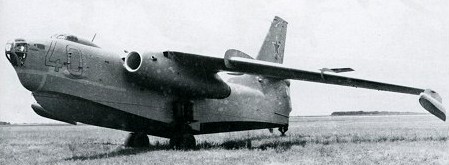
Developed from the R-1, the Be-10 flew for the first time on 20 July 1956 and was first seen in public on the 1961 Soviet Aviation Day, when four of the type flew past in formation.

Beriev Be-10 Article

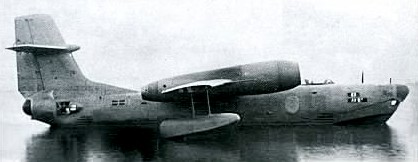
The Beriev Be-10 ‘Mallow’ has the distinction of being the only turbojet-powered flying-boat in the world to have attained true production status. During 1961, and under the designation M-10, the type established 12 world class records. Among them were a speed record over a 15/25km course of 912km/h, piloted by Nikolai Andrievskii, and a speed of 875.86km/h over a 1000km closed circuit with a payload of 5000kg and an altitude record of 12733m with a 10000kg payload, with Georgi Buryanov at the controls.

The all-metal Be-10 was a high-wing monoplane with sharply sweptback wings; these had considerable anhedral, and incorporated two wing fences and a fixed wing-tip stabilising float on each wing. Armament comprised two 23mm NS-23 cannon in the nose, plus two more operated under radar control in a tail barbette.

Engines: 2 x Lyulka AL-7PB turbojets, 6500kg each.
Take-off weight: 46500 kg / 102515 lb
Empty weight: 24100 kg / 53132 lb
Wingspan: 22.3 m / 73 ft 2 in
Length: 31.1 m / 102 ft 0 in
Wing area: 111.8 sqm / 1203.40 sq ft
Max. speed: 912 km/h / 567 mph
Ceiling: 14962 m / 49100 ft
Range: 4800 km / 2983 miles
Armament: 4 x 23mm cannon, 2000kg of weapons

Beriev Be-8

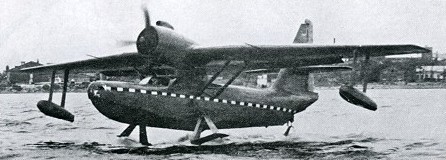
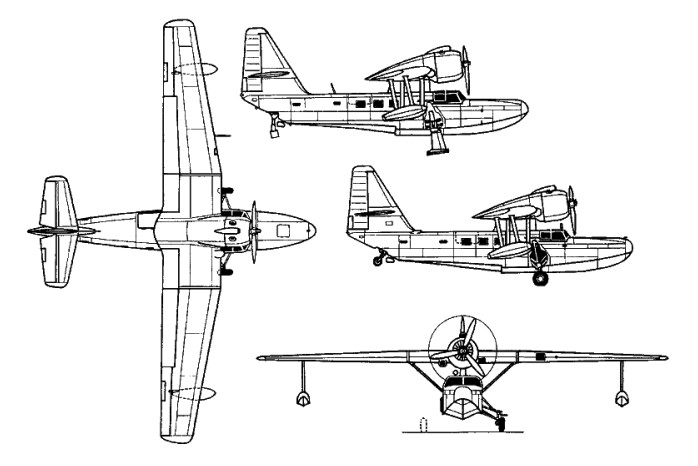
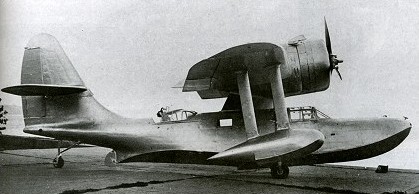
The Beriev Be-8 ‘Mole’ of 1947 was an all-metal utility amphibian flying-boat, with the main units of the landing gear retracting into the sides of the hull just below the pilot’s cabin. The wing was supported above the hull by a central pylon, together with a pair of parallel struts on each side. The passenger cabin accommodated six. A small batch of Be-8s was built, and examples were used in a variety of roles including flying ambulance, liaison, and training.

Engine: 1 x Shvetsov ASh-21 radial, 522kW
Take-off weight: 3624 kg / 7990 lb
Loaded weight: 2815 kg / 6206 lb
Wingspan: 19.0 m / 62 ft 4 in
Length: 13.0 m / 42 ft 8 in
Wing area: 40.0 sqm / 430.56 sq ft
Max. speed: 266 km/h / 165 mph
Ceiling: 5550 m 18200 ft
Range: 810 km / 503 miles

Beriev R-1

The first jet-propelled flying boat built in the USSR. The R-1 was first flown on 30 May 1952 by I M Sukhomlin. Only one prototype built.

Engine: 2 x VK-1, 2700kg each
Take-off weight: 20000 kg / 44093 lb
Wingspan: 20.0 m / 65 ft 7 in
Length: 19.8 m / 64 ft 12 in
Height: 7.1 m / 23 ft 4 in
Wing area: 58.0 sqm / 624.31 sq ft
Max. speed: 800 km/h / 497 mph
Ceiling: 11500 m / 37750 ft

Beriev LL-143 / Be-6

LL-143

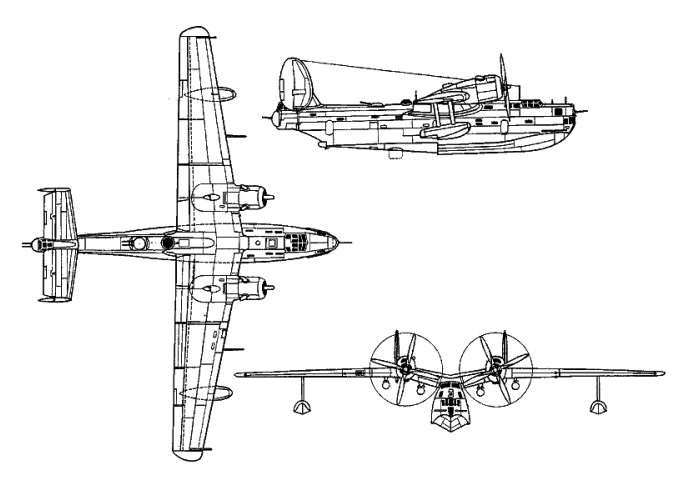
Development of a large maritime reconnaissance and bombing flying-boat was initiated by the Beriev design bureau in 1943, and the Beriev LL-143 prototype flew for the first time on 6 September 1945. An all-metal high-wing monoplane, it was powered by two 1492kW Shvetsov ASh-72 radial engines. Armament comprised twin NS-23 23mm cannon in a tail turret (behind the twin fins and rudders) and similar provision in a remotely controlled dorsal barbette. A single NS-23 cannon was installed in the bow turret.

Beriev LL-143 / Be-6 Article

The LL-143 was developed into the Beriev Be-6 production aircraft, the first example of which was flown by M. I. Tsepilov in 1949. It differed from the prototype by having more sophisticated equipment, which included a retractable radome aft of the second step, and a redesigned nose without cannon armament. At a later stage the tail gun position was replaced by MAD (magnetic anomaly detection) equipment. The Be-6, to which NATO allocated the code-name ‘Madge’, carried a heavy offensive load comprising various combinations of mines, depth charges or torpedoes on underwing pylons outboard of the engines.

Be-6

Be-6s operated patrol, maritime reconnaissance and anti-submarine duties until the early 1970s, and a few remained in service on transport or fishery patrol duties into the late 1970s.

LL-143
Take-off weight: 21300 kg / 46959 lb
Empty weight: 15110 kg / 33312 lb
Wingspan: 33.0 m / 108 ft 3 in
Length: 23.0 m / 75 ft 6 in
Height: 7.5 m / 24 ft 7 in
Wing area: 120.0 sqm / 1291.67 sq ft
Max. speed: 371 km/h / 231 mph
Ceiling: 6000 m / 19700 ft
Range: 5100 km / 3169 miles

Be-6
Engine : 2 x ASh-73TK, 1765kW, 2300 hp
Take-off weight; 23400 kg / 51588 lb
Empty weight: 18827 kg / 41507 lb
Wingspan: 33.0 m / 108 ft 3 in
Length: 23.7 m / 77 ft 9 in
Height: 7.6 m / 24 ft 11 in
Wing area: 120.0 sqm / 1291.67 sq ft
Max. speed: 400 km/h / 249 mph
Range: 4900 km / 3045 miles
Crew: 8
Armament: 4 x 23mm machine-guns

Beriev LL-143
Beriev Be-6

Beriev MDR-5

The first prototype flew as an amphibian in May 1938. The second prototype was built as a flying boat. Only two were built.

Engine: 2 x M-87A, 950hp
Take-off weight: 8795 kg / 19390 lb
Empty weight: 6083 kg / 13411 lb
Wingspan: 25.0 m / 82 ft 0 in
Length: 15.9 m / 52 ft 2 in
Wing area: 78.5sqm / 844.97 sq ft
Max. speed: 350 km/h / 217 mph
Ceiling: 8700 m / 28550 ft
Range: 1150-2415 km / 715 – 1501 miles

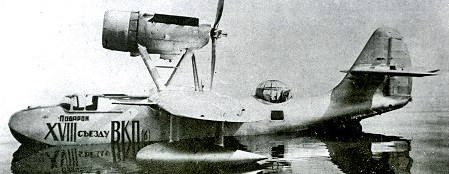
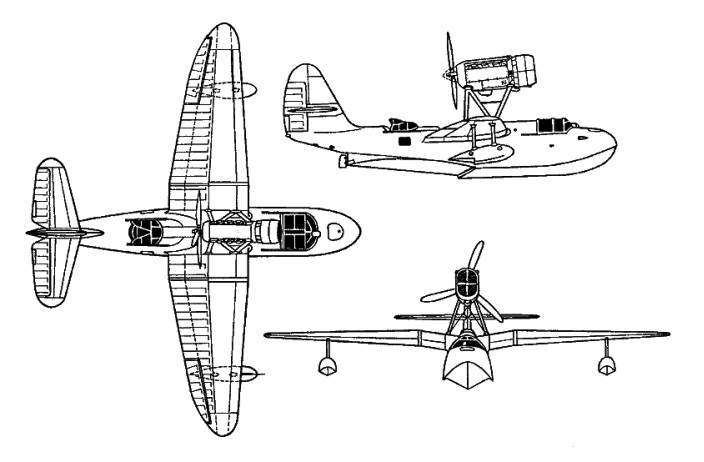
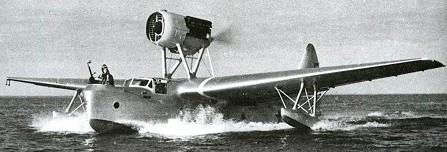
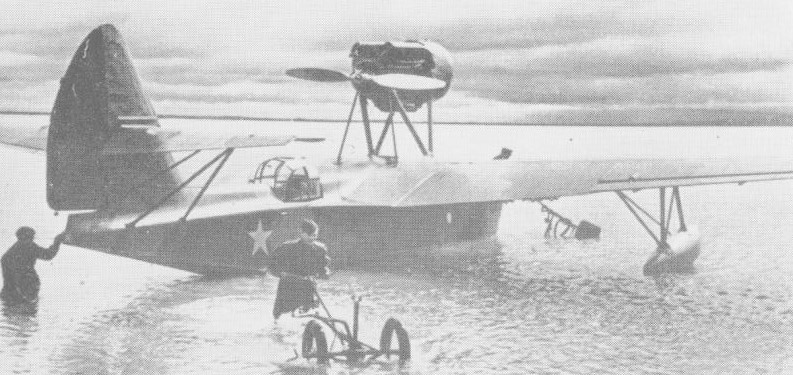
Beriev MBR-2 / MP-1 / Be-2

Georgii Mikhailovich Beriev produced his first original design, Aircraft No. 25, at the Menzhinsky plant in Moscow in 1932. The B.M.W. VIF-powered prototype was transported to Sevastopol on the Black Sea for flight tests, and proving successful the new flying-boat went into production as the MBR-2 (Morskoy Blizhnii Razvedchik, or naval short-range reconnaissance). In production form it was powered by a Soviet-built M-17B inline engine.
Deliveries of the MBR-2M-17 intended for use in the short-range bombing and maritime reconnaissance roles, began in 1934. It was a shoulder-wing cantilever monoplane, with its M-17B engine mounted on a pair of N-struts over the wing; it had a two-step wooden hull with plywood covering, and the pilot’s cockpit located just in front of the wing. A strut-braced horizontal tailplane was set high on the single fin. Bow and midships gunners each had a single 7.62mm PV-1 machine-gun.

In 1935, with the first production version already in service, Beriev carried out a redesign of the MBR-2. The pilot’s cockpit was fully enclosed, and the midships gunner’s position protected by a glazed cupola. The M-17B engine was replaced by the M-34NB (redesignated AM-34NB in 1937) of 619kW, and a new curved fin and rudder replaced the original angular vertical tailplane. ShKAS machine-guns supplanted the obsolete PV-1s. The new version was placed in large-scale production, which continued until 1942, when 1,300 of all variants had been built. The MBR-2AM-34 served with all four main Soviet fleets and saw considerable service, first during the Winter War of 1939-40 with Finland, and then throughout the Great Patriotic War of 1941-5. It was tough, reliable and could be fitted with wheel or ski landing gear. Post-war, the MBR-2 served for nearly a decade on fishery patrol duties; it received the NATO codename ‘Mote’.

Variants:

Beriev MBR-2AM-34
In 1935, with the first production version already in service, Beriev carried out a radical redesign of the MBR-2. The pilot’s cockpit was fully enclosed, and the midships gunner’s position protected by a glazed cupola; the M-17B engine was replaced by the M-34NB (redesignated AM-34NB in 1937) of 619kW; an entirely new curved fin and rudder replaced the original angular vertical tailplane; and ShKAS machine-guns supplanted the obsolete PV-1s.

Beriev MBR-2M-103
In 1937 a standard MBR-2AM-34 was modified to take a more powerful M-103 engine, but no production of this version was undertaken

Beriev MP-1
This was a civil passenger version of the MBR-2M-17; it carried six passengers in an enclosed cabin, or an equivalent weight of freight; used in some numbers by Soviet Civil Aviation

Beriev MP-1bis
A 1937 civil development of the MBR-2AM-34, with similar capacity to that of the MP-1; one MP-1 bis, piloted by Paulina Osipenka, established a number of women’s world records; between 22 and 25 May 1937 she attained respectively 7605m with a 500kg payload and 7000m with a 1000kg payload; on 2 July the same year she made a non-stop flight of 2416km between Novgorod and Archangelsk.

Specifications:

MBR-2M-17
Engine: 2 x M-17B inline piston, 507kW
Take-off weight: 4100 kg / 9039 lb
Empty weight: 2475 kg / 5456 lb
Wingspan: 19.0 m / 62 ft 4 in
Length: 13.5 m / 44 ft 3 in
Wing area: 55.0 sqm / 592.01 sq ft
Max. speed: 200 km/h / 124 mph
Ceiling: 4400 m / 14450 ft
Range: 650 km / 404 miles
Crew: 4
Armament: 2 x 7.62mm machine-guns, 500kg of bombs

MBR-2AM-34
Max speed: 245km/h
Range: 800km
Service ceiling: 7150m
Empty weight: 2718kg
Loaded weight: 4000kg

MBR-2bis
Engine: 1 x AM-34NB, 860hp
Length: 44.29ft (13.5m)
Width: 62.34ft (19.00m)
Height: 12.47ft (3.80m)
Maximum Take-Off Weight: 9,359lbs (4,245kg)
Maximum Speed: 154mph (248kmh; 134kts)
Maximum Range: 870miles (1,400km)
Service Ceiling: 19,685ft (6,000m)
Armament: 2 x 7.62mm machine gun
Bombload: 661lbs (300kg)
Crew: 4-5
Hardpoints: 2

Beriev KOR-2 / Be-4

More or less in parallel with the construction and development of the KOR-1 floatplane, The Beriev bureau worked on the design of a small flying-boat intended to fulfil the same requirement as the hastily developed KOR-1, but to provide much enhanced performance.
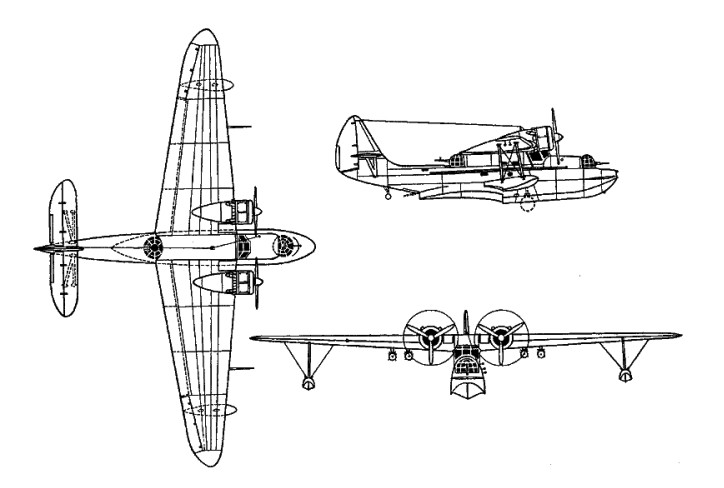
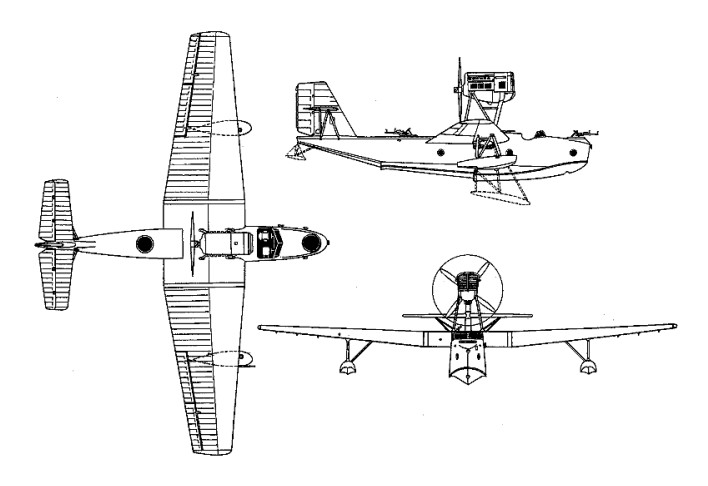
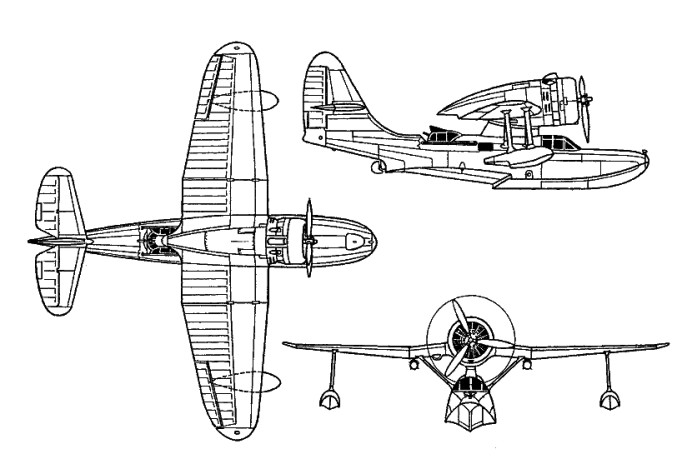
In configuration the Beriev KOR-2 was a parasol-wing monoplane, the wing pylon-mounted above the stepped flying-boat hull, and braced by two streamlined struts on each side.
An inverted gull wing, with a wing-mounted engine and three-bladed controllable-pitch propeller. The tail unit was similar in configuration to that of the KOR-1, except that the high-mounted tailplane was a strut-free cantilever structure.
First flown in 1940, this Beriev design was built in a factory at Taganrog, on the shore of the Sea of Azov, only a small number of these aircraft had been completed and delivered to the Soviet navy before the Taganrog area was over-run by the invading Germans in the autumn of 1941. Production of the KOR-2, or Beriev Be-4 as it had then been redesignated, was resumed at a Central Asian factory during 1942, but no records of the number constructed have so far been discovered.

Engine: 1 x Shvetsov M-62 radial, 671kW
Take-off weight: 2760 kg / 6085 lb
Empty weight: 2055 kg / 4531 lb
Wingspan: 12.0 m / 39 ft 4 in
Length: 10.5 m / 34 ft 5 in
Height: 4.05 m / 13 ft 3 in
Wing area: 25.5 sq.m / 274.48 sq.ft
Max. speed: 360 km/h / 224 mph
Ceiling: 8100 m / 26600 ft
Range: 950 km / 590 miles
Armament: 1 x 7.62mm machine-gun, 300kg of bombs