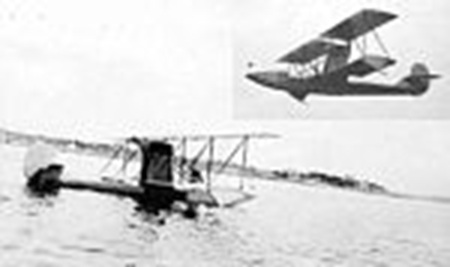
The Burgess K was flown in April 1913 with a 70 hp Renault pusher engine. The two-bay biplane wings had inverted V-struts with a single tube metal spar, and wooden hull.
The single example built, purchased by the Navy, was taken into service as the D-1 (later AB-6) and was destroyed in a crash in early 1914.
Burgess K Engine: 70 hp Renault Span: upper 40’9″ lower 35’5″ Length: 30’9″ Seats: 2
In 1946 Kenneth L. Bunyard designed a lightweight amphibian Flying Boat. The BAX-3 was a three seat, all wood construction aircraft with a cantilever wing and was powered a 130 hp Franklin 5A pusher unit.
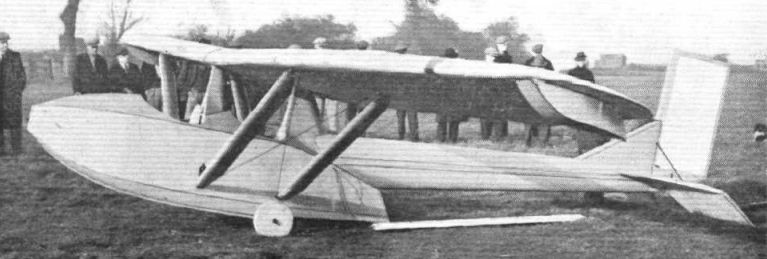
In 1931 K. Bunyard designed and built a small biplane flying-boat, following this with a design for an unusual amphibian which failed to materialize in prototype form. At the end of the Second World War he began production of a three-seat lightweight amphibian flying-boat know as the Bunyard BAX-3 Sportsman. A four-seat version was designated BAX-4.
The company was founded in 1931 in Westchester, N.Y. and around 1946 had a slight name change and moved to Flushing, N.Y.
The Brown Aeronautical Company of Baltimore, Maryland built its second hydroplane design, aptly named Lord Baltimore II in 1911. This design is sometimes described as an amphibian, but this cannot be proved from the photograph. The design had a strong similarity to the Curtiss Hydroplanes, a not uncommon feat as these Curtiss designs were leading the field.
Ray Broome designed and built two ultralight aircraft in the late 1980s early 1990s based on the Resurgam parameters.
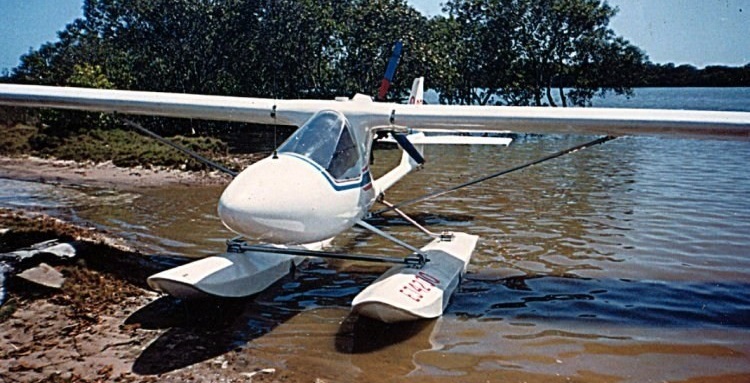
Number one was completed in 1987 as a landplane with a tricycle undercarriage although it was operated on floats for a time. The fuselage of the first aircraft was built solely from fibreglass. It was sold unregistered in 1991 and reconfigured as a taildragger and was still flying in NSW, Australia, as late as mid-2014.
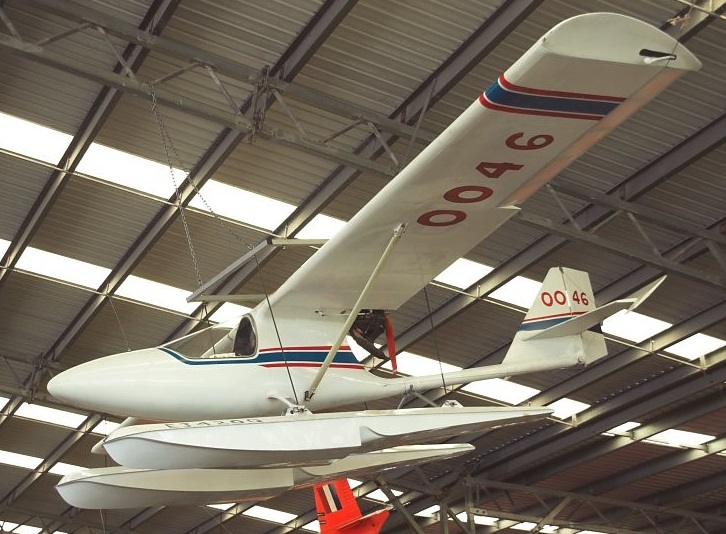
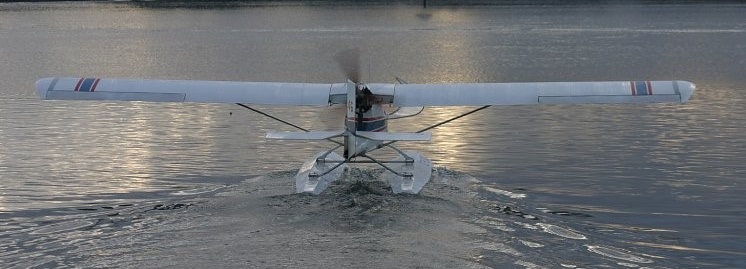
The second aircraft was built in 1992 and took up the registration 10-0046 C/N 2. It was always operated as a floatplane, mostly around the Moreton Bay area until 2008 by which time it had accumulated approximately 330 hours in service.
The fuselages of both aircraft were built on a mould taken from the front section of a damaged Club Libelle glider which inspired the name LeBeau. The composite was 6mm Kevlar foam sandwich. The rear fuselage is an aluminium tube with the tail sections having timber ribs on aluminium spars. The wings similarly have timber ribs with a double sided plywood main spar and plywood nose skin. Wing, rudder and tailplane are covered with Stits aircraft fabric painted in two-pack.
second aircraft
The floats are single skin fibreglass with plywood ribs and sealed flotation chambers. The engine is a 2-stroke, 4-cylinder Konig SD-570, rated at 28hp at 4200 rpm with a toothed belt reduction drive. The propellor is a 3 bladed ground adjustable in pitch. A third nose cone and fuselage was moulded but not taken any further.
second aircraft
The second aircraft was delivered by road to QAM Caloundra by the builder/donor Ray Broome.
The 1932 B.A.C. VIII was a two-seat flying boat glider using B.A.C. VII wings and tail. Nicknamed the “Bat-Boat” after similar craft described in a short story by Rudyard Kipling, it was tested in August 1931 by being towed behind a speed-boat on the River Medway at Rochester. On 7 December that year it was demonstrated from the Welsh Harp reservoir at Hendon.
Belite Aircraft has developed the single-seat Sealite amphibious floatplane that weighs less than 338 pounds empty and meets FAR 103 requirements for ultralight float-equipped “vehicles,” as the FAA calls them.
The Sealite flew in December 2013, the 110th anniversary of the Wright brothers’ first flight at Kitty Hawk. Belite President James Wiebe made the first flight – “I was pleased with this test flight. It demonstrated the performance and utility possible with a single-place amphibious aircraft. The ground roll was very short, the climb rate was impressive, and the landing manners were easy and benign”.
The first flight was from a grass strip but water tests are planned. The vehicle is an adaptation of the company’s UltraCub model. It made the weight with extensive use of carbon fiber in the floats and wing spars. The wings and floats weigh only 20 pounds each.
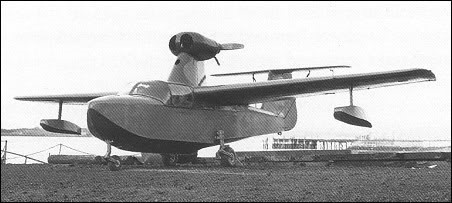
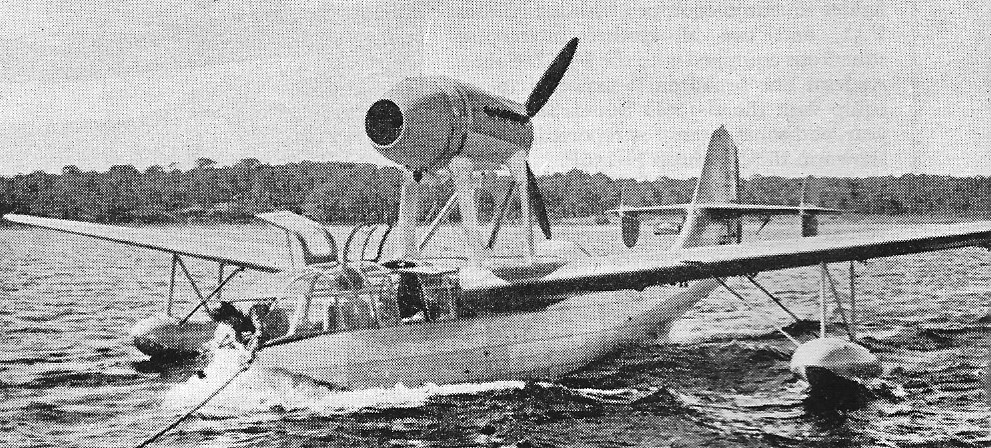
The Breguet Br.790 Nautilus light reconnaissance flying boat had completed flight tests by November 1939, and preparations were being made for the quantity manufacture of the type for the French Navy at the Toulon Arsenal at the time of the armistice.




 All Aero