Colonial Aircraft Corp

Founded as a side venture in 1945 by David B. Thurston, an aeronautical engineer at Grumman, and Herbert P. Lindbad (working at Republic). Colonial built its first aircraft at Long Island, New York, during 1947 and 1948, and after receiving the aircraft’s Type Certificate in 1955, the company moved to a new manufacturing facility in Sanford, Maine.

After Colonial was acquired by Lake Aircraft Corp in 1959, with John F. Strayer as the new President, Thurston left the company while Lindbad stayed on.
Collins Aero W-7 Dipper

The Dipper Amphibian is a two-seat amphibian of metal and glassfibre construction (first flown 1982).
A plans only design, not in production.

Reports that the boat hull of the Aqua II was used in the homebuilt Collins W-7 Dipper, flown August 28, 1982 as N25WC, are incorrect. The Collins Dipper project was converted from a damaged Cessna 150 and had a new boat hull fitted below the fuselage. The boat hull was designed by the Aqua designer Meredith Wardle and was about 92% in size of the Aqua II boat hull.

Engine: Lycoming O-360, 180 hp.
HP range: 150-180.
Speed max: 124 mph.
Cruise: 120 mph.
Range: 520 sm.
Stall: 48 mph.
ROC: 1400 fpm.
Take-off dist: 600 ft.
Landing dist: 800 ft.
Service ceiling: 18,000 ft.
Fuel cap: 39 USG.
Weight empty: 1060 lbs.
Gross: 1760 lbs.
Height: 9.33 ft.
Length: 25.33 ft.
Wing span: 33.33 ft.
Wing area: 160 sq.ft.
Seats: 2.
Landing gear: retractable nose wheel.

Colgate-Larsen CL-15 / SL-15 / Spencer-Larsen SL-12C

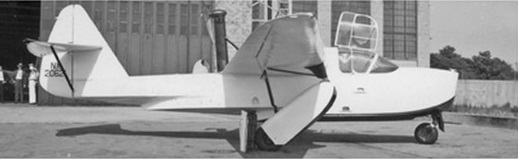
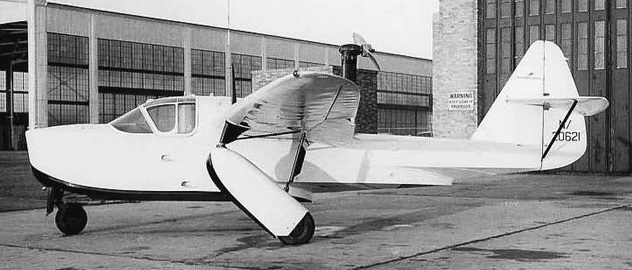
Spencer-Larsen SL-12C NX20621

Spencer and ex Sikorsky engineer Vincent A. Larsen designed the single engine SL-12C amphibian in 1969. It was a two-place, high wing monoplane. The main wheels located in rearward-retracting wing floats; motor in hull drove the prop on a shaft above the fuselage.

First flying in May 1939 registered NX20621, piloted by Percy Spencer, flight tests exposed so many problems with the design and construction that the plane was dismantled after logging 10 hours, and the company reorganized as Colgate-Larsen.

Colgate-Larsen Aircraft Corporation succeeded Spencer-Larsen Aircraft Corporation around 1940, continuing its work at Amityville, Long Island, NY, on novel-design small four-seat amphibian flying-boat, the CL-15 (formerly SL-15).

Spencer leaves Spencer-Larsen in September 1940 and starts the work on his own S-12 Air Car amphibian design.

Engine: Menasco D-4, 150 hp
Wingspan: 40 ft
Length: 27 ft 10 in

Christofferson Hydro

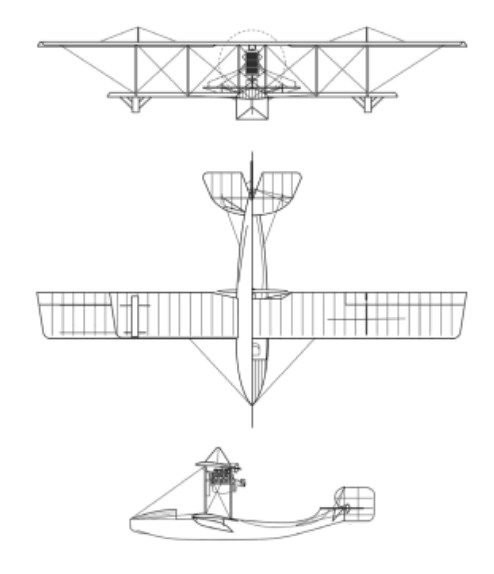
The Hydro flying boat built by Christofferson Aviation flew in 1913, and was probably designed by Alan Loughead who worked for Christofferson at the time.

A two-bay biplane, of the three or four examples known to have been completed in 1914, two were sold to explorer Roald Amundsen for a proposed Arctic flight (that never happened), and one was used by Silas Christofferson’s San Francisco-Oakland Aerial ferry in 1914. This was the second scheduled airline to operate in the US.

Another Hydro is listed as having been sold to Japan.

Engine: Hall-Scott V-8, 120 hp
Span: upper: 49′ lower 33’6″
Length: 28′