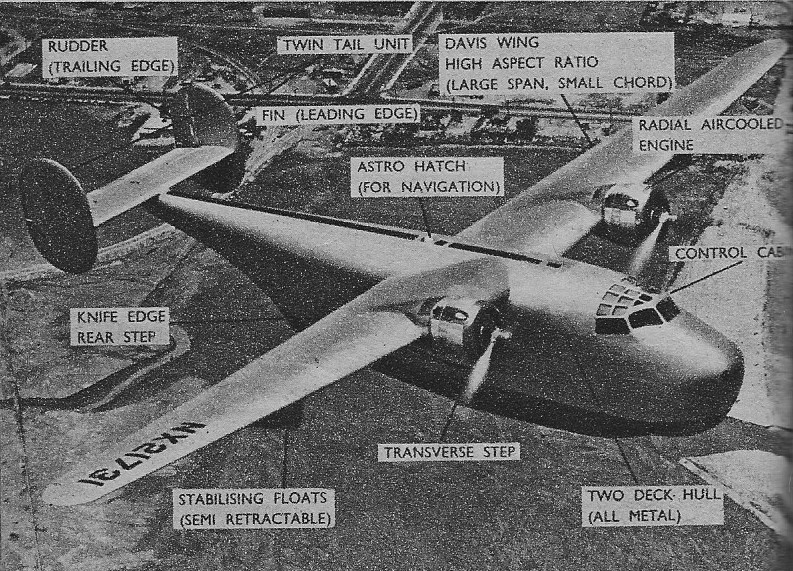
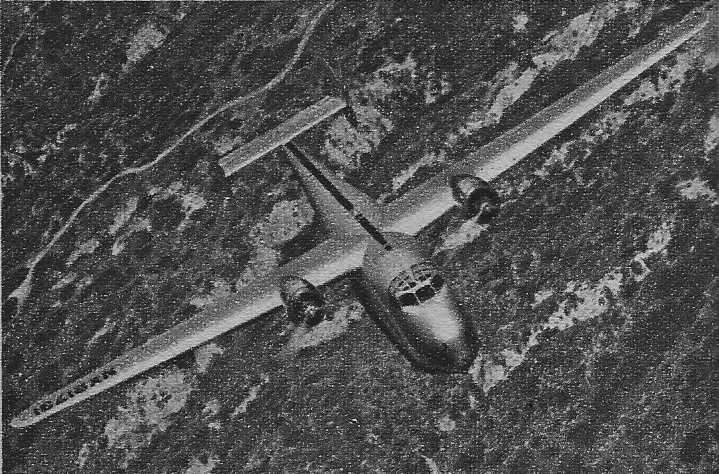
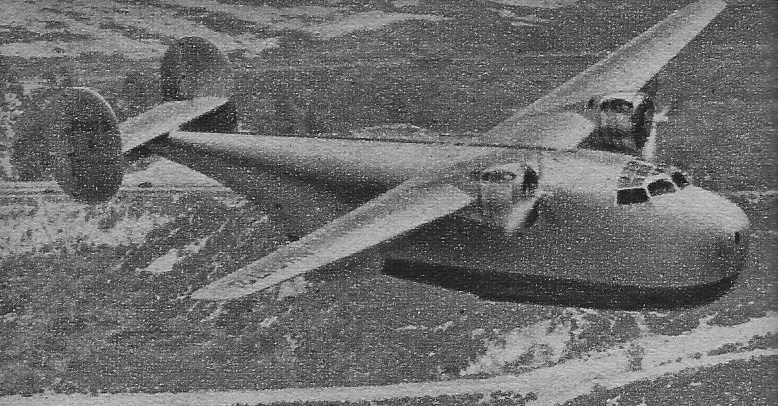
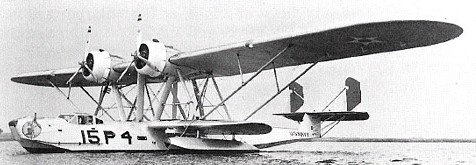
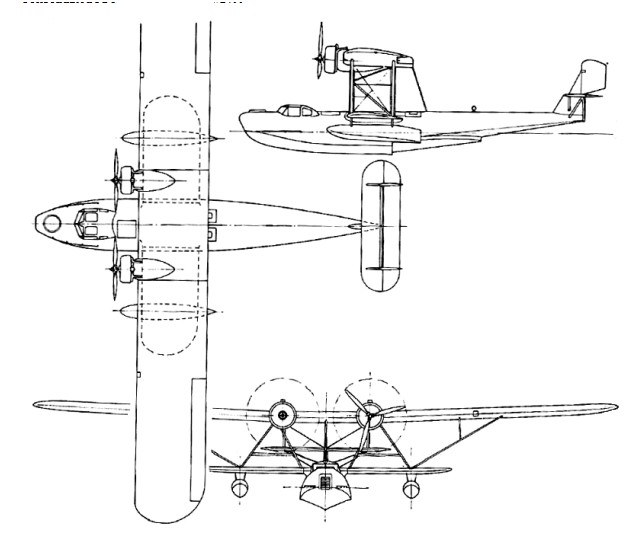
The Davis Wing emerged from the mind of David R. Davis, an aeronautical engineer working on a new wing planform, a planform utilizing a short chord and high aspect ratio along with thickness suitable to fit engines and fuel while maintaining efficiency. His meeting in the summer of 1937 with Consolidated President Reuben H. Fleet allowed the wing design to flourish as one of the most utilized wing planforms of World War 2. The new wing was intended for use on the company’s new flying boat design – the Model 31. Despite the Model 31’s cancellation (only one example emerged from development), the wing was seen as a good step forward in the design of the upcoming B-24 Liberator and became a major Consolidated design mainstay thereafter.
Engine: 2 x Wright Duplex Cyclone, 2000 hp Wingspan: 110 fy 0 in Length: 73 ft 0 in Top speed: 285 mph Range: 7000 mi at 220 mph
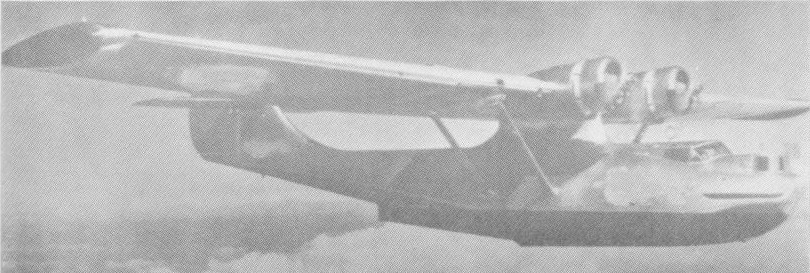
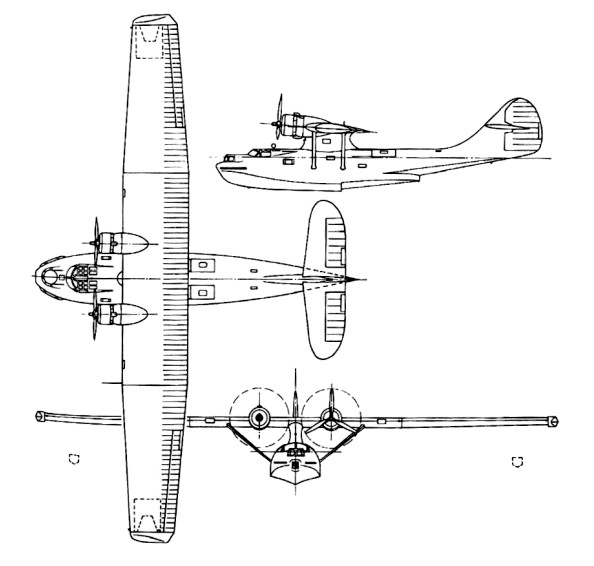
Long range sea surveillance flying boat, USA, 1939
Engine: 2 x Wright R 3350-8 Cyclone, 2268 hp Length: 74.081 ft / 22.58 m Heigh : 25.164 ft / 7.67 m Wingspan: 110.007 ft / 33.53 m Wing area: 1047.983 sqft / 97.36 sq.m Max take off weight: 48007.3 lbs / 21772.0 kg Weight empty: 29339.7 lb / 13306.0 kg Max. speed: 215 kts / 398 km/h Cruising speed: 118 kts / 219 km/h Service ceiling: 21391 ft / 6520 m Wing load: 45.92 lb/sq.ft / 224.00 kg/sq.m Range: 2850 nm / 5279 km Armament: 1x 37mm Cannon, 4x cal.50 MG (12,7mm)
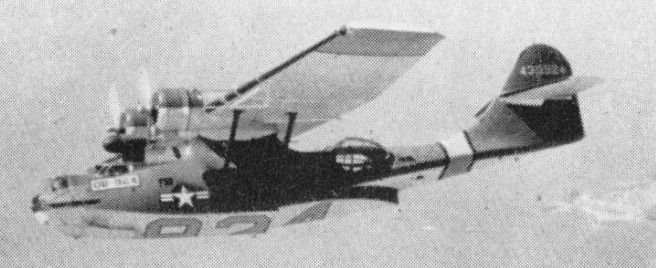
The Consolidated PB2Y Coronado series was a planned replacement for the 1930’s era Consolidated PBY Catalina design already in place.
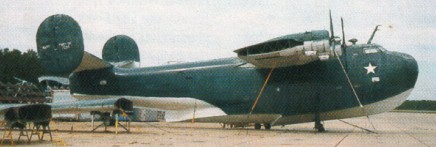
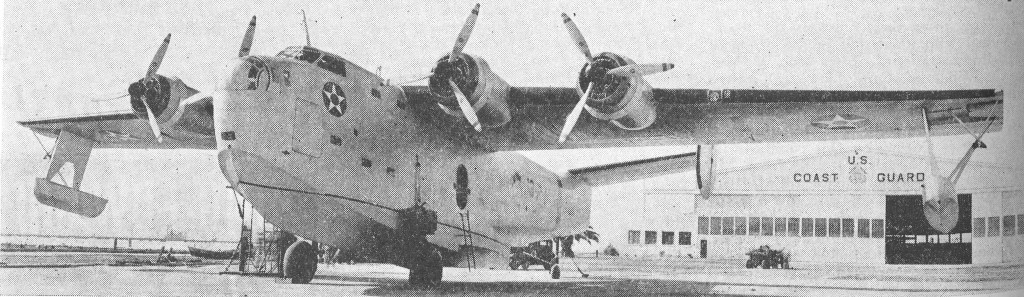
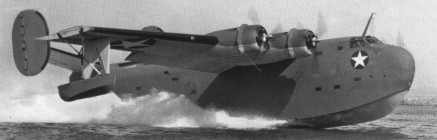
The PB2Y Coronado first appeared in the XPB2Y-1 prototype form, was first flown in December 1937, and delivered to the US Navy in August 1938. After service trials it served for some time as Flagship of Aircraft, Scouting Force, US Navy. It suffered almost immediately with poor water-based handling and equally dangerous in-air instability issues related largely to the single fin tail design. The tail section was redesigned to incorporate twin-rounded vertical fins which helped iron out the handling issues. The US Navy took this redesigned model as the PB2Y-2 and continued testing as needed. Results necessitated the addition of better armor protection and self sealing fuel tanks which further produced the PB2Y-3. This model would go on to become the definitive production model and also join service in limited numbers with the British RAF.
The first PB2Y-2 (the production development) went into service in January 1941. The PB2Y-3 was ordered in quantity in 1941 and remained in production until 1944 as a long-range patrol-bomber flying-boat.
The large ASV radome was visible just aft of the cockpit. Wings were high mounted and forward on the tall fuselage and featured retractable wing-tip floats which helped in building better aerodynamic tendencies (this function was similar to the PBY Catalina). The twin fin tail section was also mounted high on the design at rear.
Armament of the Coronado was twin 12.7mm (.50 caliber) M2 machine guns housed in a bow turret, a dorsal turret amidships and a rear turret just aft and between the twin tail fins. An additional 12.7mm machine gun was positioned to fire from hatches in the beam position on either side. The Coronado could fulfill an offensive role by being fitted with up to 1,000 pounds of bombs (held internally in the wing roots) or two Mark 13 type torpedoes held externally.
Despite being of sound design, the Coronado did not dislodge the PBY Catalinas in long distance reconnoitering sorties. Additionally, the Coronado was not implemented greatly as a bomber or anti-ship element, being superseded in this role by the equally capable Consolidated PB4Y-1 series, and aircraft similar in scope but dedicated to land bases and thus not needing any specialist training for water operations.
Many Coronado flying-boats were converted into transports under the designation PB2Y-3R, with military equipment removed, nose and tail turret positions faired over and the four 894kW Pratt & Whitney R-1830-88 Twin Wasp engines replaced by R-1830-92. Accommodation in this version was for a crew of five (instead of ten) and 44 passengers; 7,257kg of cargo; or 24 passengers and 3,900kg of cargo. A naval ambulance version of the Coronado was also produced as the PB2Y-5H, accommodating 25 stretchers.
In British service, the PB4Y Coronado was known as the Coronado Mk I, of which some 10 PB2Y-3 models were acquired by RAF Transport Command for transatlantic freight carrying. Several subvariants appeared as the PB2Y-3R – a dedicated transport seating some 45 passengers or cargo – and the PB2Y-5R – a converted model for air ambulance duties with room for 25 litters.
PB2Y-3R at San Diego Bay 1944
In all, 210 Coronados were produced with most models serving in the Pacific Theater (sans the RAF models in the Atlantic).
Consolidated PB2Y Coronado Long range flying boat bomber, USA, 1937 Engine : 4 x Pratt&Whitney R 1830-88 Twin Wasp, 1184 hp Sizes and weights Length : 79.265 ft / 24.16 m Height : 27.493 ft / 8.38 m Wingspan : 114.993 ft / 35.05 m Wing area : 1779.935 sqft / 165.360 sq.m Max take off weight : 68011.0 lb / 30844.0 kg Weight empty : 40942.4 lb / 18568.0 kg Max. speed : 194 kts / 359 km/h Cruising speed : 123 kts / 227 km/h Service ceiling : 20505 ft / 6250 m Cruising altitude : 1509 ft / 460 m Wing load : 38.34 lb/sq.ft / 187.00 kg/sq.m Maximum range : 2059 nm / 3814 km Range : 1191 nm / 2205 km Armament : 8x cal.50 MG (12,7mm), 5443kg Bomb.
Consolidated PB2Y-3 Coronado Engines: 4 x Pratt & Whitney R-1830-88 Twin Wasp 14-cylinder air-cooled radial, 1,200hp, 895kW Length: 79 ft 3 in (24.2m) Wingspan: 114.99ft (35.05m) Wing area: 165.36 sq.m / 1779.92 sq ft Height: 27 ft 6 in (8.38m) Empty Weight: 40,935lbs (18,568kg) Maximum Take-Off Weight: 68,002lbs (30,845kg) Maximum Speed: 223mph (359kmh; 194kts) Cruise speed: 227 km/h / 141 mph Maximum Range: 2,371miles (3,815km) Rate-of-Climb: 570ft/min (174m/min) Service Ceiling: 20,505ft (6,250m; 3.9miles) Armament: 2 x 12.7mm machine guns in bow turret 2 x 12.7mm machine guns in dorsal turret 2 x 12.7mm machine guns in tail turret 1 x 12.7mm machine gun in left beam position 1 x 12.7mm machine gun in right beam position 8 x 1,000lb (454kg) bombs held internally in wings OR 2 x Mark 13 torpedoes (externally held) Accommodation: 10 + 45 Hardpoints: 2
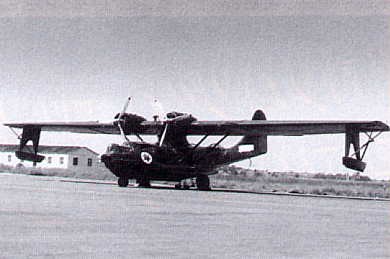
The Consolidated Model 28, designed by Isaac Laddon, originated from a US Navy requirement of late 1933.
The prototype XP3Y-1, developed from the PY-1/P2Y and flown for the first time on 28 March 1935, introduced the parasol wing constructed on the basis of a cantilever wing requiring no supporting structures, although two small-section struts were mounted between wing and hull on each side. Another new feature was the introduction of stabilising floats which retracted in flight to form the wingtips. Power was from two 825 hp R-1830-54 engines.
Initial trials of the prototype left little doubt that the Navy was about to acquire a significant aircraft. Sixty PBY-1 ordered in 1933 and powered by 850 hp engines were ordered and began to enter squadron service in 1937. By mid-1938 14 squadrons were operational.
The first 22 aircraft built were PBYs and were built in the USA. Also built by Boeing Aircraft of Canada at their Vancouver plant, as the PB2B-1. Fifty-five Boeing Canada-built PBY-5 were eligible for conversion to 28-5ACF status which allows further conversion to air transport category.
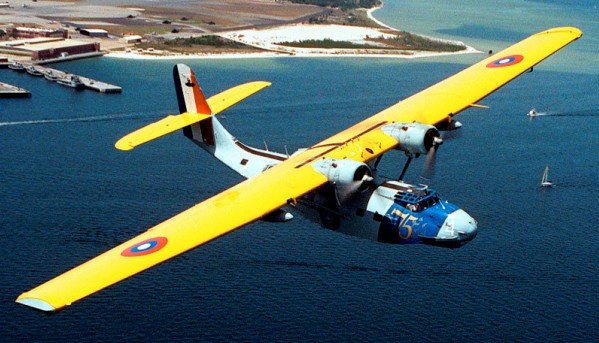
Production as a pure flying-boat ended with the PBY-4, for the last of these was converted to an amphibian with retractable tricycle-type landing gear, under the designation XPBY-5A. Subsequent aircraft had this as standard. Production of the PBY series would be undertaken by Consolidated in the United States, Canadian Vickers and Boeing of Canada in Canada, the Naval Aircraft Factory in Britain and state factories in the Soviet Union under the Lend-Lease Act. Between 27 and forty Model 28 Catalinas were built in the Soviet Union as the MP-7.
On 7 May 1945, RAF Coastal Command flew its last raid against a German submarine when a Catalina of 210 Sqn, piloted by Lt. K. Murray, located a U-boat that had stopped dead between Shetland Islands and Norway, and recorded engine noises showing that the U-boat must be in distress. The Catalina dropped a series of depth charges. The boat was U-230 under 1st Lt. Emmerich, and it radioed later that it was badly damaged. On Wednesday 9 May 1945, the U-230 went down with all her crew off Bergen, Norway.
Initial export aircraft went to Russia, where the type was built subsequently in large numbers under the designation GST. The RAF acquired a single example for evaluation in 1939 and almost immediately ordered a batch of 50, the first of many to serve with Coastal Command. The name Catalina (adopted first by the RAF) was used later by the USN for the various versions which entered service. The type was also to serve with the RAAF, RCAF, RNZAF and the air arm of the Dutch East Indies.
The RNZAF operated 56 Catalinas, both PBY 5 and PB2B 1 models. They were used for maritime reconnaissance and air sea rescue between 1943 and 1956. The PBYs were withdrawn from service post war and sold for scrap in 1952; the PB2Bs soldiered on until replaced by Short Sunderlands in 1953 54.
The RCAF chose the PBY-5A as its replacement for the Supermarine Stranraer. During World War II, Boeing Aircraft of Canada, Canadian Vickers and Canadair Ltd. made almost 800 PBY’s. The RCAF called its version the ‘Canso A’ – A for amphibious. The PBY-5A first flew for the Royal Canadian Air Force on 20 March 1944.
Canadian Vickers built 130 for the RCAF, 9806-9844, and 11001-11100, and 230 to the USAF as OA-10A, 44-33868 to 44-34097.
139 were exports to the RAF, 36 as Catalina IIA, 12 PBY-5A as Catalina III, 11 PBY-5A as Catalina IV, and 70 PBY-5B as Catalina IVA.
A number were operated by the USAAF as OA-10As. Seventy-five went to the USAAF as OA-10B in 1945.
Israeli Air Force PBY-5A Catalina
The Amtorg KM-2 was an improved PBY Catalina, built under Consolidated license.
The GST (Russian State Aircraft Factory) was responsible for the production for a licence-built version. Russian-built engines were substituted and armament consisted of three 12.7mm or 7.62mm machine guns.
Russian State Aircraft Factory PBY
Altogether 2398 were built by Convair, 676 in Canada, and others in Russia.
Steward-Davis built about 13 Super Catalina civil conversion of PBY-5A/-6A wth two 1900hp Wright R-2600, larger squared tail, prop spinners, and faired-over nose turret. Many served in USFS fire duty, notably N6453C and N9505C.
In 1964 the province of Quebec, Canada, was using seven modified PBY to reduce forest fires. Field Aviation of Toronto modified the PBY to carry 800 USG of water that could be dumped in 0.8 sec and refilled in 14 sec during a touch and go on lakes or rivers.
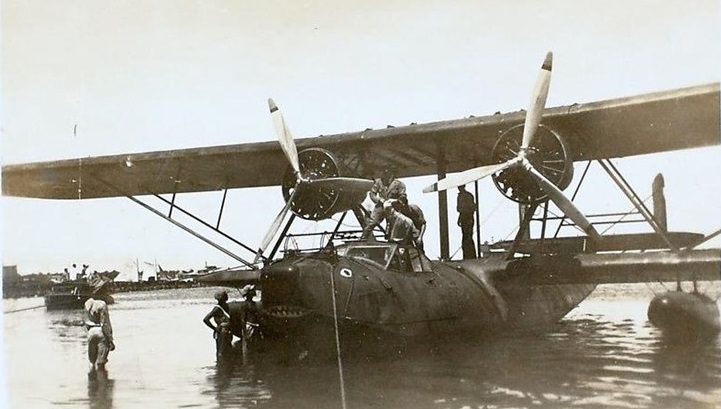
Foreign sales included a P2Y-1C for Colombia flown on December 23, 1932.
The sole P2Y-1C (ex NC2102) delivered to Cartagena, Colombia on Dec 31st 1932.
The Columbian P2Y remained in service until 1948.
P2Y-3 Engine: 2 x 750hp Wright R-1820-90 Take-off weight: 11471 kg / 25289 lb Empty weight: 5797 kg / 12780 lb Wingspan: 30.48 m / 100 ft 0 in Length: 18.82 m / 61 ft 9 in Height: 5.82 m / 19 ft 1 in Wing area: 140.66 sq.m / 1514.05 sq ft Max. Speed: 224 km/h / 139 mph Cruise speed: 188 km/h / 117 mph Ceiling: 4907 m / 16100 ft Range: 1900 km / 1181 miles Armament: One flexible 7.62mm Browning in bows; two dorsal gun hatches in wings
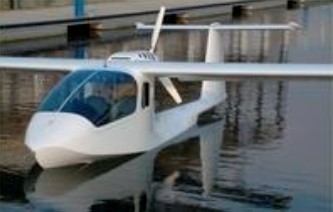
The Colyaer Gannet S100 is a seaplane that shares the wing, tail and upper fuselage of the Colyaer Martin 3. It has a water rudder and an optional reversible prop. On both airplanes, the engine is in the rear, which means less noise and greater visibility. Both the Colyaer Martin 3 and the Colyaer Gannet S-100 are made of Kevlar, which has a better strength-to-weight ratio than fiberglass, making the airplane both strong and light.
Stall: 35 kt / 40 mph / 65 kmh Cruise: 97 kt / 112 mph / 180 kmh VNE: 140 kt / 162 mph / 260 kmh Empty Weight: 270 kg / 595 lbs MTOW Weight: 450 kg / 992 lbs Climb Ratio: 1000 ft/min / 5 m/s Glide Ratio: 20 Take-off distance (50ft obstacle): 140 ft / 43 m Landing distance (50ft obstacle): 140 ft / 43 m
Grumman began designing the G-42 in mid-1939 as a successor to the J2F Duck but as a consequence of wartime priorities this was transferred to Columbia as the Columbia JL.
A total of three were produced.
XJL-1 Type: 6 place military utility amphibian Engine: 1 x Wright R-1820-56 Cyclone, 1200 hp Prop: 3 blade CS metal Max speed: 174 mph Cruise speed: 119 mph Range: 2070 miles MTOW; 13,000 lb Wing span: 50 ft 0 in Length: 45 ft 11 in
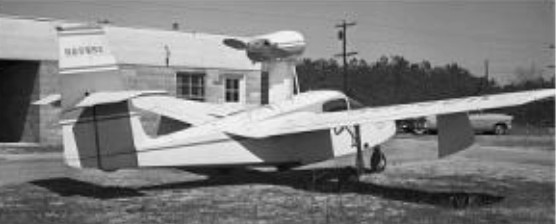
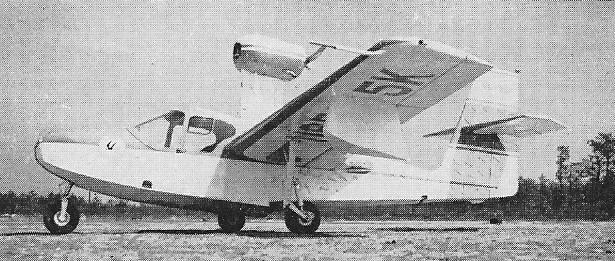
Following World War II, aircraft designer David Thurston, then of Grumman, formed the Colonial Aircraft Corporation as a side job, beginning work on a two/three-seat amphibian, the “Skimmer”. Using some ideas from his previous association with the Gooyear GA-1 Duck and Grumman G-65 Tadpole, Thurston built an all-new amphibian design with a shallower hull and raised turtledeck. Construction on the prototype, called the C-1 Skimmer, began during 1957, powered by a 115 hp Lycoming O-235-C1 with an Aeromatic propeller.
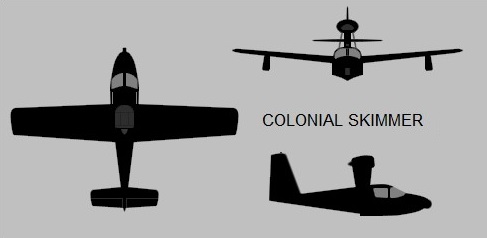
The all metal hull was semi-monocoque and the fully cantilevered wings joined the fuselage in the high mid-position.
Directly from the G-65 was a tricycle undercarriage retracting system in which the main wheels folded into the wings and one-piece, streamlined stabilising floats. The nose wheel, when retracted, left half of the tire exposed to act as a bumper. Flight control configuration was conventional, with flight surfaces manually actuated, except it appears for hydraulically-actuated flaps; there was a fold-down sea rudder at the base of the air rudder. Access was through a hinge-up front windscreen panel on each side, with side-by-side seating up front and a baggage area behind, which could alternatively handle a second passenger sitting sideways.
C-1 Skimmer
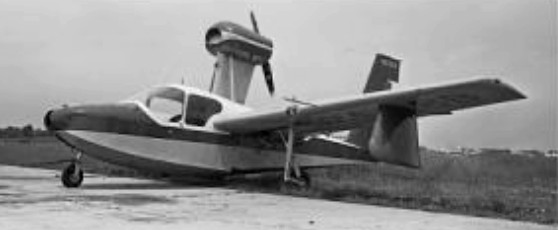
The Skimmer C-1 was a small flying boat of all-metal construction, with mid-mounted wings featuring a noticeable dihedral and fixed fin-style floats. It had a tail with a mid-mounted tailplane, and tricycle landing gear – all gear assemblies with single wheels, the main gear pivoting from the wings in towards the fuselage the nose gear semi-retracting upward into the nose. Ground steering was by differential braking, the nosewheel being free-castoring.
The C-1 prototype, registered N6595K, made its first flight on 17 July 1948 and was further developed over the next six years. The Type Certificate was achieved in September 1955. By that time Thurston had quit Grumman and was working at Colonial full-time. Changes included the installation of a 95 kW / 125 hp Lycoming O-295-D engine.
Production totals of the C-1 Skimmer are given as 22 up to late 1957. It led to the improved “C-2 Skimmer IV” during 1957, which was externally all but identical to the C-1 Skimmer, the primary change being an uprated O-320-A1A engine providing 135 kW (180 HP), permitting a higher maximum takeoff weight, enlarged horizontal tail surfaces, modified wing floats, plus structural strengthening of the wings and pylon for the increased gross weight. It was said to have seats for four, with a cabin redesign. The Type Certificate came in December 1957 and twenty C-2s had been completed at the time Colonial sold its assets, after a series of difficulties and shufflings, to Lake Aircraft Corp in late 1959.
Lake Aircraft Corp marketed the aircraft initially as the Lake Skimmer, and developed the aircraft into the LA4. The initial Lake prototype, the “LA-4P”, very similar to the C-2 Skimmer, performed its initial flight in November 1959; it was followed by two “LA-4A” prototypes in 1960, which featured a 1.22 meter (4 foot) wingspan stretch and structural reinforcement.
A total of 43 (all versions) were built.
C-1 Skimmer Engine: 125 hp Lycoming O-290-D Seats: 2-3 Max speed: 125 mph Cruise: 155 mph ROC: 700 fpm Range: 700 mi Empty weight: 1300 lb Loaded weight: 1950 lb Wingspan: 34 ft Length: 23 ft 6 in Height: 8 ft 10 in Wing area: 150.6 sq.ft
Type: 2 place civil amphibian Engine: 1 x 180 hp Lycoming O-360-A5A Prop: 2 blade Constant speed, metal Max speed: 135 mph Cruise speed: 130 mph Range: 625 miles Empty weight: 1525 lb MTOW: 2350 lb Wingspan: 34 ft 0 in Length: 23 ft 6 in Wing area: 170 sq.ft


 All Aero