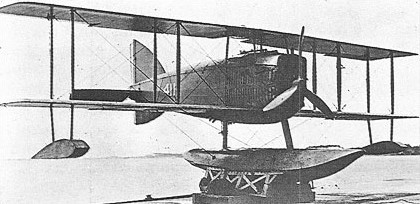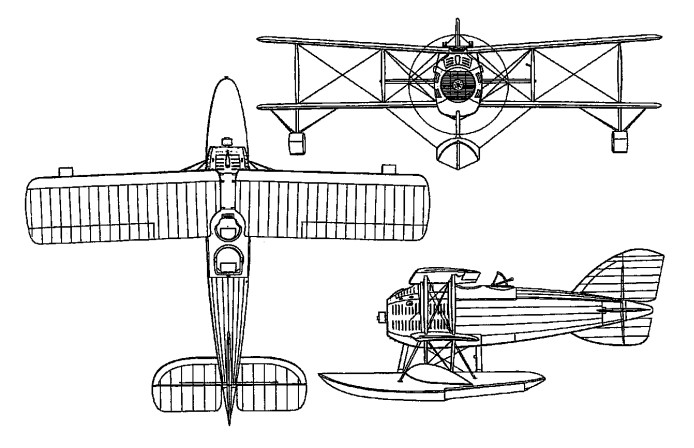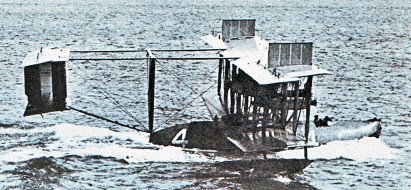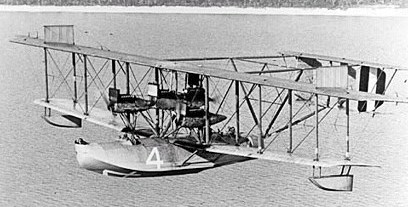
Curtiss CT-1

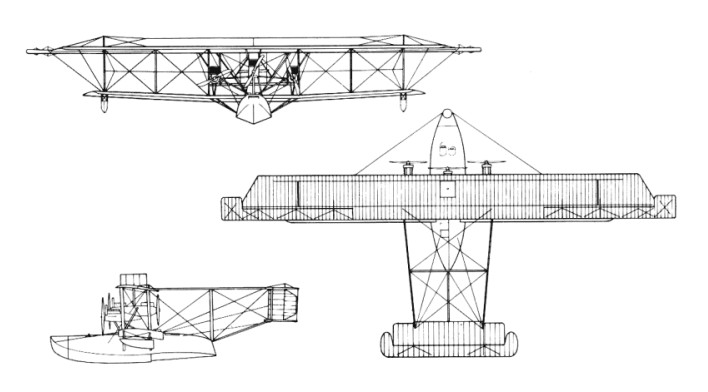
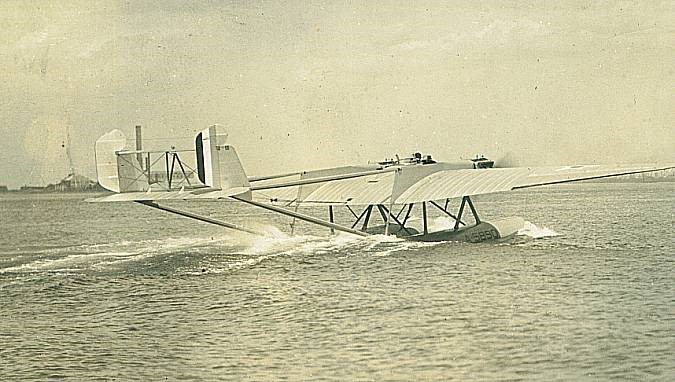
The US Navy was looking for a new torpedo bomber following a demonstration of sinking a battleship with an aircraft. A specification was announced requiring a twin floatplane that could be sled launched and crane recovered at sea. The aircraft had a maximum span of 65 feet (20 m) which could be broken down into 25 feet (7.6 m) sections for shipboard storage.

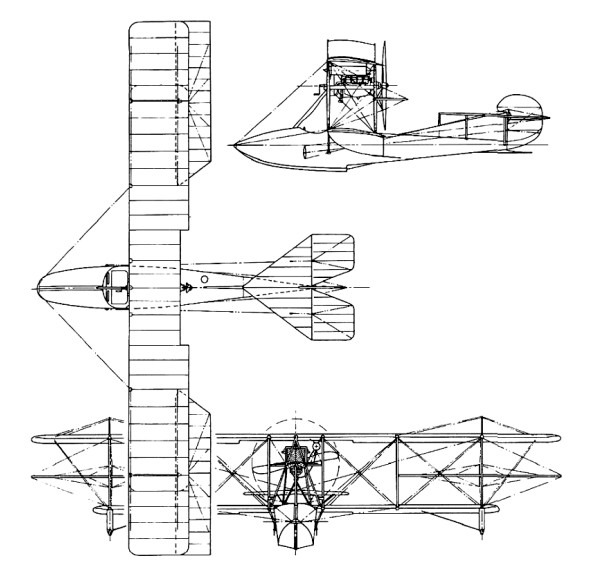
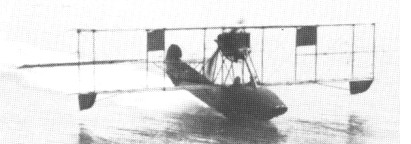
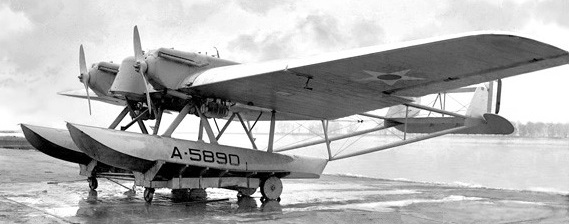
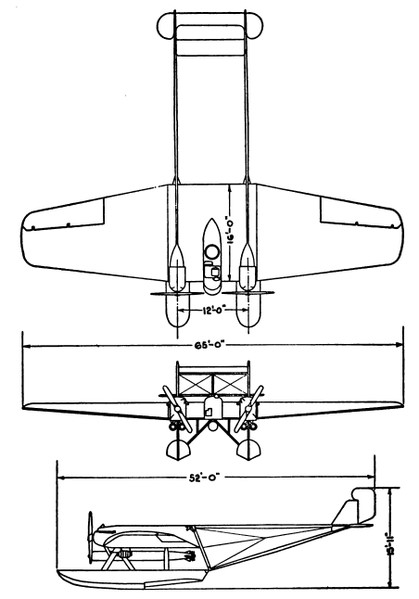
Designed by Wilbur Gilmore, the Curtiss CT-1 aircraft had twin booms, twin tails, twin floats and a single cockpit. A turret was placed high above and behind the pilot to have a full 360 degree firing arc. The thick airfoil wings were cantilevered without struts or wires using three spars. The fuselage was made of traditional welded tube frame with the-then new technology of an aluminum skin. The rest of the aircraft was of welded tube with a fabric covering. The engine nacelles were deeply recessed into the wings. Two under-wing Lamblin radiators provided cooling. Engine stands were located for mechanics to work on the aircraft. Single-engine operation resulted in a height loss of 100 ft per minute.
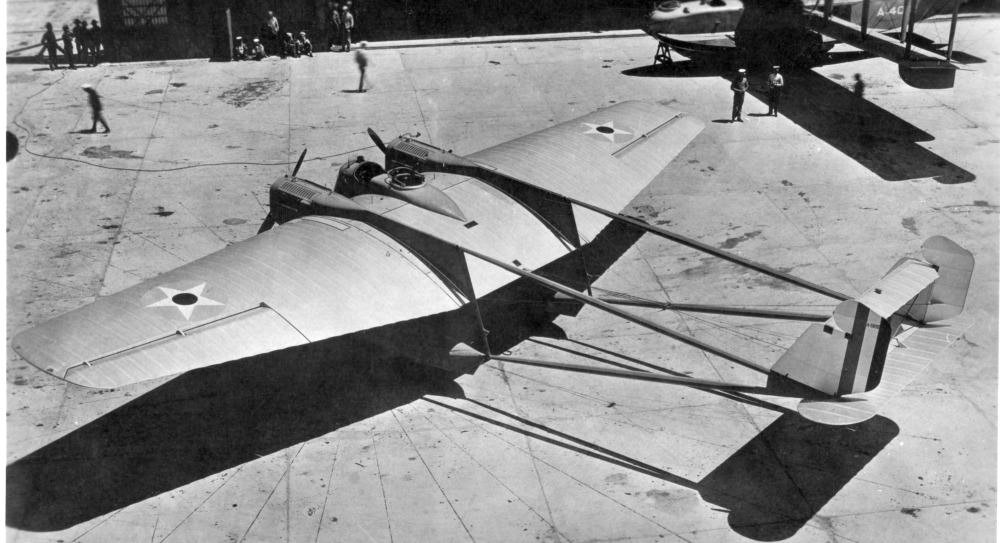
The first water taxi tests were performed by Bert Acosta on 2 May 1921 at NAS Rockaway, resulting in larger rudders added for stability. The sheet metal formed motor mounts and tail structure required reinforcement. The engines overheated, and could only fly for 20 minutes at a time.

Prototypes of the Curtiss CT-1, Stout ST-1, Fokker FT-1 and Blackburn Swift F were evaluated at the Annacostia Naval Yard. The CT-1 was demonstrated to the US Navy at the Annacostia Naval Yard and at the war college at Fort McNair, Washington, D.C. The aircraft was given the serial number A-5890, and the navy designation CT-1, for “Curtiss” “Torpedo bomber (number one)”-“variant one”. Curtiss won an initial contract to build nine torpedo bombers on June 30, 1920, but the order was cancelled and only one acceptance prototype was built. The aircraft was constructed in Rockaway, New York.
Gallery

Engines: 2 × Curtiss D-12, 350 hp (260 kW) each
Propellers: 2-blade
Wingspan: 65 ft (20 m)
Airfoil: Curtiss C-32
Length: 52 ft (16 m)
Height: 15 ft 5 in (4.70 m)
Gross weight: 11,208 lb (5,084 kg)
Cruise speed: 93 kn; 172 km/h (107 mph)
Range: 304 nmi; 563 km (350 mi)
Service ceiling: 5,300 ft (1,600 m)
Crew: 3 Pilot, Assistant Pilot, Gunner
Curtiss R3C / F3C

R3C-1

In August 1920, Curtiss the company was forced into receivership. Clement Keys, a Canadian financier, obtained funds to manage the company’s debt and led it again to sound financial status. The Buffalo facility became the major facility, and the company remained the largest U.S. aircraft company through the 1920s. Its racing planes, including the CR-1 and CR-3, won several competitions.

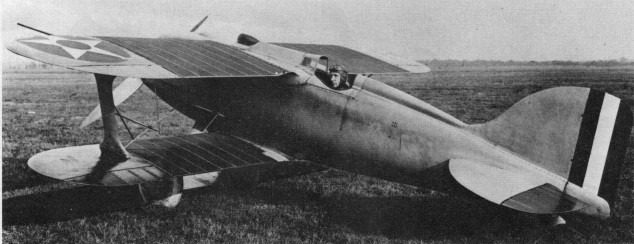
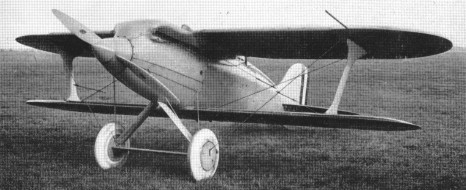
The 1925 Pulitzer saw the R3Cs in a joint Army/Navy project, with No. A-6978 and No. A-6979 going to the Navy, and No. A-7054 to the Army. The airplanes took the 1925 Pulitzer Race at record speed and left everyone else far behind. Army Lt. Cyrus Bettis was the winner in A-7054 at 249 mph, Navy Lt. AI Williams was second in A-6979 at 242 mph.

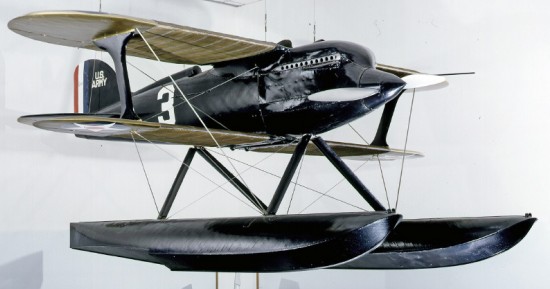
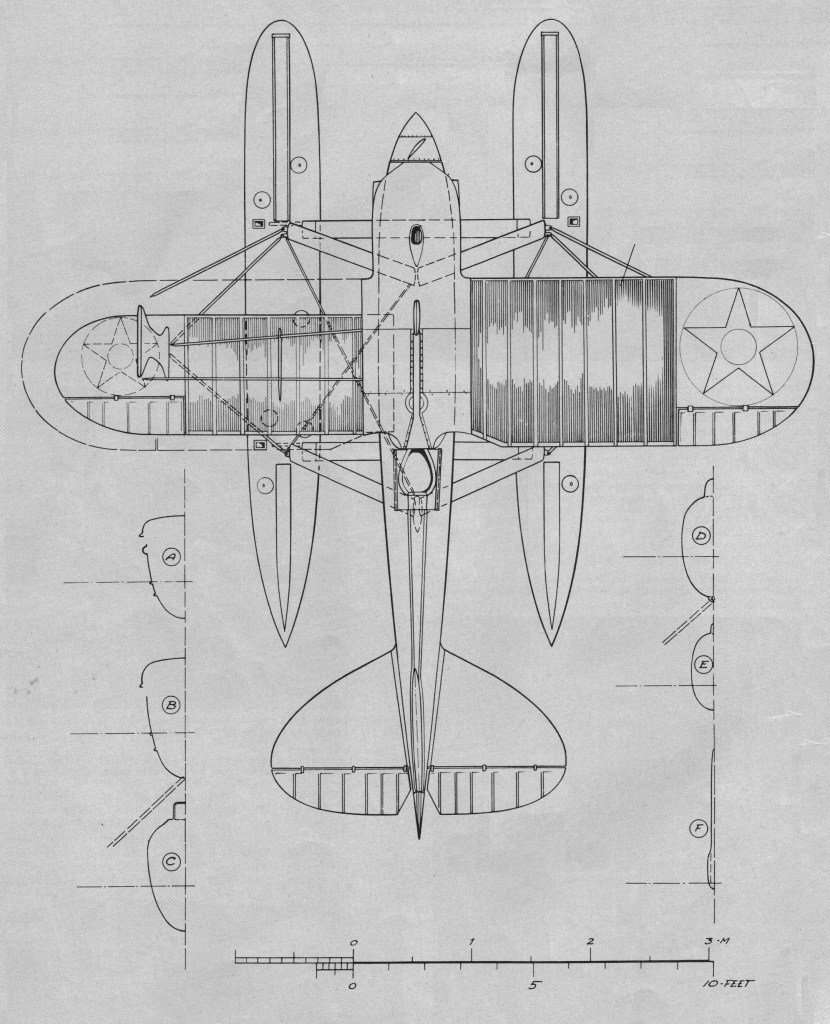
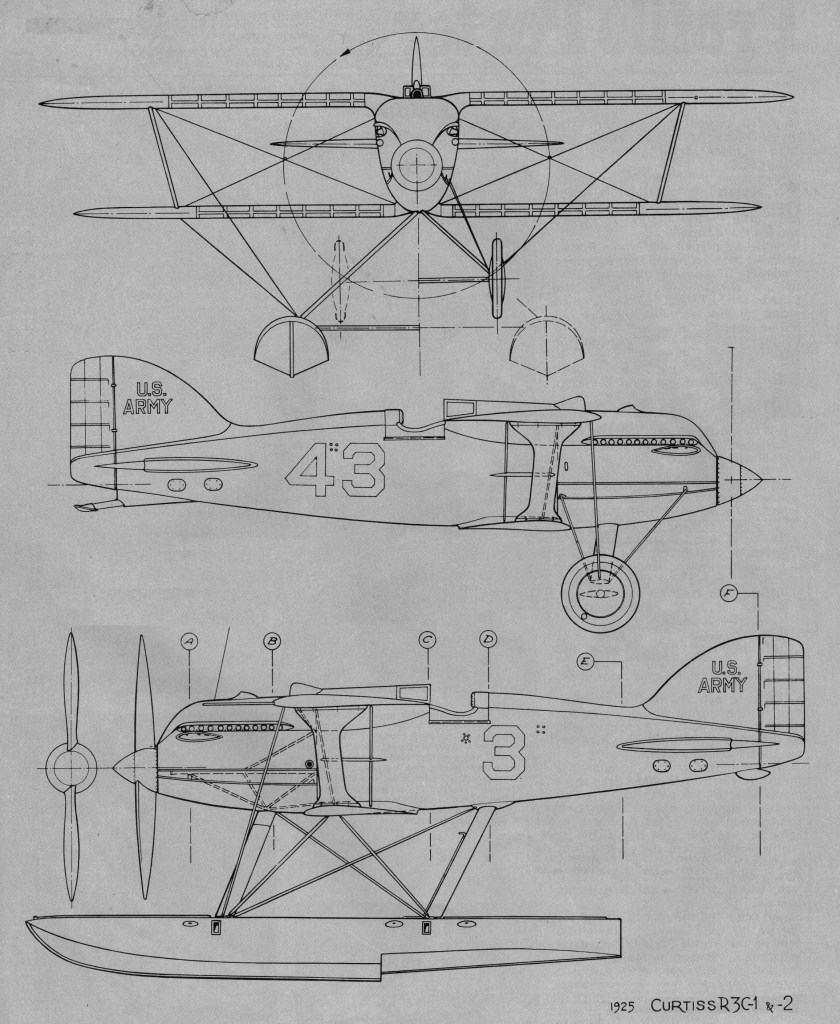
On Oct. 26, 1925, U.S. Army Lt. James H. Doolittle flew the Curtiss R3C-2 to victory in the Schneider Trophy Race on floats with an average speed of 374 km/h (232.17 mph). The next day he flew the R3C-2 over a straight course at a world-record speed of 395 km/h (245.7 mph).

In the Schneider Trophy Race of Nov. 13, 1926, this same airplane piloted by Lt. Christian F. Schilt, USMC, and powered by an improved engine, won second place with an average speed of 372 km/h (231.4 mph).

R3C-2

F2C and F3C were “paper” designations assigned to the R2C and R3C racing aircraft respectively.

R3C-1

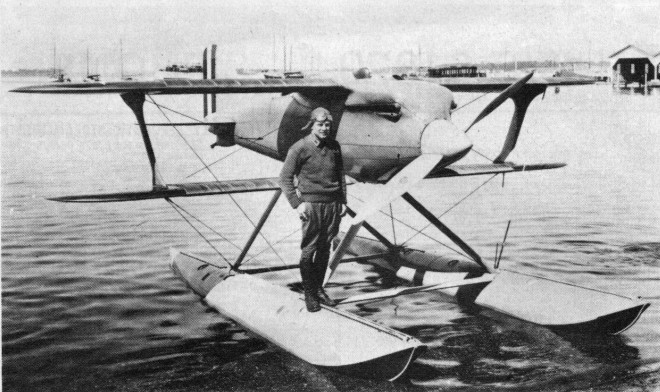
The R3Cs were modified into R3C-1s by the attachment of twin floats and entered in the Schneider Race of 1925. There they caused a sensation, being far and away the most streamlined water-borne flying machines the world had ever seen. In this they heralded the great racing seaplanes to come, for which the Schneider will always be remembered. Prior Schneider racers had been worthy efforts, but little more. From 1925 until the trophy was permanently retired in 1931, it would attract the most exciting aircraft in the world.

In 1925, however, it was strictly an intramural contest between the Army’s Jimmy Doolittle in the Pulitzer-winning A-7054, and the Navy’s George Cuddihy in A-6979 and Ralph Oftsie in A-6978.

On Oct. 26, 1925, U.S. Army Lt. James H. Doolittle flew the Curtiss R3C-2 to victory in the Schneider Trophy Race on floats with an average speed of 374 km/h (232.17 mph). The others failed to finish. The next day he flew the R3C-2 over a straight course at a world-record speed of 395 km/h (245.7 mph).

Curtiss R3C-2 Article

For the 1926 Schneider of Nov. 13, Doolittle’s A-7054 remained much as it had been, except that the pilot was Lt. Christian Schilt. Oftsie’s R3C-2 (A-6978) became the R3C-3 with the change from a Curtiss D-12 engine to a Packard 2A1500, and the addition of a slick, symmetrical cowling; pilot, Lt. William Tomlinson. The final R3C-2 (A-6979) got a new Curtiss V-1550 engine to become the R3C4, while retaining Cuddihy as pilot. Part of the reason for this major effort to gain speed can be explained by the rules of the Schneider Trophy, which awarded permanent possession to the nation which won three times in a row.

Tomlinson’s R3C-3 was wrecked during trials at Hampton Roads, Virginia. Cuddihy once again was forced to pull out before he had completed the race. Schlit did his best, averaging barely 1 mph faster than Doolittle’s 1925 winning speed, but not fast enough to catch deBernardi, who clocked 242 mph in his Macchi M-39. Schilt won second place with an average speed of 372 km/h (231.4 mph). Schilt’s airplane, repainted like the R3C-2 of Doolittle, is now at the USAF Museum, on loan from the National Air and Space Museum.

Curtiss R3C-2

Curtiss R3C-2
Wingspan upper: 6.71 m (22 ft.)
Wingspan lower: 6.1 m (20 ft.)
Length: 6.01 m (19 ft. 8 1/2 in.)
Height: 2.46 m (8 ft. 1 in.)
Weight: Empty: 975 kg (2150 lb.)
Gross: 1152 kg (2539 lb.)
Engine: (1925) Curtiss V-1400 V-12, water-cooled, 610 hp
Engine: (1926) Curtiss V-1400 V-12, water-cooled, 665 hp
Engine: Bore and Stroke: 12.382 cm (4.875 in.) x 15.875 cm (6.25 in.)
Displacement: 22.95 liters (1400 cu. in.)
Engine: Mfg. No. 9
Curtiss-Reed Propeller:
Design: EX-32995
Two-Blades, Fixed-Pitch
Serial No.: M-455
Material: Duralumin
Diameter: 237 cm (92 in.)
Pitch: 284 cm (112 in.)

Curtiss HA

HA

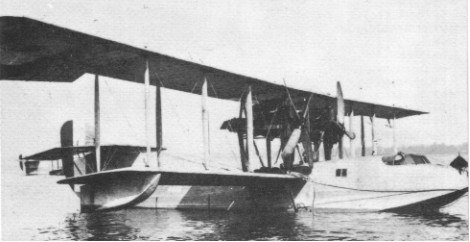
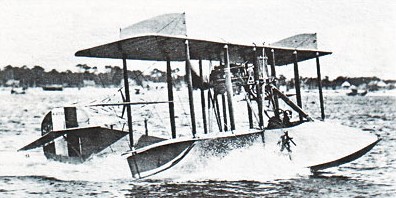
Designed by Capt B L Smith of the US Marine Corps as a two-seat patrol fighter floatplane for use in the Dunkirk-Calais area, the HA – known unofficially as the “Dunkirk Fighter” – was intended to combat the Brandenburg float fighters. The HA was built at the experimental plant of the Curtiss Engineering Corporation. Of conventional wooden construction with fabric skinning, the HA was powered by a 425hp Liberty 12 engine and proposed armament was two synchronized 7.62mm Marlin machine guns and two Lewis guns of the same calibre on a Scarff mounting in the rear cockpit.
The HA was flown for the first time on 21 March 1918, but was found to be unstable longitudinally and seriously tail heavy. The initial test terminated in a crash. Curtiss was then awarded a contract for two further prototypes, the first of which, the HA-1, utilized salvaged components from the original HA and featured revised vertical tail surfaces, an annular-type radiator and relocated wings. The HA-1 demonstrated appreciably improved handling qualities, but was written off after a fire in the air. The third HA prototype, the HA-2, differed appreciably from the HA-1.

HA-2

The third HA float fighter prototype embodied considerable redesign as the HA-2. Powered by a 12- cylinder Liberty 12 water-cooled engine, like the preceding prototypes, the HA-2 had longer-span wings of marginally increased chord and gap, the upper wing being raised clear of the fuselage, the decking of which was lowered. The radiator was redesigned, but cooling problems were encountered and although the HA-2 proved more docile than the lighter HA-1, it possessed insufficient promise to warrant further development.

HA-1
Take-off weight: 1634 kg / 3602 lb
Empty weight: 1111 kg / 2449 lb
Wingspan: 10.97 m / 35 ft 12 in
Length: 9.37 m / 30 ft 9 in
Height: 3.23 m / 10 ft 7 in
Wing area: 35.95 sq.m / 386.96 sq ft
Max. speed: 203 km/h / 126 mph

HA-2
Take-off weight: 1772 kg / 3907 lb
Empty weight: 1336 kg / 2 lb
Wingspan: 12.80 m / 41 ft 12 in
Length: 9.37 m / 30 ft 9 in
Height: 3.48 m / 11 ft 5 in
Wing area: 45.52 sq.m / 489.97 sq ft
Max. speed: 190 km/h / 118 mph

Curtiss HA-2

Curtiss NC

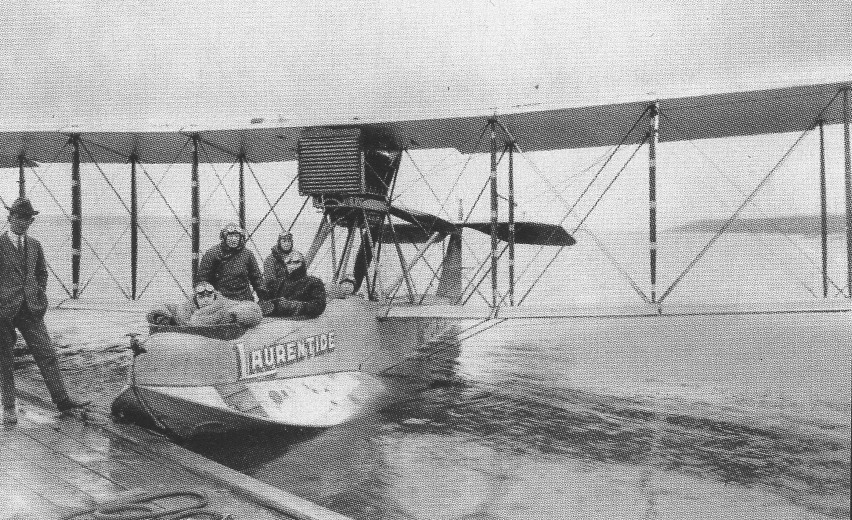
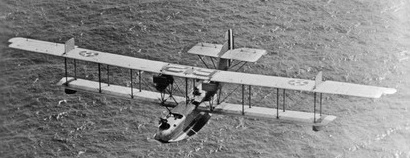
During 1917, the US Navy Bureau of Construction and Repair collaborated with Glenn Curtiss in an effort to produce a flying-boat that would be capable of crossing the Atlantic without difficulty and be immediately available for operations. Preliminary designs, drawn up by naval team which included Commander Jerome Hunsaker, were developed by Curtiss and his engineers. The selected configuration was a wide-span biplane with three tractor engines, a short hull to accommodate a crew of five, and a biplane tail supported on booms projecting from the upper wing and the rear of the hull. Detail design was carried out by the Curtiss staff, except for the hull which was the work of US Navy Commander Holden Richardson. Soon afterwards Curtiss received an order for production of the NC as it had by then been designated (NC for Navy-Curtiss). Four aircraft were to be built by Curtiss, and it was decided that the Naval Aircraft Factory would build six more.
Existing factory space at the Curtiss Garden City, New York factory was greatly expanded with US Navy help for production of the NCs, which were to be taken by road in sections for final assembly at Rockaway Naval Air Station. When World War I ended only the NC-1 had been completed and the original purpose of the design no longer existed. Although the NAF NCs were cancelled, the US Navy decided to go ahead with the four Curtiss ‘boats which would be used in a transatlantic flight to the UK. It was felt that the publicity gained by such a flight would be of great value to the US Navy.

Three NC boats (NC-1, NC-3 and NC-4) left Trepassey Bay, Newfoundland on 16 May 1919, NC-2 having already come to grief. Both the NC-1 and the NC-3 came down at sea short of Horta in the Azores, which was to be the first stop. Neither could take off again, the NC-1 being abandoned and its crew taken off by ship, but the NC-3 was able to taxi in to Horta. Only the NC-4 completed the journey to Plymouth successfully, arriving on 31 May following stops at Horta, Ponta Delgada, Lisbon, and Ferrol del Caudillo. The total distance flown from take-off at Rockaway, New York on 8 May was 6317km, completed in 57 hours 16 minutes total flight time.

NC-1
Engines: 3 x 360-hp/268-kW Liberty inlines in tractor layout
Later – four engines as three tractors and one pusher

NC-2
Engines: two tractors and one pusher
Later two tractor/pusher tandem pairs

NC-3
As four-engined NC-l

NC-4
Engine: 4 x 400-hp / 298kW Liberty 12A inline piston
Maximum take-off weight: 28,000 lb / 12,701 kg
Empty weight: 7257 kg / 16,000 lb
Wingspan: 38.40 m / 125 ft 12 in
Length: 20.80 m / 68 ft 3 in
Height: 7.44 m / 24 ft 5 in
Wing area: 226.77 sq.m / 2440.93 sq ft
Max. speed: 137 km/h / 85 mph at sea level
Service ceiling: 760 m / 2500 ft
Climb to 2,000 ft (610 m): 10 min 0 sec
Endurance 14 hours 45 minutes.

Curtiss CR-1 / CR-2 / CR-3 / CR-4

CR-3 Curtiss D-12 465 hp

The single CR-1 of 1921, A6080, had conventional gear. It later became a CR-3.

The single CR-2 (original designation for CR-4) of 1921, A6081, was flown by USN Lt Harold Brow to third place in the 1922 Pulitzer race, in which Curtiss ships took the first four places. It later became a CR-3.

The Schneider Trophy never experienced any casualties during competition, but several pilots were killed training for the races. U.S. citizens Harmon J. Norton in 1923 were killed in a Curtiss CR-3 and Franck Connaut in 1926.

A CR-3 was winner of the 1921 Pulitzer trophy race piloted by Bert Acosta, at 176.7 mph.

In 1923 the Schneider Trophy Contest at Cowes, Isle of Wight was won by an American Curtiss CR-3 racing seaplane at a speed of 285km/h, piloted by Lieut David Rittenhouse. Close behind was a second CR-3 flown by Lieut Rutledge Irvine with a speed of 279.16km/h. The only other aircraft to complete the 344.69km course was Britain’s Supermarine Sea Lion III, powered by a Napier Lion engine which was almost 19% more powerful than the Curtiss D-12 carrying the CR-3 to victory.
Richard Fairey realised that the Curtiss engine, in combination with a Curtiss-Reed propeller, was a most significant factor in this American success.

The CR-4s of 1923 were CR-1 with pontoons and CR-2 redesignated and modified to an unknown extent. The two were A6080/6081. A CR-4 set seaplane speed record of 188mph in 1924.

CR-3
Engine: Curtiss D-12, 450hp
Wingspan: 22’8″
Length: 25’1″
Max speed: 194 mph

Curtiss H.12 Large America

By July 1916 first examples of a larger Curtiss flying boat design began arriving in England. Designated H.8, these were quickly modified to accept more powerful twin 250 hp Rolls Royce engines, and redesignated Curtiss H.12s, or ‘Large Americas’.
Although the lightly constructed hull was easily damaged in rough seas, the Large America was extensively used by the R.N.A.S. for anti submarine, anti Zeppelin and general reconnaissance duties.

Engines: 2 x 345 h.p. Rolls Royce Eagle.
Length 46.1 ft (14.03 m)
Wingspan 95 ft (28.96 m)
Weight empty 7,360 lb (3,340 kg)
Crew: 4
Armament: Five or six machine guns
Bomb load: 4 x 230 lb (100 kg).
Max speed: 100 mph (160 kph)
Ceiling: 12,500 ft (3,800 m) fully loaded

Curtiss F / Alexandria 10

Model F

The definitive 1913 Model F was of wooden construction, the two-bay biplane had inter-plane ailerons on each side, fabric-covered wings and tail unit, and a carefully contoured single-step plywood-covered hull which accommodated two side-by-side in a cockpit location just forward of the wings. Power was a 56kW Curtiss O engine driving a pusher propeller. The engine being mounted on struts just below the upper wing centre-section.

The Curtiss F two-seat biplane flying boat became the Army’s first flying boat. This basic design was ordered by the US Navy, and after the United States entered World War I on 6 April 1917 it was adapted as the service’s standard primary training flying-boat, 144 more being ordered. During the war, Curtiss received so many orders for flying boats that he hired Boeing and Loughead (later renamed “Lockheed”) to build them to his specifications.

Alexandria was contracted Curtiss F-boats for USN, as the Alexandria 10, circa 1917. Thirteen were built; A2651 to 2653, A5024, and A5247 to 5256
The F was also sold to several civil owners.
The 1914 version of the Model F had rounded wingtips, a tougher hull and increased strut support for the engine to prevent it collapsing on the crew in the event of a crash.
The 1917-18 version of the Model F eliminated the original shoulder-yoke type aileron control in favour of a more conventional arrangement; and some aircraft had the ailerons transferred to the upper wing from the interplane position, span of the upper wing being extended. Several ambulance conversions flew with provision for a stretcher patient to be carried above the hull behind the cockpit. The more powerful Curtiss OXX-3 engine was fitted from 1917 onwards.
The Model F, particularly in its earlier versions, was sold to a number of foreign navies. Russia obtained a considerable number for operation in the Baltic and Black Seas. The Italians also flew the Model F and eight examples were licence-built by the Zari company at Bovisio.

Engine: 1 x 75kW Curtiss OXX-3 inline piston
Take-off weight: 1116 kg / 2460 lb
Empty weight: 844 kg / 1861 lb
Wingspan: 13.75 m / 45 ft 1 in
Length: 8.48 m / 27 ft 10 in
Height: 3.42 m / 11 ft 3 in
Wing area: 35.95 sq.m / 386.96 sq ft
Max. speed: 110 km/h / 68 mph
Range: 1370 km / 851 miles

Curtiss Hydroaeroplane / C-1 / AB-1

The Curtiss Flying Boat was an early “hydro-aeroplane” or seaplane that was first concept tested by well-known aviator Glenn Curtiss in January 1912 in San Diego. By the end of the same year, Curtiss had built his first successful flying boat at Hammondsport, NY and succeeded in selling the aircraft to the Navy. The Navy first acquired five Curtiss Flying Boats, then an additional 144 for training before the original F type model was supplanted by the MF in 1918.

The C-1, the Navy’s first flying boat, was tested at Hammondsport, N.Y., by Lieutenant T. G. Ellyson on 30 November 1912. Its performance, as informally reported by Ellyson, was: “Circular climb, only one complete circle, 1,575 feet in 14 minutes 30 seconds fully loaded. On glide approximately 5.3 to 1. Speed, eight runs over measured mile, 59.4 miles per hour fully loaded. The endurance test was not made, owing to the fact that the weather has not been favorable, and I did not like to delay any longer.”

The Curtiss C-1 (changed to AB-1 in 1914) made the first catapult launch by a flying boat in December 1912.

On 27 March 1914 the original designations of aircraft were changed to two letters and a number of which the first letter denoted class, the second type within a class, and the number the order in which aircraft within class were acquired. Four classes were set up; A for all heavier-than-air craft, D for airships or dirigibles, B for balloons and K for Kites. Within the A Class, the letters L, H, B, X and C represented land machines, hydroaeroplanes, flying boats, combination land and water machines, and convertibles respectively. Thus the third hydroaeroplane, formerly A-3, became AH-3, and the first flying boat, formerly C-1, became AB-1.

The first Curtiss Flying Boat acquired by the Navy was designated C-1, before it was changed to AB-1 (A for Curtiss and B for flying boat) as the Navy began to procure aircraft from other corporations. The C-1 was based at the Navy Yard in Washington, D.C. in 1912 before moving to Guantanamo Bay, Cuba.