1998:
249 route de Pegomas
F-06130 Grasse
France
LSA amphibian builder
1998:
249 route de Pegomas
F-06130 Grasse
France
LSA amphibian builder
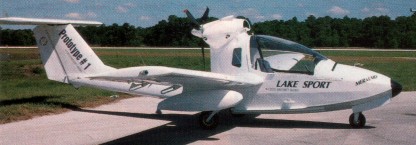
The all-new Mermaid is the first amphibian to be designed especially to comply with the FAAs new Light Sport Aircraft rules. It is also the first new certified single-engine amphibian to reach production in decades.
The design parameters were challenging: make a certifiable, roomy amphibian that will fit the LSA rules (2-place, 1235 pounds gross, low stall speed), and that will be affordable, reliable, and fun to fly; then give it the speed and range to be practical as a transportation device, and dual controls, for training and peace of mind. The Mermaid does it all, and more.
Of conventional all-metal design, the Mermaid is built by European craftsmen, with US-sourced materials. Its five watertight compartments are built with EDO-style pump-outs. The slipper-clutch Rotax 912ULS (914 also available) puts out 100 reliable horsepower while burning well under 5 gph. The useful load is over 500 pounds, and the large baggage area is located nearly on the CG, to make its capacity truly usable. The wide cockpit is comfortable; and it affords a large panel area.
In the US, the very early stages of prototype 1 used a Rotax 100HP as the power plant. This installation was refined over the next two years with probably no less than 6 different configurations using the Rotax. After essentially complete redesign of the prototype number one in the U.S. with this power plant, the next one and half years of performing flight and water testing gave good results. Even though adequate in horsepower, performance should be better on hot and heavily loaded days, and there were propeller inefficiencies from some of the after body aerodynamic interference.
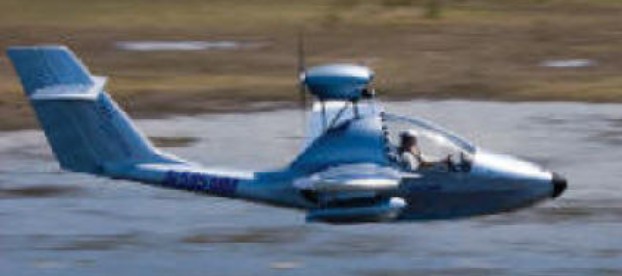
During one of the demo flights a customer from Australia suggested it might have better performance with a Jabiru 125 HP power plant. During initial flight tests this power plant proved to perform slightly better than the Rotax. But the installation was still lacking its full potential until repositioned higher above the after body structure. This one modification substantially increased the performance of the M6. The Jabiru was a tough engine to cool in the pusher configuration. After almost a year perfecting this engine installation they were capable of running on step taxi without limitations.
But then one customer insisted on the Rotax installation.
Dan Card received the first production Mermaid in parts and began construction in December 2005. Parts and pieces to make the fuselage, bulkheads, tail, and wings arrived from Czech Aircraft Works, where they were previously partially assembled using the factory jigs. Dan still had much of the aircraft to build. The challenge to build the first customer-built Mermaid began with assembling the aircraft for fit and finish while meeting the individual aspects of being “the first.” The construction of the Mermaid is very conventional as far as riveted aluminum monocoque construction goes. With plenty of traditional rivets to squeeze and buck, the fuselage in essence emerges in one piece, from nose to vertical stabilizer, including a robust center section to which the wings attach. The V hull is reinforced with a boxed section (at the bow) that houses the nose wheel when it’s retracted and closed off by its doors. It’s also triangulated with a flat floor onto which the seats, rudder pedals, and center console get fastened. With a series of 10 bulkheads, about a foot apart, completing the structure, the hull area below the seats becomes exceedingly robust.
The wing center section extends past the cockpit just far enough to support (or be supported by) the repositionable (not fully retracted) hydraulically actuated main gear. The wings are attached just outside the main gear bay via three bolts in the main spar and one in the drag spar, but in each instance, there is no carry-through of either spar. The ailerons on the Mermaid are actuated by push-pull and torque tubes, not cables. The flaps stop at the butt end of the wing and do not extend through the center section and die into the fuselage. They are slotted and use a displaced hinge pivot similar to the RV-10, a Cirrus SR22, or a Lancair Legacy; not really clean, but simple. The center section is also used as a platform for supporting/carrying ancillary systems like the battery, fuel pumps and filters, strobe pack, solenoids, disconnects, and relays, but it also serves as the main attachment for the engine pylon.
This Mermaid’s inaugural flight took place in September 2007 and was conducted over the rural farmlands of Fresno, California.
The Mermaid received ASTM certification #19.
Stall: 35 kt / 40 mph / 64 kmh
Cruise: 100 kt / 115 mph / 185 kmh
VNE: 115 kt / 132 mph / 212 kmh
Empty Weight: 330 kg / 727 lbs
MTOW Weight: 560 kg / 1235 lbs
Climb Ratio: 1000 ft/min / 5 m/s
Take-off distance (50ft obstacle): 600 ft / 183 m
Landing distance (50ft obstacle): 600 ft / 183 m
Engine: Jabiru 3300, 120 hp
Wing span: 31 ft
Wing area: 124 sq.ft
Length: 24 ft
Empty weight: 888 lb
Gross weight: 1430 lb
Fuel capacity: 30 USG
Cruise: 115 mph
Stall: 40 mph
Range: 580 sm
Rate of climb: 1000 fpm
Takeoff dist: 450 ft
Landing dist: 500 ft
Seats: 2
Cockpit width: 44 in
Landing gear: retract tricycle
LSA: yes
WetAero M6 Mermaid
Engine: Rotax 912 ULS
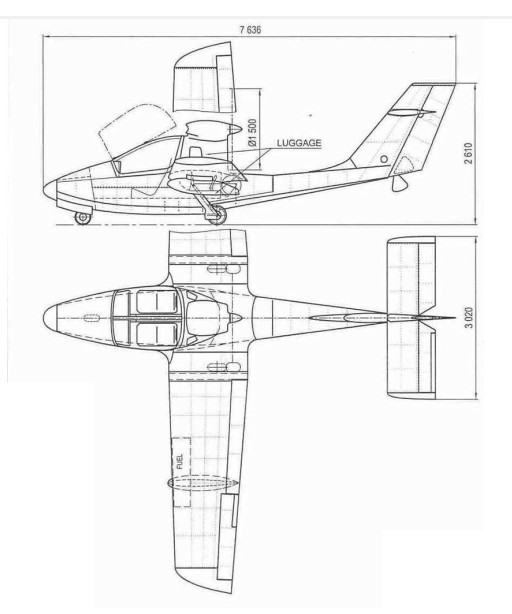
Wing span: 33.3 ft / 10,152 m
Length: 25 ft / 7,62 m
Wing area: 134.5 sq.ft / 12,5 sq.m
Wing loading: 10.65 lb/sq.ft / 45,6 kg/sq.m
Empty weight: 925 lb / 420 kg
Gross weight: 1430 lb / 650 kg
Useful load: 505 lb / 230 kg
Cabin width: 46 inch / 117 kg
Fuel capacity: 2×15 U.S.gal / 2×57 liters
Luggage space: 16 cu.ft / 450 lt
“G” limit: +4 / -2 G
Take-off (grass): 511 ft / 156 m
Take off (50″ object grass): 850 ft / 259 m
Climb rate: 800 fpm / 4 m/s
Stall speed with flaps: 32 mph / 52 km/h
Stall speed w/o flaps: 36 mph / 57 km/s
Cruise speed (75% power – TAS): 110 mph / 177 km/h
Never exceed speed (VNE): 155 mph / 250 km/h
Range (75% power, no res.): 450 sm / 725 km
Endurance (no res.): 4,5 hours
Landing ground roll (grass): 434 ft / 132 m
Price 2012: $147,000 Rotax 912ULS Base Model
$168,000 fully optioned.
WetAero M6 Mermaid
Jabiru 3300 120 HP
Takeoff (grass): 450 ft / 137 m
Takeoff (50-foot object grass): 1,080 ft / 330 m
Climb rate: 910 fpm / 4,6 m/s
Stall speed with flaps: 32 mph / 52 km/h
Stall speed w/o flaps: 36 mph / 57 km/h
Cruise speed (75% power TAS): 118 mph / 190 km/h
Never-exceed speed (Vne): 155 mph / 250 km/h
Range (75% power, no reserve): 620 sm / 1000 km
Endurance (no reserve): 4 hours
Landing ground roll (grass): 434 ft / 132 m
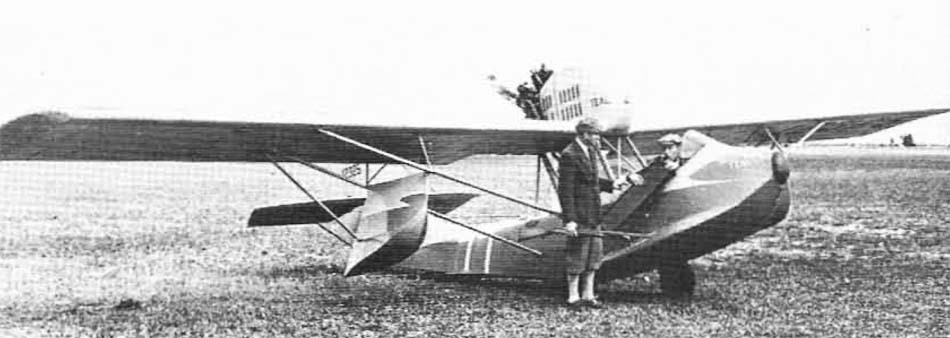
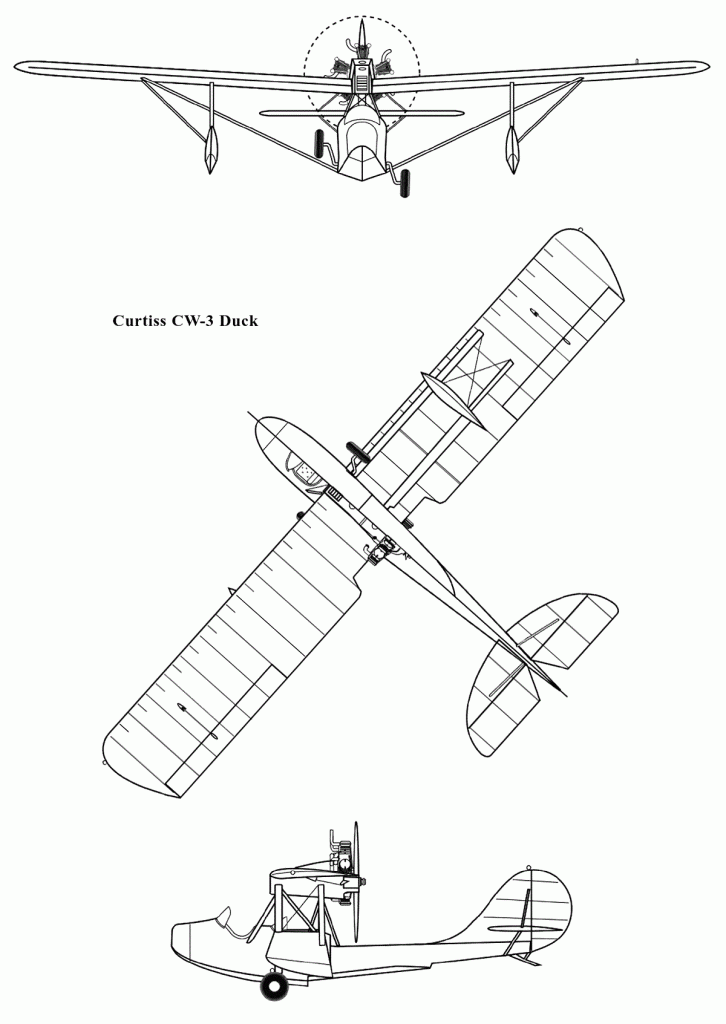
The Curtiss-Wright CW-3 Duckling (sometimes called the Teal) was an American two-seat amphibian flying-boat developed by Curtiss-Wright as a modification of the CW-1 Junior. The new aircraft was distinguished by a double cabin, where the pilot and passenger sat side by side, and the new fuselage. The fuselage had a plywood V-shaped underside added and the addition of strut-mounted pontoons. The engine was mounted above the wing driving a pusher propeller. The wing and engine installation remained unchanged, although floats were added under the wing for stability on the water surface.
First flying in 1931 only three aircraft were built, all powered by different engines, but the power was the same – 90 hp (67 kW).
The first prototype was equipped with a Velie M-5 radial engine, the second CW-3L for $1,250 with a Lambert engine, the third CW-3W with a Warner Scarab engine.
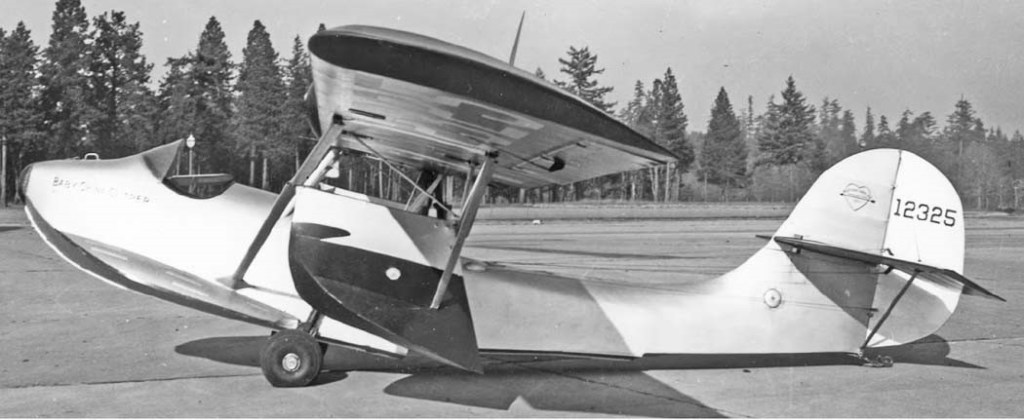
The release of CW-3 ended there, since the financial crisis began in the USA and there were no amphibious customers.
CW-3L
Engine: Lambert, 90 hp
MTOW: 544 kg
Wingspan: 12.04 m
Length: 6.48 m
Wing area: 16.38 sq.m
Maximum speed: 129 km / h
Cruising speed: 105 km / h
Crew: 2
CL-3W
Engine: 1 × Warner Scarab, 90 hp (67 kW)
Wingspan: 39 ft 6 in (12.04 m)
Length: 21 ft 3 in (6.48 m)
Crew: two
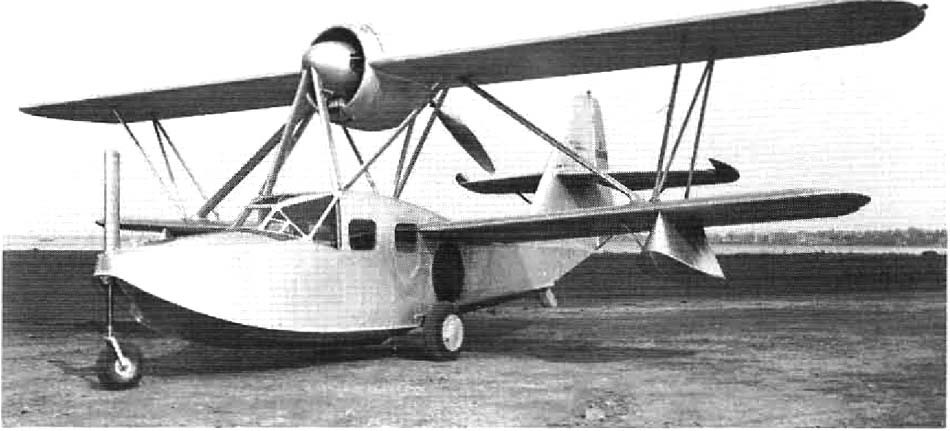
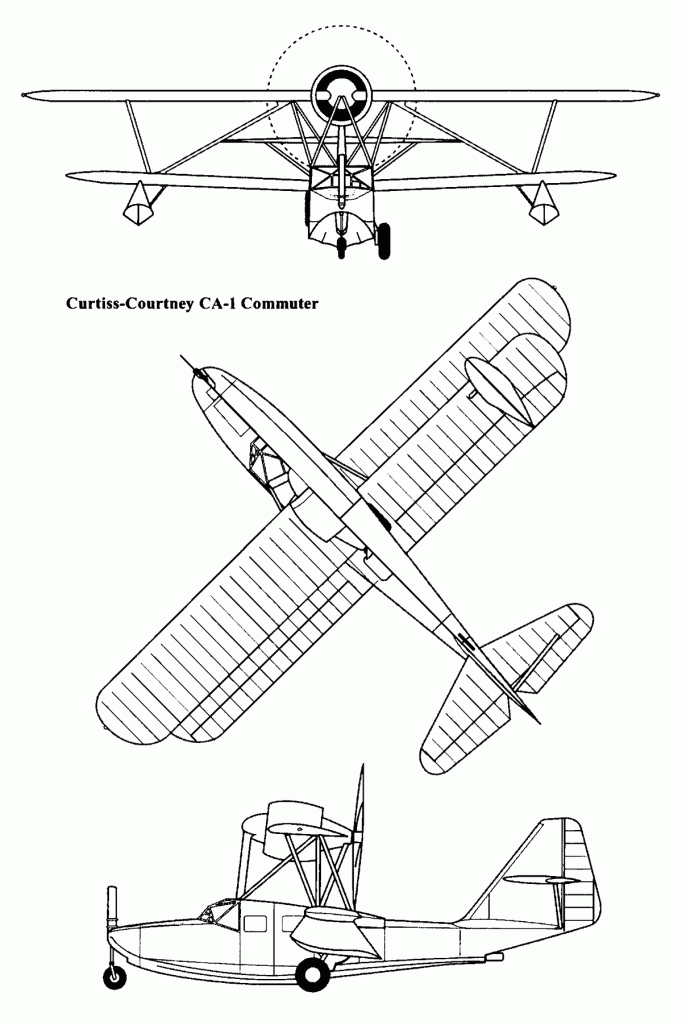
Designed by the British test pilot Frank Courtney, the Curtiss CA-1 (sometimes known as the Commuter or the Courtney Amphibian), was a five-seat amphibian. The CA-1 was powered by a 365 hp (272 kW) Wright 975E-1 radial, cowled and fitted into the leading edge of the top wing driving – through an extension shaft – a pusher propeller. When Wright told Courtney that this could not be done, the Briton went to a non-Curtiss-Wright mechanical workshop and successfully assembled his design.
Possessing a metal hull and wooden wings, the CA-1 had a nose wheel landing gear and an enclosed cabin for the pilot and passengers.
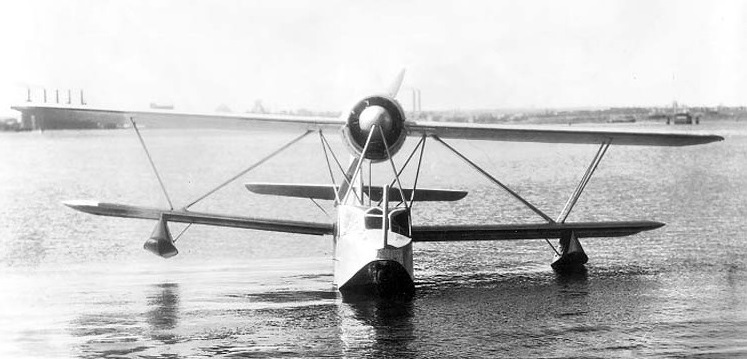
The three prototypes were built at the St. Louis plant, the first flying in 1935.
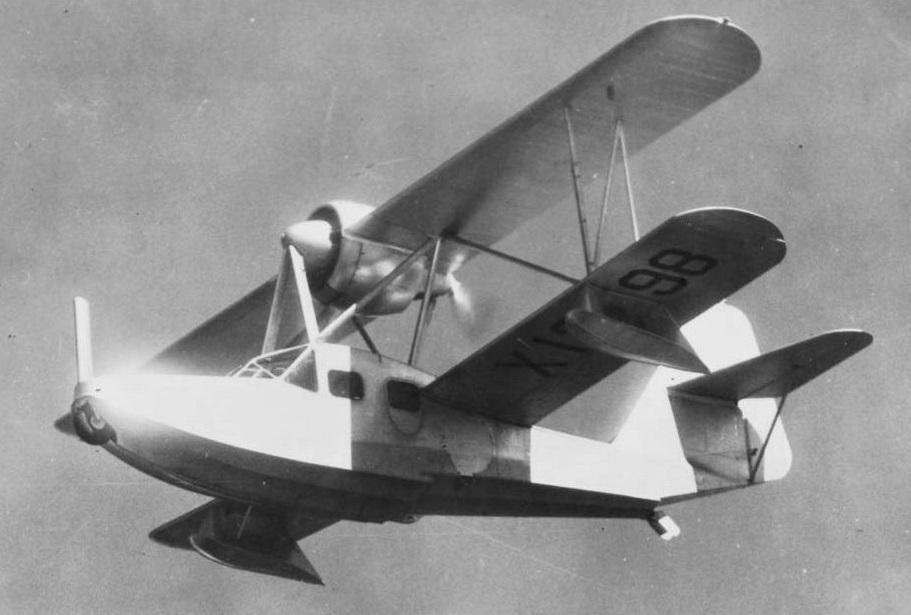
CA-1 (factory number 101; registration number 13298) in January 1935 received ATC No.2-397, and CA-1 (factory number 102; registration number 11780) in September received ATC 582, aircraft of this type did not go into mass production. Only three aircraft were built and they were all sold in Japan along with the project documentation, designated LXC by the Imperial Japanese Navy Air Service.
Engine: 1 × Wright 975E-1 (J-6-9), 365 hp (272 kW)
Wingspan: 40 ft 0 in (12.19 m)
Length: 31 ft 0 in (9.45 m)
Height: 3.65 m
Empty weight: 1352 kg
MTOW: 2109 kg
Maximum speed: 151 mph (243 km/h; 131 kn)
Cruise speed: 125 mph (201 km/h; 109 kn)
Stall speed: 60 mph (97 km/h; 52 kn)
Range: 550 mi (478 nmi; 885 km)
Ceiling: 4267 m
Crew: one
Capacity: four passengers
Baggage: 240 lb (110 kg)
Built to order for Raymond V. Morriss, a Curtiss employee, the single-seat model M made its first flight in January 1914. The Tadpole was the world’s first monoplane flying boat.
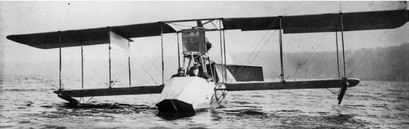
Curtiss built the Tadpole to test the aerodynamic relationship between the planning hull and the rigging of the wings. The first variation used a 100 hp Curtiss OX engine and came with the unequal span wings of the early F Boat, but with inset ailerons and several degrees of sweep. One of the devices tested on this aircraft was a set of moveable struts on the upper and lower wing centre sections that enabled incidence to be adjusted. If the wing were adjusted to a negative incidence while the plane was moored, it would not tend to become airborne during high winds. Continuing experiments were carried out with the Tadpole in the winter of 1914 when it was fitted with outrigger skis and flown from a frozen lake.
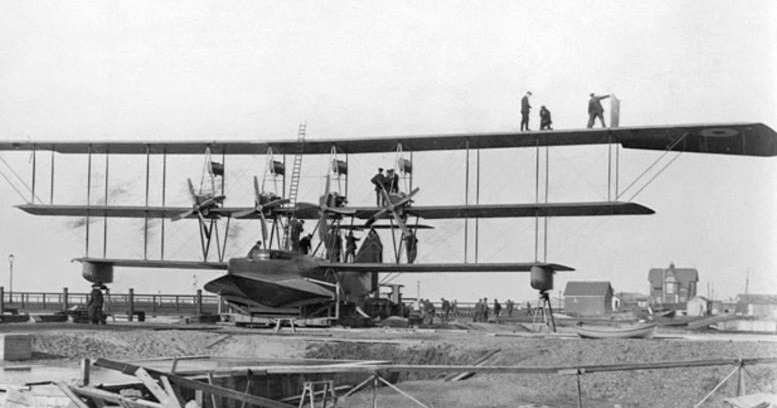
In 1915, the American businessman Rodman Wanamaker who, prior to the outbreak of the First World War commissioned the Curtiss Aeroplane and Motor Company to build a large flying boat, America to win the £10,000 prize put forward by the British newspaper Daily Mail for the first aircraft to cross the Atlantic, commissioned Curtiss to build a new, even larger flying boat for transatlantic flight that became known as the Wanamaker Triplane, or Curtiss Model T, (retroactively re-designated Model 3 when Curtiss changed its designation system).
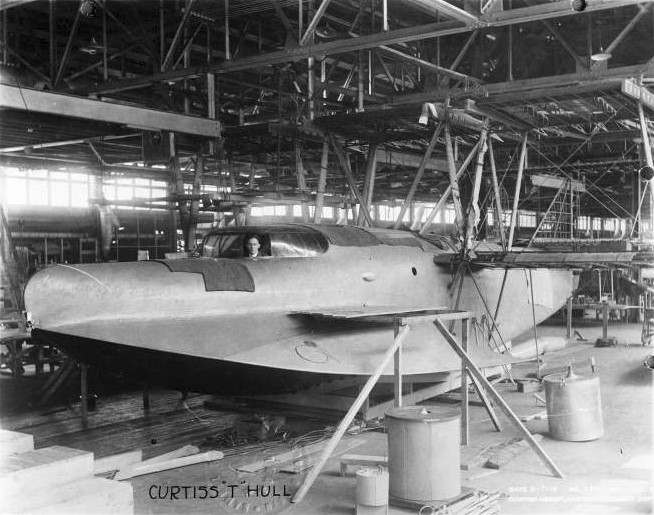
Early press reports showed a large triplane, 68 ft (17.9 metres) and with equal-span six-bay wings of 133 foot (40.5 metre) span. The aircraft, to be capable of carrying heavy armament, was estimated to have an all-up weight of 21,450 pounds (9,750 kilogrammes) and was to be powered by six 140 hp 104 kW) engines driving three propellers, two of which were to be of tractor configuration and the third a pusher.
The British Royal Naval Air Service (RNAS) placed an order for 20 Triplanes. The first one was completed at the Curtiss factory, Buffalo, New York in July 1916. This was the first four-engined aircraft to be built in the United States and one of the largest aircraft in the world.
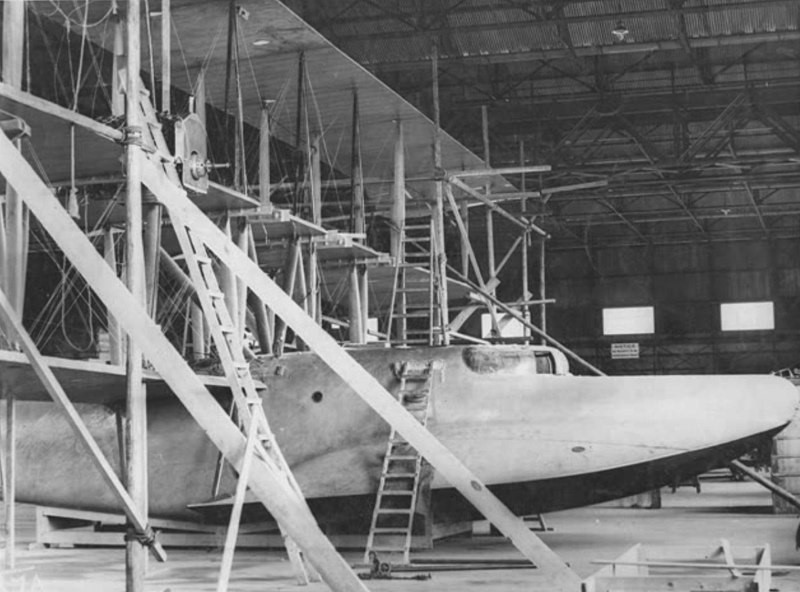
The finished Model T differed from the aircraft discussed in the press in various points. Size and weight were similar, with the upper wing having a span of 134 feet, but the other wings had different spans. It was planned to be powered by four tractor 250 hp (187 kW) Curtiss V-4 engines installed individually on the middle wing, which was unusual for the time. The crew of two pilots and a flight engineer were provided with an enclosed cabin, similar to the Curtiss Model H. To reduce the forces a pilot would need to use on the controls, small windmills could be connected to the aileron cables by electrically operated clutches to act as a form of power assisted controls.
As the planned Curtiss V-4 engines were not available when the prototype, 3073, was completed, it was decided not to fly the aircraft in the United States, but to take it to England by ship where it was reassembled at the naval air station Felixstowe. Initially it was fitted with four 240 hp (180 kW) Renault engines, but these were soon exchanged for four 250 hp Rolls-Royce Eagles.
As the aircraft was damaged beyond repair on the maiden flight it was considered unsuccessful, and the order for the remaining nineteen cancelled. The Wanamaker Triplane did however, provide the inspiration for John Porte of the Seaplane Experimental Station to build a massive five-engined flying boat of similar layout, the Felixstowe Fury.
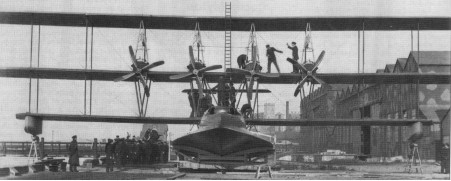
Although 20 Curtiss-Wanamaker triplanes were ordered by Britain, only one, 3073, reached the RNAS.
Engines: 4 × Renault 12F, 240 hp (180 kW) each
Upper wingspan: 134 ft (41 m)
Mid wingspan: 100 ft (30 m)
Lower wingspan: 78 ft 3 in (23.85 m)
Length: 58 ft 10 in (17.93 m)
Height: 31 ft 4 in (9.55 m)
Wing area: 2,815 sq ft (261.5 sq.m)
Empty weight: 15,645 lb (7,096 kg)
Gross weight: 22,000 lb (9,979 kg)
Maximum speed: 100 mph (161 km/h; 87 kn)
Range: 675 mi (587 nmi; 1,086 km) at cruise speed of 75 mph
Endurance: 7 hr
Time to altitude: 10 minutes to 4,000 ft (1,220 m)
Crew: 6
Engines: 4 x RR Eagle Mk1, 250 hp.
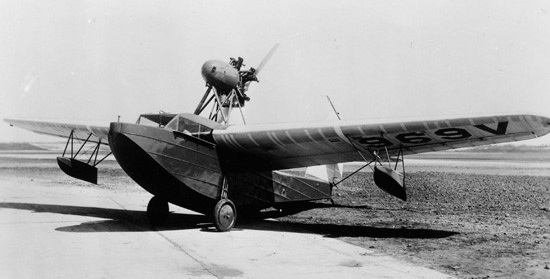
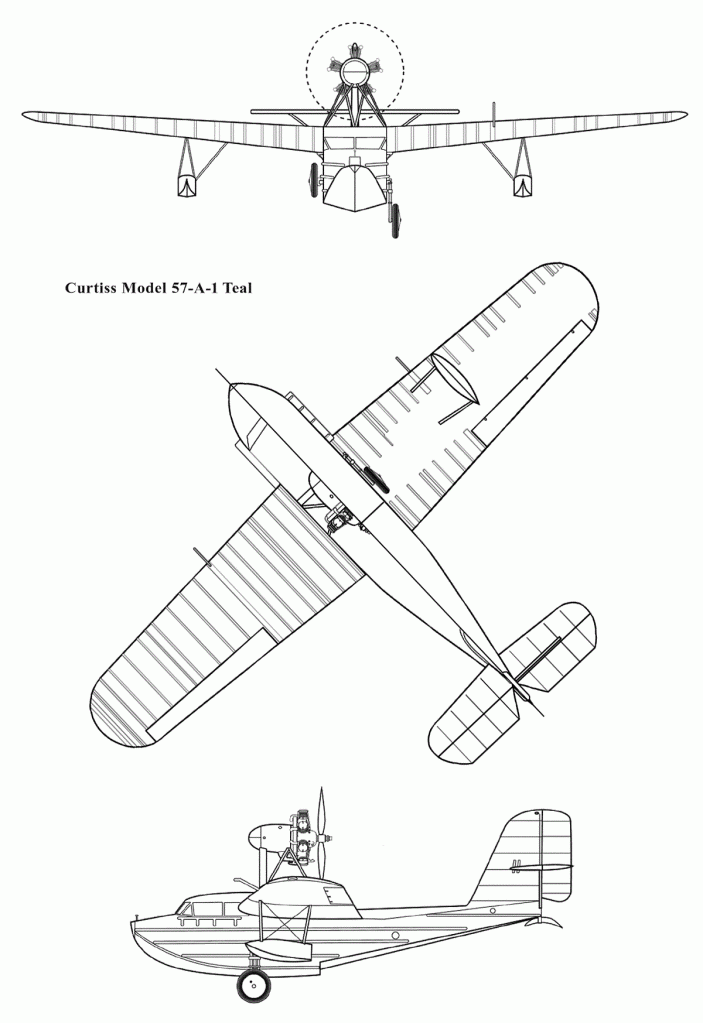
In the late 20s, the Curtiss Airplane and Motor Company developed a Model 57 Teal multi-purpose flying boat. The first A-1 version was completed in 1929.
It was a three-seater with the pusher engine pod-mounted above the wing centre section, equipped with a Wright J-6-5 Whirlwind engine with a power of 165 hp (123 kW).
In 1930, the boat passed flight tests and received a registration N969V. In the same year, the construction of a four-seater B-1 version with a Wright J-6-7 engine with a capacity of 225 hp (168 kW) was started.
Orders for A-1 did not arrive, and then the financial crisis broke out in the USA, as a result of which the company had to stop working on several projects, one of which was Teal. The four-seater B-1 was never completed, although it received a registration number N970V.
Teal A-1
Engine: 1 × Wright J6-5, 165 hp (123 kW)
Length: 30 ft 3 in (9.22 m)
Wingspan: 45 ft 6 in (13.87 m)
Height: 11 ft 6 in (3.50 m)
Wing area: 248 ft2 (23.03 m2)
Empty weight: 2,135 lb (968 kg)
Maximum speed: 99 mph (160 km/h)
Cruise speed: 85 mph (137 km/h)
Range: 450 miles (724 km)
Service ceiling: 10,400 ft (3,170 m)
Rate of climb: 400 ft/min (2 m/s)
Crew: one
Capacity: two passengers
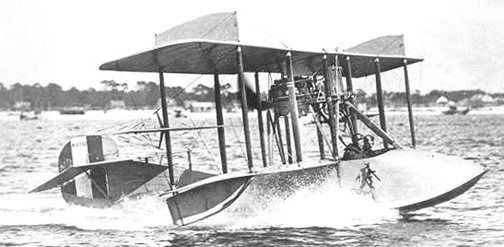
The 1916 Model 18 MF (Acronym was for “Modernized F”) was first powered by the 100hp Curtiss OXX-3. Later motors included 150hp K-6 and 400hp K-12.
Twenty-two were built; A2345-2350, A4403-4418, of which many were modified after WW1 by Cox-Klemin Co for civil use. Post-war production version became the Seagull.
No.124 had a Packard A for tests as MF-2.
Engine: 100hp Curtiss OXX-3
Wingspan: 49’9″
Length: 28’10”
Useful load: 638 lb
Speed: 72 mph
Range: 345 mi
Seats: 2
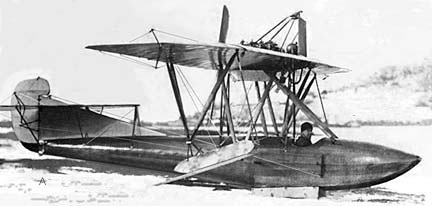
The Curtiss M flying boat was built to order for Raymond V. Morris, a Curtiss employee.
It featured swept-back, birdlike parasol wing and full-length, V-bottom wooden hull.
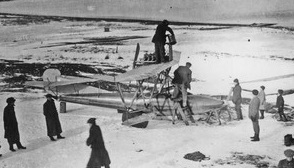
A single seater first flying in January 1914, it was the world’s first monoplane flying boat.
After unsatisfactory tests were performance was marginal, it was converted to a biplane layout at San Diego.
Engine: Curtiss O, 90hp
Wingspan: 34’0″
Length: 25’0″
Seats: 1
 All Aero