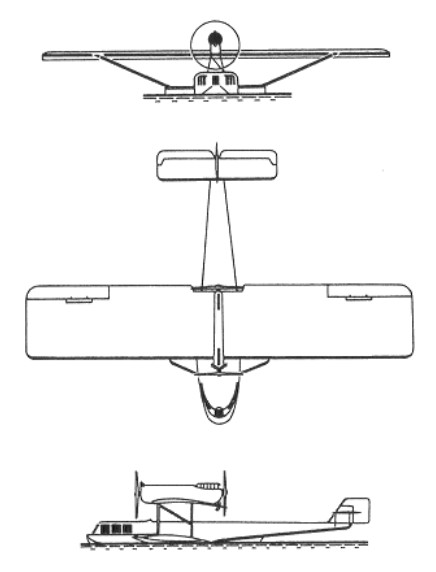
After the armistice, Dornier built a six passenger flying boat, the GsI, with the inher¬ently stable broad beam hull and sponsons that characterized his later boats. First flown in July 1919 the GsI went to Switzerland for test flights, it returned to Fredrichshafen on the 10/12/1919. From there it went on a sales tour to the Netherlands on the 3rd March 1920. The craft was a success, but after a demonstration in the Netherlands, the Allies demanded its destruction because the Control Commission had forbidden that category of aircraft. The GsI was scuttled at Kiel-Holtenaeu on the 25 th April 1920 to prevent it falling into the hands of the Allied Inspection Commission.
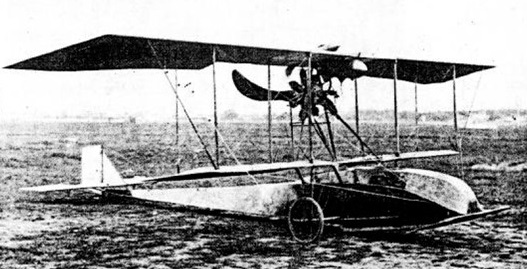
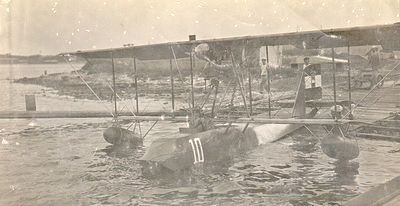
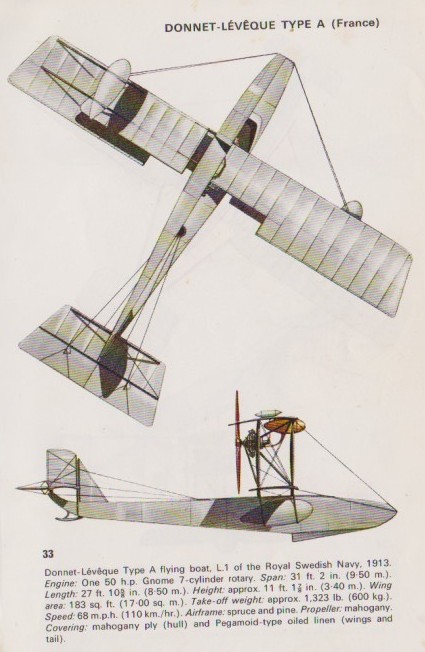
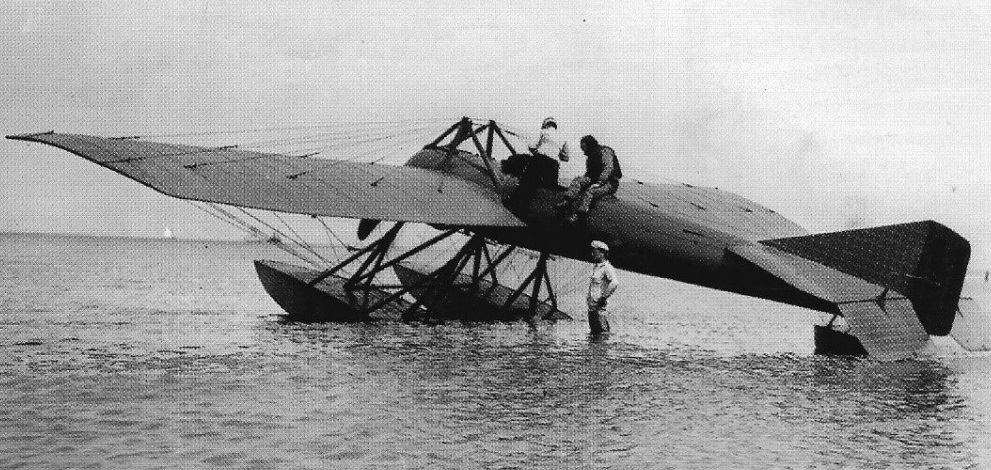
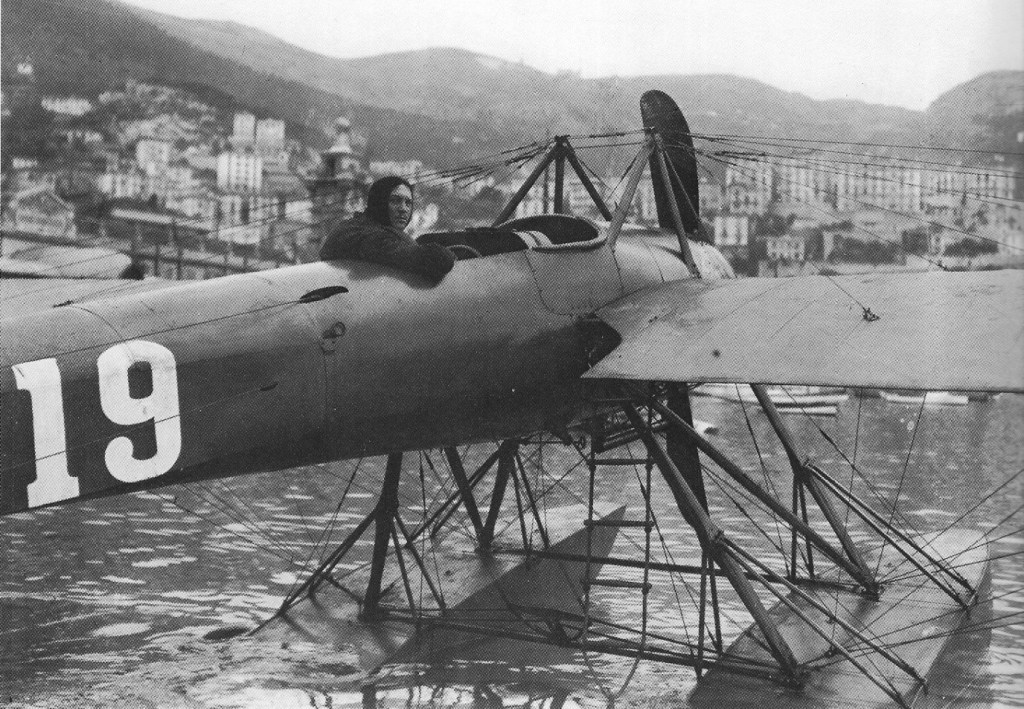
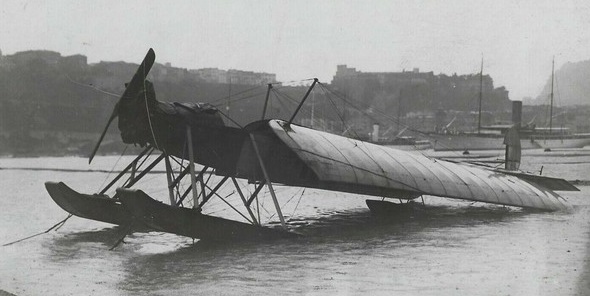
In 1912 four Donnet-Lévêque flying boats type A (no ailerons) and type C (with ailerons) – assigned numbers from 8 to 12 – were obtained by K.u.k. Seeflugwesen. A two-place hulled hydroplane designed by Francois Denhaut, they were powered by a 50 hp Gnome engine.
Aircraft sporting number 10 entered service on January 4, 1913 and was written off in December 1913 due to damage sustained in a crash.
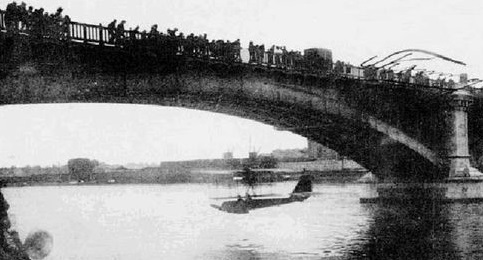
At Argenteuil in 1913, piloted by the marine Konning
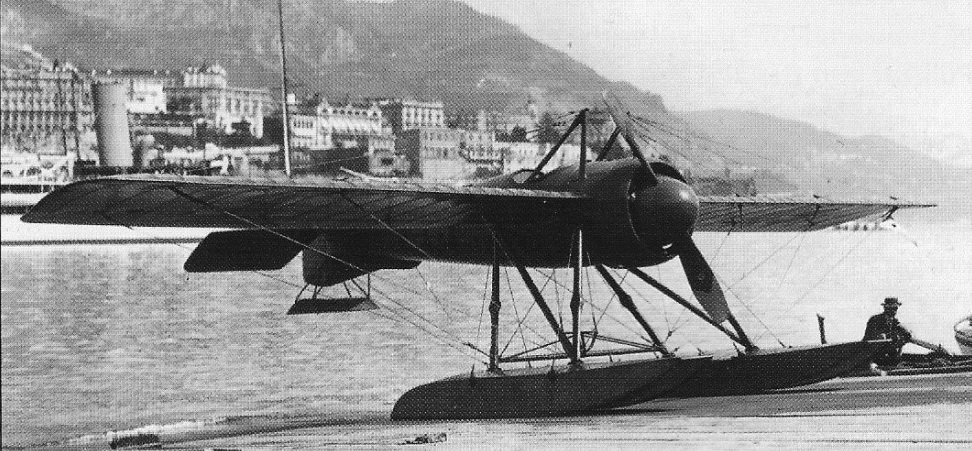
On 9 August 1912, Jean Conneau (also known as Beaumont) attempted a Paris-to-London flight. He took off from the Seine, near Bezons, made stops at Quilleboeuf and Le Havre, and the landed at Boulogne-sur-Mer where an accident cancelled the flight.
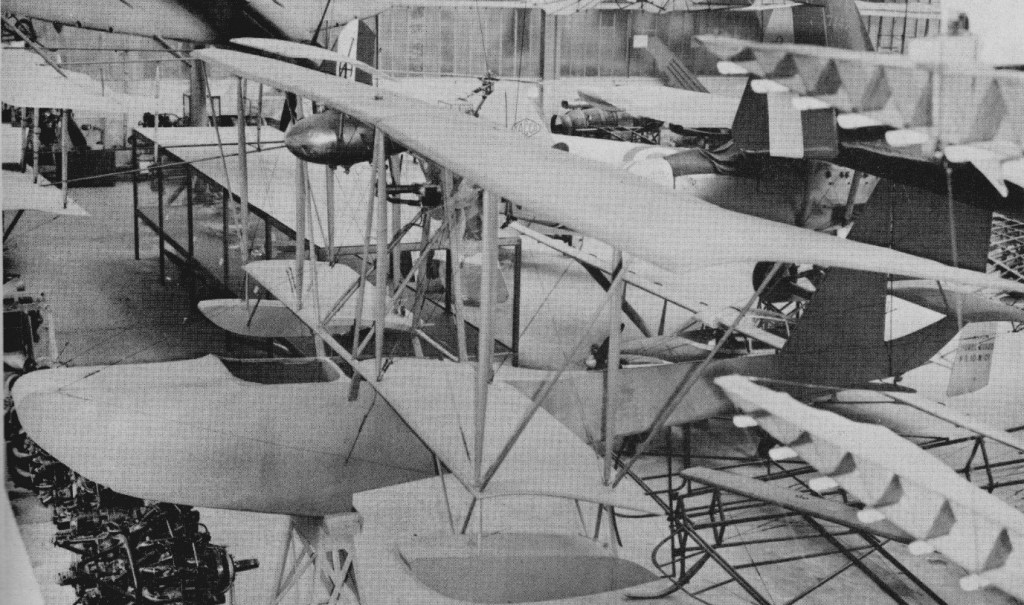
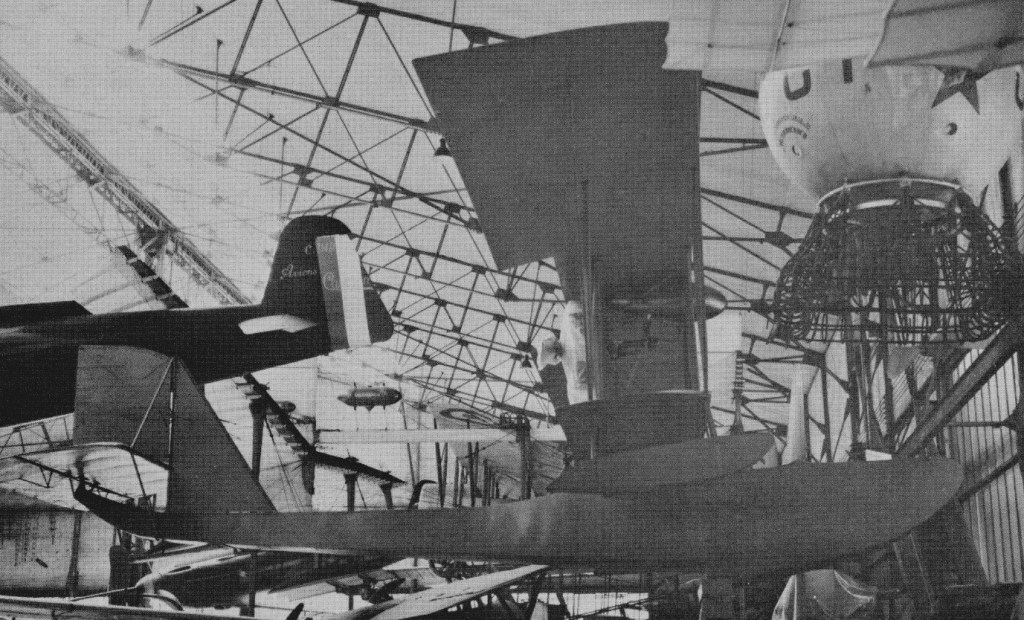
Jean Conneau’s aircraft was donated to the Musse de L’Air by the Schreck concern.
Jean Conneau’s aircraft
Engine: Gnome, 50 hp Wingspan: 31.16 ft Length: 28.86 ft
Based at lie de la Jatte from 1912, designing and building light, fast, single-engined flying-boats for the French Navy, RNAS and others. Total of 58 2/3-seat flying-boats acquired by U.S. Navy for coastal patrol in European waters in 1918, and two sent to U.S.A.
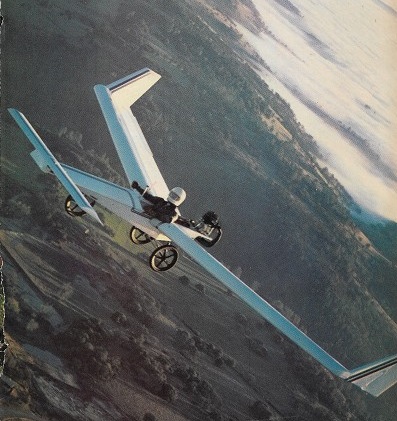
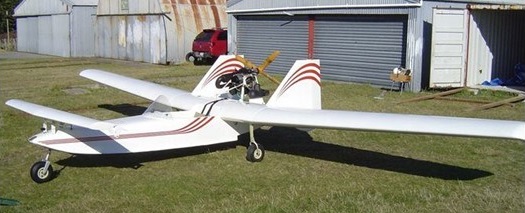
Single seat single engined mid wing monoplane with conventional three axis control. Wing has swept back leading edge, swept forward trailing edge, and tapering chord; two fin tail and canard wing. Pitch control by fully flying canard; yaw control by fin-mounted rudders; roll control by one third span spoilers; control inputs through stick for pitch/roll and pedals for yaw. Cantilever wing; wing profile double surface. Undercarriage has three retractable wheels in tricycle formation; steel spring suspension on all wheels. Push right go right nosewheel steering connected to yaw control. Individual brakes on main wheels. Glass fibre fuselage partially enclosed (total enclosure optional). Engine mounted above wing driving pusher propeller. Composite foam/glass fibre construction with spars in carbon fibre.
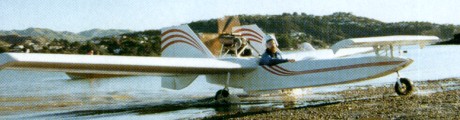
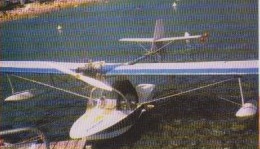
The appearance of the world’s first purpose designed amphibious ultralight created quite a stir when it appeared in prototype form at the ’82 Oshkosh and it has continued to attract great interest ever since.
This composite construction machine has floats at its wing tips and the entire fuselage forms a hull. The main wheels of the XTC Hydrolight retract sideways and outwards and the nosewheel retracts forward, nestling in the nose of the fuselage. Foot operated individual main wheels brakes are fitted.
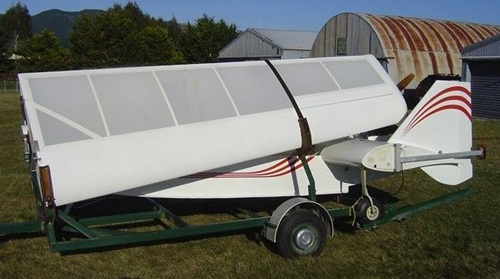
Though originally fitted with a twin cylinder Cuyuna 430RR and later with the Kawasaki TA440 developing 39 hp at 6000 rpm, the XTC Hydrolight is now normally supplied with the KFM 107 engine. The title stands for Cross Terrain Craft and, according to its constructor, is pronounced ‘ecstasy’! To allow trailer transport, the outer wing sections are removable, rigging time being quoted as 10 min with one person. The aircraft is supplied in kit form, requiring some 100 h for completion, for around $6000 in 1982, the exact price depending on the options selected from a long list including bubble canopy, parachute systems, lights, instruments, skis, Tedlar wing covering and a trailer.
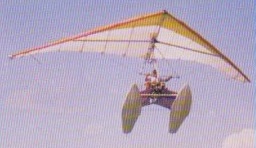
Powered by a Rotax 447 it cruises at around 45-50mph at only 4700rpm and uses around eight litres per hour. You can up the cruise to 60-65mph. The hull is constructed of fibreglass and Kevlar, the wing has a fibreglass D-section leading edge and covered with sail cloth, and a carbon fibre capped spar. Wing attach fittings are titanium, and with extensive use of stainless steel and anodised aluminium in a majority of the rest of the metal fittings this is a very low maintenance airframe even if operated in the sea.
Engine: KFM 107, 25 hp at 6280 rpm. Propeller diameter and pitch 52×22 inch, 1.32×0.56m. V belt reduction, ratio 2.1/1. Max static thrust 170 lb, 77 kg. Power per unit area 0.16 hp/sq.ft, 1.7 hp/sq.m. Fuel capacity 5.0 US gal, 4.2 Imp gal, 18.9 litre. Length overall 15.2 ft, 4.62 m. Height overall 4.8ft, 1.44m. Wing span 32.0ft, 9.75m. Chord at root 5.0ft, 1.52m. Chord at tip 3.0ft, 0.91m. Dihedral 3 degs. Canard span 12.0ft, 3.65m. Canard chord 2.5 ft, 0.76 m. Fin height 3.0 ft, 0.91 m. Total wing area 155 sq.ft, 14.4 sq.m. Main wing area 128 sq.ft, 11.9sq.m. Canard area 27.0 sq.ft, 2.5 sq.m. Total spoiler area 4.0 sq.ft, 0.37 sq.m. Fin area 10.0ft , 0.93 sq.m. Rudder area 8.0 sq.ft, 0.74 sq.m. Main wing aspect ratio 8.0/1. Wheel track 6.3ft, 1.93m. Wheelbase 10.2ft, 3.09m. Nosewheel diameter overall 11 inch, 26 cm. Main wheels diameter overall 11 inch, 26 cm. Floats, dimensions 2.4 x 14.0 ft, 0.71 x 4.26 m. Empty weight 247 lb, 112kg. Max take off weight 500 lb, 227kg. Payload 253 lb, 115kg. Max wing loading 3.22 lb/sq.ft, 15.8 kg/sq.m. Max power loading 20 lb/hp, 9.1 kg/hp. Load factors +4.0, 4.0 design; +8.0, 8.0 ultimate. Max level speed 62 mph, 100 kph. Never exceed speed 80 mph, 129 kph. Max cruising speed 60 mph, 97 kph. Economic cruising speed 50 mph, 80 kph. Stalling speed 25 mph, 40 kph. Max climb rate at sea level 600 ft/min, 3.1 m/s. Min sink rate 250 ft/min at 37 mph, 1.3 m/s at 59 kph. Best glide ratio with power off 14/1 at 40 mph, 64 kph. Take off distance 100 ft, 30 m. Landing distance 200 ft, 60 m. Range at average cruising speed 120 mile, 193 km.
Engine: KFM 107 ER, 22 hp. 2.1:1 reduction belt drive. Wingspan 32ft. Wing area 150 sq.ft. Aspect ratio 6:1. Length 14ft. Empty weight 280 lbs. Payload 250-lbs. pilot plus fuel. Wing loading 3.2 lbs/sq.ft. L/D 16:1. Cruise speed 50 mph. Stall speed 26 mph. Vmax 60 mph. Climb rate 600 fpm. Fuel 5 USgal.
Explorer amphibian design from Dean Wilson, to provide full living accommodation for five people and carry a vehicle or bulk freight loaded via a swing-open tail. First flown 1991.
 All Aero