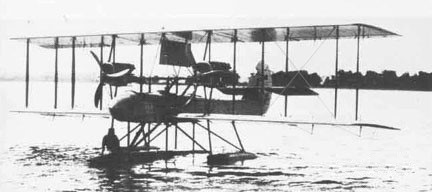
Westland N.1B / N.16 / N.17

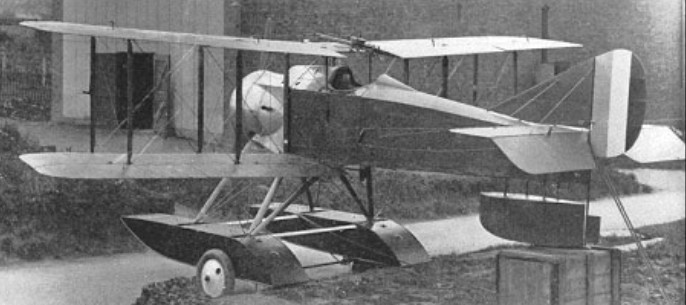
Westland Aircraft began design of its first aircraft in 1917, in response to an Admiralty requirement for a single-seat fighting scout seaplane. In the Admiralty’s N.1B category, the aircraft was designed by Robert Bruce and Arthur Davenport, and was a compact two-bay equi-span biplane of conventional wooden structure and fabric covering. First flown in August 1917, it was powered by a 150hp Bentley BR1 rotary engine. Inboard of the ailerons, on both upper and lower wings, the trailing-edge camber could be varied to obtain the effect of plain flaps. The wings could be folded backwards for shipboard stowage. Armament comprised one synchronised 7.7mm Vickers gun and a flexibly-mounted Lewis of the same calibre above the upper wing centre section. Two prototypes were built and sometimes referred to as the Westland N16 and N17 from their RNAS serial numbers. The first was flown with short Sopwith floats and a large strut-mounted tailfloat whereas the second was used to evaluate long Westland floats that eliminated the need for a tail float. This second aircraft, which lacked the camber-changing mechanism on the wings, also flew with the Sopwith floats and a tail float directly attached to the underside of the rear fuselage. By the time the N.1Bs were on test at the Isle of Grain, the RNAS was experimenting successfully with the shipboard operation of wheeled aircraft and the requirement for a floatplane fighting scout faded away.

Westland N17
Max take-off weight: 897 kg / 1978 lb
Empty weight: 682 kg / 1504 lb
Wingspan: 9.53 m / 31 ft 3 in
Length: 7.76 m / 25 ft 6 in
Height: 3.40 m / 11 ft 2 in
Wing area: 25.83 sq.m / 278.03 sq ft
Max. speed: 175 km/h / 109 mph
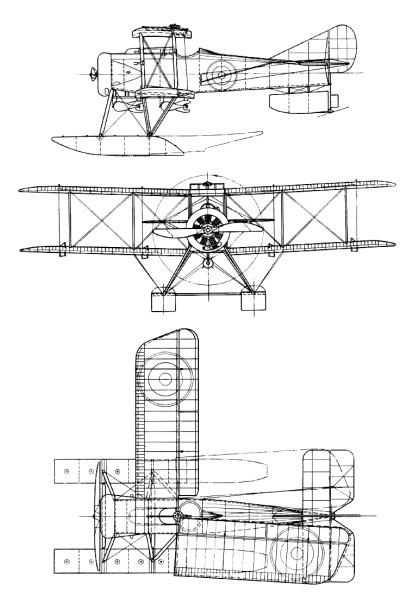
Westland N17

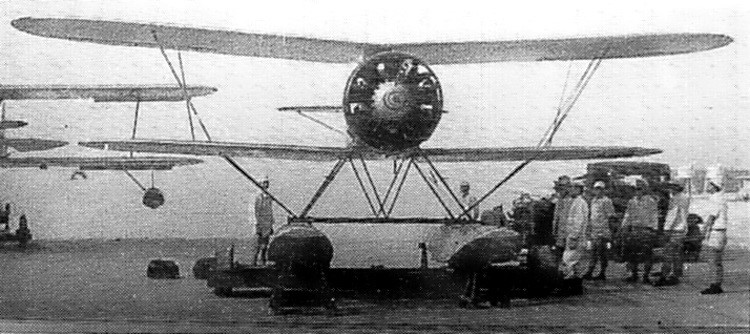
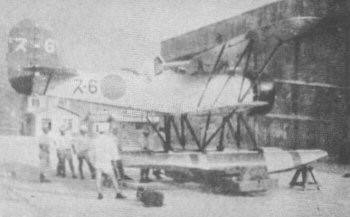
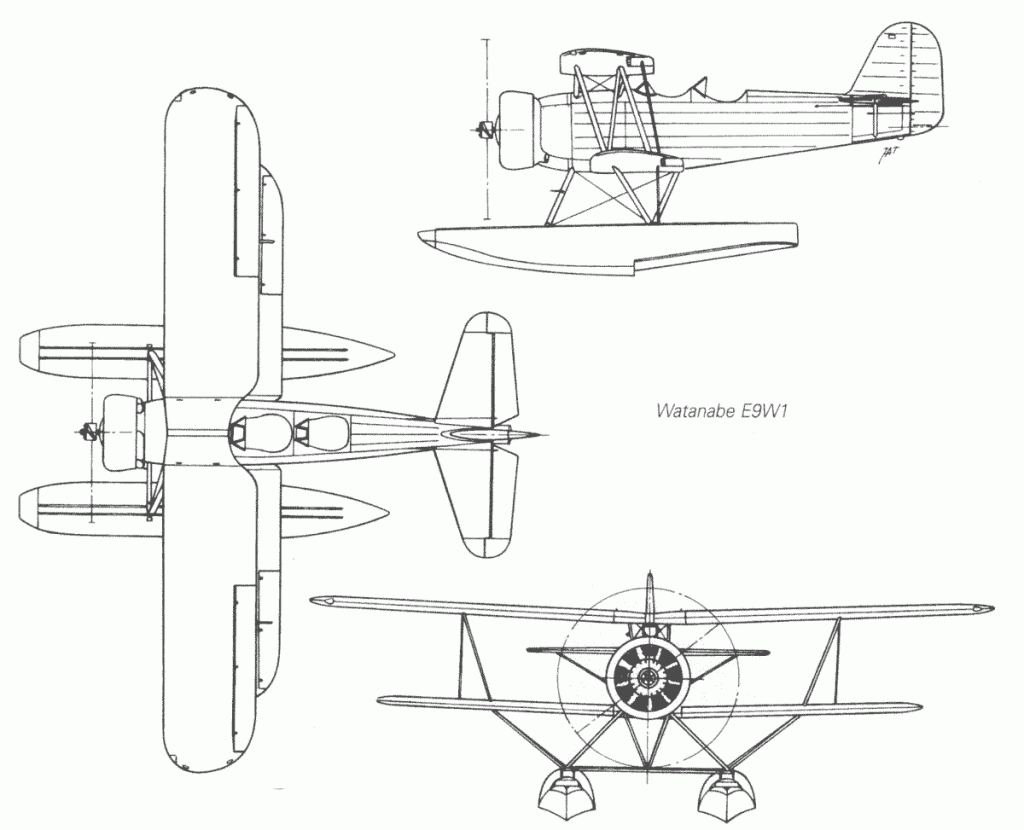
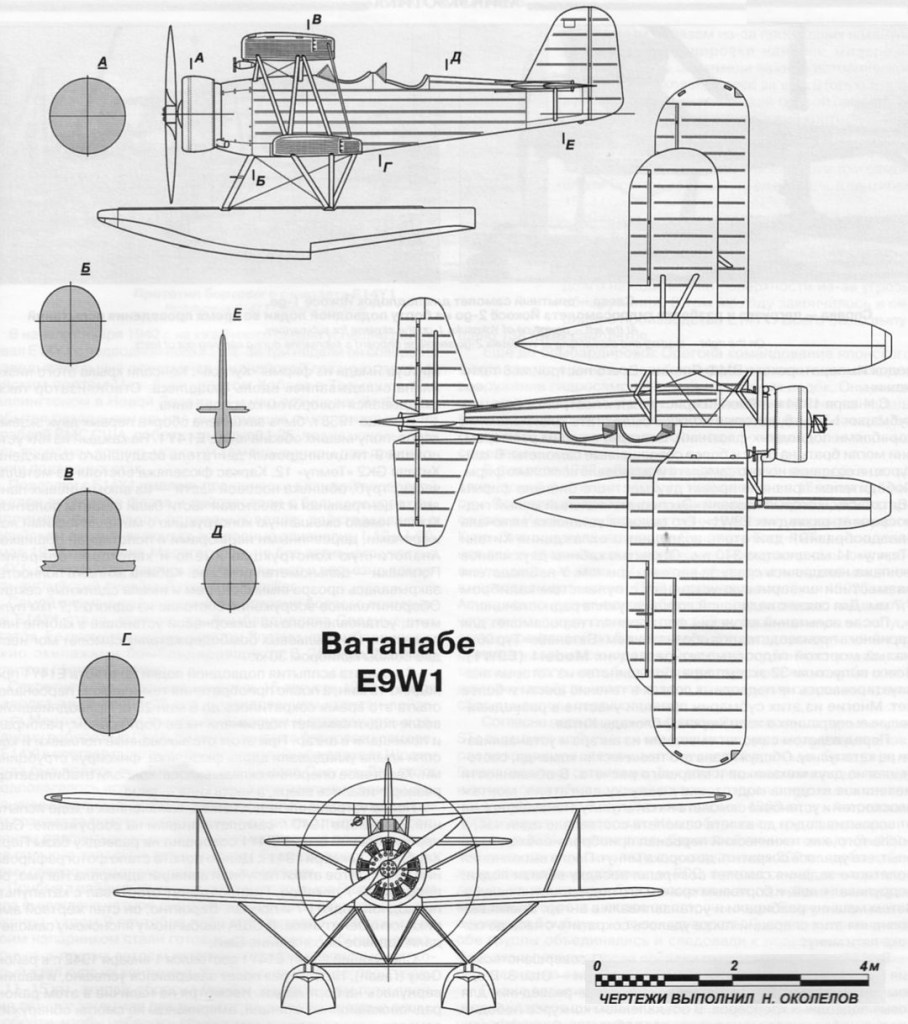
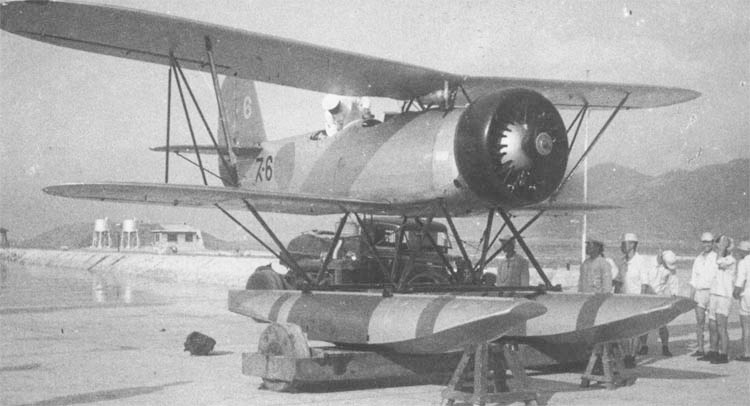
Watanabe E9W1 / Navy type 96 / Kyushu E9W1 / Nakajima E9N1

In January 1934, the Imperial Japanese Navy had a requirement for a two-seat reconnaissance seaplane to be operated from its J-3 type submarines, and placed an order with Watanabe Ironworks for design and development of an aircraft to meet this requirement.

The E9W was a two-seat single-engine twin-float unequal-span seaplane designed to be easily dismantled for hangar stowage on a submarine, capable of being reassembled in two minutes 30 seconds and disassembled in one minute 30 seconds. It was armed with a 7.7 mm (0.303 in) machine gun operated by the observer.

The first of three prototypes flying in February 1935.

Following successful testing of one of the prototypes on the submarine I-5, an order for a production batch of 32 aircraft, designated E9W1, was placed. It was also built by Nakajima as the E9N1.

The aircraft entered service in 1938 with the Imperial Japanese Navy Air Service as the Navy Type 96 Small Reconnaissance Seaplane with the last being delivered in 1940. Although it was in the process of being replaced by the Yokosuka E14Y monoplane, it was still in front line service at the time of the Japanese attack on Pearl Harbor, remaining in service until July 1942, being used to direct their parent submarines onto Chinese ships attempting to pass the Japanese blockade of the South China Sea. The E9W1 was given the reporting name Slim in 1942 by the Allies of World War II.

E9W1
Engine: 1 × Hitachi Tempu II, 224 kW (300 hp)
Wingspan: 9.91 m (32 ft 9½ in)
Wing area: 23.51 sq.m (252.95 sq.ft)
Length: 8.00 m (26 ft 3 in)
Height: 3.71 m (12 ft 2 in)
Empty weight: 882 kg (1,940 lb)
Gross weight: 1,253 kg (2,756 lb)
Maximum speed: 232 km/h (144 mph)
Cruising speed: 148 km/h (92 mph)
Range: 731 km (454 miles)
Endurance: 4.9 hours
Service ceiling: 6,740 m (22,100 ft)
Crew: 2 (pilot, observer)
Armament: 1 x 7.7mm (0.303in) machine gun

Warrior Centaur

Considerations that influenced the layout of the Centaur concept included cabin volume, access, low take-off speed and boat handling duties.

The hull features no transverse step and no forebody chines. This hull accelerates to about seventy percent of take-off speed in displacement mode by which time the water is satisfactorily “hard” and aerodynamic lift takes more than half the weight of the aeroplane off the water. The Centaur encounters no drag hump. This leaves much more thrust available than conventional seaplanes for getting more useful load airborne in a respectable distance. This useful load advantage is further increased by the reduced structural content and weight in the hull, having typically half the beam and surface area of conventional seaplane hulls (floatplanes or flying boats).

The fine bow results in little rotation. Because of the narrow beam, any remaining rotation results in less rise, wave dispersion, spray and wasted energy. The Centaur can handle short steep waves typically twice the height tolerated by equivalent seaplanes.

With the composite vinylester-epoxy laminating resins primary structure largely inset from a secondary shell, the Centaur will tolerate abuse which also aids repair without specialist facilities.

The Centaur’s low stub-wing uses ground-effect aerodynamics to aid low take-off speed. This is helped by a continuous flap through the wing center-section which provides much lift in the propeller slip-stream.
The flap and wings create down-wash on the tail. This down-wash substantially balances the pitching effects of changes in power and flap setting.

Using engineering content near identical to the undercarriage, the outer wing panels can be released and folded back to within the beam of the sponsons, so that the Centaur can be berthed or tied up against the side of a dock or ship, or in marinas. In preparing for flight, as they rotate forward to the locked position, a central stub spar mates with the spar in the wing panel, thus completely removing bending forces from the hinge. The aircraft cannot be flown unless locking is successful and the wings cannot be unlocked unless taxiing at low speed on the surface.

Walsh Bros Seaplane

The business syndicate, displeased with Vivian’s seemingly excessive caution, took possession of the Manurewa; soon after, it crashed and was damaged beyond repair. Recovering from this setback, Leo, with Vivian’s help, began to design a flying boat of the American Curtiss type which he thought would suit New Zealand conditions. The brothers gained the financial and practical assistance of R. A. Dexter, an American engineer and motor dealer in Auckland, who was to be a consistent supporter.

Fifteen months’ spare time work went into the construction of this aircraft; all the work was carried out by the Walsh brothers, Leo and Vivian, with the exception of the steel fittings which were manufactured by Mr R.A. Dexter, an Auckland engineer who was backing the project.

The hull planking was cedar with ash stringers and mahogany ribs; the hull weighed 305 lbs. Aluminium decking was provided on the forward portion of the hull and the after portion was covered with a special cloth stretched over cedar battens. Seven watertight compartments were built into the hull. The two mainplanes (each 41 ft 6 ins long) had front and rear spars of ash with cedar rib. The fabric covering the wings and the tailplane was doped with cellulose. The aircraft was powered by a 10-cylinder 4-stroke Anzani engine fitted in a special housing at the rear end of the top mainplane. An 8 ft laminated walnut and mahogany propellor with brass tips was fitted.

The aircraft was constructed at the Walshs’ home in Remuera and when completed was dismantled and carried to Bastion Pt, Orakei. After re-assembly the aircraft was launched on January 1, 1915. After taxiing trials and final adjustments, Vivian Walsh took off in the flying boat for a short test flight around Bastion Pt. Many practice flights followed and on March 14 carried its first passengers (covering a distance of five miles).
Even with the light weight of this aircraft (1,200 lbs) the 80 hp Anzani radial engine was only just sufficient to keep the aircraft flying and many hours of work by Leo Walsh were required to keep the engine tuned.

In March 1915 Vivian took the first of many passengers on a flight of five miles. The flying boat itself lasted only 15 months before being dismantled and parts from it were used in the building of an im¬proved flying boat known as “The Roberts”.

Engine: 80 hp Anzani
Weight: 1,200 lbs

Wadsworth Flying Fish

In 1911, Detroit industrialist and boat tycoon Frederick Elliott Wadsworth built a hydro-aeroplane named the Flying Fish which debuted at the New York Boat Show. The vehicle was designed to skim on top of the water at speeds of up to 65 mph, with the ‘skipper-pilot’ seated in a wicker chair at the rear of its canoe-like hull. The Flying Fish was successfully tested on the ice of Lake St. Clair but no further development occurred.