A biplane flying-boat
Amphibian
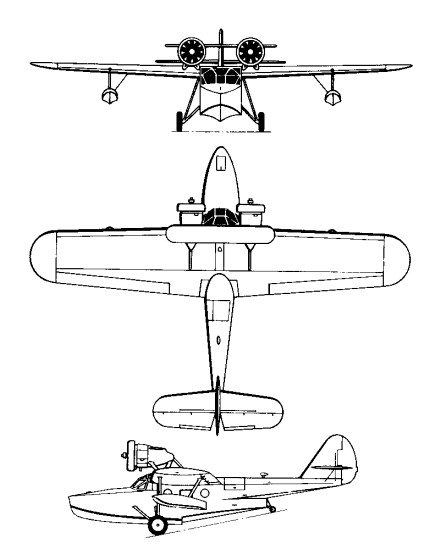
Eastman Sea Rover
A biplane flying-boat
Eastman Flying Yacht
Four-seat flying boat or three-seat amphibian of sesquiplane configuration.
Douglas YB-11 / YO-44 / YOA-5
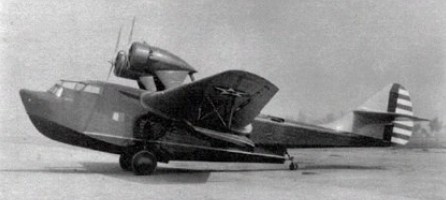
Powered by two Wright R-1820-45 Cyclones rated at 930hp, the YB-11 was to have a crew of five and carry three 7.62mm machine guns. One gun was located in the plexiglas nose turret, and one each in waist positions which were covered by sliding hatches when not in use. The forward part of the wing was of corrugated aluminum with fabric covering from the rear spar back. The fuselage was all metal and the landing gear retracted into depressed wells on the sides.
Before completion, the design was reclassified as an observation type and given the designation YO-44. However, the finished product was delivered with the Air Corps serial number 33-17 as the YOA-5 amphibian. It bore this identification throughout its life.
YOA-5
Max take-off weight: 9080 kg / 20018 lb
Wingspan: 27.36 m / 89 ft 9 in
Length: 21.26 m / 69 ft 9 in
Height: 6.71 m / 22 ft 0 in
Max. speed: 272 km/h / 169 mph
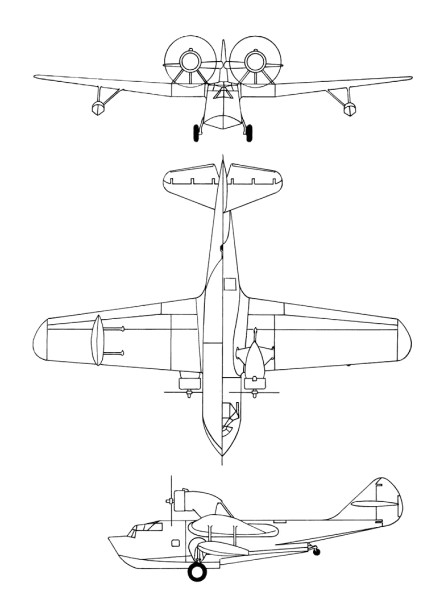
Douglas XP3D
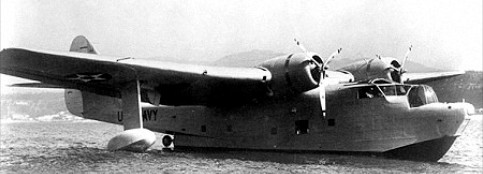
Shortly after Douglas had developed the XP3D-1, a large twin engine seaplane, for the U. S. Navy as a patrol bomber, the Army ordered a scaled down version to be built as an amphibian, the YB-11.
Douglas Sinbad / Dolphin / C-21 / C-26 / C-29 / OA / RD
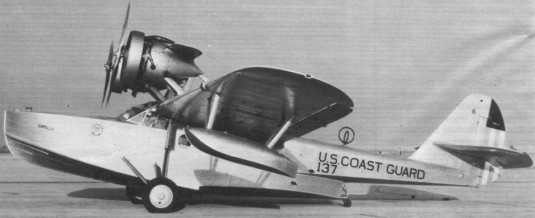
Completed in July 1930 as the non-amphibious Sinbad under civil registration NX145Y, Douglas’s first in-house flying boat design was initiall concieved as a “flying yacht” to be offered on the civilian market. The Sinbad appeared as a monoplane having an all-metal hull of semi-monocoque construction and a two-spar cantilever wing covered in plywood that featured slotted, Handley Page type ailerons. In original configuration, the 300-hp Wright J-5C Whirlwind engines were mounted directly above the wing and encased in nacelles that blended-in with its upper surface.
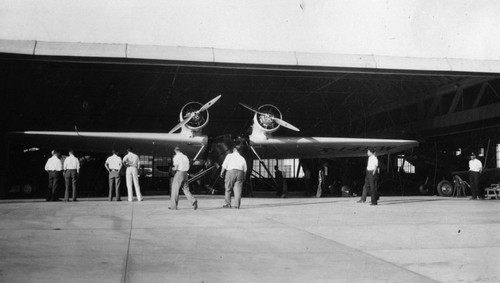
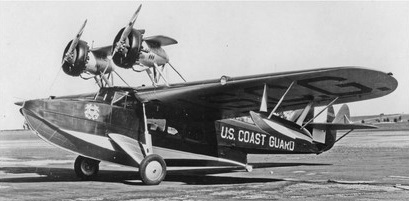
After flight testing revealed the need to raise the thrust line, the engines were moved above the wing on struts, along with an auxiliary airfoil mounted between the conical engine nacelles to add structural support and lift. When no civilian buyers surfaced, the Sinbad was sold to the Coast Guard in March 1931 for $31,500, where it operated for a period of time as call-sign “24 G” without a military designation but later simply listed as the “RD” with no numeric suffix.
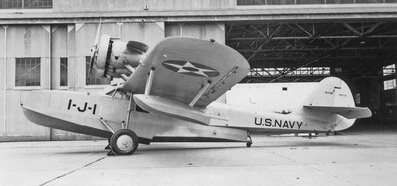
The improved Dolphin, equipped with amphibious landing gear, a modified hull, and 400 hp Pratt & Whitney R-1340 engines, emerged in early 1931 and two, known as the Dolphin I Speccial, were sold n June the same year to the Wilmington-Catalina Airline where they completed close to 40,000 crossings without incident. Military orders followed for 350 hp R-975 Whirlwind powered examples for the US Army Air Corp and another to the Navy as the XRD-1, both delivered in late 1931. Twenty-three more Dolphin variats were procured for the navy and the Coast Guard between 1932 and 1934; three RS-2s in early 1933, two to the Navy and one to the Coast Guard, powered by 450 hp Pratt & Whitney R-1340 engines; six very similar RD-3s in mid-1933 to the Navy; and ten RD-4s in late 1934 to the Coast Guard, powered by 450 hp R-1340-96 engines. One of the Navy RD-2s was specially outfitted for President Franklin D. Rooservelt but there is no record of it being used for such purpose. Navy RDs were assigned to utility squadrons and used primarily as transports, whereas Coast Guard versions saw extensive service in the search and rescue role as flying lifeboats. Two RD-3s were subsequently assigned to the Marine Corps to be used as utility transports. One aircraft reportedly manufactured as an RD-2 was used as a government transport by the Secretary of the Treasury until 1937. After the US entered World War II, RD-4s remaining in service with the Coast Guard were employed briefly for coastal patrol duties.
The authorities are in conflict as to the exact number of Dolphins accepted by the US Army Air Corp, however, it appears at least sixteen were delivered between 1932 and 1933. Two in 1932, powered by 300 hp Pratt & Whitney R-985 engines, eight in 1932 powered by 350 hp R-985-5 engines, as the C-26A; four in 1932-33, powered by 350 hp R-985-9 engines, as the C-26B, and two with enlarged cabins in 1933, powered by 575 hp R-1349-16 engines, as the C-29.
In 1936-37 four OA-4As and one OA-4B were refitted with stainless steel wings, thn another OA-4B became the OA-4C when modified with experimental tricycle landing gear.
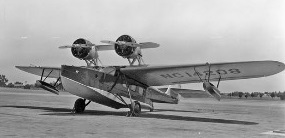
Civilian Dolphins, of which sixteen (including the two Dolphin I Specials) are estiated to have been built between 1933 and 1934, came in many variations ae decreaed by the preferences of individual customers. One registered as NC14286 was completed as a personal transport for William E. Boeing. French industrialist Armand Esders purchased a Dolphin powered by two 550 hp R-1340-51 engines, Standard Oil Company acquired two with 450 hp R-1340-56 engines to be used in overseas operations, and two more were built for the Vanderbilt family. In 1934 Pan American Airways bought two Dolphins that were operated by China National Airways Corp subsidary. After World War II began, one Dophin I Special and one from Standard Oil ended up flying in Australia with the RAAF.
Total produced (all versions) 59
Sinbad
Engines: 2 x Wright J-5C Whirlwind, 300 hp
RD-4
Engines: 2 x Pratt & Whitney R-1340-96 Wasp, 450 hp
Props: 2 blade, ground adjustable, metal
Wingspan: 60 ft 10 in / 18.29 m
Wing area: 592 sq.ft / 55.0 sq.m
Length: 45 ft 3 in / 13.74 m
Height: 14 ft / 4.27 m
Empty weight: 7000.9 lb / 3175.0 kg
Gross weight: 9737 lb / 4323.0 kg
Max speed: 147 mph / 136 kts / 251 km/h
Cruise speed: 110 mph / 117 kts / 217 km/h
Ceiling: 14,900 lb
Range: 660 mi
Seats: 8
C-21
Engine: 2 x Wright R-975-3, 261kW
Max take-off weight: 3893 kg / 8583 lb
Loaded weight: 2659 kg / 5862 lb
Wingspan: 18.29 m / 60 ft 0 in
Length: 13.36 m / 43 ft 10 in
Height: 4.29 m / 14 ft 1 in
Wing area: 52.21 sq.m / 561.98 sq ft
Max. speed: 225 km/h / 140 mph
Cruise speed: 192 km/h / 119 mph
Ceiling: 4330 m / 14200 ft
Range: 885 km / 550 miles
Dornier Composite Sea Star
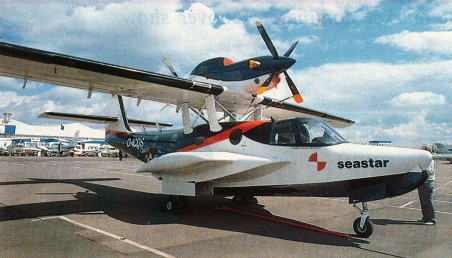
Flying Boat, Germany, 1986.
Dornier Composite Sea Star Article
Dornier succcessfully test flew preproduction Sea Star CD2 with technical modifications in 1988.
Modifications included –
Increase in wing area from 28.5 to 30.5 sq.m.
Replacement of the original P&WC PT6A-112 engines with –13S models of 650 hp at takeoff and 500 hp at cruise. This led to a 400 kg gain in takeoff weight, better climb rate, and up o 11 hrs in single engine (600 hp) mode.
Addition of a small keel on the underside of the hull, resulting in greater stability and reduced takeoff and landing speeds.
Modifications to the upper strut shrouds and air intakes, allowing an increase in empty weight, from 2.6 to 2.8t, and rise in payload capacity, from 1.6 to 1.8 t.
Engine : 2 x PT 6 A 112, 368 shp
Length : 41.011 ft / 12.5 m
Height : 15.092 ft / 4.6 m
Wingspan : 52.165 ft / 15.9 m
Wing area : 306.774 sq.ft / 28.5 sq.m
Max take off weight : 9261.0 lb / 4200.0 kg
Weight empty : 5292.0 lb / 2400.0 kg
Max. weight carried : 3969.0 lb / 1800.0 kg
Max. speed : 184 kt / 341 km/h
Landing speed : 62 kt / 115 km/h
Cruising speed : 167 kt / 310 km/h
Initial climb rate : 1574.8 ft/min / 8.0 m/s
Service ceiling : 28002 ft / 8535 m
Wing load : 30.14 lb/sq.ft / 147.0 kg/sq.m
Range : 300 nm / 555 km
Crew : 2
Payload : 12pax
Claudius Dornier Seastar Gmbh & Co Kg / Dornier Composite
Founded 1982 to develop the Seastar twin-turboprop STOL amphibian (first flown 1984), but became insolvent 1989. Re-formed 1990 as Dornier Composite.
Dornier Do-26
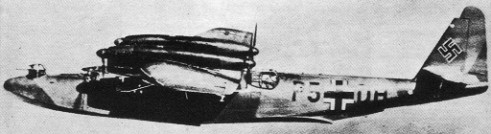
The Do 26 was originally produced for Lufthansa as a mailplane capable of flying non stop between Lisbon and New York. A complete break with previous Dornier flying boat designs, the Do 26 VI, which flew for the first time on May 21, 1938, used a cantilever wing housing retractable stabilizing floats and four 600 hp Jumo 205C diesel engines in tandem pairs. The forward engines drove normal tractor propellers, but the rear pair drove pushers by means of extension shafts which could be raised through 10 degrees to keep the three-blade metal propellers clear of spray during takeoff. The V2, with 800 hp 205D engines, was completed by early 1939, and together with the V1 underwent extensive trials with Lufthansa. Three Do 26s, stressed for catapult launching from support ships, had been ordered by Deutsche Lufthansa in 1937, and the first of these was flown on 21 May 1938. Two of the three were completed before the outbreak of World War II and delivered to the airline under the designation Do 26A. They were never used as intended, across the North Atlantic, and made just 18 crossings of the South Atlantic.
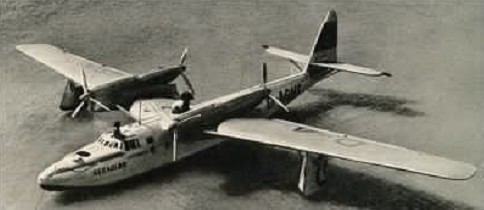
The four passenger B series prototype, the V3, was still under construction at the start of the Second World War in September 1939 and was taken over by the Luftwaffe along with three eight-passenger C series prototypes, the V4, V5 and V6.
The Luftwaffe ordered the last four to be adapted as Do 26D dual role long range maritime reconnaissance aircraft, with a 20mm (0.79 in) MG 151 cannon in a powered bow turret, two glazed blisters amidships each mounting a single MG 15 machine gun, and a third MG 15 below the rear hull. Along with the V2 prototype, the four converted machines were used during the invasion of Norway on supply and communications operations in and out of the narrow fjords. On May 28, 1940, two Do 26s were shot down by Hurricanes of 46 Squadron, RAF, in Rombaksfjord while attempting to land. No further Do 26s were built. After the operations in Norway the remaining Do 26s were withdrawn from front line service. They continued to operate on communications tasks until the lack of spares and servicing problems necessitated their withdrawal from service.
The V1 and “A” model had 205E engines. The sole “B” model, which was destroyed by RAF Hurricanes early in the war, had 205Ea engines and the “C” model had 205D engines.
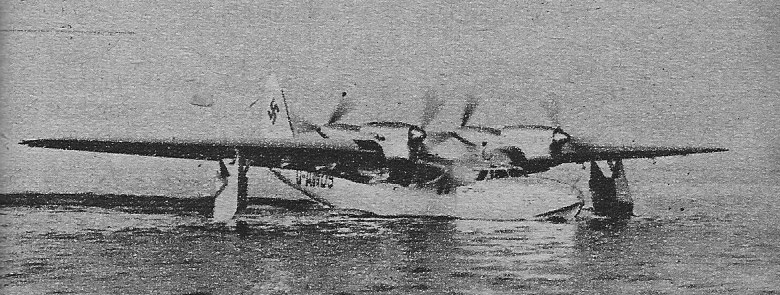
Do 26 V6
Engines: 4 x Jumo 205C, 440kW / 600 hp
Wingspan: 30.0 m / 98 ft 5 in
Length: 24.5 m / 80 ft 5 in
Height: 6.9 m / 22 ft 8 in
Wing area: 120.0 sq.m / 1291.67 sq ft
Gross weight: 22 500 kg (49 604 lb)
Empty weight: 10200 kg / 22487 lb
Maximum speed: 324 km/h (201 mph)
Cruise speed: 310 km/h / 193 mph
Ceiling: 4600 m / 15100 ft
Range w/max.fuel: 9000 km / 5592 miles
Crew: 4

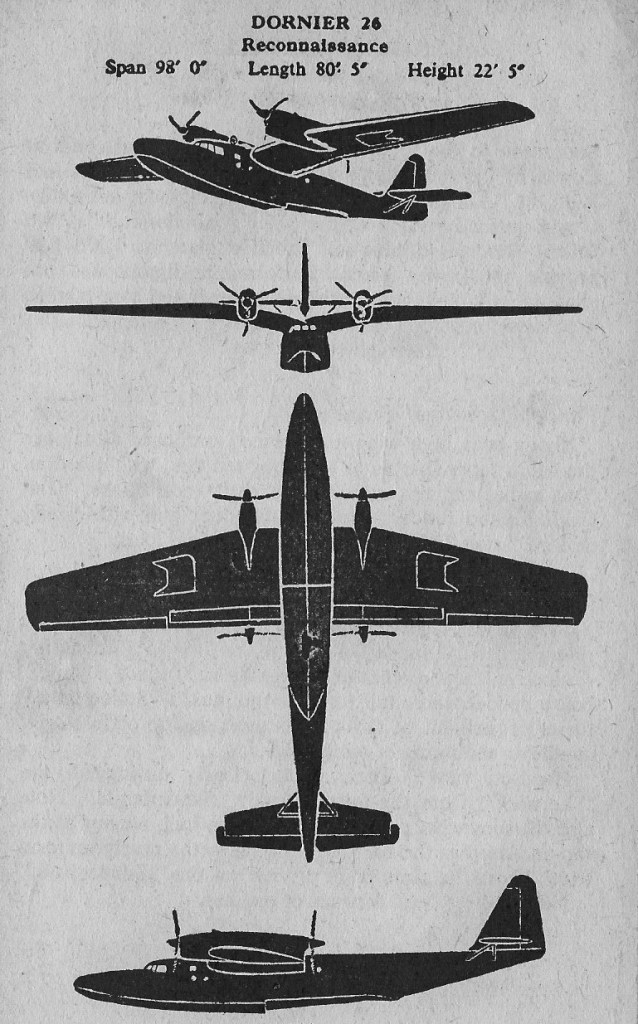
Dornier Do.24
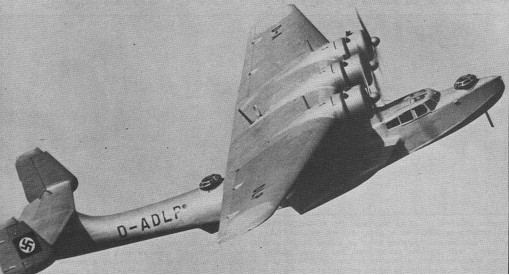
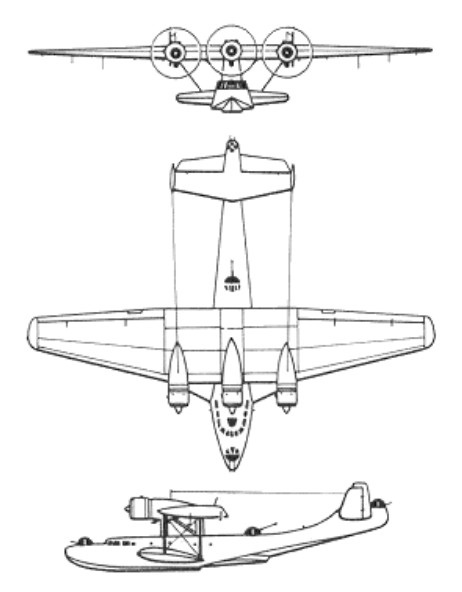
Broadly similar in design and layout to the Do 18, the Do 24 had three radial engines mounted separately on the wing leading-edge, and twin fins and rudders. At the prompting of the Netherland’s Marine Luchtvaartdienst, in 1935 Claudlus Dornier set about developing a replacement for the WAL seaplanes which was already thirteen years old and totally obsolete.
Working to Dutch specifications Dornier installed, Wright R-1820 Cyclones in the Do 24 V3 and V4, temporarily shelving the Jumo 205-powered V1 and V2. D-ADLP, the V4, was used for open sea trials at Bodensee and proved to be a. typically tough Dornier airplane. Plans were made to build 60 Do 24Ks under license in the Netherlands, but following diversion of part of the funding to buy additional Martin 139s (export versions of the B-10 medium bomber) this order was cut to 48 planes. When Germany invaded Holland in 1940, 25 Do 24Ks were captured in various stages of completion and were used for air-sea rescue work in the North Sea and English Channel. The seaplane was evaluated at Erporoblingsstelle-See Travemunde and was judged to be so suitable for this mission that production was resumed in Holland, BMW-Bramo Fafnir radials replacing the American Wrights with the result that the machine was redesignated Do 24T, additional aircraft being built in occupied France as well.
The first of three prototypes to fly, on July 3, 1937, was the Do 24 V3 (D-AYWI), pow-ered by 875-hp Wright Cyclone R-1820-F52 engines. This aircraft, plus the V4 and ten similarly-powered Do 24K-1s were delivered to the Dutch navy, and apart from the Jumo 205C-engined V1 and V2 were the only German-built examples.
Production continued with 28 Dutch-built Do 24K-2s, powered by 1000-hp R-1820-G 102 engines, and carrying revised armament and up to 1250-kg (110-lb) bombs. Twenty-five of these were delivered to the Dutch East Indies. The other three, and eight partially-built K-2s, were captured in 1940 and completed to Luftwaffe standards as Do 24N-1 air/sea rescue aircraft. From this the major ASR/transport version, the Do 24T-1, was developed with 1000-hp Bramo 323R-2 engines. Armament consisted of a 20-mm (0.79-in) Hispano cannon in a dorsal turret and single 7.9-mm (0.311-in) machine-guns in the bow and stern positions. One hundred and eighty of these were built (110 in Holland and 70 by CAMS in France).
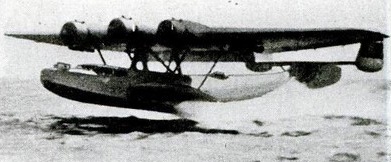
Of the 294 Do 24s built (including prototypes) only 37 saw service with the Dutch East Indies navy, for whom it was originally designed in 1935.
By contrast, some 222 were employed by the Luftwaffe.
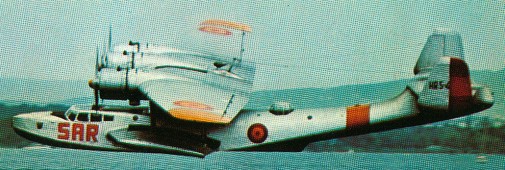
Forty-nine Dutch-built Do 24T-2s were sold to Spain, and in 1944 Spain also purchased 12 generally similar Dutch-built Do 24T-3s, powered by three 1,000 hp BMW engines. These were used to provide an air-sea rescue service in the Mediterannean, the Spanish machines picking up downed crews of any nationality. Only 48 of the French-built T-Is reached the Luftwaffe, the remainder being ‘liberated’ and used as transports by Flottille 917 Tr of the French Aetonavale starting in December 1944 with the first two.
The Dutch East Indies Dorniers operated for some time against Japanese shipping in the southwest Pacific; those of the Luftwaffe saw action in the Baltic, English Channel, Mediterranean and the Black Sea.
Engines: 3 x BMW Bramo 323, 735kW
Max take-off weight: 18400 kg / 40565 lb
Empty weight: 10600 kg / 23369 lb
Wingspan: 27.0 m / 88 ft 7 in
Length: 21.9 m / 71 ft 10 in
Height: 5.8 m / 19 ft 0 in
Wing area: 108.0 sq.m / 1162.50 sq ft
Max. speed: 340 km/h / 211 mph
Cruise speed: 255 km/h / 158 mph
Ceiling: 5900 m / 19350 ft
Range w/max.fuel: 4800 km / 2983 miles
Range w/max.payload: 2400 km / 1491 miles
Armament: 4 machine-guns, 1 x 30mm cannon, 600kg of bombs
Crew: 6
Do 24T-1
Span: 27 m (88 ft 7 in)
Length: 22.05 m (72 ft 4 in)
Gross weight: 16 200 kg (35715 lb)
Maximum speed: 332 km/h (206 mph)
Do 24T-3
Engines: 3 x BMW-Bramo, 1000hp.
Wing span: 88 ft 7 in (27 m).
Length: 72 ft 2.5 in (22 m).
Height: 18 ft 10.5 in (5.75 m).
Max TO wt: 39,249 lb (17,800 kg).
Max level speed: 211 mph ( 340 kph).
Do24ATT –
 All Aero