Fairey N.4

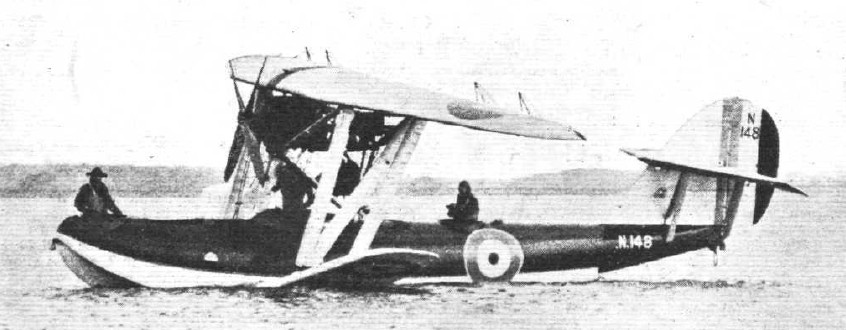
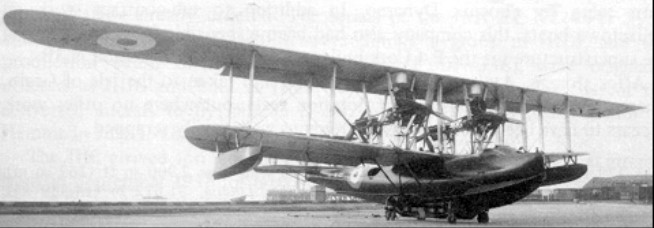
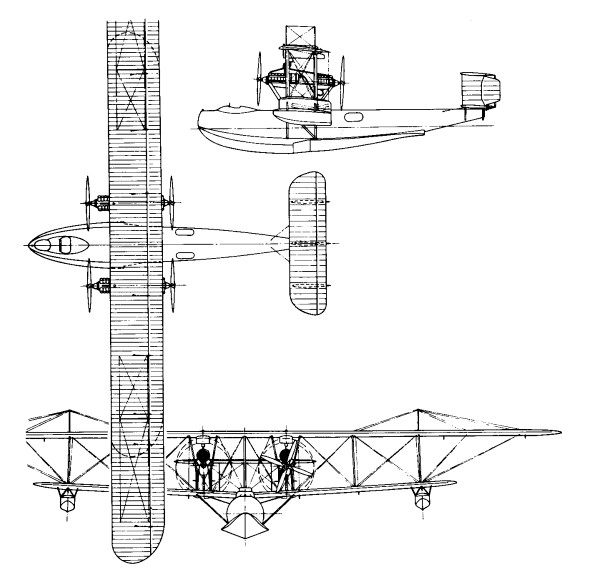
The Fairey N.4 was a 1920s British five-seat long range reconnaissance flying boat. Designed and built by the Fairey Aviation Company to meet an Admiralty requirement for a very large four-engined reconnaissance aircraft, it was the world’s biggest flying boat when it first flew in 1923.
The first N.4 (named Atalanta) first flew in 1923 powered by four 650 hp (485 kW) Rolls-Royce Condor IA piston engines. The hull had been built in Southampton (by boat builders) and delivered to Lytham St. Annes for assembly and the complete aircraft was then dismantled and taken by road to the Isle of Grain for its first flight.
The second N.4 Mk II (named Titania) included improvements and later variant Condor III engines. Titania was not flown straight away and was stored, not flying until 1925.

Engines: 4 × Rolls-Royce Condor III, 650 hp (485 kW) each
Length: 60 ft 0 in (20.12 m)
Wingspan: 139 ft 0 in (42.37 m)
Wing area: 2900 ft2 (269.41 m2)
Gross weight: 31612 lb (14339 kg)
Maximum speed: 115 mph (185 km/h)
Endurance: 9 hours 0 min
Service ceiling: 14,100 ft (4300 m)
Crew: 5
Armament
0.303in (7.7mm) Lewis machine-gun (in nose and beam positions)
1000lb (454kg) of bombs

Fairchild FB-3

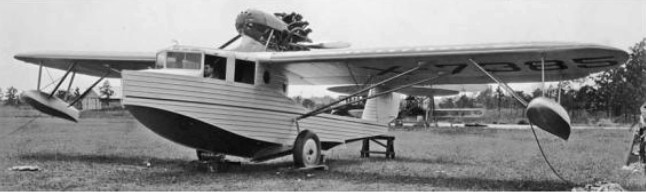
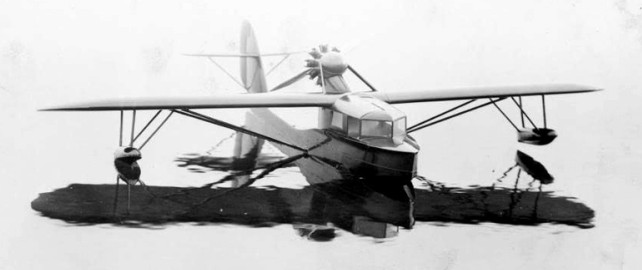
The Fairchild FB-3 (Flying Boat number 3) was an all-metal flying boat designed by Arthur Stelb and developed by the new Fairchild Metal Boat Division of the Fairchild Aircraft Corporation. The prototype was built at Fairchild’s Farmingdale, Long Island facility. The FB-3 was an amphibious high-wing strut-braced monoplane with retractable landing gear, powered by a high pylon mounted pusher configuration radial engine. The two-step hull provided floatation with two outboard floats for stability. The wings used metal spars and ribs with fabric covering. The interior was well finished for its time.

The prototype aircraft (NX7385) was test flown in 1929 but did go into production.

Fairchild FB-3
Engine: 1 × Pratt & Whitney Wasp R-1340, 420 hp (310 kW)
Wingspan: 52 ft (16 m)
Length: 41 ft (12 m)
Maximum speed: 113 kn; 209 km/h (130 mph)
Cruise speed: 100 kn; 185 km/h (115 mph)
Seats: 4

Fabre Hydro-airplane / Hydroplane

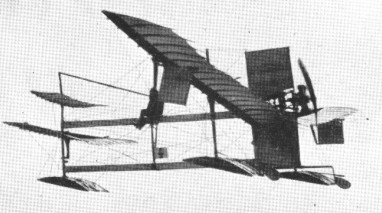
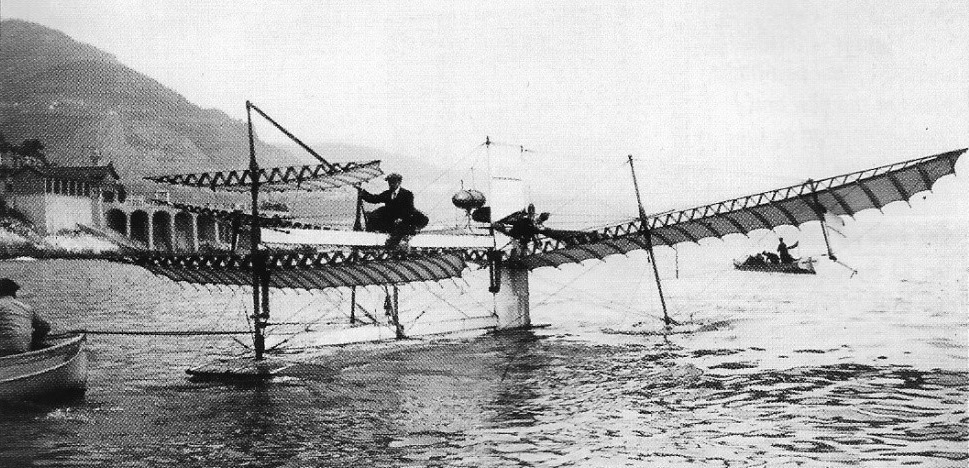
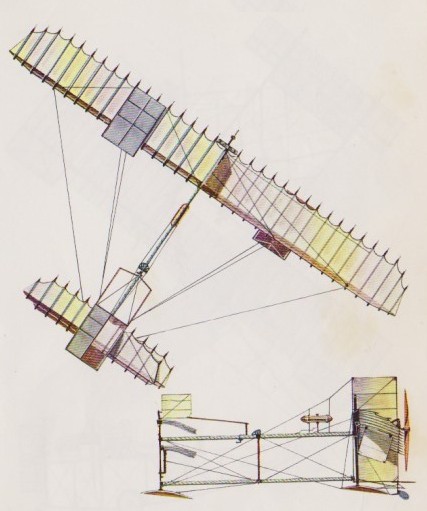
On 28 March 1910, this aircraft built by Henri Fabre made the first successful seaplane flight at Martigues, France. A float equipped aircraft named ‘Le Canard’.

The three-float, Gnôme-powered plane featured a fuselage consisting of two vertically spaced members, and trussed wing spars.

Engine: Gnome 7, 50hp
Span: 45’11” / 14 m
Length: 27’10” / 8.50 m
Height: 12 ft 2 in / 3.70 m
Wing area: 182.99 sq.ft / 17.00 sq.m
Weight gross: 1047 lb / 475 kg
Speed: 55 mph / 89 kph

Explorer PG-1 Aqua Glider

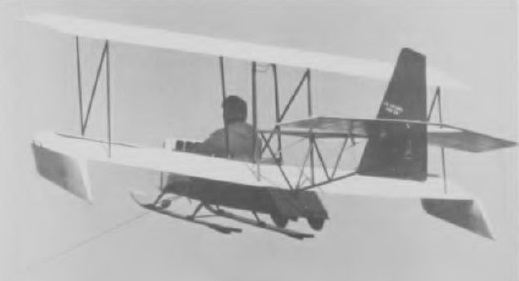
One of the very few waterborne gliders, the Aqua Glider single-seater is also unusual in being a biplane; it is intended for tethered gliding by unlicensed pilots, and is towed behind any speedboat that can attain a speed of 30kt (35mph). The pilot can also cast off from the speedboat when airborne and make a free flight before landing back on the water, but to do this he must have a licence. The Aqua Glider was designed by Col William L. Skliar, USAF (Ret’d), who began design work on it in September 1958, the prototype making its first flight in July 1959. After making about 1,000 flights and being flown by about 60 pilots, the prototype was donated to the Experimental Aircraft Association Museum in Milwaukee.
Approximately 1,000 sets of plans have now been sold to amateur constructors in more than 20 countries all over the world, and about 200 Aqua Gliders were under construction; about 12 are known to have flown, in the Bahamas, Brazil and Japan as well as in the USA. The forward staggered single bay biplane wings are conventional single-spar wooden structures with fabric covering, and there are spoiler-type light alloy ailerons on the lower wing only, immediately behind the main spar.
Balance floats – basically just plate-type fairings – are carried at the extremities of the lower wing tips. The pilot sits in an open cockpit in the unstopped watertight wooden hull and, instead of a conventional planing bottom, take-offs are made on a pair of standard jumper skis, 6 ft in length, attached to small wire-braced struts below the hull. The latter is of spruce with a mahogany plywood bow, bottom skins and sides, the plywood being glass fibre covered below the waterline. There is a towing hook on the nose. The wire-braced tail unit is of spruce with plywood and fabric covering, and is carried on a boom of welded steel tube or wire-braced wooden construction. The rudder is conventional and the tailplane an all-moving one-piece surface.

Span: 4.87m / 16 ft
Wing Area: 14.28 sq.m / 95 sq.ft
Aspect ratio: 5.0
Airfoil: NACA 4412
Length: 13 ft 8 in
Height: 5 ft 0 in
Empty Weight: 83 kg / 180 lb
Payload: 100 kg / 220 lb
Gross Weight: 182 kg / 400 lb
Wing Load: 20.61 kg/sq.m / 4.5 lb/sq.ft
Max speed: 65 mph (in smooth air)
Stalling speed: 35mph
L/DMax: 6.5 at 72 kph / 39 kt / 45 mph
Seats: 1

Euler Hydro-Triplane

A pre-war (1913) model was the Euler Hydro-Triplane a pusher configuration amphibious triplane flying boat featured in the French magazine L’Aérophile. It was propelled by a 70 hp engine Gnome engine, and was made famous also by the Magazine Flight as the best of its kind, this time powered with a 100 hp (75 kW), nine cylinder Gnome Delta rotary engine. It was remarkably the first true amphibian, with the mainwheels placed on the upper and lower pairs of struts. It was never used by the Military.

English Electric Ayr         

Ayr flying-boat

While the company were working on the Kingston they decided to experiment with a design for a small flying boat. The aircraft was a single-engined biplane flying-boat named the Ayr and was built in 1924. The hull was designed by Linton Hope, who had designed the Kingston hulls. An unusual feature was the lower wing, or stub wing mounted low down on the hull. It was designed to carry bombs underneath the stub-wings, these would have been underwater when the aircraft was afloat. During trials the aircraft rolled to the right and refused to become airborne.

Engine: 1× Napier Lion IIB 12-cylinder ‘broad arrow’ piston engine, 450 hp (336 kW)
Length: 40 ft 8 in (12.40 m)
Wingspan: 46 ft 0 in (14.02 m)
Height: 13 ft 8 in (4.12 m)
Wing area: 466 sq ft (43.3 m²)
Empty weight: 4,406 lb (2,003 kg)
Loaded weight: 6,846 lb (3,112 kg)
Maximum speed: 127 mph (110 knots, 204 km/h)
Service ceiling: 14,500 ft (4,400 m)
Armament: 2 x 0.303 in (7.7 mm) Lewis machine guns
Crew: 3

Ellison-Mahon Gweduck

After Ben Ellison reviewed a Widgeon, Ben & Marty Ellison, & Ross Mahon designed the Gewduck around the Widgeon’s shortcomings and, one by one, eliminated them. They started designing the aircraft in 1990. The design involved a hired structural engineer and coaching from David Thurston, and the goal was an airplane that could carry 6 people and 300 lb of cargo.

Gweduck twin engine, six place, 600 hp amphibian. Construction is fibreglass, vinyl-ester resin and carbon fibre. All of the Gweduck’s akins are glass-foam-glass sandwiches of varying thicknesses. The fuselage sides and the wing skins are 3/8 in thick with the closed-cell, polyurethane Last-A-Foam (commonly used in the boating industry).

The landing gear borrows heavily on Grumman concepts with machined billet A-arms pulling the oleo struts up into the fuselage sides and the sealed landing gear wells.

The fuselage basically uses three moulded parts: the sides, the aft bottom, and the forward bottom ahead of the step, which is ¾ inch thick. The entire hull is totally sealed.

The windshield is 3/8 in thick to transfer some of the bow loads up to the top of the hull.

The fuselage is designed to be hosed out with salt water to wash. There is no metal from shoulder-level down, and everything drains into the bilge and is pumped overboard.

The wing has two molded-sandwich skins, top and bottom, and the molded ribs are bonded to the lower skin while it’s still in the mold. The spar is two C-sections back-to back with carbon fibre caps. They bolt the C-sections together and insert 3/8 in aluminium plates between the webs where the wings bolt into the fuselage. Once the top skin is bonded on, the bolts joining the spar halves are superfluous.

The main spar is at 39% and there is a front spar at 10% chord. The leading edge is non-structural for easy repair.

The airfoil is a 15% thick Ribblet, and the ailerons are linked to the flaps, so they go down 15 degrees as the externally hinged Fowler flaps come down 30 degrees.

All of the fuel is in the wings with none in the fuselage. The normal capacity is 200 USG but outboard auxiliary tanks increase the total capacity to 360 USG.

Engines: 2 x Lycoming IO-540, 300 hp
Prop: MTV-9, reversible
Wing span: 52 ft 6 in
Span floats down: 48 ft
Height: 10 ft 10 in
Empty weight: 4200 lb
MAUW: 6000 lb
Fuel cap: 200 USG + 180 USG aux
Cruise speed: 100 kt
Fuel burn econ cruise: 19.5 USG/hr
Seats: 6
Power loading: 10 lb / sq.ft
Wing laoding: 20 lb/sq.ft
Eldred Flyer’s Dream

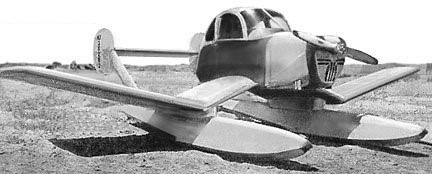
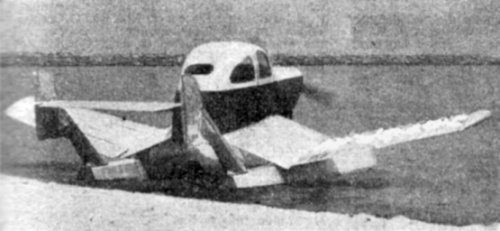
Dewey Eldred’s Flyer’s Dream NX36282 was a very original prototype floatplane designed by Dewey Eldred and Sol Fingerhut. Built in 1946 in Willoughby, Ohio, it featured an automobile-like nacelle mounted on top of a 30-ft span W-shaped wing placed in lowermost position. Its tail was mounted at the end of twin-booms extending attached to the rear of the floats. It used a 125 hp engine and first flew June 4, 1946.

Eklund TE-1

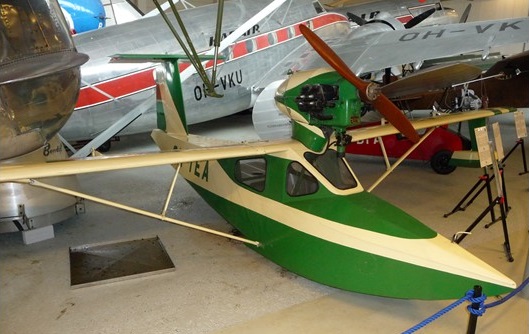
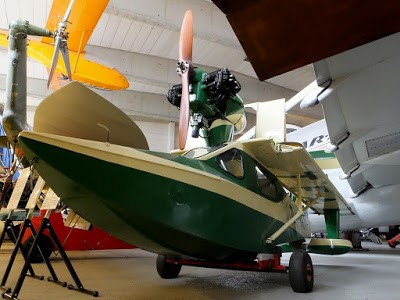
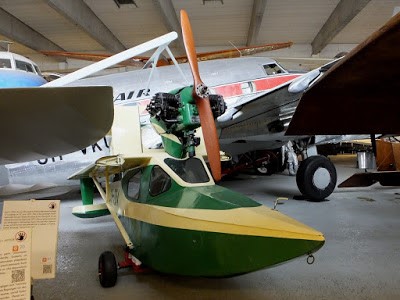
Originally designed by engineer Torolf Eklund as an amphibian with a 28 HP engine. The plane made its first flight on 23 February 1949. Underpowered, a 40 HP engine was installed and the landing gear removed, resulting in the world’s smallest flying boat.

The plane was in the aircraft register in 1954 – 1969 as OH-TEA Serial number: 1. Deposited at the Finnish Aviation Museum since 1981.

OH-TEA