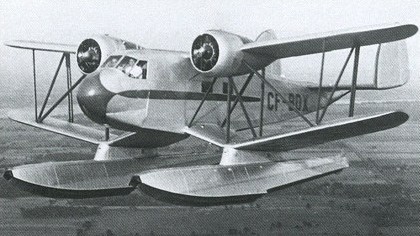
The Fleet 50 Freighter was a twin-engine biplane Canadian general utility aircraft designed and built by Fleet Aircraft. Design was started in 1936 to create a general purpose twin-engined utility aircraft for the Canadian market. It was designed as a short take-off freighter with features added to ease cargo handling. The Freighter was a biplane with the lower wing an inverted gull wing with either a float or wheel landing gear. Two radial piston engines were mounted in nacelles on the upper wing panels.
The fuselage structure was welded steel tubing with duralumin formers, and a semi-monocoque duralumin nose section. The wings were stressed-skin metal structure on the inboard panels and fabric-covered wood beams and duralumin ribs on the outboard panels. The fuselage had room for two crew and up to ten passengers. Large doors and a roof-mounted chain hoist were fitted for use in the cargo role.
The prototype designated the 50J first flew on 22 February 1938, powered by two 285 hp (213 kW) Jacobs L-5MB 7-cylinder radial engines. It was later re-engined with 330 hp Jacobs L-6MB engines and re-designated the 50K. A further four aircraft were built, all with L-6MB engines.
None of the aircraft was operated for long, as the design was under-powered and could not maintain altitude on only one engine.
Fleet 50K landplane Engines: 2 × Jacobs L-6MB 7-cylinder radial engine, 330 hp (246 kW) each Length: 36 ft 0 in (10.97 m) Wingspan: 45 ft 0 in (13.72 m) Height: 13 ft 1 in (3.99 m) Wing area: 528 ft² (49.05 m²) Empty weight: 4600 lb (2087 kg) Gross weight: 8326 lb (3777 kg) Maximum speed: 150 mph (241 km/h) Range: 650 miles (1046 km) Service ceiling: 15,000 ft (4570 m) Crew: 2 Capacity: 10 passengers or freight
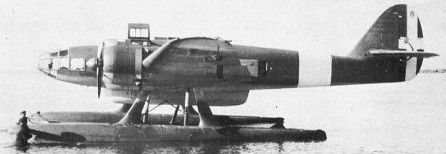
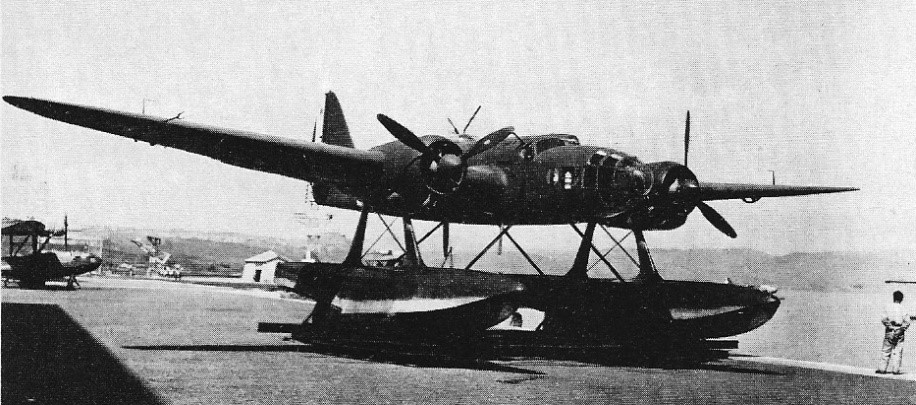
On receiving a joint requirement from the air force and the navy, CMASA, a FIAT subsidiary, developed the RS.14 a floatplane for maritime reconnaissance. 152 examples were produced (including the prototypes), and were used with great success. The aircraft could also be converted for attack missions by fitting a canoe-shaped belly pod able to carry to 400 kg of bombs.
In the summer of 1943 a land-based version with retractable landing gear and 6 12,7 mm machine-guns and a 37 mm cannon was produced and designated A.S. 14. 184 plus 2 prototypes were built.
Fiat R.S. 14 Engines: 2 Fiat A.74 RC.38, 649 kW(882 hp) Empty weight: 5470 kg Takeoff weight: 8470 kg Wingspan: 19,54 m Lenght: 14,10 m Height: 5,63 m Wing Area: 50,00 square metres Max speed: 390 km/h Ceiling: 6300 m Range: 2500 km Climb to 5000 m: 15 minutes Armament: 1×12,7 mm machine-gun in the dorsal turret; one 7,7 machine-gun on each side; 400kg of bombs in a ventral canoe-shaped pod . Crew: 5
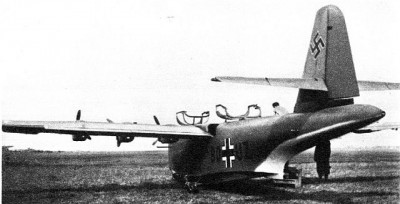
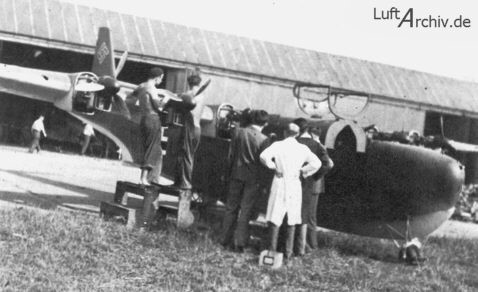
The quarter scale FFG Prag Fg227 was powered by 6 ILO 2 stroke engines rated at 21hp each. It was a ¼ scale BV.238 built by students at Prag under the direction of Dipl.Ing. Ludwig Karch.
A quarter-scale testbed called the FGP 227, registered as BQ+UZ, was deemed necessary to test the aerodynamics and water handling.
Intended to allow flight tests to commence from the manufacturers airfield, the FGP 227 refused to take-off from the grass airfield.
The aircraft was dismantled and transported to Erprobungsstelle See, Travemünde (E-Stelle – flying boat testing station). During transport French prisoners of war loading the wing onto flat-bed trucks allowed it to fall from a crane causing damage which was not repaired until September 1944.
Flight tests commenced in September 1944 as soon as the repairs were completed, but all six engines stopped due to fuel starvation soon after take-off, resulting in a heavy landing on the water. The FGP 227 was again repaired after which the aircraft flew several more times. By this time construction and testing of the BV 238 had started, so no useful data was gleaned from the programme.
Powerplant: 6 × ILO F 12/400 air-cooled two-stroke piston engines, 15.7 kW (21.1 hp) each Propellers: 3-bladed fixed pitch propellers Wingspan: 15.25 m (50 ft 0 in) Length: 11.95 m (39 ft 2 in) Height: 3.54 m (11 ft 7 in) Wing area: 24.24 sq.m (260.9 sq ft) Empty weight: 1,250 kg (2,756 lb) Gross weight: 1,640 kg (3,616 lb) Crew: 2
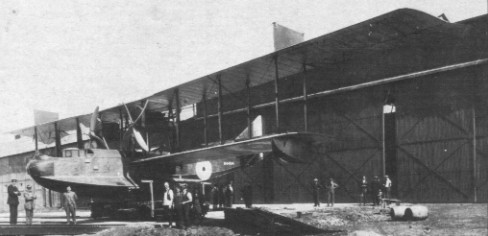
The Felixstowe F.5 is a four-seater seaplane of British maritime reconnaissance aircraft developed at the end of the First World War. Designed to combine the same payload and the operating range of the Felixstowe F.3 with qualities of handiness and the performances of the Felixstowe F.2a. The last aircraft designed by John C. Door, the prototype, N90, first flew in May 1918, the aircraft met expectations, the hull supporting maritime conditions of the North Sea, and production was launched.
To accelerate production and for economic reasons, The F.5 adopted many elements already built for the F.3. Preserving practically only the hull of the prototype, with the aerofoil and the engines of the F.3, the craft had performances lower than the prototype, the F.2a, and even than the F.3.
F.5 entered service only after the First World War ended, and replaced in the RAF the Felixstowe F.2a, F.3 and Curtiss H-16 . It became the standard aircraft of the RAF until the commissioning of the Supermarine Southampton in 1925. Nine squadrons were in the RAF equipped with the F.5.
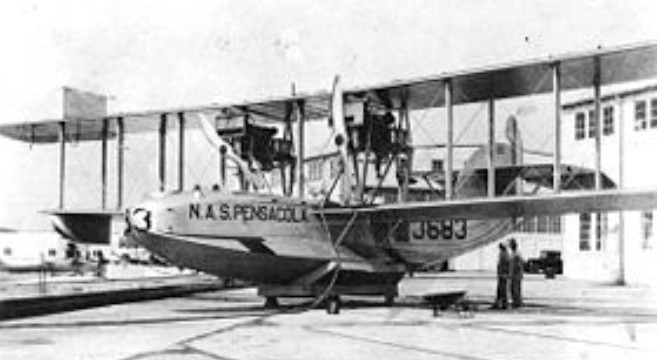
The U.S. Navy was interested in Felixstowe F.5 but wished that the craft be produced in the United States and tailored to their needs. Parts were delivered to Naval Aircraft Factory, Philadelphia, in March 1918, and work began immediately. The Rolls-Royce Eagle were replaced by Liberty. The F5L the prototype made its first flight July 15, 1918. Often wrongly called Curtiss F.5L, 227 were built:
The F.5L remained in service in the U.S. Navy until replaced in 1928 by the PN-12, used for coastal patrols or missions of coastal artillery adjustment.
Between 1920 and 1921, the Aeromarine Plane and Motor Company subsidiary Aeromarine Airways, used 8 F.5L surplus from the U.S. Navy. Equipped for the transport of 10 passengers, these were sometimes called Navy Cruiser and were used in November 1920, between Key West , Florida and Havana , Cuba . One of these seaplanes, from the 1st November 1920, flew the first international air mail service on behalf of the U.S. Post Office. Aeromarine Airways also flew the seasonal services Miami – Bimini – Nassau , New York City – Atlantic City and Cleveland – Detroit from July 14, 1922. These were named Santa Maria / Wolverine, Pinta, Niña, Columbus, Balboa, Ponce de Leon, Buckeye and Mendoza. The latter is famous for having flown over New York with 27 people on board in May 1922.
In 1920, Shorts Bros. export some F.5 to Japan, which then bought a license. The arsenal of Yokosuka to build 10, Aichi 40 and arsenal Hiro 10 before developing in 1927 from F.5 Hiro Type 15 (Hiro H1H).
In 1919, NAF built two F.5L [A4036/4037] with a significantly larger surface modified empennage. This tail will be adopted retroactively on F.5L in service.
In March 1919 Naval Aircraft Factory dispatched to New York City a F.5L specially designed for display. An aeronautical exhibition was organized by the Association of Manufacturers and the cell Aeronefs exposure would allow the public to understand how construtction device. So it was a cutaway that should not fly, but he was still a seral number [A-3882]. Transferred to the Smithsonian Institution in 1920, he became well cumbersome when it was decided ten years later to renovate the building that housed. The Smithsonian therefore proposed to return to the U.S. Navy, and this proposal was accepted, but the Smithsonian finally kept the hull, a wing float, a propeller and a bomb. The U.S. Navy had shelled the rest is all that remains today of the family seaplane designed by John C. Door , with the front part of an unidentified aircraft maintained by the Norfolk and Suffolk Aviation Museum of Flixton, in Great Britain .
Felixstowe F.5 Engines: 2 x Rolls-Royce Eagle VIII, 345 hp Wingspan: 31.6 m Length: 15.0 m Height: 5.7 m Wing area: 131 sq.m Empty weight: 4136 kg Loaded weight: 5765 kg Maximum Speed: 142 km / h Ceiling: 2070 m Range: 840 km Armament: 4 Lewis 7.7 mm Bombload: 418 kg Crew: 4
F-5-L Engines: Two 400-horsepower Liberty 12A Wingspan: 31.6 m (103 ft 9 in) Length: 15 m (49 ft 4 in) Height: 5.7 m (18 ft 9 in) Weight: Empty, 3,955 kg (8,720 lb) Gross, 6,169 kg (13,600 lb)
Porte designed the F.3, a slightly enlarged variant of the F.2, which was put into production. The F.3 soon proved to be inferior in many respects to the F.2, but by the time this was realized full scale production was well under way and could not be halted. This accent on F.3 production inadvertently prevented full importance being given to Porte’s final biplane flying boat design, the F.5.
Span: 31 m (102 ft) (upper), 22.6 m (74 ft 2 in) (lower) Length: 15 m (49 ft 3in) Height: 5.7 m (18 ft 8 in) Maximum speed: 150 km/h (93 mph) at 609.5 m (2000 ft).
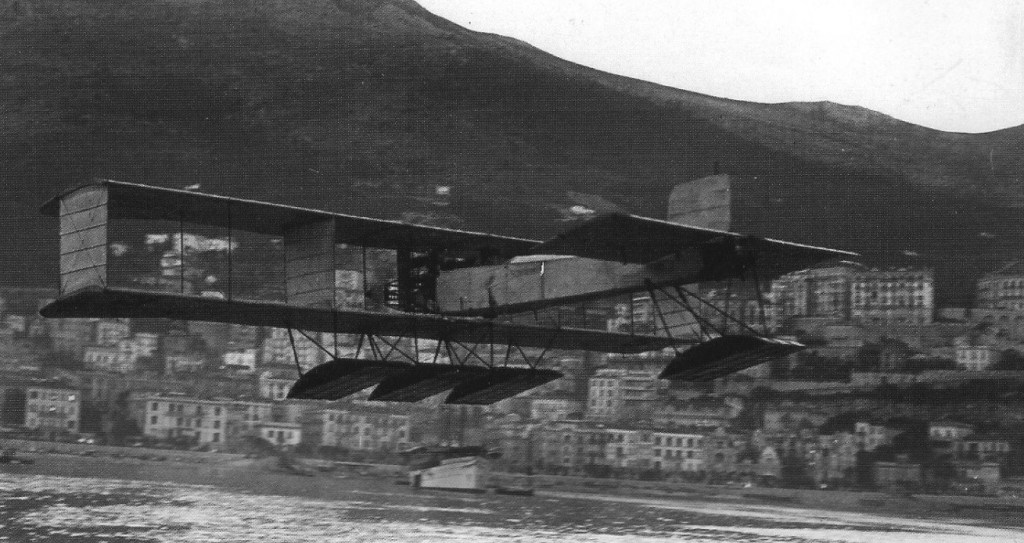
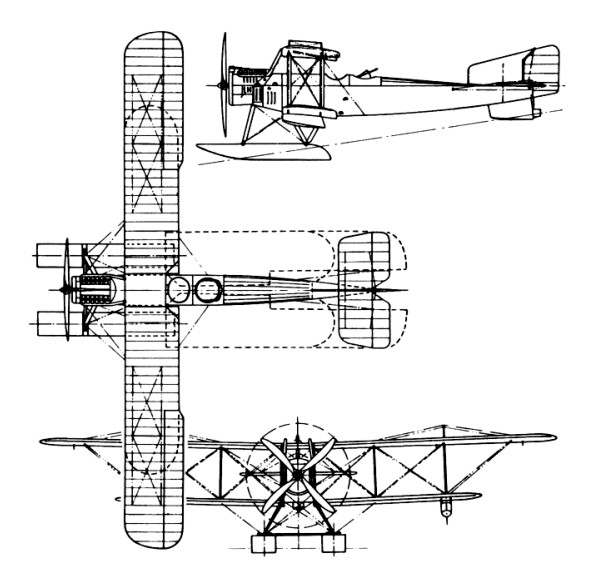
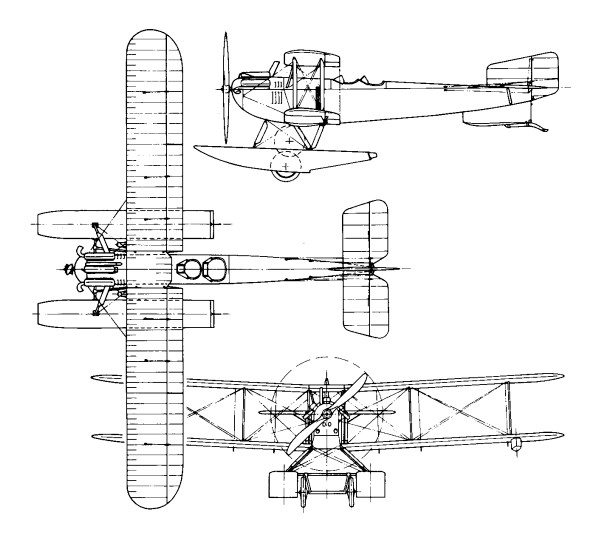
The Fairey Campania two-seat seaplane got its name from the ex-Cunard ocean liner Campania which the Admiralty had converted into a seaplane carrier during the winter of 1914-15. Production aircraft, powered by a 186.3kW Sunbeam Maori II or 186.3-257kW Rolls-Royce Eagle engine, entered service in 1917 and eventually operated as armed-reconnaissance aircraft from the carriers Campania, Nairana and Pegasus and from coastal bases until the Armistice, thereafter also seeing action in Russia. A total of about 60 Campanias were built from the contracts placed with Fairey (for 50 aircraft in two batches), Barclay Curie and Company (for 50) and Frederick Sage and Company/Sunbeam Motor Car Company (for 70).
Engine; 1 x Sunbeam “Maori II”, 190kW Max take-off weight; 2420 kg / 5335 lb Empty weight; 1660 kg / 3660 lb Wingspan; 18.8 m / 61 ft 8 in Length; 13.1 m / 42 ft 12 in Height; 4.6 m / 15 ft 1 in Wing area; 58.3 sq.m / 627.54 sq ft Max. speed; 137 km/h / 85 mph Ceiling; 1520 m / 5000 ft Range w/max.fuel; 450 km / 280 miles Armament; 1 machine-guns, 2 x 30kg bombs Crew; 2
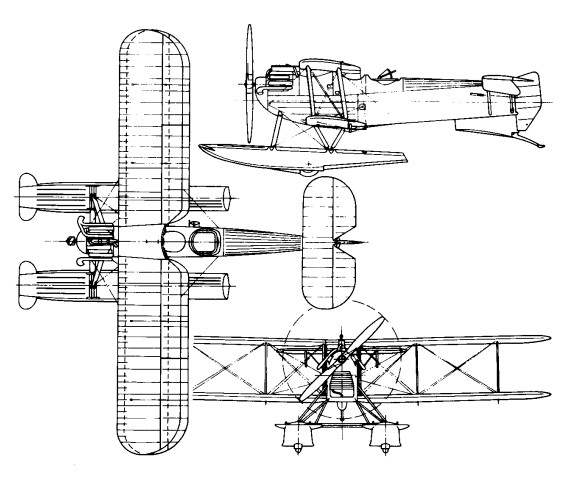
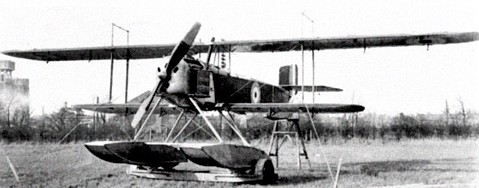
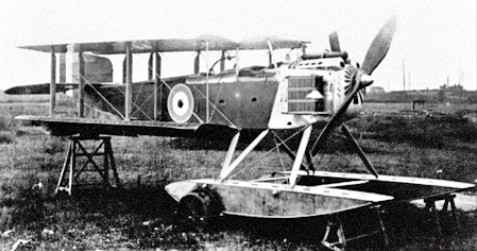
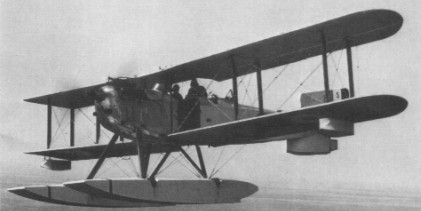
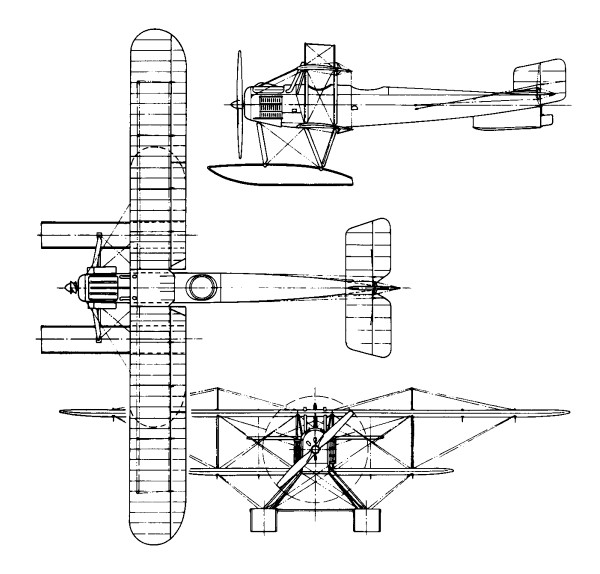
The Fairey N.10 (F.128) was modified in September 1917 as a landplane, with a wheeled undercarriage, and designated Fairey III. This introduced the Fairey Patent Camber Gear evolved for the Hamble Baby, which was then described as a trailing-edge flap and used to increase the lift of the wings. Tested as a two-seat seaplane, the F.128 was known as the Fairey III. With a single frontal radiator behind the propeller and the floats replaced by a wheel landing gear, the designation became Fairey IIIA. One N10 (III) even had its 46 foot wings reduced to about 25 feet, fitted with floats and entered in the 1919 Schneider Trophy Race. The race was flown, but foggy conditions prevented anyone from properly completing the course. This N10 (III) – at one stage G-EALQ – served as a prototype – floats on, floats off – wings long, wings short – 450 hp Napier Lion and so on. Fifty examples were ordered as ship-borne two seat bombers, and production began in 1918 (N2850-N2899), and the first IIIA was flown on June 6, 1918. Powered by a 260 hp Sunbeam Maori 12 cylinder engine, it had 46ft 2in equal span two bay wings; the variable camber being fitted to the lower wing only. The end of the war prevented any widespread use of the IIIA, however. The IIIB was also produced in small numbers as a two seat floatplane bomber, and a few examples saw active service before the Armistice mainly on coastal patrols around the United Kingdom. The IIIB had float landing gear, increased wing area, and ailerons on the upper wing in addition to the Patent Camber Gear on the lower. Both versions employed a 260 hp Sunbeam Maori engine, and could carry a bombload of approximately 272 kg (600 lb). The IIIB did have the top mainplane span increased to 62ft 9in was a specially strengthened catapult version. It seems that about eighty-two IIIAs and Bs were built – some later converted to the IIIC.
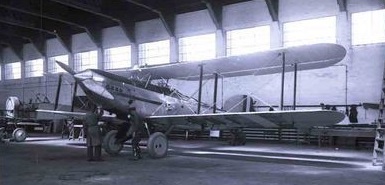
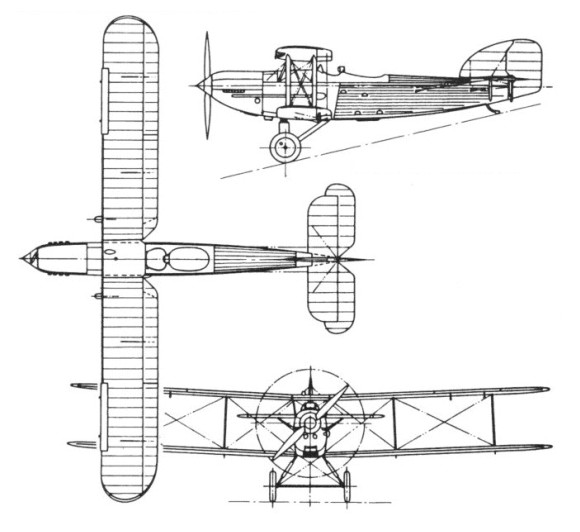
The third variant to be designed and produced during 1918 was the IIIC, a seaplane which had a performance increase of some 14%. Powered by a Rolls Royce Eagle VIII engine, the IIIC total production of 36 machines were all either IIIBs converted on the production line, or built as IIICs from that line. Too late for war service in 1918, at least seven examples saw operational duties with the North Russian Expeditionary Force, based at Archangel, in 1919. Four IIICs appeared on the Civil Register later, one of which, G-EBDI (ex N9253), took part in an attempted global flight in 1922, but finally sank in Far Eastern waters on August 24,1919. Progression in design next produced the IIID variant, first flown in prototype form in August 1920. An overall total of 227 IIIDs were eventually built, and the type’s adaptability to both float and landplane configurations gave it a relatively long life. The prototype IIID, N9450, retained the Eagle VIII engine and made its first flight in August 1920 as a seaplane, and an initial production batch of 50 machines was put in hand. Of the 207 IIID built for service with the RAF and Fleet Air Arm, 152 were powered by Napier Lion IIB, V or VA engines. On 30 October 1925, a IIID became the first standard FAA seaplane to be catapulted from a ship at sea. In landplane form, the IIID was one of the first service aircraft to have oleo-pneumatic (oil/air) shock-absorbers. Six IIID seaplanes went to the Australian government in August 1921. Several other European coun¬tries purchased a few machines in the same period. Copies were sold to Sweden, Portugal, and Netherlands. Long distance flights characterised the IIID era; Portugese IIIDs flew across the Southern Atlantic; 4 RAF IIIDs on a Cairo-Cape-Cairo flight in 1926. Led by Wg Cdr C. W. H. Pulford, between 1 March and 21 June 1926 IIIDs completed a flight of almost 22,530km, Cairo-Cape Town-Cairo and thence to Lee-on-Solent. At no time throughout the period of almost four months was any delay caused by mechanical failure of any of the aircraft. They operated from Singapore, Shanghai, British Guiana and Australia. The basic design was still much the same; 46ft span, double bay, variable camber, Napier Lion (or alternating R.R. Eagle VIII). In service from 1924 until 1930 the IIID played a significant part in the development of military aviation. Last in the III series was the IIIF. Originally designed to meet a 1924 specification which required a 3 seat spotter reconnaissance aircraft for the Fleet Air Arm, the IIIF was a much modified development of the IIID, having an all metal fuselage and propeller, folding wings, and easy change to either wheeled or float undercarriage. The first prototype, N198, first flew on 19 March 1926, and initial deliveries of production aircraft went to various naval units during 1927. The Fairey IIIF had no dual controls and were used extensively on naval co-operation with its two man cockpit aft of the pilot. No raked wings, no stagger, no sweep back, the top wing in perfect symmetry with the bottom. Although many of the same characteristics still applied it was a vastly improved design over the IIID. Nearly 600 of these were built.
Fairey IIID
It was in Fleet Air Arm use that the IIIF made its largest contribution, serving aboard every British aircraft carrier of the time, as well as ashore with many naval air stations, training establishments, and specialized naval schools. It also became the vehicle for a variety of experiments and testing in many roles; including catapult trials, landing on a carrier with strengthened float and empennage, and many trials of radio-controlled aircraft. The IIIF was also subjected to many years of scientific tests at the RAE, Farnborough. At least 25 IIIFs were purchased by non British governments, including Russia, Ireland, Argentina, Greece, Chile and New Zealand. In all a total of 622 Fairey IIIFs were built, of which 243 were RAF versions and the rest FAA variants. At least three examples recorded as still in RAF service (as target tugs) as late as February 1941.
Fairey IIIF Irish Air Corp
Two further developments, the IIIF Mk V and Mk VI, were to give further service under the designations Gordon and Seal respectively, but were merely the final examples of a line of Fairey III series aircraft which had spanned almost 23 years of service usage.
F.128 Engine; 1 x 260hp Sunbeam Maori II 12-cylinder in-line engine Max take-off weight; 4159 kg / 9169 lb Empty weight; 2970 kg / 6548 lb Wingspan; 46.2 m / 151 ft 7 in Length; 36 m / 118 ft 1 in Height; 11.10 m / 36 ft 5 in Wing area; 476 sq.m / 5123.62 sq ft Max. Speed; 104 km/h / 65 mph Ceiling; 14000 m / 45950 ft Armament; 1 x 7.7mm machine-gun, 2 x 50kg bombs Crew; 2
IIIA Span: 14.07 m (46 ft 2 in) Length: 9.45 m (31 ft) Height. 3.25 m (10 ft 8 in) Engines: 260 hp Sunbeam Maori Maximum speed: 175.4 km/h (109 mph). Service ceiling: 4572 m (15000 ft).
IIIB Engine: Napier Lion XIA, 570 hp. Wing span: 62 ft 9 in.
IIIB Engines: 260 hp Sunbeam Maori Span: 19.13 m (62 ft 9 in) Length: 11.3 m (37 ft 1 in) Height: 4.27 m (14 ft) Maximum speed: 152.9 km/h (95 mph) Service ceiling: 3139 m (10300 ft).
IIIC Engine: 375 hp RR Eagle VIII Span: 14 m (46 ft 1 in) Length: 11.3 m (37 ft 1 in) Height: 4.27 m (14 ft) Maximum speed: 177.8 km/h (110.5 mph). Service ceiling: 2774 m (9100 ft).
IIID Engine: 375 hp RR Eagle VIII or 450 hp Napier Lion II. Span: 14 m (46 ft 1 in) Length: 11 m (36 ft 1 in) Height. 3.96 m (13 ft) Maximum speed: 193 km/h / 120 mph Service ceiling: 6096 m (20000 ft) (Landplane/Lion).
IIIF prototye Length: 11.07 m (36 ft 4 in) Height. 3.83 m (12 ft 7 in)
IIIF Engine: Napier Lion XIA, 570 hp / 425kW. Span: 13.94 m (45 ft 9 in) Length 34ft 4in. Height 14ft 2in. Wing area; 41.2 sq.m / 443.47 sq ft Empty weight: 1779 kg / 3923 lb Loaded weight: 2858 kg / 6301 lbs Maximum Speed: 120 mph. Ceiling; 6095 m / 20000 ft Maximum speed: (Mk 1 landplane) 241.4 km/h (150 mph) Armament; 2 x 7.7mm machine-guns, 220kg of bombs
IIIM – Engine: Napier Lion XIA, 570 hp.
IIIM/B Engine; 1 x Napier Lion XIA, 425kW Max take-off weight; 2858 kg / 6301 lb Empty weight; 1779 kg / 3922 lb Wingspan; 13.94 m / 45 ft 9 in Length; 10.82 m / 35 ft 6 in Height; 4.26 m / 13 ft 12 in Wing area; 41.2 sq.m / 443.47 sq ft Max. speed; 209 km/h / 130 mph Ceiling; 6095 m / 20000 ft Armament; 2 x 7.7mm machine-guns, 220kg of bombs

 All Aero