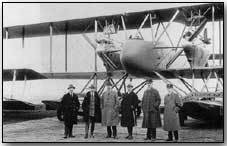
Grigorovich M-2 / M-3 / M-4 / Shchetinin M-2

Despite the poor results obtained with the M-1 flying boat, the Russian fleet command was predisposed towards an effective national flying boat model. On June 28, 1914 , the Naval General Staff (MGSh) wrote:
“The General Staff… to get out of the position, considers it very advisable to start the indigenous construction of hydroplanes and establishes the following conclusions:
1 – Because the hydroplane designed and built at the SS Schetinin and K Society is available, allowing the factory to carry out the tests at the Puerto del Emperador Alexander III aviation station, but on the condition that the pilot be from the factory. In case of success of the tests the flying boat will be acquired for the needs of the Baltic Sea aviation.
‘ In the event that the hydroplane shows good results, the Naval General Staff considers requesting several of these boats after the problems presented have been solved.”

On the other hand, with the war approaching, the Navy leadership, the 2nd rank captain BP Dudorov requested the MGSh without delay to buy from the PRTV and the RBVZ (Russian Baltic Wagon Factory) all the hydrofoils, finished or not, that could be ready in a short period of time.

These factors encouraged Schetinin to redirect the fundamental activity of PRTV towards the development of navalized models. DP Grigorovich was working on a development of the M-1 model, so on July 29, 1914 a contract would be signed for the production of four new improved examples.

The changes introduced were so significant that the resulting aircraft earned the right to be defined as a new model, which came to light as the M-2 (Morskoi (Naval) – 2), Russian: Григорович М-2.

The contract established the delivery of the first copy for the 7th, the second for the 12th, the third for the 17th and the last for August 23, 1914. Each flying boat was valued at 8,000 rubles and instructions were given to collect four Gnôme engines between 80 and 100 hp in Moscow.

The acceptance conditions established the reach of a height of 500 meters in 12 minutes with the 100 hp engine and 15 minutes with the 80 hp, carrying a load of 75 kg above the weight of the crew and the necessary fuel for three flight hours.

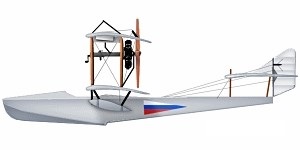
The M-2 was a propeller-driven biplane flying boat, generally similar to that of the M-1 and originally the same engine, but its overall dimensions were increased. The hull grew in width in order to accommodate both crew members side by side. The bow also changed its shape from flat to tapered with a concave bottom in the front, while a new three-sided tail section featured new, much higher mounts, to which the considerably larger area stabilizer was attached.

The wingspan of the upper wing was considerably greater than that of the lower wing, but unlike the M-1 the diagonal supports at the wingtips were not used. The biplane box maintained its location on supports above the fuselage and had only large-area ailerons on the upper plane. The lower wings were installed 1m above the hull on the engine support frame.

The triangular section rear fuselage was raised from the water, tail was equipped with a skid, often referred to as the “shovel”.

According to Shavrov the M-2 to M-4 were used to test some novelties such as the variable incidence stabilizers in flight (for this purpose they had an elevator in the lower part of the leading edge) and in the M-4 a ski – paddle with rubber buffer hinged under the tail to improve launch.

The types of wood used were generally similar to those used during the construction of the M-1.

The construction of the model in the Schetinin factory introduced a constructive novelty: for the first time in Russia, the hull was formed inverted, with the keel up. The first M-2 was delivered to the naval experimental station located in the Grebni port of Petrograd only on August 18, 1914, because before that date the hangar was not found ready for its conservation.

The tests of the prototype with the 80 hp Gnôme engine plant began in August 1914. Unfortunately, the prototype was destroyed on the 31st of that month causing the death of its pilot PV Evsyukov. It is noteworthy that VB Shavrov defines this engine as an 80 hp Clerget, which makes this statement appear in multiple articles and sites that reference this source.

The construction of the other examples was stopped until the investigations were completed. The causes of the accident were never established, but no problems related to structural weaknesses or linked to the construction of the model were found, so it was agreed to continue production.

On October 8 at the Schetinin factory, 4 Gnôme Monosoupape engines of 100 hp were received (The engine of the damaged unit was delivered to the RBVZ) and on November 28, 1914 the first of the new units with this power plant and modifications in the selection of the airfoil was received at the Third Naval Station in Revel (Tallinn). Only 12 days later a second copy would arrive. The test flights were developed until December 22 by the pilot of the factory Ya. I. Siedov-Sierov and the fleet pilot Lieutenant II Kulniev, resulting in numerous remarks and proposals for improvements.

On December 20 three FBA (Franco-British-Aviation) flying boats of the six contracted to France on September 12, 1914 arrived at the Third Station. Both because of their construction and because of their performance, they were quite superior to the M-2, which is why the representatives of the Navy took a negative position towards the Schetinin – Grigorovich model. By the end of the year none of them had been able to present themselves to the acceptance tests.

During the winter the company’s mechanic and pilot made the changes so that by the spring of 1915 flights could be resumed. At that time, a series of improved components arrived from the factory and were installed in the second prototype. General tests continued until April 1915, resulting in a climb time of 15 minutes to a height of 1,300 meters.

The third flying boat М-2 code Sch-3 in the fleet register, with Lieutenant VA Litvinov, head of the Kilkond naval station in the cabin.

In general, they received a positive assessment, so on April 25, 1915 they entered service with the Baltic Fleet aviation with the registrations Sch-2 and Sch-3. These served in the Third Revel Station, basically in training missions, until they were discharged in the winter of 1915-1916 (in the month of November according to Maslov). After that date the engines were removed and for some time were kept in Revel. Due to the fact that these examples underwent changes in the wing profile and hull lines during the tests, their name was changed to M-3 (according to Maslov the name M-3 only corresponded to the second of these, since the first kept as M-2 (Sch-2)).

In the summer of 1914 in the Black Sea the situation was calm and by the month of September the Naval Aviation only had six military planes. The situation would change radically in October, when Turkey declared war on Russia. The new situation made it necessary to take urgent measures.
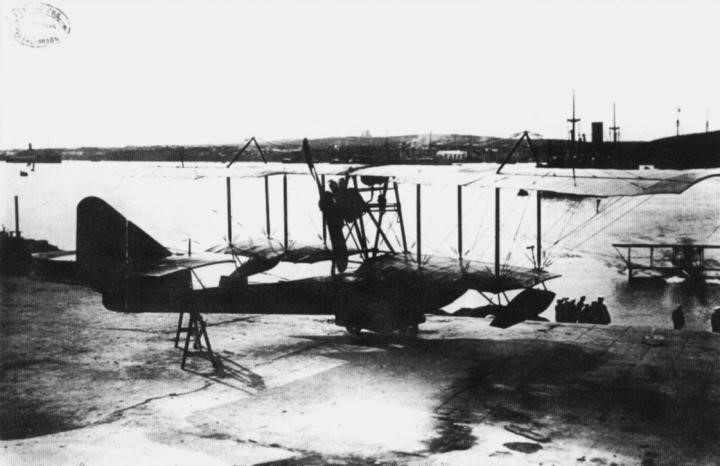
M-4 number 29, belonging to the Black Sea fleet

From a request of the Black Sea pilots and after several talks held by the head of the Russian aviation, Grand Prince Alexander Mikhailovich Romanov, the commander of the Baltic Fleet NO von Essen; the head of the MGSh AI Rusini and the head of the Aeronautical Department of the MGSh AA Tuchkov, the remaining two copies of the contract of four were sent to Sevastopol on March 10, 1915. This measure was aimed at strengthening the capacity of the air forces for the operations to be carried out in the Bosphorus area.

Ten days after the arrival, a PRTV brigade would arrive under engineer AN Sidielnikov and also made up of pilot Ya. I. Siedov-Sierov, two mechanics and two assemblers. On March 24 the flying boats were transferred to the assembly site and on the 31st the commission from the port of Sevastopol arrived to carry out the tests.

They had to make a flight of 25 minutes and another of 13 minutes in which they should reach the contracted height in 7.5 minutes. The planes received the numberings “29” and “30” and were to complement a varied group of seaplanes that made up the Black Sea Fleet aviation. These M-2s would later be referenced in documents as M-2/M-4 or simply M-4.

M-4 number 29

On April 8, 1915, military pilots began familiarization flights and after a series of acceptance tests, the two were accepted by the Fleet, eventually being used in military actions. On April 12, 1915, number 29, armed with a Maxim machine gun in an installation designed by Kryltsov, was lowered into the water from the cruiser “Emperor Nikolai I” in the Bosphorus region. Crewed by A. Ye. Zhukov and SN Korsakov the flying boat managed to carry out an attack on a Turkish gunboat of the type “Burak Reis”, dropping a bomb that exploded about 70 meters from the stern. This was considered the first military action of a flying boat in Russia and could have ended as a major catastrophe: a hose rupture forced the crew to make a landing a considerable distance from the base, but they managed to reach it by sailing.

Reports on the use of the Schetinin / Grigorovich flying boats in the Black Sea theater were promising, but the Aviation Committee had some doubts about the structural resistance of the model, especially since “30” began to present problems with the hull cladding slats, which came off even after normal landings. As a result, on May 15, a document was issued to the factory in which it recommended reducing the angle of attack of the stabilization floats, reinforcing their fixation and modifying the hull in order to add a rudder that would improve operation in the water. PRTV received the considerations but there was little that could be done because the production had culminated with the delivery of the four copies.

The flying boat “30” was decommissioned in October 1915. In the case of “29”, no evidence has been found to define its operating time.

The factory numbers of the delivered were 196 and 197 (the numbers of the others are unknown), The Baltic Sea Fleet of M-3s were Sch-2 and SCh-3. The Black Sea Fleet of M-4s were naval register ”29”, factory number 196, and naval register ”30”, factory number 197.

M-2 prototype
Powerplant: 1 x 80 hp Gnôme
Upper plane wingspan: 13.68 m
Wing area: 33.5 m²
Length: 8.0m
Normal takeoff weight: 870 kg
Wing loading: 26 kg/ m²
Power Load: 10.9kg/hp
Speed at sea level: 115km/h
Cruising speed: 76km/h
Ascent time to 1000 m: 7 min
Ceiling: 4000m
Practical range: 320 km
Endurance: 3.5 hours
Accommodation: 2 side by side

1913 M-3
Span: 44’10”
Length: 26’3″
Loaded Weight: 1918 lb

M-4
Powerplant: 1 x 100 hp Gnome Monosoupape
Wingspan: 13.62m
Wing area: 37.90 m²
Length: 8.00m
Normal takeoff weight: 870 kg
Wing loading: 26 kg/m²
Power load: 8.7kg/hp
Top speed: 100km/h
Cruising speed: 76km/h
Practical range: 320 km
Accommodation: 2 side by side
Grigorovich M-2

Grigorovich, Dmitry Pavlovich / Grigorovič

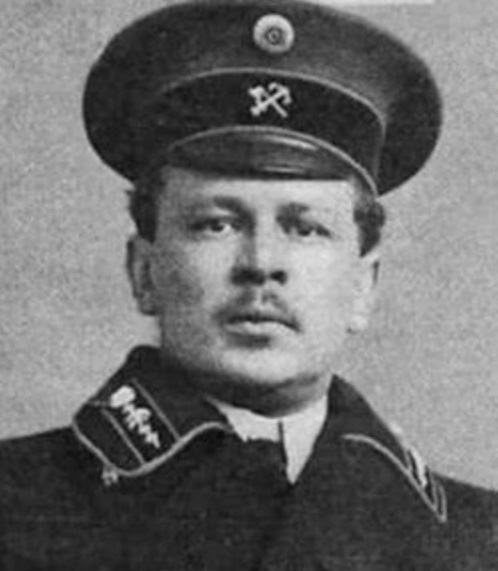
Dmitry Pavlovich Grigorovich was born on February 6 (January 25, old style) in 1883 in Kiev. His father, Pavel Dmitrievich, a great-nephew of the famous Russian writer Dmitry Vasilievich Grigorovich, first served in a sugar factory, later – in the quartermaster of the military department. Mother, Yadviga Konstantinovna, was the daughter of a rural doctor. The parents sent their son to the Kiev real school. Quite a lot of lessons were devoted to practical training in workshops and laboratories.

Graduates of a real school had the right to enrol in polytechnic institutes and, after graduating from a real school in 1902, Dmitry Grigorovich chose for his further education the mechanical department of the Kiev Polytechnic Institute of Emperor Alexander II.

Dmitry Grigorovich actively participated in the Aeronautical Circle KPI, founded in 1905. It was supervised by Nikolai Borisovich Delone, a student of Nikolai Yegorovich Zhukovsky, a professor of mechanics. Members of the circle listened to N.Delone’s lectures on the basics of aeronautics and were actively engaged in the design and manufacture of their own aircraft.

Before the end of the KPI, Dmitry went to the Belgian city of Liege, where he attended two semesters at one of the institutes, studying aerodynamics and engine theory. “Since 1909,” wrote N. Suknevich, the wife of Dmitry Pavlovich, “when Dmitry graduated from the Kiev Polytechnic Institute, we were both passionate about aviation. Our room was littered with mechanical parts, engine components, various parts. Not far from the Polytechnic Institute on the Kurenevsky airfield, he removes the shed and adapts it to the hangar. Next hangar another polytechnic – Igor Sikorsky. Dmitry made the first lightweight sports biplane G-1 with the Anzani engine with a capacity of 25 horsepower from bamboo, which he tested on January 10, 1910. “

The next work of D. Grigorovich was an airplane built according to the design of the French Bleriot XI aircraft, also with the Anzani engine, but with its own control system and chassis design. It was built by Grigorovich together with the Kiev motor sport amateur Ilnitsky. Financial assistance Ilnitsky was enough to complete work on a new airplane and demonstrate it at the Kiev exhibition of aeronautics. The aircraft attracted the general attention of aviation specialists and amateurs. The magazine “Automobile and aeronautics” called it the best design of the exhibition.

Fedor Tereshchenko, a descendant of a wealthy merchant family, became interested in the development of Dmitry Grigorovich. Tereshchenko also studied at the Kiev Polytechnic Institute and in his estate in the village of Chervonoye, Berdichevsky district, he equipped an aircraft workshop and airfield. Fyodor Tereshchenko proposed to Grigorovich to cooperate. Soon two of their sport airplanes appeared – the G-2 and the G-3. The designer and the main performer of all the works was Dmitry Grigorovich, the patron of the arts was Fyodor Tereshchenko.

In 1911 Dmitry Grigorovich went to St. Petersburg and got a job as a journalist in the science journal “Bulletin of the ballooning”. It was in 1911 that the famous work of Konstantin Tsiolkovsky’s Study of World Spaces with Jet Instruments was published in this journal.

Grigorovich flew one of his planes from Kiev to St. Petersburg and carried out several successful flights there at the Commandant airfield. They were witnessed by Sergei Schetinin, the founder of the first in the Russian Empire aircraft building plant called “The First Russian Aeronautical Partnership of the SS Shchetinin and Co.”. Over time, Schetinin invited Grigorovich to the position of manager and technical director of the plant.

Grigorovich proposed to create new aircraft designs, which at that time were very necessary for the military industry of the empire.

The head of the naval aviation of the Baltic Fleet requested repair the Donne-Levek military seaplane damaged in training flights. At Schetinin Grigorovich, together with the head of the drawing bureau Sedelnikov, suggested repairing the plane and at the same time making its drawings and setting up production at the factory.

During this work, the idea was born to create a hydroplane, but with the introduction of fundamental changes in its design as compared with Donne-Leveque. Grigorovich proposed to install the aircraft not on the float, necessary for take-off and landing on water, but to design a “flying boat”. The new design, called M-1 (“Sea-first”).

In parallel with the work at the plant of S. Shchetinin, on June 1, 1917, Grigorovich founded his own research aircraft building plant called “DP Grigorovich”.

On June 1, 1917 Grigorovich ended his working relationship with SS Schetinin. His personal relations by that time had been damaged and Schetinin, who had grown considerably rich from the war, considered that he no longer needed his engineer. Quite quickly Grigorovich received bank loans with low interest rates that allowed him to lease some facilities to organize an experimental factory and an empty building belonging to the Ismailovski regiment, at 12 Rota, Building 26. As an aid to be able to make the loan payment, the new facility received an order for the construction of 40 M-5 flying boats (later M-20), which was signed on July 28, 1917 with deliveries scheduled for the period between September 1, 1917 and January 1, 1918. The price of each unit was set at 16,000 rubles. In parallel Grigorovich received requests for the development of several experimental models.

At this enterprise, Dmitry Pavlovich designs, tests and prepares several more machine designs for serial production. These were flying boats M-18, M-19, M-20 and M-21.

The revolutionary events of 1917-1918 interrupted Dmitry Grigorovich’s quick pace in the aircraft industry. In March 1918, his plant was nationalized and redeveloped to produce agricultural equipment. According to some reports, in those days he received an invitation to go abroad, but remained in his homeland. The enterprise of S. Shchetinin was also reorganized into the State Aviation Plant “Red Pilot”.

Trying to survive and save his loved ones, D. Grigorovich began to work in the Main Committee of the United Aviation Plants (Golovkoavia) – the leading body of aircraft engineering. However, he did not work there for long: during the famine in Petrograd, Grigorovich and his family moved to Kiev, then to Odessa, then went to Taganrog. In Taganrog, he worked at an aviation factory, whose main profile was the repair of aircraft and engines. On the initiative of Grigorovich, outside of all sorts of orders and plans, the MK-1 sea float fighter (Rybka) was built there. Dmitry Pavlovich took direct participation in its design and production. Soon the order for “Rybka” was transferred to the plant “Red Pilot”, and Grigorovich was able to return to Petrograd.

In addition to introducing the new aircraft into production, Grigorovich completed work on the GASN sea torpedo bomber, which had been half forgotten in the factory yard since 1917. The hydroplane was repaired, some changes were made to its structure, and in the summer of 1920 test flights began.

In connection with the receipt of an order for the design of a new naval reconnaissance aircraft in mid-1922, Grigorovich moved to Moscow, where he was appointed Technical Director and Head of the Design Bureau of the State Aviation Plant No. 1 (GAZ 1), the former Dux Aircraft Factory. In this position, Grigorovich replaced another well-known aviation specialist, Nikolai Polikarpov, who was transferred to the Golovkoavia design department.

The company built a new Soviet R-1 reconnaissance aircraft for a 400 hp engine. The aircraft was designed on the basis of the captured English DH-9. Grigorovich accelerated the revival of production and ensured the operational solution of dozens of large and small tasks. On June 29, 1923, after the successful tests of the Air Force, the first two R-1 aircraft were handed over. And after a while, the plant produced 38 such machines every month.

In addition, the design team of the company worked hard on another order – the creation of a domestic fighter. It became a biplane I-2 with an M-5 engine, developed under Grigorovich and put into service in early 1925.

At the beginning of 1925 Grigorovich was again transferred to the Krasny Pilot plant (later – State Aviation Plant No. 23), where Aviatrest created the country’s first Department of Marine Research Aeronautical Engineering.

Under the leadership of Grigorovich, a number of projects and research samples of naval reconnaissance aircraft were prepared: MRL-1 (“Marine reconnaissance with Liberty engine”), its subsequent modifications – MR-2, MP-3, training aircraft MUR-1, MU -2 (“Marine Training with the engine” Ron “and” Marine Training “); ROM-1, ROM-2, ROM-2bis (“Scout of the open sea”), two-float, two-tail naval destroyer under two MM-1 tandem engines (“Marine minononset”), MT-1 (“Sea torpedo carrier”).

Unfortunately, due to some design flaws, incomplete compliance with customer requirements, and sometimes because of overt intrigues in the aviation industry, most of these machines did not reach mass production.

The chain of certain failures coincided in time with the start of the campaign launched against the old specialists. Special commissions “on the elimination of sabotage” were created at each defensive enterprise.

The first lawsuits against the “bourgeois experts” were the Shakhty affair and the Industrial Party affair. On September 1, 1928, they reached Grigorovich. He was arrested in his office, accused of sabotage and sent to Butyrka prison. Following him, he was arrested by his comrades – A. Sedelnikov, E. Maioranov, V. Corvin-Kerber, who worked with him in the “First Russian Aeronautical Partnership of S.S. Shchetinin and K”. Soon, a wave of arrests of aviation specialists swept through other defense industry enterprises.

In the spring of 1928, the USSR government adopted the “Plan for the construction of armed forces for the future five-year plan”. The leadership of the OGPU decided to use the imprisoned specialists in their direct specialties. The Deputy Chairman of the OGPU, Heinrich Yagoda, defended this idea, and was entrusted with the task of overseeing the first prison design bureau.

They established a design bureau in December 1929 directly in the Butyrskaya prison,. Dmitry Grigorovich was appointed Chief Designer of the Special Design Bureau, Nikolai Polikarpov, who was arrested on charges of participating in a counter-revolutionary organization, was appointed his deputy. Prisoners who were enrolled in the OKB were improved in conditions of detention — they increased their nutritional standards, more often they were taken to the bathhouse and were allowed to see their relatives. Immediately after the formation of the design bureau, he was visited by the Deputy Chief of the Air Force, Y. Alksnis, and set the task: by the spring of 1930, to design a fighter, the characteristics of which would be no worse than those of the best foreign aircraft.

Over time, the group of Grigorovich was transferred to aviation plant Menzhinsky (GAZ number 39), located near the Central airport. In his memoirs, Alexander Yakovlev, wrote: “They lived and worked in the mysterious” Seventh Hangar “, adapted to the internal prison.” The guards divided this hangar into two parts: in one there was a living area, in the other – working premises.

In just three months, the prisoners, designers and engineers have developed a model of the future fighter. They spent even less time on the construction of his research sample – a month, and on April 29, 1930, it was first tested in the air.

The success of the I-5 fighter inspired the leadership of the OGPU to expand the network of Special Design Bureaus, and the OKB D. Grigorovich received the orderto develop a whole range of combat aircraft.

Soon the staff of the OKB Grigorovich was expanded to 300 people at the expense of freelance specialists, and under the new name of the Central Design Bureau (Central Design Bureau) it was introduced into the technical department of the OGPU Economic Department. The mode of detention of prisoners of the Central Clinical Hospital was relaxed. And on July 10, 1931, Dmitry Grigorovich received freedom. In those days, Pravda newspaper published the Resolution of the USSR Central Executive Committee: “… Amnesty … Grigorovich Dmitry Pavlovich, Chief Designer for Research Aircraft Building, who repented of his previous actions and hard work, proved in practice his repentance. To award him with a diploma of the CEC of the USSR and a cash premium of 10,000 rubles.”

After his release, Dmitry Grigorovich remained to work in his Central Design Bureau. At that time, there were carried out searches and research of the best schemes of light and heavy attack aircraft, developed cannon fighter monoplanes I-Z and PI (factory code DG-52), armed with recoilless cannons and machine guns, which were produced in large series.

Dmitry Pavlovich combined his work with the Central Clinical Hospital with teaching and research at the Moscow Aviation Institute, where he headed the Department of Aircraft Design and Design.

In the spring of 1938, Grigorovich was given a new position – the head of the newly organized design bureau in Novosibirsk. But he could not go to Siberia – he became seriously ill and on July 26 of the same year, at the age of 56, died of blood cancer. He was buried at the Novodevichy cemetery in Moscow.

The result of D. Grigorovich’s life was 80 types of designed airplanes, of which almost four dozen were placed in production.

Gribovski G-16

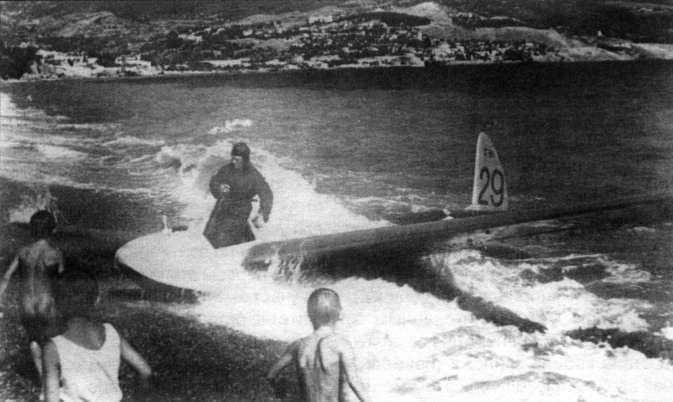
N. Baruzdin “docks” on Yalta beach

After the failure of the G-12 in its water operations, Gribovski opted to develop a lighter and smaller version that received the name G-16 (Russian: Грибовский Г-16).

The G-16 glider was designed as a hydrofoil with a single deck hull and high cantilever wing, which had stabilization floats fixed to a support on its intrados and braced by means of uprights on its outer side. The wing structure comprised two box-like spars, joined together by light ribs. The wing was covered with 1 – 1.5 mm thick plywood, creating a flexible but strong structure. On the extrados, the wing had a fabric covering. The wing design used the TsAGI R-II profile proposed by the engineer PP Krasilschikov.

The hull had straight sides with a curved top and a 19-frame structure, a tail spar and five stringers. The entire hull was covered with 1.5 – 3 mm thick plywood nailed to the structure with galvanized laces and covered with glued and enameled canvas. Oil paint was used internally.

For operations on water, it had an ash skid at the bottom of the hull designed for landing on land.

The tail area made transition towards the empennage and the thin stabilizer braced in its lower part by two short uprights.

The pilot was located in an open cockpit forward, in front of the wing leading edge.

Built at the OSOVIAJIM Glider Factory, the G-16 participated in the X National Sailing Competitions held in Koktebel. On 25 September 1934 this glider, piloted by Gribovski, performed for the first time in the USSR, a takeoff from the water in a glider towed by an amphibious Shavrov SH-2 piloted by LG Minov.

A little later pilot N. Baruzdin made a takeoff from the sea towed by a Shavrov Sh-21Sh-2. This flight would cover the Koktebel – Gurzuf in Yalta.

G-16
Wingspan: 14.20 m
Wing area: 14.90 m²
Length: 5.57 m
Height: 1.42 m
Surface of the horizontal planes: 1.70 m²
Empennage surface: 1.2 m²
Ailerons surface: 1.36 m²
Empty weight: 139 kg
Wing loading: 14.7 kg / m²
Glide ratio: 20.1
Optimal flight speed: 56 km / h
Minimum descent speed: 0.72 m / s
Accommodation: 1

Gribovski G-12

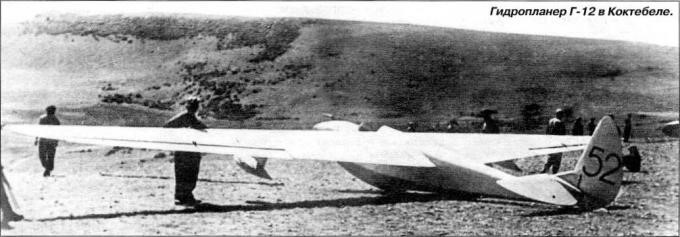
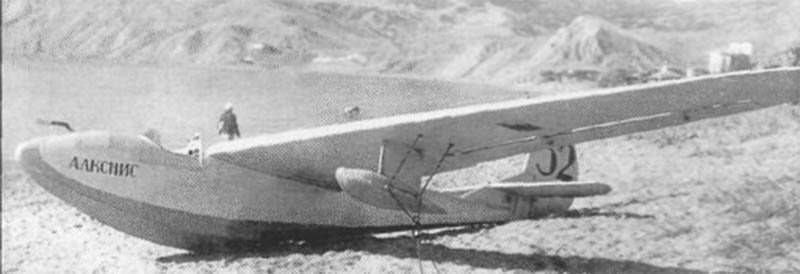
Gribovski G-12 glider during competitions at Koktebel.

With the objective of studying the potential of take-off and landing on the water, Gribovski decided in 1933 to build an experimental hydrofoil that received the name G-12 (Russian: Грибовский Г-12).

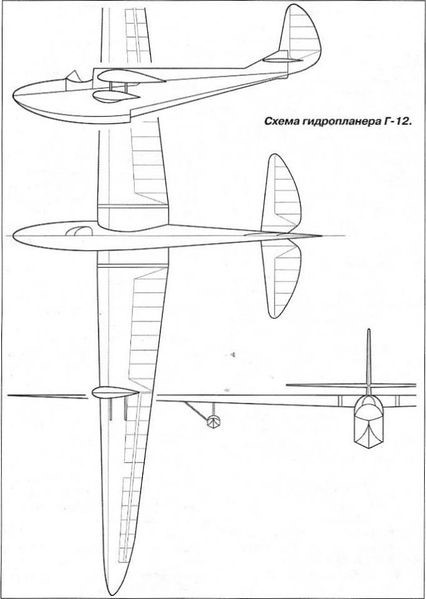
The G-12 glider was designed as a single-seater hydrofoil with a single-beam hull and high cantilever wing that had stabilization floats fixed to a support and braced by means of uprights on its external side. The wing structure comprised two box-like spars, joined together by light ribs. The wing was covered with 1 – 1.5 mm thick plywood, creating a flexible but strong structure. The wing had a fabric covering.

The hull had straight sides with a curved top and a 19-frame structure, a tail spar and five stringers. The entire hull was covered with 1.5 – 3 mm thick plywood nailed to the structure with zinc-plated lace and covered with glued canvas and enamelled in silver. Oil paint was used internally.

The G-12 glider was designed to operate in the water and on land, so the entire outer skin up to the tail post featured an ash skid designed for land landing at the bottom.

The tail area made transition towards the empennage and the thin stabilizer braced in its lower part by two short uprights.

The pilot was located in an open cockpit forward, in front of the wing leading edge.

The entire glider was painted silver.

The Gribovski G-12 glider was designed and built at the Moscow Construction Bureau (MKB) in 1933.

With the number “52” painted in black on its empennage and the name of the VVS chief “Alksnis” on the sides of the bow, it participated in the IX National Sailing Competitions. After the development of the normal flight tests, the G-12, piloted by AK Ioost, took off from the Uzun-Cyrt mountain, landing in the waters of the bay at Koktebel. It is noteworthy that landing proved to be considerably smoother than landing.

G-12 “Alksnis” hydrofoil on the Crimean beach during testing.

Later, in this same bay, an attempt would be made to carry out take-off tests from the water. Towing attempts from a motorboat and then from a Shavrov Sh-2 amphibious hydrofoil were unsuccessful. During the drag, when one of the side floats touched the water, they sank and slowed the glider. As a result of this the tests of aquatic operations were cancelled and from that moment the G-12 was only used on land.

G-12
Wingspan: 15.20 m
Wing area: 15.40 m²
Length: 6.50 m
Height: 1.45 m
Empty weight: 157 kg
Wing loading: 15.4 kg / m²
Stabilizers surface: 0.22 m²
Elevator area: 1.77 m²
Empennage surface: 0.9 m²
Rudder surface area: 0.9 m²
Aileron surface: 1.3 m²
Accommodation: 1

Gourdou G-120

In 1937, the French Navy launched a program for a twin-engine, catapultable twin-engine seaplane for anti-submarine warfare. The aircraft should not exceed a weight of 1,600 kg, and carry 10 bombs of 10 kg. It needed a top speed of 250 km / h, a minimum speed of 90 km / h, and a cruising speed of 110 to 120 km / h. Gourdou proposed a plane equipped with high-lift devices.

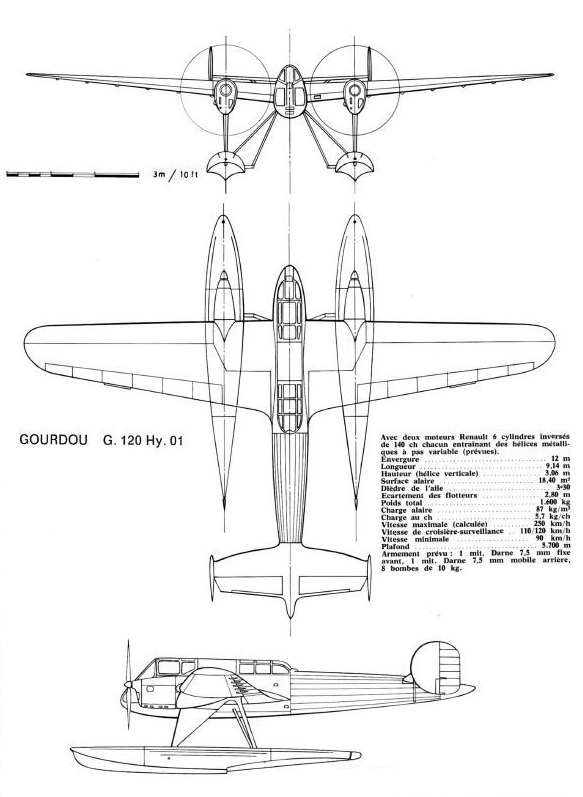
In early 1938, the Technical Service of Aeronautics commissioned a life-size, rectangular wing with a constant profile, which passed the tests in the large Chalais-Meudon wind tunnel in June. This wing of 12 m wingspan and 18 sq.m wing surface, resulted in the order of a prototype.

The structure of the wing was two longitudinal members braced by oblique ribs lattice. The wing was fabric covered. The aircraft had a Fowler-type double-flap system, fitting one into the other. In the “out” position, the ensemble retreated by increasing its initial surface area by 50% and opening two slots. The slits obtained by this system were “convergent-divergent”. They differed from the converging slits of Handley-Page beaks and flaps of Bernard aircraft. Once the shutters returned, there were only small dents on the underside.

The fuselage was of welded steel-molybdenum tube structure. It had an advanced cockpit, and a firing point for the gunner behind a common fairing. This defensive post was equipped with a 7.5 mm Darne machine gun. A second machine gun of the same type, fixed, was installed in the nose. The cockpit roofs were glazed, and the front part of the fuselage was Plexiglas.

Both floats each had a volume of 1500 litres. Each float was located under the engine nacelles. They were held in the vertical plane by a triangular panel and a rear strut. Two slashes connected him to the fuselage. The floats were built in three elements, like those of the seaplanes Bernard H.52 C1 and H.110 C1.

The empennages were also made of welded steel tubes. To clear the shot in the rear weapon, the tail was twin fin.

The aircraft was subjected to static tests on a specially designed bench in the Parc Saint-Maur plant. At the beginning of the winter of 1939-1940, the seaplane was transferred to Chalais-Meudon where a special three-column support had been built on the balance plate of the large wind tunnel. In December 1939, the glider tests were carried out, flaps out. The results were disappointing. The lift was 30% lower than expected, the drag higher, the stability at depth mediocre. The director of the wind tunnel tests, Mr. Rebuffel, decided to visualize the flow on the wing with a thin stream of hot oil. The defect was a small oil cooler placed in the leading edge of the wing between the fuselage and the engine. The air intake was on the underside and the exit located on the rear. The smoke clearly indicated that this exit was prominent and caused air separation throughout the area between the fuselage and the engine. Once this radiator output changed, everything returned to normal. The exit and the return of the shutters, in 11 seconds, created a normal flow.

The powered tests began in February 1940, with test pilot Jean-Marie Le Borgne. The metal propellers that were not delivered on time were replaced by wooden pitch propellers. The results confirmed the calculations: the stability was good.

The G.120 was transported to Athis-Mons, in a rented shed on the banks of the Seine. It was launched on June 1, 1940. The test pilot Le Borgne made several hydroplanings, shutters closed, with a test engineer in the rear seat. Passing on his own wake, the pilot noticed a certain lack of rigidity in the behaviour of the floats. During another test, the flaps released, and at 70 km / h the G.120 took off by surprise, after 100 m and rose to 20 m of altitude. After a small flight of 200 m, the pilot landed without difficulty. The next day, the aircraft flew again in front of the STAé officials and flew 50 m above the water for more than 3 km. After this flight, the pilot pointed out the lack of effectiveness of the ailerons. He had been obliged to counter the lateral wind with the rudder. The flotation behaviour of the floats was remedied. This work could not be completed because of the German invasion. To prevent the prototype from falling into the hands of the enemy, Le Borgne destroyed it and sank the wreck in the Seine.

Gourdou G.120 Hy
Engines: 2 x Renault, 140 hp
Wingspan: 12 m
Length: 9.14 m
Height: 3.06 m
Wing area: 18,40 sq.m
Cruising speed: 110-120 km / h
Maximum speed: 250 km / h
Ceiling: 5,700 m
Wing load: 87 kg / sq.m
Load factor 5.7
Armament: 2 x Darne 7.5 mm machine guns
Bombload: 8 x 10 kg bombs

Goupy 1912 Hydroaéroplane

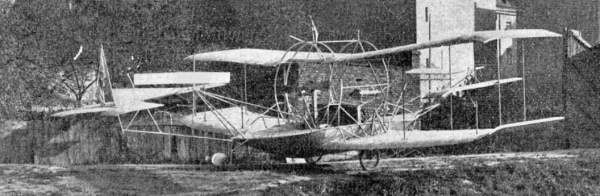
The 1912 Goupy “hydroaéroplane” was just a land plane set on floats with wheels and all, no further alterations. Typical was the fuselage “hung” between the wings and the sesquiplane construction with the struts somewhat at an angle. The construction at the nose looks like radiators, but are unlikely that as this design was fitted with a 100 hp Gnome rotary. Maybe a streamlined construction to get the engine neatly into the ‘square’ fuselage.

Gotha WD.27

The Gotha WD.27 (for Wasser Doppeldecker – “Water Biplane”) was a patrol seaplanes developed in Germany during World War I. It was a conventional four-engine seaplane with engines grouped in tractor-pusher pairs on the lower wings. Contemporary records show three German Navy serial numbers allocated to the type, but firm evidence of only one of these being built.

Goodyear GA-22 Duck

In 1950, a revised four-seat variant of the Goodyear GA-2, the GA-22 Drake was flown, followed in 1953 by the GA-22A Drake (with a revised hull); only one of each was built.

The GA-22A Drake was powered by a 225 hp (167 kW) Continental E-225-8 and converted into a flying boat with a revised hull; first flight in 1953.

The last aircraft built, the GA-22A Drake registered N5516M, is stored by the EAA Air Venture Museum

Goodyear GA-2 Duck

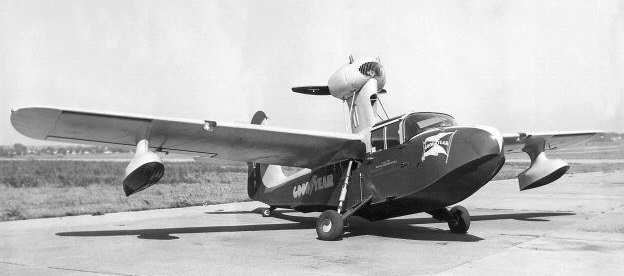
Goodyear GA-2 Duck NC5500M

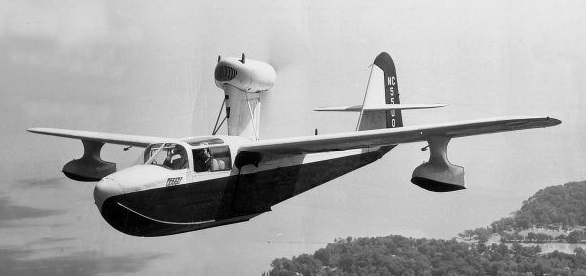
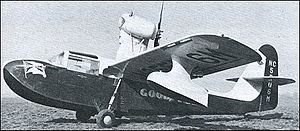
The Goodyear Aircraft Corporation began to design a small light amphibian before the end of the Second World War. The prototype designated GA-1 first flew in September 1944. It was a cantilever high-wing monoplane with underwing stabilizing floats. The GA-1 had an all-metal fabric-covered wing, an all-metal single-step hull, and a cruciform tail unit. It had a retractable tail-wheel, accommodation for two, and a pylon-mounted piston engine with a pusher propeller.

Goodyear GA-2 Duck

After successful testing of the prototype, 18 demonstration aircraft were built. These differed from the prototype in that they had room for the pilot and two passengers. Two versions were built, the GA-2 with a 145 hp (108 kW) Franklin 6A4-145-A3 piston engine, and the GA-2B with a 165 hp (123 kW) Franklin 6A4-165-B3 flat-six piston engine.

Sixteen GA-2 Duck were built, some later modified as GA-2Bs. Six GA-2B Duck were modified from GA-2s in 1949. The GA-2B had improvements over the GA-2, not the least insignificant of which was the fitting of the patented Goodyear Cross-Wind Landing Gear.

Goodyear GA-2B Duck NC5504M

GA-2B
Engine: 1 × Franklin 6A4-163-B3, 165 hp (123 kW)
Length: 26 ft 0 in (7.92 m)
Wingspan: 36 ft 0 in (10.97 m)
Height: 9 ft 6 (on wheels) in (2.90 (on wheels) m)
Wing area: 178.20 ft2 (16.55 m2)
Empty weight: 1600 lb (726 kg)
Gross weight: 2300 lb (1043 kg)
Maximum speed: 125 mph (201 km/h)
Range: 300 miles (483 km)
Service ceiling: 15,000 ft (4570 m)
Crew: One
Capacity: Two passengers