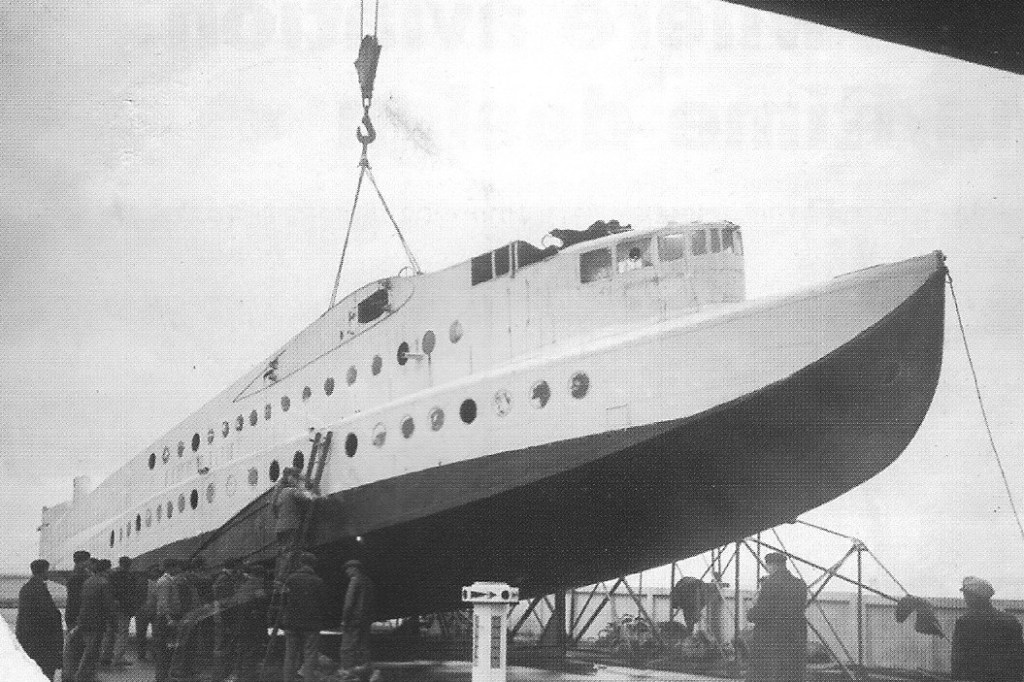
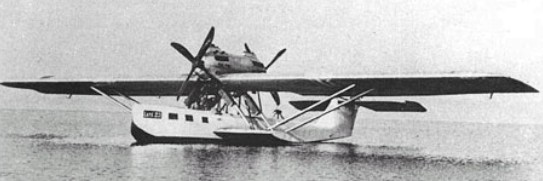
The Late 521 was a flying-boat with strut-braced high wings and short stub sponsons. Named Lieutenant de Vaisseau Paris, it was powered by six 641kW Hispano-Suiza 12Ycrs engines (inboard engines mounted as tandem pairs) and flew for the first time on 17 January 1935. A total of 76 passengers could be accommodated on the two decks of the two-step hull. The craft sank in a storm on its inaugural flight to the USA, but was salvaged and rebuilt with 484.4kW Hispano-Suiza 12Nbr engines. It subsequently established seaplane load-over-distance and load-to-height records in 1937.
The Late 522 (powered by six 671kW Hispano-Suiza 12Y37 engines) appeared in April 1937 but World War II prevented a regular transatlantic service. Both the Late 521 and 522 were impressed into French Navy service on 1 September 1939, three naval Late 523 having already been delivered between January and October 1938. These were armed with five 7.5mm Darne machine-guns and carried up to 1,200kg of bombs. Maximum endurance was 33 hours.
The Late 522 returned to passenger service in March 1940. The remaining aircraft of the series performed Atlantic patrols with Escadrilles E6 and E12. One Late 523 had been lost in September 1939, a second was scuttled in June 1940; and the Late 521 was demobilised in August of that year. The surviving Late 523 was grounded in August 1942, having flown with Escadrille 4E out of Dakar since June 1941. The Late 521 and 522 were destroyed at Berre by retreating Germans in August 1944.
Late 521
Variants: Laté 520: [Project] 1930-33, 4 x 1000 hp HS.18 Sbr, engine abandoned Laté 521: 1935, 6 x 860 hp HS.12Ybrs (2 x tandem pairs, 2 x tractors) Laté 521 sunk at Pensacola in hurricane, to France for rebuilding Laté 521: 1937, rebuilt with 6 x 650 hp HS.12Nbr (later to mil.) Laté 521: 1939, Aéronavale serv., 970 hp HS.12Y-37 then 900 hp ’27 Laté 522: 1939, Air France transatlantic serv., 970 hp HS.12Y-37 Laté 522: 1939, Aéronavale, 900 hp HS.12Y-27, then back to ’37 Laté 523: 1938, Aéronavale recce vers., 900 hp HS.12Y-27, 3 built
Engines: 6 x HS 12 Ybrs, 630kW Max take-off weight: 37400 kg / 82453 lb Empty weight: 21480 kg / 47356 lb Wingspan: 49.3 m / 161 ft 9 in Length: 31.6 m / 103 ft 8 in Wing area: 330.0 sq.m / 3552.09 sq ft Max. speed: 250 km/h / 155 mph Cruise speed: 213 km/h / 132 mph Ceiling: 6300 m / 20650 ft Range w/max.fuel: 5800 km / 3604 miles Crew: 6 Passengers: 70
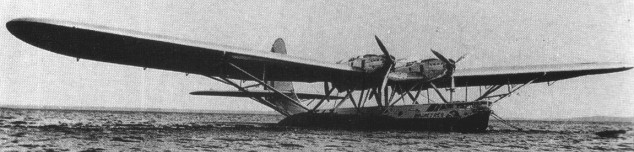
The Latécoère 300.01 was the company’s first four-engined flying-boat and flew originally in 1931, but sank in the Etang de Berre, near Marseilles, later that year. When salvaged it was re¬built and named Croix du Sud (First flight 7 October 1932) with four 650 hp / 484.4kW Hispano-Suiza 12NBr water-cooled engines in tandem pairs. On 31 December 1933 Croix du Sud set up a new international class record by flying the 2,285 miles (3,679 km) from Berre to St Louis (Senegal) in just under 24 hours.
It operated the Air France South Atlantic mail service between Dakar, Senegal and Natal, Brazil. It completed 23 missions before being lost at sea on December 7, 1936. The pilot was the famous French aviator Jean Mermoz.
Jean Mermoz’s Croix du Sud. Latécoère 300 in 1936
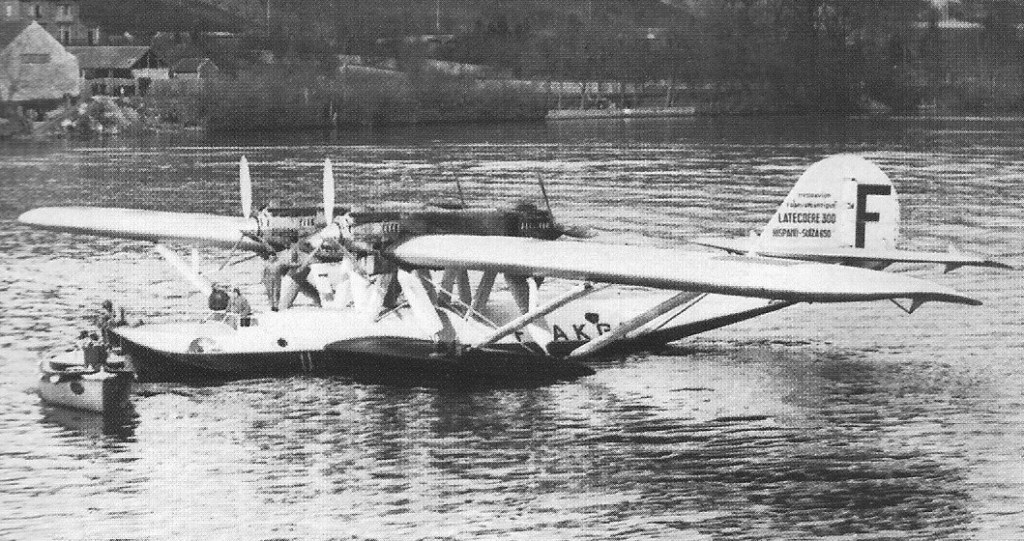
Three improved Latécoère 301 aircraft with 485-kW (650-hp) Hispano-Suiza l2Nbr engines were built during 1935-6, incorporating changes made to the Late 300 in 1935, including increased wing dihedral and enlarged tail surfaces. The all-metal two-step hull accommodated a four-man crew with sleeping accommodation, mail load and most of the fuel.
The first of the 301s was lost, the remaining two were used in South Atlantic service until 1939. In 1939 the last remaining 301 was converted to military service, joining the 302s in patrol duties in West Africa.
The basic type’s long-range performance attracted the attention of the French Navy, and in 1936 the French naval air service received three examples of the Latecoere 302, a fully navalised version of the Latécoère 301, with 930-hp / 693kW Hispano-Suiza 12Ydrs engines, between 1935 and 1936. They had machine-gun posts in bow and two beam positions, as well as two in the engine nacelles. Bomb load was 300kg. The aircraft supported a crew of four and included sleeping accommodations. Fuel and payload were stored inside the hull.
Late 302 equipped Escadrille E4 at Berre, joined by the last civil but militarised Late 301 in August 1939. These were operated in the patrol role, operating from West Africa together with a single navalised Latécoère 301 until scrapped in 1941.
Laté 300 – 1931 flying boat for Aéropostale (Dakar-Natal), 4 x 650 hp HS.12Ner Laté 300-01: aground Berre Dec 1931, rebuilt 1932 as Croix-du-Sud Laté 301: 1934-35 version for Air France, 3 built (2 later to military) Laté 301 to Aéronavale: 2/1017 for spares, 3/1018 to part Laté 302 std. Laté 302: 1936 version for Aéronavale, 4 x HS.12Ydrs, 3 built Laté 302 crew of 8 (inst. of 4), 3 x Darne MGs, 4 x 75 kg bombs
Variants:
Laté 300 Mailplane with Hispano-Suiza 12Nbr engines, one built.
Laté 301 Mailplane with Hispano-Suiza 12Nbr engines, three built.
Laté 302 Maritime reconnaissance aircraft with Hispano-Suiza 12Ydrs engines, three built.
Latécoère 300.1 Engines: 4 x Hispano-¬Suiza 12 Nbr, 750 hp, Propeller: three blade. Wing span: 145 ft 0.25in (44,20 m). Length: 84 ft 9in (25.83 m). Wing area: 2.798.6 sq.ft (260 sq.m). Gross weight: 50,706 lb (23,000 kg). Max speed: 130 mph (210 kph) at S/L. Typical range: 2,985 miles (4,800 km). Crew: 4. Pas¬senger/mail payload: 2,910 lb (1,320kg).
Latécoère 301
Latécoère 302 Engines: 4 × Hispano-Suiza 12Ydrs2, 694 kW (930 hp) each Length: 26.16 m (85 ft 9.5 in) Wingspan: 44.01 m (144 ft 4.25 in) Height: 7.98 m (26 ft 2⅛ in) Wing area: 258 sq.m (2,755.6 sq.ft) Empty weight: 14,340 kg (31,548 lb) Loaded weight: 24,050 kg (52,911 lb) Maximum speed: 240 km/h, 130 knots, 149 mph at 2,000 m (6,560 ft) Cruise speed: 185 km/h (xx100 knots (190 km/h), 115 mph (185 km/h)) Range: 3,300 km (1,783 nm, 2,050 mi (3,300 km)) Range w/max.fuel: 4800 km / 2983 miles Service ceiling: 5,000 m (xx16,400 ft (5,000 m)) Wing loading: 93.2 kg/sq.m (19.2 lb/sq.ft) Power/mass: 0.11 kW/kg (0.070 hp/lb) Endurance: 20 hours at 150 km/h (93 mph) Climb to 2,000 m (6,560 ft): 12.5 min Armament Guns: 1 7.5 mm (0.3 in) Darne machine gun in bow, 2 firing through beam windows Bombs: 4 x 75 kg (165 lb) bombs Crew: 8 Armament: 5 or 7×7.5-mm (0.295-in) Darne machine-guns plus provision for up to 300 kg (661 lb) of bombs under wing. Crew: 4
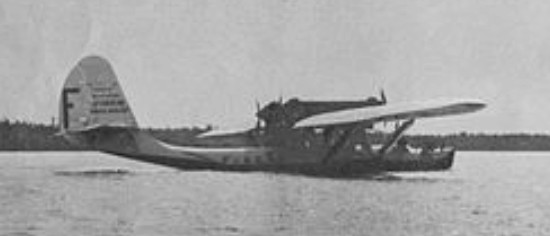
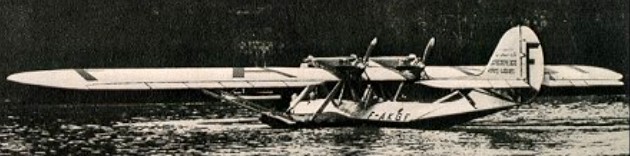
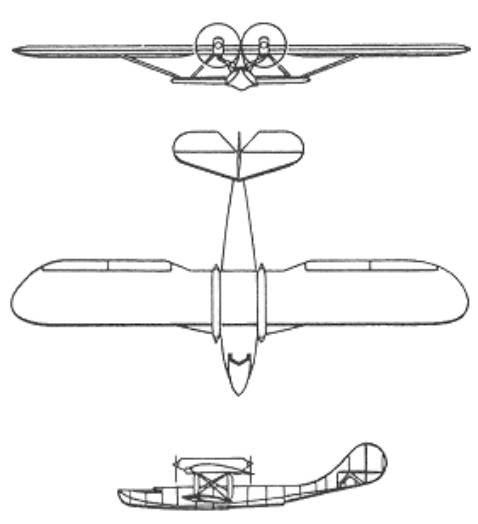
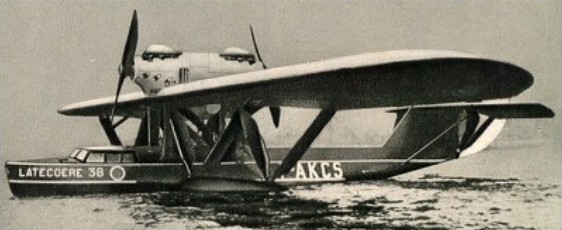
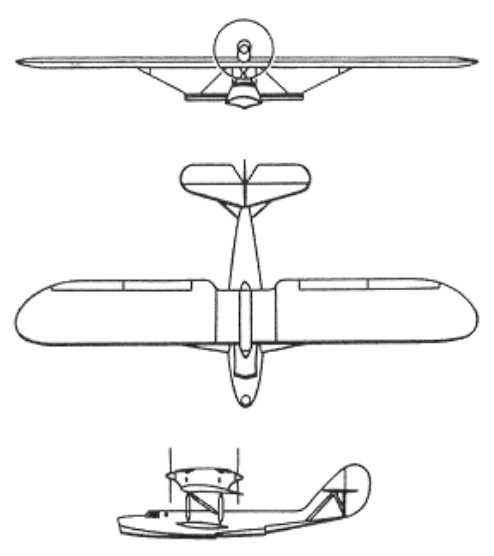
The Laté 38 Series were 1929 postal parasol flying boat, 2 x push/pull engines.
Laté 38-01: 1930 prototype, trialled at St Raphaël (Nov 1930) F-AKCS aka Laté 38-0-01 or Laté 380-01, first flight 14 Sept 1930 Laté 380bis: Laté 38-01 mod. for Aéronavale, crashed 16 Mar 1933 Laté 380bis modifications incl. lengthened hull and larger tailplane Laté 38-02: 1931 prototype, F-ALRP to Aéropostale, 1934 to Air France Laté 38-1: 1934 recce flying boat, 2 x 650 hp HS.12Nbr, 3 built aka Laté 381, as Laté 380bis but hull widened and further lengthened
Engine: 2 x HS 12 Ydrs 2, 685kW Max take-off weight: 9475 kg / 20889 lb Empty weight: 5475 kg / 12070 lb Wingspan: 31.4 m / 103 ft 0 in Length: 17.2 m / 56 ft 5 in Wing area: 130.0 sq.m / 1399.31 sq ft Max. speed: 209 km/h / 130 mph Ceiling: 4700 m / 15400 ft Range w/max.fuel: 4000 km / 2486 miles Crew: 3
The Late 23 was an enlarged version of the Late 21 (conv. from Laté 21bis F-AIHP 73/2) for 4-6 pax, powered by Farman engines and spanning 28.00m. With accommodation for eight passengers, it had a maximum take-off weight of 7503kg, but the sole prototype broke up on take-off on 31 December 1927, killing its crew of four.
Engines: 2 x 500hp Farman 12We Max take-off weight: 7503 kg / 16541 lb Empty weight: 4627 kg / 10201 lb Wingspan: 28.00 m / 91 ft 10 in Length: 16.60 m / 54 ft 6 in Height: 4.80 m / 15 ft 9 in Wing area: 123.00 sq.m / 1323.96 sq ft Max. speed: 178 km/h / 111 mph Cruise speed: 152 km/h / 94 mph Ceiling: 3800 m / 12450 ft Range: 1200 km / 746 miles


 All Aero