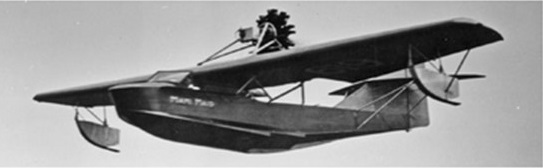
The five-seat amphibian monoplane MM-200 Miami Maid appeared in 1928 or 1929 with a 230 hp Menasco-Salmson B-2 radial engine pusher mounted on top of the wing, and registered NC619. The design combined an all-wood Fokker cantilevered wing with the wooden hull of a Curtiss F boat.
A second aircraft, the MM-201 registered NC178N, was modified in 1930 for installation of a 300 hp Wright R-975 Whirlwind engine.
MM-200 Engine: Menasco-Salmson B-2, 230 hp Wingspan: 44 ft Length: 33 ft Useful load: 1250 lb Top speed: 120 mph Cruise speed: 100 mph Range at cruise: 500 mi
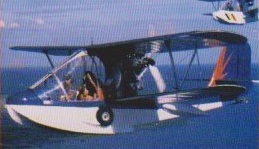
The tandem, two seat MD 03 amphibious pusher biplane has a fuselage of spaceframe and composites, while the wings are the same as on other Delpech models.
Engine: Rotax 582, 64 hp Wing span: 8.60 m Wing area: 18 sq.m MAUW: 450 kg Empty weight: 198 kg Fuel capacity: 45-60 lt Max speed: 160 kph Cruise speed: 130 kph Minimum speed: 60 kph Climb rate: 5 m/s Seats: 2 Fuel consumption: 9-14 lt/hr Kit price (1998): 110 000 Fttc
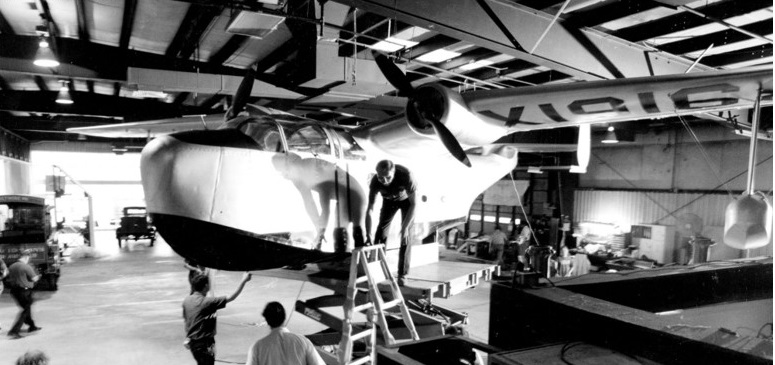
A piloted, three-eighths scale model of PBM flying boat; single-seat test aircraft built to generate aerodynamic data to design and build full-scale Martin PBM flying boat.
The construction was fabric-covered spruce plywood and aluminum.
In 1987, a dedicated and enthusiastic team of volunteers, many of whom were former Martin employees, began an exhaustive restoration of the 162A. After more than 10,000 man-hours of labor, the 162 was ready for display while on loan to the Museum of Industry in Baltimore, not far from where the “Tadpole Clipper” had been built and flown. Portions of the rear fuselage under-surface were left uncovered to illustrate some of the modifications made in the 162A’s hull during the course of its testing.
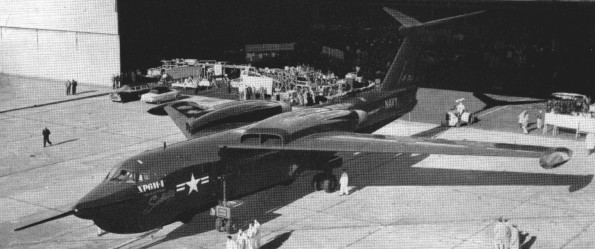
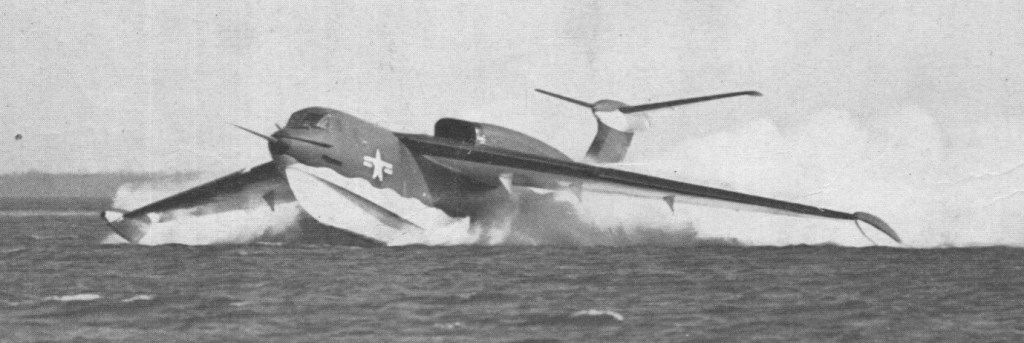
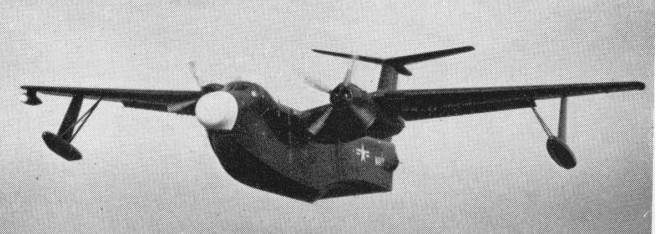
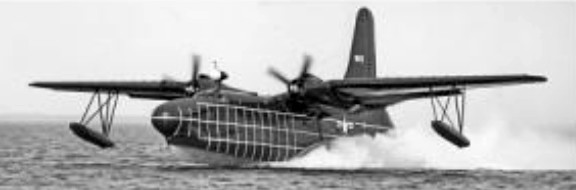
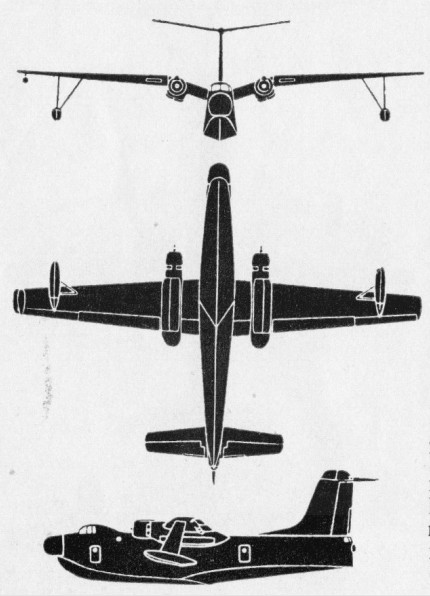
To meet a US Navy requirement for a high-performance multi-role flying-boat, Martin offered its Model 275 design. This had an all-metal hull of high length/beam ratio, mounting a cantilever high-set sharply-swept wing incorporating so much anhedral that the stabilising floats at the wing-tips could be attached permanently; the tail unit was of T-tail configuration with all-swept surfaces. Above the wing, to minimise spray ingestion, were mounted four Allison turbojet engines, and pressurised accommodation was provided for a crew of five. A beaching cradle allowed the SeaMaster to taxi in and out of the water under its own power. The P6M used a rotary bomb bay (as used on Martin’s licence-built Canberras and the XB-51). This permitted weapons release at high speeds without the drag of conventional bomb doors.
The first XP6M-1 prototype was flown on 14 July 1955, the second following on 18 May 1956. Ejection seats were fitted to the second and subsequent aircraft. These proved useful when the second SeaMaster pitched up, went into a loop and disintegrated. The original position of the engine exhausts caused stress on the rear fuselage which resulted in structural damage. The angle of the exhausts was adjusted after testing.
Martin received orders for six pre-production YP6M-1 boats powered by Allison J71 turbojets each developing a maximum 5897kg afterburning thrust. Successful flight testing led to an order for 24 production P6M-2 aircraft named SeaMaster, which differed primarily by having 7711kg thrust non-afterburning Pratt & Whitney J75-P-2 turbojet engines. The cockpit glazing was modified on later models to give a much better overhead and side view. However, the contract was cancelled on 21 August 1959 after only three had been built and these, together with the YP6M-1s, were scrapped at a later date. They were the fastest flying-boats ever built.
YP6M-1 Engines: 4 x J71 turbojet. Speed: 600 mph.
P6M Engines: 4 x Pratt & Whitney J75-P-2 turbojets, 7938kg Wingspan: 30.48 m / 100 ft 0 in Length: 40.84 m / 133 ft 12 in Height: 9.45 m / 31 ft 0 in Max take-off weight: 72575 kg / 160001 lb Payload: 13600kg / 29983 lb Max. speed: 965 km/h / 600 mph Ceiling: 12200 m / 40050 ft Range: 4830 km / 3001 miles Armament: 6 x 12.7mm machine-guns, 1800kg of weapons Crew: 4
On 23 August 1938 the US Navy ordered from Martin a single prototype of the Martin 170 design for a patrol bomber of flying-boat configuration.
The tip of the tail is almost 50 feet above water level while the wing span is 200 feet, greater than a Boeing 747, and the two level interior is as big as a 15 room house with a long circular staircase connecting the two decks. The control surfaces are all fabric covered.
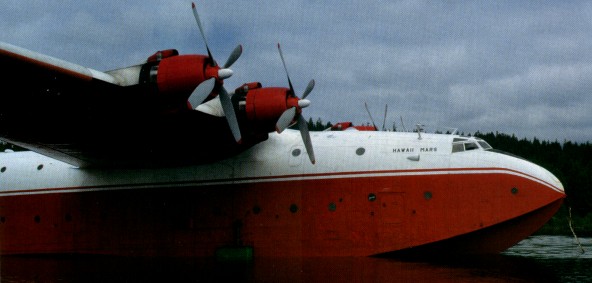
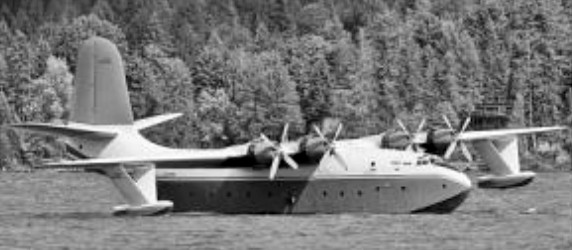
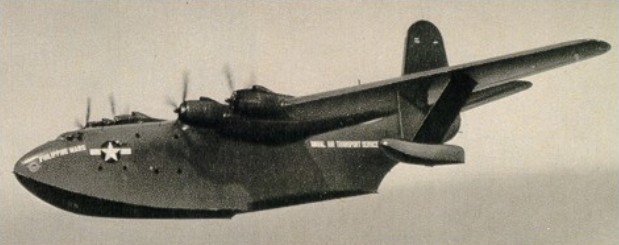
Designated XPB2M-1, it was the world’s largest flying-boat when flown for the first time on 3 July 1942, but by then the United States had become involved in World War II and it was decided not to proceed with procurement of the type as a patrol bomber. Instead, the boat was modified for use in a transport role, becoming re-designated XPB2M-1R and entering service in December 1943. It remains the largest flying-boat to have been operated by the US Navy and an early demonstration of its capability came in 1944, when a 9299kg cargo was delivered to Hawaii in a 7564km round trip completed in only 27 hours 36 minutes, resulting in a US Navy order for a production version under the designation JRM-1 Mars. This covered 20 aircraft to be completed specially for the transport role, but the end of World War II brought contract cancellations and only five were built, plus a single JRM-2 for operation at a higher gross weight. When the five JRM-1s were later modified to this latter standard they became redesignated JRM-3. These 60.96m span aircraft were powered by four 1715kW Wright R-3350-8 engines, and an appreciation of their capacity can be gained from the fact that on 19 May one of them, Marshall Mars, carried a total of 301 passengers, plus its crew of seven.
In 1948, carrying a load of 25 passengers, 17 crew, and 22,000 lb of freight, JRM ‘Carolina Mars’ flew from Hawaii to Chicago non-stop. This 4000-mile flight was the longest made by a flying boat.
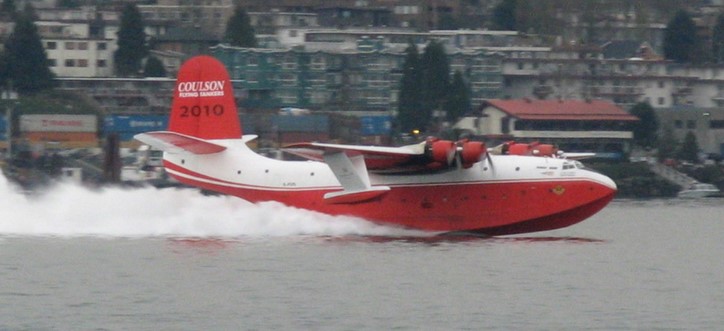
In ten years of military service between 1946 and 1956 and the five logged some 87,000 accident free hours. They established the world flying boat lift record of 30,992 kg (68,327 pounds) and carried a record 350 troops. The propeller driven Mars were declared obsolete in 1956 and Forest Industries Flying Tankers Ltd, Canada, purchased four, the other having been lost in a fire.
With a fibre glassed Douglas Fir plywood 6.000 gallon tank installed in the cargo area it could scoop up the 32 tons of water within 22 seconds while the flying boat skimmed the surface at about 70 knots.
Martin 170 / JRM Mars Engines: 4 x Wright R-3350-18 Cyclone, 1620kW / 2170 hp Max take-off weight: 67130 kg / 147997 lb Empty weight: 34300 kg / 75619 lb Wingspan: 61.0 m / 200 ft 2 in Length: 36.6 m / 120 ft 1 in Height: 13.6 m / 44 ft 7 in Wing area: 242.0 sq.m / 2604.86 sq ft Max. speed: 380 km/h / 236 mph Cruise speed: 300 km/h / 186 mph Ceiling: 5200 m / 17050 ft Range w/max.fuel: 9300 km / 5779 miles Crew: 7 Passengers: 40
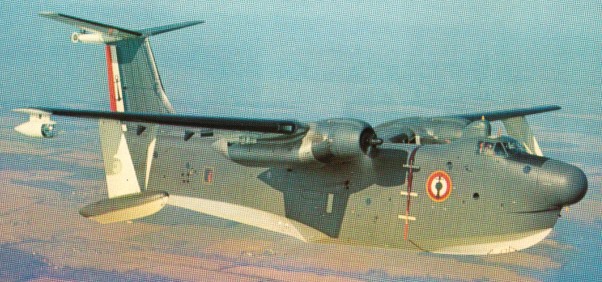
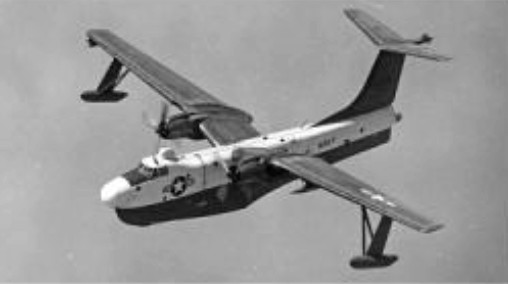
As a new US Navy patrol flying-boat, Martin developed the Model 237 design, combining the wing and upper hull of the Mariner with the new lower hull structure. A PBM-5 Mariner served as the prototype XP5M-1 which, when ordered into production, was given the name Marlin.
The modified hull of the XP5M-1 incorporated radar-directed nose and tail turrets, as well as a power-operated dorsal turret, and power was provided by two 2424kW Wright R-3350 radial engines.
This prototype flew for the first time on 30 May 1948, but it was not until two years later that the P5M-1 was ordered into production, the first of these series aircraft being flown on 22 June 1951.
Initial deliveries, to US Navy Squadron VP-44, began on 23 April 1952 and the type remained in service until the mid-1960s.
Martin P5M-1
In addition to those operated by the US Navy, 12 of the later P5M-2 version were supplied to France under the American MAP for use by the Aeronavale in 1959. In the French Aeronavale, where they were used for maritime patrol out of Dakar, West Africa, until 1964, after which they were returned to the Navy. The P5M 2 Marlin could carry up to 8,000 lb (3,629 kg) of assorted weapons. The P5M-1 has a low mounted ” dihedral ” tailplane, different hull shape and lower-powered engines, compared to the P5M-2.
The first of 28 P5M-2 Marlins to undertake a modernisation program was delivered to the US Navy in 1959.
Martin aircraft production ceased December 20,1960 when the last P5M- 2 Marlin was handed over to U.S. Navy.
Claiming high operational costs, the Coast Guard turned over all of its P5Ms to the Navy in 1961. Lacking most military equipment, they were used as crew trainers as P5M-1T and P5M-2Ts.
In September 1962, when all American military forces adopted the tri-service designation scheme, the P5M-1 became the P-5A, the P5M-1S the SP-5A, the P5M-1T the TP-5A, the P5M-2 the P-5B, the P5M-2S and P5M-2T the PT-2B.
SP-5B / P5M2
In 1964, in an attempt to boost take-off power, one SP-3B was tested with a tail mounted 3000 lb.st Pratt & Whitney J60 turbojet engine. They were not adopted for service.
No Marlins went to the reserves. As they were retired, they were stored until sold as scrap. A Navy SP-5B of VP-40 made the last operational flight on 6 November 1967.
Model 270
The XP5M-1 prototype was later used (as the model 270) to test the 15:1 hull configuration for the P4M SeaMaster.
P5M Engines: 2 x Wright R-3350-32WA Turbo-Compound, 2573kW Max take-off weight: 38555 kg / 85000 lb Empty weight: 22900 kg / 50486 lb Wingspan: 36.02 m / 118 ft 2 in Length: 30.66 m / 100 ft 7 in Wing area: 130.62 sq.m / 1405.98 sq ft Max. speed: 404 km/h / 251 mph Ceiling: 7300 m / 23950 ft Range: 3300 km / 2051 miles Armament: 3600kg of weapons Crew: 11
P5M-2 Marlin Naval patrol bomber flying boat Engines: 2 x Wright R3350-32W Turbo-Cyclone, 3450 h.p Wingspan: 118 ft. 2in (36.02 m) Wing area: 1406.3 sq.ft Length: 100 ft. 7in (30.66 m) Height: 32 ft 8.5 in (9.97 m) Empty weight: 50,485 lb Max TO wt: 85,000 lb (38,555 kg). Loaded weight: 73,055 lb MTOW: 76,635 lb Fuel capacity: 4410 gal Max speed: 251 mph at SL Ceiling: 22,400 ft Normal range: 2050 mi Max range: 3,600 miles Armament: 2 x 20mm tail mounted guns Bombload: 16,000 lb Crew: 7
The XPBM-1 prototype flying-boat patrol bomber was originally ordered by the US Navy in 1936. Before it was built, a quarter-size prototype (Model 162A) was constructed and flown. The full-size aircraft was flown for the first time in February 1939.
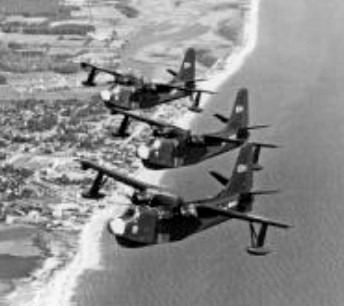
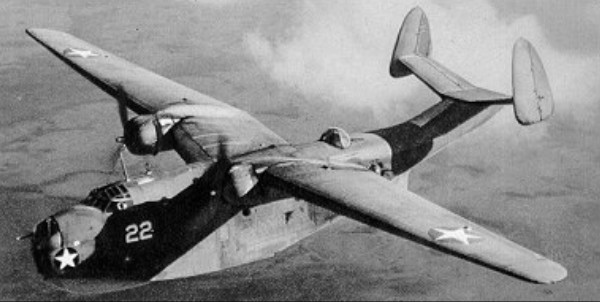
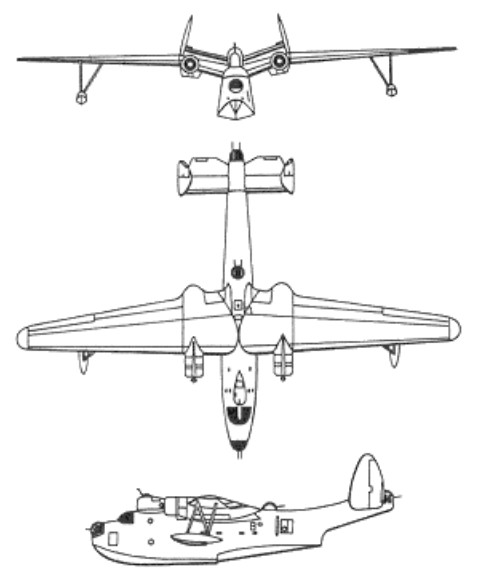
The production PBM-1 – fitted with two 1,192 kW Wright R-2600-6 radial engines, a dihedral tail and retractable wingtip floats – was ordered in 1938 and 20 of these went into Navy service in 1941. A single XPBM-2 was ordered at the same time as a long-range version specially strengthened for catapult take-off. The PBM-3, with two 1,267kW Wright R-2600-12 engines, was ordered in quantity in 1940 and deliveries began in 1942. In this version the crew was increased from seven to nine, the armament was revised and the fuel capacity increased. The retractable wingtip floats of the PBM-1 were replaced by fixed floats. In 1942 the PBM-3 was adopted also as a naval transport carrying 20 passengers or 3,629-4,082kg of cargo (PBM-3R). Twenty-six PBM-3B patrol bombers were also used by RAF Coastal Command, delivered under Lend-Lease. At the end of the war a specialised anti-submarine version was also developed as the PBM-3S.
PBM-5A
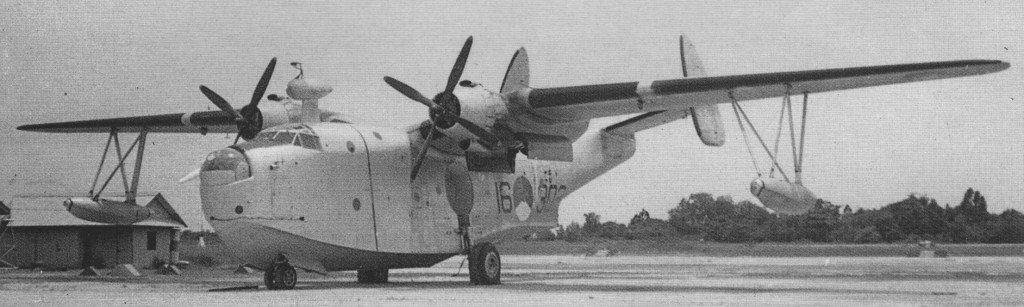
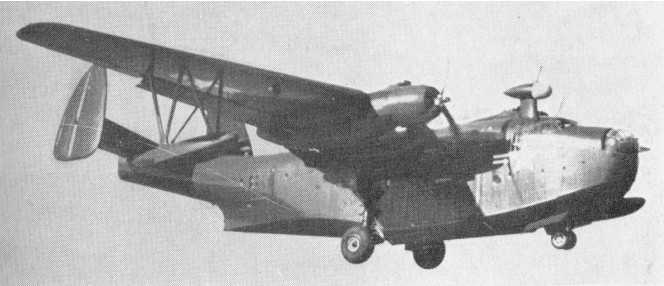
The final two production versions of the Mariner were the PBM-5 and PBM-5A, powered by 1,565kW R-2800-22 and R-2800-34 engines respectively. The last PBM-5A was delivered to the US Navy in April 1949. This version was basically an amphibious version of the PBM-5 and ended its career as a general utility aircraft.
PBM-5A Mariner
630 PBM-5 flying boats were built, followed by 36 PBM-5A amphibians, used for air-sea rescue duties, primarily by the U.S.C.G.
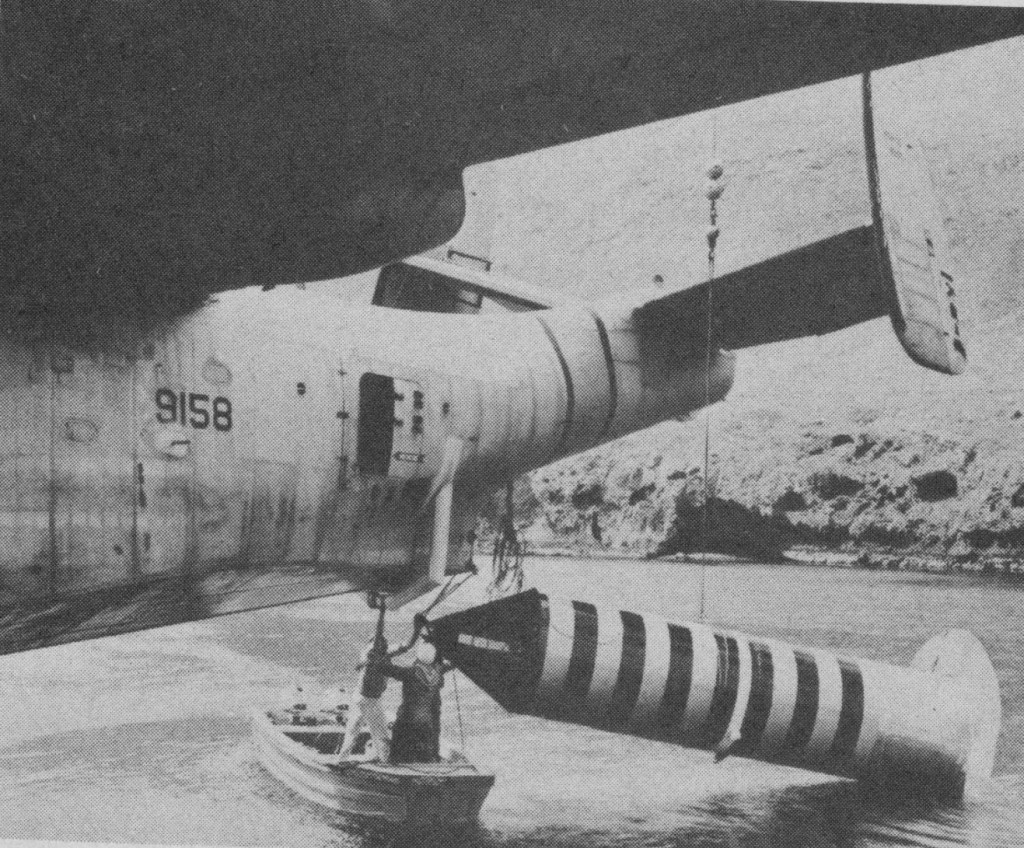
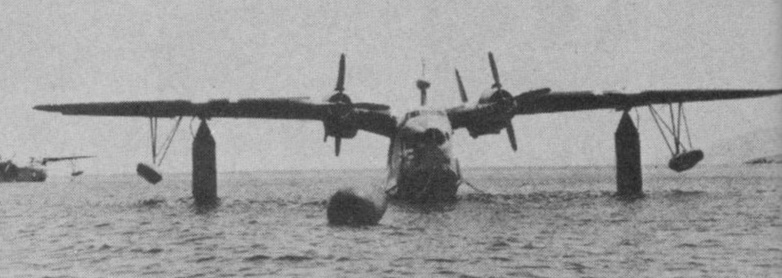
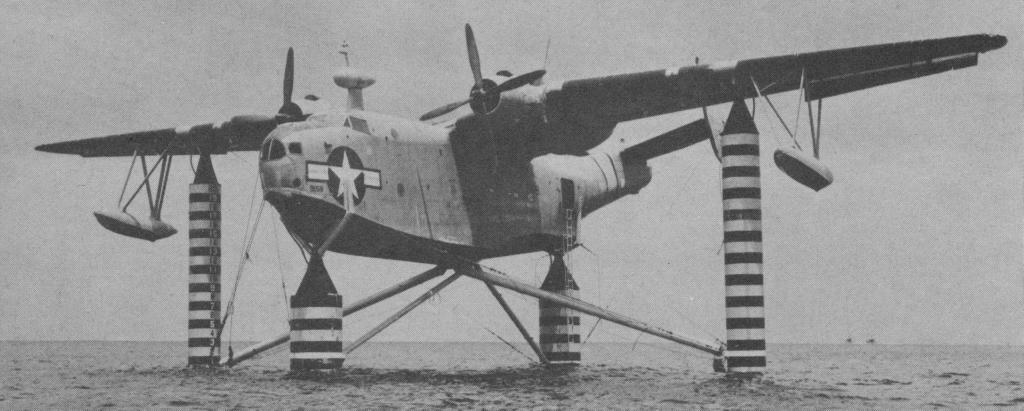
In 1963 the US Navy tested vertical floats designed by General Dynamics/Convair, on a PBM-5.
These made the seaplane a stable working platform for anti-submarine warfare with little motion from 4-5 ft waves.
Engines: 2 x Wright R-2800A-5B, 1250kW Max take-off weight: 25400 kg / 55998 lb Empty weight: 14660 kg / 32320 lb Wingspan: 36.0 m / 118 ft 1 in Length: 34.4 m / 112 ft 10 in Height: 8.4 m / 27 ft 7 in Wing area: 130.0 sq.m / 1399.31 sq ft Max. speed: 325 km/h / 202 mph Cruise speed: 240 km/h / 149 mph Ceiling: 6150 m / 20200 ft Armament: 8 x 12.7mm machine-guns, 2000kg of bombs Crew: 7
PBM-5A Mariner Air-sea rescue amphibian Engines: 2 x Pratt & Whitney R2800-34, 2,100 h.p. Wingspan: 118ft Length: 79ft. 10in Loaded weight: 60,300 lb Max speed: over 200 m.p.h. Ceiling: 20,200 ft. Max range: 2,900 miles at 143 m.p.h. Armament: (when fitted) 8x.50 in machine-guns Bombload: 4,000 lb
Martin PBM 3 D Mariner Engines: 2 x Wright R-2600-22 Cyclone, 1874 hp Length: 79.823 ft / 24.33 m Height: 27.493 ft / 8.38 m Wingspan: 118.012 ft / 35.97 m Wing area: 1407.931 sq.ft / 130.8 sq.m Max take off weight: 58009.1 lb / 26308.0 kg Weight empty: 33180.8 lb / 15048.0 kg Max. speed: 184 kts / 340 km/h Service ceiling: 19800 ft / 6035 m Wing load: 41.21 lb/sq.ft / 201.00 kg/sq.m Range: 1947 nm / 3605 km Crew: 8 Armament: 8x MG cal.50 (12,7mm), 3629kg Bomb./Depth Chrgs.
The Martin Model 156 was intended to be a successor aircraft to the M130 for Pan American Airways.
Lateral buoyancy was provided by seawings rather than conventional sponsons or outboard floats. Interior furnishings provided for either a maximum of 46 passengers or a more luxurious arrangement allowing for night sleeping for a reduced number of passengers. Four 1,000-hp nine-cylinder radial engines were mounted in nacelles on the leading edge of the center section.
Only one was built and it was sold to the Russians in 1937. The sale included a complete set of production drawings as the Russians intended to mass produce the aircraft. WWII and invading Germans ruined their plans. The single type was used by the Russians for troop movements during the war. It is distinguishable from the M130 by the twin tails structure.
Engines four 1,000-hp Wright Cyclones Gross wt. 63,000 lb Empty wt. 30,414 lb Top speed 190 mph Cruise 156 mph Takeoff 70 mph Range 2,410 miles Ceiling 15,500 ft Seats 46.
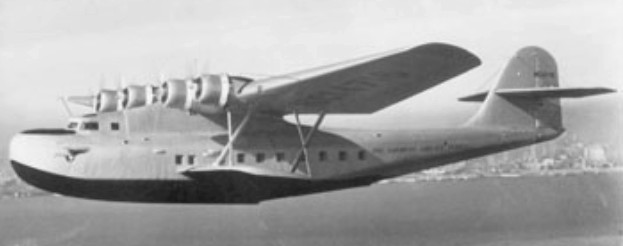
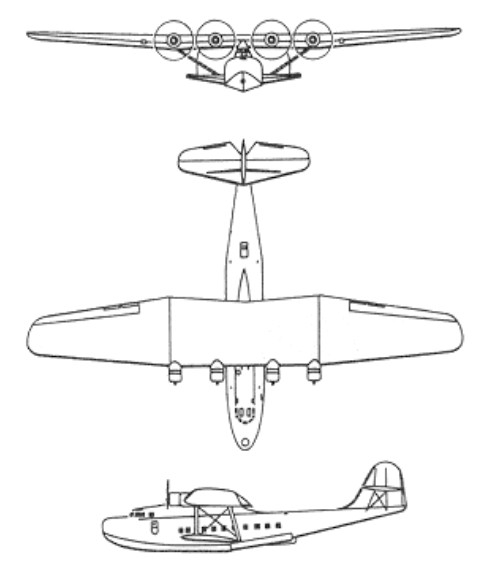
The Martin 130 was a large four-engined monoplane flying-boat designed for transoceanic services. Three were built for Pan American Airways in 1934-1935 and on 21 October 1936 began operating over the Pacific from San Francisco to Manilla, Philippine Islands.
The first designated flight engineer was required on the Martin M-130 ‘China Clipper’, flying boat. On the M-130, a separate cabin was constructed for the flight engineer, communication with the pilots being carried out via interphone. His principal responsibilities were supervision of aircraft maintenance on the ground, advising the flight crew of the aircraft maintenance status, and in-flight operation of the engines and aircraft systems. In the absence of flight time limitations, these engineers performed some prodigious feats of repair in addition to their normal functions.
Lateral buoyancy of the hull was provided by stub wings or ‘seawings’ instead of the conventional sponsons or outboard stabilising floats. Accommodation was provided for a crew of four and 36-48 daytime passengers or 18 sleeping bunks for night flying.
First flying in 1934, the four engine Martin Model 130 flying boat entered service on 21 October 1936 with Pan American Airways on the San Francisco Manila air route in 1935. The Martin Clipper carried 10 passengers on overseas flights with a range of 3,200 miles. The M-130 had a cruising speed of 163 mph, weighed 53,000 pounds when fully loaded, and a wingspan of 130 feet.
Engines: 4 x Pratt & Whitney R-1830-S1A4G Twin Wasp, 830 hp / 610kW Prop: three blade. Wing span: 130 ft 0 in (39.62 m). Length: 90 ft 71 in (27.62 m). Height: 7.3 m / 23 ft 11 in Wing area (incl. sponsons): 2,315 sq.ft (215.07 sq.m). Empty weight: 13160 kg / 29013 lb Gross weight: 52.000 lb (23,587 kg). Max. speed: 290 km/h / 180 mph Max cruising speed: 163 mph (262 kph) at 7000 ft (2,135m). Range: 3,200 miles (5,150 km). Crew: 4. Pax cap: 36 43 (18 in sleeper configuration). Ceiling: 5200 m / 17,000 ft.
In 1989 designer and manufacturer Larry Seifert introduced the Mariner. The Mariner is a two-place tandem seating amphibious bi-plane. It was being offered in kit form, which would take the average builder between 300 and 600 hours to build, and required no special tools, or jigging. It was also offered as a ready to fly plane under the new Light Sport Aircraft category.
The Mariner is set up to take a number of different engines, from the Rotax 503 and 582 on up to the Subaru auto conversion. Depending on engine power cruise comes in between 55 and 75 mph, top speed 95 mph, climb rate 1,000 feet per minute and stall 28 mph. Take off from land or water requires 150 to 200 feet.
Horsepower: 40 hp Wingspan: 28.5 ft / 8.69 m Length: 18.75 ft / 5.72 m Height: 8 ft / 2.44 m Empty Weight: 304 lb / 138 kg Gross Weight: 950 lb / 431 kg Useful Load: 646 lb / 293 kg Fuel Capacity: 5 USgal / 19 L Cruise: 48 kts / 89 kmh / 55 mph Stall: 26 kts / 48 kmh / 30 mph Range: 65 nm / 120 km / 75 mi ROC: 800 ft/min / 4.1 m/sec Ceiling: 12,000 ft / 3,658 m Takeoff Distance: 150 ft / 46 m Landing Distance: 225 ft / 69 m


 All Aero