A two-seat flying-boat trainer
One N.T.2B was shipped to Canada to make forestry patrols from Lake St John, Quebec.
Amphibian
Norman Thompson Flight Company N.1B / White & Thompson N.1B
A two-seat flying-boat fighter
Nord 1400 Noroit
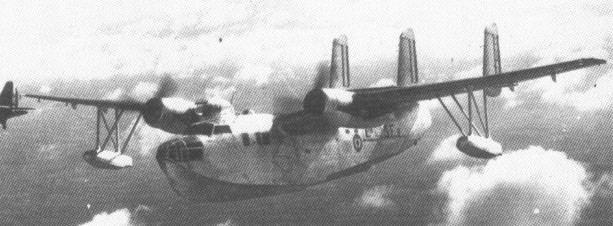
Despite the decline of the seaplane’s importance after the Second World War, France still saw a limited future for the type and commissioned from the Societe Nationale de Constructions Aéronautiques du Nord (generally known as SNCAN or Nord) a flying boat for the reconnais¬sance and air/sea rescue roles.
This was an all-metal monoplane with a gulled wing and a two ¬step hull, and had accommodation for a crew of seven, plus a roomy rear cabin with a large sliding door on the port side for rescue operations. It first flew on 6 January 1949 as the N.1400.01 Noroit prototype (F-WFDL) with 1,600-hp (1,193-kW) Gnome-Rhone 14R radials. The N.1400.02 second prototype introduced retractable tailwheel landing gear to provide an amphibious capability. Retractable tailwheel landing gear was installed on the N 1400-01 at a later date. There followed a pair of N.1401 pre-production machines with two 1,800-hp (1,342-kW) SNECMA-built Junkers Jumo inlines and annular radiators. The N 1401 Noroit (F-WFKU) was flown on 6 August 1949, the second example (F-SFKN) being flown later, and both were tested in 1950 with two Bristol Hercules radial engines. Finally there came 21 N.1402 Noroit (North-West Wind) production aircraft, the last of them delivered in 1956. Together with the two N.1401s modified to the same standard, these served with Flottille 5F.
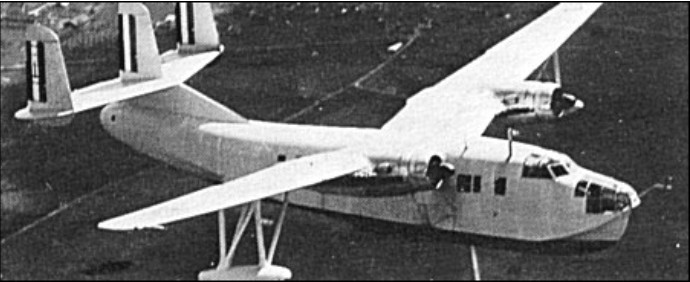
Nord N. 1402 Noroit
Engines: two 2,100-hp (1,566-kW) SNECMA 12H.00 (Junkers Jumo 213A) inline piston
Maximum speed 230 mph (370 km/h) at 8,695 ft (2,650 m)
Initial climb rate 984 ft (300 m) per minute
Range 2,610 miles (4,200 km)
Empty weight 28,660 lb (13,000 kg)
Maximum take-off weight 45,040 lb (20,430 kg)
Wingspan 103 ft 8 in (31.60 m)
Length 72 ft 4 in (22.05 m)
Height 22 ft 5.5 in (6.85 m)
Wing area 1,076.43 sq ft (100.00 sq.m)
Armament: six 20-mm cannon in two-gun nose, dorsal, and tail positions, and bombs carried in nacelle bays plus provision for eight rockets on the hull sides.
Crew: 7
Nikitin PSN-2 / Yefimov PSN-2
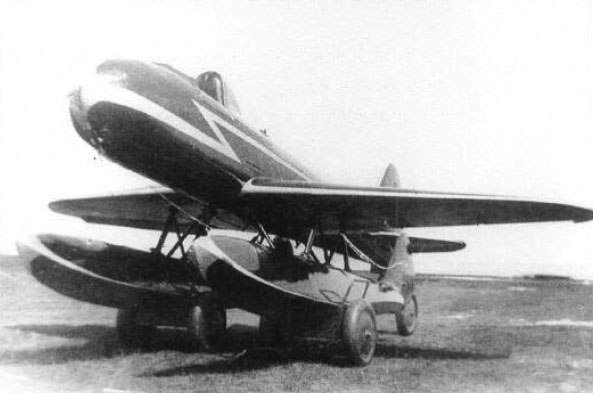
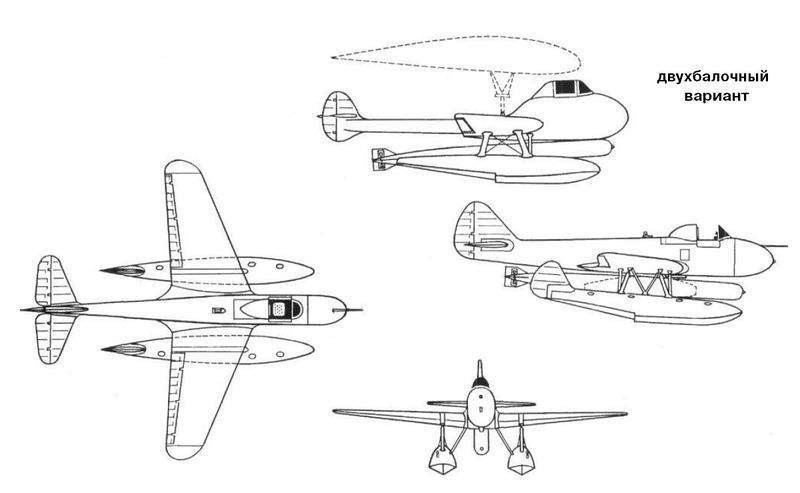
The PSN-2 was a single seat glider floatplane designed to test the concept and guidance equipment for a range of guided glider bombs proposed by S.F. Valk in 1933. Designed by M.M. Yefimo the Nikitin PSN-2, (Planer Spetsial’nogo Naznachenaya – glider for special purpose) was designed by MM Yefimov and produced in the USSR from 1934 by V.V. Nikitin.
Constructed of wood, the PSN-2 was a sleek monoplane aircraft with two floats attached to the wing with struts, an open cockpit in the extreme nose of the fuselage and extra fins at the aft end of each float. The PSN-2 could be carried aloft under a mother-ship or aero-towed off water. Beaching gear was available for manoeuvring the aircraft when not on the water.
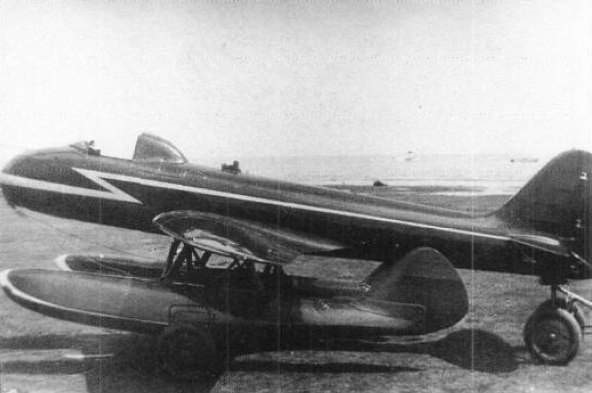
A prototype was built at factories No. 23 and No. 379. First flown in June 1940, the planned mission of the pilotless production version of PSN-2 included a 40 km (25.85 mile) range flown at 700 km/h (435 mph), guided to the target with the KVANT Infra-red guidance system. Flight testing was carried out in 1940, but work was discontinued on 19 July 1940 after an order from the commissioner of the naval forces. Between July 1 and 23, 1940, three tows were carried out over the water and 10 take-offs with flight heights of up to 275 meters. A Beriev MBR-2 was used as a tug.
Only the one was built.
PSN-2
Wingspan: 7m
Wing area: 9.47 sq.m
Length: 7.7m
Height with floats: 2.7 m
Empty weight: 830 kg
Loaded weight: 1,800 kg
Maximum speed: 168 km / h
Seats: 1
New Standard D-28
Floatplane
Nelson No. 4 float biplane
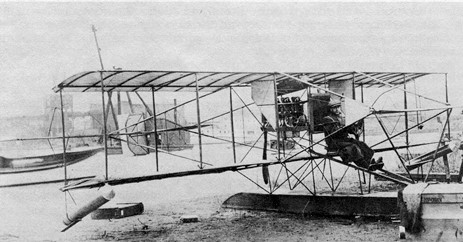
The Nels Nelson No. 4 was built in the winter of 1911-12 as a Kirkham engined landplane and fitted with the float in the summer of 1912 – first flight as a floatplane in August. It was flown in both forms but later in 1912 Nelson made further changes and converted it to a permanent wheeled configuration. It was in this form that it was sold to Prof. Charles Swartz, Mgr. of the Aeroplane Exhibition Co. Humboldt, Tenn., who promptly wrecked it.
Naval Air Establishment Ding
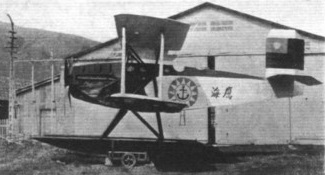
The Ding was a dual-purpose torpedo bomber and passenger seaplane. In a military configuration, the fairly standard tractor biplane had a crew of three – a pilot just under the wing, a gunner behind him, and a bombardier in a compartment in the fuselage between the pilot and engine. Two main floats were placed on either side of the fuselage, providing clearance for a single torpedo or load of conventional bombs. It was powered by the same 360hp 12-cylinder liquid cooled Rolls-Royce engine of the Beeng fighter-bomber. As a passenger aircraft, the bombardier’s cabin provided sufficient room for four people to sit comfortably. The aircraft had a loaded weight of 5,300lb, wingspan of 46ft, and length of 36ft.
Naval Air Establishment Nin-Hia

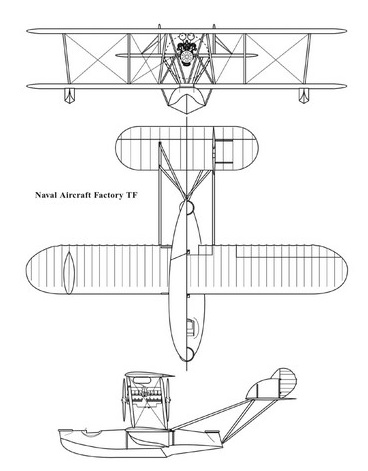
NAF TF
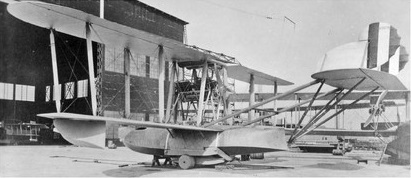
The origins of the TF (Tandem Fighter) can be traced to a 1918 requirement issued by the British Technical Committee for a long-range sea-borne fighter to escort patrol aircraft (H-16s, F-5s, etc) on maritime sorties. After the armistice, Navy officials retained sufficient interest in the idea to authorise NAF to proceed with design proposals. After reviewing various options, the Navy approved a twin-tandem engine design that incorporated a hull and tailplane arrangement nearly identical to the larger NC series and authorised construction of four prototypes. Originally, the TF was to have been powered by Curtiss-built 400 hp Kirkham engines, however mechanical problems with the Kirkham engines led to the decision to substitute the less powerful Wright-Hispanos.
Construction of the first prototype commenced in August 1919 and the first flight took place on 1 October 1920. Testing revealed poor handling characteristics plus a marked tendency of the engines to overheat at high RPM settings.
Although three more prototypes were completed and tested during 1921 and 1922, results were still rated as unsatisfactory, and the program was formally cancelled in January 1923.
The fourth prototype was reportedly completed with 400 hp Packhard I-A V-12 engines.
3 place Navy escort fighter
Engine: 2 x Wright-Hispano H-3, 300 hp
Prop: 4 blade wood fixed pitch
Wing span upper: 60 ft 0 in
Length: 44 ft 0 in
Wing area: 930 sq.ft
Empty weight: 5575 lb
Loaded weight: 8846 lb
Max speed: 95 mph
Cruise: 72 mph
Ceiling: 13,000 ft
Range: 650 mi
Armament: 2 x flexible Lewis .50in mg in bow, 1 x flexible Lewis .30in mg in rear cockpit
Number built: 4
NAF N-1 / Davis N-1
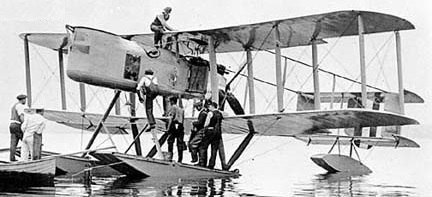
The 1918 N-1 USN gunship was a two place open cockpit, biplane flying boat. A twin-boom, triple-tail aircraft with a nacelle fuselage, a 37mm cannon was fitted in the nose.
Two were built, A4341 and 4342, and a contract for 2,284 was cancelled.
Seen on some records as Davis N-1.
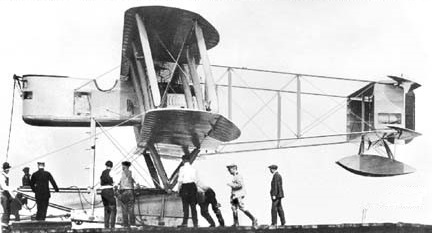
Engine: 330hp Liberty pusher
Wingspan: 51’0″
Length: 37’7″
Speed: 94 mph
Ceiling: 7,800′
 All Aero