Patchen Explorer/Observer

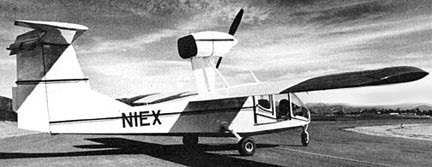
Patchen Explorer N1EX

Only one Patchen Explorer was ever built, in the 1960s, registered N1EX.

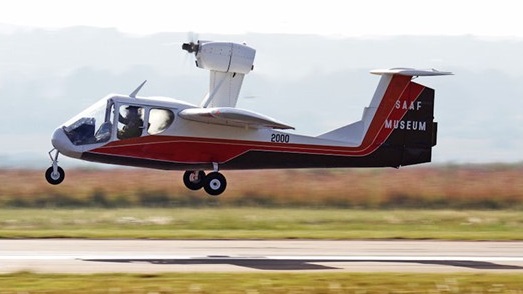
By 1982 the prototype was shipped to the Republic of South Africa and evaluated by the SAAF’s test flight and development centre for use as a light recon forward air control aircraft, but was not quite what was required. As a result it languished in a hangar for many years before being donated to the SAAF Museum.

National Dynamics (Pty) Ltd, South Africa, was formed 1975 after acquiring the prototype and all production rights of the Patchen Explorer/Observer four-seat cabin lightplane conceived originally by Thurston Aviation Corporation in the U.S.A., as a landplane development of the Teal amphibian.

Engine: Lycoming, 200hp
Max speed: 130 mph
Cruise speed: 115 mph
Seat: 2

The aircraft is still alive and well, operated by the South African Air Force Museum. Why only one prototype was ever built I do not know, as it is a great little aircraft with a fantastic helicopter-type view from the cockpit. I will admit that it does not have the greatest control harmony (sensitive rudder and elevator, heavy ailerons), but it goes well with a 200hp Lycoming and variable-pitch prop. I served with the SAAF Museum during 1999 as a display pilot and flew the Patchen at many airshows. It looks so weird that it attracts far more interest at airshows than many of the vintage aircraft! (James R Feuilherade 11/15/00)
Partenavia Sea-Sky

One of the very few water-based gliders, the Sea-Sky was designed and produced in the early 1960s by Partenavia of Naples. The Sea-Sky was a small single-seater with the pilot seated in a single-step speed boat-like wooden semimonocoque hull, with a small water rudder under the step, and the cantilever tail unit, of fabric covered metal construction, carried on a steel tube tail boom. The tailplane is a one-piece all-moving surface, with a tab on the port trailing edge. The braced parasol wing is of constant chord and is carried on an inverted vee steel tube structure at the rear of the hull, with steel tube bracing struts at the sides; the wing is a two-spar wooden structure, fabric-covered, with plain fabric-covered wooden ailerons and small fixed floats at the squared-off wing tips. The pilot sits in an open cockpit and has an overhanging control column and conventional rudder bars; the Sea-Sky is designed to be towed behind a motor boat. It is, however, capable of free flight and the wings and tailplane can be easily removed for transport and storage.

Span: 24ft 7in
Length: 20 ft 0 in
Height: 7 ft 3 in
Wing area: 121.1 sqft
Empty weight: 187 lb
Max weight: 375 lb
Min sinking speed: 4.90 ft/sec at 33.5 mph
Best glide ratio: 9:1

Parseval Aeroboat / Das Aeroplan

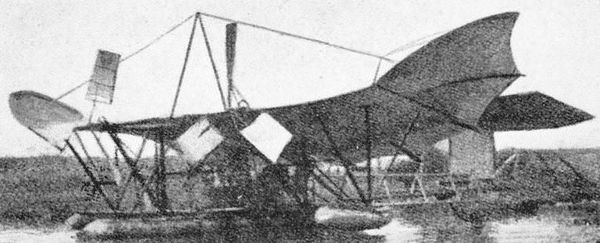
Major August von Parseval’s Aeroboat of 1909 – “Das Aeroplan”, was taken to Plau, in Mecklenburg, where it was to be tested along the shore of the lake in 1910.

The first test of August von Parseval’s seaplane was on April 6, 1910 with pilot Oberingenieur Blochmann, but the plane would not leave the water. On April 14 the machine capsized in a storm and sank. The pilot was saved and the machine salvaged and modified. The biggest changes were straight wings (original wing tips were in V-shape), extra water planes and a triangular fuselage, instead of rectangular. Since the machine couldn’t start from water a Wright-like construction was built, with a trolley on rails. On October 7, 1910 a successful first attempt was made with the starting device. The machine flew at 3 meters for a length of 100-800 meters. A second flight on October 15, 1910 was very successful as the machine flew 3-4 kilometers. The landing on the water was not smooth, so Blochmann was lightly injured. Parseval realized that the machine could never start from the water and ended development.

The machine has a span of 14 metres, while it is 7 metres long and is fitted with a motor of 114-h.p.

Perry P-1

Reportedly, W Parker Perry built a five-place monoplane amphibian Perry P-1 in 1929.

Although registered as N444 on 16 January 1929, specs from Perry’s application were 14′ long with 12′ wingspan and one or two Packard engines of 85 hp, to accommodate a pilot and four passengers.

CAA inquiries went unanswered and the registration was cancelled on 5 May 1930. Probably never built or completed.

Palmer Sunshine Clipper

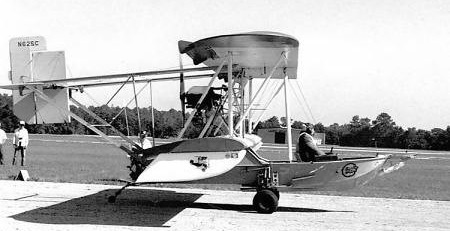
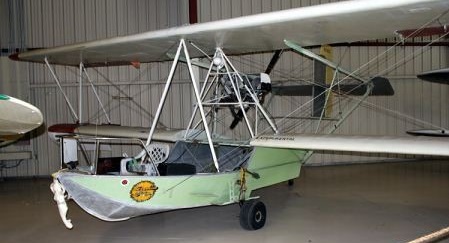
The Sunshine Clipper was a small two-seat amphibious homebuilt aircraft designed and constructed by Henry C. Palmer of St. Petersburg, Florida, USA. The aircraft uses a 14 ft (4.27 m) Orlando Clipper aluminum boat of 1948 vintage as basis for the fuselage, which was then combined with the wings of a Piper J-3 Cub, and parts and components of Piper J-3 Cub, PA-22 Tri-Pacer and PA-25 Pawnee aircraft.

The aircraft (N62SC c/n 1) first flew in November 1987, powered by a 65 hp Continental A65 engine. The aircraft remained a one-of-a-kind design and was registered to the SUN ‘n FUN Aviation Foundation on August 21, 1999 and is on display at the Florida Air Museum.

Engine: Continental A65, 65 hp
Span: 33 ft 0 in (7.20 m)
Weight empty: 1,100 lb (360 kg)
Loaded weight: 1,500 lb (572 kg)
Max speed: 65 mph (145 kmh)
Cruise speed: 55 mph (120 kmh)
Climb: 100 ft (1,000 m)/min

Northrop N-3PB

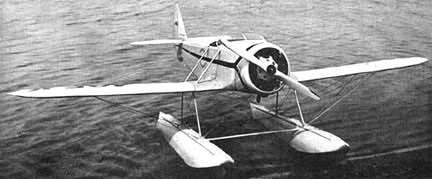
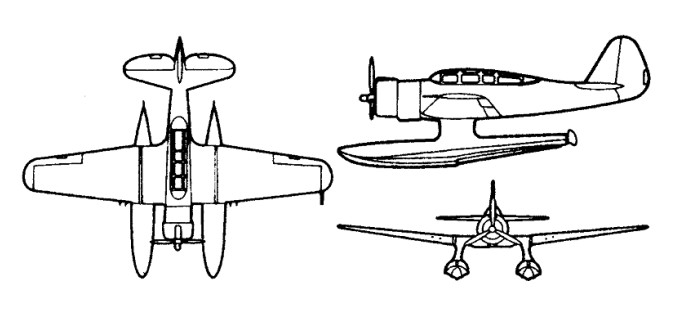
In 1940 Northrop received an order from a Norwegian Buying Commission for the design and construction of a single-engine monoplane patrol bomber with twin floats. The Norwegian order covered 24 aircraft, and in less than eight months the Northrop N-3PB prototype flew, on 1 November 1940, powered by an 895kW Wright Cyclone GR-1820 radial engine. It attained a speed of 414km/h and was then claimed to be the world’s fastest military seaplane.

Norway was invaded by the Germans shortly after the contract had been awarded, and the N-3PBs were delivered to a unit of the Royal Norwegian Naval Air Service, operating as an RAF unit from unimproved coastal sites in Iceland on anti-submarine patrol and convoy escort duties. All maintenance had to be performed in the open, often under extremely harsh environmental conditions, and during 19 months of 1941-42 several were lost during water landings in severe arctic weather, but there were no losses due to enemy action.

An aircraft was destroyed as late as 1965, in the collapse of a snow-laden hangar, but in the early 1980s an N-3PB was located and restored in Norwegian colours by the manufacturers.