Amphibious trike
503
Engine: Rotax 503
582
Engine: Rotax 582
Amphibious trike
503
Engine: Rotax 503
582
Engine: Rotax 582
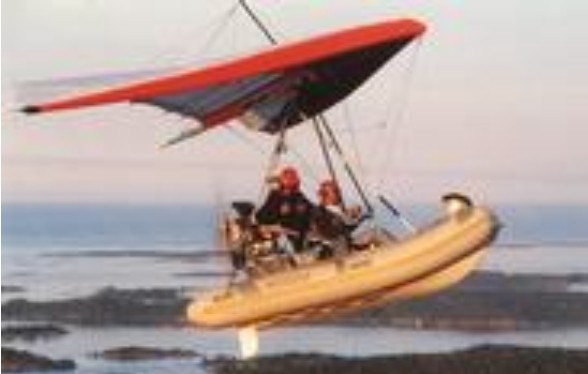
FIB – Flying Inflatable Boat
With Polaris made wings, the flexiwing seaplane is welded steel and uses a Rotax 503 or 582. Three sizes of wings are used: 14, 16, and 18 sq.m.
Stall: 26 kt / 30 mph / 48 kmh
Cruise: 38 kt / 43 mph / 70 kmh
VNE: 43 kt / 50 mph / 80 kmh
Empty Weight: 216 kg / 476 lbs
MTOW Weight: 406 kg / 895 lbs
FIB 503
Empty weight: 182 kg
Wing span: 11 m
Wing area: 21 sq.m
Fuel capacity: 35 lt
Certification: S; J
Engine: Rotax IV DCDI, 48 hp
MAUW: 362 kg
Seats: 2
Max speed: 85 kph
Cruise speed: 65 kph
Minimum speed: 54 kph
Climb rate: 1.8 m/s
Fuel consumption: 11 lt/hr
Price (1998): 27 200 000 L
FIB 582
Empty weight: 170 kg
Wing span: 10 m
Wing area: 14 sq.m
Fuel capacity: 50 lt
Engine: Rotax 582, 64 hp
MAUW: 368 kg
Seats: 2
Max speed: 115 kph
Cruise speed: 90 kph
Minimum speed: 45 kph
Climb rate: 3 m/s
Price (1998): 33 800 000 L
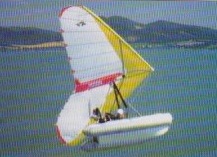
Sonny Levi, a British water sports enthusiast, designed a glass fibre catamaran hydroplane-type hull around a microlight trike unit. To this is attached a standard hang glider wing, resulting in a floatplane trike.
Engine: KFM 107ER, 25 hp
Wing span: 10.4 m
Length: 3.93 m
Empty wt: 104 kg
MAUW: 249 kg
1998:
Fraz. Valdichiascio
I-06024 Gubbio (PG)
Italy
Builder of hull-type trike units.

The Pigeon Hollow Spar Company also produced a flying boat called the Thomas-Pigeon about 1920. This hydroplane was built for Reginald deNoyes Thomas, a WWI naval aviator and director of the Thomas-Pigeon Aeroplane Corporation of Boston, Massachusetts.
The fuselage is spruce and ash ribboned all-wood construction with mahogany planking. This type of construction was said to insure safety, long life and reliability in all weather conditions.
The engine is mounted over the fuselage and below the upper wing. The only control is a joystick, and it may never have been completed.
The fuselage of which was located and purchased by Cole Palen, and reported in 1994 at “Yanks Air Museum in Chino.”
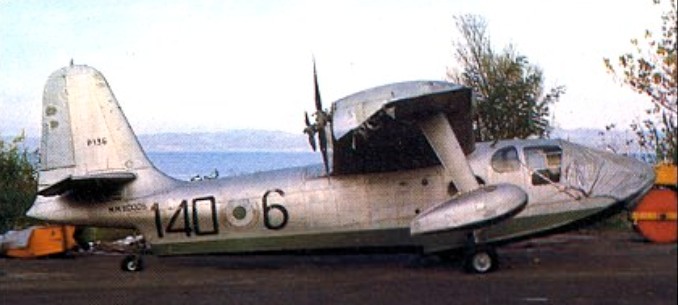
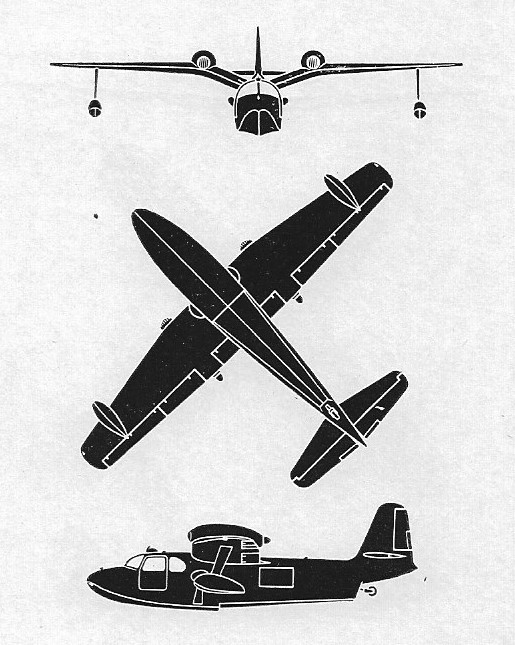
The P.136 was flown for the first time on 29 August 1948 and he first production aircraft were powered by 215 hp Franklin 6A8-215-B9F engines. Eighteen of these were acquired by the Italian Air Force followed by a further fifteen of the P.136-L powered by Lycoming engines.
More than 80 P.136 five-seat light amphibians were built as one of the company’s first post-war products, 33 of which were supplied to the Italian Air Force for use as flying-boat trainers and for air-sea rescue duties.
A second production series, the P.136-L, differed in having higher-power Lycoming engines and redesigned, enlarged squared-off tail surfaces.
A total of 32 were delivered to non-military customers, including twenty to the USA where they were marketed as the Trecker Gull. Most of these were P.136-L-1 or P.136-L-2.
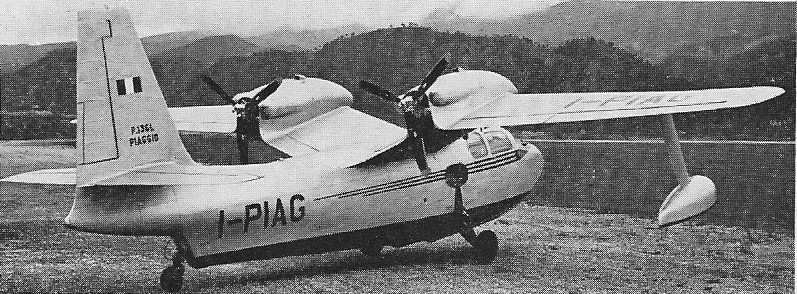
Trecker Aircraft Corp, a division of Kearney & Trecker Corporation, in early/mid-1960s assembled at Milwaukee, Wisconsin, Piaggio P.136L-1 s and L-2s under names Trecker Gull and Super Gull.
P.136
Engine: 215 hp Franklin 6A8-215-B9F
P.136-L
Engine: 2 x Lycoming GO-435-C2
Wingspan: 44 ft 4.75 in
Wing area: 268 sq.ft
Length: 35 ft 5 in
Height: 11 ft 6 in
Empty weight: 3211 lb
Loaded weight: 5842 lb
Max speed: 181 mph
Cruise: 160 mph at 6890 ft
Time to 3280ft: 3 min 40 sec
Service ceiling: 17,716 ft
Normal range: 373 mi
Max range: 621 mi
P.136-L-1
Engines: 2 x 270 hp Lycoming GO-480-B
Wingspan: 44 ft 4.5 in / 13.53 m
Length: 35 ft 4 in / 10.8 m
Height: 12 ft 7 in / 3.83 m
Wing area: 270.2 sq.ft / 25.1 sq.m
Empty weight: 4400 lb
Loaded weight: 5996 lb
Max speed: 183 mph at SL
Cruise 70%: 167 mph
Service ceiling: 19,685 ft
Max range: 1056 mi
P.136-L-2
Engines: 2 x 340 hp / 254kW Lycoming GSO-480
Wingspan: 44 ft 4.5 in / 13.53 m
Length: 35 ft 4 in / 10.8 m
Height: 12 ft 7 in / 3.83 m
Wing area: 270.2 sq.ft / 25.1 sq.m
Empty weight: 4652 lb / 2110 kg
Loaded weight: 6600 lb / 2995 kg
Max speed: 208 mph / 335 km/h at SL
Cruise 70%: 190 mph
Service ceiling: 25,500 ft / 7800 m
Max range: 900 mi / 1450 km
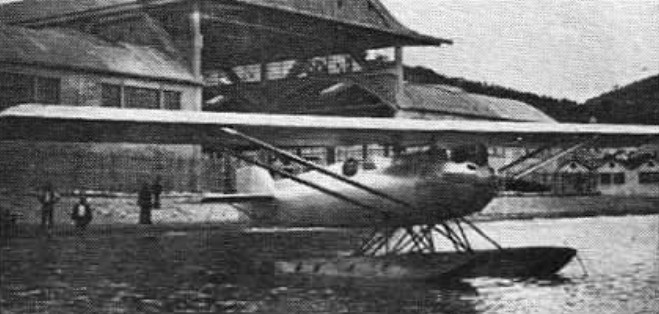
A parasol-wing single-seat floatplane, the small Piaggio P.8 reconnaissance aircraft of 1928 was intended, like its rival the Macchi M.53, to be stored in a cylindrical container aboard submarines of the large ‘Ettore Fieramosca’ class. It was designed to be assembled rapidly for deployment at sea on patrol or reconnaissance; after being recovered it could as easily be dismantled and re-stowed in its container. Powered by a 56kW Blackburn Cirrus II engine, it had a maximum speed of 135km/h.
Engine: 1 x Blackburn Cirrus II, 56kW
Max. speed: 135 km/h / 84 mph
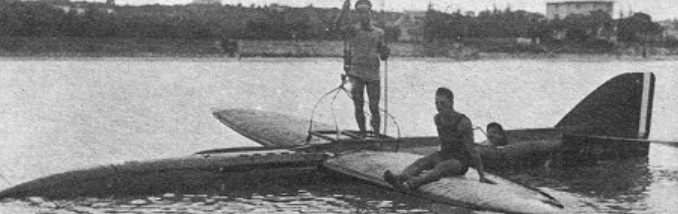
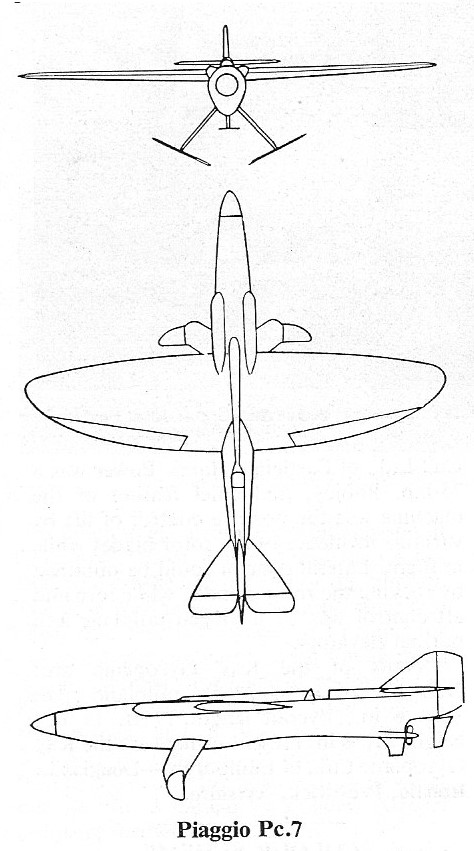
A truly remarkable design, the Piaggio P.7 or Piaggio-Pegna P.c.7 was built for the 1929 Schneider Trophy contest. A cantilever high-wing monoplane with long slender fuselage, it had twin hydrofoils instead of floats and was intended to float with the wing resting on the surface of the water. While water-borne it was to be driven by an ordinary marine propeller connected by a shaft and clutch to the rear of the 723kW Isotta Fraschini Special V.6 engine. Once sufficient speed had been attained to lift the aircraft on to the hydrofoils and the normal tractor propeller was clear of the water, this latter propeller would be clutched-in, the marine propeller disengaged, and a conventional take-off would follow.
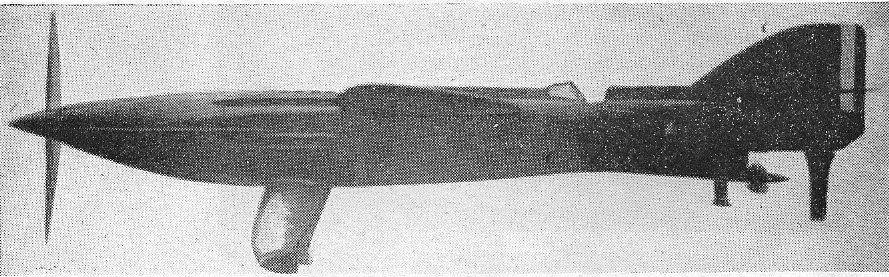
In practice, problems with the respective clutches prevented the P.c.7 from ever taking off, and although water trials were conducted on Lake Garda by Dal Molin of the Italian Schneider team, the construction of a second aircraft was abandoned.

Engine: 1 x Isotta-Fraschini Special, 723kW / 850 hp
Wingspan: 28 ft 8.5 in
Length: 29 ft
Height: 8 ft
Empty weight: 3093 lb
Loaded weight: 3709 lb
Max take-off weight: 1738 kg / 3832 lb
Crew: 1


In 1927 two parallel, designs were developed to meet an Italian naval requirement for a two-seat catapult-launched seaplane. One was a small flying-boat, the Piaggio P.6bis powered by a single 194kW Isotta Fraschini V.6 engine mounted between the wings and driving a pusher propeller; the other was the P.6 floatplane with a large central float, two wing-tip stabilising floats, and a 288kW A.20 engine in the nose. The two aircraft had identical wing structure, with rigid strut bracing, and each mounted a single defensive machine-gun, that of the flying-boat in the bow, and the floatplane’s in the rear cockpit.
The P.6ter of 1928 was similar to the P.6, but had an engine boosted to 306kW to provide a maximum speed of 195km/h. Wing span was 13.50m and maximum take-off weight 2360kg. A batch of 15 P.6ter floatplanes was built, and the type was used for a period aboard several Italian capital ships and cruisers.
P.6bis
Engine: 1 x 194kW Isotta Fraschini V.6
P.6
Engine: 1 x 288kW A.20
P.6ter
Engine: 1 x Fiat A.20, 306kW
Max take-off weight: 2360 kg / 5203 lb
Wingspan: 13.5 m / 44 ft 3 in
Max. speed: 195 km/h / 121 mph
Phoenix became part of the English Electric Co Ltd. in 1918 and continued development of flying-boats, initially the P.5 Kingston.
 All Aero