Rohrbach built ten Ro-II seaplanes for Japanese Navy and Ro-IIIA for Turkey.
Amphibian
Rohrbach Ro-II
Rohrbach built ten Ro-II seaplanes for Japanese Navy and Ro-IIIA for Turkey.
Rogožarski SIM-XIV
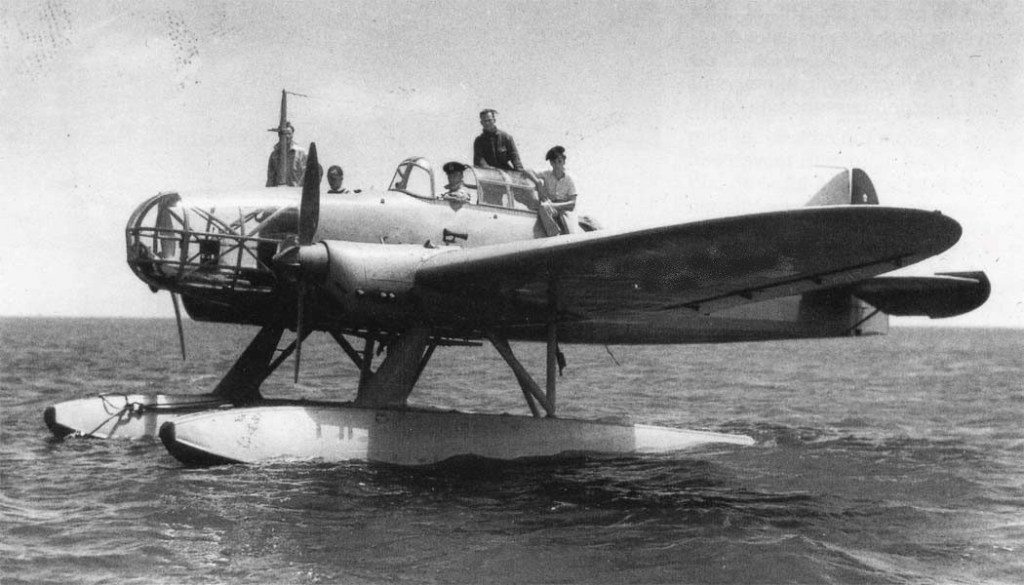
SIM-XIV-H – coastal scout (one prototype in 1938 and 6 copies in 1939)
SIM XIVB-H – bomber seaplane (12 copies in 1940)
Rogers Sea Hawk
The 1929 Rogers Sea Hawk flying boat first flew in January 1929, piloted by George Rommell.
Engine: 150hp Curtiss C-6 pusher
Wingspan: 40’0″
Length: 31’6″
Useful load: 1045 lb
Max speed: 90 mph
Cruise: 72 mph
Stall: 42 mph
Range: 500 mi
Seats: 4
Rogers Sea Eagle RBX

Designed by Harry Rogers, as a close copy of the Curtiss F, the 1929 Rogers Sea Eagle RBX flying boat was first powered by a 150hp Hisso A engine, and priced at $12,500. Only the one, NX/NC9735, was built, receiving ATC 274.
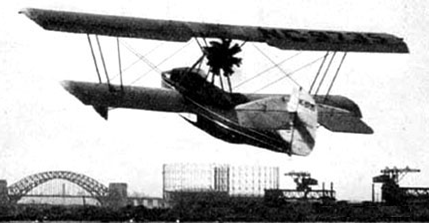
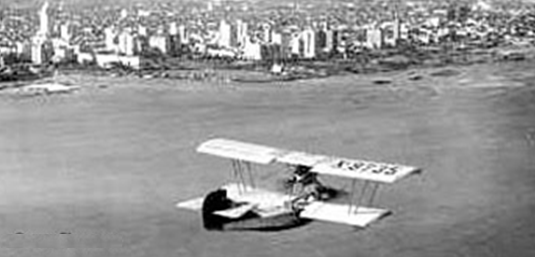
Sea Eagle RBX
Engine: 225hp Wright J-6 pusher
Wingspan: 40’0″
Length: 32’0″
Useful load: 1034 lb
Max speed: 105 mph
Cruise: 85 mph
Stall: 43 mph
Range: 270 mi
Seats: 4
Undercarriage: flying boat
Rogers, Harry
c.1925 (Harry) Rogers Air Lines
Garden City NY & Miami FL.
USA
1928: Rogers Aeronautical Mfg Co
Roosevelt Field
Long Island NY.
USA
Flying boat builder
Richmond Airways Sea Hawk
Richmond Airways built a Sea Hawk five-seat flying boat in 1928, with Curtiss C-.6 engine driving pusher propeller.
Ricci R.I.B
A large three-engine twin-hull R.I.B. flying-boat.
Reid Flub / Reid Flying Submarine / RFS-1
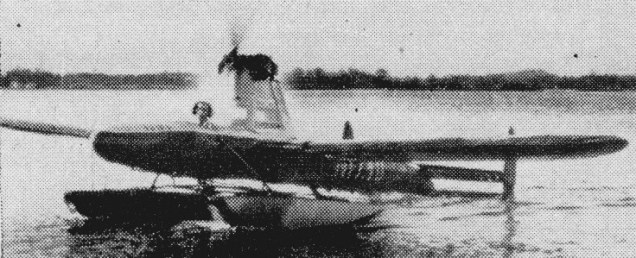
Donald Reid was developing a flying sub using his own money. The “flub” would use one jet engine for both flying and underwater propulsion.
The last five models have been man-size, and his son, Bruce, has been his chief test pilot. Bruce has had the flub, in the air on short, straight-ahead flights, and underwater for short periods. In 1965 they hoped to put the two together and take off from water, land and submerge.
The 1965 model is scrounged mostly from parts of crashed airplanes. It has a 65-hp Lycoming engine with propeller mounted above the fuselage/hull for flying and an electric-powered screw for underwater propulsion.
Reid says he was laughed out of Washington when he proposed such a vehicle to the Navy 10 years ago. “Now,” he says, “I’ll just finish it and give it to the Air Force.”
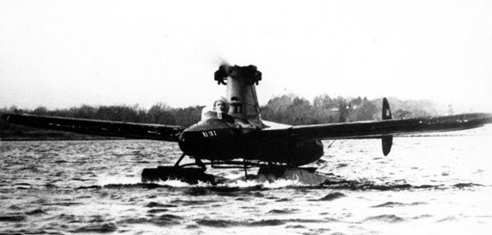
The RFS-1 sort of worked. The airplane was incredibly heavy, so it could only do slight hops in the air, but it could dive, at least a little bit. Before diving, the pilot had to remove the propeller, and cover the engine in rubber. Since the airplane had an open cockpit, the pilot used an aqualung while under water. The RFS-1 dived down to 12 feet during a test.
REDA-MDT Pony
A two-seat amphibian (first flown 1994), produced by Pony JSC.
 All Aero