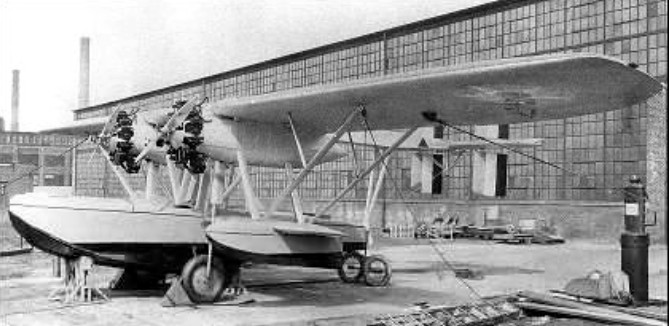
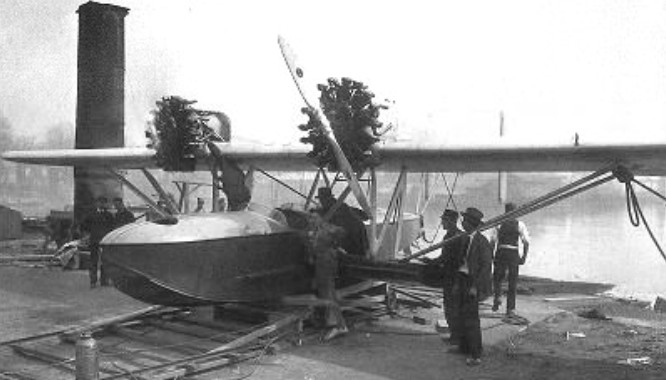
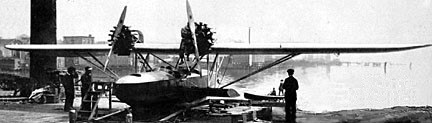
Sikorsky developed the S-36, a larger version of the S-34, and six S-36 amphibians were built, usually with two 200hp Wright J-4 Whirlwind engines. Certified ATC 2-275, the 1927 S-36 had various seating arrangements and various wingspans, from 56’0″ to 72’0″. The latter span for the long-range version. Length was 34’0″.
Five built were NX1282, N3001 (temporary, cancelled), NX3699, and N4567, plus XPS-1 A8005 in 1928.
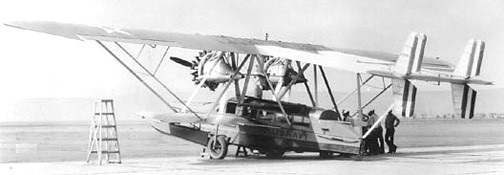
The US Navy used the PS-1, PS-2, PS-3, based on S-36 and -38, on patrol, transport and utility duties as the XPS-1. One was built as XPS-1 A8005 in 1928.
Sikorsky XPS-1 A-8005
Also in 1928, two PS-2 were built; A8089 and A8090.
Sikorsky PS-2
Four PS-3 were built in 1929 (A8284 to 8287), later being designated RS-3. One was produced for the USN (A9055) and two for the USMC (A8922 and 8923).
Other S-36s, carrying two crew and up to six passengers on two facing bench seats with a table between, were delivered to Andean National Corporation and, on 7 December 1927, to the newly formed Pan American Airways for survey flights in the Caribbean.
An S-36, named Dawn, was bought by Mrs Frances Grayson, a niece of President Wilson, who wanted to be the first woman to fly the Atlantic. After take-off on 23 December 1927, with Mrs Grayson and two pilots on board, it vanished over the ocean.
Sikorsky’s first attempt to build an amphibian, the six-seat S-34 NX883, flew in 1926. During a test flight in November 1927, piloted by Capt. Collier and with Igor Sikorsky as observer, it developed engine trouble while flying low over water and sank after forced landing. The two men were rescued and taken ashore by motor boat.
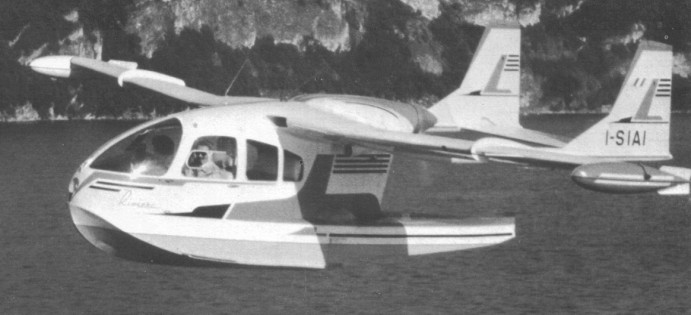
The three-seat prototype of the amphibian FN-333 flying boat, designed and built by Nardi S.A., flew first on 4 December 1952. Two more prototypes were built by Nardi through the decade. In the wake of the second Nardi prototype, Fiat of Italy also built two FN.333 prototypes, but did not continue with the exercise.
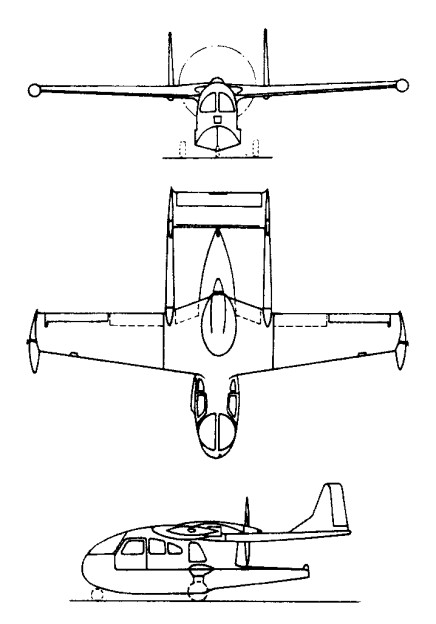
The initial prototype had “guitar-pick” style tailfins, and was powered by a Continental engine with 110 kW (145 HP); there had been thought of fixing the floats to the wingtips and then folding the wing downward after water landing, but the idea didn’t survive close examination.
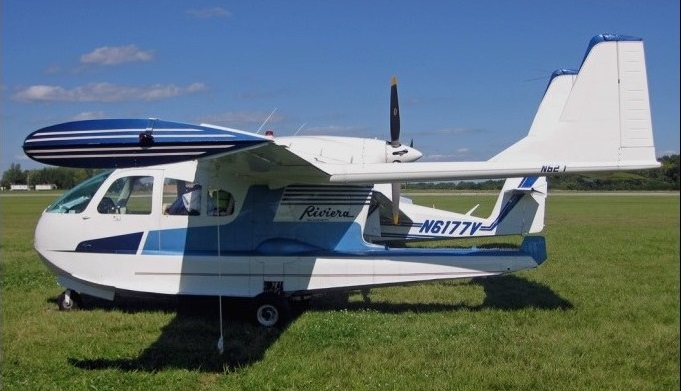
Following the third Nardi prototype, an exclusive manufacturing licence for the FN-333 was obtained by SIAI Marchetti in March 1959. SIAI Marchetti called the aircraft “Riviera”.
SIAI-Marchetti placed a slightly enlarged four-seat variant in production which had flown in prototype form on 8 December 1954. The first of ten pre-production Rivieras was flown in February 1962.
The Riviera used a tricycle landing gear with the nose gear tucking up into the forward hull, the main gear hinging up to be stowed in the fuselage, as well as retractable floats, hinging up to mate with the wingtips, and no wing bracing. The twin tailfins were of trapezoidal configuration and had forward fillets. Powerplant was a Continental IO-470-P air-cooled flat-six engine with fuel injection, providing 185 kW (250 HP) and driving a two-bladed propeller.
Initial production was devoted to fulfilling orders from the USA were sales were handled by the Lane Aircraft Company which purchased the airframes for assembly by Southwest Airmotive. The first four were delivered to the USA bu mid-January 1963 and more than fifty had been sold by the middle of the year.
About 24 Rivieras were built through the 1960s, the exact number being hard to determine because of double-counting of serials.
Engine: 1 x Continental IO-470-P, 185kW Wingspan: 10.4 m / 34 ft 1 in Length: 7.4 m / 24 ft 3 in Height: 3.2 m / 11 ft 6 in Wing area: 15.0 sq.m / 161.46 sq ft Empty weight: 1030 kg / 2271 lb Max take-off weight: 1485 kg / 3274 lb Max. speed: 285 km/h / 177 mph at SL Cruise 70%: 264 km/h / 164 mph Econ cruise: 137 mph ROC: 1220 fpm Service ceiling: 5600 m / 18350 ft Range w/max.fuel: 1300 km / 808 miles Range w/max.payload: 1000 km / 621 miles Crew: 4
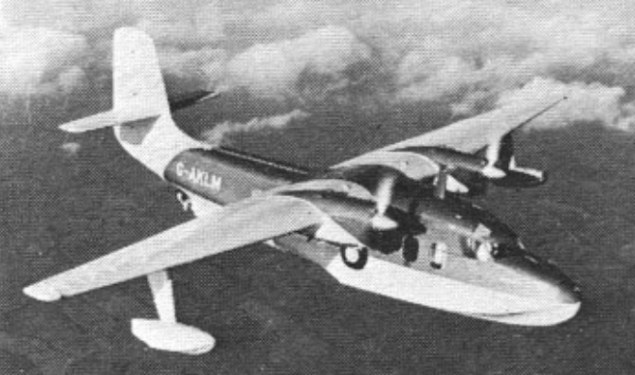
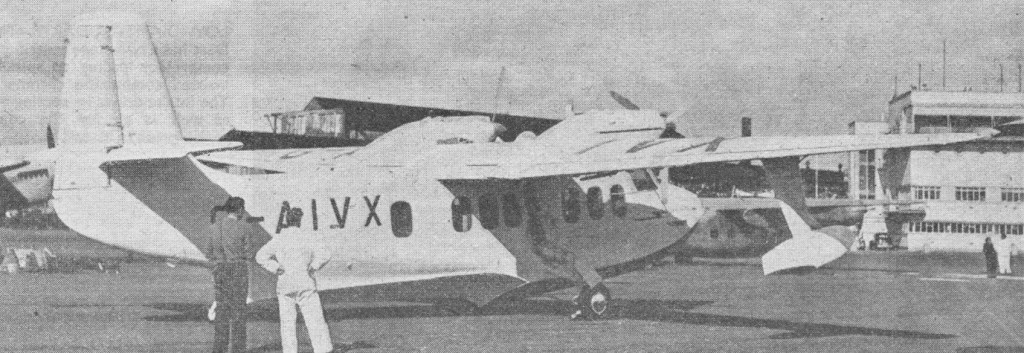
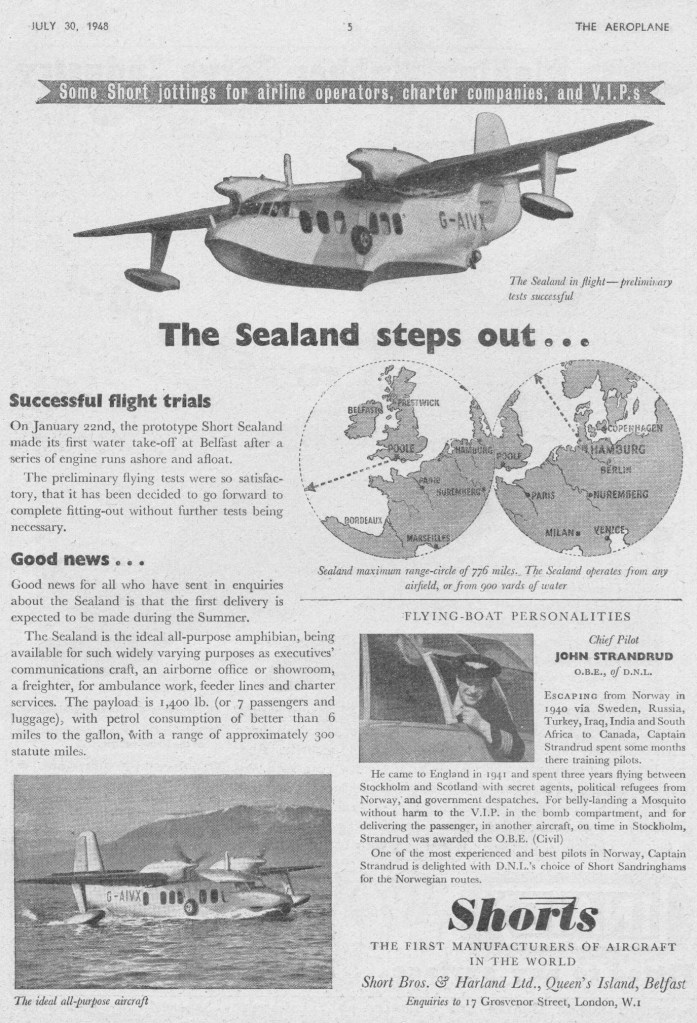
The Sealand twin-engined light commercial amphibian flying-boat was first flown on 22 January 1948. Power was provided by 254kW de Havilland Gipsy Queen 70 engines and accommodation was for five to eight passengers. Only a small number were produced, including three for the Indian Navy.
1948
September 1948
Sealand III Engines: 2 x de Havilland Gipsy Queen 70, 254kW Max take-off weight: 4128 kg / 9101 lb Empty weight: 3205 kg / 7066 lb Wingspan: 18.75 m / 62 ft 6 in Length: 12.85 m / 42 ft 2 in Height: 4.57 m / 15 ft 0 in Wing area: 32.79 sq.m / 352.95 sq ft Max. speed: 298 km/h / 185 mph Ceiling: 6340 m / 20800 ft Range: 958 km / 595 miles
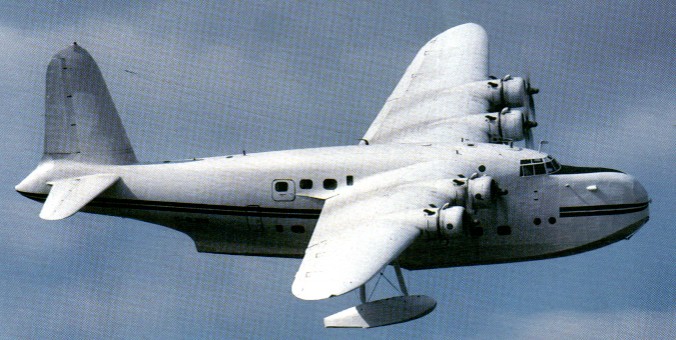
For service in the Pacific the Air Ministry required a more powerful, more heavily armed flying boat than the Short Sunderland, and specification R.8/42 was met by a new Short design, known originally as the Sunderland IV but later renamed Seaford, with the company designation S.45.
Gross weight rose to 34000kg and a number of structural improvements were incorporated to compensate for this; these included a strengthened wing and enlarged horizontal tail surfaces. The hull was also modified, its beam being increased by 0.99m. Armament comprised two 12.7mm machine-guns in a Brockhouse turret in the bow, and two 7.7mm machine-guns in the nose decking. Two 20mm cannon were mounted in a Boeing B-17 dorsal turret, and the Martin tail turret contained a pair of 12.7mm guns, two more of which were located in beam positions. A bomb load could also be carried in a fashion similar to that of the Sunderland. The first of two prototypes, powered by four 1253kW Bristol Hercules XVII engines, was flown on 30 August 1944 and 30 production aircraft, with 1283kW Hercules XIXs, were also ordered. Of these only six were completed.
In April and May 1946 No.201 Squadron carried out operational trials with the Seaford, in co-operation with the Marine Aircraft Experimental Establishment at Felixstowe, but the programme was cancelled and the completed machines were converted as 39-passenger aircraft for BOAC, acquiring the designation Solent 3. A seventh Solent 3 was a conversion of the second production Seaford, which had been evaluated by BOAC in 1946, leading to an order for 12 30-passenger Solent 2s which was delivered in 1948.
18 Solent were operated by BOAC as 30-passenger Solent 2s (12) and 34-passenger Solent 3s (6) before the company abandoned the use of flying-boats in 1950. Power for these was provided by Bristol Hercules 637 engines.
The was the civil version of the Seaford flying-boat, Four Solent 4s were operated by Tasman Empire Airways with Hercules 733 engines and accommodation for 42 day passengers.
S.45 Seaford Engines: 4 x Bristol Hercules XIX, 1283kW / 1696 hp Max take-off weight: 34000 kg / 74958 lb Empty weight: 20400 kg / 44975 lb Wingspan: 34.37 m / 112 ft 9 in Length: 27.00 m / 88 ft 7 in Wing area: 1486.939 sq.ft / 138.14 sq.m Max. speed: 210 kt / 389 km/h / 242 mph Range: 2694 nm / 4990 km / 3101 miles Armament: 2 x 20mm cannon, 4 x 12.7mm + 2 x 7.7mm machine-guns
Solent 3 Engines: 4 x Bristol Hercules 637, 1260kW Max take-off weight: 35650 kg / 78595 lb Empty weight: 21860 kg / 48193 lb Wingspan: 34.38 m / 113 ft 10 in Length: 26.72 m / 88 ft 8 in Height: 10.45 m / 34 ft 3 in Wing area: 156.72 sq.m / 1686.92 sq ft Max. speed: 430 km/h / 267 mph Ceiling: 4725 m / 15500 ft Range: 3540 km / 2200 miles
Solent IV Engines: 4 x Bristol Hercules, 2040 hp Cruise speed: 244 mph
Intended as a long-range flying-boat with a heavy armament, and much bigger than Short Sunderland. The first of two prototypes flew in 1944. The second prototype would have been a 40-passenger aircraft but was cancelled due to low demand.
Following on from the Empire class flying boats, Short was keen to explore the limits of the flying-boat design, while also investing in the S.32 land airliner. A number of drag and stability improvements were proved and then embodied in the enlarged version of the Empire boat named the G class, or Golden Hind, and featuring improved power and range. The intention for this design (of which three were ordered by Imperial Airways) was to implement a regular scheduled service across the Atlantic in association with Pan Am.
World War II intervened and the three G boats were sequestered by the RAF and converted for ASW/reconnaissance use for which gun turrets and depth charge housings were installed. In 1942 they were reconverted to carry up to 40 passengers and used on services to Africa.
In late 1941 the two surviving G boats were returned to civil duties, but only one example survived the war. After a brief operational period the aircraft fell into disuse.
Engines: 4 x Bristol Hercules IV or XIV 14-cylinder radial, 1380 hp Wingspan: 40.90 m / 134 ft 2 in Length: 31.40 m / 103 ft 0 in Height: 11.45 m / 38 ft 7 in Wing area: 2159.904 sq.ft / 200.66 sq.m Weight empty: 37712.1 lb / 17103.0 kg Max take-off weight: 33800 kg / 74517 lb Max. speed: 181 kts / 336 km/h / 209 mph Cruising speed: 157 kts / 290 km/h Service ceiling: 16896 ft / 5150 m Cruising altitude: 7497 ft / 2285 m Range: 2781 nm / 5120 km / 3182 miles Crew: 5 Passengers: 40 Armament: 12x cal.303 MG (7,7mm), 907kg Bomb.
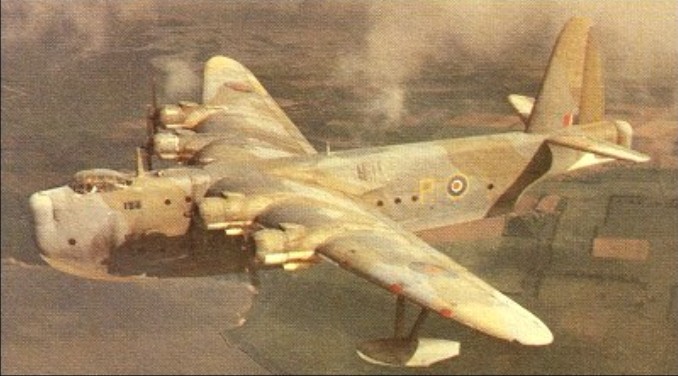
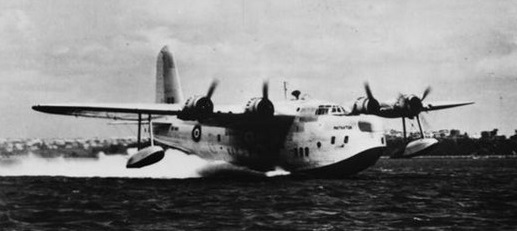
The Sunderland maritime-patrol and reconnaissance flying-boat was designed to meet the requirements of Air Ministry Specification R.2/33 and was virtually a military version of the Empire boat. The prototype flew for the first time on 18 October 1937, just over a year after the first Empire began its trials.
Entering service in June 1938, by the outbreak of war there were three squadrons of RAF Coastal Command operational with it and others in the process of re-equipping or forming. The Sunderland was notable for being the first flying-boat to be equipped with power-operated gun turrets.
The first production version was the Sunderland I powered by Bristol Pegasus 22 engines and armed with eight 7.7mm machine-guns: two in a Fraser-Nash nose turret, four in a Fraser-Nash tail turret, and two on hand-operated mountings in the upper part of the hull aft of the wing trailing edge.
French Navy Sunderland
The Sunderland II had Pegasus XVIII engines, but was otherwise similar to the Mk I, although late models were fitted with a two-gun dorsal turret in place of the manually operated guns.
The Mk III used the same power plant as the Mk II, but had a modified hull with a stream-lined front step and a dorsal turret as standard.
The final military version was the Sunderland V, the IV having become the Seaford. The Mk.5 was used mainly as a maritime reconnaissance flying boat they were powered the more powerful l200hp Pratt & Whitney R-1830 Twin Wasp. Wing span remained the same, however, the aircraft was slightly longer at 85’ 4”. Due to the increased power, the MAUW was 65,000lbs, but the maximum speed remained relatively unchanged. Armed with six Browning .303 machine-guns carried in two turrets (four in the rear and two in the forward), and four .303s fixed, that were controlled by the pilot. There were also two 0.5 Browning, which were manually operated, positioned in the beam hatches. Eight depth charges were carried on racks which were run out from the bomb room, along rails which extended under the wings. As with all the guns, these could be reloaded in flight.
Production continued until October 1945 and seven hundred and forty-nine Sunderlands were built, and they served throughout the war. The final Coastal Command Sunderland operational mission was in June 1945 over four weeks after the German surrender. Long-range Sunderland operations also took place overseas from bases in Africa and the Far East.
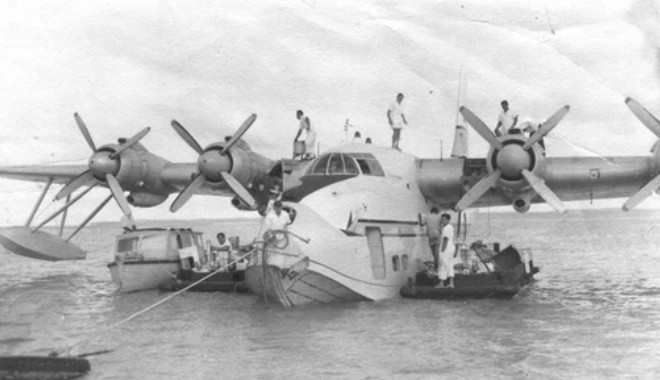
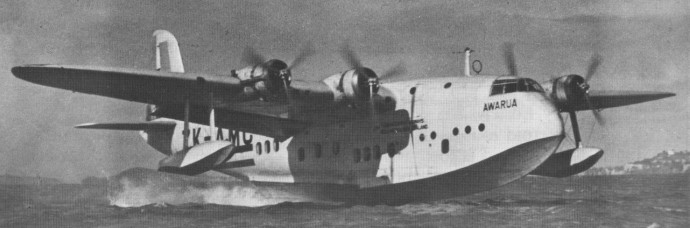
In 1943 a number of Sunderlands were de-militarised, equipped to carry 20 passengers and turned over to BOAC. The Short S.25 Sandringham was produced during the Second World War by the demilitarized conversions of Short Sunderland military flying boats previously operated by the Royal Air Force.
Sandringham ZK-AMD
Post-war the type took part in the Berlin Airlift carrying 4920 tonnes (4847 tons) of freight. During the Korean War Sunderlands based in Japan undertook nearly 900 operational sorties totally over 13350 hours of flying. The Sunderland finally retired from RAF service in 1959 when the last aircraft were scrapped at RAF Seletar, Singapore.
Sandringham Engines: 4 x Bristol Pegasus XVIII Cruise: 200 mph Pax capacity: 16-24
Sunderland Mk. III Engines: 4 x 1065hp Bristol Pegasus radials Wing span: 112 ft 10 in Length: 84 ft 4in MAUW: 58, 000 lb Top speed: 210mph at 7,000ft
Sunderland Mk V Engines: 4 x Pratt-Whitney R-1830-90B Twin Wasp, 895kW / 1200 hp Max take-off weight: 29480 kg / 64993 lb Empty weight: 16740 kg / 36906 lb Wingspan: 34.38 m / 113 ft 10 in Length: 26 m / 85 ft 4 in Height: 10.52 m / 35 ft 6 in Wing area: 156.72 sq.m / 1686.92 sq ft Max. speed: 185 kt / 343 km/h / 213 mph Cruising speed: 116 kt / 214 km/h Service Ceiling: 5455 m / 17900 ft Range: 2337 nm / 4300 km / 2672 miles Armament: 2 x .5in / 12.7mm Browning machine-guns, 10 x .303in / 7.7mm machine-guns Bombload: 2250kg / 8 x depth charges Crew: 13
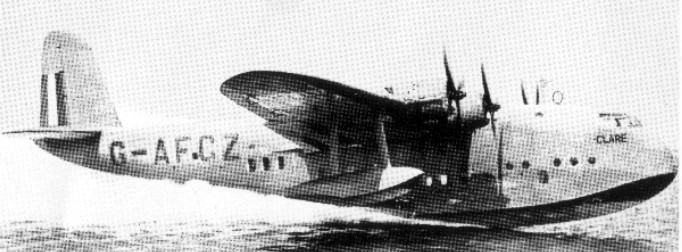
In 1935 the British government took the bold decision to carry all mail within the Empire at the ordinary surface rate. Combined with increasing passenger traffic, this called for a sudden expansion of Imperial Airways and the equally bold decision was taken to buy 28 of a totally new flying-boat, known as the C Class Empire, ‘off the drawing board’ from Short Brothers, at a cost of over £2,000,000. They were four engined cantilever monoplane with a hull of advanced lines.
Features included light-alloy stressed-skin construction; a cantilever high wing with electric Gouge flaps; four 685kW Bristol Pegasus Xc radial engines driving DH Hamilton two-position propellers; and a streamlined nose incorporating an enclosed flight deck for captain, first officer, navigator and flight clerk. A steward’s pantry was amidships and in the normal configuration seats were arranged in front and rear cabins for 24 passengers. On long hauls sleeping accommodation was provided for 16, with a promenade lounge. On some routes experience showed that the mail capacity had to be raised from 1.5 to 2 tonnes, reducing the passenger seats to 17.
S.23
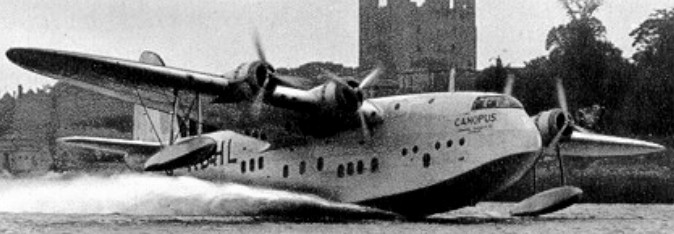
The prototype, the Short S.23 named Canopus, flew on July 4, 1936. Less than four months later, on October 30, it was in passenger service. Others followed at fortnightly intervals and by 1937 the fleet was already covering 113,196 miles per week on scheduled services.
The original C Class boats had four 910 hp Bristol Pegasus engines and could carry 17 pass¬engers, plus two tons of mail and freight for 810 miles at 164 mph. They were soon followed by seven more with 900 hp Perseus engines and double the range of the first batch.
All 28 were delivered, plus three for Qantas (Australia). Two were long-range boats with increased weight and transatlantic range. Eleven S.30s (eight for Imperial and three for Tasman Empire Airways) had 663kW Perseus XIIc sleeve-valve engines and greater range – the first four also being equipped for flight refuelling to greater weight. The final two boats were S.33s with increased weight and Pegasus engines.
On 5 August 1935, Imperial Airways began regular trans-Atlantic airmail flights using Short Empire flying boats which were refuelled in the air.
Short Empire ‘Cambria’, specially modified for trans-Atlantic operations
S.30
During World War II most of these great aircraft served on long routes all over the world. Four were impressed for RAF use with radar (two being destroyed in Norway in May 1940) and most were re-engined with the same 752kW Pegasus 22 engines as the Sunderlands (the derived military version). Their achievements were amazing: one made 442 crossings of the Tasman Sea, two evacuated 469 troops from Crete and one was flown out of a small river in the Belgian Congo in 1940. Others maintained schedules on the North Atlantic, between Britain and Africa, the dangerous Mediterranean route from Gibraltar to Malta and Cairo, and the Horseshoe route between Australia, India and South Africa. Most were retired in 1947.
The prototype completed 2,024,745 miles of safe flying in her ten years of service.
S.23 C-Class Engines: 4 x Bristol Pegasus XC, 790 hp / 686kW Wing span: 114 ft 0 in (34.75 m) Length: 88 ft 0 in (26.82 m) Height: 31 ft 9.75 in (9.68 m) Wing area: 139.35 sq.m / 1499.95 sq ft Empty weight: 10659 kg / 23499 lb Max TO wt: 40,500 lb (18,375 kg) Max level speed: 200 mph (322 kph) Cruise speed: 265 km/h / 165 mph Ceiling: 6095 m / 20000 ft Range: 1223 km / 760 miles Crew: 5 Passengers: 17-24
S.30 Engines: 4 x 910 h.p. Bristol Pegasus Length: 88 ft. (26.82 m.) Wing span: 114 ft (34.74 m.) Weight empty: 23,500 lb. (10,660 kg.) Max speed: 200 mph Max cruise: 165 mph (265 kph) Ceiling: 20,000 ft. (6,000 m.) fully loaded Range: 800 miles (1,300 km.) Crew: 5 Pax cap: 24
Tests had proved that an Imperial Airways’ Empire flying-boat could achieve a transatlantic crossing only if its entire payload consisted of fuel. Since it is well known that an aircraft can be flown at a much greater weight than that at which it can take off from the ground, Robert Mayo proposed that a small heavily loaded mailplane be carried to operational altitude above a larger ‘mother plane’ and then released to complete its long-range task. The proposal was accepted by the Air Ministry and Imperial Airways, which jointly contracted Shorts to design and build such a composite unit.
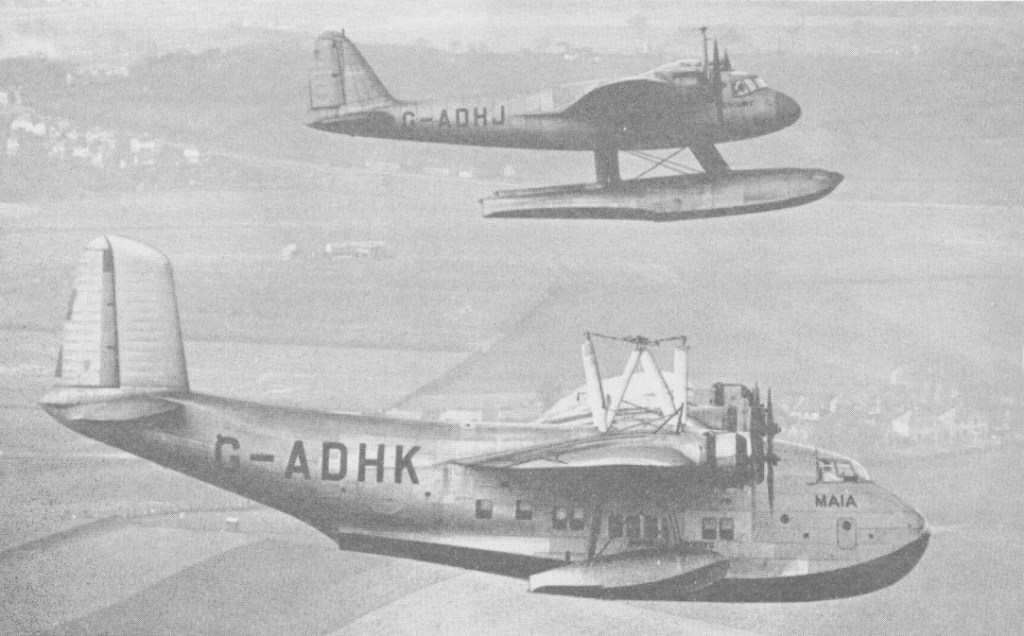
The Short S.21 Maia, the lower component, was a slightly enlarged and modified version of the Empire boat; the Short S.20 Mercury, the upper long-range unit, was a new high-wing twin-float seaplane with four 254kW Napier Rapier H engines giving a cruising range of 6116km with 454kg of mail.
This eight engined part time biplane composite was first tested on 4 January 1938. During take off and before separation Mercury’s flying controls were automatically locked in the neutral position, Maia’s pilot having full command; the parasite’s engines were started from inside the mother ship and combined with those of Maia to get the two components airborne.
The first airborne separation took place on 6 February 1938, over Rochester, Kent, and after a number of experimental flights Mercury was air-launched over Foynes Harbour, County Limerick, Ireland crewed by Captain Donald Bennett, on 21 July 1938. Mercury carried 5455 litres (1200 Imperial gallons) of fuel in its wings and 508 kg (1120 lb) of newspapers, mail and newsreel footage in her twin floats. Bennett flew on to Montreal nonstop, covering the 4715 km (2930 miles) from Ireland in 13 hours 29 minutes, then set off again for New York, where for the first time ever English newspapers were on sale at the news stands on the day after publication.
From 6 October 1938 Mercury and Bennett made news again with a nonstop flight of 9728 km (6045 miles) from Dundee, Scotland to Orange River, South Africa in 42 hours 5 minutes.
Arrival at Capetown
The Composite subsequently operated a scheduled nonstop mail service between Southampton and Alexandria, Egypt which continued until the outbreak of World War II.
Mercury was eventually broken up at Rochester and Maia destroyed by enemy action during May 1941.












 All Aero